
Reviewed · MOUNT FUJI DAY TRIPS FROM TOKYO
Mt. Fuji & Hakone: Fuji Sengen Shrine, Cruise, and Ramen-Making
Lake Ashi gives this full-day outing its best opening: you board the Hakone Pirate Ship and look for Mt. Fuji from the water, then spend the day among shrines, spring-fed ponds, and mountain towns. I like the easy round-trip bus ride from Shinjuku, and I like that lunch is an activity rather than a rushed restaurant stop.
The ramen-making class is a fine change of pace, since you mix your soup, seasonings, toppings, and noodles to your taste. I also like the choice between the steep 398-step climb and the gentler route at Arakura Fuji Sengen Shrine. The catch is a long day with considerable walking, traffic delays, and no guarantee that clouds will let Fuji appear.
Key points to know before you book
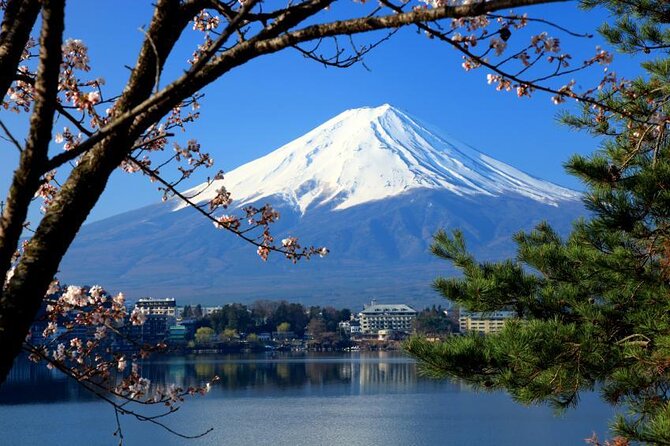
- Lake Ashi by Pirate Ship: A short 25-minute cruise offers a pleasant first view of Hakone and a chance to see Mt. Fuji from the water when skies cooperate.
- Ramen made from scratch: You prepare noodles, choose your broth and toppings, then eat the result for lunch.
- Arakura Shrine climb: The famous Churei-to Pagoda viewpoint requires either 398 steps or a sloping path, with both options taking effort.
- Oshino Hakkai springs: Eight ponds fed by Mt. Fuji snowmelt are surrounded by food stalls, fruit, wine, and souvenirs.
- A very full day: Expect roughly 11 to 12 hours, a 7:40 a.m. start, and a return to the Shinjuku meeting point.
- Weather matters: Rain or poor visibility can cancel the cruise or hide Fuji, and an alternative stop may be offered without a refund.
What this Mt. Fuji and Hakone day actually delivers
At $128.69 per person, this is not a cheap bus ride to one viewpoint. You are paying for transport from Tokyo, an English-speaking guide, the ramen activity and lunch, and the Lake Ashi cruise when that option is selected. The appeal is efficiency: in one demanding day, you reach two popular areas that are awkward to combine by public transport.
The tour has a strong 4.8 rating from 124 ratings, with 97 percent recommending it. That fits the basic idea here. If you want a carefully paced visit to one place, this is too busy. If you have one open day in Tokyo and want to collect several major sights without working out train connections, the price can make sense.
The bus leaves from the Shinjuku Center Building at 7:40 a.m. The building is about a seven-minute walk from JR Shinjuku Station, though I would allow extra time. Shinjuku is large, confusing, and full of tour buses. One useful warning is repeated in the practical details: the bus leaves on schedule and does not wait for late arrivals.
More Mount Fuji day trips from Tokyo:
- Mt Fuji and Hakone 1-Day Bus Tour Return by Bullet Train
★ 5.0 · 26,383 reviews - Mt Fuji & Hakone Cruise, Drum Show Bullet Train 1 Day from Tokyo
★ 4.0 · 7,413 reviews - Tokyo Mt Fuji 5th St & Hakone Cruise Bus Tour w/Bullet Train
★ 4.4 · 5,024 reviews
Lake Ashi and the 25-minute Pirate Ship cruise
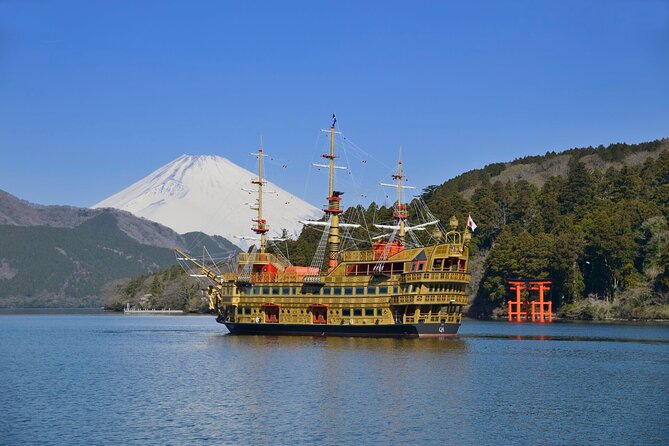
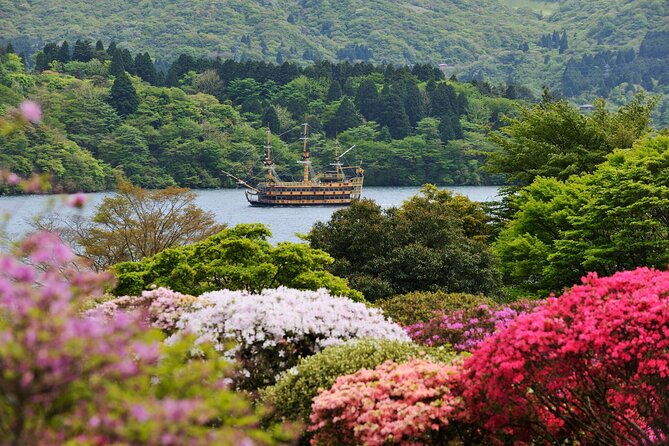
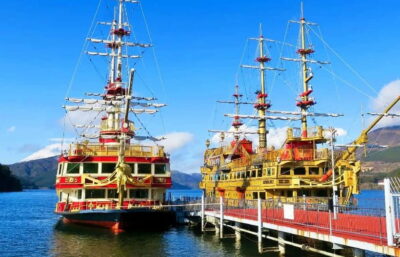
The first major stop is Lake Ashi, also called Lake Ashinoko. The Hakone Pirate Ship carries you across the lake for about 25 minutes. The ship gives you a break from the road and a different angle on the surrounding hills, greenery, and, on clear days, Mt. Fuji.
This is a short cruise, not a full Hakone lake excursion. You will have enough time for photos and fresh air, but not hours to explore the shoreline. The ship is especially attractive in spring, when cherry blossoms may add color, though the scenery changes with the season.
The phrase weather permitting is important. Mt. Fuji is often hidden by cloud, haze, or rain even when the lower parts of the day are pleasant. The cruise itself can also be suspended because of bad weather or other operating problems. In that case, the operator says an alternative facility will be used and no refund will be given, so do not book this day solely for the boat.
One useful point from the experience is that timing on the road can affect this stop. A guide named Yoko was able to arrange another pickup point after the original cruise station was missed, but you should not count on every delay being solved so neatly. Traffic around Tokyo and Hakone can be heavy, and the schedule has little spare room.
Making your own ramen near Mt. Fuji
After the morning ride and cruise, you head to the Ramen Factory in the Mt. Fuji area. This is more than a meal placed in front of you. You make the noodles from scratch, select your soup base and seasonings, choose toppings, and boil the noodles to your preferred firmness.
I like this part because it gives the day a hands-on Japanese food experience instead of another quick photo stop. It also gives you something to do when clouds have blocked the mountain. The class lasts about one hour, and you eat what you prepare for lunch.
The meal is included only when you choose the appropriate tour option. Check the exact option at booking rather than assuming every departure includes it. Vegetarian requests must be sent to the provider at least seven days ahead. Halal and vegan lunches are not available.
There are a couple of practical points here. Lunch is arranged for the group, so you are not choosing from a large restaurant menu or setting your own dining time. One account described the lunch as authentic and satisfying, while another found it a bit cold and noted that traditional low seating was uncomfortable for some older people. If sitting close to the floor is difficult for you, ask the provider about the arrangement before paying.
Arakura Fuji Sengen Shrine and the Churei-to Pagoda
Arakura Fuji Sengen Shrine is the day’s most recognizable photo stop. The shrine dates to 705 and is associated with more than 1,500 years of Shinto tradition. You enter through a large red torii gate, pass the main hall, and continue toward the Churei-to Pagoda and its observation area.
The classic view places the red five-story pagoda, Mt. Fuji, and, in spring, cherry blossoms in the same frame. It is one of the most familiar Mt. Fuji images in Japan, but the appeal is not only photographic. The climb passes Shiogama Shrine, linked with safe childbirth, and Atago Shrine, linked with fire protection.
You have two ways up. The Sakuya-Hime staircase has 398 steps. The sloping path is easier, but it still takes time and effort. The tour warning about walking is worth taking seriously. This is not a quick step off the bus, snap a photo, and return stop. You should be able to walk for at least 10 to 15 minutes at a time, and you should expect a good deal more during the full day.
The itinerary allows about one hour and 20 minutes here. That is enough for the shrine, climb, pagoda, and photos if you keep moving. It may feel short if you want a quiet visit or if the steps slow your group. The tour description also gives Tenku no Torii as a possible shrine choice, so confirm the exact departure plan if that viewpoint matters more to you than Arakura.
Your guide can make a big difference at this stop. Yoko, Mami, and Hiro are singled out in the supplied comments for being friendly, helpful, and clear with information. Another account found the commentary too limited, and one reported poor English and a disorganized day. Guide quality can vary, so treat the English-speaking guide as a useful aid rather than a guarantee of a full historical talk at every stop.
More Hakone day trips from Tokyo:
- Tokyo: Mt. Fuji Tour, Hakone Ropeway, Owakudani, Lake Ashi
★ 4.7 · 4,002 reviews - Private Tour to Mt. Fuji and Hakone (Fully Licenced Operator)
★ 5.0 · 1,910 reviews - Mt Fuji & Hakone Cruise, Drum Show Bus 1 Day from Tokyo
★ 4.0 · 1,287 reviews - From Tokyo: Mt. Fuji & Hakone Tour w/ Return by Bullet Train
★ 4.2 · 1,278 reviews
Oshino Hakkai and Mt. Fuji’s clear spring ponds
Oshino Hakkai brings you to a traditional village setting in Yamanashi Prefecture. Its name refers to eight ponds formed by snowmelt from Mt. Fuji. The water filters through volcanic rock over roughly 80 years before reaching the springs, which explains their clarity.
This stop gives you a quieter type of Mt. Fuji experience. Instead of looking only at the mountain, you see how the volcano shapes the area’s water, food, farming, and village life. The ponds are the main draw, but the surrounding stalls add plenty of browsing.
You can find local wine, fresh fruit, souvenirs, and regional snacks. Yamanashi is known as Japan’s Fruit Kingdom, so this is a good place to sample or buy local produce. It is also a practical refreshment stop after the shrine climb.
The planned time is about one hour and 20 minutes. That sounds generous, but it disappears quickly if you want both the ponds and the market. You may find the area busy, especially around the most photogenic water. Keep your expectations realistic: this is a popular sightseeing village with shops, not an untouched rural settlement.
The bus ride, group size, and pace

The air-conditioned bus is the backbone of the day. The included vehicle has free Wi-Fi, and one particularly positive account praised the reclining seats, power outlets, and room to stretch out. Those details matter because the day includes long road sections, including a possible two-hour ride toward the mountain area.
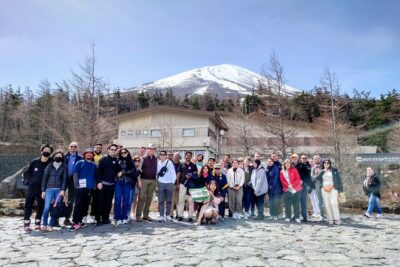
The maximum group size is 42 people. That is large enough to make boarding, head counts, and meeting points important. On the good side, you do not need to manage local trains, buses, cruise tickets, or changing connections. On the less pleasant side, one late person or a traffic jam can affect everyone.
Return traffic to Tokyo is a real risk. A departure that looks like an 11-hour day can run toward the longer end of the 11 to 12-hour estimate, especially on a busy road. Keep your evening flexible. I would not book a tight dinner reservation, airport transfer, theater ticket, or long-distance train soon after the expected return.
The tour finishes back at the Shinjuku Center Building. Hotel pickup and drop-off are not included, so you must get to and from the meeting point yourself. Use the mobile ticket and the supplied meeting instructions, then arrive early enough to identify the correct guide and bus.
Weather, mountain views, and backup plans
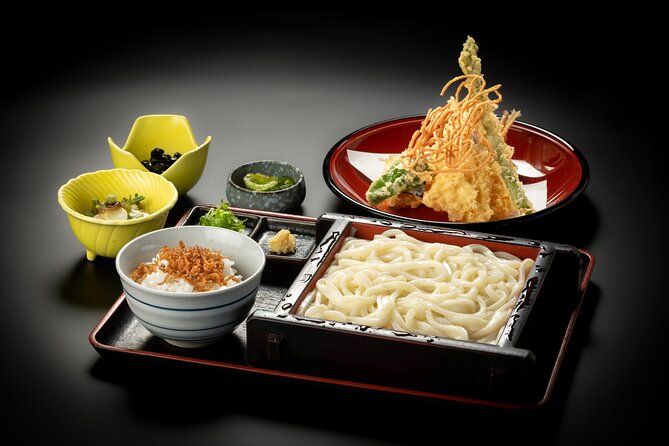
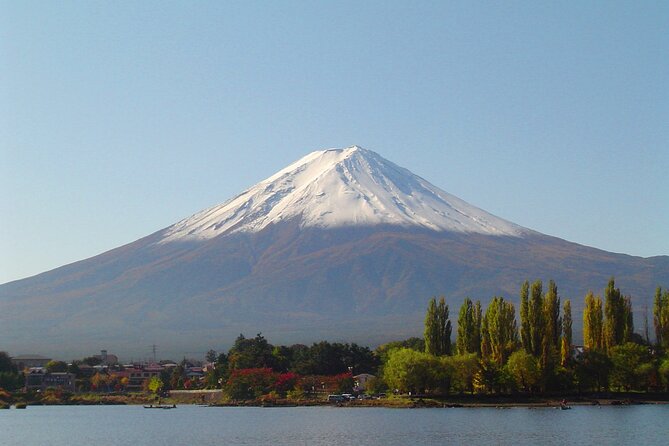
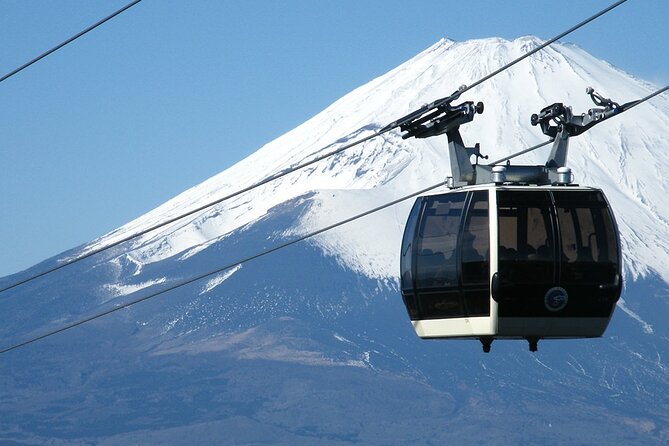
Mt. Fuji is the star of this outing, but it is never fully under the tour’s control. You may see it from Lake Ashi, Arakura, Oshino Hakkai, and the roads between stops, or you may see only a brief outline. Rain can also prevent the boat ride.
A rainy day does not automatically ruin the experience. One especially fortunate departure had heavy rain in the morning, then cleared just enough for a view of Fuji. Still, you should book this as a regional sightseeing day with a chance of mountain views, not as a guaranteed Fuji photograph.
If the cruise cannot operate because of weather, service suspension, or traffic, an alternative facility may replace it. The stated policy does not provide a refund for that change. This is one of the biggest value considerations at $128.69, particularly if the cruise is the main reason you are booking.
Who will get the most from this tour?
I would choose this day if you are visiting Tokyo for the first time, have limited time, and want a guided introduction to Hakone and the Mt. Fuji region. It suits you especially well if you value easy transportation more than free time and enjoy mixing scenery, food, culture, and shopping.
It is also a good match for people who like variety. The cruise, noodle class, shrine, pagoda, ponds, and market feel different from one another, so the day does not depend on a single attraction. If clouds hide Fuji, the ramen class and village stop still give the day some substance.
I would hesitate if you have trouble walking, dislike early starts, or prefer quiet, unhurried sightseeing. I would also look elsewhere if you want a serious historical tour, a long shrine visit, or a guaranteed cruise. The schedule is efficient, but efficiency means you move on before fully exploring each place.
Free cancellation is available up to 24 hours before the start time. Cancellations made later are not refunded, and changes within that period are not accepted. That policy is fairly standard, but it makes an early weather check useful when possible.
Should you book this Mt. Fuji and Hakone tour?
Book it if you want the simplest way to combine Lake Ashi, a ramen class, Oshino Hakkai, and a famous Fuji shrine in one day. The strongest reasons are the comfortable bus, the practical route, the hands-on lunch, and the chance to see Fuji from several different settings. Guides such as Yoko, Mami, and Hiro have added warmth and useful help for many departures.
Skip it if you want a relaxed pace or if a clear Mt. Fuji view is essential. The day is long, traffic can cut into sightseeing, and weather can remove the cruise or mountain views without reducing the price. At this cost, the tour offers fair value for convenience, but it works best when you see it as a busy sampler of the region rather than a deep visit to Hakone or Fuji.
FAQ
How long does the tour last?
The experience lasts approximately 11 to 12 hours. It starts at 7:40 a.m. and ends back at the Shinjuku meeting point.
Where does the tour start?
The meeting point is the Shinjuku Center Building at 1-chōme-25 Nishishinjuku, Shinjuku City, Tokyo. It is about a seven-minute walk from JR Shinjuku Station.
Is hotel pickup included?
No. Hotel pickup and drop-off are not included. You must reach the Shinjuku meeting point yourself.
Is lunch included?
Ramen-making and lunch are included when you select the option that includes them. The activity includes making noodles, choosing soup and toppings, and boiling the noodles yourself.
Can I request a vegetarian meal?
Yes, but you must contact the activity provider at least seven days before the tour. Halal and vegan lunches are not available.
What happens if the Lake Ashi cruise is canceled?
An alternative facility may be substituted if the cruise is suspended because of weather, traffic, or another operating issue. A refund will not be provided for that reason.
Is the tour suitable for people with limited mobility?
The tour involves considerable walking. Reaching Churei-to Pagoda requires either 398 steps or a sloping path, and the tour is not recommended if you have difficulty walking for 10 to 15 minutes.
More Tokyo boat trips and river cruises
- Tokyo: Meiji Shrine, Asakusa, Skytree Bus Tour and Cruise
★ 4.7 · 1,986 reviews - Sumida River: Japanese Traditional Yakatabune Dinner Cruise
★ 4.6 · 779 reviews - Tokyo: Hakone Fuji Day Tour w/ Cruise, Cable Car, Volcano
★ 4.2 · 724 reviews - Dynamic Tokyo: Tokyo Tower, Tea Experience, Bay Cruise Day Tour
★ 4.5 · 521 reviews
More Tokyo ramen tours and classes
- Eat and Drink Like a Local: Tokyo Ueno Food Tour-Taverns&Ramen
★ 5.0 · 957 reviews - Ramen & Gyoza Cooking Class in Tokyo with Local Supermarket Visit
★ 5.0 · 823 reviews - Tokyo: Ramen Tasting Tour with 6 Mini Bowls of Ramen
★ 4.9 · 432 reviews - Tokyo: Easy Ramen Cooking Experience in Kabukicho, Shinjuku
★ 4.6 · 321 reviews
Newly reviewed around Tokyo
- Tokyo Asakusa:Calligraphy & Make T-shirt Activity★ 5.0 · 62 reviews
- Intercity Shuttle, Tokyo to Haneda /Narita /Yokohama /Makuhari★ 5.0 · 5 reviews
- 1 Hour Travel around Tokyo with a Professional Photographer★ 5.0 · 3 reviews
- Travel Tokyo with Your Own Personal Photographer★ 5.0 · 43 reviews
- Train in Samurai Swordsmanship and Defeat the Demon in Tokyo★ 5.0 · 5 reviews
- Shuttle Van 6hr Tokyo Tour to-and-from Tokyo, Yokohama and Narita★ 5.0 · 9 reviews
- Kickboxing & Body Training with EX-Pro Fighter★ 5.0 · 4 reviews
- Traditional Japanese Knife Sharpening Class★ 5.0 · 18 reviews
Mount Fuji Day Trips from Tokyo, compared.
Mt Fuji and Hakone 1-Day Bus Tour Return by Bullet Train
Read our review →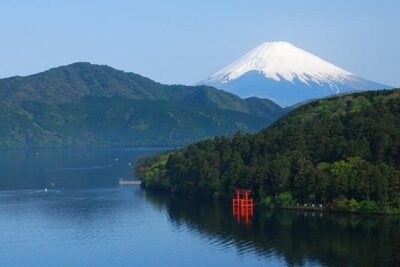
Mt Fuji & Hakone Cruise, Drum Show Bullet Train 1 Day from Tokyo
Read our review →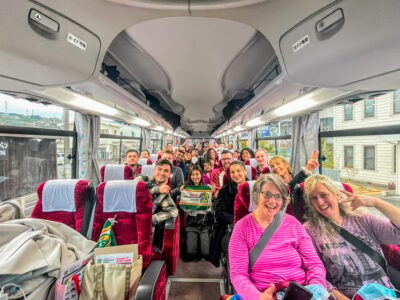
Tokyo Mt Fuji 5th St & Hakone Cruise Bus Tour w/Bullet Train
Read our review →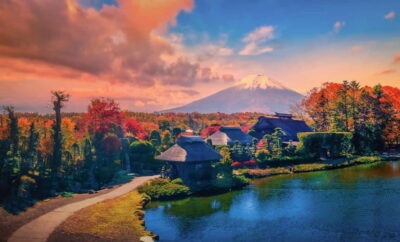
Mt. Fuji Tour, Hakone Ropeway, Owakudani, Lake Ashi
Read our review →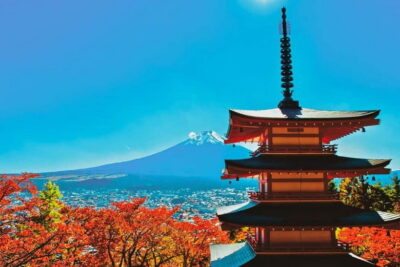
Mt.Fuji,Kawaguchiko Oishi Park,Arakurayama Sengen Park
Read our review →
Mt Fuji Top 5 Spots Day Tour: Arakurayama Park,Oshino Hakkai
Read our review →
Private Tour to Mt. Fuji and Hakone (Fully Licenced Operator)
Read our review →Browse the lists this tour appears in