
Reviewed · HISTORICAL TOURS
Modern Japanese History Tour in Tokyo
Japan’s wartime past is not tucked away in a single museum. In central Tokyo, it unfolds across a shrine, a military museum, and a collection devoted to ordinary civilian life. This three-hour private tour connects those places and gives you a guide to help explain material that can be difficult to follow on your own.
I like the way the tour puts military and civilian experiences side by side. I also like that you get a private English-speaking guide, with guides such as Shun, Yasuhiro Suzuki, Hiro, and Izumi praised for clear explanations, patience, and tact. The main consideration is that some museum displays are in Japanese only, so the quality of your visit depends heavily on your guide and your willingness to discuss painful subjects with care.
I also appreciate the compact route. You meet at Kudanshita Station, visit Yasukuni Shrine, spend the largest portion of the morning at Yushukan Museum, then finish at Showa-kan before returning to the starting point. The $204.58 price is not cheap, but it includes admission and a private history expert rather than a large group tour.
Key points to know before booking
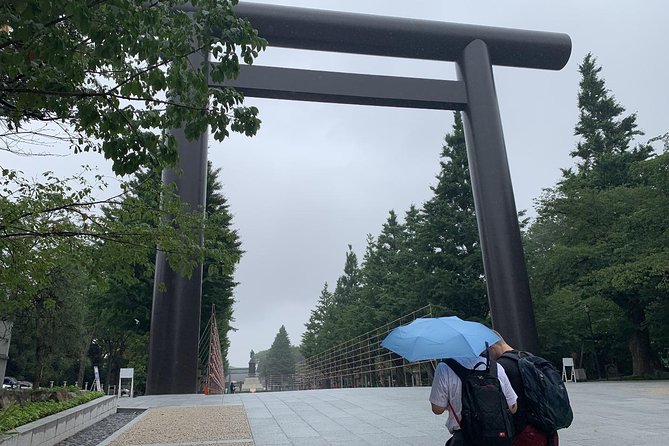
- Yasukuni Shrine introduces Japan’s public remembrance of war dead, with traditional buildings and quiet grounds.
- Yushukan Museum takes about 90 minutes, focusing on Japan’s military history, artifacts, documents, and kamikaze pilots.
- Showa-kan shifts the focus to civilian life, including hardship during and after World War II.
- The private guide matters, since many displays are in Japanese and need explanation.
- The subject is serious and sometimes contested, so arrive ready to listen, ask careful questions, and keep an open mind.
- The tour runs from 9:00 a.m. to about noon, with no hotel pickup, food, drinks, or gratuities included.
Why this Tokyo history tour feels different
Many Tokyo sightseeing routes concentrate on temples, shopping streets, gardens, and food. This one asks a harder question: how does a country remember war?
You will look at Japan’s modern military history from the Meiji period through World War II and into the postwar years. The stated focus includes Japan’s 2.5 million war dead since 1869, the lives of soldiers, the decisions behind kamikaze attacks, and the severe problems civilians faced during the war, including starvation.
That mix gives the morning its value. You are not simply walking through old buildings or looking at weapons. You are comparing official remembrance with personal experience. Yasukuni Shrine and Yushukan present one side of the story, while Showa-kan brings you closer to daily life, shortages, family memories, and the difficult years after defeat.
This is also a useful tour for anyone who wants more context for modern Japan. The country you see today was shaped by war, occupation, loss, rebuilding, and rapid economic growth. Three hours cannot cover every issue, but a skilled guide can help you place the exhibits in a sensible order.
The tone matters. This is not a light morning activity, and the subject can be sensitive. The experience is designed to educate, not provoke. You should expect direct discussion of military conduct, sacrifice, nationalism, and the human cost of war.
More history and heritage tours in Tokyo:
- Tokyo: Imperial Palace and Shogun Historical Walking Tour
★ 5.0 · 2,251 reviews - Tokyo: Imperial Palace Japanese History Walking Tour
★ 4.9 · 987 reviews - Tokyo: Shinjuku Historical Walking Tour & Secret Backstreets
★ 5.0 · 530 reviews
Starting at Kudanshita Station at 9:00 a.m.
The tour begins at Kudanshita Station, at 1-chōme-13-19 Kudankita in Chiyoda City. You will meet your English-speaking guide there rather than being collected from your hotel.
That meeting point makes sense for this route because the three main stops are in the same general area. Still, allow enough time to find the correct station exit and meeting location. The tour begins at 9:00 a.m., and a private guide cannot easily start the visit while waiting for a late arrival.
You will remain with your own group throughout the activity. That private format is one of the biggest differences from a standard museum visit. You can ask why a particular exhibit matters, request more explanation, or spend less time on a section that does not interest you.
The guides named in the available feedback include Shun, Yasuhiro Suzuki, Hiro, and Izumi. Their strengths are described in practical terms: clear explanations, thoughtful handling of difficult material, patience with questions, and help translating exhibits. You should still regard the guide as the key variable in the experience, since the museums can be hard to follow without assistance.
Yasukuni Shrine: a quiet setting for a difficult subject
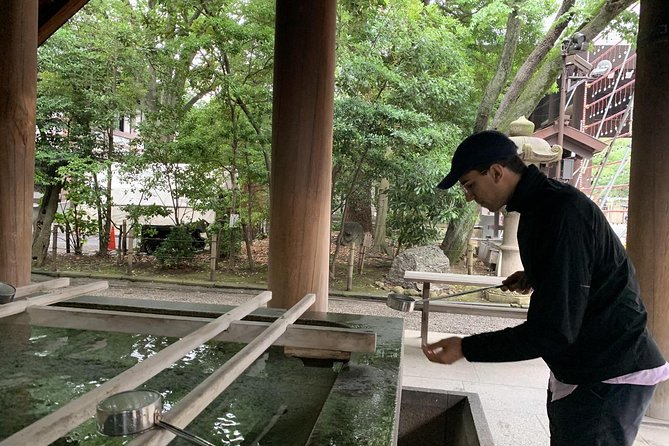
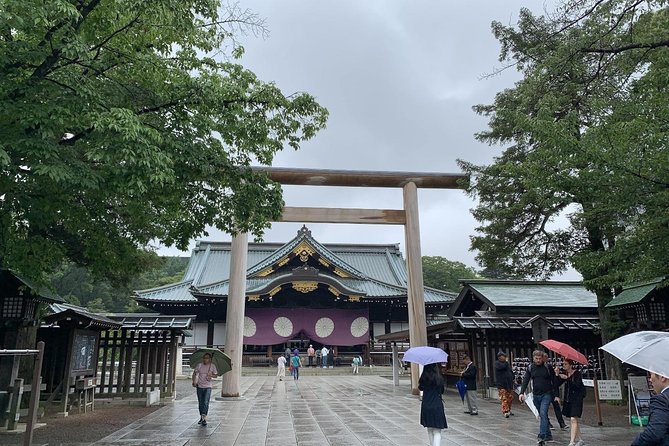
The first stop is Yasukuni Shrine, with about 30 minutes set aside. The shrine honors Japan’s war dead and gives you a physical setting for understanding how the country commemorates those who died in military service.
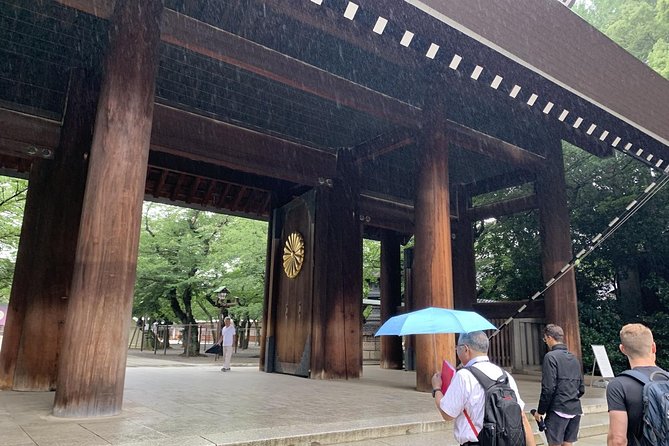
The grounds feature traditional architecture and a calm atmosphere. That contrast is worth noticing. Tokyo is a huge modern city, yet this site feels set apart from the surrounding streets. Your guide can explain how the shrine functions as a place of remembrance and why it has such an important role in discussions of Japan’s wartime past.
The visit is not just a quick photo stop. It establishes the question that runs through the rest of the morning: who is remembered, how are they remembered, and what parts of the past receive emphasis?
Yasukuni is also a politically sensitive place. The tour information is clear that the subject may be difficult for some people, and it asks everyone to keep an open mind and avoid putting the guide in a threatening situation. You do not need to agree with every interpretation presented at the site, but you should be prepared for a serious, respectful conversation.
The 30-minute timing is sensible. You get an introduction to the grounds and their meaning without using up the morning before the museums. If you want a long independent visit to the shrine grounds, this tour may feel rushed. If your priority is context and explanation, the short stop works well.
Yushukan Museum: 90 minutes of military history
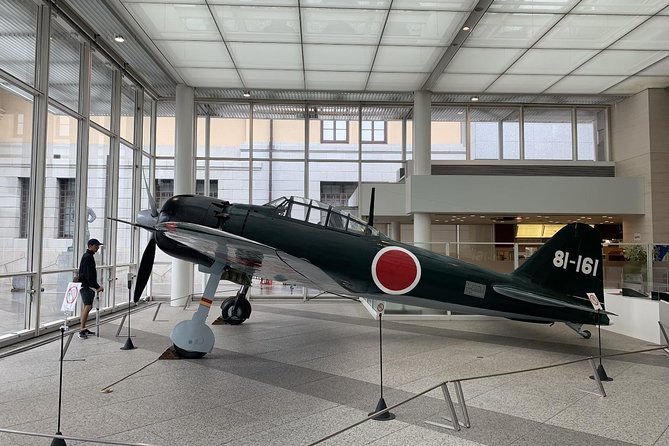
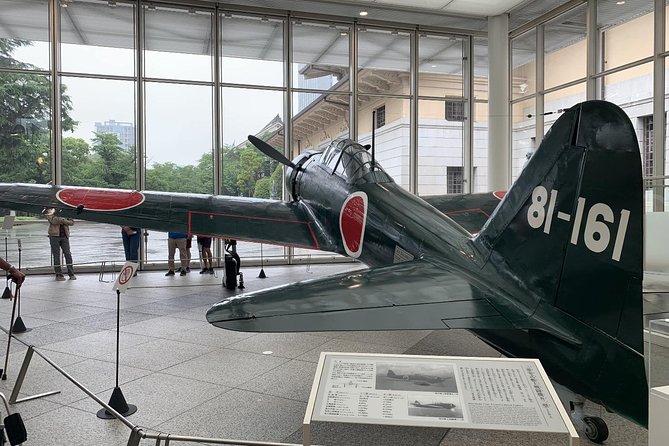
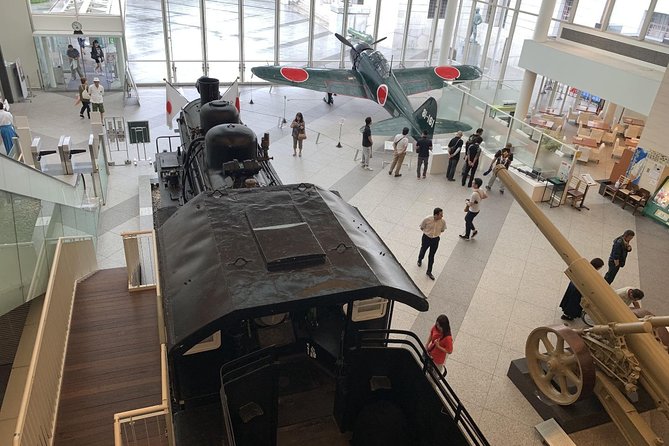
The main stop is Yushukan Museum, located on the grounds of Yasukuni Shrine. You will have about an hour and a half here, making it the central part of the tour.
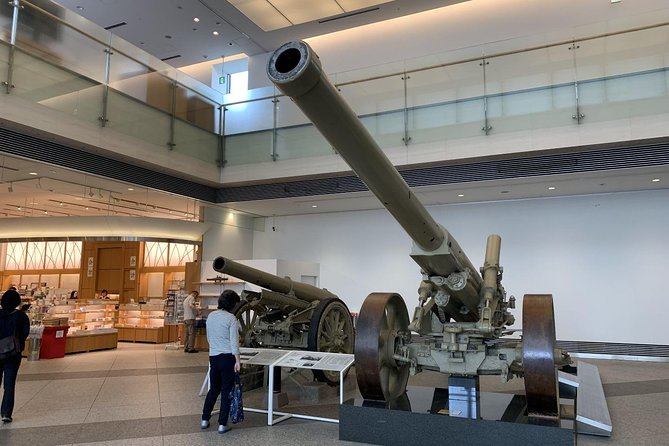
Yushukan presents Japan’s military history through artifacts, documents, equipment, and other displays. The coverage includes the modern military period and World War II, with particular attention to soldiers and military practices such as the kamikaze attacks, also known as tokotai.
The museum can be difficult to navigate without an English-speaking guide. Several displays are in Japanese only, so labels alone may not tell you what an object was, who used it, or how it fits into the larger story. Your guide’s interpretation is therefore not a small extra. It is the main reason to book a guided visit instead of simply entering by yourself.
This is where the private format earns its keep. You can ask about military terms, family letters, the training and role of soldiers, or the beliefs that made kamikaze missions possible. The tour’s stated purpose includes explaining what soldiers told their families before their expected deaths, a detail that shifts the topic away from tactics and toward human choices and fear.
You should also understand that a museum connected to Yasukuni Shrine may present a particular view of Japan’s wartime past. That does not make the visit useless. It makes your guide’s role more important. A good explanation can help you recognize the museum’s viewpoint, place its displays in context, and separate historical evidence from commemoration.
The 90-minute visit gives you time to see a substantial portion of the exhibits, but it is not enough for every room and every document. Ask your guide early what the tour will emphasize. If military history is your main interest, you may want to use the available time on weapons, soldiers, and wartime policy. If you are more interested in families and personal stories, say so.
A completely different kind of day in Tokyo:
- Mt Fuji and Hakone 1-Day Bus Tour Return by Bullet Train
★ 5.0 · 26,383 reviews - 1-Day Tokyo Bus Tour
★ 5.0 · 14,250 reviews - Tokyo: teamLab Planets TOKYO Digital Art Museum Entry Ticket
★ 4.6 · 9,779 reviews - Mt Fuji & Hakone Cruise, Drum Show Bullet Train 1 Day from Tokyo
★ 4.0 · 7,413 reviews
Showa-kan: the civilian experience of war
The final museum is the National Showa Memorial Museum, commonly called Showa-kan. You will spend about an hour here, looking at the lives of Japanese civilians during and after World War II.
This change of focus is one of the strongest parts of the route. After Yushukan’s attention to military history, Showa-kan brings the war down to the household level. Exhibits use personal belongings, photographs, and related material to show what daily life was like during the war and through the difficult postwar years.
You might see how shortages affected families, how food scarcity shaped daily decisions, and how people managed the years after the fighting ended. The museum also helps explain the long road from defeat and hardship to Japan’s later economic growth.
That civilian material makes the overall tour more balanced. Military history can become abstract when it is reduced to dates, campaigns, and equipment. Showa-kan reminds you that war is also about meals missed, possessions lost, children separated from normal life, and families trying to rebuild.
As with Yushukan, some exhibits may be in Japanese only. Your guide can interpret the displays and explain the everyday context behind them. This is especially useful if you want to understand more than the basic caption beside an object.
The hour allotted here is enough for a focused visit. It may feel short if you read every panel or want to examine every photograph. The best approach is to let your guide point out the displays that support the main story, then ask questions about the items that catch your attention.
What the private guide adds
The tour’s guide is described as an English-speaking history expert, but the practical benefit is broader than a list of dates. You need someone who can translate museum material, explain cultural references, and handle disagreement without turning the morning into an argument.
The available guide names include Shun, Yasuhiro Suzuki, Hiro, and Izumi. The specific comments about them highlight a shared pattern: personal warmth, careful explanations, patience, and a strong grasp of both military events and everyday life.
That last point matters. A guide who only knows military facts may leave you with a narrow picture of the period. The best version of this tour links military decisions to the civilians who lived with the consequences.
Ask questions. This is a private activity, so you do not need to hold back until the end. You can ask how a museum presents an event, what a Japanese term means, or why a particular personal item matters. The tour is more useful when you treat it as a guided conversation rather than a lecture.
At the same time, keep your expectations realistic. A guide can clarify Japanese-language exhibits, but a three-hour tour cannot settle every debate about wartime responsibility or memory. The tour gives you a framework for thinking, not a final answer to every question.
Is $204.58 good value?
At $204.58 per person, this is a costly morning, especially for one person. The value improves if two or more people share the experience, since the guide is private and the price includes entrance fees to Yushukan and Showa-kan.
You are paying for several things at once:
- A private English-speaking guide
- Explanations in museums where some material is Japanese-only
- Admission to both museums
- A planned route connecting three nearby sites
- The chance to ask detailed questions throughout the morning
If you are comfortable reading Japanese and already know the subject, you may not need this service. You could find the museums on your own and spend more time at the displays that interest you.
If you do not read Japanese, the calculation changes. The museums may be much harder to understand without translation and context. The guide can turn a set of objects and documents into a connected account of military policy, family life, sacrifice, and recovery.
The tour also offers value through focus. Tokyo has endless places to visit, and it is easy to postpone serious historical sites. This booking sets aside a full morning and gives you a clear route, which can be worthwhile if modern Japanese history is a priority.
Group discounts are listed as a feature, but the exact discount is not provided. Check the price for your party before booking. Food, drinks, souvenirs, hotel pickup, drop-off, and gratuities are not included.
Who should book this experience?
I would recommend it to you if you have a serious interest in:
- Japan’s military history from the Meiji period through World War II
- The kamikaze, or tokotai, system
- The way Japan commemorates war dead
- Civilian hardship during and after World War II
- The connection between wartime experience and postwar rebuilding
- Museums where English interpretation may be limited
It is also a good fit if you prefer a private conversation to a large walking group. Families, couples, and small groups can shape the discussion around their own interests.
I would hesitate to recommend it as a casual first-day Tokyo activity. The subject is heavy, and the tour assumes that you want to think about difficult historical questions. It is not a substitute for a general introduction to Tokyo, and it does not include food, shopping, or broad sightseeing.
You should also consider your comfort with contested memories of war. The visit to Yasukuni Shrine and Yushukan may not match every interpretation you have encountered. That is part of the reason to go with a guide who can explain the setting carefully.
Practical details before you reserve
The activity lasts approximately three hours and ends back at the Kudanshita Station meeting point. It starts at 9:00 a.m., so plan your morning around a prompt arrival.
Most people can participate, according to the tour information. No hotel transportation is included, and you will need to make your own way to and from Kudanshita Station.
Confirmation is normally issued at booking. If you book within seven days of the date, confirmation may take up to 48 hours and remains subject to availability. The experience is described as non-refundable and unable to be changed for any reason, so check your dates carefully before paying.
The subject may be upsetting. Come ready for an adult discussion of death, military sacrifice, starvation, and wartime conduct. Treat the guide with respect, especially when asking questions that touch on national identity or responsibility.
Should you book the Modern Japanese History Tour?
Book this tour if you want a focused, private introduction to Japan’s wartime memory and you value explanation more than speed. The strongest reason to go is the pairing of Yushukan’s military displays with Showa-kan’s account of civilian life. The guide is essential for making sense of Japanese-only material and for handling the difficult context.
Skip it if you want light sightseeing, broad Tokyo coverage, or a flexible museum morning with no fixed schedule. At $204.58 per person, it needs to match your interests.
For the right person, this is a useful and serious morning. You leave with more than images of shrines and uniforms. You gain a clearer sense of how soldiers, families, and the Japanese state experienced and remembered the war.
FAQ
How long does the Modern Japanese History Tour last?
The tour lasts approximately three hours.
What time does the tour begin?
The tour begins at 9:00 a.m.
Where does the tour start?
You meet your English-speaking guide at Kudanshita Station, at 1-chōme-13-19 Kudankita, Chiyoda City, Tokyo 102-0073, Japan.
Where does the tour finish?
The activity ends back at the meeting point.
Is this a private tour?
Yes. Only your group participates in the activity.
Which sites are included?
The tour includes Yasukuni Shrine, Yushukan Museum, and the National Showa Memorial Museum, also called Showa-kan.
Are museum entrance fees included?
Yes. Entrance fees to Yushukan War Museum and Showa Memorial Museum are included.
Is hotel pickup included?
No. Hotel pickup and drop-off are not included.
Are food and drinks included?
No. Food and drinks are not included.
Is the tour suitable for people who do not speak Japanese?
Yes, the tour includes a private English-speaking guide. This is useful because some museum exhibits are in Japanese only.
Can I cancel and receive a refund?
No. The experience is listed as non-refundable and cannot be changed for any reason.
Is the subject matter sensitive?
Yes. The tour covers war dead, civilian suffering, Japanese military history, and kamikaze attacks. The activity asks participants to keep an open mind and treat the guide respectfully.
Newly reviewed around Tokyo
- Tokyo Asakusa:Calligraphy & Make T-shirt Activity★ 5.0 · 62 reviews
- Intercity Shuttle, Tokyo to Haneda /Narita /Yokohama /Makuhari★ 5.0 · 5 reviews
- 1 Hour Travel around Tokyo with a Professional Photographer★ 5.0 · 3 reviews
- Travel Tokyo with Your Own Personal Photographer★ 5.0 · 43 reviews
- Train in Samurai Swordsmanship and Defeat the Demon in Tokyo★ 5.0 · 5 reviews
- Shuttle Van 6hr Tokyo Tour to-and-from Tokyo, Yokohama and Narita★ 5.0 · 9 reviews
- Kickboxing & Body Training with EX-Pro Fighter★ 5.0 · 4 reviews
- Traditional Japanese Knife Sharpening Class★ 5.0 · 18 reviews
Historical Tours, compared.
Imperial Palace and Shogun Historical Walking Tour
Read our review →
Yanaka Walking Tour: Historic and Traditional District of Tokyo
Read our review →
Shinjuku Historical Walking Tour & Secret Backstreets
Read our review →
Mt. Fuji Heritage Tour: Traditional Villages, Lakes & Shrine
Read our review →
The Best of Izakaya in Shinjuku Food & Cultural Tour
Read our review →
Yanaka Historical Walking Tour in Tokyo’s Old Town
Read our review →Browse the lists this tour appears in