
Reviewed · TOKYO FOOD TOURS
Hidden Bites of Shinjuku A Foodie Walk Tour With A Local Expert
Shinjuku’s best food stories are often found in narrow alleys, small restaurants, and places that do not shout for tourist attention. This four-hour walk links those eating stops with Golden Gai, Kabukicho, Hanazono Shrine, and Godzilla Head, giving you food and a useful first look at one of Tokyo’s most famous districts.
I like the small group of eight and the way the tour mixes meals with local sights. I also like that guides such as Naoto, Chisato, and Kato can help with food questions, local history, and even meeting-point confusion. The main drawback is the $190 price, which is a serious spend if you mainly want a quick snack or a general sightseeing walk.
Key points at a glance
- Four hours and up to four restaurants: Expect several local dishes, desserts, and nonalcoholic drinks rather than one large meal.
- A compact group of eight: The size should make it easier to ask questions and follow the guide through busy Shinjuku streets.
- Food plus famous sights: The route includes Golden Gai, Kabukicho, Hanazono Shrine, Omoide Yokocho, Don Quijote, and Godzilla Road.
- Local guides with different strengths: Naoto has helped with late-arrival directions, while Chisato and Kato are praised for food and neighborhood explanations.
- Alcohol costs extra: Soft drinks and water are included, but alcoholic drinks must be purchased separately.
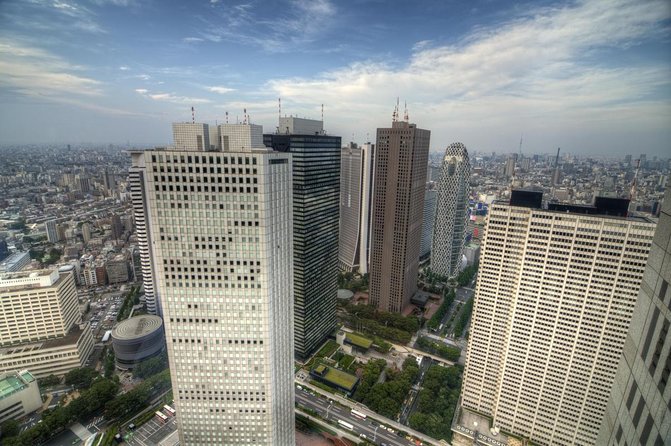
- A good first-night orientation: The tour gives you a practical introduction to Shinjuku’s food lanes, nightlife zones, and landmarks.
Why this Shinjuku walk works
This is not simply a restaurant crawl. It is a guided walk through a district with several different faces. Shinjuku can feel like a wall of signs, station exits, department stores, and side streets. A local guide gives the area some order, leading you from food stops to shrines, alleyways, and recognizable landmarks.
The food is the main reason to book. You visit three or four restaurants and sample local dishes, desserts, and drinks. The exact menu is selected by the guide, so you get variety without having to choose every stop yourself. That is useful in Tokyo, where menus can be crowded with unfamiliar choices and the best small places may not be obvious from the street.
The sightseeing matters, too. Golden Gai and Omoide Yokocho are not interchangeable. One is known for tiny bars and tightly packed lanes, while the other is a food alley with simple dishes and alcoholic drinks. Hanazono Shrine offers a quieter pause near the nightlife, and Godzilla Head gives you one of Shinjuku’s most recognizable photo stops.
At $190 per person, this is not a bargain meal. You are paying for food, a four-hour walking route, a local host, planning, and the convenience of visiting several places in a small group. I see the price as easier to justify if you are new to Tokyo, want help choosing food, or value conversation and neighborhood context. If you already know Shinjuku well, you may find it expensive for what is included.
More things to do in Shinjuku:
- Tokyo: Shinjuku Food Tour (13 Dishes at 4 Local Eateries)
★ 5.0 · 6,603 reviews - Tokyo Bar Hopping Tour in Shinjuku (All-You-Can-Drink + Dinner)
★ 5.0 · 3,587 reviews - Tokyo: Shinjuku Food Tour (15 Dishes and 4 Eateries)
★ 4.9 · 2,033 reviews
Starting near Shinjuku Station
The meeting point is at Shinjuku Station, at 3-chōme-38-1 Shinjuku. The station has many exits, so check the meeting instructions carefully before setting out. One useful detail comes from the experience of a late arrival: guide Naoto sent photos of the location and identified the southeast exit, written as Tounan Guchi, for a taxi driver.
That kind of help can matter. Shinjuku Station is a major transport hub, and arriving at the wrong side can cost you more than a few minutes. If you are taking a taxi, having the Japanese name for the exit may make the ride simpler. The tour ends back at the meeting point, so you will not need to arrange a separate return transfer.
The tour is near public transportation and lasts about four hours. Wear shoes suited to walking and expect city streets, narrow lanes, and regular stops. The route is not presented as a formal museum visit, so the sights are experienced from the streets and public areas.
Golden Gai: tiny lanes and a very different Tokyo
Golden Gai is one of the first major stops, with about 30 minutes set aside. It is only a short walk from Shinjuku’s East Exit, between the city office and Hanazono Shrine. The area is known for its tightly packed buildings and very small bars.
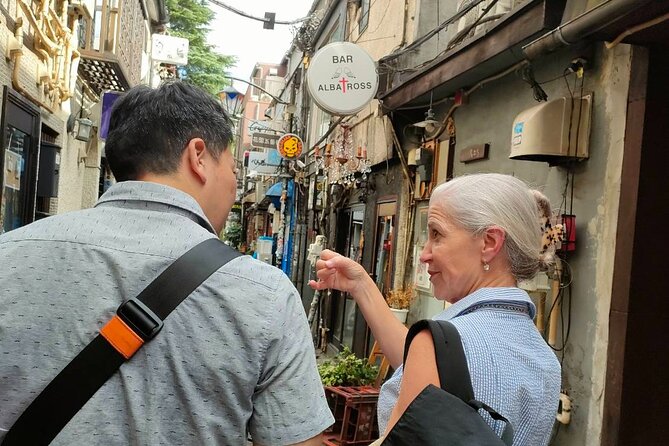
Golden Gai gives you a look at a more intimate side of Shinjuku. Instead of broad avenues and giant signs, you find narrow passages lined with small businesses. A local guide is useful here because the area can feel confusing at first, and the social rules of tiny Japanese bars are not always clear to someone seeing them for the first time.
You should not expect a long drinking session at this stop. The tour’s food visits are spread across the route, and alcohol is not included. Think of Golden Gai as a neighborhood introduction, a visual stop, and a chance to understand why this corner of Shinjuku has such a strong identity.
The narrow setting may not suit you if you dislike crowded lanes or want a quiet meal. It is also worth remembering that Golden Gai is known for nightlife, so the atmosphere can change depending on the time of day and the businesses open during your visit.
Kabukicho: neon, nightlife, and a little context
The walk spends about 45 minutes in Kabukicho, Shinjuku’s famous entertainment district. This area is known for nightlife, clubs, pubs, snack bars, and adult-oriented businesses. The guide helps you see the district as more than a collection of bright signs.
For a first visit, Kabukicho can feel like sensory overload. There are many streets and alleys, and the district’s reputation may make some people cautious. Staying with the guide gives you a defined route and a chance to ask direct questions about what you are seeing.
The value here is context. You are not just being taken to an eating place and sent back to the station. The guide connects the food stops with the area’s social and commercial life. That makes the meal more memorable, especially if this is your first evening in Shinjuku.
The stop is not a substitute for a dedicated nightlife tour. You should also keep your expectations practical. The description highlights the neighborhood and its restaurants, but it does not promise entry to every bar, club, or attraction in the district.
More Tokyo food tours:
- Best of Shinjuku: Izakaya Food Tour (4 Stops, 14+ Tastings)
★ 5.0 · 1,863 reviews - Tokyo Night Foodie Tour in Shinjuku – Seasonal Sushi, Wagyu Beef
★ 5.0 · 1,161 reviews - Eat and Drink Like a Local: Tokyo Ueno Food Tour-Taverns&Ramen
★ 5.0 · 957 reviews - Tokyo: Shibuya Food Tour (13 dishes and 4 Eateries)
★ 5.0 · 770 reviews
Hanazono Shrine: a calm break beside the alleys
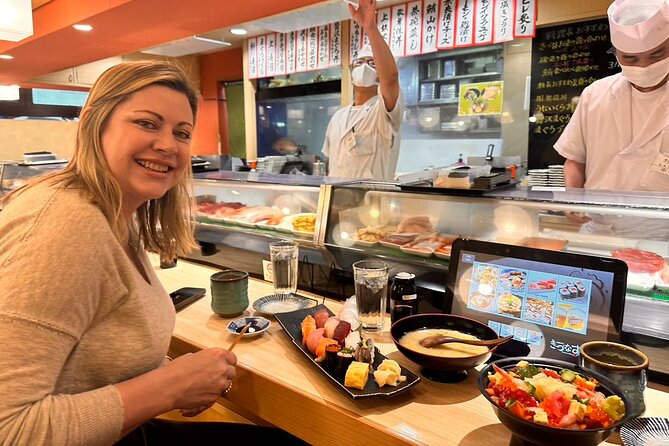
Hanazono Shrine is scheduled for around 30 minutes. It is described as the most important Shinto shrine near Shinjuku Station and sits close to Golden Gai. Its position makes it a striking contrast to the nearby nightlife streets.
I like this part of the route because it breaks up the food and city noise. A shrine visit gives you a moment to look at a different side of Tokyo without leaving central Shinjuku. The guide can explain the place and its role in the neighborhood, adding meaning beyond a quick photograph.
The stop is not a long religious or cultural lecture. It is one part of a wider walking route, so the time is limited. Still, that short pause helps the tour feel balanced. You get food, nightlife streets, modern landmarks, and a traditional site within the same four hours.
As with the other public stops, there is no admission charge listed. The tour includes the walk and guiding, not a private shrine ceremony or special access.
Omoide Yokocho: simple food in a narrow alley
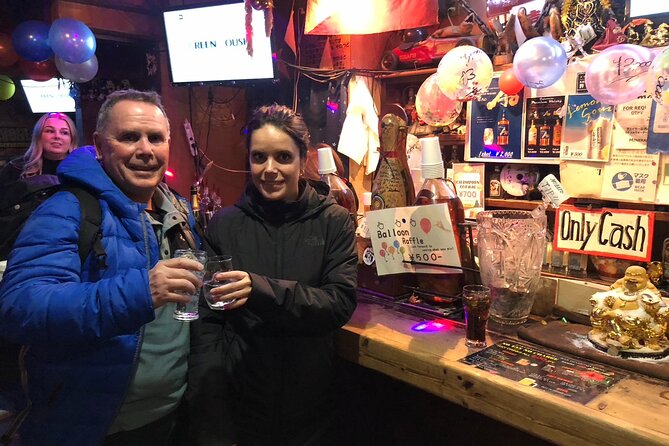
Omoide Yokocho, also known as Memory Lane, receives about 30 minutes. This landmark alley has small food stalls and places serving simple dishes and alcoholic drinks. It is a natural fit for a food walk because the setting is part of the experience.
This is where the route’s focus on ordinary local eating becomes clearest. You are not being taken only to polished restaurants. Narrow food alleys show how compact Tokyo dining can be, with small menus, limited space, and a strong connection between the street and the kitchen.
Your guide selects the restaurants and dishes, so the stop should feel more manageable than trying to make sense of the alley alone. You can focus on tasting and asking questions instead of worrying about which doorway to choose.
The drawback is that small venues may not offer much room or privacy. If you need a slow, spacious dinner, this part of the tour may feel rushed. The 30-minute timing suggests a tasting stop, not a long sit-down meal.
Don Quijote and the everyday side of Shinjuku
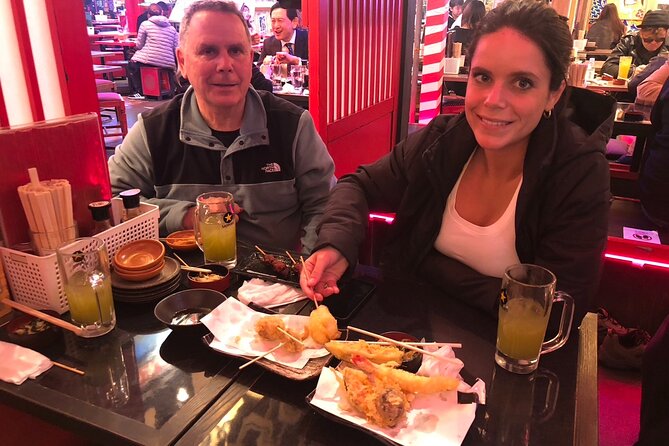
The route includes about 30 minutes at Don Quijote Shinjuku Kabukicho. This large shop sits at the entrance to Kabukicho and sells a wide range of goods, including groceries, toys, footwear, and other everyday items.
At first, a discount store may seem less important than a shrine or food alley. In practice, it gives you a glimpse of the shopping culture that makes Japanese city life so distinctive. Don Quijote is also useful for understanding the commercial energy of Kabukicho, where food, shopping, entertainment, and late-night business all meet.
You should think of this as a short cultural and visual stop, not a dedicated shopping trip. The tour does not list shopping purchases as an included feature, and 30 minutes is not much time for browsing a large store. If you want souvenirs, you may need to return on your own after the tour.
Godzilla Road and Head: the final big photo stop
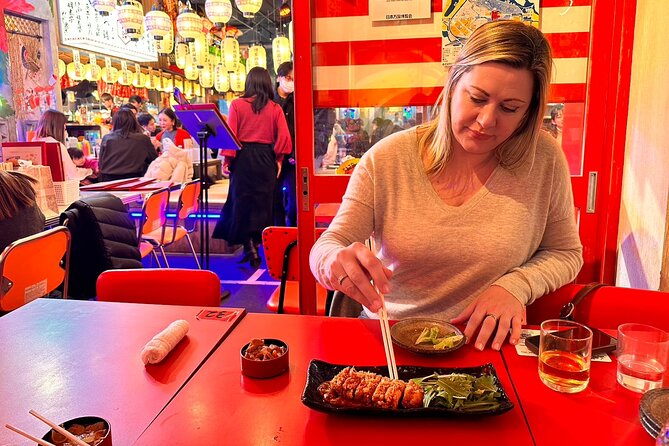
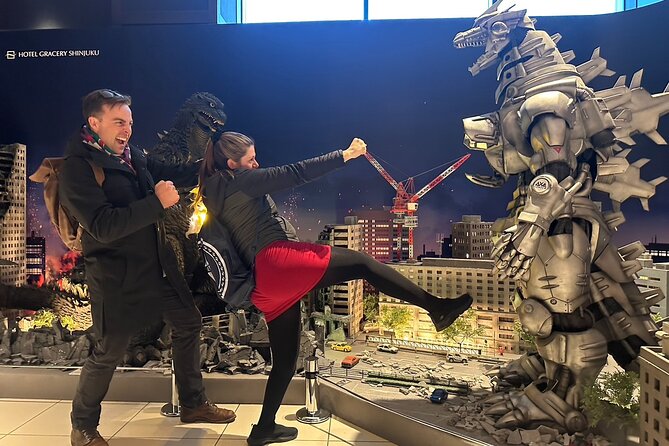
Godzilla Road and Godzilla Head receive about 45 minutes. The sculpture is attached to the Shinjuku Toho Building and can be seen from Hotel Gracery Shinjuku’s Godzilla Terrace. It is one of Kabukicho’s best-known landmarks.
This stop adds a playful finish to the route. After shrines, food lanes, and local restaurants, the giant Godzilla figure reminds you that Shinjuku also knows how to have fun with pop culture. It is an easy landmark to recognize later if you return to the district by yourself.
The timing allows for photographs and a closer look at the surrounding streets. The tour does not say that hotel access or a special viewing area is included, so do not assume you will receive entry to private parts of the building. The value is the landmark itself and the guide’s help placing it within the neighborhood.
What you eat and drink
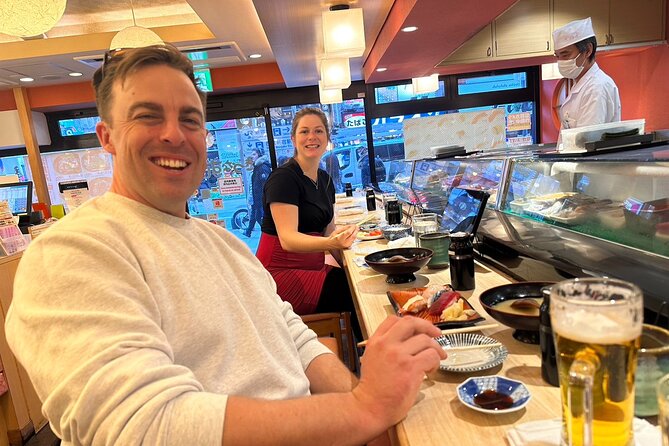
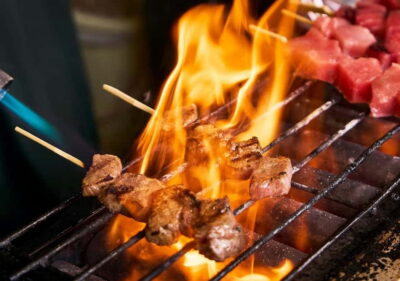
The tour includes local dishes selected by the guide, desserts, soft drinks, and water. You visit three or four restaurants, so the meal is built around variety. This is a better format for trying unfamiliar food than ordering one large dish in a single restaurant.
The exact dishes are not specified. That is both a benefit and a limitation. You get a guide-led selection, but you cannot plan around a particular food in advance. If you have allergies, dietary restrictions, or strong dislikes, ask about suitability before booking because the available information does not promise a special menu.
Alcoholic drinks are not included, though you can purchase them. This keeps the advertised inclusions clear, but it also means the final cost may rise if you want beer, sake, or another drink at the stops. I would budget for that separately rather than treating the $190 price as all-inclusive.
Dessert is included, which helps the walk feel like a complete food experience rather than a series of savory samples. Still, you should view it as a tasting tour. The information does not promise full portions at every restaurant or a replacement for every meal.
The guide makes the difference
The guide is central to the experience. Naoto, Chisato, and Kato are named hosts associated with the route. Chisato is especially strong at explaining the area and the food, while Kato is described as patient and able to answer questions about local dishes and neighborhood history.
Naoto’s practical help with a late arrival is worth noting. Sending photos of the meeting place and giving the taxi driver the Japanese name for the southeast exit is exactly the sort of small assistance that can save a morning or evening from going off track.
Because the group is limited to eight people, you should have more room to ask questions than on a large coach tour. That matters in a food setting. You may want to know what an ingredient is, how a dish is usually eaten, or why a particular neighborhood developed around nightlife and small restaurants.
The guide quality can still vary from one departure to another. The named hosts have different personalities, and the exact restaurant choices may change. I would book this for the guided conversation and access to a planned food route, not because you expect a fixed menu.
Who should book this experience?
I would recommend it to first-time visitors who want a practical introduction to Shinjuku. It suits people who enjoy trying several foods, asking questions, and walking between stops rather than sitting in one restaurant for the evening.
It is also a good choice for solo visitors and couples who want company without joining a large group. A maximum of eight people keeps the walk personal while still giving it a social feel.
You may want to skip it if you already know Shinjuku’s food scene, dislike walking, or want complete control over every dish and restaurant. The $190 cost is difficult to justify if your main goal is a cheap dinner. It makes more sense when you value the guide, the neighborhood explanation, and the chance to sample several places without planning the route yourself.
Free cancellation is available if you cancel at least 24 hours before the start time. Cancellations inside that window are not refunded, and changes made within 24 hours are not accepted. Hotel pickup and drop-off are not included, so plan your own way to and from Shinjuku Station.
Should you book the Shinjuku food walk?
Book this tour if you want food, neighborhood context, and famous Shinjuku sights in one well-organized outing. The combination of Golden Gai, Omoide Yokocho, Hanazono Shrine, Kabukicho, Don Quijote, and Godzilla Head gives you a broad introduction to the district, while the small group lets you speak with the guide.
I would be more cautious if you are judging the experience only by the amount of food. At $190, it is a premium walking tour, and alcoholic drinks cost extra. For a first visit, though, the convenience and local guidance can make the price worthwhile. It is a strong choice for curious eaters who want their first taste of Shinjuku to come with a sense of place.
FAQ
How long does the Shinjuku food tour last?
The experience lasts approximately four hours.
Where does the tour begin?
It begins at Shinjuku Station, at 3-chōme-38-1 Shinjuku, Shinjuku City, Tokyo 160-0022, Japan.
Where does the tour end?
The activity ends back at the meeting point.
How many people can join the tour?
The maximum group size is eight people.
Which Shinjuku sights are included?
The route includes Shinjuku Golden Gai, Kabukicho, Hanazono Shrine, Omoide Yokocho Memory Lane, Don Quijote Shinjuku Kabukicho, and Godzilla Road and Head.
How many restaurants will I visit?
You will visit three to four restaurants selected by the guide.
Are drinks included?
Soft drinks and water are included. Alcoholic drinks are available to purchase separately and are not included.
Can I cancel for a refund?
You can receive a full refund if you cancel at least 24 hours before the experience start time. Cancellations or changes made less than 24 hours before the start time are not refunded or accepted.
More Tokyo walking tours
- Tokyo Tsukiji Fish Market Food and Culture Walking Tour
★ 5.0 · 3,184 reviews - Tokyo: Imperial Palace and Shogun Historical Walking Tour
★ 5.0 · 2,251 reviews - Tokyo: Shinjuku Local Bar and Izakaya Guided Walking Tour
★ 4.9 · 1,794 reviews - Tokyo: Tsukiji Fish Market Food and Walking tour
★ 5.0 · 1,724 reviews
Newly reviewed around Tokyo
- Tokyo Asakusa:Calligraphy & Make T-shirt Activity★ 5.0 · 62 reviews
- Intercity Shuttle, Tokyo to Haneda /Narita /Yokohama /Makuhari★ 5.0 · 5 reviews
- 1 Hour Travel around Tokyo with a Professional Photographer★ 5.0 · 3 reviews
- Travel Tokyo with Your Own Personal Photographer★ 5.0 · 43 reviews
- Train in Samurai Swordsmanship and Defeat the Demon in Tokyo★ 5.0 · 5 reviews
- Shuttle Van 6hr Tokyo Tour to-and-from Tokyo, Yokohama and Narita★ 5.0 · 9 reviews
- Kickboxing & Body Training with EX-Pro Fighter★ 5.0 · 4 reviews
- Traditional Japanese Knife Sharpening Class★ 5.0 · 18 reviews
Tokyo Food Tours, compared.
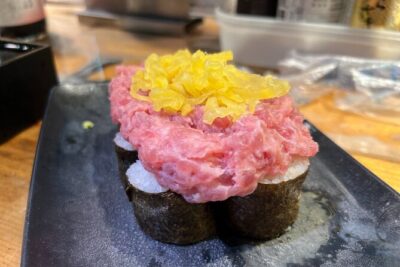
Shinjuku Food Tour (13 Dishes at 4 Local Eateries)
Read our review →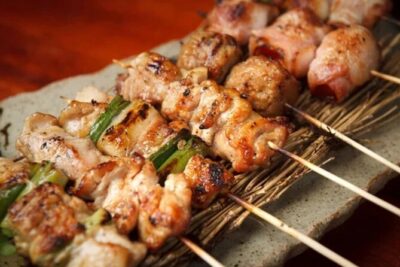
Shinjuku Food Tour (15 Dishes and 4 Eateries)
Read our review →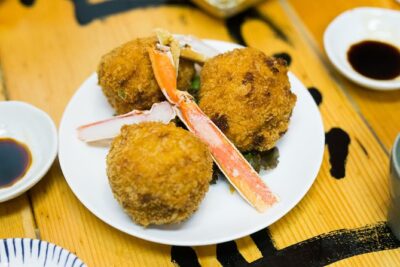
Best of Shinjuku: Izakaya Food Tour (4 Stops, 14+ Tastings)
Read our review →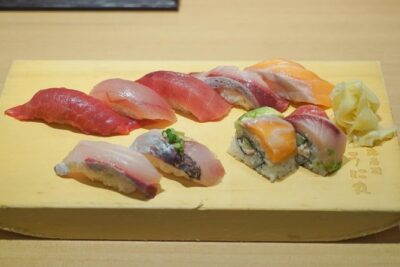
Tokyo Night Foodie Tour in Shinjuku – Seasonal Sushi, Wagyu Beef
Read our review →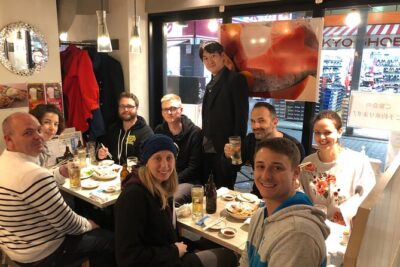
Eat and Drink Like a Local: Tokyo Ueno Food Tour-Taverns&Ramen
Read our review →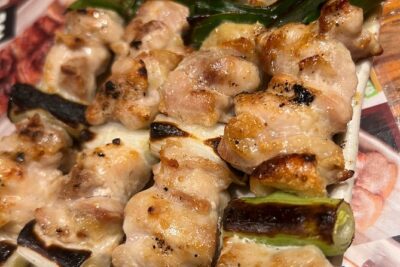
Tsukiji Fish Market: Street Food & Culture Walking Tour
Read our review →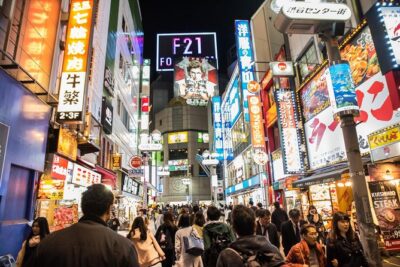
Browse the lists this tour appears in