
Reviewed · TOKYO SUMO EXPERIENCES
Sumo Training Watching Experience in Tokyo
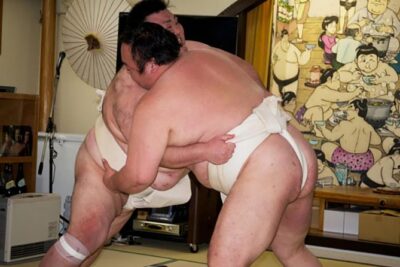
Real sumo training is the heart of this Tokyo experience. You sit inside a working stable and watch active wrestlers stretch, build strength, practice basic moves, and face off in match-style bouts. The sound, heat, and force are far more immediate than they are from stadium seats.
I like the small group of up to eight, which keeps the view close and makes it easier to follow Alisa’s explanations and diagrams. I also like the chance for photos with wrestlers after training, if the stable permits it.
The main catch is the strict etiquette. You sit on cushions on the floor, remain quiet, keep your phone silent, and arrive on time. The early start matters too: arriving at 7:45 gives you the full session, while an 8:20 arrival usually means missing the opening exercises.
Key points to know
- See real wrestlers at work: This is a serious practice session, not a staged comedy performance.
- Arrive at 7:45 for the full program: The complete visit can last 60 to 120 minutes.
- Expect floor seating: You sit directly on cushions, so bad knees, back problems, or pregnancy may make this uncomfortable.
- Walk from the meeting point: The stable is not beside the Kokugikan, and the walk takes roughly 7 to 15 minutes.
- Listen more than you speak: Conversation is generally not allowed inside the stable, and phones must stay silent.
- Small groups help: A maximum of eight people makes it easier to see the training and hear the commentary.
Why this is real sumo, not a stage performance
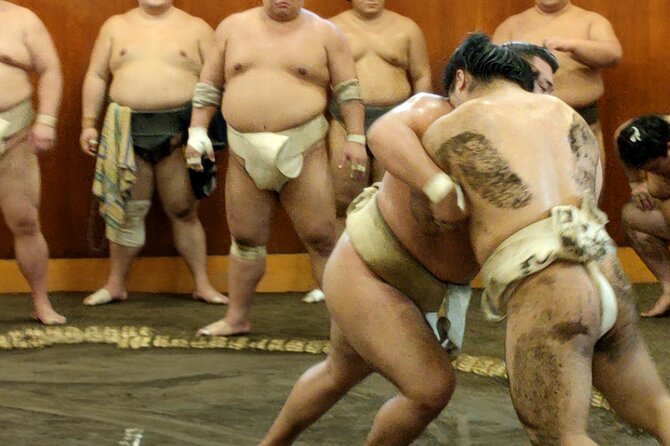
This experience takes you into a sumo stable during active training. The wrestlers are not putting on a special show for tourists. They follow their normal practice, which gives you a closer look at the work behind the grand tournaments.
Sumo has a formal, sacred side that can be easy to miss in a large arena. At a tournament, you see the finished bout. Here, you see the preparation: stretching, strength training, repeated basic movements, and match-style practice. That progression helps you understand that sumo is not simply two large men pushing each other out of a ring.
The stable setting also changes the mood. You are close enough to hear the impact of bodies and feet. You may feel the force of each collision in a way that is difficult from distant stadium seating. The tradeoff is that this is not a polished performance with constant narration, music, or a promise that every planned part will happen at exactly the advertised minute.
Alisa provides live commentary using original diagrams and documents. That is especially useful if you know little about sumo. She can explain what you are seeing as the training moves from one stage to the next, so the repeated exercises feel purposeful rather than confusing.
More Tokyo sumo experiences:
- Tokyo: Sumo Show and Dining Experience
★ 4.8 · 2,742 reviews - the SUMO show
★ 5.0 · 1,960 reviews - Tokyo Shinjuku Sumo Show & Experience with Photo
★ 5.0 · 1,750 reviews
Walking from Ryogoku to the stable
You meet near Ryogoku at the stated address, 1-chōme-4-29 Yokoami, in Sumida City. From there, the group walks to the stable. The walk is described as about seven minutes by the operator, while one detailed experience account puts it closer to 10 or 15 minutes. Allow extra time rather than trying to arrive at the last second.
The stable is not right beside the Kokugikan, and the meeting place is not the same as simply meeting at the JR station entrance. Read the meeting instructions carefully and arrive early. The guide leaves on time and cannot wait for late arrivals.
This short walk is part of the practical appeal. You are not being brought to a purpose-built attraction. You are heading into a working neighborhood setting where the training takes place. Still, the route and meeting point deserve attention because a rushed morning can mean missing the first section.
The full program starts with stretching and strength work. If you arrive at 7:45, you have the best chance to see all four parts:
- Stretching and strength training
- Basic sumo training
- Match-style training
- Photos, if allowed after practice
The visit inside the stable usually lasts from 60 to 120 minutes. The overall experience is listed at about two hours and 20 minutes, including the meeting and walk.
The 7:45 start gives you the best view of the training
The start time is more important here than on a casual sightseeing tour. Participants arriving at 7:45 generally see the entire training sequence. Those arriving at 8:20 usually begin with the basic training section, so their time inside may shrink to 30 to 90 minutes.
That difference affects the value of the ticket. If you pay $84.70 per person, I would make the effort to arrive for the earlier start. The opening exercises are not disposable filler. They show how the wrestlers prepare their bodies before the heavier practice begins.
The early session also lets you watch the rhythm of the stable. Stretching and strength work set the tone, then basic drills show the repeated movements that support the sport. Match-style practice brings more force and drama, but it makes more sense after you have seen the groundwork.
The timing is not flexible. Date requests are not accepted because training schedules, tournaments, and other training camps affect when a stable can receive visitors. Tokyo may offer sumo matches at certain times of year, but a stable visit depends on a different schedule. Book ahead if this is important to your plans. The average booking lead time is 77 days, which tells you that last-minute availability may be limited.
What the training sequence helps you understand
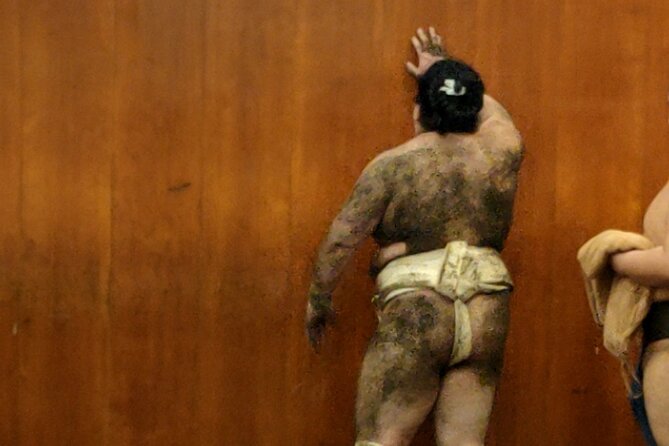
The first section, stretching and strength training, gives you a direct look at the physical demands of sumo. You see preparation before competition, not only the final clash. It can be a quiet start, but it helps you notice the discipline behind the sport.
Basic training follows. This is where Alisa’s explanations matter most. Her diagrams and live commentary can help you recognize the movements and understand how practice builds toward a bout. Without guidance, a visitor unfamiliar with sumo might see a series of similar drills. With the visual material, the actions have a clearer purpose.
The match-style training is likely to be the most exciting part. It has the close sound and physical impact that make a stable visit different from watching from the stands. You are near the action, but you must also respect the setting. This is still a sacred working space, not an interactive show where you can ask questions whenever you like.
The final part is photography. You might be able to take a photo with wrestlers after the training, but it is not guaranteed. Treat it as a possible extra, not the main reason to book. The stronger reason is the training itself.
A completely different kind of day in Tokyo:
- Mt Fuji and Hakone 1-Day Bus Tour Return by Bullet Train
★ 5.0 · 26,383 reviews - 1-Day Tokyo Bus Tour
★ 5.0 · 14,250 reviews - Tokyo: teamLab Planets TOKYO Digital Art Museum Entry Ticket
★ 4.6 · 9,779 reviews - Mt Fuji & Hakone Cruise, Drum Show Bullet Train 1 Day from Tokyo
★ 4.0 · 7,413 reviews
Quiet rules are part of the experience
Inside the stable, you basically do not talk during the tour. Set your phone to silent mode before entering, and use a camera or smartphone setting that makes no sound. You can take photos, but the stable’s quiet matters more than getting a constant stream of pictures.
You cannot eat or drink inside. Plan breakfast before the meeting, and do not carry the expectation that you can snack during the session. If you have a cold or another infectious illness on the day, you are asked to cancel your participation.
Clothing also matters. Avoid revealing outfits. This is a religiously and culturally important sport, so modest dress and respectful behavior are not minor suggestions. If someone ignores the rules, the staff may ask that person to leave the stable temporarily.
I see these restrictions as a fair exchange for access to an operating training space. You are being allowed to watch a routine that is not designed around sightseeing. The visit works best when you accept that you are observing first and taking photos second.
Floor cushions, limited space, and physical comfort
This is Japanese-style seating. You sit directly on cushions on the floor rather than on chairs. The position may be difficult if you have bad knees or back problems, and it is specifically unsuitable for pregnant women according to the activity information.
The seating issue deserves more attention than it might receive in a normal tour description. You may be in one position for much of the 60 to 120 minutes inside the stable. If floor sitting is uncomfortable, this may not be the right way to see sumo, even if the subject interests you.
Children must be at least six years old. Age alone is not the only concern. Even children over eight who cannot sit still are not allowed to participate. The quiet rules and close quarters require patience, so this is better for children who can watch silently for an extended period.
The group maximum is eight people. That is a useful limit in a small stable. It should make it easier to see the training and follow Alisa’s explanations than it would be with a large crowd. It also means that every person’s behavior affects the atmosphere, so punctuality and restraint matter.
What you get for $84.70
At $84.70 per person, this is not a cheap way to fill a morning. The value depends on what you want from sumo.
If you simply want to see a bout, a tournament ticket may be a better fit when matches are available. If you want a broad introduction to Japanese sport with easy seating and a flexible schedule, this visit may feel demanding for the price.
I think the cost makes more sense if you care about access. A stable is not an ordinary sightseeing stop, and visiting one is difficult even for people who live in Japan. You get a small group, a guide who explains what is happening, close viewing of real training, and a possible photo with wrestlers. Those elements are hard to reproduce through a stadium seat or a general city tour.
The price also includes a chance to see the full practice sequence if you arrive at 7:45. Arriving late reduces the time and may weaken the value, so the ticket rewards careful planning. I would not book this on a morning when you have a tight connection or another important appointment afterward.
The mobile ticket is convenient, but it does not remove the need to check the meeting location. Keep the ticket accessible, arrive early, and allow time for the walk to the stable.
Who will enjoy this most
I would recommend this experience to you if you want an authentic look at sumo training and can follow strict rules without fuss. It suits adults, older children who can remain quiet, and anyone curious about the preparation behind the sport.
It is also a good choice if you prefer a small, focused activity over a large attraction. Alisa’s use of diagrams and live explanations adds structure, and the close distance gives the visit a sense of occasion.
I would be cautious if you have trouble sitting on the floor, dislike quiet observation, or need a guaranteed photo opportunity. I would also avoid booking it if you cannot reach the meeting point on time. The stable will not wait, and a late arrival can mean missing the opening exercises or starting with only the second section.
The experience is less suitable for young children who become restless. Even though the minimum age is six, the practical requirement is the ability to sit quietly and respect the stable.
Booking timing and cancellation
Confirmation is sent within 48 hours of booking, subject to availability. Since dates are controlled by training schedules, you should not assume that any preferred morning will be offered.
Free cancellation is available up to 24 hours before the start time for a full refund. If you cancel less than 24 hours before the start, the amount paid is not refunded, and changes made within that period are not accepted. The cut-off uses Tokyo local time.
Because the experience is often booked well in advance, check your plans before committing. At the same time, the cancellation rule gives you a reasonable safety window if your schedule changes more than a day before the visit.
Should you book the sumo training visit?
Book it if you want to see serious sumo practice from close range, value a small group, and are willing to sit quietly on the floor. The combination of real training, Alisa’s clear diagrams, and the possibility of post-training photos gives you more than a quick photo stop.
Skip it if you need chairs, a relaxed arrival time, free conversation, or a guaranteed meeting with the wrestlers. The $84.70 price is fair for rare access, but only if you take part in the full experience and arrive at 7:45.
For the right person, this is one of Tokyo’s more direct ways to understand sumo. You leave with a better sense of the work, discipline, and ceremony behind the bouts, not just an image of two wrestlers colliding.
FAQ
How long does the sumo training experience last?
The activity takes about two hours and 20 minutes overall. Time inside the stable is usually 60 to 120 minutes for participants who arrive at 7:45. Those arriving at 8:20 generally spend 30 to 90 minutes inside.
Where does the experience start?
You meet near Ryogoku at 1-chōme-4-29 Yokoami, Sumida City, Tokyo 130-0015, Japan. The group then walks to the sumo stable.
Can I take photos during the visit?
Yes, photos are allowed, but your phone must be on silent mode and the camera must not make a sound. You might also be able to take a photo with wrestlers after training.
Can I eat or drink inside the stable?
No. Eating and drinking are not allowed inside the stable.
Is the experience suitable for children?
Children must be at least six years old. Children who cannot sit still are not allowed to participate, even if they are over eight.
What happens if I need to cancel?
You can cancel up to 24 hours before the start time for a full refund. Cancellations or changes made less than 24 hours before the start are not accepted for a refund.
Newly reviewed around Tokyo
- Ueno and Yanaka Culture Art Walking Tour in Old Tokyo★ 5.0 · 5 reviews
- Giant Sushi Cooking Class: Make a 1.5m Sushi Roll in Tokyo★ 5.0 · 9 reviews
- 2 Hours Mochi &Nerikiri Making & Matcha Class in Bunkyo★ 5.0 · 21 reviews
- Japanese Sweets (Mochi & Nerikiri) making at a Private studio★ 5.0 · 22 reviews
- Mt Fuji and Kawaguchiko Private Tour★ 5.0 · 10 reviews
- Half-Day Local Tokyo Tour in Adachi Market and Shibamata★ 5.0 · 16 reviews
- Private Full-Day Tour of Tokyo with Hotel Pickup★ 5.0 · 3 reviews
- Vegan / Vegatarian Ramen Tour★ 4.5 · 5 reviews
Tokyo Sumo Experiences, compared.
Tokyo Shinjuku Sumo Show & Experience with Photo
Read our review →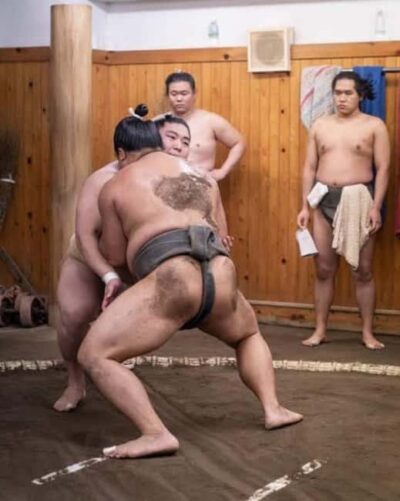

Luxury Sumo Show Experience & Japanese cuisine & Drink
Read our review →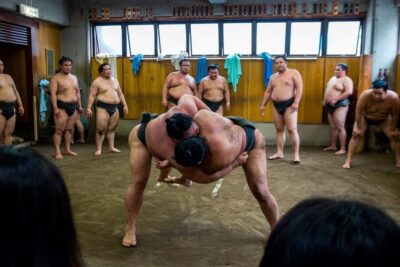
Tokyo Sumo Experience: Chanko & Mochi with a Former Pro
Read our review →
Ultimate Sumo Tournament: Tokyo, Osaka, Nagoya, Fukuoka
Read our review →Browse the lists this tour appears in