
Reviewed · TOKYO CALLIGRAPHY CLASSES
Tokyo Japanese Calligraphy Experience with a Master Artist
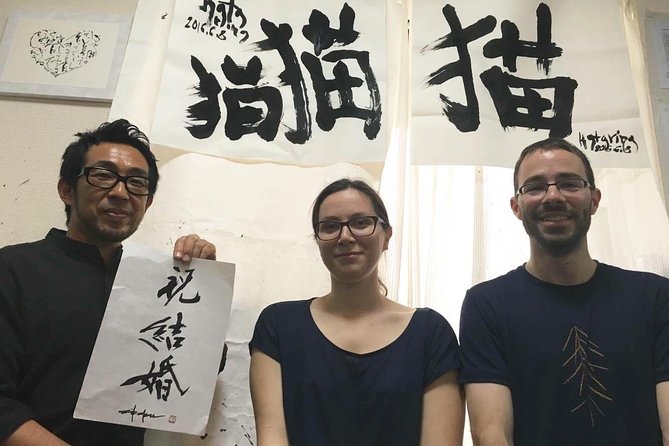
Japanese calligraphy is less about making a perfect picture than learning how a single brush stroke can show control, patience, and feeling. In a quiet studio near Umeyashiki Station, master calligrapher Eizuru Matsumura teaches you the basics of shodo with brush, ink, and paper.
I like the small group size, limited to 10 people, and the fact that an English-speaking guide helps you from the station to the studio and back. I also like that this is a real hands-on class, not a demonstration where you simply watch an expert work. The main drawback is the price, $92.24 per person, for an experience that lasts about 90 minutes, and the exact session length should be confirmed because the included activity is also described as one hour.
Key points
- Meet at Umeyashiki Station: The studio is about a five-minute walk from the Keikyu Line station.
- Learn from Eizuru Matsumura: Your instructor is an active calligrapher, artist, lecturer, and workshop teacher.
- Use the full set of tools: Brush, ink, and paper are supplied, so you need to bring only yourself.
- English support is included: An English-speaking guide helps explain the lesson and handle the walk to the studio.
- Keep your finished work: The calligraphy you create can serve as a personal Japanese souvenir.
- Best for patient beginners: Children age 7 and older can join with an adult, and the group is capped at 10.
Why shodo makes a good Tokyo experience
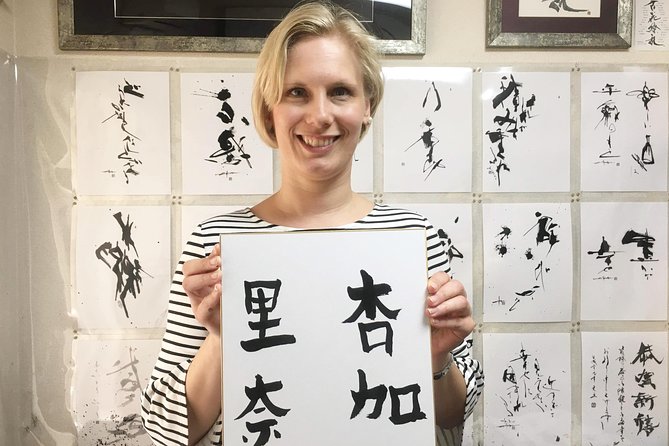
Tokyo offers plenty of grand sights, but the city can also leave you feeling as if you are racing from one train platform to the next. Shodo gives you a quieter hour. You sit down, prepare the brush, work with ink, and focus on the movement of your hand.
Japanese calligraphy, or shodo, was once linked with nobles and samurai. Today it remains both a traditional art and a living practice. The class connects those two sides. You learn a skill with old roots, but you also get to create something personal rather than simply view an object behind glass.
I especially like this kind of activity for the middle or end of a Japan trip. By then, you may have seen temples, shrines, gardens, and museums. A calligraphy session lets you slow down and process some of what you have seen. One participant compared the activity to yoga and music, which is a useful way to understand the mood: calm, repetitive, and focused.
Do not expect a casual craft project that you can finish while chatting. The appeal comes from paying attention to pressure, direction, spacing, and rhythm. If you want a fast souvenir with little instruction, this may feel too deliberate. If you enjoy learning by doing, the pace works in your favor.
More Tokyo calligraphy classes:
- Tokyo: Calligraphy on Kanji Fan & Scroll with Drink
★ 5.0 · 210 reviews - Let’s experience calligraphy in YANAKA, Taito-ku, TOKYO !!
★ 5.0 · 127 reviews - Experience all of Japanese culture and Japanese food experience classes “origami, udon, Japanese food, green tea, calligraphy” in 4 hours
★ 5.0 · 105 reviews
Meeting at Umeyashiki Station
The meeting point is Umeyashiki Station on the Keikyu Line, at 2 Chome-28 Kamata in Ota City. The school is about a five-minute walk from the station, but your guide meets you there and leads you to the studio.
That station meeting is useful if you do not read Japanese or feel unsure about finding a small local business. Guides named Yoko and Michiko have helped participants make the transfer from the station to the studio and return afterward. This is more than a minor convenience. Small studios can be harder to locate than major Tokyo attractions, especially when addresses use Japanese place names and narrow side streets.
Plan your route carefully and arrive on time. Hotel pickup is not included. It can be arranged for an additional 6,000 yen, but the standard meeting point is the station. Private transportation by taxi, car, or bus is also not included.
The setting near Umeyashiki gives the activity a local feel. You are not being taken to a large tourist attraction or a staged cultural center. You are going to a working calligraphy school and studio, close to a regular train station in Tokyo.
Inside Eizuru Matsumura’s calligraphy studio
The class takes place at 球鶴書道教室, a school offering basic and creative calligraphy instruction. Your teacher is Eizuru Matsumura, who has practiced calligraphy since age 31. He is also an artist and has taught workshops, events, and television programs. His work includes creating the official logo for a Kyokushin Karate World Tournament pamphlet.
Those details matter because you are not simply receiving a generic tourist lesson. Matsumura works as an artist as well as an instructor, so the class can show you both the rules of traditional writing and the more expressive side of brush work.
The studio is described as a small space with gentle music. That atmosphere suits the subject. A large, noisy room would make it harder to pay attention to the sound and movement of the brush. Here, you can expect a more personal setting, though the room may feel close if the group reaches its maximum of 10 people.
Your guide also acts as an interpreter. That means the lesson is not limited to watching the teacher and copying a few gestures. Instructions, cultural context, and questions can be explained in English. The calligrapher has been praised for patience, humor, and a calm teaching manner, qualities that help when your first brush strokes look less graceful than you hoped.
What you actually practice
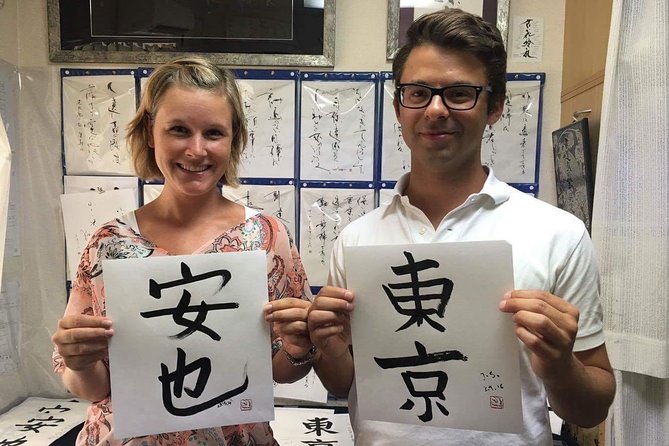
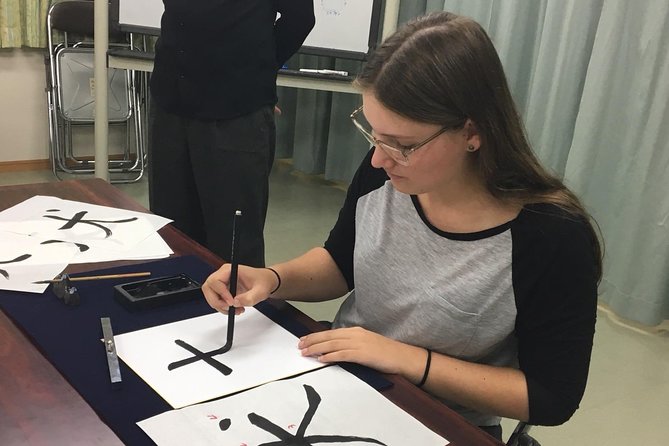
The central tools are simple: brush, ink, and paper. The technique is not. A brush reacts to pressure in ways a ballpoint pen does not. A heavy touch creates a different line from a light one, and the speed of a stroke affects its shape.
You will practice Japanese characters in an artistic style. The class is designed for beginners, so you do not need previous calligraphy training. The instructor provides hands-on guidance throughout, helping you understand how to hold and move the brush rather than leaving you to copy a model on your own.
Expect to produce more than one attempt. That is part of the value. You learn by seeing how a stroke changes when you alter its speed or pressure. The finished result may not look like the master’s work, but it will show what you learned during the session.
The best approach is to resist chasing perfection. One person with an art background felt that the session did not allow enough time to reach the desired level of finish. That is a fair caution. This is a short introduction, not a professional studio course. If you already work as an artist or have studied calligraphy, you may want a longer lesson or clearer confirmation of the class length before booking.
For most beginners, though, the limited time is manageable. The basic goal is to gain a feel for the brush and create a piece you can take home.
A completely different kind of day in Tokyo:
- Mt Fuji and Hakone 1-Day Bus Tour Return by Bullet Train
★ 5.0 · 26,383 reviews - 1-Day Tokyo Bus Tour
★ 5.0 · 14,250 reviews - Tokyo: teamLab Planets TOKYO Digital Art Museum Entry Ticket
★ 4.6 · 9,779 reviews - Mt Fuji & Hakone Cruise, Drum Show Bullet Train 1 Day from Tokyo
★ 4.0 · 7,413 reviews
The role of the English-speaking guide
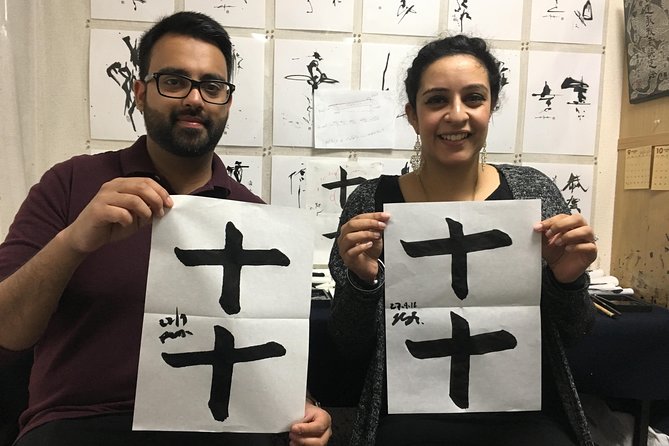
The calligrapher leads the art instruction, while the English-speaking guide helps you understand the process. Guides such as Yoko and Michiko have been praised for contacting participants ahead of time, meeting them at the station, leading them to the studio, and returning them to the meeting point afterward.
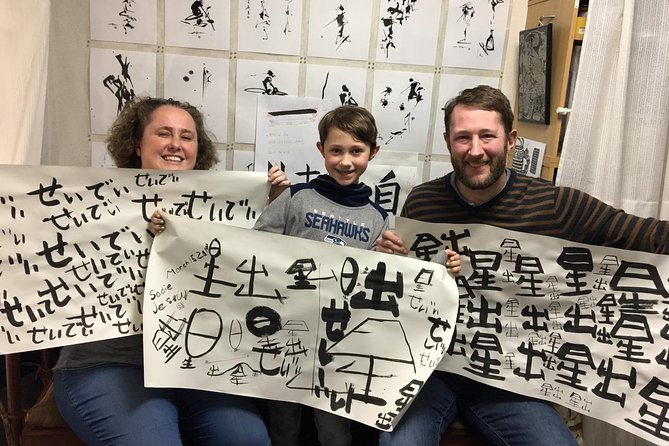
That support is particularly helpful for families and first-time visitors. A nine-year-old participant worked on a name and other characters with the help of the guide. Children age 7 and older may join, but they must be accompanied by an adult.
The guide also helps connect the brush work to Japanese culture. You learn about the place of calligraphy in traditional life, along with its use today. This makes the class more than a handwriting lesson. You get a sense of why the art values discipline, balance, and controlled movement.
Keep in mind that the tour requires at least two participants for a booking. The maximum group size is 10. That range keeps the session social without making it feel like a large lecture, although the experience may feel more personal with a smaller group.
A souvenir you make yourself
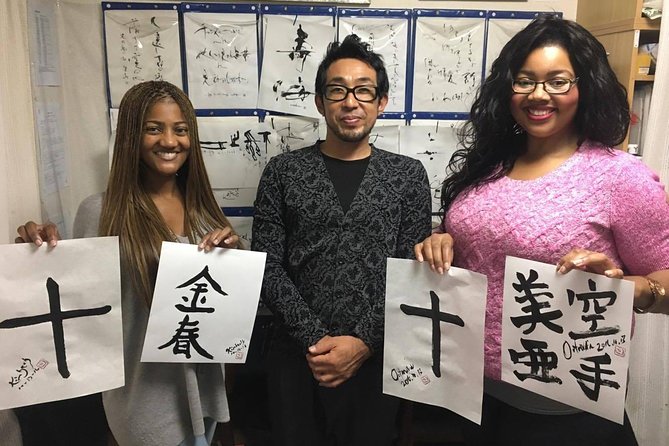
One of the strongest practical features is that you can keep your work. You leave with a piece of Japanese calligraphy made during the class, rather than a mass-produced item bought in a station shop.
The result may have more meaning than a standard souvenir because you remember the movements that created it. You may also receive help choosing or writing a character connected to your name or visit. The available information confirms that children can work on their names, but you should not assume every participant will receive a custom character unless the guide explains that option.
The finished paper will not necessarily look like a master’s example. That is not a flaw. Its value comes from being your own first attempt under professional instruction. If you frame it later, the uneven strokes become part of the story.
This is also a practical choice for luggage. Paper is easier to pack than a fragile ceramic object, though you should still protect it during the rest of your trip.
Is $92.24 a fair price?
At $92.24 per person, this is not a bargain activity. You are paying for a small-group lesson, an established calligrapher, an English-speaking guide, all materials, and help getting to a studio that may be difficult to find alone.
The value depends on what you want from Tokyo. If your priority is seeing as many famous sights as possible, 90 minutes and this price may not fit your plan. You could spend less on a museum or temple visit and still learn about Japanese culture.
I think the price makes more sense if you want personal instruction and a souvenir you create yourself. Private transportation is not part of the standard cost, and food and drinks are not included, but you do not need to buy any special tools or supplies. Group discounts may also be available, which could improve the value for families or friends traveling together.
Check the duration before paying close attention to the booking details. The experience is presented as approximately one hour and 30 minutes, while the included studio visit is also listed as one hour. A past participant expected a longer session and felt disappointed by the difference. Ask how much time is planned for instruction, practice, and finishing your work.
Who will enjoy this class most?
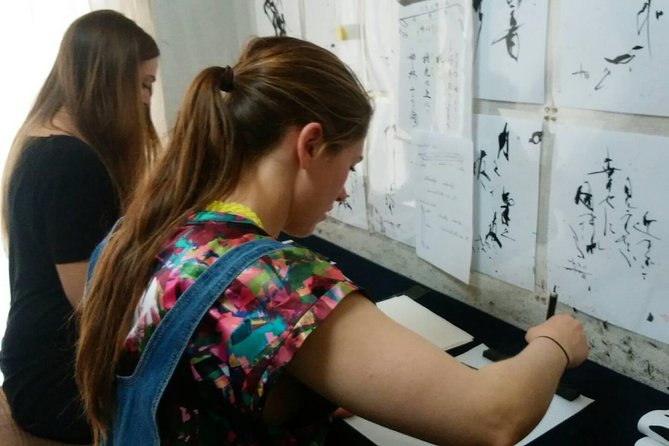
I would recommend this experience to you if you meet one or more of these conditions:
- You want a calm cultural activity between busy sightseeing days.
- You enjoy learning a physical skill from a specialist.
- You want a personal souvenir rather than a shop-bought item.
- You are visiting Tokyo with children age 7 or older.
- You appreciate having an English-speaking guide for local transport and interpretation.
- You are curious about both traditional and contemporary Japanese culture.
It is less suitable if you want a long, technical course or a fully private lesson. The group can reach 10 people, and the scheduled time is short. It is also not a good match for anyone who wants hotel pickup included in the base price.
The activity appears especially well suited to families. Children can take part, the instructor is described as patient and funny, and the class gives them something concrete to make. Adults who are serious about brush technique should treat it as a first lesson, not a complete education in shodo.
Timing, booking, and cancellation
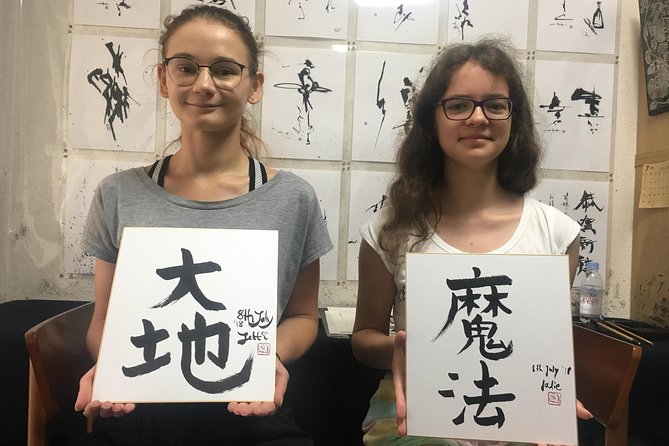
The experience runs for about 90 minutes, with the studio located five minutes from Umeyashiki Station. It ends back at the meeting point. Confirmation is sent within 48 hours, subject to availability, and the activity is offered near public transportation.
Most people can participate. Children need an accompanying adult, and the minimum age is 7. The minimum booking is two participants, with no more than 10 people in the group.
Free cancellation is available if you cancel at least 24 hours before the start time. Cancellations or changes made less than 24 hours before the start are not accepted for a refund. The cutoff follows Tokyo local time, so check that carefully if you are arranging the class from another time zone.
Should you book the Tokyo shodo experience?
Book it if you want a quiet, hands-on lesson with a real calligrapher and an English-speaking guide who can take care of the station-to-studio details. Eizuru Matsumura’s artistic background, the small studio, and the chance to keep your own work give the session more substance than a quick tourist demonstration.
Before booking, confirm the exact duration and consider the cost. At $92.24, this is best treated as a special cultural appointment, not a cheap filler activity. If you enjoy patient instruction, Japanese art, and souvenirs with a personal story, it is a strong choice. If you need a longer class or a lower price, keep looking.
FAQ
Where does the calligraphy experience meet?
You meet at Umeyashiki Station on the Keikyu Line, at 2 Chome-28 Kamata, Ota City, Tokyo 144-0052, Japan.
How far is the studio from Umeyashiki Station?
The school is about a five-minute walk from Umeyashiki Station. The guide leads you from the station to the studio and back to the meeting point afterward.
Who teaches the calligraphy class?
The instructor is calligrapher Eizuru Matsumura. He is also an artist and has taught workshops, events, and television programs.
Is English support included?
Yes. An English-speaking guide is included and provides interpretation and assistance during the experience.
Can children participate?
Children age 7 and older can participate, but they must be accompanied by an adult.
What happens if I need to cancel?
You can cancel for a full refund up to 24 hours before the experience start time. Cancellations or changes made less than 24 hours before the start time are not accepted for a refund.
Newly reviewed around Tokyo
- Tokyo Asakusa:Calligraphy & Make T-shirt Activity★ 5.0 · 62 reviews
- Intercity Shuttle, Tokyo to Haneda /Narita /Yokohama /Makuhari★ 5.0 · 5 reviews
- 1 Hour Travel around Tokyo with a Professional Photographer★ 5.0 · 3 reviews
- Travel Tokyo with Your Own Personal Photographer★ 5.0 · 43 reviews
- Train in Samurai Swordsmanship and Defeat the Demon in Tokyo★ 5.0 · 5 reviews
- Shuttle Van 6hr Tokyo Tour to-and-from Tokyo, Yokohama and Narita★ 5.0 · 9 reviews
- Kickboxing & Body Training with EX-Pro Fighter★ 5.0 · 4 reviews
- Traditional Japanese Knife Sharpening Class★ 5.0 · 18 reviews
Tokyo Calligraphy Classes, compared.
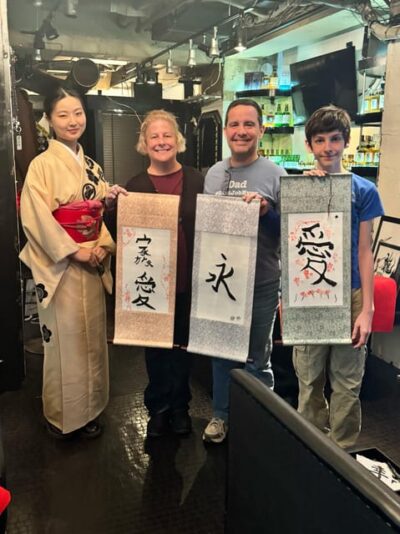
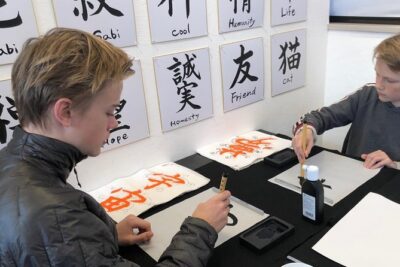
Let’s experience calligraphy in YANAKA, Taito-ku, TOKYO !!
Read our review →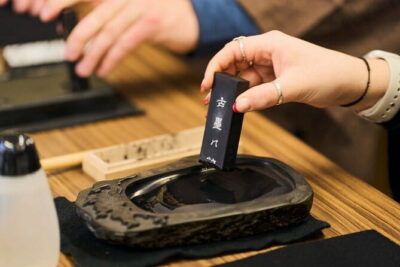
Calligraphy Workshop & Original T-Shirt Creation
Read our review →
Calligraphy Workshop & Original T-Shirt Creation
Read our review →
Calligraphy &Make your original folding fan in Asakusa
Read our review →
Tokyo Asakusa:Calligraphy & Make T-shirt Activity
Read our review →Browse the lists this tour appears in