
Reviewed · TOKYO SAMURAI AND NINJA EXPERIENCES
Tokyo: Samurai Adventure! Authentic Sword Action Experience
The best part of this Tokyo activity is that you do more than watch a sword show. You learn how to hold, draw, swing, and present a training sword, then work with a professional samurai instructor on a short action scene. Dai and Kume, both professional action actors, lead the class.
I like the mix of demonstration and hands-on practice. I also like the chance to train beside Japanese students who are learning samurai action for themselves. The main point to consider is the short one-hour format: you get a lively introduction, not a full martial arts course.
Key points at a glance
- Watch samurai action at close range: The session includes a live training demonstration before you try the movements yourself.
- Practice with wooden swords: Training swords are provided, so you can work on grips, positions, and swings without handling a real blade.
- Learn from Dai and Kume: The instructors are professional action actors who guide beginners through staged sword movement.
- Join a Japanese group class: Group sessions may include Japanese students preparing for samurai action, giving the class a local, working-studio feel.
- Take part in a staged scene: After the basic drills, you pair with a professional samurai for an action sequence.
- Good value for a short activity: At $32.84 per person, this is a modestly priced way to add an active cultural experience to a Tokyo day.
Why this one-hour samurai class works
Many sword-themed activities are built for watching. This one gives you a role. You see the instructors demonstrate the movements, then repeat them with a wooden sword under direction. That simple change makes the session more memorable because you are paying attention to foot position, hand placement, timing, and posture instead of just waiting for the next performance.
The activity is also designed for complete beginners. You do not need a background in martial arts, Japanese theater, or historical swordsmanship. The class begins with warm-ups and basic instruction, then builds toward a short action scene. That progression matters. You are not thrown into a complicated performance before you understand how to hold the sword.
I also like that the class is led by action actors. Their work is about controlled movement and presentation, not real combat. You should expect theatrical sword action, practiced forms, and safe training rather than a lesson in battlefield fighting or a chance to handle an actual katana.
The one-hour length is both a strength and a limit. It fits neatly into a busy Tokyo schedule, especially if you are visiting Tsukishima, Ginza, Tsukiji, or the area around Tokyo Station. But the class moves quickly. You will get a taste of the discipline and performance rather than a detailed study of samurai history or sword technique.
More Tokyo samurai and ninja experiences:
- Tokyo: Samurai Ninja Museum Guided tour and Experience
★ 4.6 · 1,010 reviews - Tokyo: Samurai Sword & Archery Class from Samurai Descendant
★ 5.0 · 603 reviews - Best Samurai Experience in Tokyo
★ 5.0 · 458 reviews
Starting in Tsukuda, near Tsukishima
The meeting point is at 2-chōme-15-3 Tsukuda, Chuo City, Tokyo 104-0051. The activity is near public transportation and is described as convenient from Tokyo Station, Ginza, and Tsukiji. You will need to arrange your own way there, since transportation is not included.
Plan to arrive with enough time to find the building and settle in. This is a small, focused activity with a maximum of 15 participants, so being late could matter more here than it would on a large sightseeing bus. The exact room or studio details are not provided in the activity information, so check your booking confirmation carefully for the current meeting instructions.
The location in central Tokyo makes this easy to combine with other plans. You might schedule the class between a Tsukiji visit and an afternoon around Ginza, or use it as an active break from museums and shopping. The activity ends where it begins, so you will not need to arrange a second pickup point.
Warm-ups, grips, and the first sword movements
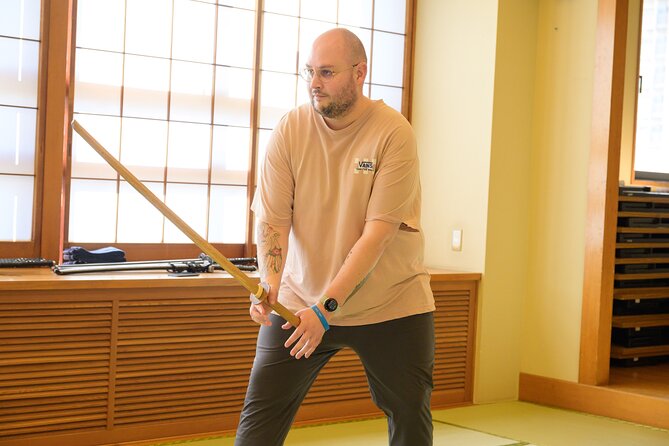
The class begins with warm-ups. This may sound basic, but it is useful preparation for a lesson built around precise arm and body movements. You will then learn the foundations: how to grip the training sword, how to hold it, and how to swing it in a controlled way.
Expect the instructors to focus on form rather than force. The wooden swords are supplied, and the purpose is to learn the shape and timing of samurai action. You are practicing movements used for performance, so clean posture and deliberate motion matter more than speed.
This part should suit families, couples, solo visitors, and groups with mixed fitness levels. The activity information says most people can participate, and beginners are welcome. Still, you should be comfortable standing and moving through basic exercises for the length of the class.
The teaching also has a cultural side. A sword is not simply waved around in this setting. The way you grip it, present it, and move with it is part of the visual language of samurai performance. Even a short lesson can help you notice how much control is needed to make a staged fight look sharp.
Watching the professional demonstration
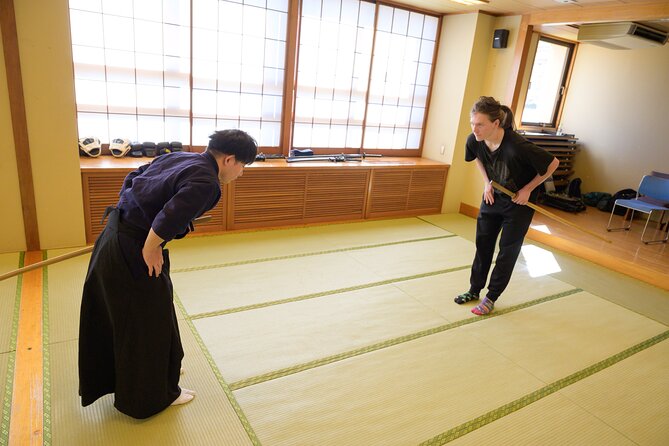
A live samurai demonstration is built into the session. You watch the instructors train and perform before, or alongside, your own practice. This is one of the strongest parts of the experience because it gives you a clear model to follow.
The demonstration also helps explain the difference between real sword combat and action performance. The movements can look powerful, but the class uses training swords and controlled choreography. You are seeing a form of physical storytelling, where timing and position create the impression of danger while the participants work safely.
For some people, observing may be enough. The activity specifically allows you to enjoy the session even if you are more comfortable watching than performing. That makes it a useful option for a group with different interests. One person can take part fully while another focuses on the demonstration and photographs.
That said, the value is strongest when you join in. The demonstration is short, while the hands-on part gives you a better sense of what the instructors are doing. If you are shy about performing, remember that the class is built for beginners and guided by professionals.
A completely different kind of day in Tokyo:
- Mt Fuji and Hakone 1-Day Bus Tour Return by Bullet Train
★ 5.0 · 26,383 reviews - 1-Day Tokyo Bus Tour
★ 5.0 · 14,250 reviews - Tokyo: teamLab Planets TOKYO Digital Art Museum Entry Ticket
★ 4.6 · 9,779 reviews - Mt Fuji & Hakone Cruise, Drum Show Bullet Train 1 Day from Tokyo
★ 4.0 · 7,413 reviews
Training beside Japanese students
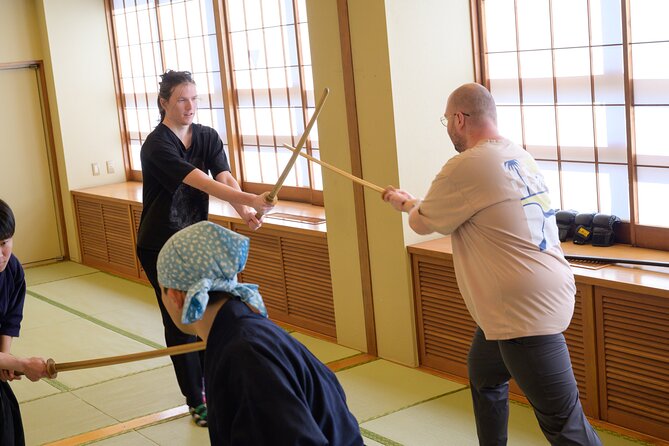
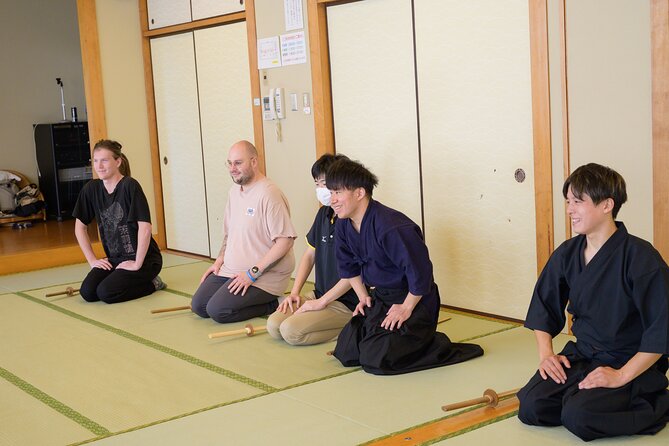
The group option has a feature you will not get in a private lesson: you may train alongside Japanese students who are learning samurai action. They are aspiring Japanese actors, so the class can feel less like a tourist show and more like a working practice session.
You will watch, then practice alongside them and interact with them during the lesson. That exchange adds a local element without requiring you to speak Japanese. The activity information does not promise a formal language lesson, but the class may include simple interaction and shared practice.
This format is best for you if you enjoy meeting people and do not mind learning in a group. It may feel more social and less controlled than a private lesson. You may need to wait briefly for your turn or share the instructor’s attention with other participants.
A private class offers more direct attention, but the group class provides the more distinctive setting. You are not only being shown samurai movement by an instructor. You are also seeing how people preparing for performance approach the same material.
The staged sword scene with a professional
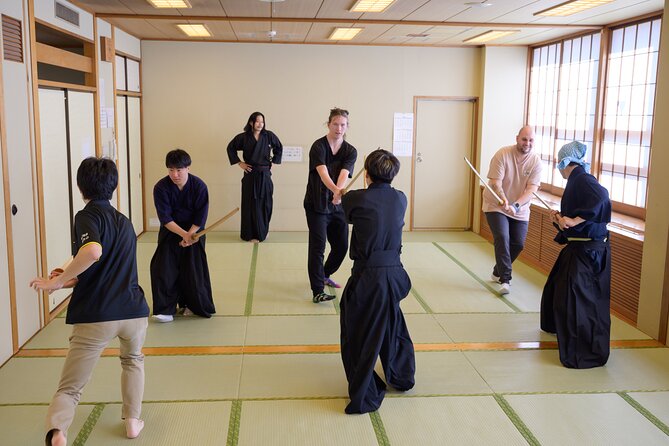
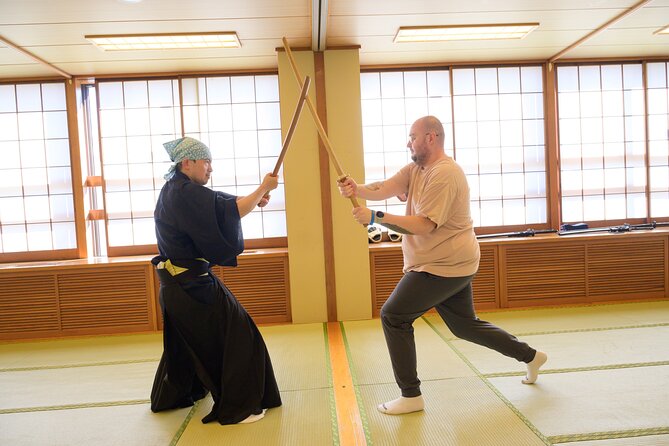
Once you know the basic movements, you pair with a professional samurai for an action-packed scene. This is the point where the separate drills become a small performance.
You will not be fighting with real blades. The practice swords are wooden, and the activity is built around safe action movement. The instructor controls the sequence, so you can concentrate on timing and presentation rather than trying to invent choreography.
This section gives the class its sense of occasion. You have learned a grip, a hold, and a swing, then you use them in a scene with a trained performer. It is a modest form of stage combat, not a test of strength. The goal is to make the movement look convincing while keeping everyone in control.
If you have never done anything theatrical, you may feel awkward for the first few seconds. That is normal. Follow the instructor’s timing and keep your movements measured. The professionals are there to make the scene work, even if your technique is still developing.
Photos with the samurai instructors
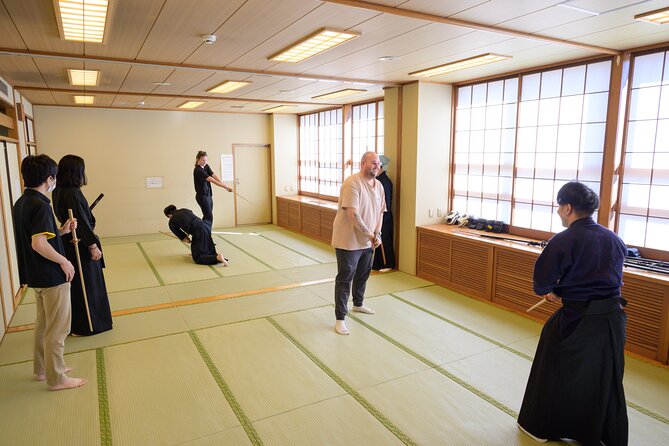
The session ends with a photo opportunity with the samurai. This is a practical touch, especially because the experience is short and physical. You leave with a clear souvenir of the activity rather than only a memory of a quick class.
Photos are also useful for groups. The activity can accommodate up to 15 people, and group discounts are available. If you are arranging a family outing, school group, or team activity, the final photo gives everyone a shared record of the session.
Do not expect a full costume package. Kimono dressing is not included, and the information does not promise historical clothing or elaborate props. The focus stays on sword movement, demonstration, and interaction with the instructors.
That distinction helps set the right expectation. You are booking a samurai action workshop, not a complete dress-up day or a formal tea-and-culture program.
What the $32.84 price gets you
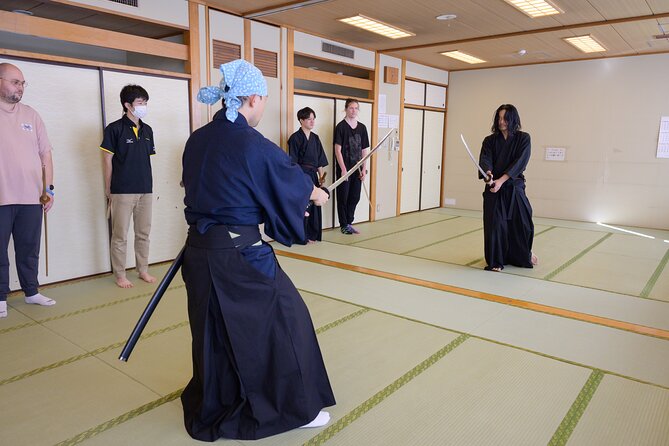
At $32.84 per person, this is reasonably priced for a one-hour activity in central Tokyo. The cost covers the samurai history introduction, live demonstrations, hands-on sword practice, wooden training swords, and the final photo session.
The value comes from the active format. You are not paying only for a performance. You receive instruction and get time to practice the movements yourself. For a first visit to Tokyo, that makes this a useful add-on to a sightseeing day.
The price does not include food, drinks, transportation, or kimono dressing. Those omissions are easy to understand, but they affect your total budget. You should plan your route and meal separately, especially if you are coming from another part of Tokyo.
The class is usually booked about 39 days ahead, which suggests that planning early is sensible. That is particularly true if you need a certain date, want a private session, or are organizing a larger group. A maximum of 15 participants keeps the class from becoming a huge crowd, but it also means spaces can be limited.
Private lesson or group session
The group class is the more social choice. You can practice with other visitors and Japanese students, watch aspiring actors work on their forms, and share the energy of a class. It may suit you if you want interaction and a less formal atmosphere.
A private lesson should suit you better if you want more direct guidance or prefer not to perform in front of a group. The activity offers both options, although the supplied information does not spell out the private lesson price or exact structure. Check those details before booking.
Families and mixed-age groups should find the beginner format approachable, provided everyone can manage basic standing and movement. Couples may enjoy the paired action scene. Solo visitors can also fit in, since the instructors organize the practice and partner work.
People seeking advanced martial arts training should look elsewhere. This is an introduction to samurai action for beginners. It teaches selected movements and performance skills in a compact session, not a complete sword-fighting system.
Practical planning for your Tokyo day
Wear clothing that lets you move comfortably. The activity description does not provide a formal dress code, but warm-ups, sword swings, and staged action are easier in flexible clothes than in restrictive outfits.
Allow time to reach the Tsukuda meeting point. The activity is near public transportation, but transportation itself is not included. Since the class lasts about one hour and returns to the starting point, you can plan another activity before or after it without losing an entire half-day.
Confirmation is provided when you book. Free cancellation is available if you cancel at least 24 hours before the start time. Within 24 hours, you will not receive a refund, and changes are not accepted. The cutoff uses local Tokyo time.
The class is capped at 15 people. That is small enough for the activity to remain personal, but you should not assume you can simply arrive without a confirmed reservation. Book ahead if the date matters to you.
Who should book this samurai experience
You should book this if you want an active cultural activity that fits into a tight itinerary. It is especially suitable if you enjoy learning by doing, like theatrical performance, or want something different from temples, shopping, and food tours.
It also works well for people who are curious about Japanese culture but do not want a long lecture. The short introduction to samurai history gives context, while the demonstration and sword practice make the subject physical and easy to remember.
I would be cautious about booking it if you want to handle a real sword, wear a kimono, or receive serious martial arts instruction. None of those is part of the stated package. The wooden swords and staged scene are the point.
The group option may be the best value for most visitors. It offers the central activity at a modest price and adds contact with Japanese students. Choose private instruction if personal attention matters more than the group setting.
Should you book Tokyo Samurai Experience ICHI?
I would book this as a one-hour Tokyo activity when you want something participatory, affordable, and easy to fit between larger plans. The strongest features are the professional instruction from Dai and Kume, the close-up demonstration, and the chance to use basic forms in a staged scene.
Keep your expectations realistic. This is not a full samurai lesson, a costume experience, or real combat training. It is a compact action workshop with cultural context, safe wooden swords, and a memorable photo at the end.
For $32.84, the balance is good. You get to watch skilled performers, learn enough technique to understand the work, and take part yourself. If that sounds more appealing than simply looking at another exhibit, reserve ahead and make your way to Tsukuda ready to move.
FAQ
How long does the samurai experience last?
The activity lasts approximately one hour.
Where does the activity begin and end?
It begins at 2-chōme-15-3 Tsukuda, Chuo City, Tokyo 104-0051, Japan, and ends back at the same meeting point.
Is the activity suitable for beginners?
Yes. Beginners are welcome, and most people can participate.
Are real swords used during the class?
No. The class uses practice wooden swords for safe training and staged action movements.
Who leads the samurai experience?
The class is led by professional action actors and samurai instructors Dai and Kume.
Is transportation included?
No. Transportation to and from the workshop is not included, although the meeting point is near public transportation.
Is kimono dressing included?
No. Kimono dressing is not included in the activity.
Can I cancel for a full refund?
Yes, if you cancel at least 24 hours before the experience start time. Cancellations within 24 hours are not refunded, and changes within that period are not accepted.
Newly reviewed around Tokyo
- Tokyo Asakusa:Calligraphy & Make T-shirt Activity★ 5.0 · 62 reviews
- Intercity Shuttle, Tokyo to Haneda /Narita /Yokohama /Makuhari★ 5.0 · 5 reviews
- 1 Hour Travel around Tokyo with a Professional Photographer★ 5.0 · 3 reviews
- Travel Tokyo with Your Own Personal Photographer★ 5.0 · 43 reviews
- Shuttle Van 6hr Tokyo Tour to-and-from Tokyo, Yokohama and Narita★ 5.0 · 9 reviews
- Kickboxing & Body Training with EX-Pro Fighter★ 5.0 · 4 reviews
- Train in Samurai Swordsmanship and Defeat the Demon in Tokyo★ 5.0 · 5 reviews
- Traditional Japanese Knife Sharpening Class★ 5.0 · 18 reviews
Tokyo Samurai and Ninja Experiences, compared.
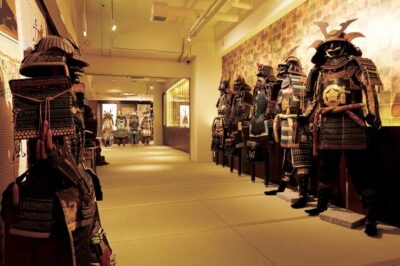
Samurai Ninja Museum Guided tour and Experience
Read our review →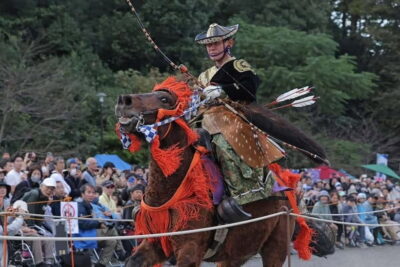
Samurai Sword & Archery Class from Samurai Descendant
Read our review →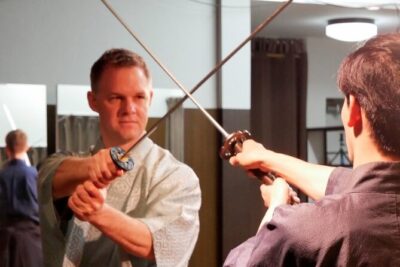
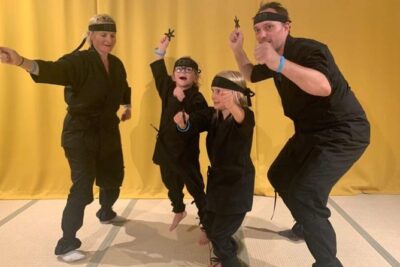
Ninja Experience (Family Friendly) at Samurai Ninja Museum TOKYO
Read our review →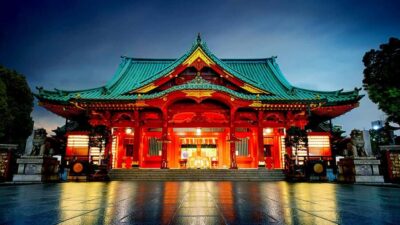
Samurai Entertainment Night Show in Kanda Shrine
Read our review →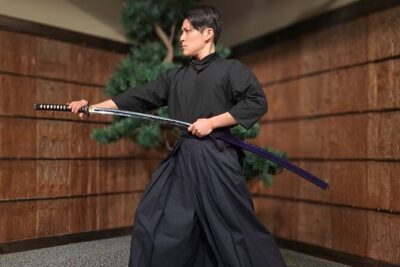
Tokyo Sword Experience – includes Museum Ticket/Ninja Experience
Read our review →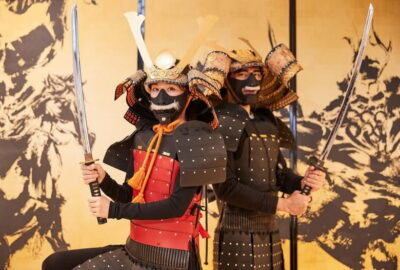
Samurai Ninja Museum Asakusa: Samurai Sword Lesson & Tour
Read our review →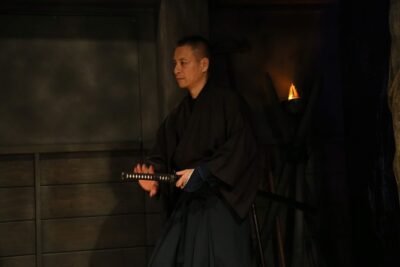
Ninja Samurai 2-hour hands-on lesson by Japanese master in Tokyo
Read our review →Browse the lists this tour appears in