Reviewed · MORNING
Tokyo Ikebukuro Morning Tour Dive into Japanese Culture
The most memorable part of this morning is not a grand Tokyo landmark. It is the chance to walk through Sugamo in a kimono, taste small local foods, and see an everyday shopping street with a traditional Japanese touch. The experience also includes a tea ceremony, an IKEBUS ride, and time at Kogan Temple.
I like the small-group privacy and the way the 1,000-yen food certificate turns the shopping street into part of the activity rather than just scenery. I also like the goshuincho stamp book, a useful souvenir that gives your temple visit a purpose. The main drawback is the price: at $128.77 per person for about four hours, this is not a cheap sightseeing ride.
Key points to know
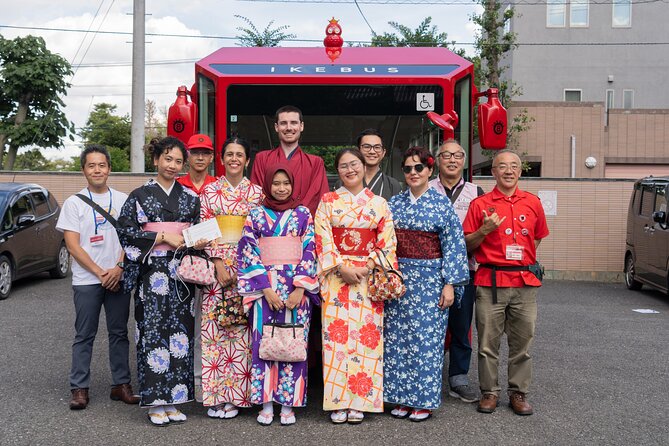
- Kimono dressing is part of the morning, including several layers and, depending on your hairstyle, decorative hair accessories.
- The tea ceremony adds real cultural context, rather than making the kimono only a photo prop.
- Sugamo Jizo-dori is the central stop, with local snacks and a 1,000-yen certificate for eating while you walk.
- Kogan Temple provides the stamp-book moment, with temple stamps added to your included goshuincho.
- IKEBUS connects the experience to Ikebukuro, offering a cute and practical ride between parts of the morning.
- The tour is private, and the activity returns to its starting point after roughly four hours.
A Traditional Morning Begins in Ikebukuro
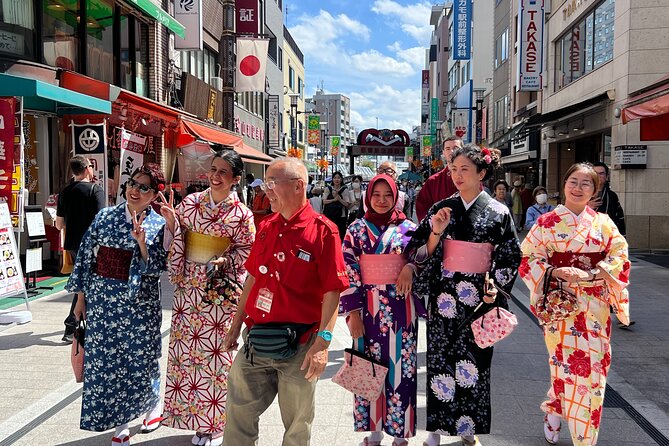
You meet at 9:00 a.m. at the Ikebukuro East Tourist Information Center, at 1-chōme-20-10 Higashiikebukuro. That location gives the morning a clear starting point in one of Tokyo’s major neighborhoods, but the tour soon shifts away from the usual department-store and station atmosphere.
The focus is cultural participation. You do not simply look at a kimono in a display case or stop for a quick photograph. You are dressed in one, learn how much preparation is involved, and then spend part of the morning wearing it in public.
The dressing process can surprise first-time participants. Several layers are used, and the finished outfit feels more substantial than many people expect. If you have short hair, the staff may add hair accessories to complete the look. That detail matters because it makes the preparation feel like an activity in its own right, not a rushed costume change.
You should also expect some limits. A kimono is formal clothing, not athletic wear. Walking is part of the morning, and the outfit may make your pace slower or your movement less casual. That is not a problem for most people, but it is worth keeping in mind if you prefer fast sightseeing.
More early morning tours in Tokyo:
- Tokyo: Sumo Morning Practice Viewing Tour
★ 4.8 · 570 reviews - Tokyo: Sumo Morning Training Visit
★ 4.4 · 370 reviews - Tokyo: Sumo Morning Practice Tour at Sumida City
★ 4.8 · 308 reviews
The Tea Ceremony Gives the Kimono Meaning
The tea ceremony is one of the strongest parts of this experience. It provides a reason to learn how the clothing fits into Japanese customs, rather than treating it as a decorative outfit for the day.
The tea preparation includes matcha, and you receive an introduction to the basic ritual while dressed in kimono. The available details do not describe the full ceremony or its exact length, so you should not book this expecting a long formal tea-school lesson. Think of it as a concise cultural experience built into a wider morning.
I like this balance. A full tea ceremony can require patience and close attention to small gestures, while a short introduction is easier to fit into a Tokyo itinerary. You get a taste of the setting without giving up the rest of the morning.
It also gives you a useful point of reference for later sightseeing. After learning a little about the care involved in serving matcha, you may look at other Japanese cultural experiences with more understanding. The value is not only in the tea itself. It is in the manners, clothing, and pace surrounding it.
Riding IKEBUS Between Ikebukuro and Sugamo
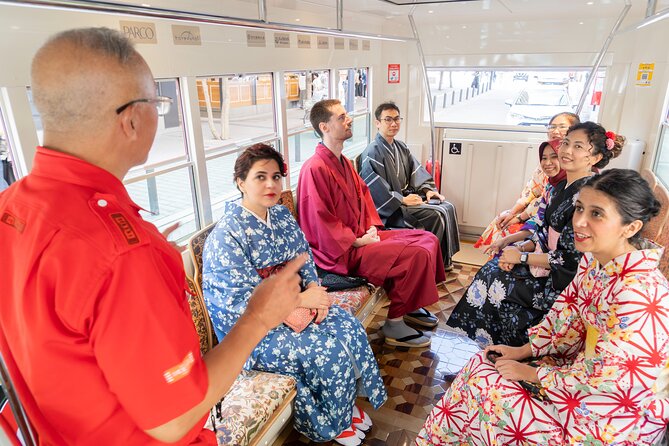
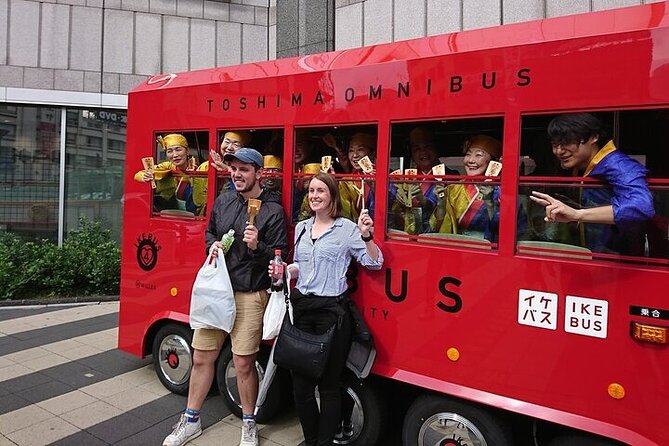
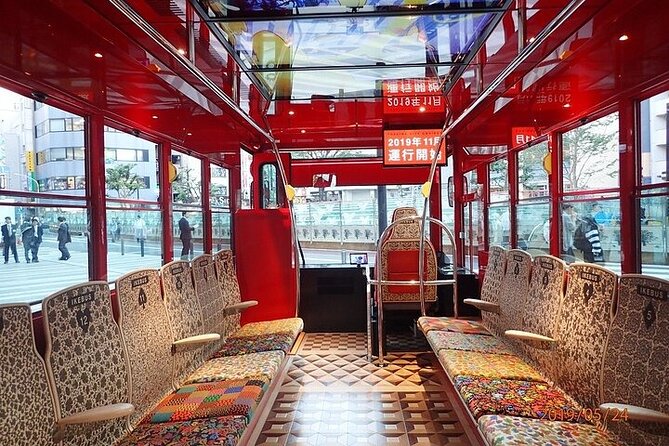
The tour includes a ride on IKEBUS, a small local bus serving the Ikebukuro area. Its appearance has been described as cute, and it adds a distinctly local transportation moment to the morning.
For you, the practical benefit is simple: the bus links the starting area with the walk around Sugamo without requiring you to arrange another route. It also gives the tour a neighborhood feel. Tokyo sightseeing often happens by train, but a short local bus ride lets you watch the streets pass at a lower pace.
The exact bus sequence is not fully specified, so you should follow the operator’s instructions at the meeting point. The important point is that IKEBUS forms part of the experience, not just a background transfer.
This is especially useful if you want a morning that combines several kinds of Tokyo life: a major urban district, a local bus, a temple, and a traditional shopping street. You are not spending four hours in one room or on one long drive.
Sugamo Jizo-dori: Snacks and Shopping Street Life
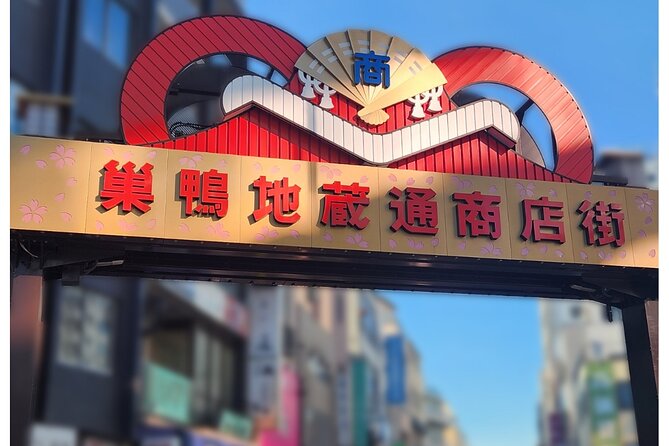
Sugamo Jizo-dori Shopping Street is the heart of the walking portion. The tour allows about 30 minutes here, with time to taste local specialties and use the 1,000-yen food certificate.
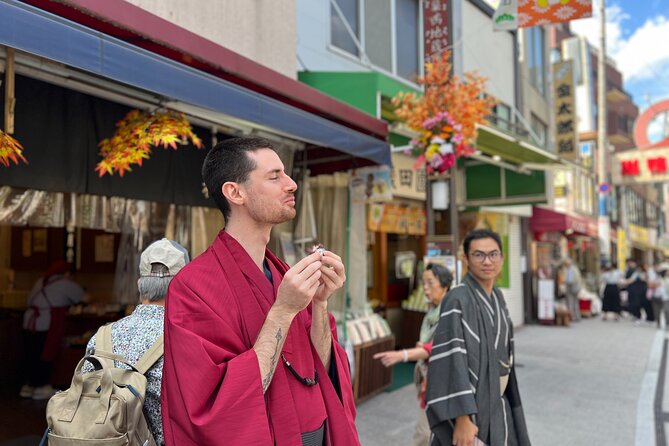
Thirty minutes is enough for a focused introduction, but it is not enough to inspect every shop or browse at leisure. I would treat this as a tasting stop. You can sample small foods while walking, look at the shop fronts, and get a feel for Sugamo before deciding if you want to return independently.
The food certificate improves the value of this stop. Instead of simply hearing that the street has local treats, you have a small budget set aside for trying them. The amount is not large, so expect a snack or two rather than a full meal. The precise participating shops and redemption rules are not provided, so ask the tour staff how to use it when the morning begins.
Sugamo has a different character from Tokyo’s most famous sightseeing districts. You are not being taken to a landmark designed mainly for international visitors. The appeal comes from ordinary shopping, small foods, and the rhythm of a neighborhood street. If you have already seen Asakusa and Odaiba, this offers a useful change of pace.
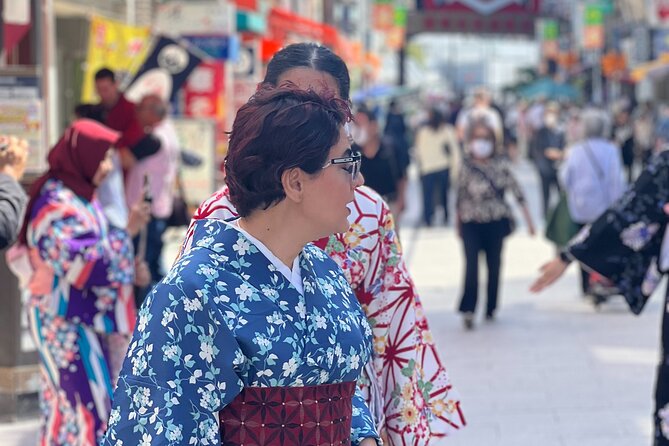
There is also a practical clothing point here. Walking in a kimono through a shopping street makes the experience more public and social than a private dressing session. You may attract some attention simply because the clothing is formal and distinctive, but the supplied information does not promise staged photography or special access. The emphasis is on walking, tasting, and participating.
A completely different kind of day in Tokyo:
- Mt Fuji and Hakone 1-Day Bus Tour Return by Bullet Train
★ 5.0 · 26,383 reviews - 1-Day Tokyo Bus Tour
★ 5.0 · 14,250 reviews - Tokyo: teamLab Planets TOKYO Digital Art Museum Entry Ticket
★ 4.6 · 9,779 reviews - Mt Fuji & Hakone Cruise, Drum Show Bullet Train 1 Day from Tokyo
★ 4.0 · 7,413 reviews
Kogan Temple and Your Goshuincho
Togenukijizo Kogan Temple receives about 30 minutes of the tour. It is closely connected to Sugamo Jizo-dori, so the temple visit fits naturally into the shopping-street walk.
The included goshuincho stamp book is a particularly good souvenir. Goshuin books are designed to collect temple and shrine stamps, along with handwritten calligraphy from the site. Here, you receive an original book and can have temple stamps added during the visit.
That gives you something more lasting than a snack or a quick photo. The book begins with a record of this morning, and you can continue using it at other appropriate temples and shrines during your Japan trip. Be careful with it, however. A goshuin is treated as a religious record, not simply as a sticker book or autograph album.
The temple stop is also short. Thirty minutes should allow time to see the grounds, receive the stamp, and ask questions, but it is not a long temple study session. If you want extensive time for prayer, photographs, or reading every detail, you may need to return on your own after the tour.
What the Private Format Changes
This is a private activity, meaning only your group participates. That is a major advantage for anyone who dislikes being folded into a large tour with strangers.
A private format can make the kimono fitting easier, since you can ask questions without holding up a busload of people. It also gives your group more room to discuss the tea ceremony, local food, or the temple. The operator can focus on your pace within the limits of the schedule.
The trade-off is price. At $128.77 per person, you are paying for more than transportation between two stops. The cost covers a roughly four-hour cultural program, kimono preparation, tea ceremony, IKEBUS travel, a 1,000-yen food certificate, and a goshuincho book. Private operation also adds value if you are traveling as a couple, family, or small group.
Still, the value depends on what you want. If your goal is simply to see Sugamo, you can visit the street and Kogan Temple more cheaply on your own. If you want the clothing, tea, guided structure, food credit, and private setting, the comparison is fairer.
The tour is best judged as a cultural activity, not as a transport bargain. You are buying a prepared morning with several connected parts.
Timing, Walking, and Practical Comfort
The activity starts at 9:00 a.m. and lasts approximately four hours, ending back at the meeting point. A morning start is useful in Tokyo because it leaves the afternoon open for Ikebukuro shopping, another neighborhood, or a later meal.
The itinerary includes walking around Sugamo, so comfortable preparation matters even though you will be wearing traditional clothing. You may want to keep your personal belongings light. The information does not specify bag storage, footwear rules, or changing-room details, so ask the operator if you have a large suitcase, mobility concern, or special clothing need.
Most participants can take part, and service animals are allowed. The tour is near public transportation, which helps with reaching the meeting point, though no specific station directions are provided in the supplied details.
The activity uses a mobile ticket, so keep the booking confirmation available on your phone. Confirmation is received at booking. Since the starting point is an information center, arrive with enough time to find the exact entrance and settle in before 9:00 a.m.
You can cancel for a full refund if you do so at least 24 hours before the local start time. Cancellations or changes made less than 24 hours ahead are not accepted for a refund.
Who Will Get the Most From This Morning
I would recommend this experience to you if you want a hands-on introduction to Japanese customs without committing a full day to a formal cultural class.
It suits first-time visitors who want more than the standard Tokyo checklist. Ikebukuro and Sugamo show a side of the city that is easy to miss when every day is built around famous landmarks. You get a major urban district, local transportation, a temple, a shopping street, food tasting, and traditional clothing in one compact outing.
It is also a good fit for repeat visitors. If you have already visited Asakusa or Odaiba, Sugamo can feel like a fresh choice. The supplied experience details point to fewer international visitors in this area, although you should not interpret that as a guarantee of an empty street.
Couples and families may appreciate the private format. The tea ceremony and kimono dressing can also work well for someone marking a special occasion, provided everyone is comfortable with the clothing and walking pace.
I would hesitate to recommend it if you want extensive free time, a full meal, or a low-cost neighborhood tour. The 30-minute blocks at Sugamo and Kogan Temple are structured, and the food certificate is modest. You are paying for the complete arrangement and cultural framing.
Should You Book the Tokyo Ikebukuro Morning Tour?
Book this tour if you want to wear a kimono, learn the basics of a tea ceremony, taste small local foods, and visit Sugamo with a private group. The included goshuincho makes the morning feel more personal, while the IKEBUS ride and shopping street keep it connected to daily Tokyo life.
Skip it if your priority is landmark sightseeing, independent wandering, or maximum value per dollar. You can see Sugamo and Kogan Temple without paying for a packaged experience.
For the right visitor, the price is justified by the combination of preparation, participation, and convenience. You get a short but thoughtfully linked morning, then return to Ikebukuro with a book, food experience, and a better sense of how traditional customs fit into modern Tokyo.
FAQ
Where does the tour start?
It starts at the Ikebukuro East Tourist Information Center, located at 1-chōme-20-10 Higashiikebukuro, Toshima City, Tokyo 170-0013, Japan.
What time does the activity begin?
The tour begins at 9:00 a.m.
How long does the tour last?
The experience lasts approximately four hours and ends back at the meeting point.
Is the tour private?
Yes. Only your group participates in this private activity.
What is included for food and souvenirs?
You receive a 1,000-yen gift certificate that can be used for food while walking, along with an original goshuincho stamp book for collecting temple stamps.
Can I cancel for a full refund?
Yes. You must cancel at least 24 hours before the local start time to receive a full refund. Cancellations or changes made less than 24 hours before the start are not accepted for a refund.
Newly reviewed around Tokyo
- Tokyo Asakusa:Calligraphy & Make T-shirt Activity★ 5.0 · 62 reviews
- Intercity Shuttle, Tokyo to Haneda /Narita /Yokohama /Makuhari★ 5.0 · 5 reviews
- 1 Hour Travel around Tokyo with a Professional Photographer★ 5.0 · 3 reviews
- Travel Tokyo with Your Own Personal Photographer★ 5.0 · 43 reviews
- Train in Samurai Swordsmanship and Defeat the Demon in Tokyo★ 5.0 · 5 reviews
- Shuttle Van 6hr Tokyo Tour to-and-from Tokyo, Yokohama and Narita★ 5.0 · 9 reviews
- Kickboxing & Body Training with EX-Pro Fighter★ 5.0 · 4 reviews
- Traditional Japanese Knife Sharpening Class★ 5.0 · 18 reviews
Morning, compared.


Tokyo Ryogoku Sumo Morning Practice + Photo Shoot with Wrestlers
Read our review →