
Reviewed · TOKYO BIKE TOURS
Tokyo Great Cycling Tour
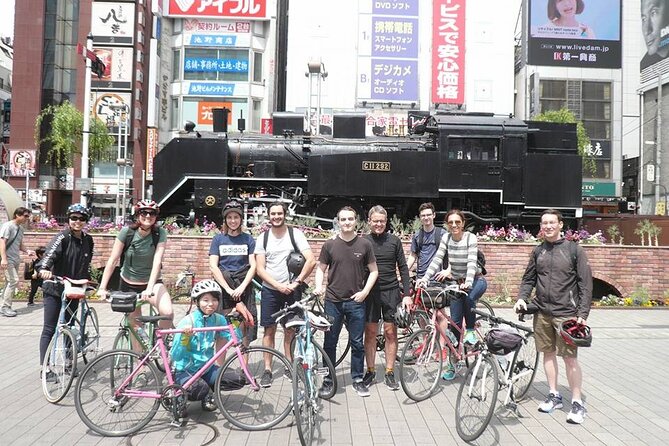
Tokyo is huge, but a bicycle gives you a useful middle ground between walking and riding in a bus. This six-hour tour links Tsukiji Jogai Market, Zojo-ji Temple, Meiji Jingu Shrine, and the Imperial Palace, while letting you see the streets between them instead of only the major sights.
I like the small maximum of 12 people, which should make safety guidance and questions easier. I also like the route’s mix of old temples, Shinto tradition, imperial Tokyo, shopping districts, offices, expensive apartments, and a cemetery tucked among fashionable neighborhoods.
The main drawback is the physical demand. You need moderate fitness, and six hours on a bicycle can feel long in Tokyo’s heat. Weather can also force a date change or cancellation, so this is not the best choice if you need a fixed indoor backup.
Key points to know before you book
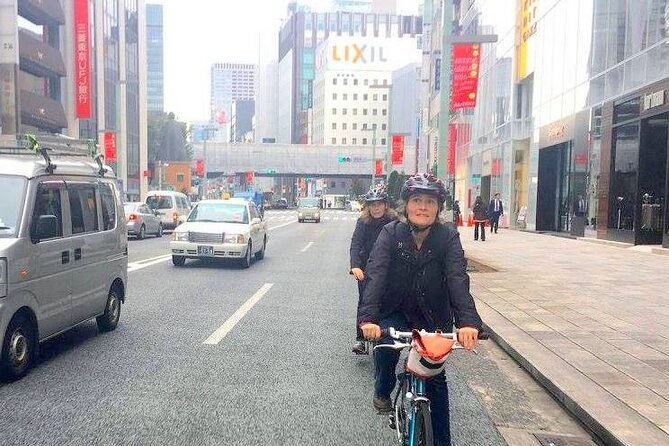
- Six hours on two wheels: You cover more ground than you could on foot, but this is an active day rather than a casual sightseeing stroll.
- A route through several sides of Tokyo: Tsukiji, Zojo-ji, Meiji Jingu, the Imperial Palace, high-rise districts, and a cemetery all appear in one outing.
- Small group of up to 12: The group size suits people who want more personal attention than a large coach tour allows.
- Experienced guides by name: Toshi, Nick, and Naoko have led rides described as careful with safety and rider welfare.
- Heat can change the plan: One very hot day led to lunch at an izakaya instead of the planned picnic.
- Free cancellation until 24 hours before: Poor weather can also lead to a new date or a full refund.
Why a bicycle works so well in Tokyo
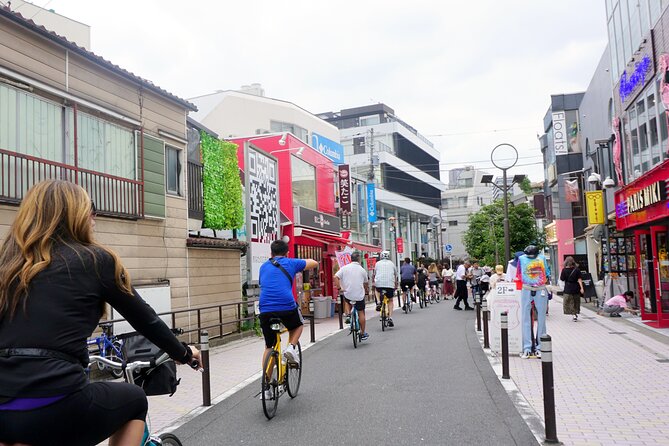
Tokyo is not a city you can neatly tick off from one viewpoint. Its famous sights are spread across districts with very different moods. On foot, you see plenty, but moving between major areas takes time. A bus can cover distance, yet it often leaves you looking at Tokyo through glass.
This tour uses the bicycle as a practical tool. You can move from a market area to a temple, then through commercial streets and residential surroundings, without making every part of the day a transfer. The point is not simply speed. It is the chance to notice how Tokyo changes block by block.
The ride lasts about six hours and begins at 9:00 a.m. That early start gives you a full morning and afternoon on the route. It also means you should arrive ready to ride, rather than treating the first hour as a slow introduction.
The group limit of 12 matters. Cycling in a group always requires attention, and a smaller group lets the guides keep a closer eye on the pace and general safety. The experience is still active, so you should be comfortable riding a bicycle and managing a moderate level of exertion.
More Tokyo bike tours:
- Tokyo Top Highlights 3h Guided E-bike Tour
★ 5.0 · 714 reviews - 3h Tokyo E-Bike Tour: Hidden Gems, and Local Life with guide
★ 5.0 · 670 reviews - Tokyo: 3-Hour Bike or E-Bike City Highlights Tour
★ 4.8 · 435 reviews
Starting at Tsukiji Jogai Market
The ride begins from Tokyo Great Tours at 1-chōme-3-2 Shinkawa in Chuo City. From there, the route reaches Tsukiji Jogai Market, the remaining outer market area associated with Tokyo’s famous seafood district.
The inner wholesale market moved to Toyosu, but Tsukiji Jogai Market remains an active place for local shoppers and people looking for food. That distinction is useful. You are not visiting the old inner market as it once operated. You are seeing the part of Tsukiji that continues to function as a shopping and eating district.
The scheduled stop is about 15 minutes, with no separate admission charge. That is enough time to take in the atmosphere and understand the area’s role, but not enough for a long, relaxed food crawl. If you are hoping to browse every stall or sit down for a full meal here, keep your expectations in check.
I like this as the opening stop because it starts with everyday Tokyo rather than a grand monument. You see a working market district before moving on to temples, shrines, and palace grounds. The contrast helps you read the city as a living place, not just a collection of sightseeing stops.
Zojo-ji Temple beneath Tokyo Tower
Next comes Zojo-ji, an old Buddhist temple with one of Tokyo’s clearest visual contrasts: traditional architecture in the foreground and Tokyo Tower rising behind it.
The stop lasts about 15 minutes and does not require an admission ticket. That is short, but the pairing of temple and tower gives the guide an excellent way to explain Tokyo’s past and present in one view. You can look from the temple’s traditional setting toward a symbol of modern engineering and dense city life.
This is one of the route’s strongest photo stops, though you should not expect a long temple visit. The value is in the setting and the explanation, not in spending an hour inside a large religious complex.
Cycling also helps here because the temple fits naturally into a wider city route. You are not making a special, time-consuming journey only to see Zojo-ji. It becomes part of a connected story about how old Tokyo survives among high-rise development.
The city between the headline sights
Some of the most useful parts of the ride are not listed as formal attractions. The route passes high-story apartment buildings, costly homes, shopping areas, and office districts. It also reaches a cemetery set among fashionable neighborhoods.
These stretches give you a more grounded view of Tokyo. Major sights tell you what the city wants you to notice. Residential buildings, offices, stores, and cemeteries show how people actually use the city every day.
The high-rise areas help explain Tokyo’s scale and property value. The cemetery offers a sharp change of mood, especially because it sits among stylish and expensive districts. That kind of contrast is hard to appreciate from a train platform or a coach window.
I would treat these sections as an important reason to choose the tour, not as filler between famous landmarks. You learn how Tokyo’s old spaces and new development sit side by side. The guide’s comments are especially useful here because the surroundings may not explain themselves.
The tradeoff is that the route is not a pure landmark parade. If you want to spend maximum time inside museums or at major monuments, a bicycle tour may feel too mobile. If you want to understand the shape of Tokyo, the in-between streets are part of the appeal.
A completely different kind of day in Tokyo:
- Mt Fuji and Hakone 1-Day Bus Tour Return by Bullet Train
★ 5.0 · 26,383 reviews - 1-Day Tokyo Bus Tour
★ 5.0 · 14,250 reviews - Tokyo: teamLab Planets TOKYO Digital Art Museum Entry Ticket
★ 4.6 · 9,779 reviews - Mt Fuji & Hakone Cruise, Drum Show Bullet Train 1 Day from Tokyo
★ 4.0 · 7,413 reviews
Meiji Jingu, Tokyo’s best-known Shinto shrine
Meiji Jingu Shrine is the third named major stop and the longest scheduled visit, at about 20 minutes. It is described as Tokyo’s most popular Shinto shrine, so this is a key cultural stop rather than a quick photo break.
The shrine gives you a different religious setting from Zojo-ji. Earlier, the route introduces Buddhism. Here, you encounter Shinto, Japan’s indigenous religious tradition. Even with a short visit, that change helps you see that Tokyo’s spiritual life is not represented by one type of temple or monument.
Twenty minutes is enough for an introduction, but it is still a limited window. You may find that you want more time to study the grounds or pause quietly. The tour’s purpose is to connect several parts of the city in one day, so the schedule favors breadth over long stays.
That balance is worth understanding before you book. I like seeing Meiji Jingu as part of a larger route because you can compare it with Tsukiji and Zojo-ji. But if this shrine is your main priority, a dedicated visit would allow a slower pace.
The Imperial Palace and the final major stop
The route continues to the Imperial Palace, identified as the home of Japan’s Emperor and Empress. The stop is about 15 minutes, again with no separate admission charge.
The palace gives the tour another angle on Tokyo. You have seen commerce at Tsukiji, Buddhist tradition at Zojo-ji, Shinto practice at Meiji Jingu, and now the imperial center of the country. These stops are not random. Together, they introduce several institutions that shape Japan’s public identity.
Because the stop is short, you should think of it as an overview rather than a full palace tour. The experience does not promise extended interior access or a long guided visit. You are fitting the palace into a six-hour cycling circuit.
That is also what makes the bicycle useful. You can include the Imperial Palace without giving up the other districts on the route. On foot, connecting all these places in one day would demand much more time and energy.
What the guide adds to the ride
The guide is not simply there to point toward landmarks. The experience includes explanations of Japanese history and culture as you pedal through the city. That context matters most in the less obvious sections, such as the office districts, high-rise apartment areas, and cemetery.
Specific guides named in the tour information include Toshi, Nick, and Naoko. A ride with Toshi and Nick is described as attentive to safety, and Naoko and Nick are also noted for looking after rider welfare. Your guide assignment may differ, but the small-group format gives the guide room to monitor the group.
One ride used Route B, so route options may exist. The available information does not spell out every difference between routes, and you should not assume that a particular version will be available on your date. Still, the mention of Route B suggests the operator may adjust the path to suit conditions or the day’s plan.
The best guide for this experience will help you connect places rather than recite names. You want to know why a temple matters, how a market district changed after the inner market moved, and what the contrast between old neighborhoods and modern towers tells you about Tokyo.
Heat, lunch, and the physical side of the day
Tokyo weather can change how the day feels. One particularly hot ride changed the picnic plan to lunch at an izakaya. That is a sensible adjustment, but it also shows why you should treat the tour as weather-dependent.
The published conditions call for moderate physical fitness. That wording is important. You do not need to be a racing cyclist, but you should be prepared for several hours of riding with sightseeing stops along the way. If you tire easily on an active day, the six-hour duration may be the deciding factor.
Your comfort will depend heavily on the day’s heat and your own cycling habits. The tour provider requires good weather, and a poor-weather cancellation leads to either a different date or a full refund. The weather rule protects the quality and safety of the experience, but it can disrupt a tightly planned Tokyo schedule.
If you are booking during a hot period, keep your day flexible after the tour. You may finish ready for a quiet meal rather than another major attraction. The izakaya change shows that the operator can make practical adjustments, but it does not guarantee a particular lunch arrangement.
Is $99.49 a fair price?
At $99.49 per person, this is not the cheapest way to move around Tokyo. You are paying for roughly six hours, a guided route, bicycle access to areas buses cannot reach easily, and the chance to combine several major districts in one day.
The value is strongest if you have limited time in Tokyo. Instead of arranging separate transport to Tsukiji, Zojo-ji, Meiji Jingu, and the Imperial Palace, you get one connected route. The guide also adds cultural explanation while you ride, which can make the city easier to understand.
The value is weaker if you already know Tokyo well, dislike group activities, or want long visits at each landmark. The short stops mean you will see several places, but you will not have the time for an unhurried exploration of every one.
A maximum of 12 helps justify the price. This is not a large coach operation where the guide must address a crowd. You get a more personal format, though the exact feel still depends on the day’s group size.
With an average booking time of 46 days in advance, you should not leave this until the last minute if the date matters. Confirmation arrives within 48 hours, subject to availability. That is worth remembering when building a fixed Tokyo schedule.
Who should book this Tokyo cycling tour?
I would choose this tour if you want an overview of Tokyo that includes both famous places and ordinary city districts. It suits first-time visitors who want help connecting the pieces, especially if a full day on foot sounds too slow.
It also suits people who enjoy active sightseeing. The bicycle is not just transportation here. It shapes the experience and lets you move through the city at street level.
Families and pairs can benefit from the small group, but everyone in the party should be comfortable riding and handling a moderate physical day. The tour is less suitable for anyone looking for a slow cultural walk, an indoor activity, or a fixed plan that cannot tolerate weather changes.
I would also think carefully about your priorities. If your top goals are food shopping at Tsukiji, a long shrine visit, or extended palace sightseeing, you may prefer separate visits. If you want to understand how those places fit into Tokyo’s wider pattern, this route makes good sense.
Practical details before you reserve
The meeting point is Tokyo Great Tours at 1-chōme-3-2 Shinkawa, Chuo City, Tokyo 104-0033, Japan. The start time is 9:00 a.m., and the tour returns to the same meeting point.
The activity is near public transportation, which makes the start and finish easier to reach. You receive a mobile ticket, and confirmation is sent within 48 hours when space is available.
You can cancel for a full refund up to 24 hours before the local start time. Changes or cancellations made less than 24 hours before the start are not accepted for a refund. The tour can also be canceled if the minimum number is not reached, with a new date, another experience, or a full refund offered.
That policy is fairly flexible, but the weather condition matters more than usual for a cycling day. Keep your booking date and the day after it reasonably adaptable if possible.
Should you book it?
Book the Tokyo Great Cycling Tour if you want to cover a lot of Tokyo in one active day and prefer street-level movement to a bus window. The route gives you markets, Buddhist and Shinto sites, imperial Tokyo, modern buildings, and less obvious neighborhoods in one package.
The strongest reasons to go are the small group, the broad route, and the named guides who are described as attentive to safety and rider welfare. The main reasons to hesitate are the six-hour physical commitment, heat, short stops, and weather risk.
For a first visit, this is a smart orientation day. You will not master every sight, but you will leave with a clearer sense of how Tokyo fits together. If you can ride comfortably, accept a full day in the saddle, and keep your schedule flexible, the $99.49 price can be good value.
FAQ
How long does the Tokyo Great Cycling Tour last?
The tour lasts approximately six hours and begins at 9:00 a.m.
Where does the tour start and finish?
It starts at Tokyo Great Tours, 1-chōme-3-2 Shinkawa, Chuo City, Tokyo 104-0033, Japan, and ends back at the same meeting point.
What sights are included?
The route includes Tsukiji Jogai Market, Zojo-ji Temple, Meiji Jingu Shrine, and the Imperial Palace. It also passes high-rise apartments, shopping and office areas, and a cemetery in a fashionable district.
How large is the group?
The tour has a maximum of 12 participants.
What level of fitness do I need?
You should have a moderate level of physical fitness and be comfortable cycling for a tour lasting about six hours.
Can I cancel for a refund?
You can cancel at least 24 hours before the local start time for a full refund. Poor weather or failure to meet the minimum number of participants can also lead to a new date or a full refund.
Newly reviewed around Tokyo
- Tokyo Asakusa:Calligraphy & Make T-shirt Activity★ 5.0 · 62 reviews
- Intercity Shuttle, Tokyo to Haneda /Narita /Yokohama /Makuhari★ 5.0 · 5 reviews
- 1 Hour Travel around Tokyo with a Professional Photographer★ 5.0 · 3 reviews
- Travel Tokyo with Your Own Personal Photographer★ 5.0 · 43 reviews
- Train in Samurai Swordsmanship and Defeat the Demon in Tokyo★ 5.0 · 5 reviews
- Shuttle Van 6hr Tokyo Tour to-and-from Tokyo, Yokohama and Narita★ 5.0 · 9 reviews
- Kickboxing & Body Training with EX-Pro Fighter★ 5.0 · 4 reviews
- Traditional Japanese Knife Sharpening Class★ 5.0 · 18 reviews
Tokyo Bike Tours, compared.
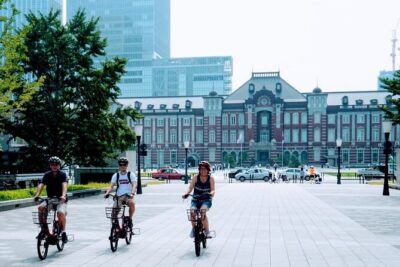
3h Tokyo E-Bike Tour: Hidden Gems, and Local Life with guide
Read our review →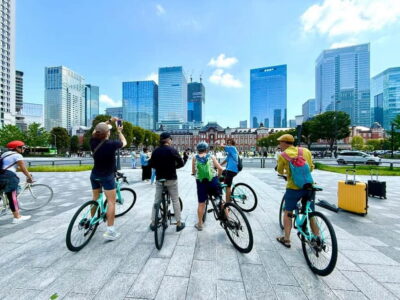
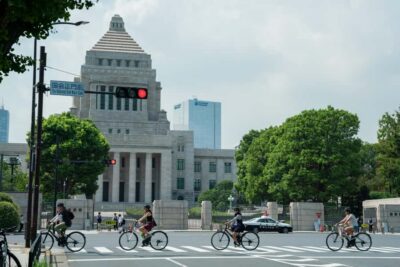
3-hour Guided E-Bike Tour of the City’s Hidden Gems
Read our review →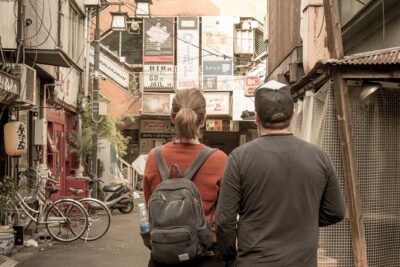
3-Hour Bike/E-Bike Tour of the City’s Highlights
Read our review →
Tokyo downtown bicycle tour Tokyo Backstreets Bike Tour
Read our review →Browse the lists this tour appears in