
Reviewed · TOKYO SUSHI MAKING CLASSES
Sushi Making in Tokyo at a Michelin-Listed Restaurant
At Tachiguisushi Sushikawa, a Michelin-listed standing sushi restaurant in Shibuya, you do more than watch a chef work. You put on the costume, shape 10 pieces of nigiri yourself, then taste 10 pieces prepared by the chef. It is a neat way to turn a famous Japanese meal into a hands-on lesson.
I like the small maximum of 10 people and the mix of making and eating. I also like that the tools, chef costume, drink, English guide, and souvenir chopsticks are included. The main caution is practical: one past booking found the restaurant closed on arrival, so confirm your reservation and meeting details before setting out.
Key points
- Ten pieces made by you: Learn to shape nigiri under the chef’s direction, with all tools supplied.
- Ten chef-prepared pieces: Taste sushi made with the chef’s selected ingredients, including upgraded items.
- Michelin-listed standing restaurant: The class takes place at Tachiguisushi Sushikawa in Tokyo’s Shibuya area.
- Chef costume included: You dress for the part before beginning the lesson.
- Tea or sake: Finish the class with a Japanese tea or sake tasting.
- Small class size: The maximum is 10 people, allowing more direct contact with the English guide and chefs.
What the 90-minute sushi class is really like
This is a short, focused cooking experience rather than a long food tour. You meet at Tachiguisushi Sushikawa, located at 1-chome 62-6 Sasazuka, Shibuya, Tokyo, and spend about an hour and a half learning the basics of nigiri sushi.
The restaurant’s standing-sushi format matters. You are not sitting down for a formal multi-course meal. Instead, the setting gives the class a direct connection to the working style of a Japanese sushi counter. It may feel less polished than a quiet restaurant dining room, but it also feels closer to the way sushi is served in an everyday Tokyo setting.
The group is limited to 10 people. That is small enough for the chef or English guide to watch what you are doing and offer help. It is not a private class, so you should expect to share the space and the instruction. For most people, that is a fair trade for the price.
More Tokyo sushi making classes:
- Sushi Making Tokyo Roll and Authentic Japanese Sushi Class
★ 5.0 · 3,971 reviews - Tokyo: Roll and Authentic Sushi Making Class in Asakusa
★ 4.9 · 1,957 reviews - Make Sushi and Create Unforgettable Memories in Tokyo
★ 5.0 · 1,413 reviews
Dressing as a sushi chef before the lesson
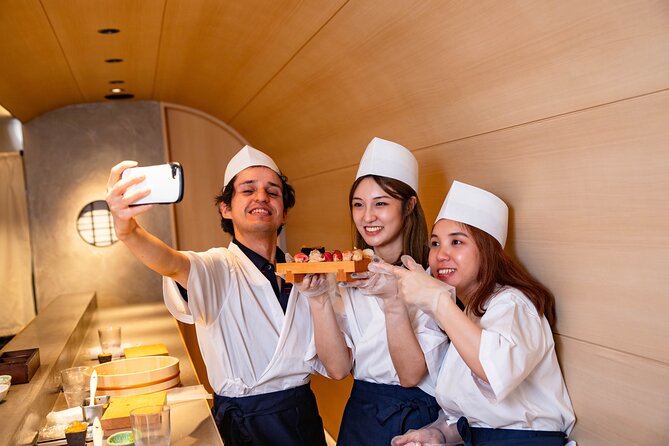
The class begins with an appealing bit of theater: you put on a sushi chef costume. This is not just a photo opportunity. It gives the lesson a clear sense of occasion and helps separate the class from an ordinary meal.
You receive the tools needed for the session, so you do not need to bring special equipment. The experience is designed for beginners, and the emphasis is on learning by doing rather than arriving with cooking skills.
The costume also makes this a good choice for families, couples, and small groups looking for something more memorable than a standard restaurant visit. You are not only eating sushi in Tokyo. You are taking part in the preparation and leaving with a souvenir.
Keep your expectations sensible. The class teaches you how to make nigiri, but it does not turn you into a professional sushi chef in 90 minutes. The craft looks simple when an expert does it. Shaping rice evenly and placing fish neatly takes more control than it appears to require.
Shaping 10 pieces of nigiri by hand
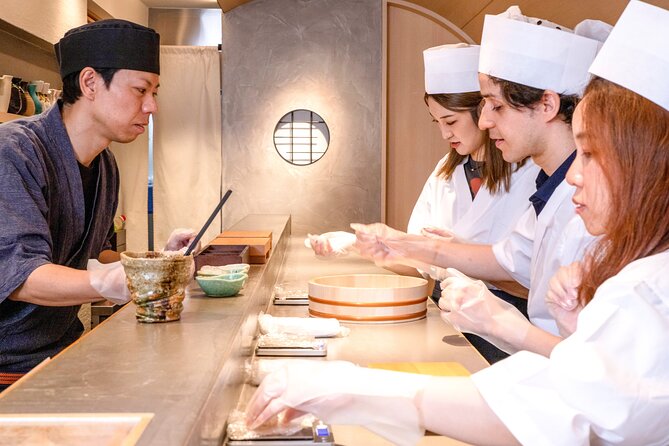
The central part of the experience is making 10 pieces yourself. You work under the chef’s guidance and learn the basic method for forming nigiri sushi.
Nigiri has a spare design: seasoned rice with a slice of fish placed on top. That simplicity is exactly what makes the class useful. There are not many ingredients to hide behind, so the shape, size, and handling of each piece matter.
The most satisfying part is likely the comparison between your sushi and the chef’s. One detailed account of the class praised the beautiful fish and noted that making nigiri look as neat as the chef’s was harder than expected. That is a useful warning. Do not judge your first pieces too harshly. The point is to learn how much precision goes into a food that can look effortless.
You make 10 pieces, giving you enough repetition to improve during the lesson. The first few may feel awkward. By the final pieces, you should have a clearer sense of how much rice to use and how gently to handle it, though the exact amount of instruction and correction will depend on the group.
This is also the part that transfers best to home cooking. You will not leave with a full sushi-school education, but you will understand the basic hand movement and presentation. If you want to repeat the activity at home, you will still need suitable rice, fish, and preparation space.
Tasting 10 pieces prepared by the chef
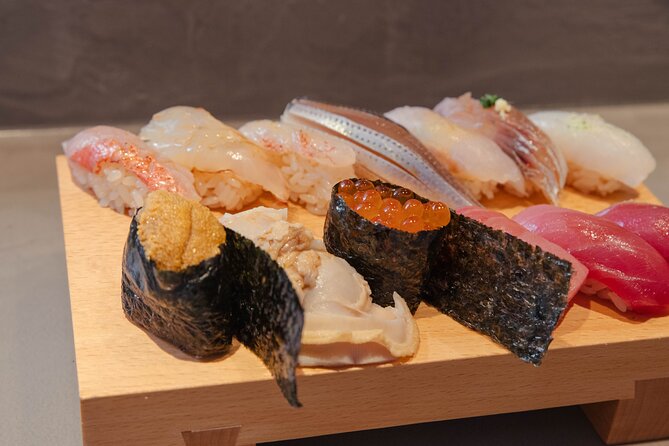
After making your own sushi, you also taste 10 pieces prepared by the chef. This is an important part of the value. You get to compare your work with sushi made by someone who shapes it every day.
The chef’s selection uses upgraded ingredients, giving you a chance to taste a more polished version of the same food you have just made. The contrast can be instructive. You can pay attention to the size of the rice, the balance of fish and rice, and the careful appearance of each piece.
You eat the sushi you make as part of the included meal. The chef-prepared sushi is also included. That makes the experience more than a demonstration followed by a snack. You take part in the preparation, then have enough food to make the visit feel like a proper meal.
Still, do not book this expecting a long omakase dinner. The activity is built around learning and tasting, not a large menu or an extended restaurant service. If your priority is sampling many types of sushi in a luxurious setting, a dedicated sushi dinner may suit you better.
For a first introduction to nigiri, though, this format makes sense. You learn the basic technique, see the professional result, and eat both versions during the same visit.
More Tokyo dinner experiences:
- Tokyo Bar Hopping Tour in Shinjuku (All-You-Can-Drink + Dinner)
★ 5.0 · 3,587 reviews - Tokyo: Sumo Show and Dining Experience
★ 4.8 · 2,742 reviews - Sumida River: Japanese Traditional Yakatabune Dinner Cruise
★ 4.6 · 779 reviews - Tokyo Bay Yakatabune Dinner/Day Cruise with Japan Show and Drinks
★ 4.5 · 473 reviews
Tea or sake with the sushi
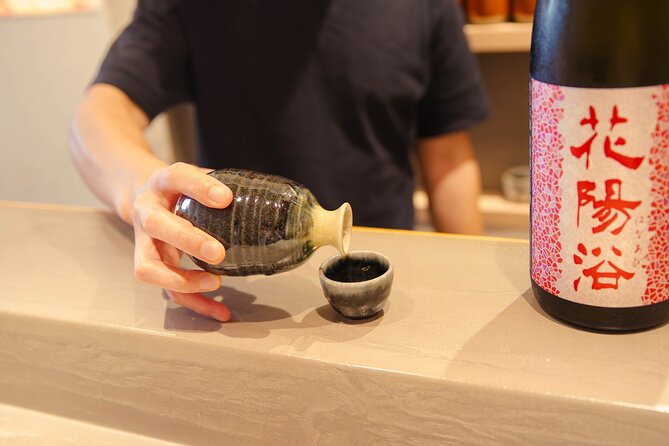
The class includes your choice of Japanese tea or sake. This small detail helps round out the meal and gives you another decision to make based on your preferences.
Tea is the straightforward choice if you do not drink alcohol, are visiting with children, or want to keep your attention on the lesson. Sake adds a more adult dining touch and fits naturally with sushi, but the information provided does not specify the style or amount served.
The drink is not the main reason to book. Think of it as part of the complete package rather than a separate tasting session. The stronger value comes from the class, the two sets of sushi, and the small-group format.
Why the small group matters
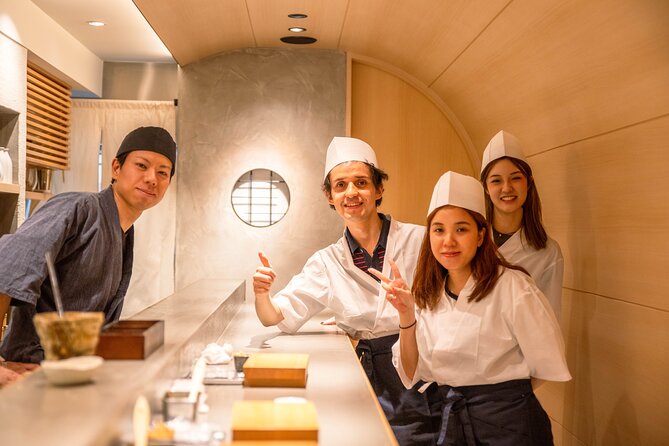
A maximum of 10 people is one of the better features here. Sushi-making is a hands-on skill, and a large class can leave you watching from the back while the instructor works at the front.
With fewer participants, you have a better chance to see the chef’s hand position and receive help while shaping your own pieces. The English guide also makes the lesson easier to follow for visitors who do not speak Japanese.
The group size does not guarantee a private lesson. You still share the instructor’s time, and the experience may feel more social than one-on-one. If you want detailed correction on every piece, a private booking would likely be more suitable, but no private option is specified here.
The small class also works well for couples and families who want to do an activity together. Since group discounts are available, it is worth checking the final price if you are booking for several people. The advertised cost is $99.08 per person, but the group rate could affect the total.
Is $99.08 a fair price?
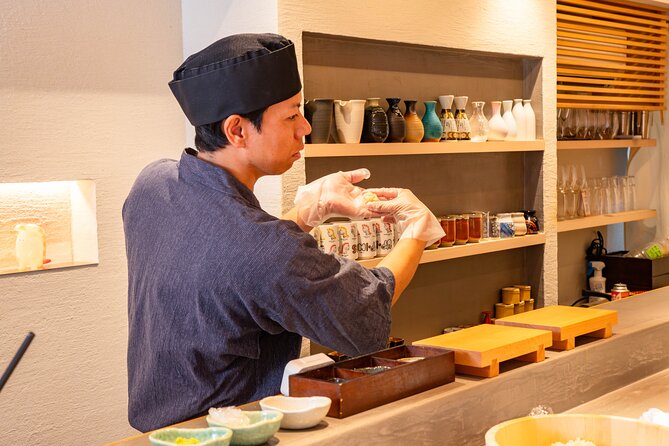
At $99.08 per person, this is not a cheap meal. You are paying for instruction, the chef costume, equipment, 20 pieces of sushi in total, tea or sake, an English guide, and commemorative chopsticks.
The value depends on how you think about the visit. If you only want to eat sushi, you may find less expensive options around Tokyo. If you want a short class, a meal, a souvenir, and contact with sushi chefs in a Michelin-listed restaurant, the price is easier to justify.
The 90-minute length is also part of the calculation. It is long enough to feel like a real activity but short enough to fit around sightseeing in Shibuya. You are not committing half a day to a cooking school.
I would call the price reasonable for someone who wants an organized, English-language cultural activity with food included. It is less attractive for an experienced home sushi maker or a visitor who mainly wants a broad tasting menu.
The included chopsticks add a nice finishing touch, though they should not drive your decision. Their real value is as a reminder of the class, not as a major part of what you are buying.
Getting to the meeting point in Sasazuka
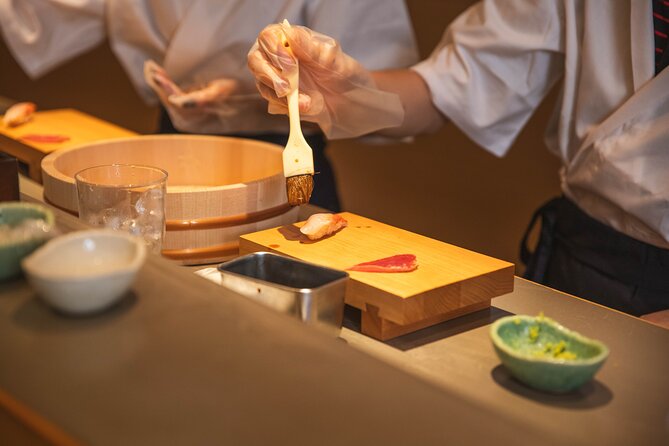
The meeting point is in Sasazuka, at Japan, 151-0073 Tokyo, Shibuya, Sasazuka, 1-chome 62-6, Prime Bliss Sasazuka. The activity ends back at the same point.
The location is near public transportation, which is helpful in Tokyo, but you should allow enough time to find the exact entrance. The address includes a building name, so check your confirmation carefully rather than relying only on the restaurant name.
Private transportation is not included. You are responsible for getting to the start point and returning afterward. This is easy to overlook when planning a busy Tokyo day, especially if you are staying in another part of the city.
I would avoid scheduling a major timed attraction immediately afterward. The class is listed at about 90 minutes, but you also need time to reach the meeting point and leave the building. A relaxed afternoon in the Shibuya area is a better match.
Food restrictions and vegetarian requests
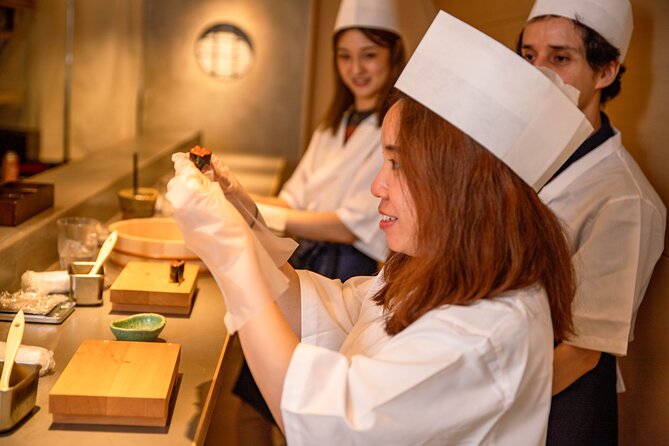
You should tell the provider about food restrictions or vegetarian preferences in advance. The restaurant will consult with you about suitable options.
Do not wait until the class begins. Sushi can involve fish, seafood, soy, and other ingredients, and the available alternatives are not fully described. The important point is that accommodations may be possible, but they need to be discussed before the activity.
If you have a serious allergy, contact the provider clearly before booking and ask what can be prepared safely. The supplied information confirms that requests can be considered, but it does not promise that every allergy or dietary need can be handled.
The one booking concern to take seriously
The experience has a 4.9 rating from 40 published ratings, with 98 percent recommending it. That is a strong record, and the hands-on lesson, chef interaction, and food quality receive the most praise.
There is also one serious operational warning. A customer arrived after booking well in advance and found the restaurant closed. The provider accepted responsibility, explained that an internal oversight had prevented the proper preparations, and apologized.
That appears to have been an isolated failure rather than a complaint about the food or teaching. Still, a closed venue can ruin a carefully planned Tokyo day. After booking, check your confirmation within the 48-hour confirmation window and make sure the date, meeting point, and start time are clear. If you cannot get confirmation, contact the provider before traveling across the city.
This is especially important because confirmation is subject to availability and may arrive within 48 hours of booking. Do not assume that payment alone means every detail is settled.
Who will enjoy this Tokyo sushi experience?
I would recommend it most strongly to first-time visitors who want a taste of Japanese food culture without spending a full day in a cooking school. It also suits couples, families, and small groups who like activities that produce both a meal and a story.
It is a good match for you if:
- You want to learn a simple Japanese cooking skill.
- You enjoy hands-on activities more than passive sightseeing.
- You appreciate a small group and English instruction.
- You want to taste chef-prepared sushi as well as your own work.
- You like taking home a modest souvenir.
- You can manage fish-based food or arrange dietary requests in advance.
It may not suit you if you want a private class, a long omakase meal, or a broad lesson covering sushi knives, fish preparation, and rice seasoning in detail. The experience focuses on shaping nigiri, not on every part of professional sushi work.
Should you book it?
Book this class if you want a compact, practical Tokyo activity with food at its center. The strongest reasons are the 10 pieces you make yourself, the 10 chef-prepared pieces you taste, the maximum group size of 10, and the chance to work in a Michelin-listed standing sushi restaurant.
At $99.08, it is best viewed as a cooking class plus meal, not simply a sushi lunch. Confirm the booking and meeting details, especially in light of the reported closure problem, and notify the provider early about dietary needs.
If that sounds like your kind of afternoon, this is a well-balanced way to get closer to sushi-making without giving up most of your day.
FAQ
Where does the sushi-making experience take place?
It takes place at Tachiguisushi Sushikawa in Sasazuka, Shibuya, Tokyo. The listed meeting address is Japan, 151-0073 Tokyo, Shibuya, Sasazuka, 1-chome 62-6, Prime Bliss Sasazuka.
How long does the activity last?
The experience lasts approximately 1 hour and 30 minutes.
How many people can join the class?
The maximum group size is 10 people.
How many sushi pieces do I make?
You make 10 pieces of nigiri sushi during the class.
How many pieces does the chef prepare?
The chef prepares 10 additional pieces for you to taste. These use the chef’s selected ingredients, including upgraded ingredients.
Is a sushi chef costume provided?
Yes. The sushi chef costume and all tools needed for the activity are included.
Is food included?
Yes. The sushi you make and the sushi prepared by the chef are included.
Can I choose tea or sake?
Yes. The experience includes a choice of Japanese tea or sake.
Can I cancel for a full refund?
Yes, if you cancel at least 24 hours before the experience start time. Cancellations made less than 24 hours in advance are not refundable, and changes within that period are not accepted.
Newly reviewed around Tokyo
- Tokyo Asakusa:Calligraphy & Make T-shirt Activity★ 5.0 · 62 reviews
- Intercity Shuttle, Tokyo to Haneda /Narita /Yokohama /Makuhari★ 5.0 · 5 reviews
- 1 Hour Travel around Tokyo with a Professional Photographer★ 5.0 · 3 reviews
- Travel Tokyo with Your Own Personal Photographer★ 5.0 · 43 reviews
- Shuttle Van 6hr Tokyo Tour to-and-from Tokyo, Yokohama and Narita★ 5.0 · 9 reviews
- Kickboxing & Body Training with EX-Pro Fighter★ 5.0 · 4 reviews
- Train in Samurai Swordsmanship and Defeat the Demon in Tokyo★ 5.0 · 5 reviews
- Traditional Japanese Knife Sharpening Class★ 5.0 · 18 reviews
Tokyo Sushi Making Classes, compared.
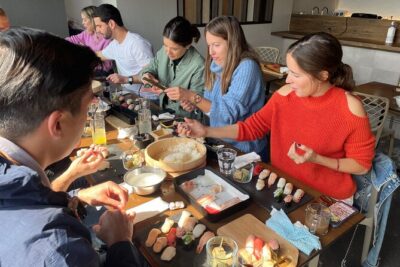
Sushi Making Tokyo Roll and Authentic Japanese Sushi Class
Read our review →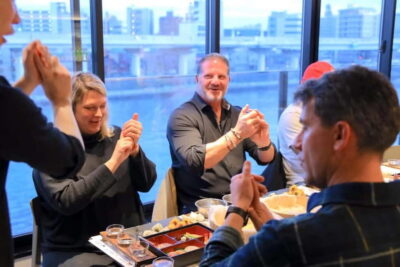
Roll and Authentic Sushi Making Class in Asakusa
Read our review →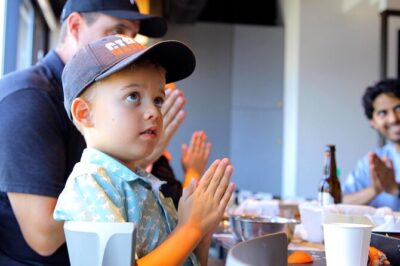
Make Sushi and Create Unforgettable Memories in Tokyo
Read our review →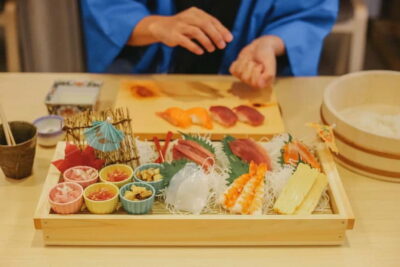
Sushi Making Class in a Happi Coat near a Famous Spot
Read our review →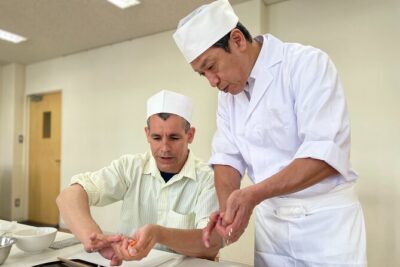
Tokyo Sushi Making Class in Tsukiji with Professional Chef
Read our review →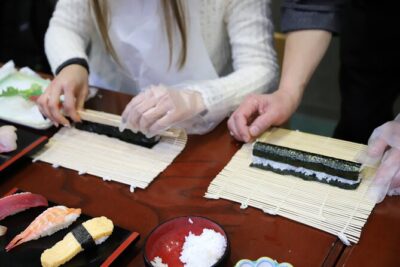
Tsukiji Fish Market Guided Tour and Sushi Making with Pro Chef
Read our review →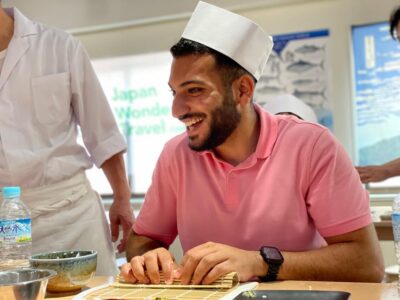
Tsukiji Fish Market Sushi Making Class with Pro Chef
Read our review →
Browse the lists this tour appears in