
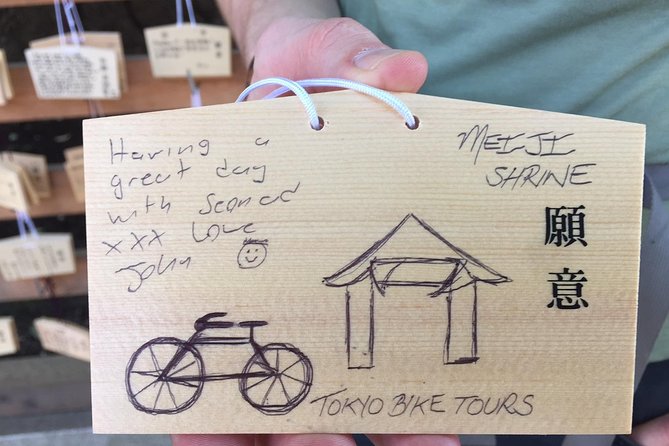
Reviewed · TOKYO BIKE TOURS
Small Group Cycling Tour in Tokyo
Tokyo makes more sense from a bicycle seat. You move slowly enough to notice quiet residential lanes, temple gates, cemetery paths, and sudden views of Tokyo Tower, yet you cover far more ground than you could on foot. This route links Meiji Shrine, Zojo-ji, Tokyo Bay, and the Imperial Palace in one long sweep.
I like the small maximum of eight, which gives guides such as Aiko, Noriko, Akio, and Keco room to answer questions and adjust the pace. I also like the mix of famous sights and ordinary city streets. The main consideration is physical effort: the ride can reach about 12 to 15 miles, or roughly 20 kilometers, with some inclines, so ask for an e-bike before the tour if you are not a regular cyclist.
Key points at a glance
- A broad Tokyo introduction: See major shrines, temples, palace grounds, modern districts, and Tokyo Bay in one outing.
- Small groups of up to eight: Guides can offer more personal explanations and keep a close eye on the group.
- Back streets add the local feel: The route uses residential lanes, sidewalks, and main roads rather than sticking only to tourist corridors.
- Plan for a real workout: The ride may last up to six hours and can cover 12 to 15 miles, with a few hills.
- E-bikes need advance planning: An electric bike is available, but you should request it before the tour.
- Lunch is not included: You get a break in Shiodome, but you pay for your own meal.
Why a bicycle works so well in Tokyo
Tokyo is too large to understand from a single neighborhood. The subway is fast, but it drops you into one station and then carries you underground to the next. A bicycle fills in the spaces between those stops.
You may pedal along a quiet lane, pass a small home or neighborhood shop, and soon arrive at a major shrine or palace moat. That change of scale is the real appeal. The city stops feeling like a string of isolated sights and starts to feel connected.
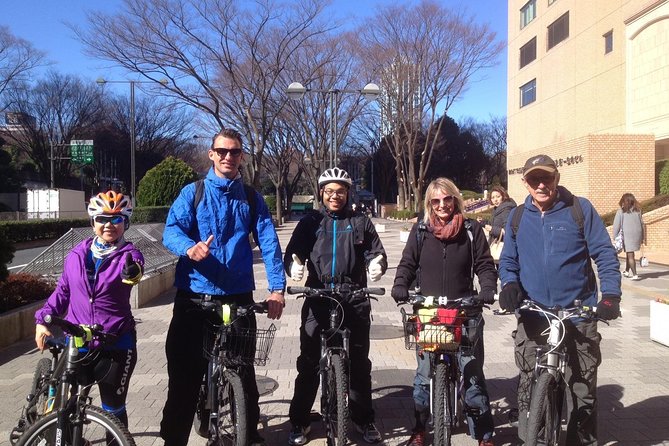
The group size matters here. With no more than eight people, a guide can stop to explain shrine customs, answer questions about Japanese culture, and check that everyone is keeping up. Guides named Aiko, Noriko, Akio, Keco, and Nikita have led different departures, so the exact personality and style will vary.
The route mixes cycling and walking. You leave the bikes for about 40 minutes at Meiji Jingu, walk around Zojo-ji, stop for lunch in Shiodome, and pause at several viewpoints. You are not pedaling without a break for six hours, but this is still an active day.
More Tokyo bike tours:
- Tokyo Great Cycling Tour
★ 5.0 · 811 reviews - Tokyo Top Highlights 3h Guided E-bike Tour
★ 5.0 · 714 reviews - 3h Tokyo E-Bike Tour: Hidden Gems, and Local Life with guide
★ 5.0 · 670 reviews
Starting at Hyatt Regency Tokyo in Shinjuku
The meeting point is KakouJapan on the third floor of the Hyatt Regency Tokyo in Nishishinjuku. The activity begins and ends there, which makes the arrangement simple if you are staying in or near Shinjuku.
The bicycles are included. An electric bike is also an option, but the information provided says it must be requested in advance. Do not assume one will be available if you wait until the morning of the tour.
A helmet should also be requested. One rider specifically advised asking for one, so make that part of your planning. The route uses sidewalks, quieter roads, and main roads, and the guide leads the group through the city rather than sending you off on your own.
The tour has a moderate fitness requirement. Some riders found a standard bicycle easy, especially on the mostly flat route, while others struggled with uphill sections. Your fitness, the weather, and the final route length will all affect how hard the day feels.
Meiji Shrine, Tokyo’s wooded Shinto sanctuary
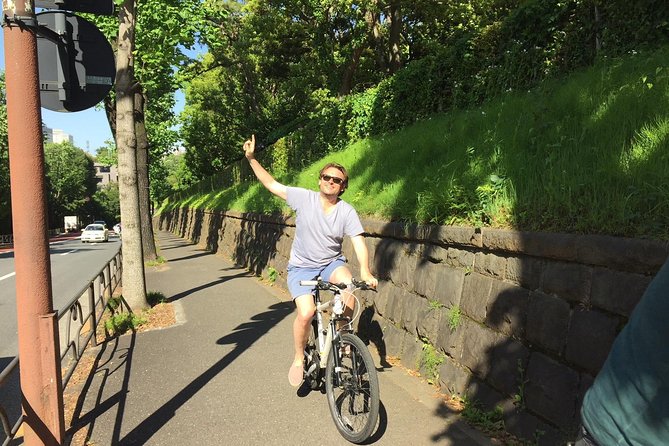
The first major stop is Meiji Jingu, one of Tokyo’s best places to see Shinto traditions in a calm setting. The shrine is described as the largest Shinto shrine in Tokyo, and you spend about 30 to 40 minutes walking through its grounds.
This is not simply a photo stop. Your guide explains the rituals and customs, including how to behave at a shrine. If the timing is lucky, you might see a Japanese-style wedding, adding a real cultural moment to the visit.
The walking portion gives your legs a break after the opening ride, though the shrine grounds still require time on foot. Cherry blossoms can make this stop especially attractive in season, but the appeal is not limited to spring. The contrast between the surrounding city and the shrine grounds is one of the best early lessons in Tokyo’s layout.
Aoyama Cemetery and Tokyo’s quieter side
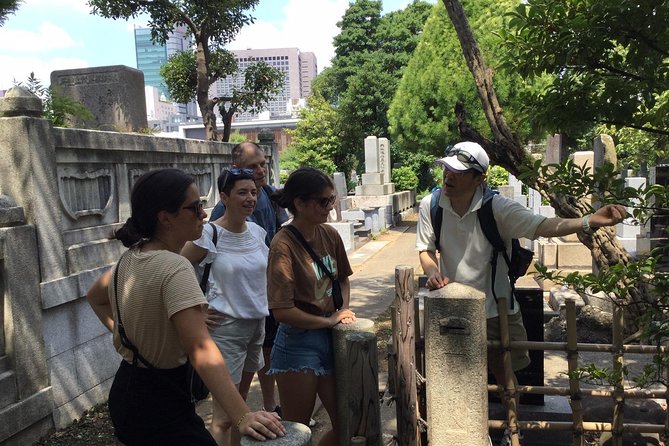
Aoyama Cemetery provides a sharp change of mood. You spend about 20 minutes among the graves of notable Japanese and Western figures, with the guide pointing out people and stories tied to Tokyo’s past.
It is an unusual stop for a standard city tour, and that is precisely why it works. You get away from the usual shopping streets and major monuments. The cemetery also gives the guide a natural place to discuss the people and events that shaped modern Japan.
Do not expect a long visit or a formal cemetery tour. This is a short, informative pause within a larger cycling route. Still, it helps the day feel less like a checklist of famous attractions.
A completely different kind of day in Tokyo:
- Mt Fuji and Hakone 1-Day Bus Tour Return by Bullet Train
★ 5.0 · 26,383 reviews - 1-Day Tokyo Bus Tour
★ 5.0 · 14,250 reviews - Tokyo: teamLab Planets TOKYO Digital Art Museum Entry Ticket
★ 4.6 · 9,779 reviews - Mt Fuji & Hakone Cruise, Drum Show Bullet Train 1 Day from Tokyo
★ 4.0 · 7,413 reviews
Roppongi Hills, shops, cafes, and city scale
The stop at Roppongi Hills lasts about 15 minutes. This large complex is filled with shops and cafes and offers a quick look at modern Tokyo’s commercial side.
The visit is brief, so you should not plan on serious shopping here. Instead, treat it as a contrast to Meiji Shrine and Aoyama Cemetery. Within a short ride, Tokyo shifts from a sacred wooded site to a high-end urban complex.
That contrast is one of the strengths of the route. You are not spending the entire day around temples or the entire day among office towers. The guide helps connect these different parts of the city through history and daily life.
Zojo-ji and the best Tokyo Tower view
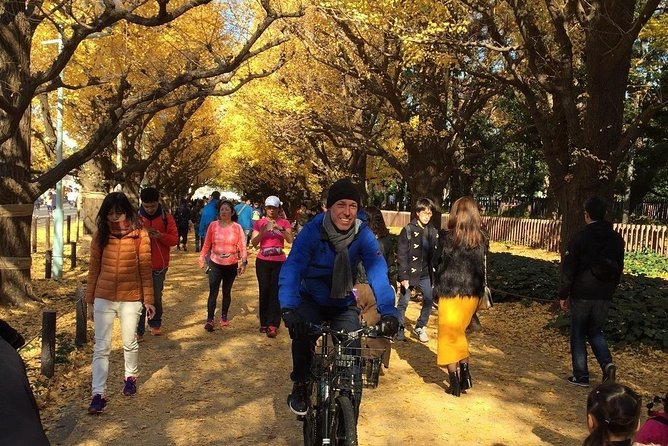
Zojo-ji is the main temple of the Jodo Buddhist sect in the Kanto area. You spend about 20 minutes here, with Tokyo Tower providing the key visual backdrop.
This is a strong stop for photographs because the traditional temple setting and the modern tower share the same frame. It also gives you another chance to compare Japanese Buddhist and Shinto traditions. At Meiji Shrine, your guide discusses Shinto practice. At Zojo-ji, you see a major Buddhist temple and hear about its role.
The stop is short, so your guide’s explanation matters. Guides have been praised for giving clear accounts of shrine and temple customs, along with short stories that make the sites easier to understand. The experience is more useful if you listen rather than simply rush in for a picture.
Shiodome and lunch with a Tokyo Bay view
Shiodome is the modern midpoint of the outing. The area is a major redevelopment district, with large buildings and a very different feel from the shrine and temple stops.
You get about 50 minutes here, including a lunch break. Lunch is not included, so budget for your own meal. The pause is welcome because the ride can be long, and you can use it to refuel before the final section.
After lunch, the route includes a view of Tokyo Bay from the top of a building. The supplied details do not promise a particular building or restaurant, but one full-day description refers to a view from the 46th floor. Treat that as a possible part of the experience rather than a guarantee for every departure.
This section gives you a useful sense of Tokyo’s modern scale. The city is not only shrines and old customs. Shiodome shows the office towers, transport links, and planned development that shape contemporary Tokyo.
The Imperial Palace moat and the ride back
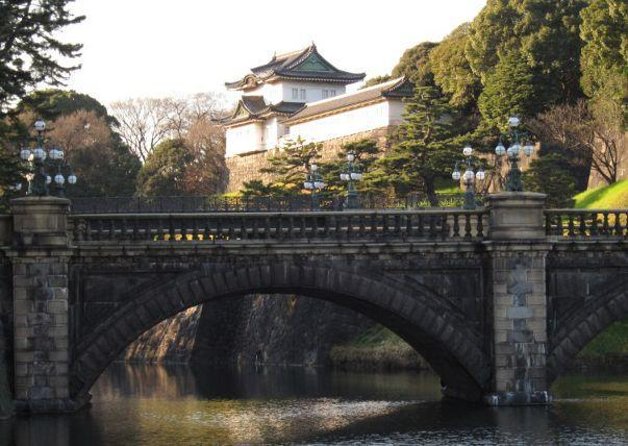
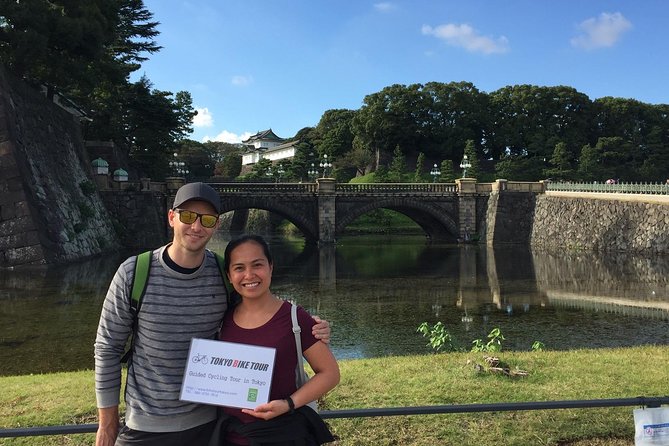
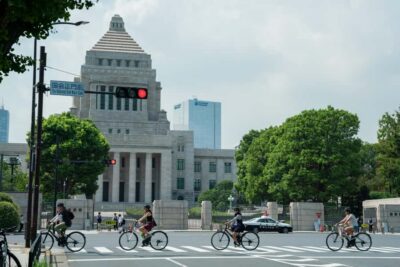
The final major stop is the Imperial Palace, the residence of Japan’s Imperial family. You cycle along part of the moat, then begin the return to Shinjuku.
The palace grounds are not treated as a long interior palace visit. The value comes from the outer setting, the moat, the open space, and the chance to understand where the Imperial family lives within the city. The route may also pass areas connected to Japan’s government and political center.
The return ride is important to consider. By this point, you may already have been cycling for several hours, with walking stops and a lunch break mixed in. The tour ends back at the Hyatt Regency Tokyo, but the final miles still require energy.
One unusual possibility is seeing an Imperial car leaving the palace, though that is a matter of timing and luck. It should not be a reason to book, but it could become a memorable surprise.
How hard is the ride?
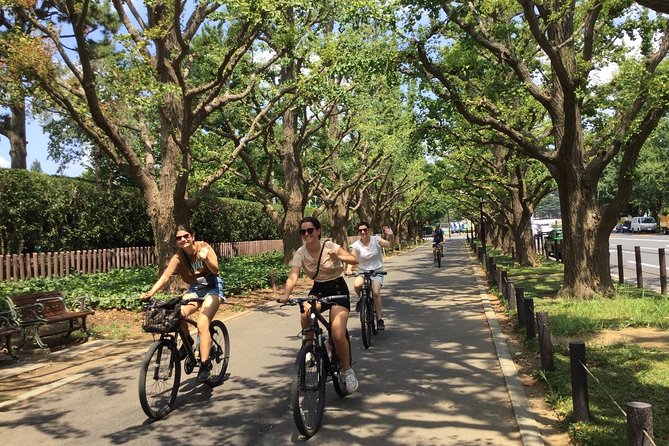
The best way to think about this experience is as a long city ride, not a gentle spin around one park. The route has been described as about 12.5 miles, 15 miles, or 20 kilometers, depending on the departure and how the route is measured.
Much of Tokyo is relatively flat, but the route includes a few inclines. One rider called the tour harder than expected, especially uphill, while another found a standard bike easy. Both impressions can be true. A regular cyclist may find the ride manageable, while someone unused to long rides may prefer assistance.
The e-bike can make the day more comfortable, especially on hills. Request it before the tour. Do not count on changing bikes at the last moment.
The pace is guided rather than competitive. Guides have been described as riding at the group’s speed, stopping for water or snacks, and checking that everyone is comfortable. Even so, you need moderate fitness and enough stamina for a full half-day or full-day activity.
Rain is another practical concern. The experience requires good weather and may be canceled if conditions are poor. If it runs in light rain, the route can still be enjoyable, but wet pavement and longer cycling make the ride less comfortable.
Guide quality and the small-group advantage
The guide is a major part of this tour. Aiko has been praised for warmth, local insight, and taking photographs along the way. Noriko has been described as attentive, encouraging, and strong on the hills. Akio has led riders through suburban streets and safe pathways while adding useful historical context.
Keco has been noted for clear English and careful attention to group questions. Other departures have included Nikita and additional guides, so the name you receive will depend on the date.
The common thread is the personal format. A group of eight leaves room for questions that might be lost on a large coach tour. If your group is smaller, the experience may feel even more tailored. One departure continued with a single person after a larger booking canceled, with three guides remaining for that rider.
The guide also manages the city riding. You follow rather than navigate, which reduces the stress of handling an unfamiliar metropolis. Still, you should pay attention to the route, obey the guide’s instructions, and remain comfortable around traffic and pedestrians.
Is $66.32 good value?
At $66.32 per person, this is a strong price for a tour that can last three to six hours and includes bicycle use, several major sights, guide service, and a city-wide route. The value is especially good if you have limited time in Tokyo and want a broad first look without arranging multiple subway journeys.
The price does not include lunch. You also need to confirm the e-bike arrangement before booking if you want electric assistance. Those are modest extra planning points, not major flaws.
The real value is access. On foot, visiting Meiji Shrine, Aoyama, Roppongi, Zojo-ji, Shiodome, and the Imperial Palace in one outing would be tiring and time-consuming. By bicycle, you can connect them while still seeing the streets between them.
The tradeoff is comfort. A sightseeing bus is easier on your legs. The subway is faster between distant points. This tour earns its price by giving you a more direct feel for the city, not by offering the easiest possible transport.
Who should book this experience?
I would choose this tour for a first or second visit to Tokyo, especially if you want orientation before exploring neighborhoods on your own. It suits adults, families with older children, and active visitors who enjoy learning while moving.
It is also a good fit if you want more than the standard tourist center. The quiet lanes and less obvious stops show you parts of Tokyo that a bus cannot reach easily.
I would think twice if you dislike cycling in cities, have limited physical stamina, or want a relaxed day with little exertion. The maximum group size is small, but the route is still long. For many people, the e-bike is the sensible choice rather than a luxury.
Book at least 24 hours ahead if your plans may change. Cancellations made at least 24 hours before the start time receive a full refund. Changes or cancellations inside that window are not accepted for a refund. Poor weather or failure to meet the minimum group size may lead to a different date, another experience, or a full refund.
Should you book the Tokyo cycling tour?
Yes, if you want to connect major Tokyo sights while seeing the quieter streets between them. The combination of Meiji Shrine, Aoyama Cemetery, Roppongi Hills, Zojo-ji, Shiodome, and the Imperial Palace gives you a broad introduction in one day.
Book with the e-bike request already made if you are unsure about the distance or hills. Bring enough money for lunch, ask about a helmet, and allow up to six hours. If you can handle a moderate ride, this offers a more personal and memorable way to understand Tokyo than simply moving from station to station.
FAQ
How long does the cycling tour last?
The tour lasts approximately three to six hours. Some full-day departures have lasted close to seven hours when the guide spent extra time with the group.
How many people can join the tour?
The maximum group size is eight people. Smaller groups may be possible depending on bookings.
Is an electric bicycle available?
Yes, an electric bike option is offered. You need to request it before the tour.
Is lunch included in the price?
No. The tour includes a lunch break in Shiodome, but you pay for your own meal.
Where does the tour start and finish?
It starts at KakouJapan on the third floor of the Hyatt Regency Tokyo in Nishishinjuku. It ends back at the same meeting point.
What happens if the weather is poor?
The experience requires good weather. If the operator cancels because of poor conditions, you will be offered a different date or a full refund.
Newly reviewed around Tokyo
- Tokyo Asakusa:Calligraphy & Make T-shirt Activity★ 5.0 · 62 reviews
- Travel Tokyo with Your Own Personal Photographer★ 5.0 · 43 reviews
- Intercity Shuttle, Tokyo to Haneda /Narita /Yokohama /Makuhari★ 5.0 · 5 reviews
- 1 Hour Travel around Tokyo with a Professional Photographer★ 5.0 · 3 reviews
- Train in Samurai Swordsmanship and Defeat the Demon in Tokyo★ 5.0 · 5 reviews
- Shuttle Van 6hr Tokyo Tour to-and-from Tokyo, Yokohama and Narita★ 5.0 · 9 reviews
- Kickboxing & Body Training with EX-Pro Fighter★ 5.0 · 4 reviews
- Traditional Japanese Knife Sharpening Class★ 5.0 · 18 reviews
Tokyo Bike Tours, compared.
3h Tokyo E-Bike Tour: Hidden Gems, and Local Life with guide
Read our review →
3-hour Guided E-Bike Tour of the City’s Hidden Gems
Read our review →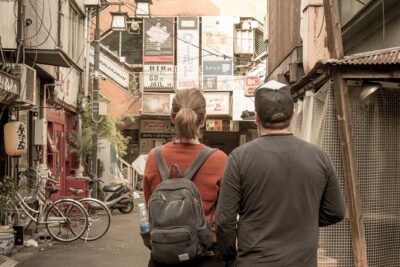
3-Hour Bike/E-Bike Tour of the City’s Highlights
Read our review →
Tokyo downtown bicycle tour Tokyo Backstreets Bike Tour
Read our review →Browse the lists this tour appears in