
Reviewed · TOKYO SUSHI MAKING CLASSES
Private Sushi Making with a Sushi Master
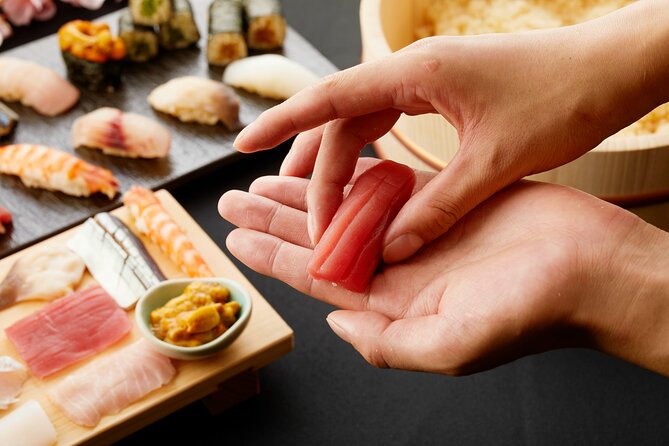
Tokyo is full of excellent sushi counters, but this private class gives you something a restaurant meal cannot: the chance to learn the work behind each piece. A sushi master demonstrates how to handle fish, rice, seaweed, and seasonal ingredients, then lets you make nigiri, maki, and gunkan yourself.
I like the private format, since you get direct help instead of trying to keep up with a large class. I also like the blend of food and culture: the sushi history talk and quiz make the meal more than a simple cooking lesson. Chef Riku and Rin are named members of the team, and the staff can work with vegetarian, vegan, gluten-free, and other dietary needs.
The main drawback is the strict arrival rule. If the team has no contact from you within five minutes of the start time, the booking is treated as a no-show with no refund, so build in extra time for Tokyo transport.
Key points to know before booking
- Three sushi styles in one class: You make classic nigiri, seaweed-wrapped maki rolls, and gunkan, the battleship-style sushi topped with fillings.
- Private instruction: Only your group takes part, giving you more time to ask questions and correct your technique.
- A Michelin-starred setting: The workshop takes place inside a Michelin-starred sushi restaurant.
- A meal at the end: You eat the sushi you prepare, along with soup and green tea.
- A short, focused schedule: The full class lasts about 1 hour and 45 minutes, including the talk, quiz, demonstration, cooking, photos, and meal.
- Easy cancellation terms: You can receive a full refund if you cancel at least 24 hours before the start time.
Why this Tokyo sushi class feels different
Anyone can order sushi in Tokyo. That is part of the fun of visiting Japan, but it also leaves you with a question: how will you make anything similar once you return home? This workshop answers that question with basic techniques you can repeat in your own kitchen.
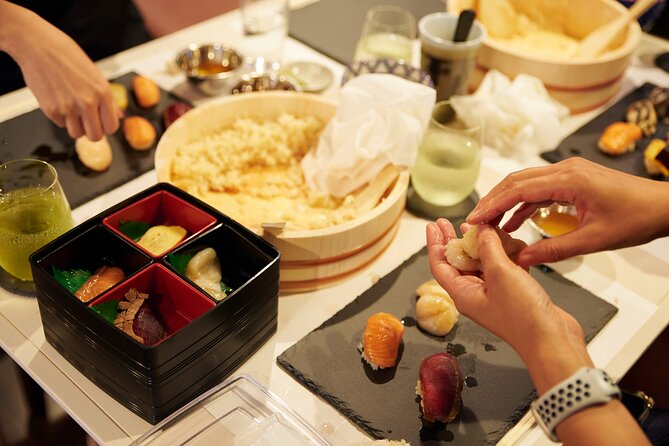
You are not simply watching a chef prepare a plate. You handle the ingredients and shape the sushi yourself. The class covers three forms, so you see how the same basic ingredients can become very different pieces.
The setting matters, too. The workshop takes place in a Michelin-starred sushi restaurant, which gives the lesson a more serious food setting than a casual cooking studio. At the same time, the class is designed to be friendly and hands-on rather than formal or intimidating.
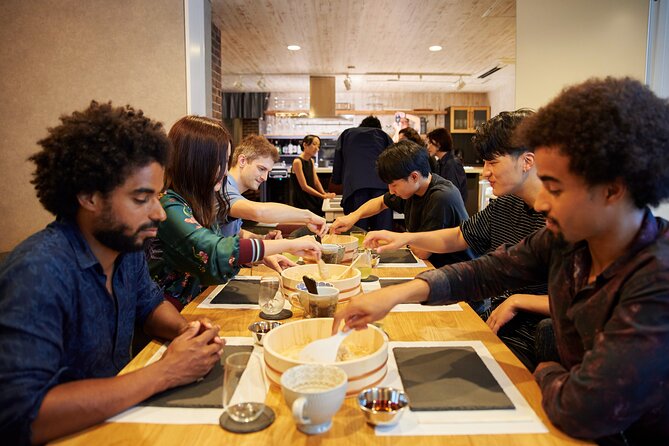
The private arrangement is especially useful for first-timers. You can ask for the demonstration to be repeated, get help with your rice shaping, or ask why a particular ingredient is paired with a certain style. Solo visitors can also book, and the format avoids the awkwardness of being placed in a large mixed group.
More Tokyo sushi making classes:
- Sushi Making Tokyo Roll and Authentic Japanese Sushi Class
★ 5.0 · 3,971 reviews - Tokyo: Roll and Authentic Sushi Making Class in Asakusa
★ 4.9 · 1,957 reviews - Make Sushi and Create Unforgettable Memories in Tokyo
★ 5.0 · 1,413 reviews
Meeting at A-PULSE AZABU STUDIO in Nishiazabu
Your starting point is A-PULSE AZABU STUDIO, at 3-chōme-8-18 Nishiazabu, Minato City, Tokyo 106-0031. The activity ends at the same meeting point, so you do not need to arrange a separate return transfer or figure out a new end location.
The meeting point is near public transportation, but the five-minute no-show rule makes punctuality important. Tokyo train journeys can involve long station walks, transfers, and crowded platforms. I would plan to arrive in the Nishiazabu area early, then use the extra time to find the studio without rushing.
This is a practical point, not a minor technicality. If the operator receives no contact within five minutes after the scheduled start, you lose the reservation and the payment. If you are delayed by a flight, train, or other problem, contact the team as soon as possible. The staff has shown some flexibility in unusual situations, but you should not treat that as a guaranteed change to the policy.
The 1-hour-45-minute schedule
The class follows a clear sequence. It begins with an introduction to sushi history, followed by a quiz, a demonstration, hands-on preparation, and time to photograph and eat your work.
That order works well. You first learn a little context, then watch the correct method before trying it yourself. The quiz adds a light challenge without turning the class into a lecture.
The total time is about 1 hour and 45 minutes. That is long enough to cover the three sushi types and enjoy the meal, but short enough to fit into a busy Tokyo itinerary. You will want to arrive ready to take part rather than squeezing in a large meal beforehand.
The final eating time is part of the class, not an afterthought. You prepare the sushi, take photos with your creations, and then eat what you made. Come hungry, since the activity is intended to finish with a freshly prepared meal.
Nigiri: learning the shape of classic sushi
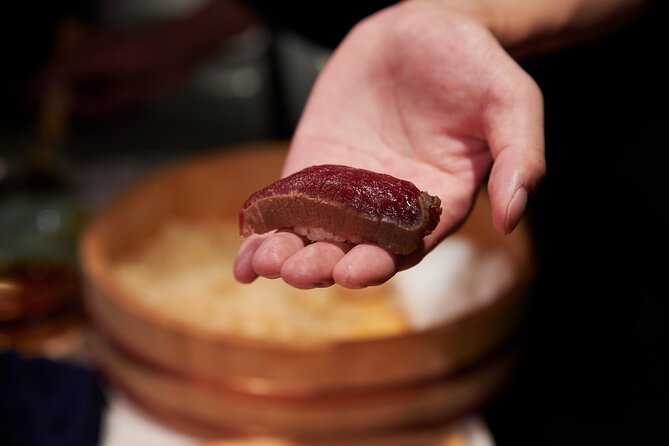
Nigiri is the familiar form with a slice of fish placed on top of rice. It looks simple, but the shape and handling matter. You learn how to form the rice and place the fish so the finished piece holds together.
This is likely the most useful style to practice at home, but it is also the one where a beginner can quickly see the difference between careful technique and a loose handful of rice. The private format gives the sushi master time to guide your hands and point out adjustments.
The fish is selected and prepared by the sushi master. That means you are working with ingredients chosen for the class and kept in pristine condition, rather than being asked to improvise with ordinary supermarket fish.
The goal is not to turn you into a professional sushi chef in one sitting. It is to give you a clear sense of the balance between rice, fish, pressure, and presentation. After the class, you should have a better idea of why a well-made nigiri piece feels neat and composed rather than bulky.
More private tours in Tokyo:
- Tokyo 6hr Private Tour with Government-Licensed Guide
★ 5.0 · 3,902 reviews - Private Tour to Mt. Fuji and Hakone (Fully Licenced Operator)
★ 5.0 · 1,910 reviews - Tokyo Customized Private Tour (Must See Places in 1 Day)
★ 5.0 · 1,499 reviews - Mount Fuji Full-Day Private Tour from Tokyo (Customizable)
★ 4.9 · 1,470 reviews
Maki: rolling seaweed around the filling
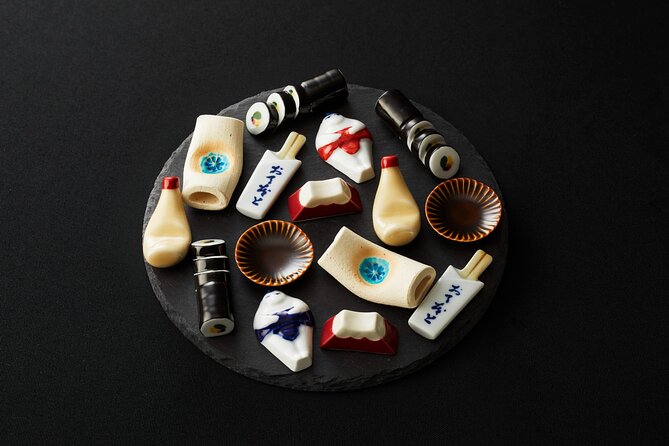
Maki is the traditional roll wrapped in seaweed. It is the most familiar choice for many home cooks, but rolling it evenly still takes practice.
During the demonstration, pay attention to how much filling goes inside and how firmly the roll is shaped. Too much filling can make the roll split, while too much pressure can squeeze out the rice. The hands-on portion lets you try the movement with direct help nearby.
Maki also gives you a useful contrast with nigiri. Nigiri puts the fish and rice in plain view. Maki hides the filling inside a clean roll, so the seaweed, rice, and cutting technique become more important.
You will get to eat the result at the end. That makes the learning process forgiving. A slightly uneven roll is still lunch, and you can compare your own work with the chef’s demonstration while the steps are fresh in your mind.
Gunkan: the battleship-style piece
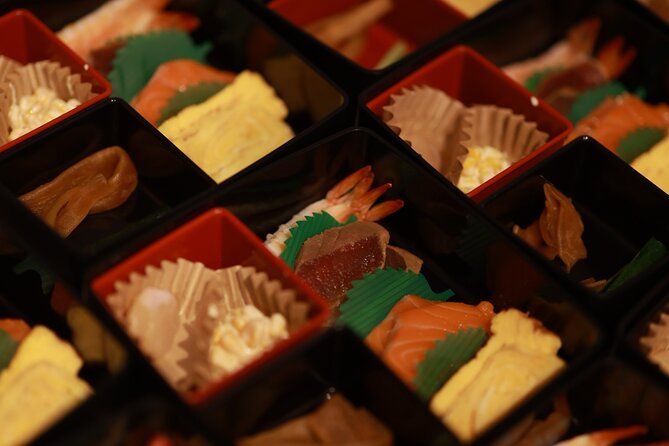
Gunkan is sushi wrapped with seaweed and topped with different ingredients. Its name refers to the shape, which resembles a small battleship with a raised seaweed edge holding the topping in place.
This style adds a different skill to the lesson. Instead of rolling ingredients inside seaweed, you build a compact base and create a rim around it. The topping remains visible, so the final piece can be especially fun to photograph.
Gunkan also shows how sushi is not limited to one shape or one method. The class gives you a basic working vocabulary: nigiri for fish on rice, maki for rolled sushi, and gunkan for a seaweed-wrapped piece with a topping.
For someone who wants a useful home lesson, this variety is a strong point. You do not spend the whole class repeating one technique. You get a short introduction to three recognizable forms, each with a different look and handling method.
The sushi history talk and quiz
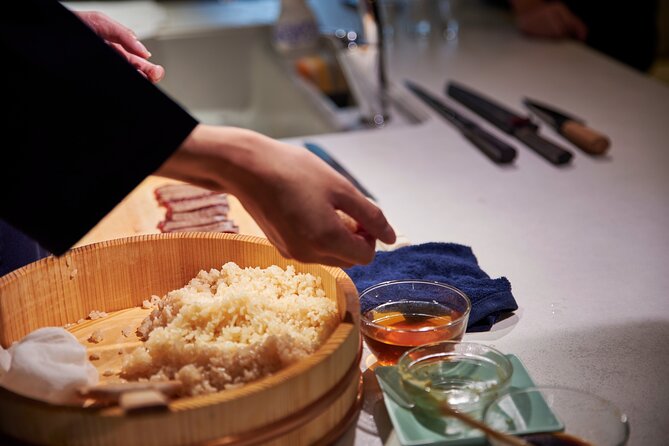
The class begins with sushi history, then tests your attention with a quiz. The provided details do not specify the exact questions, so you should expect a light educational part rather than a formal academic lesson.
I like this addition because it gives the food some context. Sushi is often reduced to raw fish, but the finished piece also depends on rice, seaweed, preparation, seasonality, and presentation. A short history talk helps you notice those parts while you are cooking.
The quiz should also keep the mood relaxed. It adds interaction before the practical work begins, and it gives the private group a simple way to take part even before the knives and ingredients appear.
If you are booking mainly for an intensive professional cooking course, this may feel brief. The activity is better understood as a friendly introduction with hands-on practice, not a full culinary qualification.
Chef Riku, Rin, and the private teaching style
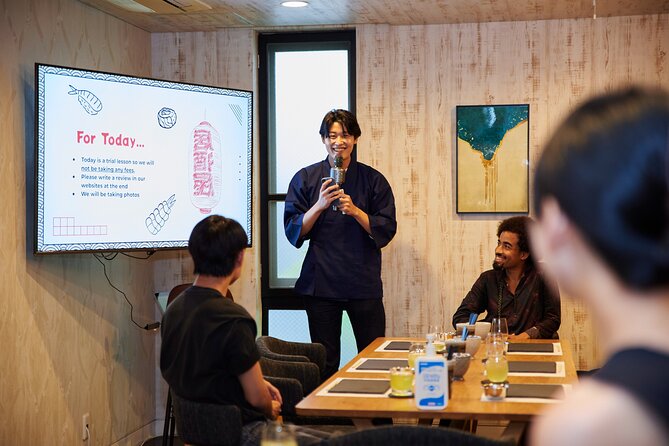
Chef Riku leads the sushi instruction, while Rin is part of the team helping make the class run smoothly. The staff speaks English, which is important when a lesson depends on small instructions about pressure, shaping, and ingredients.
A private class changes the pace. You are not waiting for a large group to finish each step, and the chef can focus on your questions. That is useful for solo visitors, couples, families, or small groups with mixed cooking confidence.
The atmosphere also matters. The team has been described as kind, helpful, and fun, with room for laughter during the lesson. That balance is valuable in a class involving raw fish and precise presentation. You get a serious look at sushi preparation without needing to act like a professional chef.
The class can also accommodate dietary restrictions, including vegetarian, vegan, and gluten-free needs. Tell the provider in advance so the ingredients can be prepared appropriately. The information confirms that these needs can be accommodated, but it does not list every possible substitute, so ask about your specific restriction before booking.
Eating your sushi with soup and green tea
The class ends with your handmade sushi, and the meal may include soup and green tea. This is where the practical lesson pays off. You get to taste the results immediately rather than carrying an unfinished project out the door.
The ingredients are carefully selected and prepared by the sushi master. That is a major part of the price. You are not paying only for rice, seaweed, and fish. You are paying for sushi-grade ingredients, instruction, preparation, and a meal in a Michelin-starred restaurant setting.
The food quality also helps you understand the role of ingredients. If one piece tastes better than another, you can think about the rice shape, the balance of topping, or the way the piece was handled. It turns lunch into a final part of the lesson.
You also get time for photos with your sushi. That may sound like a small extra, but it gives you a clear record of the three styles you made and creates a natural pause before eating.
Is $130.81 per person good value?
At $130.81 per person, this is not a budget meal or a cheap cooking activity. The value comes from the private format, the Michelin-starred restaurant setting, the quality of the ingredients, and the fact that the lesson ends with a meal.
For a person who only wants to eat as much sushi as possible, the price may feel high. You could spend less at many Tokyo restaurants and receive more prepared pieces. This class makes better sense if you want instruction, personal attention, and a food memory you can repeat at home.
The 1-hour-45-minute length also affects the calculation. You are not committing half a day, so the class can fit before or after another activity in Tokyo. That is useful if your schedule is tight, though you should leave enough time to reach Nishiazabu without rushing.
The private setup is the biggest value point. A lower-priced group class may offer a similar basic recipe, but it may not give you the same direct time with the sushi master. If you are booking for a small group and want one shared activity, the price becomes easier to justify.
Who should book this sushi experience?
I would recommend it to first-time sushi makers, food-focused visitors, couples, families, solo visitors, and anyone who wants an activity with a clear result at the end. The class is social without requiring a large group, and the work is active enough to keep you involved.
It is also a good choice for a chef or serious home cook who wants to ask questions about sushi technique. One solo chef found the discussion of preparation and flavors especially useful, and the instruction is precise enough to appeal to someone who already spends time in the kitchen.
You may want to skip it if you dislike raw fish, do not want to eat what you prepare, or prefer a long technical course. The class is designed around making and eating sushi, not simply watching a demonstration.
It is also not the right choice if your schedule is uncertain. The no-show rule is strict, and late changes within 24 hours are not accepted. Book it for a time when you can reach the studio reliably.
Booking, cancellation, and practical details
Your booking confirmation is normally issued at the time of booking. If you book within one day of the activity, confirmation arrives as soon as possible and depends on availability.
Free cancellation is available up to 24 hours before the start time for a full refund. Cancel less than 24 hours before the activity and you will not receive a refund. Changes made within that same period are not accepted.
The ticket is mobile, and the activity begins and ends at A-PULSE AZABU STUDIO. Only your group participates, and the class is near public transportation.
The experience has a 5 out of 5 rating based on 102 reviews, with 100 percent recommending it. That matches the main strengths of the format: strong ingredients, patient teaching, English-speaking staff, a private setting, and a meal you prepare yourself.
Should you book it?
Book this class if you want more than a sushi lunch in Tokyo. You will learn three basic forms, hear a short history of sushi, take part in a quiz, work with a sushi master, and eat your own finished meal.
The price is fair for a private lesson in a Michelin-starred restaurant, but it is not the best pick for a low-cost food stop. Arrive early, tell the team about dietary needs in advance, and keep the strict five-minute no-show rule in mind. For a food-loving visitor who wants a practical memory to take home, this is a focused and enjoyable choice.
FAQ
Where does the sushi-making class take place?
The class begins and ends at A-PULSE AZABU STUDIO, 3-chōme-8-18 Nishiazabu, Minato City, Tokyo 106-0031, Japan.
How long does the activity last?
The workshop lasts approximately 1 hour and 45 minutes.
What types of sushi will I make?
You will make nigiri, maki, and gunkan. Nigiri has fish on rice, maki is a seaweed-wrapped roll, and gunkan is a battleship-style piece wrapped with seaweed and topped with ingredients.
Is this a private activity?
Yes. Only your group participates in the activity.
Can dietary restrictions be accommodated?
Yes. Vegetarian, vegan, gluten-free, and other dietary restrictions can be accommodated. Provide your requirements when booking or contact the provider about your specific needs.
Do I eat the sushi I make?
Yes. The workshop includes time to photograph and eat your handmade sushi. You should come hungry.
What happens if I arrive late?
If the provider receives no contact from you within five minutes after the scheduled start time, the reservation is treated as a no-show and no refund is provided.
Can I cancel for a full refund?
Yes. You can cancel at least 24 hours before the experience start time for a full refund. Cancellations and changes made less than 24 hours before the start time are not accepted or refunded.
Newly reviewed around Tokyo
- Tokyo Asakusa:Calligraphy & Make T-shirt Activity★ 5.0 · 62 reviews
- Intercity Shuttle, Tokyo to Haneda /Narita /Yokohama /Makuhari★ 5.0 · 5 reviews
- 1 Hour Travel around Tokyo with a Professional Photographer★ 5.0 · 3 reviews
- Travel Tokyo with Your Own Personal Photographer★ 5.0 · 43 reviews
- Train in Samurai Swordsmanship and Defeat the Demon in Tokyo★ 5.0 · 5 reviews
- Shuttle Van 6hr Tokyo Tour to-and-from Tokyo, Yokohama and Narita★ 5.0 · 9 reviews
- Kickboxing & Body Training with EX-Pro Fighter★ 5.0 · 4 reviews
- Traditional Japanese Knife Sharpening Class★ 5.0 · 18 reviews
Tokyo Sushi Making Classes, compared.
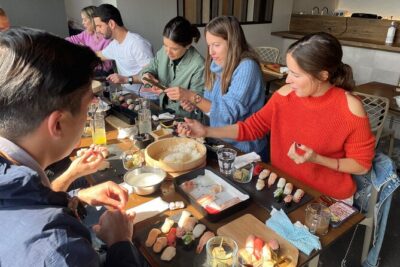
Sushi Making Tokyo Roll and Authentic Japanese Sushi Class
Read our review →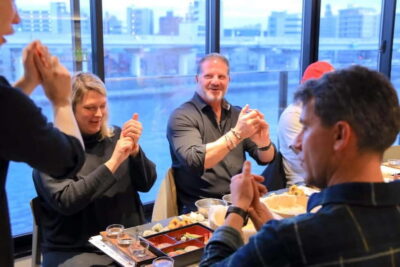
Roll and Authentic Sushi Making Class in Asakusa
Read our review →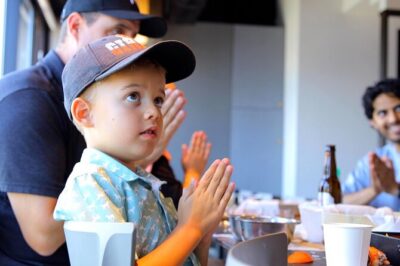
Make Sushi and Create Unforgettable Memories in Tokyo
Read our review →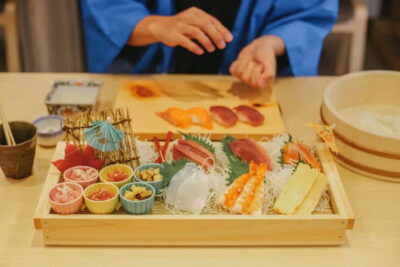
Sushi Making Class in a Happi Coat near a Famous Spot
Read our review →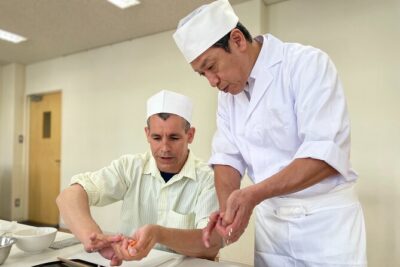
Tokyo Sushi Making Class in Tsukiji with Professional Chef
Read our review →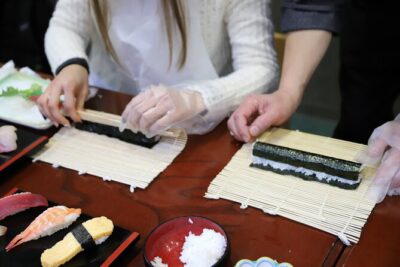
Tsukiji Fish Market Guided Tour and Sushi Making with Pro Chef
Read our review →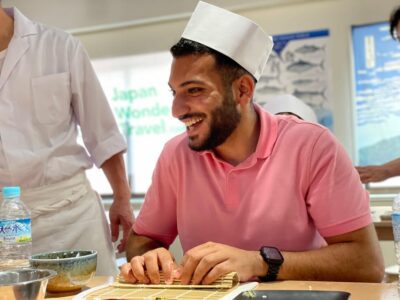
Tsukiji Fish Market Sushi Making Class with Pro Chef
Read our review →
Browse the lists this tour appears in