
Reviewed · TOKYO KIMONO EXPERIENCES
Turn Antique Kimono into Take-Home Interior Art
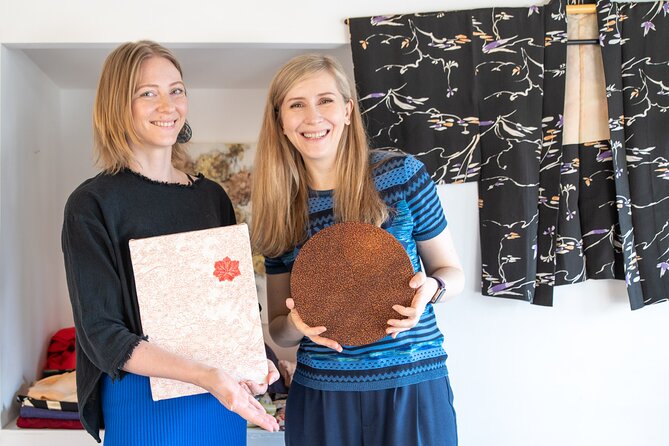
An old kimono becomes your own piece of wall art in this small, hands-on workshop at Atelier + Gallery QUADROJapan. You choose fabric from more than 200 antique kimonos, learn what its colors and patterns mean, then mount it on a round or rectangular panel to take home.
I like two things right away: the work is genuinely personal, since you select the fabric and shape, and Lena gives the process cultural context rather than treating the kimono as pretty cloth. You also get a useful souvenir, not another small object destined for a drawer.
The main consideration is the 90-minute time limit. You have enough time for a focused project, but not for a long design class or a full lesson in kimono making. If you enjoy careful, creative work, this is a fine use of an afternoon. If you want a major museum-style presentation, choose a different activity.
Key points to know
- Choose from more than 200 antique kimonos: Colors, motifs, and fabric textures vary, so your final piece can feel very personal.
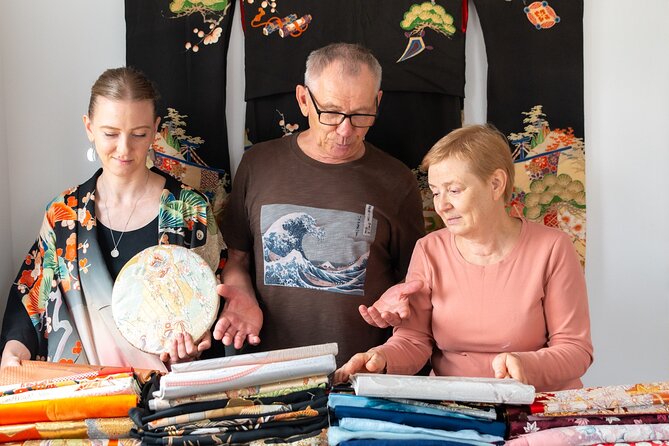
- Learn the meaning behind the design: Lena explains kimono techniques, pattern symbolism, and the connection between motifs and Japan’s seasons.
- Make the artwork yourself: You attach the fabric to the panel with traditional Japanese backing methods, with guidance at each stage.
- Pick a round or rectangular panel: The shape changes the look of the finished piece and gives you an early design decision.
- Work in a small gallery setting: The group is limited to five people, which allows for close instruction without making the session feel crowded.
- Take the finished piece home: Materials, tools, fabric, panel, and completed artwork are included in the price.
Why this kimono workshop feels different
Tokyo offers plenty of craft activities, but this one has a clear purpose: you rescue a piece of kimono fabric from being forgotten and give it a new life as interior art. That makes the project feel more meaningful than simply buying a decorative souvenir.
The idea connects with ichigo ichie, a Japanese expression about treasuring each encounter as a once-in-a-lifetime meeting. Here, the encounter is with a particular kimono. Among hundreds of fabrics, one pattern catches your eye, and that choice becomes the heart of your artwork.
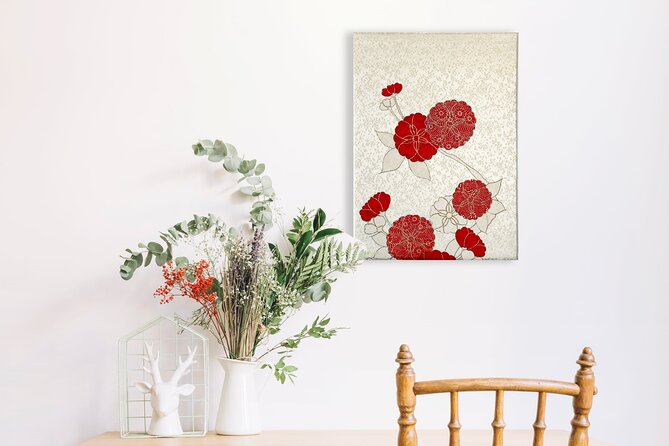
You are not buying a finished object selected by someone else. You are making a decision, learning why the design looks the way it does, and helping create the final piece. The result will not be perfectly identical to the sample artwork in the gallery, and that is part of its appeal.
I also like the sustainable angle. Reusing older kimono fabric gives a historic textile a practical second life. The material is not reduced to a costume or treated as a generic Japanese decoration. It becomes something you can display at home or in an office while remembering the time spent making it.
More Tokyo kimono experiences:
- Let’s make kimono !(Kimono is a gift for you
★ 5.0 · 252 reviews - Tokyo: Matcha and Kimono Experience
★ 4.7 · 219 reviews - Tokyo: Asakusa Kimono Dressing and Matcha Experience
★ 4.9 · 173 reviews
Arriving at Atelier + Gallery QUADROJapan
The workshop takes place at Atelier + Gallery QUADROJapan, in Meguro City on Meguro Interior Street. The address is 6-chōme 16-13 Shimomeguro, Meguro City, Tokyo 153-0064, on the first floor.
Meguro Interior Street suits the subject well. This part of Tokyo is associated with interior design, so the setting puts your workshop in a district where furniture, decoration, and objects for the home are already part of the local character. You are not heading to a large tour facility or a noisy entertainment venue. You are entering an art gallery that also functions as a working studio.
The gallery is described as intimate and cozy, with artwork on display. That matters because the room helps you think about the finished panel as art for your home, rather than as a simple class project. You can look at the surrounding pieces, consider how fabric works with shape and color, and then make your own choice.
The activity begins and ends at the same location. Transportation to and from the gallery is not included, so you need to arrange your own way there. The venue is near public transportation, but the supplied details do not specify a particular station or walking time, so check your route before setting out.
Starting with kimono craft and technique
The first part introduces the traditional methods used to make kimono. You learn about dyeing, weaving, and hand painting, which gives you a better eye for the cloth in front of you.
This short introduction is important. Without it, fabric selection could become a quick choice based only on color. With some background, you can look at a pattern and notice how the surface was created, how the colors relate to one another, and why one piece feels different from another.
Do not expect a full technical course in kimono production. The workshop lasts about an hour and a half, and the main goal is to create a finished interior piece. Still, the explanation gives your creative decision some grounding. You understand that the fabric carries more than a pleasing design.
Lena’s role is central here. Her experience with kimono fabric and its history helps connect the practical work with the cultural meaning. She is also described as patient and friendly, which is useful in a workshop where you may need help making design choices or handling the backing process.
Choosing one fabric from more than 200 antique kimonos
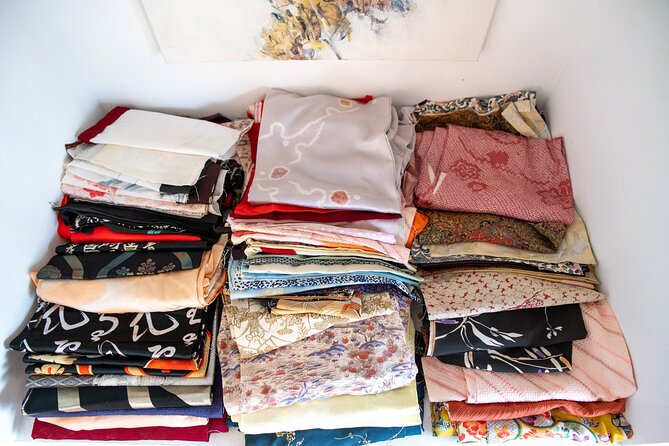
The fabric selection is likely to be the most difficult and enjoyable part. More than 200 antique kimonos are available, with different colors, patterns, and details. You may find yourself drawn first to a bold design, then pulled toward a quieter pattern once you see how it might work on a panel.
Give yourself time to look. The strongest choice is not necessarily the brightest fabric. Think about what you would enjoy seeing on a wall every day, not just what grabs your attention for the first few seconds.
You also choose between a round canvas and a rectangular canvas. That decision affects how the motif will sit inside the finished artwork. A pattern with a central design may suit a round panel, while a repeating or elongated pattern may work better in a rectangle. The precise design advice comes from Lena, so you do not need to arrive with a firm plan.
The small group limit, a maximum of five people, is a real advantage at this stage. You are making an individual choice, not waiting in a line while one instructor tries to advise a large room. The format should also make it easier to ask about a pattern’s meaning or the story connected with a particular fabric.
A completely different kind of day in Tokyo:
- Mt Fuji and Hakone 1-Day Bus Tour Return by Bullet Train
★ 5.0 · 26,383 reviews - 1-Day Tokyo Bus Tour
★ 5.0 · 14,250 reviews - Tokyo: teamLab Planets TOKYO Digital Art Museum Entry Ticket
★ 4.6 · 9,779 reviews - Mt Fuji & Hakone Cruise, Drum Show Bullet Train 1 Day from Tokyo
★ 4.0 · 7,413 reviews
Understanding symbols, seasons, and pattern meanings
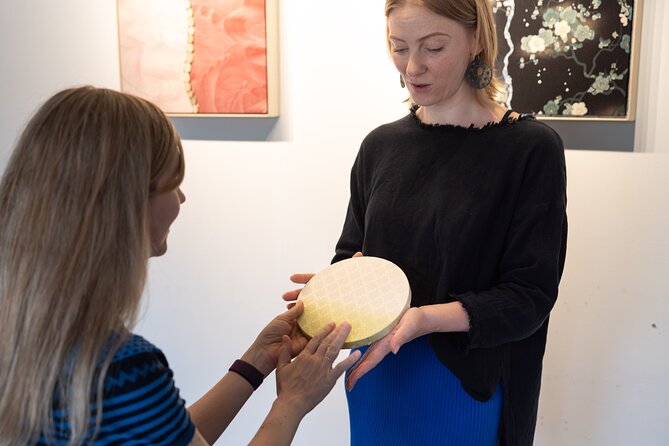
After you select the fabric, Lena explains its historical background and the symbolism in the pattern. She also discusses the meaning of Japan’s seasons and how seasonal ideas appear in kimono design.
This is where the piece becomes more than decoration. A flower, plant, natural form, or repeated motif may relate to a particular time of year or carry a traditional association. Knowing that gives you a story to tell when someone asks about the panel at home.
The seasonal connection also helps explain why kimono designs can feel so carefully composed. Japanese clothing has long used motifs to suggest nature, time, celebration, and changing seasons. Even if you do not remember every detail after the workshop, you will leave with a better sense of how the design communicates.
I appreciate that the explanation is tied to the exact fabric you choose. You are not receiving a general talk detached from the activity. The information relates to the material in your hands, so it becomes part of your memory of making the artwork.
Mounting the fabric on your panel
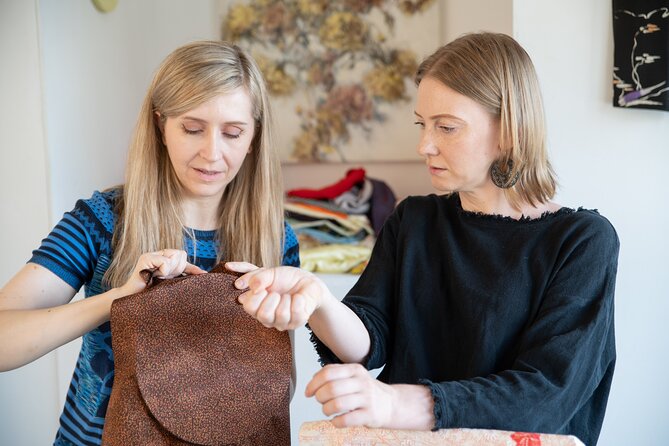
The hands-on portion uses traditional Japanese backing techniques. You attach the chosen kimono fabric to the panel, following guidance from Lena as you work through each stage.
This is not a demonstration where you watch someone else create the finished piece. You do the making yourself. That gives the souvenir a stronger personal connection, but it also means you should expect to concentrate. Fabric placement, edges, and overall balance matter, and the final look depends partly on your choices.
Lena provides tips throughout the process. Her guidance helps you avoid treating the material like ordinary craft fabric. Antique kimono cloth can have its own character, and careful handling is part of respecting the material.
The ninety-minute schedule keeps the project manageable. You are not expected to complete a large or complicated installation. Instead, you create one compact work of art that can be finished during the session and carried away afterward.
There is a tradeoff. Because the workshop is short, you may need to make decisions efficiently. If you like spending a long time testing several layouts, the pace could feel brisk. If you want a focused activity that fits neatly between sightseeing plans, the timing works in your favor.
The finished artwork and what you take home
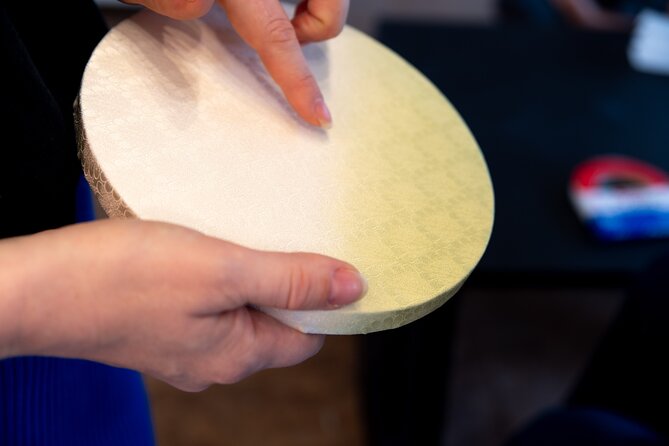
Your completed piece is included, along with the tools and materials used in the workshop. That means the listed price covers the kimono fabric, panel, supplies, and the finished artwork, rather than leaving you with an additional materials bill.
The final object is designed for interior decoration. You can display it at home or in an office, giving it a practical use beyond the trip itself. Its compact format should also be easier to pack than a large framed textile, though the supplied information does not specify exact panel dimensions or packing arrangements.
The best part is that the artwork carries several layers of memory. You remember the gallery, the fabric you selected, the story behind the pattern, and the act of attaching it yourself. A mass-produced souvenir might show that you visited Japan. This kind of object can remind you of a particular afternoon and a particular choice.
The artwork also makes a thoughtful gift, but only if you are comfortable giving away something you made yourself. Since the activity is personal, you may find it more satisfying to keep the panel for your own wall.
What the $97.73 price offers
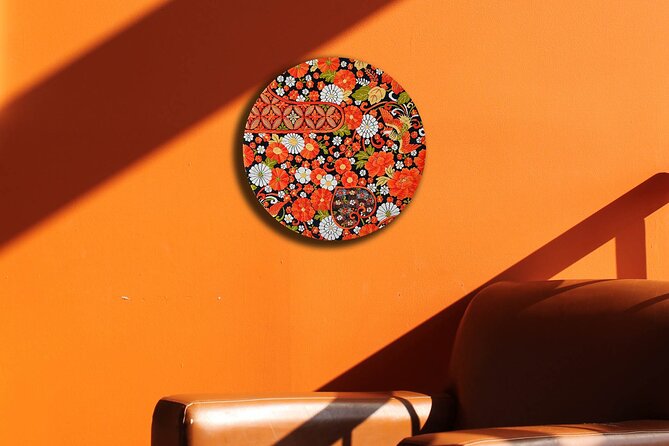
At $97.73 per person, this is not a low-cost craft stop. The price makes more sense when you count what is included: access to a large selection of antique kimono fabric, the panel, tools, supplies, cultural explanation, personal instruction, and a finished piece to take home.
You are also paying for a small-group format. With no more than five participants, the session is built around individual choices and direct help. That is a better fit for you if personal attention matters more than getting the cheapest possible souvenir.
The value depends on how much you care about the process. If you only want a decorative item, you may find it cheaper to buy one in a shop. If you want to understand the pattern, make design decisions, and create the object yourself, the price is easier to justify.
Booking patterns suggest that people reserve this activity about 17 days ahead on average. That does not guarantee that every date sells out, but it is sensible to plan ahead, especially if you have a tight Tokyo schedule. The mobile ticket also makes it easy to keep the booking available on your phone.
Who will enjoy this experience most
I would recommend this workshop to anyone who likes design, fabric, Japanese craft, or hands-on cultural activities. It suits couples, solo visitors, and small groups who want a quiet project rather than a large organized tour.
It is especially useful for:
- People who want a meaningful alternative to ordinary souvenirs
- Visitors interested in interior decoration and textile design
- Anyone who appreciates learning the story behind a pattern
- Couples who want matching or complementary artworks
- Visitors with about 90 minutes available in Meguro
- People who prefer a small group and direct instruction
It may be less suitable if you dislike making design choices, have no interest in fabric, or want a long historical lecture. The workshop gives you context, but the main focus is creating the panel.
You also need to be comfortable with the fact that each finished artwork will be different. The experience is not about reproducing one standard design. It is about responding to the fabric you choose.
Practical details before you book
The activity lasts approximately one hour and 30 minutes. It starts and finishes at Atelier + Gallery QUADROJapan, so you do not need to change locations during the session.
The maximum group size is five people. Most people can participate, and service animals are allowed. Transportation is not included, so plan your route to Meguro Interior Street separately.
Confirmation arrives at the time of booking, and the activity uses a mobile ticket. You can cancel for a full refund up to 24 hours before the local start time. Cancellations or changes made less than 24 hours before the start are not accepted for a refund.
One practical point is worth keeping in mind: ask about carrying or packing the finished artwork if you are continuing your trip. The artwork is made to take home, but exact dimensions and packing details are not provided.
Should you book the kimono art workshop?
Book it if you want a small, personal Tokyo experience that leaves you with something you made yourself. The strongest reasons are the choice of more than 200 antique kimono fabrics, Lena’s guidance on symbolism and design, and the chance to turn an older textile into useful interior art.
Skip it if your priority is saving money, visiting a major attraction, or taking a formal, long-form lesson in kimono construction. At $97.73, the value comes from the combination of instruction, materials, small-group attention, and a finished keepsake.
For a design-minded afternoon in Meguro, this is a thoughtful choice. You leave with more than a panel. You leave knowing why you chose its pattern and what that pattern means.
FAQ
Where does the kimono art workshop take place?
It takes place at Atelier + Gallery QUADROJapan, 1F, 6-chōme 16-13 Shimomeguro, Meguro City, Tokyo 153-0064. The gallery is on Meguro Interior Street.
How long does the activity last?
The workshop lasts approximately one hour and 30 minutes.
How many people can join the workshop?
The maximum group size is five participants.
What can I choose for the artwork?
You choose your preferred colors and patterns from more than 200 antique kimonos. You can also choose a round or rectangular panel.
What techniques are introduced?
The workshop introduces kimono dyeing, weaving, and hand-painting techniques. You also use traditional Japanese backing techniques to attach the selected fabric to the panel.
Is the finished artwork included?
Yes. The tools and materials, including the kimono fabric and panel, are included, and you take the completed artwork home.
Is transportation to the gallery included?
No. Transportation to and from the workshop venue is not included. The gallery is near public transportation.
What is the cancellation policy?
You can cancel at least 24 hours before the local start time for a full refund. Cancellations or changes made less than 24 hours before the start are not accepted for a refund.
Newly reviewed around Tokyo
- Tokyo Asakusa:Calligraphy & Make T-shirt Activity★ 5.0 · 62 reviews
- Intercity Shuttle, Tokyo to Haneda /Narita /Yokohama /Makuhari★ 5.0 · 5 reviews
- 1 Hour Travel around Tokyo with a Professional Photographer★ 5.0 · 3 reviews
- Travel Tokyo with Your Own Personal Photographer★ 5.0 · 43 reviews
- Train in Samurai Swordsmanship and Defeat the Demon in Tokyo★ 5.0 · 5 reviews
- Shuttle Van 6hr Tokyo Tour to-and-from Tokyo, Yokohama and Narita★ 5.0 · 9 reviews
- Kickboxing & Body Training with EX-Pro Fighter★ 5.0 · 4 reviews
- Traditional Japanese Knife Sharpening Class★ 5.0 · 18 reviews
Tokyo Kimono Experiences, compared.


Tokyo Asakusa: Traditional Kimono Rental Experience at Wargo
Read our review →
Tokyo Authentic Kimono Rental in Asakusa with Photography Option
Read our review →
Kimono Rental inside Shinjuku Gyoen National Garden
Read our review →Browse the lists this tour appears in