
Reviewed · TOKYO SUSHI MAKING CLASSES
A One-of-a-Kind Sushi Experience in a Special Place of Japan
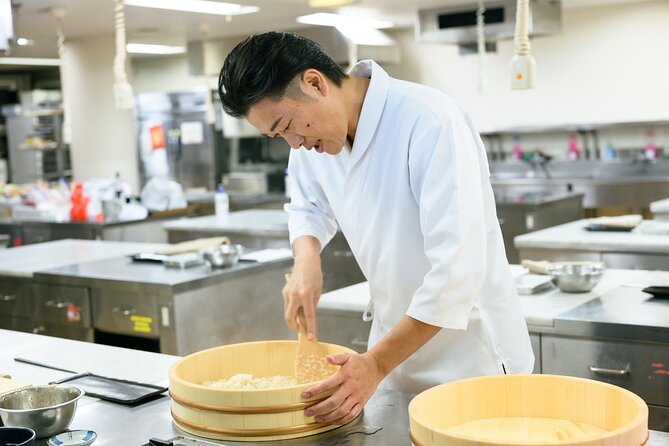
Making sushi inside Japan’s House of Representatives building is the hook here. You are not simply eating at a sushi counter. You are handling the knife, shaping the rice, and making about eight pieces with fresh fish delivered from Toyosu Market. Sushi Chef Sasao, who has served Japanese politicians including the Prime Minister, leads this unusual food lesson.
I like the mix of hands-on cooking and political Japan, a side of Tokyo most visitors never see. I also like the patient English-language instruction, especially for first-timers who may feel that sushi technique is too delicate to attempt. The main consideration is price: at $220 per person for about two hours, this is a premium experience, not a casual lunch.
Key points to know before booking
- A restricted setting: The lesson takes place inside the House of Representatives building in Nagatacho.
- Fresh Toyosu ingredients: Fish comes directly from Toyosu Fish Market and is prepared for the class.
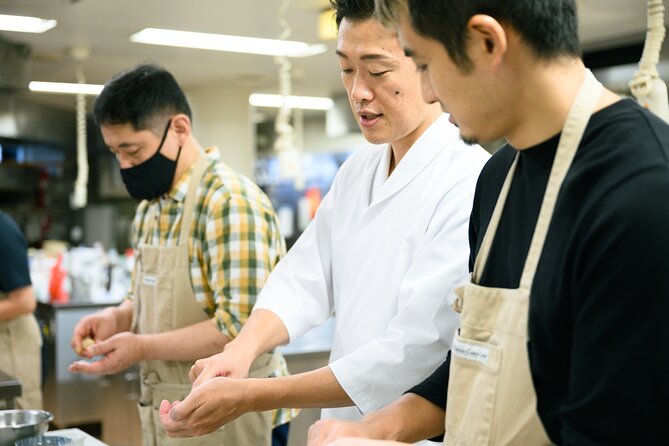
- Beginner-friendly instruction: An English-speaking guide teaches knife handling, fish slicing, and sushi shaping step by step.
- A chef with an unusual résumé: Sushi Chef Sasao has served sushi to Japanese politicians, including the Prime Minister.
- Lunch is part of the lesson: You eat around eight pieces of sushi made with your own hands, along with miso soup or green tea.
- Small enough to feel personal: The maximum group size is 20 people, with group discounts available.
Why this sushi lesson is different from a normal Tokyo food tour
Tokyo gives you no shortage of sushi counters. You can watch a chef work, point to a plate, and be eating within seconds. This experience asks more of you, in a good way. You learn what goes into the finished piece before sitting down to eat it.
The setting changes the mood. Nagatacho is associated with Japan’s national government, and this activity takes place inside the House of Representatives building, where Japanese politicians work. That is not a standard sightseeing stop, and the building is normally closed to the public in this way. The location gives the class a sense of access that a restaurant lesson cannot match.
At the same time, the activity is not presented as a political tour. The focus is sushi. You are there to learn basic technique, work with fresh ingredients, and eat what you make. If you want detailed government history or a formal tour of the building, this is not the right choice. If you want food and an unusual Tokyo setting in one short activity, it makes sense.
More Tokyo sushi making classes:
- Sushi Making Tokyo Roll and Authentic Japanese Sushi Class
★ 5.0 · 3,971 reviews - Tokyo: Roll and Authentic Sushi Making Class in Asakusa
★ 4.9 · 1,957 reviews - Make Sushi and Create Unforgettable Memories in Tokyo
★ 5.0 · 1,413 reviews
Starting in Nagatacho at 2-chome-2-2
The meeting point is 2-chome-2-2 Nagatacho, Chiyoda City, Tokyo 100-0014. The area is near public transportation, but private hotel pickup and drop-off are not included, so you need to make your own way there.
Allow enough time to find the exact meeting point. Tokyo addresses can feel confusing, and a government district is not the place to arrive at the last second with a knife lesson waiting for you. Your confirmation is provided at booking, so keep the meeting details available on your phone.
The activity returns to the same meeting point after roughly two hours. That makes it easy to pair with other central Tokyo plans, though I would avoid booking a tightly timed attraction immediately afterward. The exact class pace may vary, and you will want a few quiet minutes to finish your meal rather than rush out with half your green tea untouched.
Meeting Sushi Chef Sasao and the English-speaking guide
Sushi Chef Sasao brings an unusual professional background to the class. He has prepared sushi for Japanese politicians, including the Prime Minister. That detail matters less as a celebrity connection than as a window into the level of setting and service associated with the lesson.
The class also includes an English-speaking guide who explains the process as you work. The instruction covers basic knife handling, slicing the fish, and shaping sushi. You are not expected to arrive with cooking experience, and the format is meant to help beginners proceed one step at a time.
That patient approach is important. Sushi looks simple because the finished piece is small and neat. In practice, the rice, fish, pressure, and shape all need attention. First-time participants often begin cautiously, then gain confidence as they repeat the motions. Your early pieces may look uneven. That is part of the appeal, since each piece becomes a clear record of what you have just learned.
The class is conducted in English, but the food itself does the teaching too. You see the ingredients, handle them, and taste the result. That gives you a better sense of sushi than watching a chef work behind a counter.
What you actually learn during the two hours
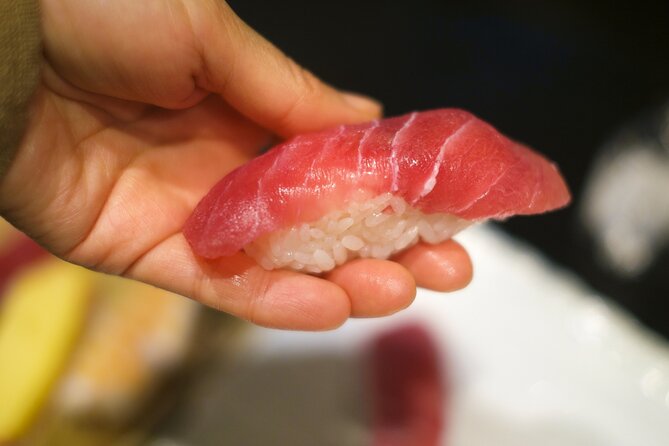
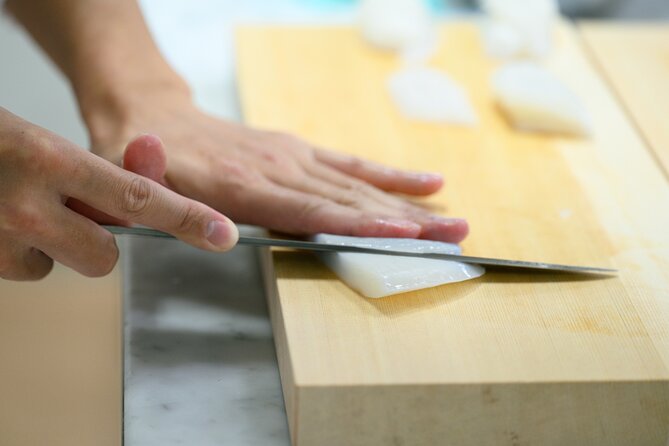
The lesson begins with the basics rather than throwing you straight into a finished plate. You learn how to handle the knife safely, then how to slice the fish. The guide supports you through the process, so you can focus on the technique instead of guessing what to do next.
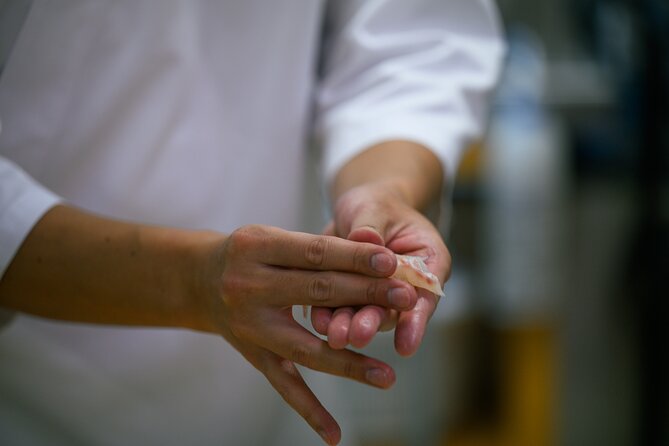
Shaping the sushi comes later. This is where the difference between eating sushi and making sushi becomes clear. A professional chef can create a neat piece quickly, but your own hands need time to learn how much pressure to use and how to keep the rice together.
The supplied details do not list a precise minute-by-minute schedule or a fixed fish menu, so you should not book expecting a particular species unless the operator confirms it. What is clear is that the fish is sourced directly from Toyosu Fish Market, one of Japan’s largest seafood markets.
You make around eight pieces for lunch. That is enough to feel like a proper meal, while still leaving room for the instructional side of the class. Miso soup or green tea is included as well. The meal is not an extra stop at another restaurant. It is the final reward for the work you have just done.
A completely different kind of day in Tokyo:
- Mt Fuji and Hakone 1-Day Bus Tour Return by Bullet Train
★ 5.0 · 26,383 reviews - 1-Day Tokyo Bus Tour
★ 5.0 · 14,250 reviews - Tokyo: teamLab Planets TOKYO Digital Art Museum Entry Ticket
★ 4.6 · 9,779 reviews - Mt Fuji & Hakone Cruise, Drum Show Bullet Train 1 Day from Tokyo
★ 4.0 · 7,413 reviews
Why Toyosu Market ingredients matter
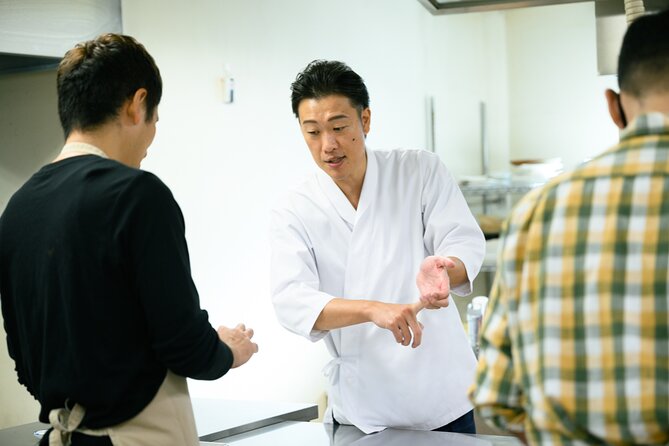
Toyosu is a major seafood market, and sourcing fish directly from there gives this class a strong connection to Tokyo’s food system. The value is not only freshness. It is also the chance to learn with ingredients selected by seafood professionals rather than ordinary supermarket supplies.
You may already know good sushi as a diner. Working with the fish changes your attention. You begin to notice how carefully it must be sliced and how much the final texture depends on preparation. One of the most useful lessons here is respect for the chef’s craft. A sushi piece may take only a few seconds to eat, but it represents far more work than those seconds suggest.
The experience also includes the preparation of sushi itself, including the rice and the shaping process. That helps explain why familiar sushi can taste better after the lesson. You are no longer treating it as a mysterious finished product. You have seen the steps that create it.
The House of Representatives setting
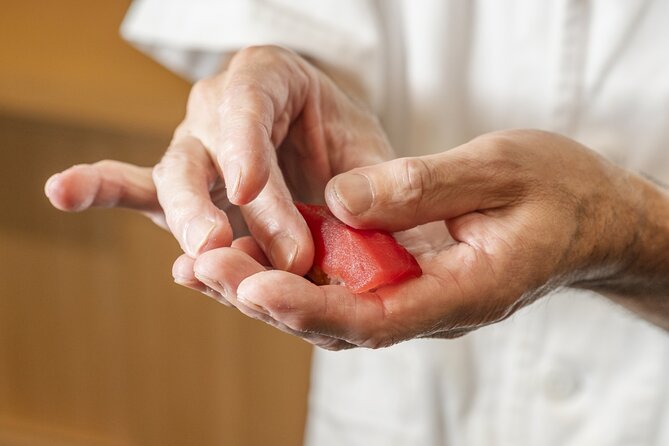
The location is the experience’s rarest feature. Tokyo has many cooking classes, but very few take place inside a building where national politicians work. The House of Representatives setting gives the class a strong sense of place without requiring a full day of sightseeing.
This can be especially appealing if you have already visited temples, gardens, shopping streets, and major city viewpoints. A cooking lesson in a government building offers a different way to understand Japan. It connects food with public life and gives you access to an environment that is normally not open to visitors in this form.
Keep your expectations realistic. You are not buying a general admission ticket to wander through the entire building. The activity takes place inside the building, but the supplied information does not promise access to every room or a separate political tour. Think of the building as the setting for the sushi lesson, not as a second attraction with its own full itinerary.
The unusual venue may also make the experience feel more formal than a neighborhood cooking class. That can be a plus if you want something polished and distinctive. If you prefer a relaxed home kitchen or a market stroll with many food samples, another activity may suit you better.
Is $220 a fair price?
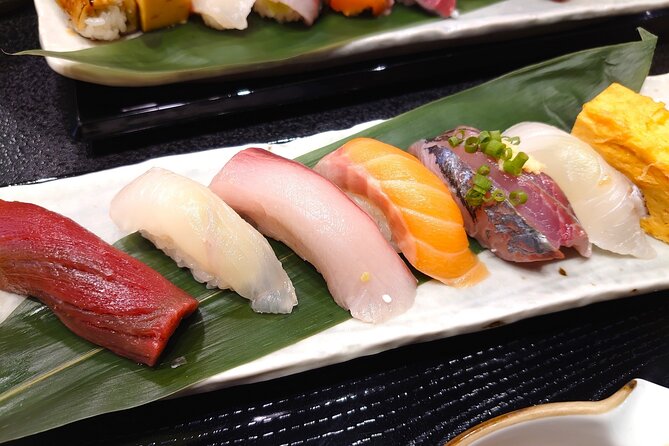
At $220 per person, this is expensive compared with a standard Tokyo lunch. You should not book it simply because you want eight pieces of sushi. The food alone does not explain the price.
You are paying for several parts at once: an English-speaking instructor, direct Toyosu-sourced fish, professional guidance, cooking equipment, lunch, a distinctive government-building location, and access to a chef with a high-level client history. The class also saves you from trying to interpret sushi technique on your own.
The value improves if you care about participation and setting. If you want to make the food yourself, ask questions in English, and leave with a memorable connection to Tokyo, the price is easier to justify. It is also a sensible splurge for a special occasion, a final-day activity, or a small group that wants one shared experience rather than another restaurant meal.
Group discounts may help if you are booking for several people. The maximum group size is 20, so this is not guaranteed to be an intimate one-on-one lesson. Still, a cap of 20 keeps it more contained than a large bus-style activity. Ask about the current discount before booking, since the available price may depend on group size and date.
Who will enjoy this most?
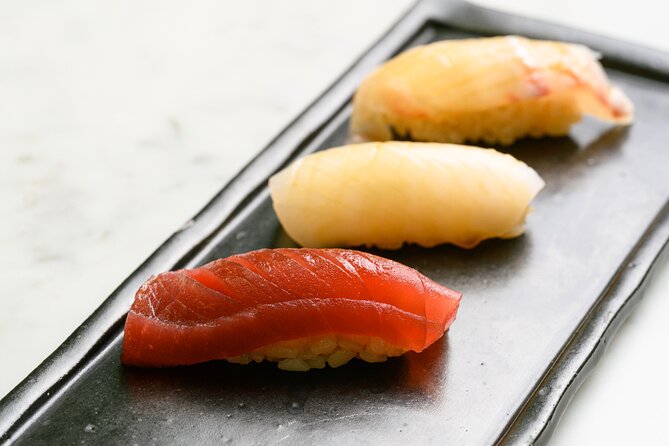
This class is a strong fit for first-time sushi makers. You do not need to be good at cooking, and the instruction is designed to build confidence through repeated practice. Families can also enjoy it, since parents and children can work together and turn the finished food into a shared memory.
It suits friends who like comparing their results and laughing over imperfect shapes. Handmade sushi does not need to look like a chef’s work to be satisfying. In fact, the uneven pieces are part of what makes the meal personal.
Food-focused visitors will get the most from the Toyosu connection and the chance to understand sushi beyond the restaurant table. The class also works well for someone who has already seen the usual Tokyo sights and wants an activity with a different angle.
I would think twice if you have a strict budget, dislike structured instruction, or only want to eat sushi without cooking. The two-hour duration is manageable, but the experience is built around participation. You need to be willing to handle the ingredients and follow the lesson.
Families, friends, and solo participants
The activity has a flexible social feel. A family can treat the class as a cooperative project, with adults and children sharing the work. Friends can compare shapes and techniques, then eat together. The cooking process gives everyone something to discuss, which helps avoid the quiet, separate feeling that sometimes comes with a group meal.
Solo participants can also take part, though the information provided does not promise a private lesson or a special solo arrangement. Since the maximum is 20 people, you may be working alongside others. That can be useful for a beginner because the class has a shared, friendly rhythm.
The most important thing is not producing perfect sushi. It is seeing your own progress. The first piece may feel awkward, while later pieces begin to take shape. That small improvement is one of the strongest rewards in the whole activity.
Practical planning for your visit
The experience lasts about two hours and ends at the starting point. Cooking equipment, ingredients, the lesson, your sushi lunch, and miso soup or green tea are included. Private transportation and hotel pickup are not included.
You receive confirmation at the time of booking. The meeting point is near public transportation, but you are responsible for reaching it. The activity is offered in English, which removes a major barrier for visitors who want instruction rather than a silent demonstration.
Cancellation is free if you cancel at least 24 hours before the local start time. Cancellations made less than 24 hours ahead are not refunded, and changes within that window are not accepted. Keep that deadline in mind before committing, especially if your Tokyo schedule is still shifting.
Why this can be a memorable final-day activity
A sushi lesson works particularly well near the end of a Japan trip. By then, you have probably eaten sushi several times, but you may still have little sense of how it is made. This experience lets you look back at those meals with new appreciation.
There is also a calm quality to making food and then sitting down to eat it. You are not racing between landmarks. You have a defined two-hour block, a guide leading you through each step, and a meal that comes from your own effort.
The setting adds a final note of distinction. Instead of ending your trip with another crowded shopping street, you can finish inside a normally restricted government building, making sushi with Toyosu fish. That will not suit everyone, but it is a memorable way to close a visit.
Should you book this sushi experience?
Book it if you want more than a meal. The strongest reasons are the unusual House of Representatives location, the Toyosu-sourced fish, the English instruction, and the chance to understand sushi by making it yourself. Sushi Chef Sasao’s experience serving Japanese politicians adds another unusual layer.
The $220 price calls for careful thought. This is good value for a hands-on cultural activity in a rare setting, but poor value if you measure the booking only by the amount of food. Families, food lovers, friends, and visitors looking for one distinctive Tokyo memory are the best matches.
Skip it if your budget is tight or if you would rather spend two hours eating at a respected sushi counter. For everyone else, this offers a rare combination of Japanese cuisine, personal participation, and access to a special place that ordinary sightseeing does not provide.
FAQ
Where does the sushi-making experience take place?
It takes place inside the House of Representatives building at 2-chome-2-2 Nagatacho, Chiyoda City, Tokyo 100-0014, Japan.
How long does the activity last?
The experience lasts approximately two hours and ends back at the meeting point.
What food is included?
You make around eight pieces of sushi for lunch. Miso soup or green tea is also included.
Where does the fish come from?
The fresh sushi ingredients are sourced directly from Toyosu Fish Market.
Is the experience suitable for beginners?
Yes. An English-speaking guide teaches basic knife handling, fish slicing, and sushi shaping step by step, including support for first-time participants.
Who leads the sushi lesson?
Sushi Chef Sasao leads the experience. He has served sushi to Japanese politicians, including the Prime Minister.
Is transportation included?
No. Private transportation and hotel pickup and drop-off are not included. The meeting point is near public transportation.
How many people can join the activity?
The maximum group size is 20 people. Group discounts are available.
What is the cancellation policy?
You can cancel for a full refund up to 24 hours before the local start time. Cancellations or changes made less than 24 hours before the start are not accepted for a refund.
Newly reviewed around Tokyo
- Tokyo Asakusa:Calligraphy & Make T-shirt Activity★ 5.0 · 62 reviews
- Intercity Shuttle, Tokyo to Haneda /Narita /Yokohama /Makuhari★ 5.0 · 5 reviews
- 1 Hour Travel around Tokyo with a Professional Photographer★ 5.0 · 3 reviews
- Travel Tokyo with Your Own Personal Photographer★ 5.0 · 43 reviews
- Train in Samurai Swordsmanship and Defeat the Demon in Tokyo★ 5.0 · 5 reviews
- Shuttle Van 6hr Tokyo Tour to-and-from Tokyo, Yokohama and Narita★ 5.0 · 9 reviews
- Kickboxing & Body Training with EX-Pro Fighter★ 5.0 · 4 reviews
- Traditional Japanese Knife Sharpening Class★ 5.0 · 18 reviews
Tokyo Sushi Making Classes, compared.
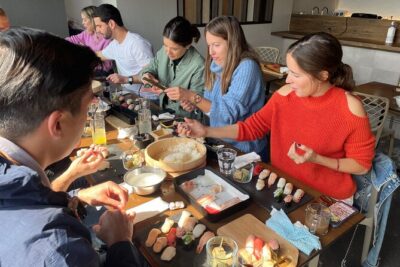
Sushi Making Tokyo Roll and Authentic Japanese Sushi Class
Read our review →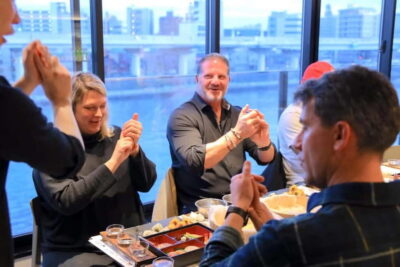
Roll and Authentic Sushi Making Class in Asakusa
Read our review →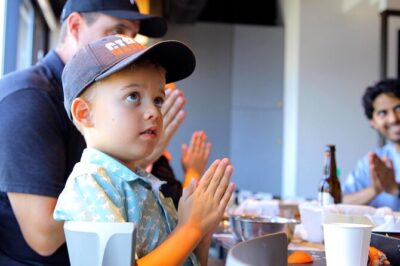
Make Sushi and Create Unforgettable Memories in Tokyo
Read our review →
Sushi Making Class in a Happi Coat near a Famous Spot
Read our review →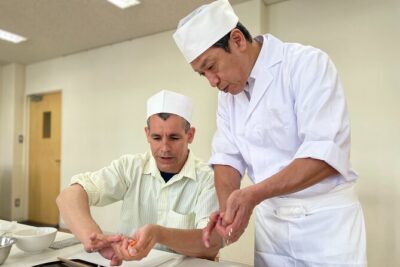
Tokyo Sushi Making Class in Tsukiji with Professional Chef
Read our review →
Tsukiji Fish Market Guided Tour and Sushi Making with Pro Chef
Read our review →
Tsukiji Fish Market Sushi Making Class with Pro Chef
Read our review →
Browse the lists this tour appears in