
Reviewed · TOKYO SUMO EXPERIENCES
The SUMO Show & Experience with Hot pot lunch
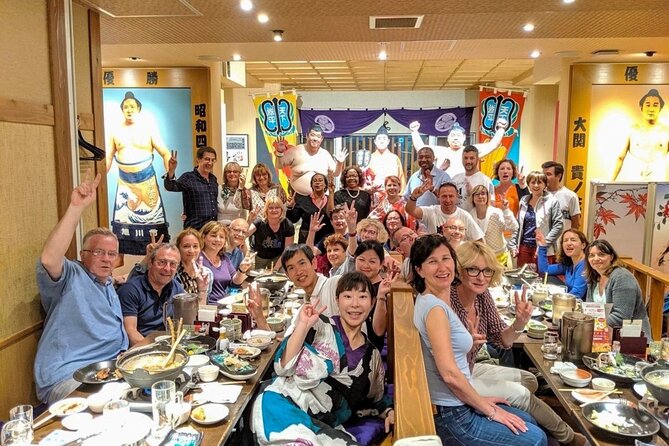
The best part of this two-hour Ryogoku experience is that sumo is not kept behind a rope. You watch former wrestlers demonstrate the sport, then step onto the clay ring yourself. If you are brave, you can put on a padded suit and try to push a 160-kilogram wrestler. It is safe, silly, and a far better way to understand sumo strength than simply watching a match from a seat.
I like the family-friendly format and the bilingual explanations, which make the rituals easy to follow even if sumo is new to you. I also like the hotpot lunch, especially because vegetarian, vegan, halal, gluten-free, and allergy-related requests can be handled with advance notice. The main drawback is price: at $97.55 per person, this is not a cheap lunch activity, and the event can feel more like an interactive show than a full professional tournament.
Key points before you book
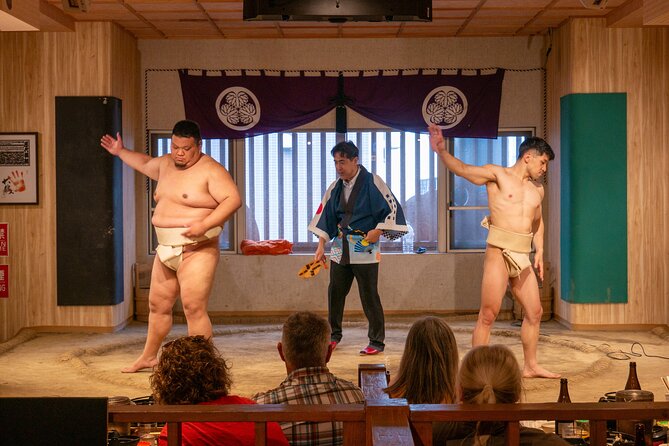
- Step into a real clay dohyo: You can try sumo footwork and drills instead of watching from the sidelines.
- Face a 160-kilogram wrestler: A padded costume lets volunteers attempt a comic but safe push match.
- Learn the rituals first: The bilingual MC explains salt-tossing, shiko leg stomps, and suriashi sliding steps.
- Good for mixed-age groups: Children, parents, older adults, and people who prefer to watch can all take part at their own level.
- Lunch is included: Your ticket covers a mini chanko nabe hotpot, with dietary requests due at least 48 hours ahead.
- It stays in Ryogoku: The experience begins and ends at Hana no Mai Edo Tokyo Museum, with no extra transfers during the activity.
Entering Ryogoku’s sumo world
Ryogoku is the right setting for this experience. This Tokyo district is closely linked with sumo, and the activity takes place at Hana no Mai Edo Tokyo Museum, 1-chome-1-15 Kamezawa, Sumida City. You meet there at 10:00 a.m., and the event returns to the same location when it ends.
The venue is a sumo-themed restaurant with a real clay dohyo. That detail matters. Sumo is built around a very small, very formal ring, and seeing the wrestlers work within it gives you a better sense of the sport’s precision. Two large bodies may collide with great force, but the action depends on balance, stance, timing, and footwork.
The setup also makes this easier for families than a formal tournament. You do not need to sit quietly for several hours or understand the ranking system before arriving. The MC provides an English-language introduction, with bilingual delivery throughout the show, so you can follow the action as it unfolds.
The group size can reach 40 people. That is small enough for a shared event but not intimate. You may have to wait your turn for the ring or photo session, especially when many children want to participate. The upside is that you can watch the demonstrations while others take their turn, and parents can join in or stay at the edge of the action.
More Tokyo sumo experiences:
- Tokyo: Sumo Show and Dining Experience
★ 4.8 · 2,742 reviews - the SUMO show
★ 5.0 · 1,960 reviews - Tokyo Shinjuku Sumo Show & Experience with Photo
★ 5.0 · 1,750 reviews
What the sumo rituals mean
The program begins with an introduction to sumo customs. This is more useful than it may sound. A sumo match can look like two athletes crashing together for a few seconds, but the gestures before and during the bout carry religious and cultural meaning.
You learn about shiko, the famous leg stomp. The wrestler raises one leg and brings it down firmly, a movement linked with strength, balance, and driving away evil spirits. You also see suriashi, the low sliding footwork that keeps the feet close to the ground. It looks simple until you try to move while keeping the proper posture.
The salt-tossing ritual is explained as well. Wrestlers throw salt into the dohyo before a bout as a purification gesture. These small actions help you see sumo as more than a sport. The ring is treated as a sacred space, and the ceremony prepares the wrestlers both physically and mentally.
The demonstrations are led by two former wrestlers. You will hear the impact of the bodies as they practice, with the sound of collisions providing a useful reminder that sumo is a contact sport. Still, the explanation comes before the audience participation, so you are not thrown into an unfamiliar activity without context.
Trying shiko, suriashi, and push drills
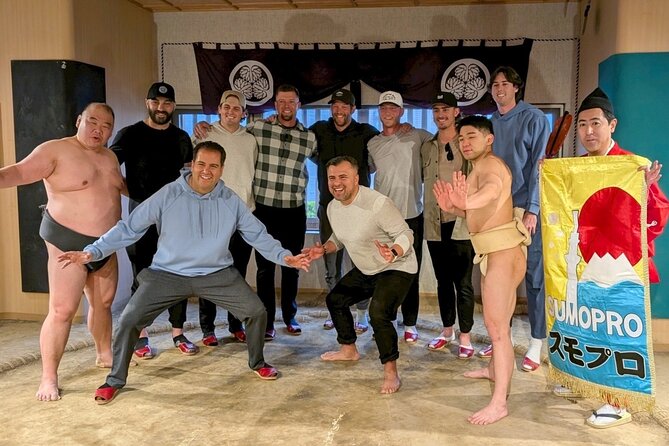
After the demonstration, you can join the former wrestlers in the ring. The hands-on part is flexible. You might try the traditional footwork, join a push drill, or simply watch and take photos. Parents can take part with their children, while anyone who prefers not to enter the ring can remain an observer.
The listed drills include teppen, a push exercise, along with shiko and suriashi. These are not presented as serious athletic training. They are short, guided activities designed to let you feel the stance and movement used by sumo wrestlers.
That distinction is important. You should not expect to become a sumo wrestler in two hours, and the activity does not replace a professional match. What it does is give you a physical sense of how difficult it is to stay balanced while pushing against another person.
The age range is broad. Children can enjoy the comic scale of the ring and the wrestlers, while teenagers may especially like the chance to test their strength. Adults can join too, and older family members can watch comfortably. One useful feature is the choice to participate or observe, so nobody has to perform in front of the group.
The padded suit challenge
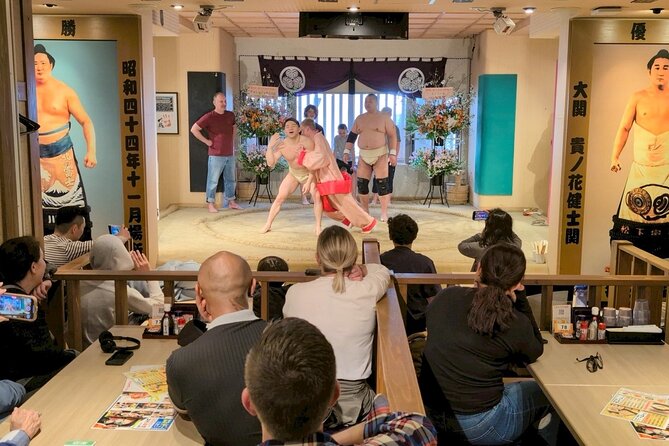
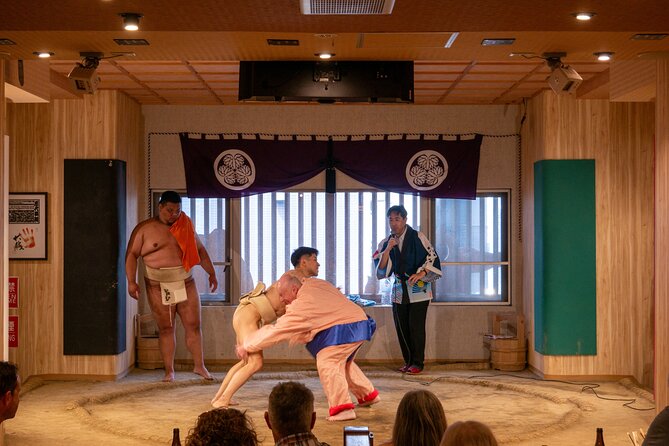
The final challenge is the biggest crowd-pleaser. A volunteer wears a padded sumo suit and tries to push a wrestler weighing about 160 kilograms. The suit turns the activity into a safe, funny contest, but the lesson is real: moving a trained sumo wrestler is extremely hard.
You will probably see volunteers use every bit of effort they have, only to discover that the wrestler barely moves. That contrast is the point. Sumo strength is not just body weight. It comes from a low center of gravity, planted feet, timing, and practiced technique.
This part works best for families with outgoing children or adults who do not mind being the center of attention. If you dislike staged participation, you can watch instead. The program does not require every person to take a turn, and the comedy remains enjoyable from the audience.
The padded suit also addresses a sensible concern. A direct bout with a professional would not be appropriate for casual visitors. The costume and controlled format let you experience the idea of a sumo match without the same risk.
More Lunch Experiences in Tokyo:
- Tokyo: Mt.Fuji & Lake Kawaguchiko 1-Day Bus Tour w/Optional Lunch
★ 4.5 · 839 reviews - Tokyo: Sumo Experience and Chanko Nabe Lunch
★ 4.8 · 257 reviews - Tokyo: Tsukiji Fish Market Tour with 6 Stops & Seafood Lunch
★ 4.5 · 165 reviews - Tokyo: 1 Day Bus Tour with Meiji-Jingu,Odaiba,lunch&Skytree
★ 4.6 · 156 reviews
A live match and a close-up photo
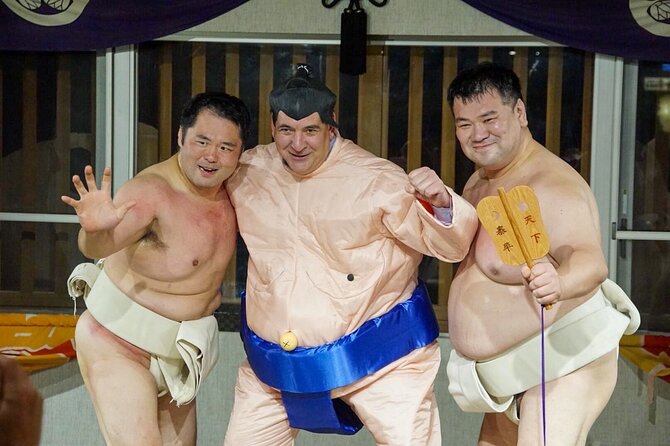
The event includes a live match between professional wrestlers. This gives the show a needed change of pace. After you have seen demonstrations and tried basic movements, you can watch experienced athletes put their technique into action.
A professional bout is short, forceful, and easy to follow. The action does not depend on a long explanation. You see the stance, the sudden charge, the effort to maintain position, and the attempt to force an opponent out of the ring.
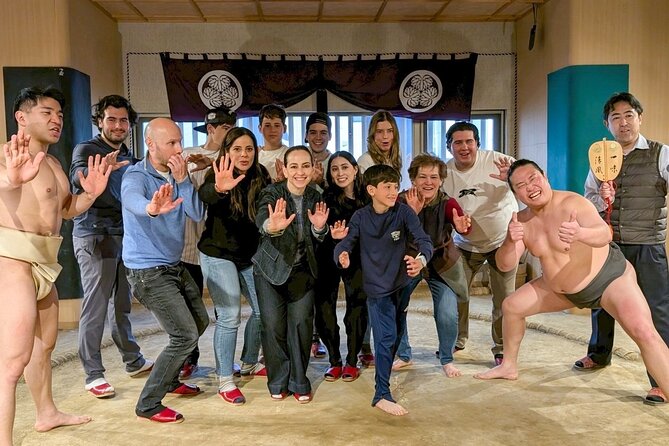
After the match, there is time for a photo session beside the wrestlers. This is one of the more practical parts of the experience because scale is hard to understand from video. Standing next to a wrestler makes the difference in size immediately clear.
Bring your patience for this part. With a group of up to 40 people, photographs are likely to be taken in turns rather than all at once. It is still a worthwhile keepsake, especially for children who have just tried the ring or the padded suit.
Chanko nabe: the lunch that fuels sumo
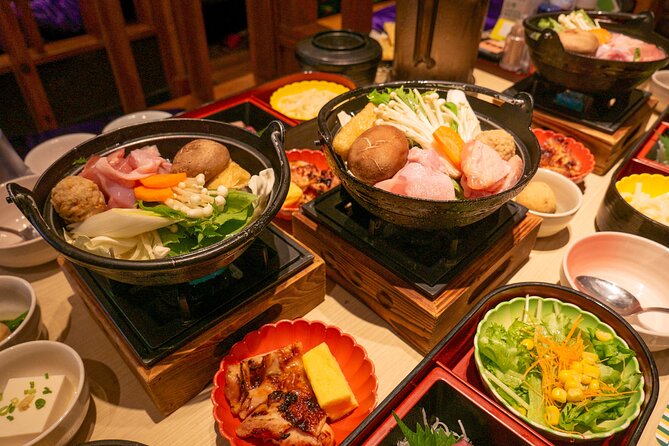
The meal is a mini chanko nabe, the hotpot associated with sumo stables. It is served after the show and included in the ticket price. The dish is built around protein and fresh ingredients, making it a fitting end to a morning spent learning about the wrestlers’ training culture.
The meal is substantial enough to make the experience feel like more than a short stage performance, though you should think of it as a mini hotpot rather than a large banquet. Alcohol and additional menu items cost extra and can be ordered on site.
Dietary planning is one of the tour’s stronger practical points. Vegetarian, vegan, halal, and allergy-friendly options are available, but you need to advise the operator at least 48 hours before the start time. Gluten-free adjustments have also been handled by swapping ingredients, so give clear information when booking rather than waiting until you arrive.
Children under five do not receive a meal under the child rate. If you want lunch for a child under five, the booking must be made at the adult rate. That is an easy detail to miss when planning a family outing.
One meal account also included sashimi alongside the hotpot, but the dependable inclusion is the chanko nabe lunch set. I would not book this expecting a fixed multi-course menu or alcohol. Book it for the hotpot, the cultural setting, and the convenience of eating at the same venue.
Is $97.55 good value?
At $97.55 per person, this costs more than a basic Tokyo lunch and more than a simple museum visit. The value comes from combining several elements: a guided cultural explanation, live sumo demonstrations, a professional match, audience participation, a photo opportunity, and lunch.
If you only want to see a professional tournament, this is not the best comparison. A tournament offers more bouts and a stronger sense of the sport’s competitive structure. This experience is aimed at people who want access, explanation, and direct contact with the culture.
For a family, the price may make sense because adults and children can share one activity rather than splitting up for separate entertainment. The meal is already covered, and there is no need to arrange transport between a show and lunch. A family with several people should still add up the total carefully, since the per-person cost rises quickly.
The ticket is also easier to justify for first-time visitors who may not be able to attend a tournament during their Tokyo dates. You get a scheduled English-friendly introduction and a chance to interact with wrestlers without needing to understand ticket categories or tournament schedules.
I would be less enthusiastic if your main goal is a quiet, formal cultural program. The padded-suit challenge and audience participation give the event a playful tone. That is a strength for families, but it may feel too theatrical if you want a solemn look at sumo tradition.
Timing, access, and small planning details
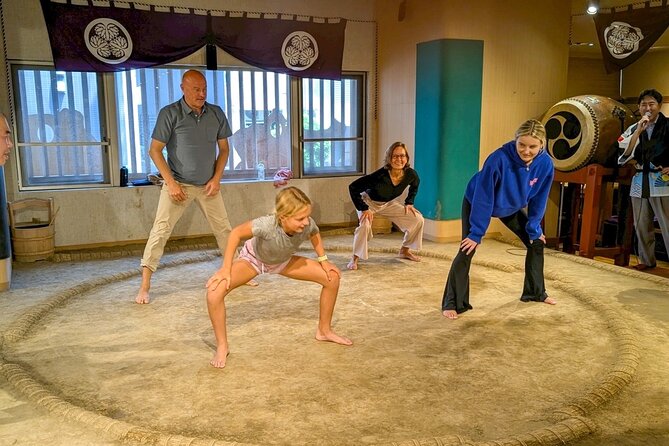
The activity starts at 10:00 a.m. and lasts about two hours. You will finish back at the meeting point, which makes it easy to plan another Tokyo activity afterward. The morning schedule also leaves the afternoon open for the nearby area or another part of the city.
The meeting location is near public transportation, though the supplied details do not specify a particular station or walking time. Check your route before the morning of the event and allow enough time to reach Hana no Mai Edo Tokyo Museum without rushing.
A mobile ticket is provided, and booking confirmation arrives at the time of booking. Most people can participate, but the activity does involve stepping into the ring, trying movements, or watching from a shared venue. If you have mobility or medical concerns, check with the operator before reserving.
Free cancellation is available when you cancel at least 24 hours before the start time. Changes or cancellations made inside that window are not refunded. The experience also requires suitable weather and a minimum number of participants. If the operator cancels for either reason, you are offered another date or experience, or a full refund.
Who should book this sumo experience?
I would recommend it most strongly to families with school-age children and teenagers. The chance to stand beside a professional, try the footwork, and push against a wrestler creates a clear memory of Tokyo that a standard sightseeing stop may not provide.
It also suits groups with mixed interests. One person can participate while another watches and takes photos. English-speaking visitors gain enough explanation to understand the rituals, and the lunch gives everyone a natural break after the active part.
The experience is also suitable for visitors who need meal adjustments, provided they plan ahead. Vegetarian, vegan, halal, and allergy requests are specifically accepted, and gluten-free changes have been made before.
I would choose something else if you want a full-length tournament, a small private lesson, or a serious athletic workshop. The format is a friendly show with hands-on moments, not formal sumo training.
Should you book it?
Book this if you want an accessible introduction to sumo with real interaction, a bilingual presentation, and lunch already arranged. The strongest reasons are the live match, the padded-suit challenge, and the chance to try the ring yourself.
Skip it if $97.55 feels high for a two-hour activity or if you would rather spend that money on a full tournament ticket and a separate meal. For most families, though, the combination of culture, comedy, photos, and chanko nabe makes the cost easier to defend. Send dietary requests at least 48 hours ahead, arrive ready to take part, and let the professionals show you just how hard it is to move a sumo wrestler.
FAQ
Where does the sumo experience take place?
It takes place at Hana no Mai Edo Tokyo Museum, 1-chome-1-15 Kamezawa, Sumida City, Tokyo 130-0014, Japan, in the Ryogoku area.
What time does the experience start?
The scheduled start time is 10:00 a.m.
How long does the activity last?
The experience lasts approximately two hours and ends back at the meeting point.
Is lunch included?
Yes. The ticket includes a mini chanko nabe hotpot lunch set.
Can dietary requests be accommodated?
Vegetarian, vegan, halal, and allergy-friendly options are available. You should provide dietary requests at least 48 hours before the tour. Gluten-free adjustments may also be possible by changing ingredients.
Can children participate?
Yes. The activity is designed to be family-friendly, and children can take part in the demonstrations and interaction with the wrestlers. Children under five do not receive a meal under the child rate unless you book them at the adult rate.
Are alcoholic drinks included?
No. Alcoholic beverages and additional menu items are not included, but they can be ordered on site.
Can I cancel for a full refund?
Yes, if you cancel at least 24 hours before the experience begins. Cancellations or changes made less than 24 hours before the start time are not refunded. If the operator cancels because of weather or insufficient participants, you are offered another date or experience, or a full refund.
More Tokyo shows and performances
- Mt Fuji & Hakone Cruise, Drum Show Bullet Train 1 Day from Tokyo
★ 4.0 · 7,413 reviews - Mt Fuji & Hakone Cruise, Drum Show Bus 1 Day from Tokyo
★ 4.0 · 1,287 reviews - Tokyo: Sumo Show and Experience in Shinjuku
★ 4.8 · 1,001 reviews - Tokyo:Luxury Sumo Show Experience & Japanese cuisine & Drink
★ 4.7 · 577 reviews
Newly reviewed around Tokyo
- Tokyo Asakusa:Calligraphy & Make T-shirt Activity★ 5.0 · 62 reviews
- Intercity Shuttle, Tokyo to Haneda /Narita /Yokohama /Makuhari★ 5.0 · 5 reviews
- 1 Hour Travel around Tokyo with a Professional Photographer★ 5.0 · 3 reviews
- Travel Tokyo with Your Own Personal Photographer★ 5.0 · 43 reviews
- Train in Samurai Swordsmanship and Defeat the Demon in Tokyo★ 5.0 · 5 reviews
- Shuttle Van 6hr Tokyo Tour to-and-from Tokyo, Yokohama and Narita★ 5.0 · 9 reviews
- Kickboxing & Body Training with EX-Pro Fighter★ 5.0 · 4 reviews
- Traditional Japanese Knife Sharpening Class★ 5.0 · 18 reviews
Tokyo Sumo Experiences, compared.
Tokyo Shinjuku Sumo Show & Experience with Photo
Read our review →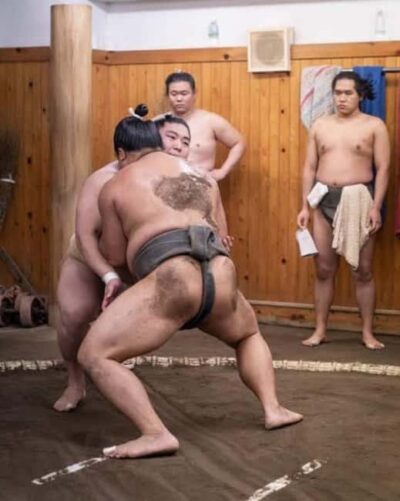
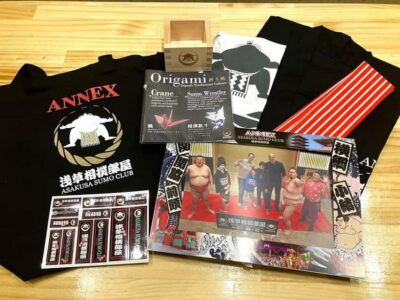
Luxury Sumo Show Experience & Japanese cuisine & Drink
Read our review →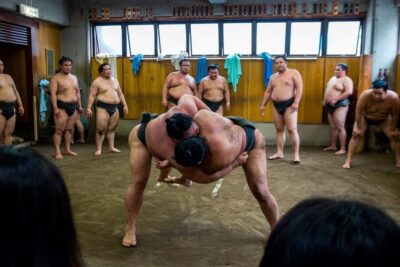
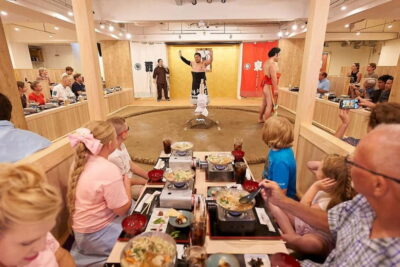
Tokyo Sumo Experience: Chanko & Mochi with a Former Pro
Read our review →
Ultimate Sumo Tournament: Tokyo, Osaka, Nagoya, Fukuoka
Read our review →Browse the lists this tour appears in