
Reviewed · HISTORICAL TOURS
Edo Tokyo Small-Group Tour: History, Culture & Local Experiences
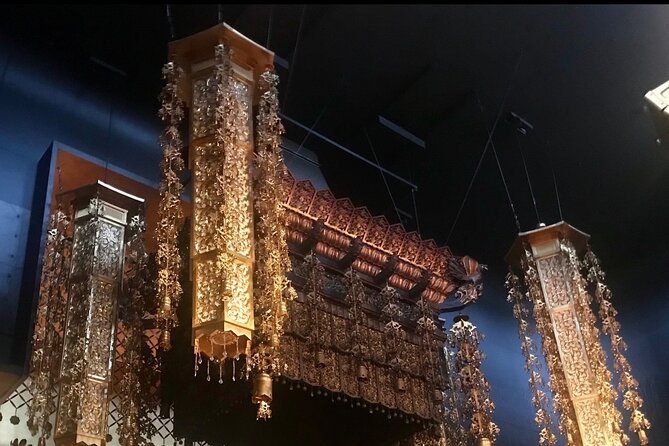
A powerful temple fire ceremony gives this Tokyo walk its edge. At Fukagawa Fudodo, you see a living religious practice before moving through a shrine, an Edo-period town recreated at full size, a traditional sweet shop, and a quiet garden.
I like the small group of seven or fewer, which gives the guide room to answer questions and keep the walk personal. I also like the route’s variety: the tour connects everyday food and neighborhood streets with major cultural sites, rather than showing you only grand monuments.
The main consideration is time. Four hours moves quickly, and the tour includes nearly four hours of scheduled stops, not counting the walk between them. Lunch is not included, and the fire ceremony or outdoor portions may be affected by weather.
Key points to know before booking
- The fire ceremony is the tour’s most unusual stop: Fukagawa Fudodo offers a spiritual display linked to Japan’s Edo period.
- The group is limited to seven people: You get a more personal walk than on a large bus tour.
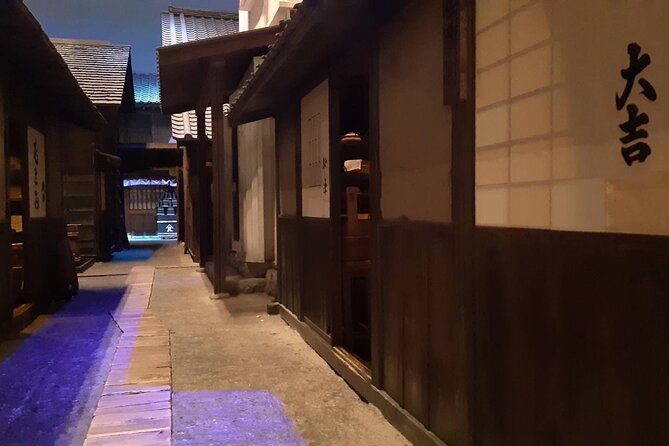
- The route explains daily life, not only famous sights: The Fukagawa Edo Museum recreates streets and homes at life size.
- You get two very different kinds of calm: The temple is intense and dramatic, while Kiyosumi Teien is slow and reflective.
- A traditional sweet shop adds a small but memorable food stop: The visit lasts about 20 minutes and gives you a taste of old-fashioned Japan.
- The tour begins at Monzen-nakacho Station and ends at Kiyosumi Gardens: You do not return to the starting point, so plan your afternoon from Kiyosumi.
Why Fukagawa makes a good Edo Tokyo introduction
Tokyo can feel too large to grasp in one morning. The Fukagawa district helps by giving you a clear thread to follow. Here, religious sites, sumo references, reconstructed streets, local sweets, and a formal garden all help explain how people lived in the Edo period.
That period lasted from 1603 to 1868, when Tokyo was known as Edo. You will not study every part of that long era, but the route gives you several useful windows into it. The temple shows ritual, the shrine connects to community life and sumo, the museum recreates ordinary streets, and the garden shows the cultivated side of Japanese taste.
I find this more useful than a tour that simply points out pretty buildings. You get a sense of how public religion, neighborhood life, food, entertainment, and garden design fit together.
The walk starts at Monzen-nakacho Station at 10:00 a.m. Since the meeting point is near public transportation, it is practical for a morning start. The final stop is Kiyosumi Teien, so you can continue exploring the Koto area afterward instead of retracing the route.
More history and heritage tours in Tokyo:
- Tokyo: Imperial Palace and Shogun Historical Walking Tour
★ 5.0 · 2,251 reviews - Tokyo: Imperial Palace Japanese History Walking Tour
★ 4.9 · 987 reviews - Tokyo: Shinjuku Historical Walking Tour & Secret Backstreets
★ 5.0 · 530 reviews
Fukagawa Fudodo and the temple fire display
The first stop lasts about 1 hour and 20 minutes, making it the longest part of the tour. Fukagawa Fudodo is a Buddhist temple, and the main attraction here is a spiritual fire display connected with the Edo period.
This is not just a quick look at a temple roof or a fast photograph from outside. The fire ceremony gives the visit a stronger sensory and emotional quality. Fire, chanting, movement, and ritual create a very different experience from the quiet garden that comes later.
The tour description calls the display stunning, but you should understand what that means in practical terms. This is a religious setting, not a theatrical show created only for tourists. Your guide can help you understand what you are seeing and how the ceremony fits into Japanese Buddhist practice.
Sandra has led this experience and is praised for explaining Japanese culture in a way that works for both adults and children. Her approach, based on the available tour information, includes facts and context rather than simply moving the group from one photo stop to the next.
Allow yourself to be attentive here. The ceremony is likely to be the moment you remember most clearly, but it is also the part where respectful behavior matters most. Follow your guide’s instructions about where to stand and how to behave.
The long visit also affects the pace of the rest of the day. If you prefer a tour built around many quick stops, this may feel slow at first. If you want one substantial cultural experience rather than a string of brief explanations, the time is well used.
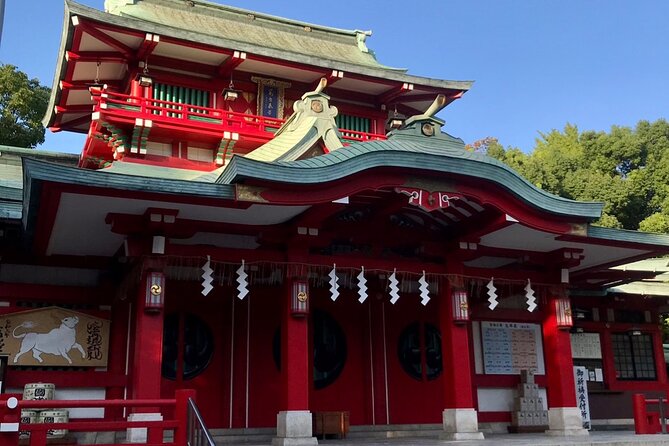
Tomioka Hachimangu and its sumo connections
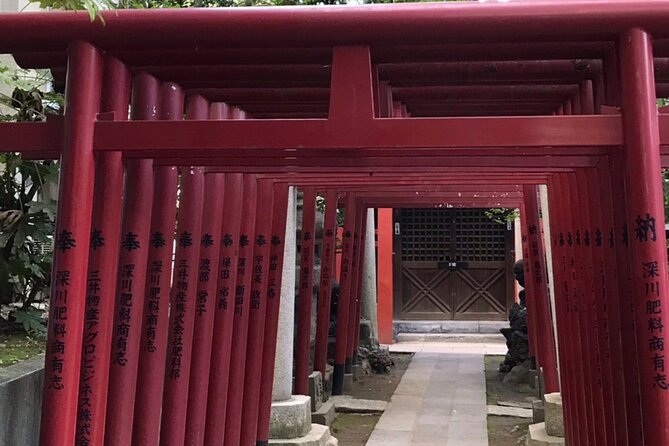
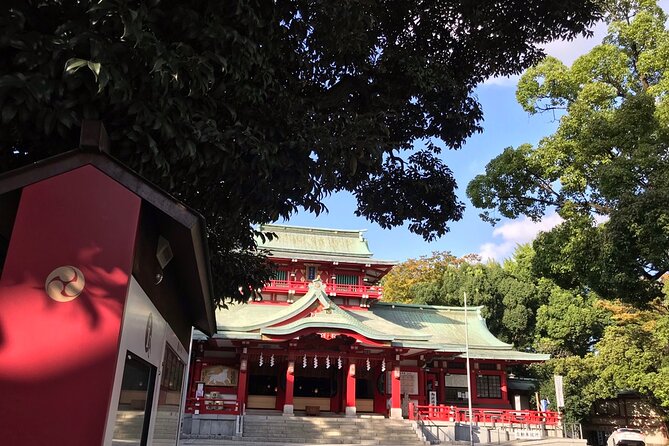
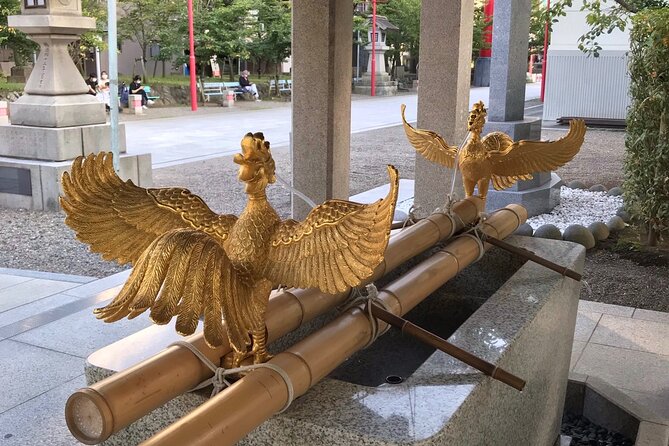
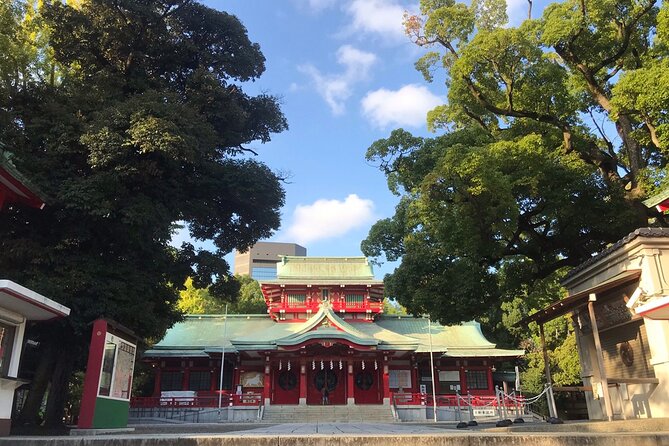
The next stop is Tomioka Hachimangu, a Shinto shrine founded in 1627. You have about 30 minutes here, enough for an introduction to the grounds, the shrine’s role, and its sumo commemorative memorial stones.
That sumo connection gives this stop a useful local angle. Sumo is not presented here as an isolated sport; it is tied to ceremony, public tradition, and the places where communities gather. The memorial stones provide a physical link between the shrine and that part of Japanese culture.
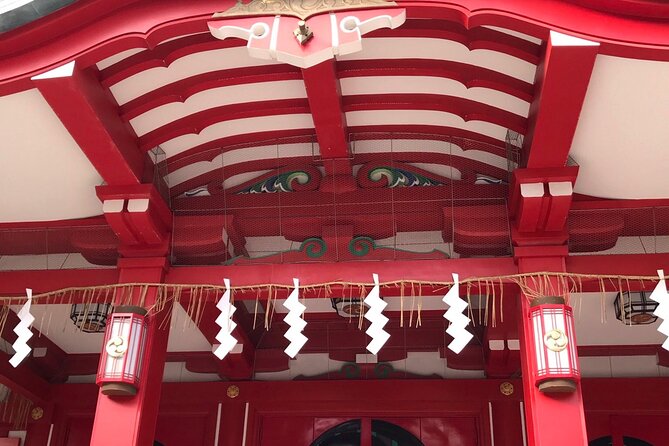
The shrine also changes the mood after the fire ceremony. Fukagawa Fudodo is intense and highly focused, while Tomioka Hachimangu offers a more open setting for looking at shrine architecture and reflecting on how Buddhist and Shinto traditions appear side by side in Japan.
Thirty minutes is enough for a guided overview, but not a long independent visit. You will not have unlimited time to inspect every corner or linger over photographs. The short stop works because the tour’s purpose is to connect several parts of Fukagawa rather than spend the whole morning at one site.
The Fukagawa Edo Museum’s life-sized streets
The Fukagawa Edo Museum receives about an hour. This is the clearest stop for seeing how ordinary life might have looked during the Edo period because the museum uses life-sized recreations of streets and buildings.
That difference matters. A display case with old objects can tell you what people used, but a full street scene helps you picture scale and daily movement. You can better understand how homes, shops, and public spaces related to one another.
The recreated setting is especially helpful if Japanese history is new to you. The guide can explain details as you walk through the scenes, giving meaning to objects and structures that might otherwise look like decoration.
One strong point of the museum is its focus on everyday life. The tour is not limited to rulers, warriors, and famous battles. It gives you a look at the environment of a small Edo neighborhood, which is why the stop works well for families and anyone who wants history in a concrete form.
The museum is also a good counterpoint to the religious sites. At the temple and shrine, you learn through ritual spaces and memorials. Here, the subject is more ordinary: streets, homes, and the visual setting of daily life.
The stop is listed as free within the tour, but all fees and taxes for the experience are included. You should still keep the group’s one-hour schedule in mind. There is enough time to understand the museum, but not necessarily enough to study every recreated area at length.
A completely different kind of day in Tokyo:
- Mt Fuji and Hakone 1-Day Bus Tour Return by Bullet Train
★ 5.0 · 26,383 reviews - 1-Day Tokyo Bus Tour
★ 5.0 · 14,250 reviews - Tokyo: teamLab Planets TOKYO Digital Art Museum Entry Ticket
★ 4.6 · 9,779 reviews - Mt Fuji & Hakone Cruise, Drum Show Bullet Train 1 Day from Tokyo
★ 4.0 · 7,413 reviews
A 20-minute taste of traditional Japan
The sweet shop stop is brief, lasting about 20 minutes, but it gives the route a welcome change of pace. You visit an old-fashioned shop and try traditional sweets.
Food stops can sometimes feel tacked onto a sightseeing route. Here, the sweet shop has a clear purpose. It connects the history lesson to something you can taste, and it gives you a small example of how traditional food remains part of local culture.
Do not expect a full meal. Lunch is not included, and the tour schedule does not leave space for a substantial restaurant visit. Eat breakfast before meeting the group, or plan lunch after the tour ends at Kiyosumi Gardens.
The short stop may be one of the most useful parts for families. Children can lose interest during long historical explanations, but a sweet tasting creates a simple, hands-on break. Sandra has been praised for keeping children engaged with fun facts and a patient manner, which fits this kind of mixed-age route.
If you have food allergies or dietary restrictions, ask the operator before booking. The supplied information does not specify the sweets, ingredients, or replacement options.
Kiyosumi Teien and the quiet finish
The final stop is Kiyosumi Teien, a classic Japanese garden with a tea house and pond. You have about 45 minutes here, enough to slow down after the temple, shrine, museum, and shop.
This is a smart ending. The garden does not compete with the fire ceremony. Instead, it gives you room to think about the day’s themes: ceremony, neighborhood life, cultivated beauty, and the relationship between built spaces and nature.
The pond and tea house create the kind of setting that rewards patience. You may find that the garden feels less like an attraction to conquer and more like a place to pause. Forty-five minutes is not a full garden study, but it is enough for a calm walk and photographs.
The tour ends at Kiyosumi Gardens, listed at 3-chome 3-9 Kiyosumi in Koto City. This is helpful if you want to continue your day nearby. It is less convenient if you need to return immediately to Monzen-nakacho, so check your afternoon plans before booking.
The garden also provides a useful contrast with the recreated streets at the museum. The museum asks you to imagine how people lived in a tightly organized Edo neighborhood. Kiyosumi Teien asks you to notice space, water, plants, and quiet movement.
What the four-hour schedule feels like
The scheduled stops add up to about 3 hours and 55 minutes:
- Fukagawa Fudodo: 1 hour 20 minutes
- Tomioka Hachimangu: 30 minutes
- Fukagawa Edo Museum: 1 hour
- Traditional sweet shop: 20 minutes
- Kiyosumi Teien: 45 minutes
That leaves very little room for delays, extended browsing, or a long rest. The walk between sites is part of the experience, but the supplied details do not give exact distances or walking times.
I would treat this as a focused half-day outing, not a loose neighborhood stroll. Wear comfortable shoes and arrive ready to keep moving. The route has several different kinds of stops, but the schedule is organized and purposeful.
A small group helps here. With no more than seven people, the guide can keep the pace together and answer questions without the long waits common on larger tours. It also makes it easier to hear explanations inside a museum or at a shrine.
The group size does not guarantee a private tour. Seven people can still feel like a group, especially in a popular or narrow space. Still, it is a useful middle ground between exploring alone and joining a large sightseeing crowd.
How much value do you get for $48.99?
At $48.99 per person, this is priced as an accessible guided half-day experience rather than a luxury tour. The value comes from the combination of a personal guide, admission fees, cultural interpretation, and several different stops.
You are not paying only for entry to the Fukagawa Edo Museum. You are also paying for the route design and the explanations that connect the sites. Without context, a shrine, fire ceremony, museum recreation, sweet shop, and garden might feel like unrelated stops. The guide turns them into one story about Edo life.
All fees and taxes are included. Lunch is not included, so budget separately for food before or after the walk.
The small group is important to the value. A guide who can speak directly to seven people has more room to adjust explanations and respond to questions. That matters even more if you are traveling with children, since Sandra has been praised for keeping young participants involved.
The tour is booked, on average, 37 days in advance. That does not guarantee that you must reserve that early, but it is a useful sign that you should not leave this experience until the last morning of your Tokyo stay.
Who will enjoy this walk most
I would choose this tour if you want Tokyo history explained through places you can see and activities you can feel. It suits first-time visitors who want more than major city sights, as well as repeat visitors looking for a quieter district and a stronger local focus.
It is also a good match for families. The route changes subject often, the museum is visual, the sweet shop adds a treat, and the guide’s style has worked well with children.
History fans should appreciate the Edo focus, though you should not expect an academic lecture. The experience is designed to be entertaining and accessible, with explanations tied to the actual sites.
I would be more cautious if you want a slow, unstructured morning. The itinerary is full, and each stop has a fixed time. It may also be less suitable if you need a full meal during the activity or want to finish back at the starting station.
The tour requires good weather. If poor weather cancels it, you are offered another date or a full refund. A minimum number of participants is also required, so a cancellation is possible if that minimum is not reached.
Confirmation is sent within 48 hours of booking, subject to availability. Service animals are allowed, and most people can participate. For anyone with mobility concerns, it is sensible to ask the provider about the walking route, since the exact surfaces and distances are not specified.
Should you book the Edo Tokyo tour?
Book it if you want a compact, well-connected look at Tokyo’s Edo past, especially if the idea of a temple fire ceremony appeals to you. The combination of Fukagawa Fudodo, Tomioka Hachimangu, the life-sized museum streets, traditional sweets, and Kiyosumi Teien gives you more range than a standard shrine visit.
I especially like the balance between major cultural ideas and small local details. You get religion and ritual, then sumo memorials, ordinary streets, a sweet, and a garden pond. That is a useful way to understand Tokyo without spending the day in a museum.
Skip it if you need a relaxed schedule, a restaurant meal during the tour, or a circular route that ends where it begins. For everyone else, $48.99 is a reasonable price for a four-hour, small-group experience with included fees and a guide who can make the Edo period understandable.
FAQ
How long is the Edo Tokyo Small-Group Tour?
The tour lasts approximately four hours. The scheduled stops total about 3 hours and 55 minutes, with additional time used for walking between locations.
Where does the tour begin?
The tour begins at Monzen-nakacho Station, at 2 Chome-4 Monzennakacho, Koto City, Tokyo 135-0048, Japan.
Where does the tour end?
The tour ends at Kiyosumi Gardens, at 3-chome 3-9 Kiyosumi, Koto City, Tokyo 135-0024, Japan.
What time does the tour start?
The listed start time is 10:00 a.m.
How many people can join the tour?
The maximum group size is seven people.
Is lunch included?
No. Lunch is not included in the tour price.
Are admission fees included?
All fees and taxes are included. The Fukagawa Edo Museum stop is listed as free, while admission is included for the other listed ticketed stop.
Can I cancel for a full refund?
Yes, you can cancel for a full refund if you cancel at least 24 hours before the experience start time. Cancellations or changes made less than 24 hours before the start are not refunded or accepted.
Newly reviewed around Tokyo
- Tokyo Asakusa:Calligraphy & Make T-shirt Activity★ 5.0 · 62 reviews
- Intercity Shuttle, Tokyo to Haneda /Narita /Yokohama /Makuhari★ 5.0 · 5 reviews
- 1 Hour Travel around Tokyo with a Professional Photographer★ 5.0 · 3 reviews
- Travel Tokyo with Your Own Personal Photographer★ 5.0 · 43 reviews
- Kickboxing & Body Training with EX-Pro Fighter★ 5.0 · 4 reviews
- Train in Samurai Swordsmanship and Defeat the Demon in Tokyo★ 5.0 · 5 reviews
- Shuttle Van 6hr Tokyo Tour to-and-from Tokyo, Yokohama and Narita★ 5.0 · 9 reviews
- Traditional Japanese Knife Sharpening Class★ 5.0 · 18 reviews
Historical Tours, compared.

Imperial Palace and Shogun Historical Walking Tour
Read our review →
Yanaka Walking Tour: Historic and Traditional District of Tokyo
Read our review →
Shinjuku Historical Walking Tour & Secret Backstreets
Read our review →
Mt. Fuji Heritage Tour: Traditional Villages, Lakes & Shrine
Read our review →
The Best of Izakaya in Shinjuku Food & Cultural Tour
Read our review →
Yanaka Historical Walking Tour in Tokyo’s Old Town
Read our review →Browse the lists this tour appears in