
Reviewed · TOKYO SAMURAI AND NINJA EXPERIENCES
Tokyo : Authentic Samurai Experience in a Private Space.
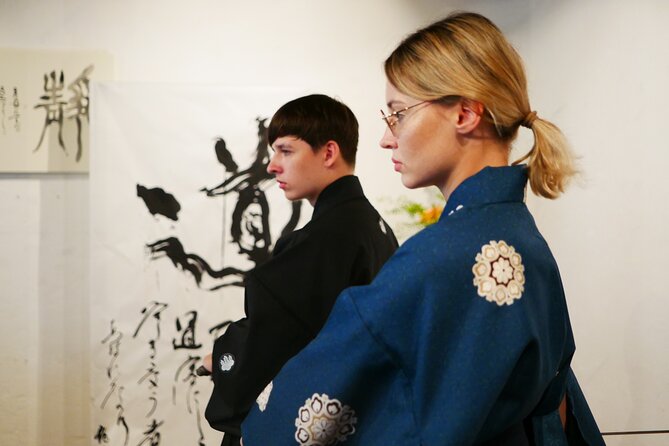
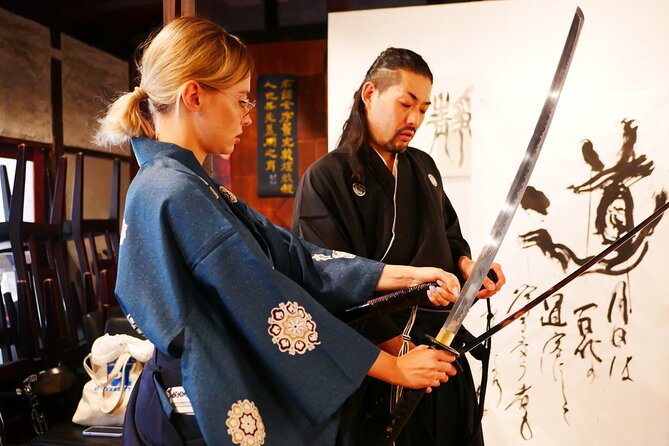
A real sword, a kimono, and a small room in an old Tokyo house make this more than a photo stop. At rojicoya, Sensei Musashi Oka and Yoshi San guide you through the basics of Bushido, then let you practice with a sword under close instruction. The session ends with Japanese tea and time for questions.
I like the four-person limit, which gives you room to ask questions and receive hands-on help. I also like the mix of ceremony and action: you learn how to draw, hold, swing, and sheath the sword, then test your technique by cutting a straw or tatami target.
The main consideration is location. This experience is in Adachi City, not among the best-known central Tokyo sights, so you will need to allow time to reach the meeting point. At about 90 minutes, it is also a focused introduction, not a full-day study of samurai culture.
Key points to know before booking
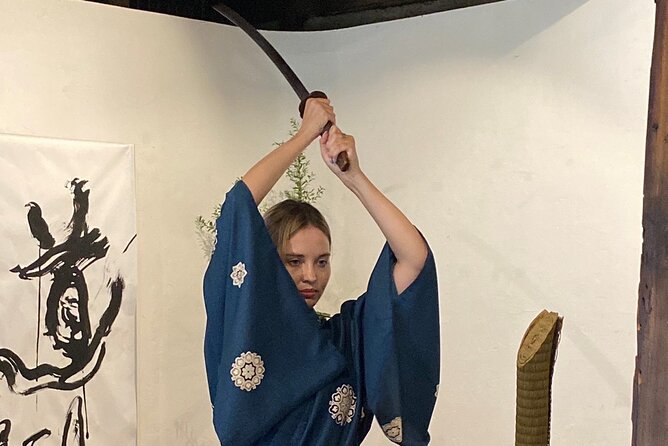
- Practice with a real samurai sword: Learn the basic movements under an instructor instead of simply posing with a prop.
- A private class for up to four people: The small format allows more direct teaching and questions.
- Held in a 100-year-old private house: The setting gives the lesson a quieter, more traditional feel.
- Kimono and Japanese tea included: You dress for the part, then close the session with a cup of carefully selected tea.
- Cutting practice is part of the class: You put your sword work to use on straw or tatami targets.
- Short enough for a busy itinerary: The experience lasts about one hour and 30 minutes and returns to the starting point.
A samurai lesson in a 100-year-old Tokyo house
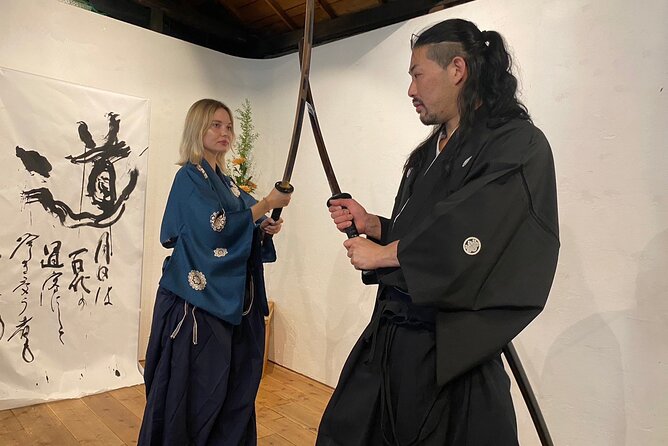
The appeal here is simple: you do not just watch a sword demonstration. You learn the movements yourself, with an instructor correcting your handling as you go.
The class takes place at rojicoya, a private house more than 100 years old in Adachi City. That setting matters. A purpose-built attraction can explain samurai culture, but an older home gives the session a more personal scale. You are not being moved through a large production. You are entering a small space for a guided lesson.
The program centers on Bushido, the traditional code associated with the samurai. The focus is practical. You learn how to handle the sword, how to draw it, how to hold it, how to swing it, and how to return it to its sheath.
You should think of this as an introductory cultural class, not martial arts training. The session gives you a taste of swordsmanship and the ideas behind it, while keeping the activity manageable for first-time participants.
More Tokyo samurai and ninja experiences:
- Tokyo: Samurai Ninja Museum Guided tour and Experience
★ 4.6 · 1,010 reviews - Tokyo: Samurai Sword & Archery Class from Samurai Descendant
★ 5.0 · 603 reviews - Best Samurai Experience in Tokyo
★ 5.0 · 458 reviews
What happens when you arrive
Your meeting point is rojicoya, at 36-1 Senjuasahicho in Adachi City, Tokyo. The activity begins and ends here, so there is no transfer between several locations during the class.
The experience is conducted mainly in English. Conversations can also use Poketalk, a translation tool that may help when a more detailed explanation is needed. That makes the class practical for international visitors, though the experience is still built around demonstration and physical instruction rather than long lectures.
The group is capped at four participants. If you book as a couple or family, you may have the room largely to yourselves. That small format is one of the strongest reasons to choose this class over a larger cultural demonstration. You can ask about the sword, Bushido, or Japanese customs without waiting for a crowd to move along.
Putting on a kimono before the sword work
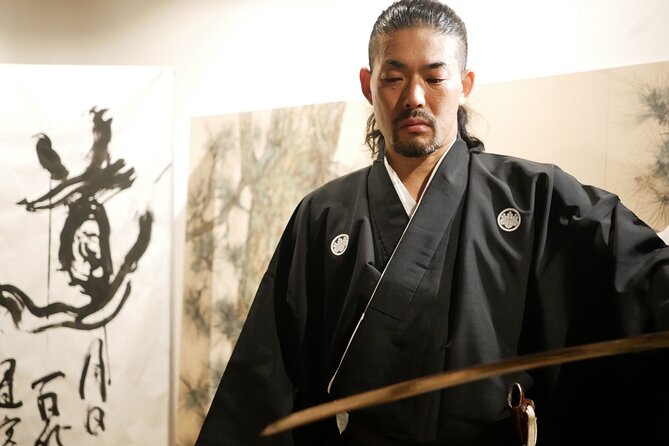
One of the first memorable parts is changing into a traditional kimono. This adds some ceremony before the active part of the lesson begins, and it helps the experience feel distinct from a standard museum visit.
The kimono is not just a costume for a quick photograph. You wear it while learning the basic sword movements, so your posture and actions take place within a traditional Japanese setting. The clothing also encourages you to slow down and pay attention to how you stand and move.
You should allow a little patience for this part. Traditional clothing can feel unfamiliar, and the class is not meant to be rushed. The reward is a stronger sense of occasion once you begin the sword practice.
The program is suitable for men and women, and it is specifically presented as approachable for beginners. You do not need previous sword experience to take part. The instructor continually teaches and guides you through the movements, which is important when handling a real blade.
Learning to draw, hold, swing, and sheath the sword
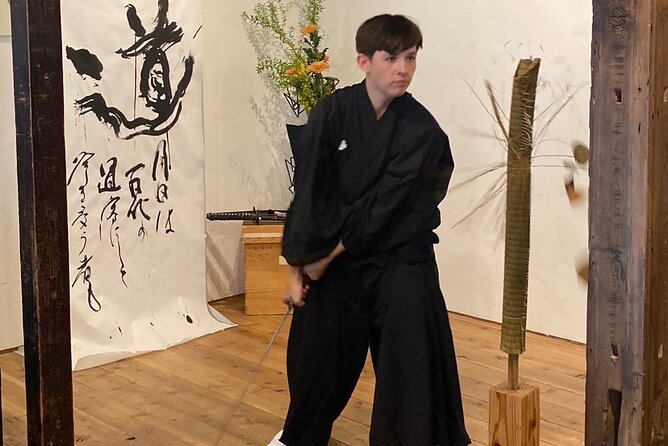
The core lesson breaks the sword work into clear steps. You practice drawing the sword, holding it correctly, swinging it, and sheathing it. These movements may look simple during a demonstration, but doing them with control requires attention.
Sensei Musashi Oka leads the instruction, with Yoshi San helping create a friendly and welcoming atmosphere. The teaching is hands-on, so you are not left to copy a movement from across a room. The small group gives the instructor a chance to watch what you are doing and help you adjust.
This is where the class earns its price. At $72, you are paying for personal instruction, equipment, traditional clothing, a private setting, and a cultural activity that would be difficult to arrange on your own. The value is strongest if you want active participation rather than a brief staged demonstration.
You should also keep your expectations in check. The session lasts roughly 90 minutes, so there is not time to cover every aspect of Japanese swordsmanship or the entire history of the samurai. You will learn selected fundamentals and get a close look at the discipline behind them.
The lesson is also a useful reminder that samurai swordsmanship is not simply about force. The repeated attention to how the sword is drawn, controlled, and returned to its sheath gives the activity a careful, formal rhythm.
More private tours in Tokyo:
- Tokyo 6hr Private Tour with Government-Licensed Guide
★ 5.0 · 3,902 reviews - Private Tour to Mt. Fuji and Hakone (Fully Licenced Operator)
★ 5.0 · 1,910 reviews - Tokyo Customized Private Tour (Must See Places in 1 Day)
★ 5.0 · 1,499 reviews - Mount Fuji Full-Day Private Tour from Tokyo (Customizable)
★ 4.9 · 1,470 reviews
Cutting straw or tatami targets
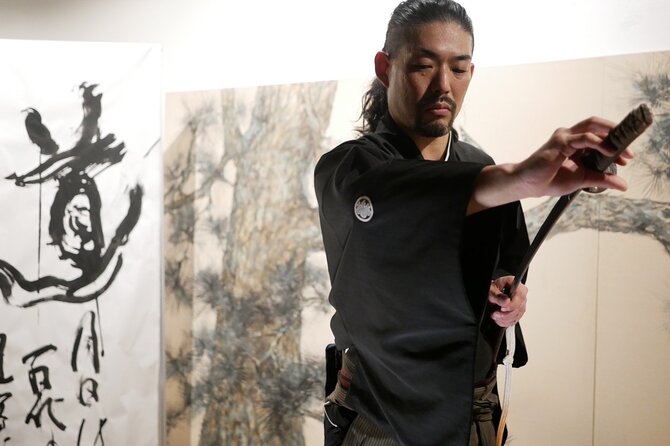
After practicing the basic movements, you get to apply them to a cutting target. The activity description refers to straw targets, while the hands-on account describes cutting tatami with a real katana. Either way, this is the moment when the class moves from practice to a physical test.
The target gives you a clear reason to focus on technique. You cannot simply swing hard and expect a good result. Your grip, angle, control, and follow-through all matter. Under instruction, you get a better sense of why correct form is central to sword work.
This is likely to be the most exciting part for many people, but it is also the point where you should listen closely to the instructor. The class is designed around guided practice, not unsupervised handling. Follow the directions carefully and treat the sword as a serious piece of equipment.
For families, couples, and friends, the target cutting adds a shared challenge. You can compare the experience afterward, but the class is not framed as a competition. The main goal is to learn the movement and understand the discipline behind it.
Tea, questions, and the cultural side of Bushido
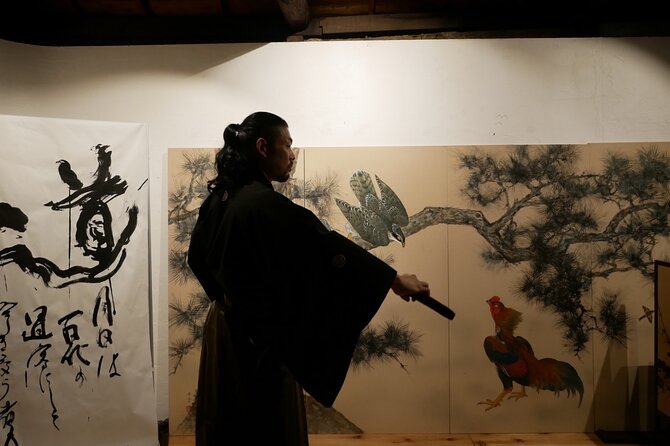
The class closes with a cup of carefully selected Japanese tea. This quieter ending gives you time to shift from physical practice to conversation.
The tea is more than a final refreshment. It provides a natural pause for questions about Bushido, Japanese culture, the sword, and the customs connected with the experience. The instructors also hold an exchange with participants, so you have a chance to ask about points that may not fit into the active lesson.
I like this balance. The sword work gives you something memorable to do, while the tea helps place that activity in a wider cultural setting. Without this final conversation, the class could feel like a costume-and-sword photo opportunity. The discussion gives it more meaning.
The quality of the conversation will depend partly on what you ask. If you are curious about Bushido or traditional Japanese culture, prepare a few questions before you arrive. The four-person format makes this especially worthwhile because you are not competing with a large crowd for the instructor’s attention.
Why the small group matters
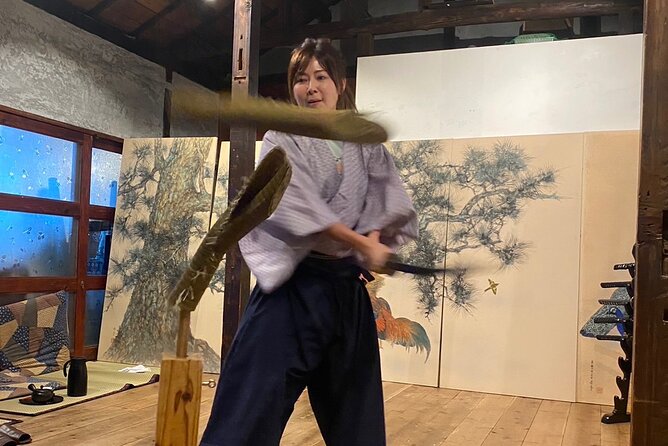
A maximum of four participants changes the tone of the experience. In a large class, you might spend much of the session watching someone else handle the sword. Here, you have a better chance to receive direct instruction and repeat the movements with help.
The private format also suits people who feel nervous about trying something unfamiliar. You can ask for clarification without feeling that you are holding up a group. That matters when the lesson includes several steps and a real blade.
The class is described as a private activity for your group only. If you book with a partner or family, you may have an especially personal session. One couple had the class to themselves, which made the experience feel more like a private appointment than a standard group tour.
There is a trade-off. A small class has less of the lively group energy you might get at a large cultural show. If you prefer a big performance with many participants and lots of spectacle, this may feel quiet. If you want direct teaching, the smaller format is a clear advantage.
How the $72 price measures up
At $72, this is not the cheapest cultural activity in Tokyo. The price makes more sense when you consider what is included: about 90 minutes of instruction, kimono wear, sword practice, target cutting, a traditional tea service, and a private group limited to four people.
You are also paying for access to instruction from Sensei Musashi Oka and the support of Yoshi San. The personal attention is the key value. If you only want a photograph in samurai clothing, less expensive options may exist. If you want to learn basic sword handling and use the sword under supervision, this experience offers more substance.
The short duration helps fit it into a packed Tokyo schedule. You can devote part of one day to Adachi City without giving up an entire afternoon. Still, include the time needed to reach the meeting point and return to the rest of your plans.
This is a good use of money for people who value an activity they can actively remember and talk about later. It is less appealing if your main interest is a long historical lecture or a broad survey of samurai history, neither of which is the focus here.
Reaching Adachi City and planning your day
The class meets near public transportation, but the provided details do not give a travel time from major Tokyo neighborhoods. Check the route from your hotel before booking and leave enough margin to arrive at 36-1 Senjuasahicho.
Because the activity ends back at the starting point, you will need to plan your onward route from there. This is useful if you want to continue exploring Adachi City, but it means the class does not drop you near a central Tokyo attraction.
I would schedule the experience as the main event in a block of time, rather than squeezing it between two appointments. The class itself is under two hours, but changing clothes, finding the house, and taking public transportation can make the overall commitment longer.
The mobile ticket is convenient, and confirmation is received when you book. Free cancellation is available if you cancel at least 24 hours before the start time. Cancellations or changes made inside that window are not accepted for a refund.
Who will enjoy this experience most
I would choose this for you if you want a hands-on cultural activity with a clear beginning, middle, and end. It works particularly well for couples, families, and small groups who want to do something together rather than sit through a demonstration.
It also suits first-time visitors who are curious about samurai but do not want to commit to a full martial arts course. The instructor-led format lets you try the basics without needing prior experience.
You may also like it if you are interested in Japanese clothing, tea, and traditional customs, since the experience combines all three with sword work. The tea and discussion make it more rounded than a short sword-cutting session alone.
I would hesitate if you are uncomfortable handling a real sword, want a large-scale theatrical show, or expect a detailed historical course. The class is active, intimate, and introductory. Its strength is the chance to take part, not the amount of academic material covered.
Should you book the Tokyo Samurai Experience?
Book it if you want personal instruction, a small group, and a memorable way to connect with Japanese culture. The kimono, 100-year-old house, real sword practice, target cutting, and tea create a well-shaped 90-minute experience.
The strongest reasons to go are the four-person limit and the patient guidance from Sensei Musashi Oka and Yoshi San. You get to ask questions, practice each movement, and experience more than a staged samurai pose.
Skip it if Adachi City is too far from your plans or if you are looking for a long, history-heavy tour. For everyone else, the $72 price is reasonable for a private, hands-on lesson that combines action with a calm cultural finish.
FAQ
How long does the samurai experience last?
The experience lasts approximately one hour and 30 minutes.
Where does the activity start and finish?
It starts and ends at rojicoya, located at 36-1 Senjuasahicho, Adachi City, Tokyo 120-0026, Japan.
How many people can participate?
The experience is private for your group, with a maximum of four participants.
Is the experience suitable for beginners?
Yes. The instructor provides continual guidance, and previous sword experience is not required.
Is the class offered in English?
The course is mainly conducted in English. Conversations are also compatible with Poketalk.
What happens during the sword class?
You wear a kimono, learn how to draw, hold, swing, and sheath a samurai sword, and practice cutting straw or tatami targets. The session finishes with Japanese tea and time to speak with the instructors.
Newly reviewed around Tokyo
- Tokyo Asakusa:Calligraphy & Make T-shirt Activity★ 5.0 · 62 reviews
- Intercity Shuttle, Tokyo to Haneda /Narita /Yokohama /Makuhari★ 5.0 · 5 reviews
- 1 Hour Travel around Tokyo with a Professional Photographer★ 5.0 · 3 reviews
- Travel Tokyo with Your Own Personal Photographer★ 5.0 · 43 reviews
- Kickboxing & Body Training with EX-Pro Fighter★ 5.0 · 4 reviews
- Train in Samurai Swordsmanship and Defeat the Demon in Tokyo★ 5.0 · 5 reviews
- Shuttle Van 6hr Tokyo Tour to-and-from Tokyo, Yokohama and Narita★ 5.0 · 9 reviews
- Traditional Japanese Knife Sharpening Class★ 5.0 · 18 reviews
Tokyo Samurai and Ninja Experiences, compared.
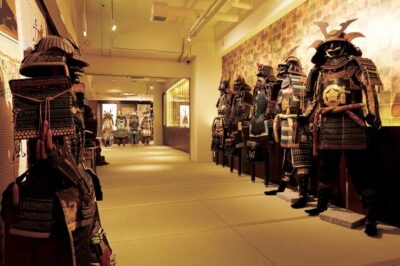
Samurai Ninja Museum Guided tour and Experience
Read our review →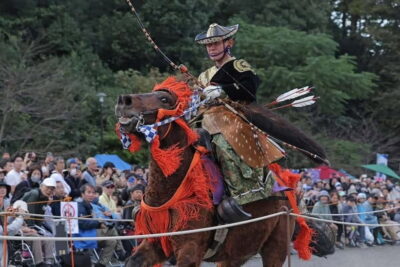
Samurai Sword & Archery Class from Samurai Descendant
Read our review →
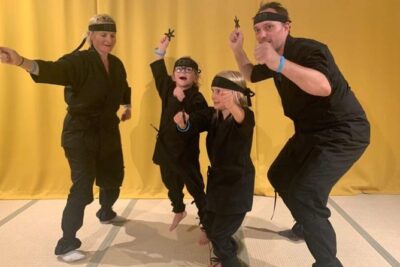
Ninja Experience (Family Friendly) at Samurai Ninja Museum TOKYO
Read our review →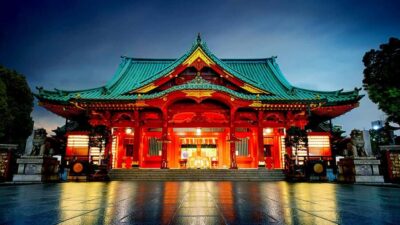
Samurai Entertainment Night Show in Kanda Shrine
Read our review →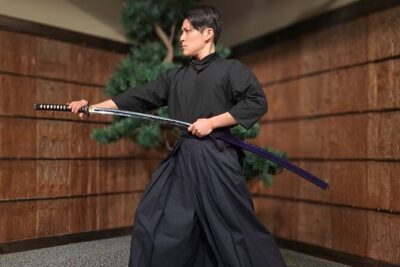
Tokyo Sword Experience – includes Museum Ticket/Ninja Experience
Read our review →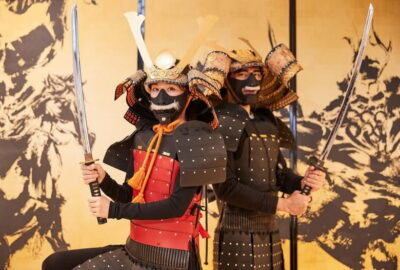
Samurai Ninja Museum Asakusa: Samurai Sword Lesson & Tour
Read our review →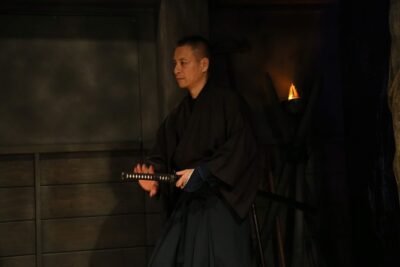
Ninja Samurai 2-hour hands-on lesson by Japanese master in Tokyo
Read our review →Browse the lists this tour appears in