
Reviewed · TOKYO SUMO EXPERIENCES
Tokyo: Sumo Keiko Training Tour with Audio Guide & Photo
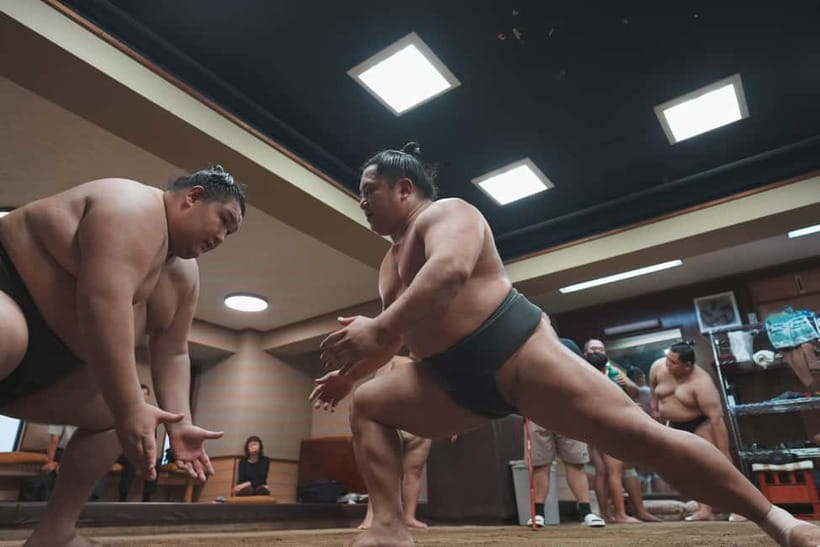
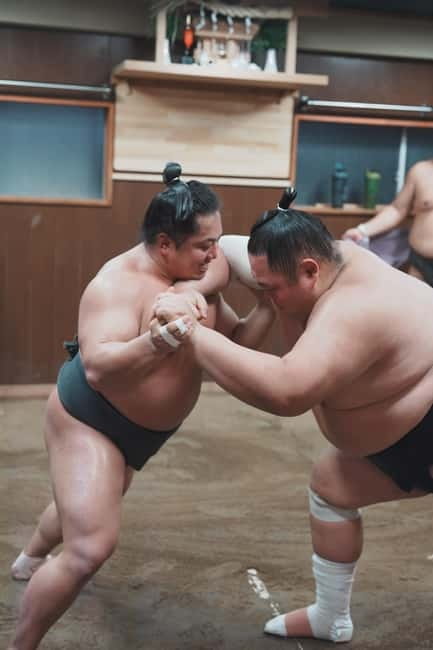
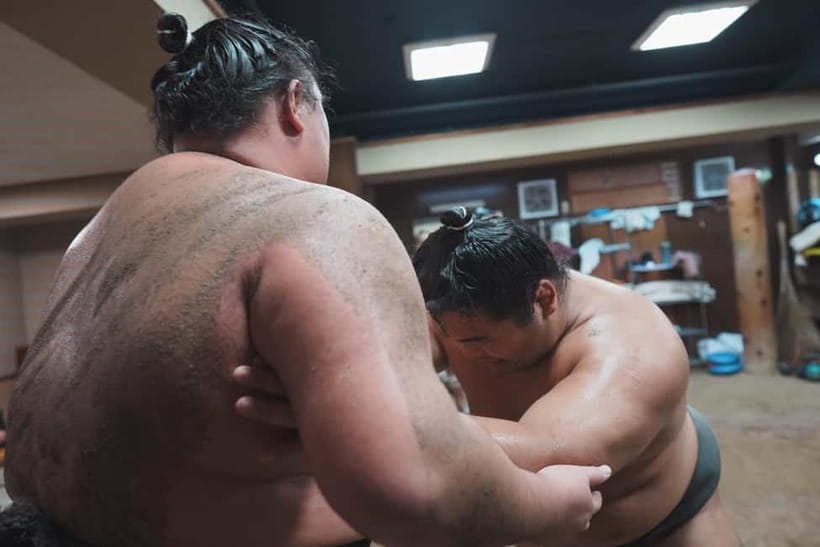
The main draw is simple: you watch professional sumo wrestlers train at Nakamura-beya, close to Ryogoku Kokugikan. This is not a staged show. The quiet, focused practice gives you a better feel for the sport than a quick ringside snapshot at a tournament.
I like the close view of real training and the useful audio guide, which explains ranks, customs, and techniques without forcing you to rely on English signs. I also like the easy location, just two minutes from JR Ryogoku Station, plus the chance to take a photo with the wrestlers.
The main catch is comfort. You may sit on a cushion for up to 1.5 hours, since bench chairs are limited and prioritized for people with disabilities. You must also stay quiet during practice, so this suits patient observers more than restless young children.
Key details before you book
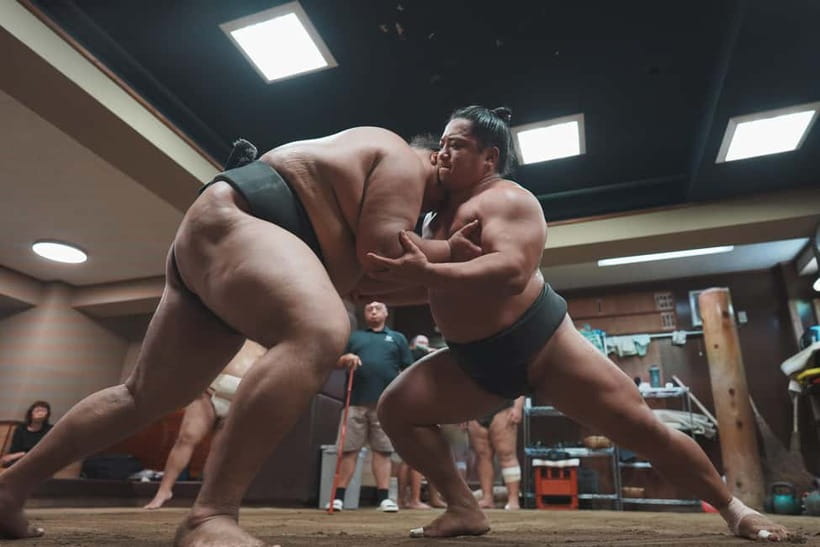
- Watch keiko at Nakamura-beya: See professional sumo practice in a working stable rather than attending a public tournament.
- Stand two minutes from Ryogoku Station: The meeting point is beside Ryogoku Kokugikan, making this one of Tokyo’s easier cultural outings.
- Use audio in multiple languages: Audio options include Chinese, English, French, German, Hindi, Italian, Japanese, Korean, Polish, Spanish, and Portuguese.
- Take home a wrestler photo: A photo with sumo wrestlers is included, with no flash allowed.
- Plan for quiet seating: Bench chairs are limited. Most people sit on cushions, and bare feet are not allowed.
- Add Ryogoku sights afterward: The Sumo Museum and Tokyo waterfront are within walking distance.
Why a practice session can beat a tournament seat
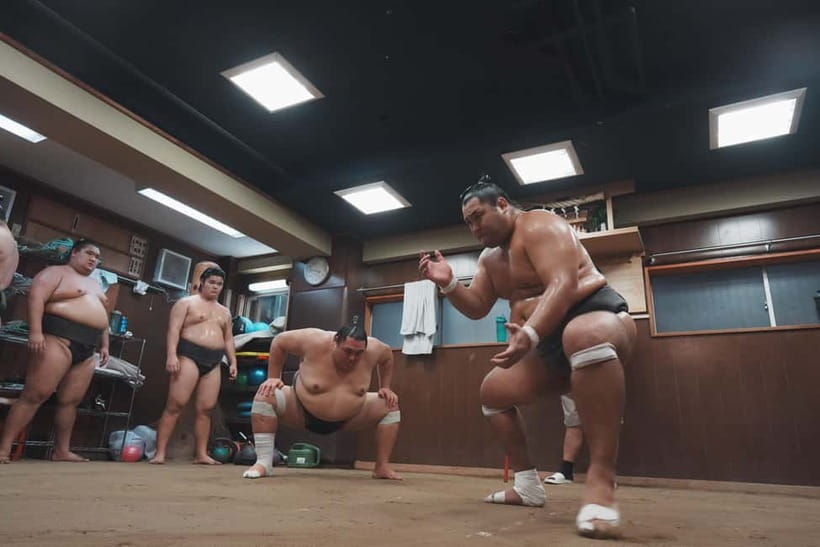
A sumo tournament is exciting, but it can also be hard to follow if you do not know the ranks, rituals, or rules. At a practice stable, you get a slower look at the work behind the spectacle: repeated movements, physical drills, and the serious mood of training.
The viewing period lasts from 40 to 90 minutes, depending on the available starting time and booking schedule. The stated visit length is up to 1.5 hours, so check the exact time offered when you reserve.
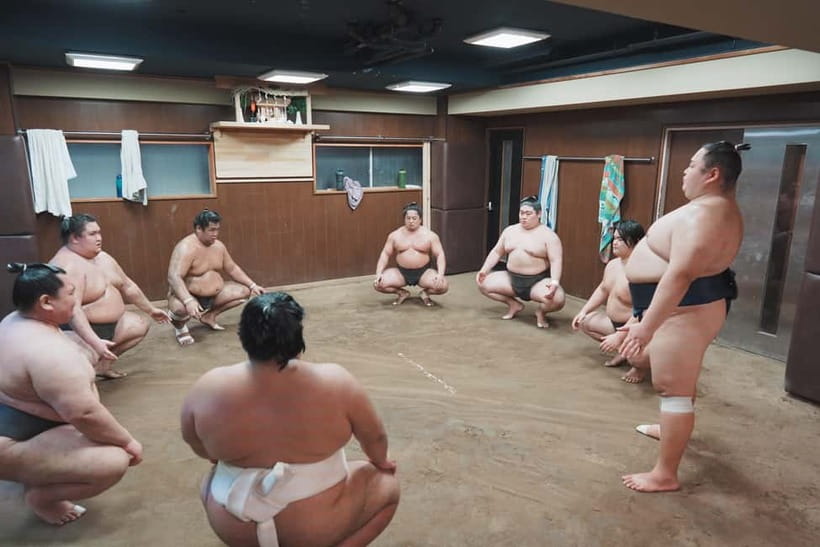
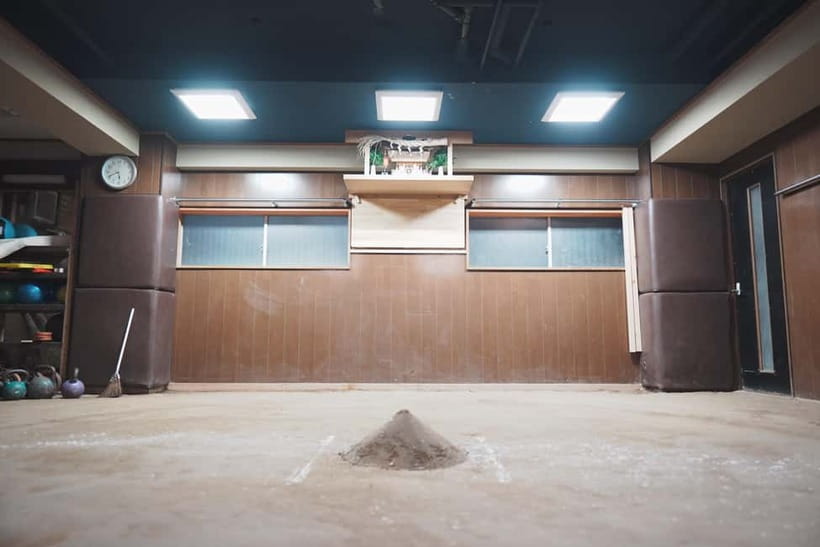
The setting matters. Nakamura-beya is a real sumo stable, not a theater built for sightseeing. That gives the session a more direct feel, though it also means you need to respect the room. Speak as little as possible, watch quietly, and follow the staff’s instructions.
This is a good place to notice how much of sumo depends on control. The sport is famous for force, but practice also shows repetition, timing, balance, and strict manners. An audio guide helps fill in the meaning of what you are seeing.
More Tokyo sumo experiences:
- Tokyo: Sumo Show and Dining Experience
★ 4.8 · 2,742 reviews - the SUMO show
★ 5.0 · 1,960 reviews - Tokyo Shinjuku Sumo Show & Experience with Photo
★ 5.0 · 1,750 reviews
Finding Nakamura-beya near Ryogoku Kokugikan
The stable is about two minutes from JR Ryogoku Station and next to Ryogoku Kokugikan National Sumo Arena. That short walk is a real benefit in Tokyo, where a cultural stop can otherwise involve several train changes and a long search for the correct entrance.
There is no hotel pickup or drop-off. You make your own way to the meeting point, so leave enough time to find Nakamura-beya before the booked start. Late arrivals do not receive extra viewing time, and the session is shortened instead.
Ryogoku is one of Tokyo’s easiest districts for building a half-day around sumo. You can pair the practice with the nearby Sumo Museum, then continue toward the Tokyo waterfront on foot. The exact time you spend at those places is up to you, but the location makes the combination practical.
Use the provided directions before leaving your hotel. A two-minute walk sounds foolproof, yet sumo stables can be easy to miss if you are rushing around a busy station area.
What happens during the 40 to 90 minute visit
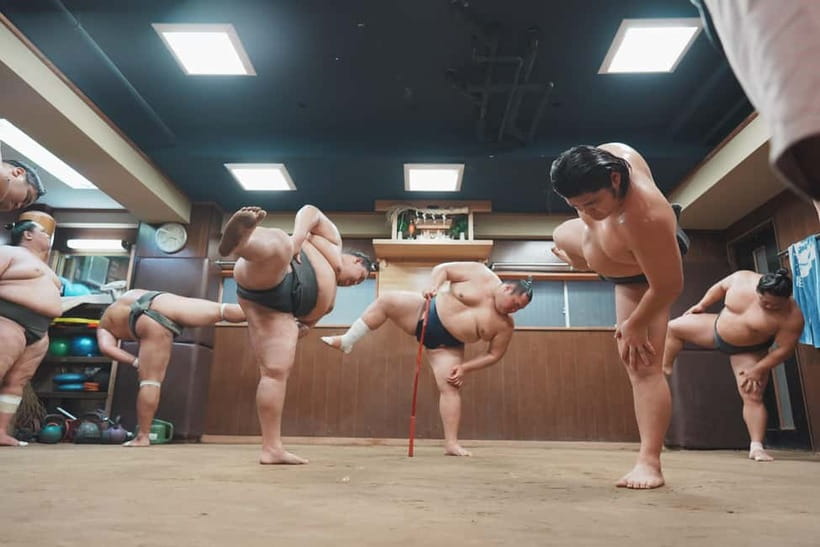
You start and finish at Nakamura-beya Sumo Stable. Once inside, you receive information about the practice and can use the sumo keiko explanation pamphlet as a quick reference.
The live guide speaks English, Japanese, and Korean. The phone audio guide offers further language choice, including Chinese, English, French, German, Hindi, Italian, Japanese, Korean, Polish, Spanish, and Portuguese. Bring your own earphones if possible. Staff can lend you a pair if you do not have any.
The guide and pamphlet are most useful for first-time viewers. Sumo has its own vocabulary and ranking system, and a little context helps you understand why the wrestlers perform certain movements or why the room follows strict rules.
During practice, keep your voice down and watch without interrupting. This is not a place for constant commentary or loud family conversation. Flash photography is forbidden, but photography is allowed, so you can take pictures when appropriate.
The viewing period may reach 1.5 hours. Restrooms should be used before you join, which is worth taking seriously because you do not want to leave in the middle of a quiet training session.
Floor cushions, air conditioning, and the practical side
The venue has air conditioning, free Wi-Fi, and charging stations. Those are modest comforts, but they matter in Tokyo, especially if you are using your phone for the audio guide and arriving with a low battery.
Seating needs more thought. A limited number of bench chairs are available, with priority for visitors with disabilities. Everyone else sits on cushions, potentially for the full 1.5 hours. If sitting on the floor is difficult, contact the provider before booking rather than assuming a chair will be available.
Bare feet are not allowed, so wear socks and comfortable clothing. Sunglasses are also not allowed. These rules are easy to follow, but forgetting them could make the visit less comfortable.
Children must be at least six years old. Younger children cannot join, and even older children need to understand that the session requires quiet observation. I would choose this for children who can sit still and follow instructions, not as a casual stop for a very young family.
More Tokyo self-guided and audio tours:
- Tokyo: Open Top Panoramic Sightseeing Bus with Audio Guide
★ 3.8 · 254 reviews - Tokyo: 60min Panoramic Open Top Bus Tour with Audio Guide
★ 4.0 · 40 reviews - Akihabara: Self-Guided Tour with a special brochure
★ 3.7 · 11 reviews - Tokyo Self-Guided Audio Tour
★ 3.5 · 10 reviews
The wrestler photo and what it adds
A photo with sumo wrestlers is included. It gives you a clear souvenir and adds a personal moment after watching the practice, but you should keep expectations sensible: the information provided does not promise a long conversation or a private meet-and-greet.
Photography is allowed during the visit, but flash is not. Keep your phone ready without making noise, and follow the staff’s directions about when photos can be taken. The photo opportunity is best treated as a short closing moment, not the main reason to come.
The strongest part of the outing remains the training itself. The photo works because you have just watched the athletes practice and can connect the souvenir to a real sumo setting.
How much value do you get for $85?
At $85 per person, this is not a bargain sightseeing stop. You are paying for access to a working sumo stable, live explanations in three languages, multilingual audio support, a pamphlet, venue facilities, and a wrestler photo.
The value depends on your interest. If sumo is high on your Tokyo list, the close view and authentic training setting can justify the price. One verified booking described the session as close and personal, even for someone who already knew a great deal about sumo. That is an important point: the appeal is not limited to beginners.
A second verified booking called it a rare chance to see how practice works. I agree with that logic. You cannot get the same setting by looking at a statue, visiting a museum, or watching a tournament from a distant seat.
The price is harder to defend if you only want a quick photo or a general introduction to Japanese culture. The session requires quiet attention, floor seating may be uncomfortable, and the length can be shorter than 90 minutes depending on the schedule.
The free cancellation window and reserve-now, pay-later option make planning easier. You can cancel up to 24 hours ahead for a full refund, according to the stated terms. Still, check the exact conditions at booking and confirm the start time before you finalize your Tokyo day.
Why the audio guide is worth using
The audio guide is more than a language backup. It gives structure to a sport that can seem mysterious when you first watch it. You can learn about sumo history, ranks, and training techniques while seeing the practice in front of you.
You will need your phone and earphones. Bring your own set for comfort, though a pair can be lent to you if needed. Free Wi-Fi and charging stations reduce the worry of using your phone for the session.
The live guide covers English, Japanese, and Korean. If you prefer one of the other listed languages, the audio guide gives you more choice without requiring a separate private guide.
Do not expect the audio to turn practice into a narrated performance. The room’s quiet atmosphere remains important. Use the guide at the proper time, keep the volume controlled, and put your attention back on the wrestlers.
Adding the Sumo Museum and waterfront
Ryogoku Kokugikan National Sumo Arena is next door, and the Sumo Museum is within walking distance. This makes the stable visit easy to pair with a museum stop, especially if you want more background after seeing practice.
The museum can help you connect the physical training to sumo’s symbols, ranks, and traditions. The stable gives you movement and sound, while the museum gives you a more display-based look at the sport. The two stops complement each other without requiring a long trip across Tokyo.
You can also walk toward the Tokyo waterfront afterward. The supplied details do not set a fixed walking route or duration, so plan that part according to your energy and the weather.
I would schedule the sumo visit early enough to leave room for these nearby sights. Since late arrival cuts into your viewing time, do not pack a tight morning with distant attractions before it.
Who will enjoy this most
This suits adults and children six or older who are curious about sumo and comfortable with quiet observation. It is especially useful for someone visiting Tokyo during a non-tournament period, when a live match may not fit the schedule.
It also works for repeat Japan visitors. The close look at training offers something different from a museum or a tournament broadcast, and the multilingual audio gives experienced fans extra detail about technique and rank.
People with mobility needs should ask about seating before booking. Bench chairs are limited and prioritized for visitors with disabilities, while most people sit on cushions. The venue has useful facilities, but the seating arrangement remains the main comfort issue.
Skip it if you want a loud, fast-paced show, a long personal chat with wrestlers, or a fully guided walking tour of Ryogoku. This is a focused visit built around watching practice respectfully.
Should you book the Nakamura-beya session?
Book it if you want a close look at professional sumo training and value an authentic setting over a polished stage show. The station access, multilingual audio, air conditioning, Wi-Fi, charging stations, and wrestler photo make the $85 easier to justify for serious sumo fans.
Think twice if floor seating is a problem, if you cannot remain quiet, or if your schedule is too tight for possible late-arrival penalties. For the best day, arrive early, bring earphones and socks, use the restroom first, and leave time for the Sumo Museum afterward.
FAQ
Where does the sumo training tour meet?
It meets at Nakamura-beya Sumo Stable, about two minutes from JR Ryogoku Station and next to Ryogoku Kokugikan National Sumo Arena.
How long does the visit last?
The activity duration is listed as 40 to 90 minutes. The visit information also refers to a possible 1.5-hour viewing period, so check the available starting time and duration when booking.
Is transportation included?
No. Hotel pickup and drop-off are not included. You make your own way to Nakamura-beya Sumo Stable.
What languages are available with a live guide?
The live guide speaks English, Japanese, and Korean.
What languages are available for the audio guide?
The listed audio options are Chinese, English, French, German, Hindi, Italian, Japanese, Korean, Polish, Spanish, and Portuguese.
Do I need to bring earphones?
You should bring your own earphones to use the audio guide on your phone. A pair can be lent to you if you do not have one.
Can I take photographs?
Yes, photography is allowed, but flash photography is not. Sunglasses are also not allowed.
Is seating provided?
A limited number of bench chairs are available, with priority for visitors with disabilities. Other participants sit on cushions.
Can children join the activity?
Children must be at least six years old. Children under six are not permitted to join.
Can I cancel for a refund?
You can cancel up to 24 hours in advance for a full refund, according to the stated booking terms. The reserve-now, pay-later option lets you hold a place without paying immediately.
Newly reviewed around Tokyo
- Tokyo Asakusa:Calligraphy & Make T-shirt Activity★ 5.0 · 62 reviews
- Intercity Shuttle, Tokyo to Haneda /Narita /Yokohama /Makuhari★ 5.0 · 5 reviews
- 1 Hour Travel around Tokyo with a Professional Photographer★ 5.0 · 3 reviews
- Travel Tokyo with Your Own Personal Photographer★ 5.0 · 43 reviews
- Train in Samurai Swordsmanship and Defeat the Demon in Tokyo★ 5.0 · 5 reviews
- Shuttle Van 6hr Tokyo Tour to-and-from Tokyo, Yokohama and Narita★ 5.0 · 9 reviews
- Kickboxing & Body Training with EX-Pro Fighter★ 5.0 · 4 reviews
- Traditional Japanese Knife Sharpening Class★ 5.0 · 18 reviews
Tokyo Sumo Experiences, compared.
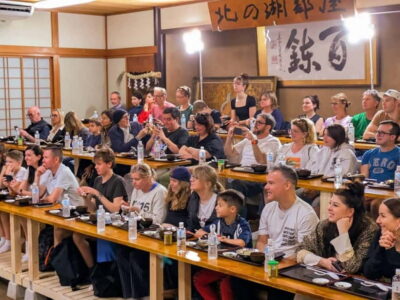
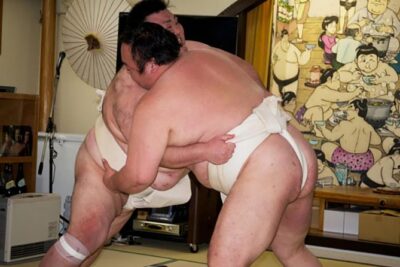
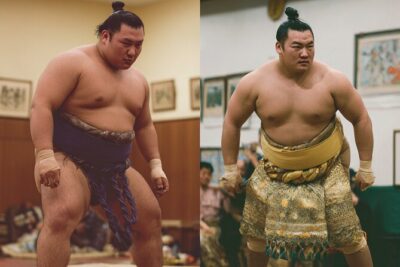
Tokyo Shinjuku Sumo Show & Experience with Photo
Read our review →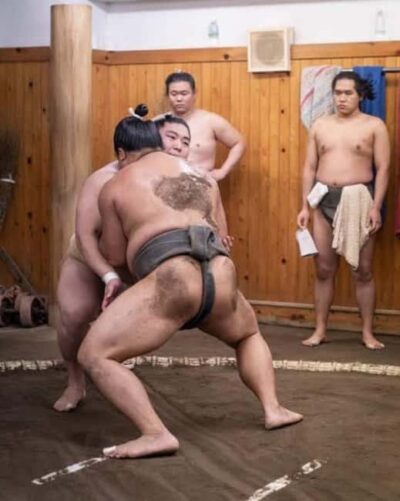

Luxury Sumo Show Experience & Japanese cuisine & Drink
Read our review →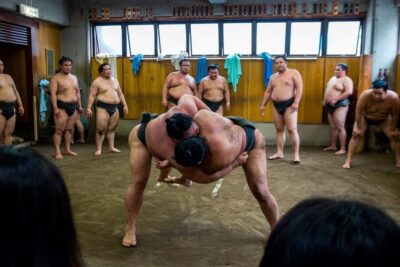
Tokyo Sumo Experience: Chanko & Mochi with a Former Pro
Read our review →
Ultimate Sumo Tournament: Tokyo, Osaka, Nagoya, Fukuoka
Read our review →Browse the lists this tour appears in