
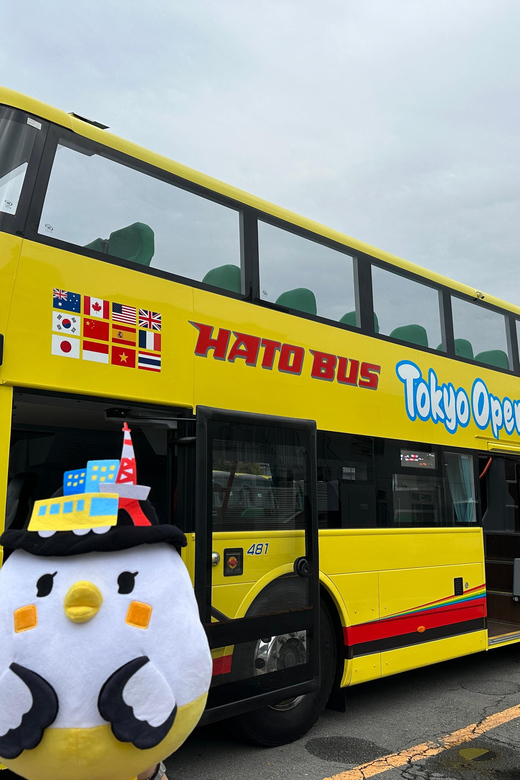
Reviewed · AUDIO TOURS
Tokyo: 60min Panoramic Open Top Bus Tour with Audio Guide
Tokyo looks different from the upper deck of a moving bus. You get wide views of Tokyo Tower, Rainbow Bridge, and the bay, while the route also gives you a quick look at government buildings, shopping streets, and old market districts. It is a smart way to get your bearings early in a Tokyo stay.
I like the eight-language GPS guidance, which lets you follow along without needing an English-speaking guide. I also like the simple one-hour format and the low $14 price. The main catch is that this is a drive-by tour, not a hop-on hop-off service, so you will not stop to explore the sights.
Key points at a glance
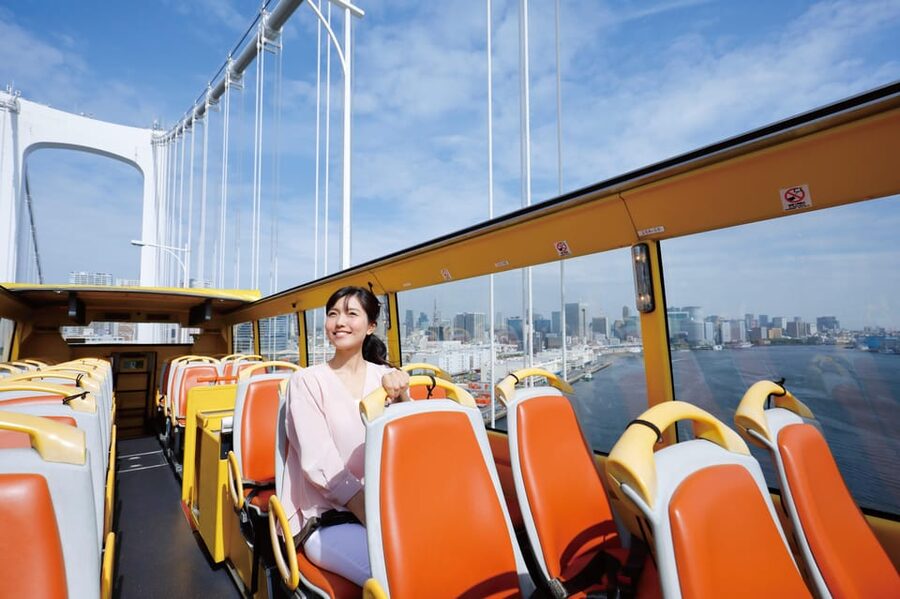
- Rainbow Bridge from an open-top upper deck: Feel Tokyo’s breeze as the bus crosses this major link between the city and the bay area.
- Eight audio languages: GPS guidance is available in English, Chinese, Korean, Spanish, French, Thai, Indonesian, and Vietnamese.
- A useful one-hour route: See Tokyo Tower, Odaiba, Toyosu, Tsukiji, Kabuki-za, Ginza, and more without spending half a day.
- Easy Tokyo Station meeting point: The Hato Bus office is about two minutes from the JR Tokyo Station Marunouchi South Exit.
- Low-cost city orientation: At $14 per person, this works well as a first look before choosing which districts deserve more time.
- Weather affects the experience: Rain can close the roof or cancel the tour, and the bus does not provide earphones or GPS devices.
Why this short bus ride works well in Tokyo
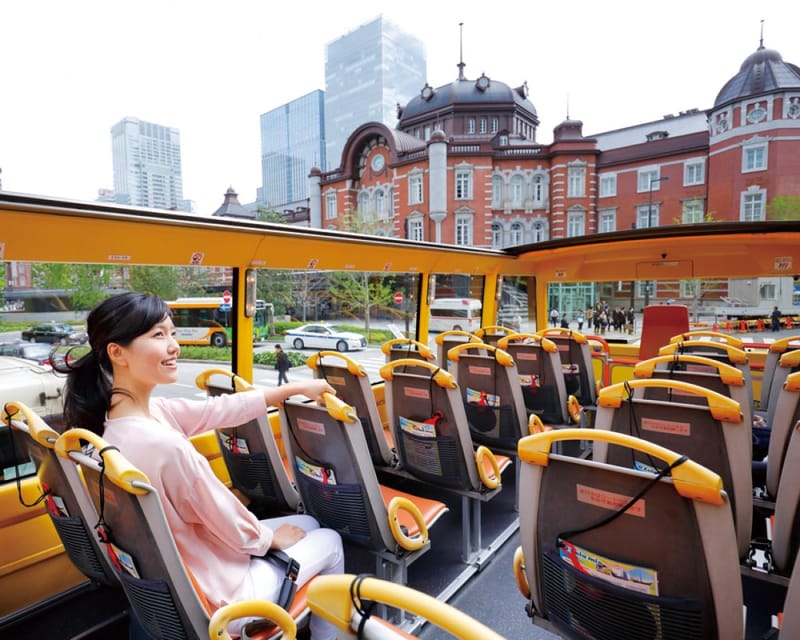
Tokyo can feel like several cities at once. Government offices sit near quiet parks, high-rise districts give way to old shopping streets, and the bay area feels far removed from central Ginza. This route connects those pieces in a single hour.
The upper deck is the main reason to book. You are not looking through a small side window or trying to spot landmarks between buildings. With no roof in good weather, you get a wider view of the streets, skyline, bridges, and passing districts.
I would treat this as an orientation ride rather than a full sightseeing tour. The bus passes each major point, but it does not give you time to visit Tokyo Tower, browse Tsukiji Outer Market, or walk through Odaiba. You are collecting impressions and deciding where to return later.
The price makes that limitation easier to accept. At $14, this is less about detailed guiding and more about seeing a broad slice of Tokyo without paying for a long excursion. A one-hour ride also fits neatly into a packed Tokyo schedule.
More Tokyo self-guided and audio tours:
- Tokyo: Open Top Panoramic Sightseeing Bus with Audio Guide
★ 3.8 · 254 reviews - Akihabara: Self-Guided Tour with a special brochure
★ 3.7 · 11 reviews - Tokyo Self-Guided Audio Tour
★ 3.5 · 10 reviews
Meeting the bus near Tokyo Station
The tour starts and finishes at the Hato Bus Tokyo Office, close to the JR Tokyo Station Marunouchi South Exit. After leaving the station through that exit, turn left and walk straight for about two minutes. Look for the yellow Hato bus stop.
That short walk sounds easy, but Tokyo Station is large, so allow extra time if you are unfamiliar with the building. The useful landmark is the Marunouchi South Exit, not simply Tokyo Station. The listed meeting point is at approximately 35.678964, 139.765781.
The route is not a hotel pickup service. You need to reach the Hato Bus office on your own, and the bus returns there at the end. That is convenient for continuing your day around Marunouchi, the Imperial Palace area, or the station’s many rail connections.
The bus is operated by Hato Bus Co., Ltd. The live guide speaks Japanese, while the automated GPS system supplies commentary in eight languages. You should bring a smartphone that works in Japan and your own earphones. Neither GPS equipment nor earphones are provided for rental.
Hibiya Park and the National Diet Building
The first part of the ride gives you a quick look at Hibiya Park and the National Diet Building. Both are passed rather than visited, so keep your camera ready and listen to the audio guidance.
Hibiya Park offers a change of pace from the surrounding central streets. From the bus, you get the sense of Tokyo’s formal civic center, with green public space close to major offices and avenues.
The National Diet Building is one of the route’s key government landmarks. This is a good example of what the tour does best: it lets you connect several important parts of Tokyo in minutes. You will not get a long explanation or a chance to walk around, but you will see where the city’s national government functions.
If you want close-up photographs or time to explore the grounds, plan a separate visit. The bus view is useful for orientation, not detailed architecture study.
Toranomon and Tokyo Tower from the road
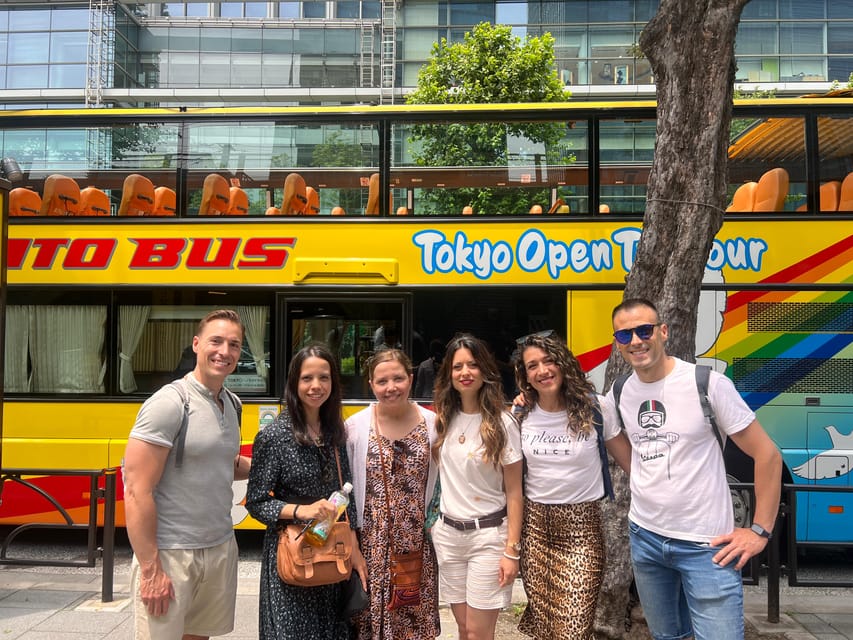
The bus then passes through Toranomon, an important central business area, before reaching Tokyo Tower. The changing view is part of the appeal. You move from civic and office districts toward one of Tokyo’s most recognizable landmarks.
Tokyo Tower is especially rewarding from a moving open-top bus because the angle changes as you approach and pass it. One piece of booking feedback specifically praised seeing the tower from several angles, something that is difficult to arrange on foot in a short time.
This is also where the upper deck matters. You can look up and across the surrounding buildings instead of seeing the tower only from street level. The ride does not include entry to the tower, and there is no stop for the observation decks, but it gives you a quick visual introduction.
The route may suit you if you want a photo opportunity without committing to a full tower visit. If Tokyo Tower is your main goal, though, you will need a separate ticket and more time.
A completely different kind of day in Tokyo:
- Mt Fuji and Hakone 1-Day Bus Tour Return by Bullet Train
★ 5.0 · 26,383 reviews - 1-Day Tokyo Bus Tour
★ 5.0 · 14,250 reviews - Tokyo: teamLab Planets TOKYO Digital Art Museum Entry Ticket
★ 4.6 · 9,779 reviews - Mt Fuji & Hakone Cruise, Drum Show Bullet Train 1 Day from Tokyo
★ 4.0 · 7,413 reviews
Crossing Rainbow Bridge toward Tokyo Bay

Rainbow Bridge is the visual high point of the route. The bus passes across the bridge, giving you open views toward Tokyo Bay and the waterfront districts. This is the section where weather can make the biggest difference.
On a clear day, the open upper deck lets you feel the breeze and see the city from a higher, broader position. The bridge crossing also changes the character of the tour. Central Tokyo’s government buildings and towers give way to wide water views, modern waterfront development, and a more open horizon.
The ride does not stop on Rainbow Bridge. You should think of the crossing as a moving viewpoint, not a photo stop. Keep your phone or camera ready, since the best angle may last only a short time.
Rain is a real consideration. The roof may be closed in wet weather, which changes the open-air character of the trip. Heavy rain or bad weather can also cause cancellation. Check conditions before setting out, especially if the open-top experience is your main reason for booking.
Odaiba and Toyosu from the upper deck
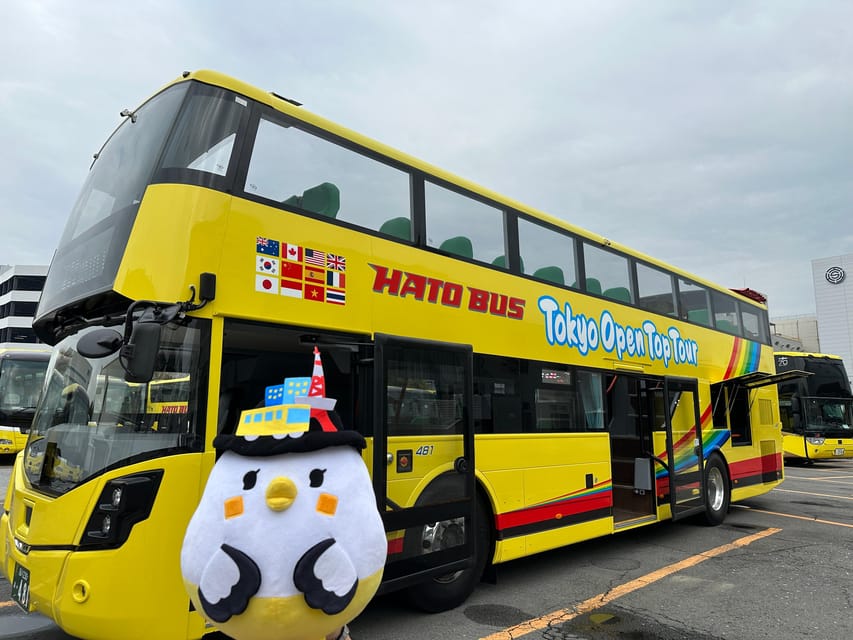
After Rainbow Bridge, the bus passes Odaiba and Toyosu. These waterfront districts show a newer side of Tokyo, far removed from the older streets around central markets and Ginza.
Odaiba is best understood from the wider route as part of Tokyo’s bay development. You get a quick sense of the scale and spacing of the waterfront area, but you will not have time to visit attractions there during this tour.
Toyosu adds another modern bay-side district to the picture. The bus gives you a useful contrast between central Tokyo and the newer waterfront zones. For a first day in the city, that contrast can help you decide if you want to return to the bay for a longer visit.
The lack of stops is both a strength and a weakness. You cover more ground than you could comfortably walk in one hour, but you cannot get off when a district catches your interest. I would note the places that appeal to you and return by train or on foot later.
Tsukiji Outer Market, Kabuki-za, and Ginza
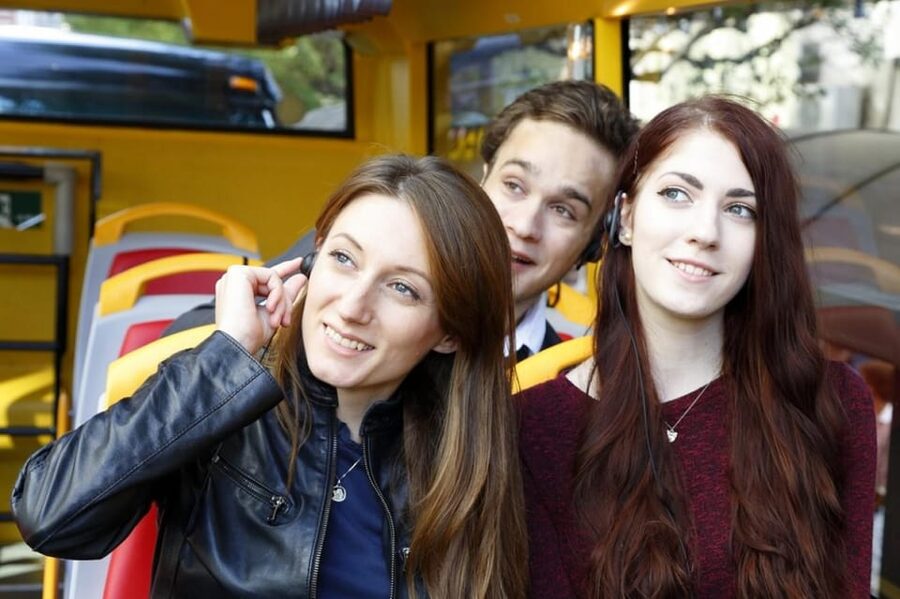
The return route passes Tsukiji Outer Market, Kabuki-za, and Ginza. This final stretch brings you back from the waterfront into some of Tokyo’s best-known central districts.
Tsukiji Outer Market is associated with food stalls, shops, and the city’s long relationship with seafood and market commerce. From the bus, you see the district as part of the city’s street network rather than as a place to eat. Food and drinks are not allowed on the bus, so plan any market tasting for after the tour.
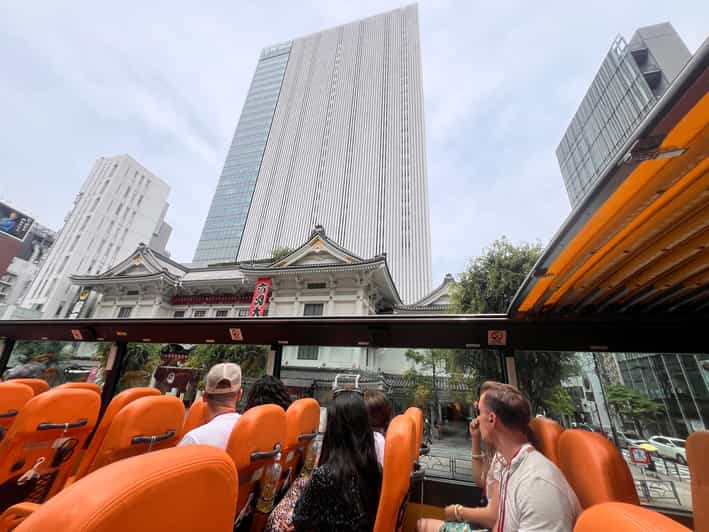
Kabuki-za gives the route a strong cultural marker. The famous theater is passed from the bus, with no performance or interior visit included. It is still a useful sight to place on your mental map, especially if you plan to explore Ginza afterward.
Ginza finishes the sightseeing circuit with its major shopping streets and central-city feel. Again, the bus only passes through. You might find this section more useful as a preview than as a complete look at the district, since Ginza rewards slow walking and side-street exploration.
The bus then returns to the Hato Bus office near Tokyo Station. That makes the finish practical. You can continue to lunch, head back to your hotel, or use Tokyo Station for another part of the city.
The GPS audio system and what you need to bring

The audio guidance is automated and GPS-based. It is available in English, Chinese, Korean, Spanish, French, Thai, Indonesian, and Vietnamese. This is helpful if you do not speak Japanese, since the live guide’s language is Japanese.
You need three things to make the system work properly:
- A smartphone that can be used in Japan
- Your own earphones
- Enough battery for the one-hour ride
The GPS system and earphones are not supplied. The service is free, but there is no refund for technical problems or malfunctioning earphones. That makes a quick equipment check worthwhile before you leave your hotel.
The Japanese-speaking guide remains part of the experience, but you should not book this expecting a long English commentary from a person on board. The multilingual information comes through the automated system. If you prefer a personal guide who answers questions in English, this is not the right format.
What the $14 price really gives you
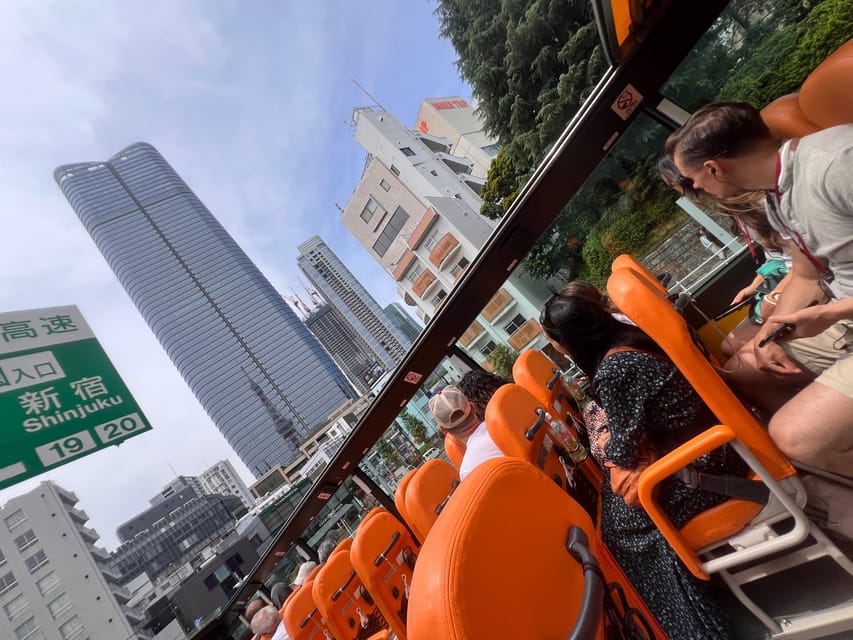
At $14 per person, the tour offers good value for a short city overview. The included package is straightforward: a seat on the double-decker open-top bus and the audio guide.
You are paying for the route and the elevated views, not for entry to attractions, meals, hotel transport, or a full-day guide. That keeps the cost low, but it also means you need to plan your own visits to Tokyo Tower, Odaiba, Tsukiji, and other stops.
I see the best value in using this early in your Tokyo stay. The tour can show you how the city’s central and bay districts connect, helping you choose where to spend your limited sightseeing time. It also works for a final afternoon when you want a relaxed overview without another long museum or temple visit.
The one-hour duration is a strong point. Tokyo’s heat, crowds, and long station walks can wear you down. A short ride gives you a break while still showing a useful number of landmarks.
Who should book this open-top tour
I would recommend it for first-time visitors who want a quick sense of Tokyo’s scale. It also suits anyone with only a short window between train connections or other plans.
Families may appreciate the easy format. Children under six can ride free without a seat, limited to one child per adult. If a child needs a seat, check the booking terms before paying, since the free arrangement applies only when no seat is used.
The tour is also a good fit for photographers who want changing angles on Tokyo Tower and Rainbow Bridge. Keep in mind that the bus is moving, so this is better for quick city images than carefully composed shots.
You may want to skip it if you need frequent stops, detailed explanations in English, or time inside the attractions. It is also a poor choice if rain is forecast and the open roof is your main reason for going.
Booking can be canceled up to 24 hours in advance for a full refund, and you can reserve now and pay later. Those terms help if your Tokyo schedule is still changing, though bad weather can affect the operation itself.
Final call: a useful first look at Tokyo
Book this tour if you want a low-cost, one-hour overview with excellent chances to see Tokyo Tower, Rainbow Bridge, the bay area, Ginza, and major civic districts from above.
Skip it if you expect a hop-on hop-off service or a detailed walking visit at each landmark. The route moves continuously, and the best experience depends on good weather, a charged smartphone, and your own earphones.
For most visitors, I would place it near the start of a Tokyo stay. Use the ride to mark places worth returning to, enjoy the open air, and let the city pass by at a comfortable pace.
FAQ
How long is the Tokyo open-top bus tour?
The tour lasts one hour.
Where does the tour start and finish?
It starts and ends at the Hato Bus Tokyo Office near the JR Tokyo Station Marunouchi South Exit.
How do I find the meeting point?
From the Marunouchi South Exit, turn left and walk straight for about two minutes. Look for the yellow Hato bus stop.
Is this a hop-on hop-off bus?
No. This is a continuous one-hour route, and you do not get off to visit the sights.
Which languages are available for the audio guide?
GPS audio guidance is available in Chinese, English, French, Indonesian, Korean, Spanish, Thai, and Vietnamese.
What language does the live guide speak?
The live guide speaks Japanese.
Do I need to bring anything for the audio guide?
Yes. Bring a smartphone that can be used in Japan and your own earphones. GPS devices and earphones are not provided.
Can I eat or drink on the bus?
Food is not allowed. Drinks in plastic bottles are permitted.
What happens if it rains?
The roof may be closed in rain. The tour may also be canceled because of bad weather or heavy rain.
Newly reviewed around Tokyo
- Tokyo Asakusa:Calligraphy & Make T-shirt Activity★ 5.0 · 62 reviews
- Intercity Shuttle, Tokyo to Haneda /Narita /Yokohama /Makuhari★ 5.0 · 5 reviews
- 1 Hour Travel around Tokyo with a Professional Photographer★ 5.0 · 3 reviews
- Travel Tokyo with Your Own Personal Photographer★ 5.0 · 43 reviews
- Shuttle Van 6hr Tokyo Tour to-and-from Tokyo, Yokohama and Narita★ 5.0 · 9 reviews
- Kickboxing & Body Training with EX-Pro Fighter★ 5.0 · 4 reviews
- Train in Samurai Swordsmanship and Defeat the Demon in Tokyo★ 5.0 · 5 reviews
- Traditional Japanese Knife Sharpening Class★ 5.0 · 18 reviews
Audio Tours, compared.
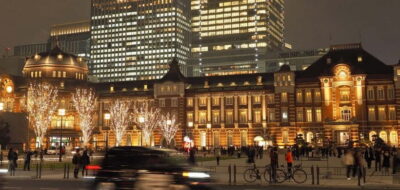
Open Top Panoramic Sightseeing Bus with Audio Guide
Read our review →

Sumo Keiko Training Tour with Audio Guide & Photo
Read our review →
Browse the lists this tour appears in