
Reviewed · TOKYO SUSHI MAKING CLASSES
Tokyo Professional Sushi Chef Experience
Tokyo sushi is best understood at the counter, where small details matter: the temperature of the rice, the pressure of your fingers, and the clean cut of a knife through fish. This two-hour class puts you in that setting with an Itamae who has 30 years of experience. I like the real restaurant setting and the chance to work with ingredients such as uni, chutoro, hirame, and kuruma-ebi. I also like the freshly grated wasabi, a sharp, fragrant ingredient that tastes very different from the familiar green paste in a tube.
The main consideration is the price: at $161 per person, this is not a cheap meal or a casual cooking lesson. You are paying for instruction, ingredients, tools, and a small English-speaking group, so it makes the most sense if you want to learn rather than simply eat sushi. Also confirm the drink arrangement when booking, since one description includes a complimentary drink while the general terms list beverages separately.
Key points before you book
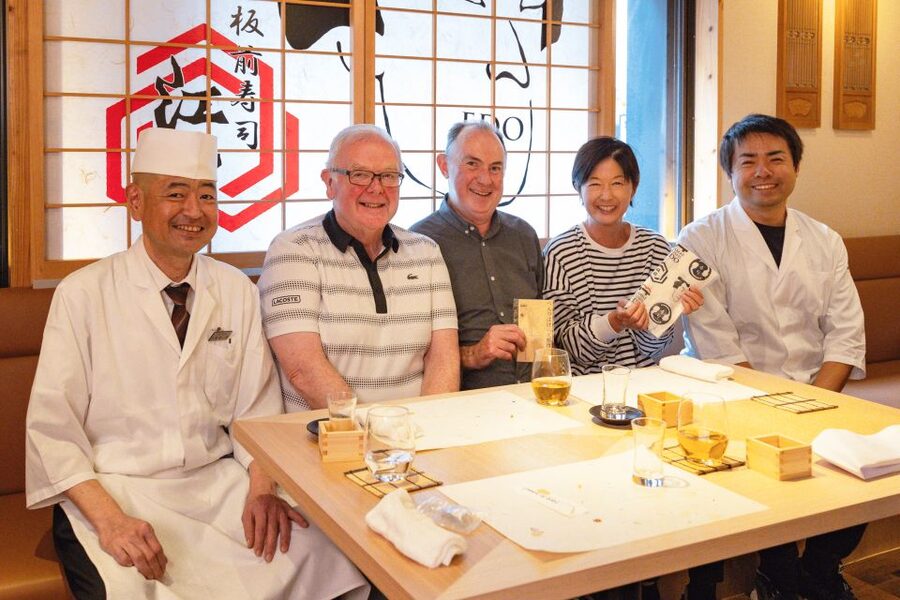
- Learn from a 30-year Itamae: Get direct instruction from a professional sushi chef rather than following a large class demonstration.
- Work in a real Tokyo restaurant: The setting gives the lesson a stronger connection to everyday sushi culture than a generic cooking studio.
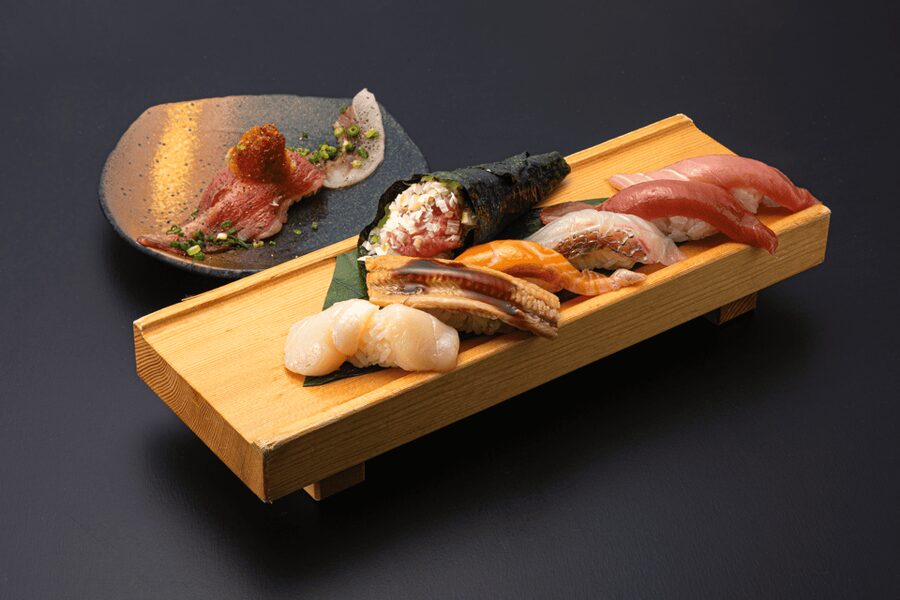
- Try premium and traditional sushi ingredients: Prepare and taste uni, negitoro, hirame, kuruma-ebi, chutoro, and akami.
- Make more than one kind of sushi: You will work on sushi rice, hand rolls, and nigiri, with demonstrations of fish preparation.
- Keep the group small: No more than eight people can join, though at least two participants are required.
- Suitable for many diets: Vegetarian and allergy-friendly choices are available if you communicate your needs.
What the two-hour sushi class is really about
This is a practical lesson, not a show where you watch a chef work and then receive a plate at the end. You will handle the rice, nori, wasabi, and sushi ingredients yourself, with the Itamae and an English-speaking interpreter helping you understand each step.
That difference matters. Sushi looks simple because the finished pieces are small. In practice, the rice can be too warm, too loose, or too tightly packed. A hand roll can become soggy if it sits too long. Nigiri can fall apart if you press too hard. The class gives you a chance to see these details up close and practice them with guidance.
The experience lasts two hours, which is enough time to cover several techniques without turning the lesson into a full-day culinary course. You should leave with useful skills for making sushi at home, though you should not expect to become a professional sushi chef in one afternoon.
The class is led in English, and interpretation support is available. That is useful for a hands-on lesson, since small instructions matter. You need to understand not only what to do, but also when to stop handling the rice or how to shape a piece without crushing it.
More Tokyo sushi making classes:
- Sushi Making Tokyo Roll and Authentic Japanese Sushi Class
★ 5.0 · 3,971 reviews - Tokyo: Roll and Authentic Sushi Making Class in Asakusa
★ 4.9 · 1,957 reviews - Make Sushi and Create Unforgettable Memories in Tokyo
★ 5.0 · 1,413 reviews
Starting with fresh wasabi and proper sushi rice
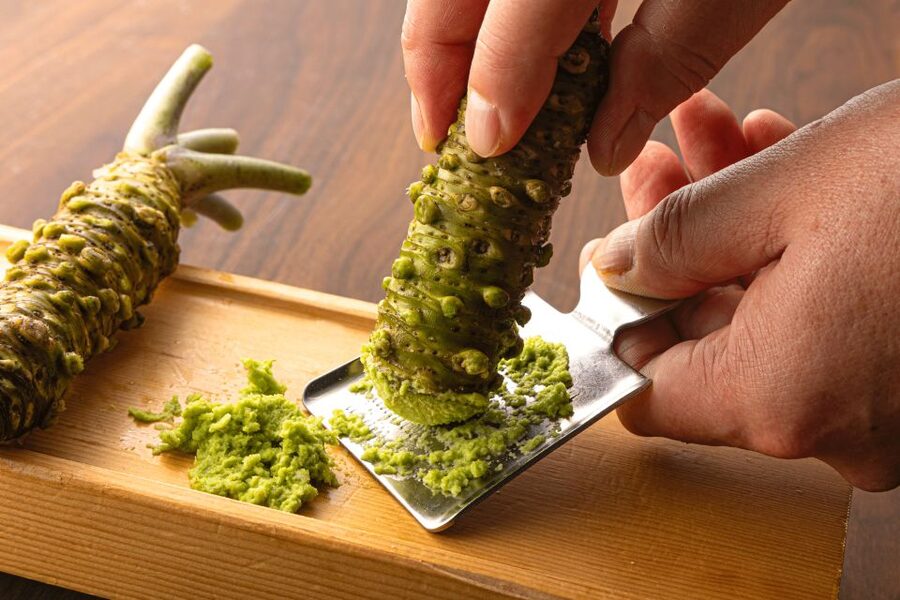
One of the most interesting early steps is grating real wasabi. Fresh wasabi has a cleaner, more delicate heat than the common prepared version. Its flavor is sharp but not simply fiery, and it fades more quickly. Grating it yourself lets you notice why Japanese chefs treat wasabi as an ingredient with its own character rather than just a hot green condiment.
You will also prepare sushi rice, known as shari once it is seasoned and used for sushi. Rice is the foundation of every piece. If it is too sticky, the texture becomes heavy. If it is too loose, the sushi will not hold together. The class explains the basic method and the details that help produce rice with the right balance of firmness and bite.
I like this part because it changes how you eat sushi afterward. You begin to notice the rice as much as the fish. That is valuable knowledge to take home, especially if your goal is to make sushi for friends or family rather than simply recreate the look of a restaurant plate.
Do not expect a long lecture on Japanese food history. The focus is on making and tasting sushi. That keeps the session lively, but it also means the cultural background is likely to come through the food and the chef’s instruction rather than through a formal presentation.
From fish preparation to your first nigiri
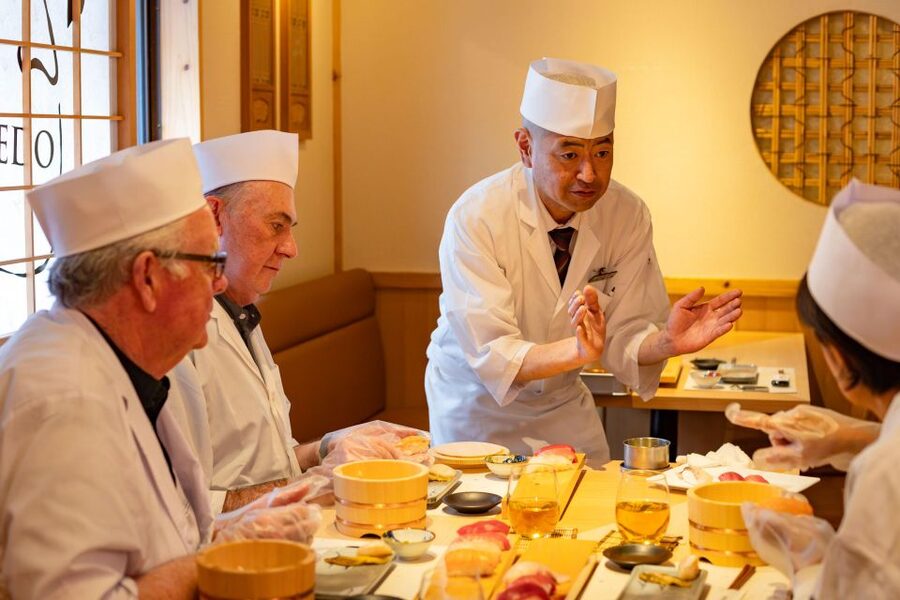
Professional demonstrations are included, with the Itamae showing fish preparation and sushi-making techniques before you try them. Watching an experienced chef first is helpful because sushi movements are compact and exact. You can see the pace, hand position, and amount of pressure before attempting the same task.
The ingredient list gives you a broad look at sushi styles and textures. You may work with:
- Uni, prized for its soft, creamy texture
- Negitoro, a rich minced tuna preparation with green onion
- Hirame, a mild white fish
- Kuruma-ebi, a Japanese tiger prawn
- Chutoro, the fattier middle section of tuna
- Akami, lean red tuna
The point is not only to sample expensive ingredients. Each one behaves differently in the mouth and on the rice. Fatty chutoro and lean akami offer a clear contrast. Soft uni requires a different touch from firmer fish. Hirame and kuruma-ebi broaden the lesson beyond the familiar tuna and salmon found on many casual sushi menus.
You will also practice forming nigiri. This is one of the most recognizable sushi styles, but it is not as easy as it looks. The rice needs to hold together while remaining light. The topping should sit neatly on top, and the finished piece should be easy to pick up and eat.
This is where the chef’s experience matters most. A 30-year Itamae can show you the difference between a piece that is merely intact and one that has the right shape and feel. You will not leave with professional-level speed, but you will understand why restaurant sushi has such a polished appearance.
Hand rolls with premium nori
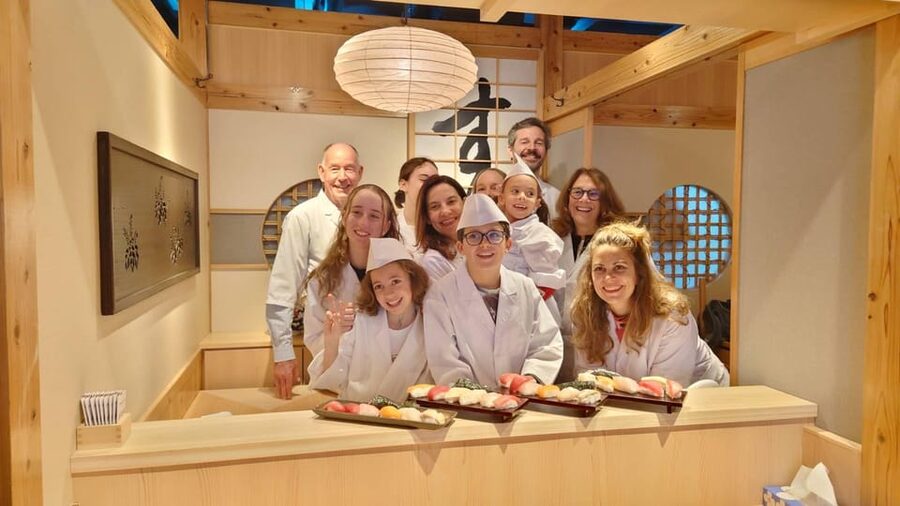
The class also includes hand-rolled sushi made with premium nori. Hand rolls are a good choice for beginners because you can focus on the balance of rice, filling, and seaweed without needing the same shaping skills as nigiri.
Nori changes quickly once it touches moisture. Rice and fillings can soften the sheet, so timing matters. A well-made hand roll should have a crisp outer layer and a sensible amount of filling. Too much rice makes it bulky. Too much filling makes it difficult to hold.
This is a useful technique for home cooking. You do not need a full sushi counter to make hand rolls, and they are easy to serve as a shared meal. The class can help you understand how much rice to use and how to build a roll that stays pleasant to eat.
The premium nori is also worth noticing on its own. Good seaweed has a fresh aroma and a pleasant snap. It should support the filling rather than overwhelm it. This is a small detail, but it helps explain why ingredient quality matters in a dish with so few components.
A completely different kind of day in Tokyo:
- Mt Fuji and Hakone 1-Day Bus Tour Return by Bullet Train
★ 5.0 · 26,383 reviews - 1-Day Tokyo Bus Tour
★ 5.0 · 14,250 reviews - Tokyo: teamLab Planets TOKYO Digital Art Museum Entry Ticket
★ 4.6 · 9,779 reviews - Mt Fuji & Hakone Cruise, Drum Show Bullet Train 1 Day from Tokyo
★ 4.0 · 7,413 reviews
Finishing with wakame udon and a drink
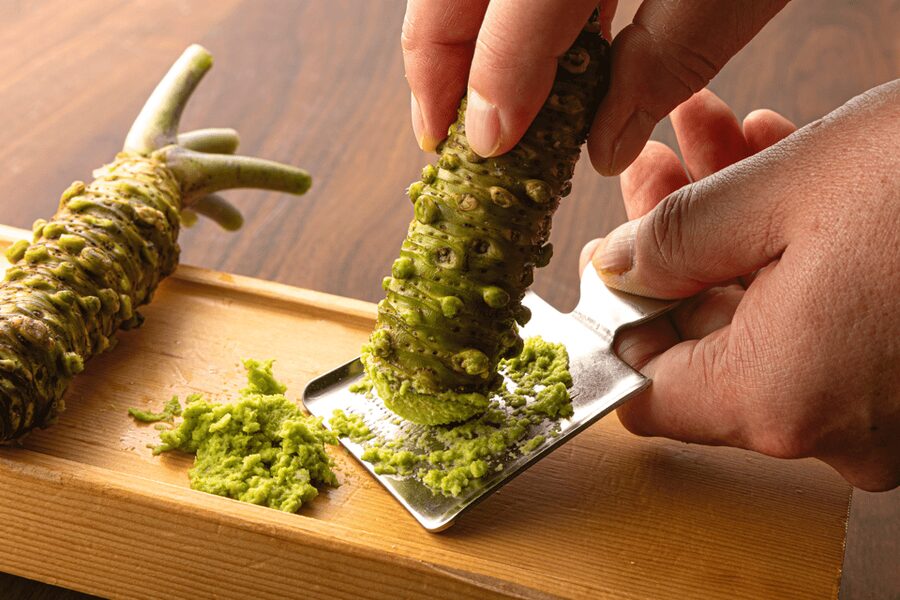
The food extends beyond sushi. A special wakame udon is included, giving you a warm noodle dish alongside the sushi you prepare. Wakame adds a light sea vegetable flavor, while udon provides a softer, more filling contrast to the cool rice and raw seafood.
A drink is also associated with the experience, with beer, sake, cola, or green tea listed as choices. However, the practical information is not perfectly consistent: one part describes a complimentary drink, while another says beverages are not included and that a drink menu is available separately. I would ask the provider to confirm this before you pay, particularly if the drink affects your sense of value.
The meal is therefore more substantial than a short sample session. You are learning, preparing food, and eating a range of sushi, with udon to round things out. Still, the main value is the instruction and access to the chef, not the amount of food alone.
Why the real restaurant setting matters
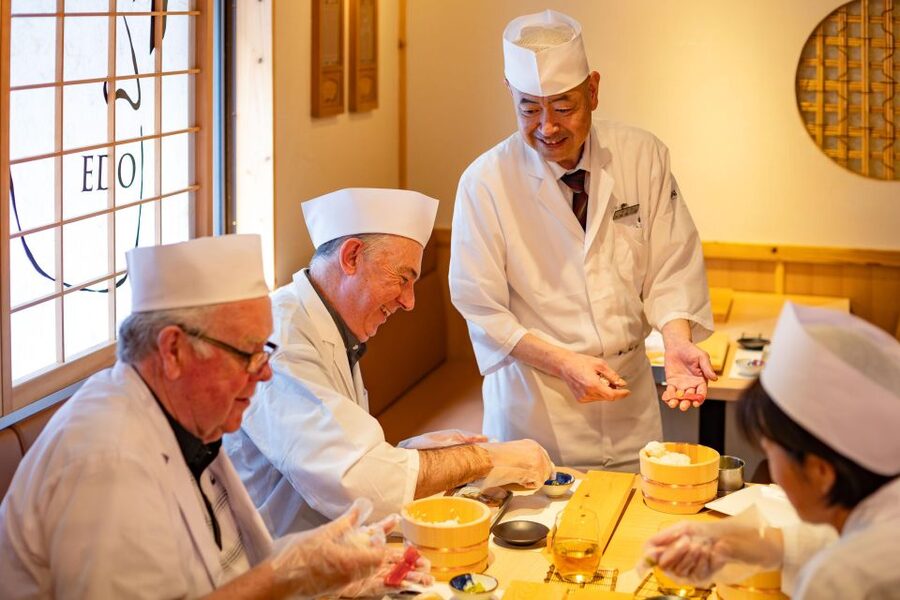
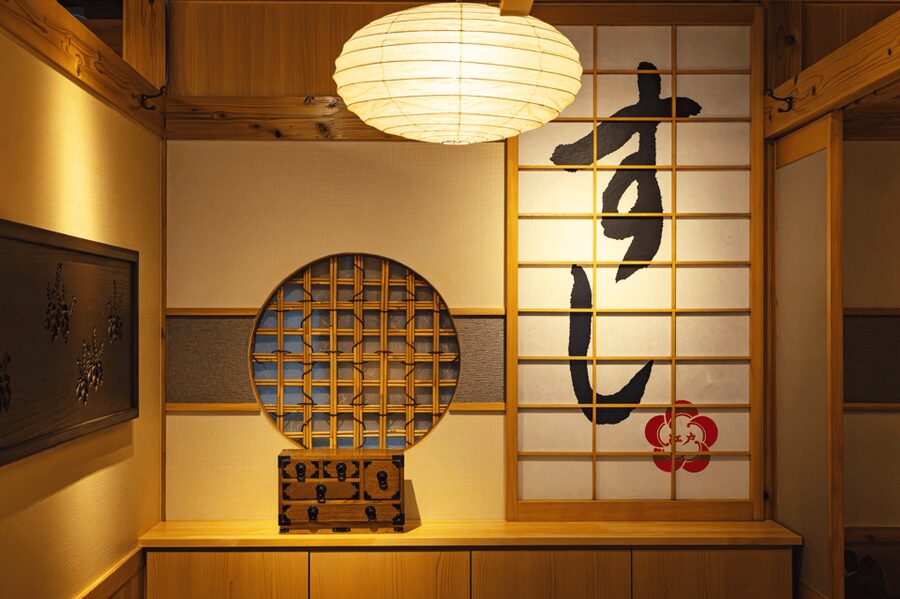
A cooking school can be clean and convenient, but a real sushi restaurant gives the lesson a stronger connection to the food you are learning to make. You can see the tools and working environment associated with professional sushi preparation, rather than practicing in a standard classroom with no restaurant context.
That setting may also make the experience feel more special during a Tokyo trip. You are not just checking a recipe off your list. You are learning a craft in the city where sushi is part of daily food culture and high-end dining.
The tradeoff is that restaurant settings can be less flexible than purpose-built teaching rooms. The meeting point may vary depending on the option you book, so check the exact location carefully. Do not assume every booking begins at the same place.
The class has a maximum of eight participants. That is small enough for personal guidance, but not necessarily private. If you want one-on-one coaching, this may not meet that expectation. The minimum group size is two, so solo visitors should check availability before booking.
Who will get the most from this experience
I would recommend this for food-focused visitors who want to understand sushi rather than just order it. It works especially well for couples, families with older children, and friends who enjoy doing something together.
The age guidance needs a little attention. The activity is described as available for elementary school students and older, but it is also marked as unsuitable for children under 10. The safest reading is that children should be at least 10 unless the provider confirms otherwise.
This can also suit a mixed group. One person may already know a fair amount about sushi, while another may be trying to shape nigiri for the first time. The demonstrations and guided practice give both people something to enjoy.
Vegetarians and people with allergies are not automatically excluded. Vegetarian and allergy-friendly options are available, but you should communicate your needs before arrival. Since sushi uses several specialized ingredients, do not rely on making changes at the last minute.
The class is less suitable if you dislike handling seafood, need a very quiet private setting, or only want a quick meal. Two hours is a meaningful time commitment, and the lesson asks you to participate throughout.
Is $161 per person a fair price?
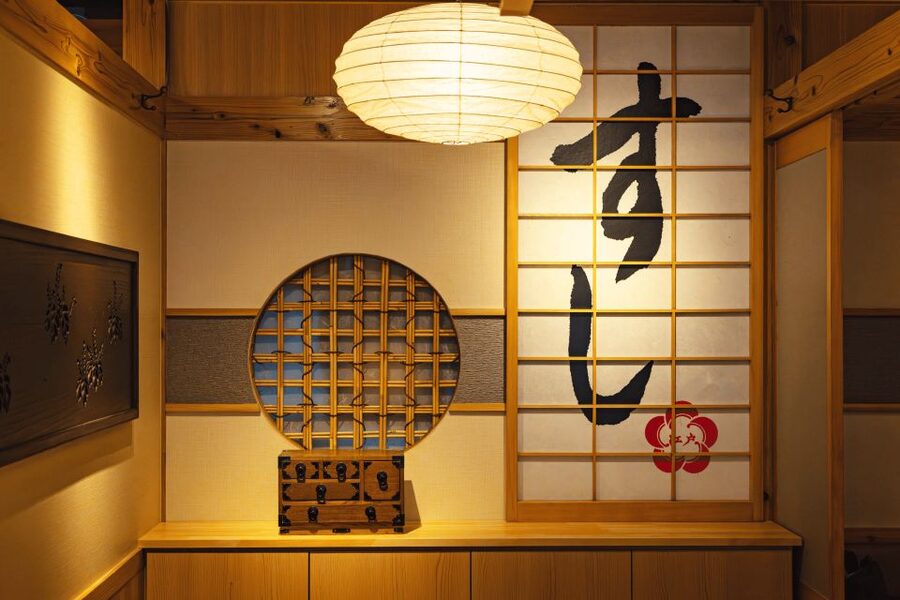
At $161, this experience sits firmly in the special-occasion category. The price includes tuition, food, tools, equipment, and the other items needed for the lesson. You are also paying for a professional chef with three decades of experience, an English-led class, interpretation support, and a group capped at eight.
If you compare it with the cost of an ordinary sushi meal, the price looks high. That is the wrong comparison. You should compare it with a guided food activity that gives you instruction, hands-on practice, multiple ingredients, and a meal at the end.
The value is strongest if you will use what you learn. The rice method, wasabi preparation, hand rolls, and basic nigiri technique can all be repeated at home. You are buying a skill and a memory, not just lunch.
The value is weaker if you are mainly interested in eating premium sushi. In that case, a restaurant meal may be a simpler way to spend your money. You may also find the price less appealing if your booking requires additional payment for drinks, so confirm that point before choosing this activity.
The five-star feedback is consistent about a few practical strengths: friendly staff, patient explanations, cleanliness, good organization, and a warm atmosphere. One participant specifically appreciated learning the sequence from tying on a chef’s apron through grating wasabi, slicing fish, and forming nigiri. That progression suggests the class is designed to make beginners feel involved rather than left watching from the side.
Small details that will improve your visit
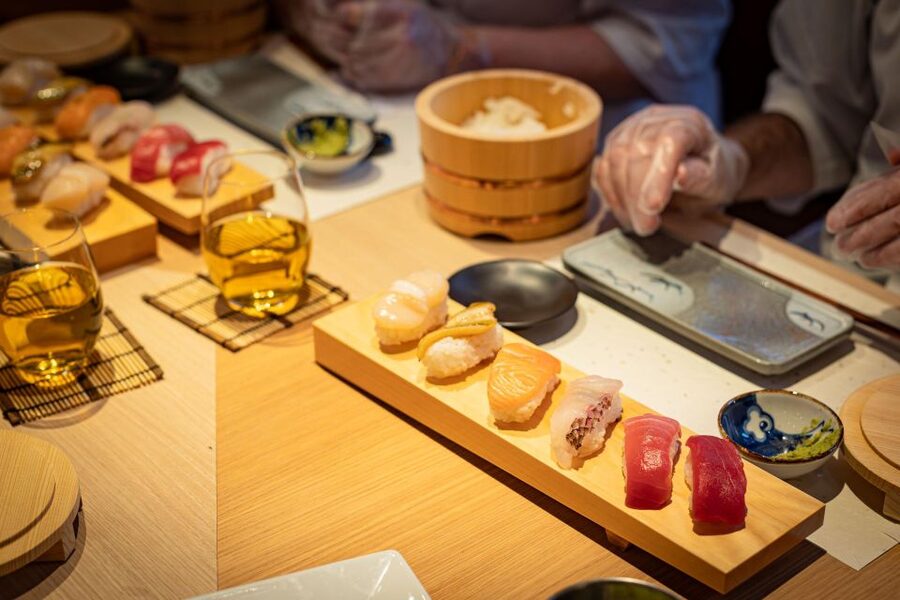
Arrive ready to work with food. This is not a passive tasting, so you will get more from it if you pay attention to the chef’s hand movements and ask questions through the English instruction and interpretation support.
Avoid strong fragrances. They are not allowed, and the rule makes sense in a sushi setting where clean aromas matter. Smoking indoors is also not allowed.
Because the group is small, book with the people you want to join if possible. A group of eight is still manageable, but your comfort may depend on how much you like working beside other participants.
Check the meeting point for your exact booking. The location can vary by option, and Tokyo is not a city where you want to discover a location change after leaving your hotel.
Free cancellation is available up to three days in advance for a full refund. That gives you some room to adjust a tightly planned Tokyo schedule, but it does not protect a last-minute change inside that period.
Should you book the Tokyo sushi chef experience?
Book it if you want a hands-on food lesson, a real restaurant setting, and a chance to work with ingredients that go beyond basic supermarket sushi. The small group, 30-year Itamae, English support, and broad menu make it a strong choice for food lovers who want more than a tasting.
Think twice if you only want a cheap meal, dislike seafood preparation, or need a private class. At $161, the experience must earn its price through instruction and atmosphere, not just the food on the plate.
For most visitors who want a memorable Tokyo activity, I think the class makes sense. You will learn how sushi is built from the rice upward, taste several different styles, and leave with techniques you can use at home. Just confirm the meeting point, age rule, dietary arrangements, and drink policy before booking.
FAQ
How long does the Tokyo sushi chef experience last?
The experience lasts two hours. Starting times vary, so you need to check availability for your preferred date.
What languages are available?
The instructor language is English, and interpretation support is available.
How many people can join the class?
The group is limited to eight participants. At least two participants are required for the experience to operate.
What types of sushi will I make and taste?
The class includes hand-rolled sushi and nigiri. Ingredients listed for preparation and tasting include uni, negitoro, hirame, kuruma-ebi, chutoro, and akami.
Are vegetarian or allergy-friendly options available?
Yes. Vegetarian and allergy-friendly options are available. You should communicate your dietary needs before the experience.
Can children participate?
The activity is intended for elementary school students and older, but children under 10 are listed as unsuitable. Confirm the age requirement with the provider before booking for a child.
Newly reviewed around Tokyo
- Tokyo Asakusa:Calligraphy & Make T-shirt Activity★ 5.0 · 62 reviews
- 1 Hour Travel around Tokyo with a Professional Photographer★ 5.0 · 3 reviews
- Travel Tokyo with Your Own Personal Photographer★ 5.0 · 43 reviews
- Intercity Shuttle, Tokyo to Haneda /Narita /Yokohama /Makuhari★ 5.0 · 5 reviews
- Train in Samurai Swordsmanship and Defeat the Demon in Tokyo★ 5.0 · 5 reviews
- Shuttle Van 6hr Tokyo Tour to-and-from Tokyo, Yokohama and Narita★ 5.0 · 9 reviews
- Kickboxing & Body Training with EX-Pro Fighter★ 5.0 · 4 reviews
- Traditional Japanese Knife Sharpening Class★ 5.0 · 18 reviews
Tokyo Sushi Making Classes, compared.
Sushi Making Tokyo Roll and Authentic Japanese Sushi Class
Read our review →
Roll and Authentic Sushi Making Class in Asakusa
Read our review →
Make Sushi and Create Unforgettable Memories in Tokyo
Read our review →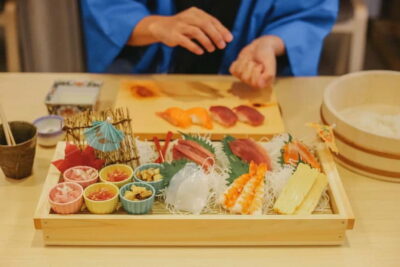
Sushi Making Class in a Happi Coat near a Famous Spot
Read our review →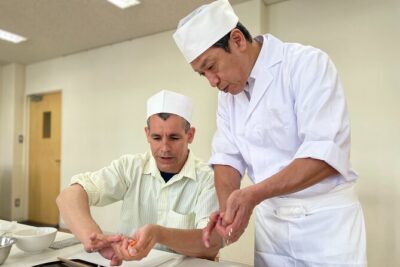
Tokyo Sushi Making Class in Tsukiji with Professional Chef
Read our review →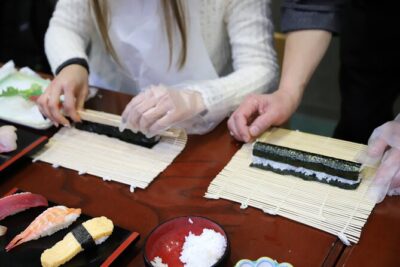
Tsukiji Fish Market Guided Tour and Sushi Making with Pro Chef
Read our review →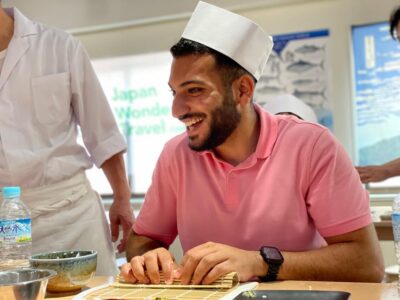
Tsukiji Fish Market Sushi Making Class with Pro Chef
Read our review →
Browse the lists this tour appears in