
Reviewed · TOKYO WALKING TOURS
Tokyo Private Local Walking Tour (Must See Places in 1 Day)
Tokyo is easiest to understand when you can connect its old temples, grand government buildings, neon districts, and everyday streets in one outing. This private walking tour gives you that broad view, with a guide shaping the day around your interests instead of marching every group through the same script.
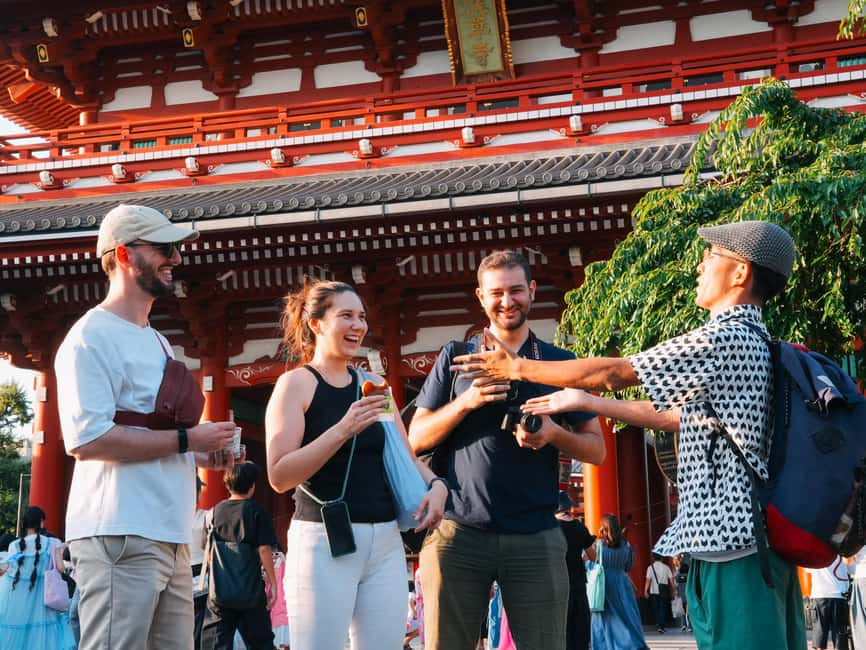
I like two things right away: you can ask for a classic first-day route, or lean into a personal interest such as Akihabara, temples, food, or local life. I also like the human touch provided by guides such as Yoyo, Akari, and Lax, who have helped guests with questions, ticket purchases, local restaurants, and changes to the route.
The main consideration is time. The advertised stops are set at about 30 minutes each, but eight major districts and sights cannot receive equal attention in a single day. Public transport costs extra, and the tour works best when you accept that it is an overview rather than an in-depth visit to every place.
Key points at a glance
- Eight major Tokyo stops: Cover Tsukiji, Asakusa, Senso-ji, Akihabara, the Imperial Palace, Meiji Shrine, Shibuya, and Shinjuku.
- A route shaped around you: Ask for more temples, food, modern culture, shopping, or neighborhood life.
- Private guide attention: English-speaking guides such as Yoyo, Akari, and Lax can answer questions and adjust the plan.
- Walking with public transport: See the city close up, then use trains or other public transport to connect distant areas.
- Hotel pickup in central Tokyo: Pickup is available at hotels within Tokyo’s 23 wards, with limits for last-minute bookings.
- Photos included: The package includes unlimited edited photos, giving you a useful record of the day.
One day, many versions of Tokyo
This experience is designed for the first day when Tokyo feels too large to sort out alone. Rather than choosing one district and staying there, you can move from a food market to an ancient temple, from imperial grounds to a giant pedestrian crossing.
That range is the tour’s greatest strength. Tokyo is not one city in the visual sense. It is a collection of very different districts linked by an efficient rail network, and the route lets you see those contrasts without spending all your planning time studying maps.
You should think of the 30-minute stops as introductions. You can look around, hear the setting explained, take photographs, and decide where you want to linger. If one place matters more to you, say so early. The itinerary is described as customizable, and guides have adjusted plans during the day to match personal interests.
The experience lasts from two to eight hours, depending on the option you choose and the starting time available. A shorter booking will need a tighter selection of sights. The full eight-hour version makes the most sense if you want the broad route listed here.
More Tokyo walking tours:
- Tokyo Tsukiji Fish Market Food and Culture Walking Tour
★ 5.0 · 3,184 reviews - Tokyo: Imperial Palace and Shogun Historical Walking Tour
★ 5.0 · 2,251 reviews - Tokyo: Shinjuku Local Bar and Izakaya Guided Walking Tour
★ 4.9 · 1,794 reviews
Tsukiji Outer Market starts the day with food
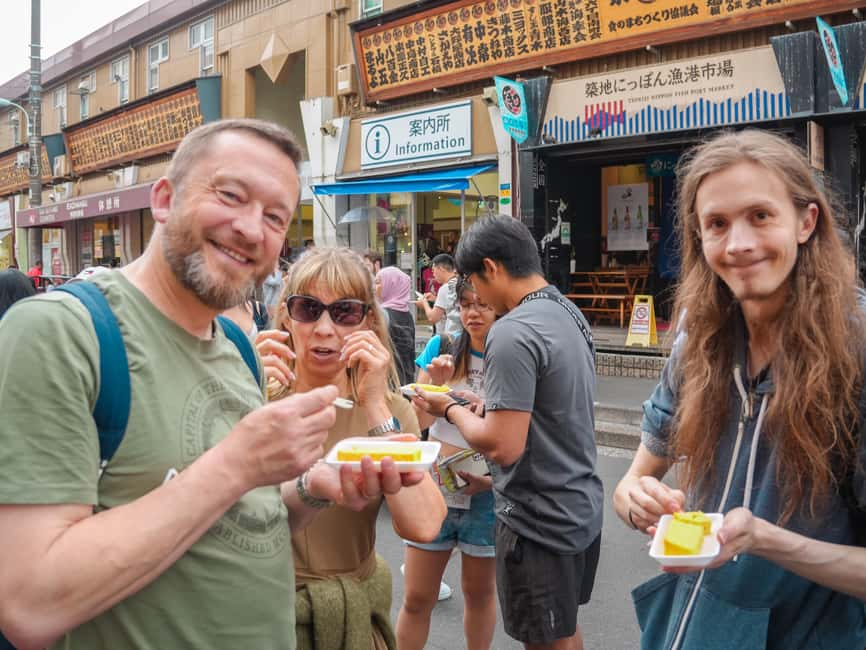
Tsukiji Outer Market is a smart opening stop because it gives you an immediate sense of Tokyo’s food culture. The outer market is the place to browse food stalls and shops, and one guest specifically enjoyed tasting food there with guide Akari.
Food is not included in the tour price, so plan to pay for anything you eat. That is not a major flaw. It gives you control over your spending and lets you choose what catches your eye, but you should not confuse a food-focused stop with a prepaid tasting tour.
Thirty minutes is enough for a first look, though it may feel short if you want to sample several things or shop. I would use this stop to ask your guide what is worth trying, then decide if the market deserves extra time.
Asakusa and Senso-ji show old Tokyo
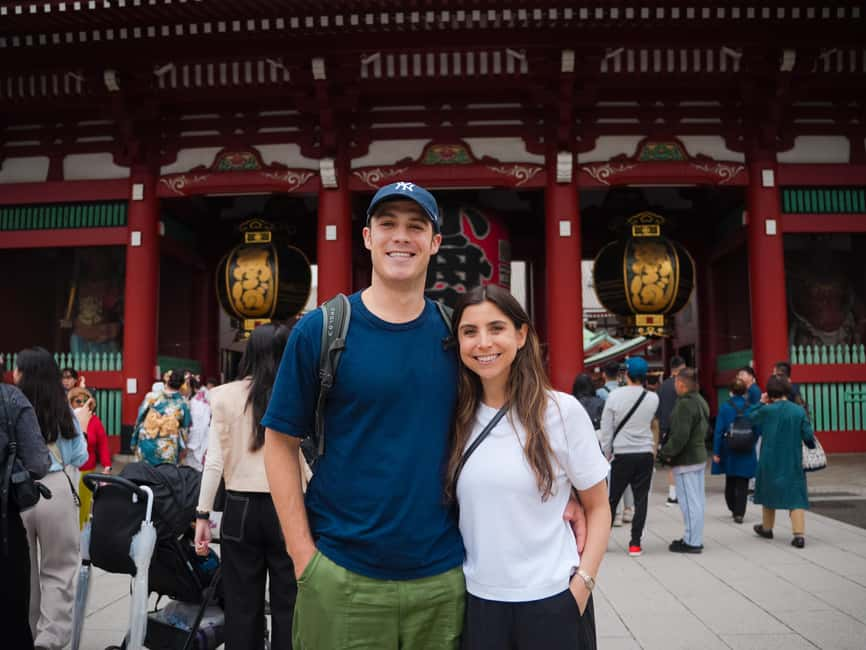
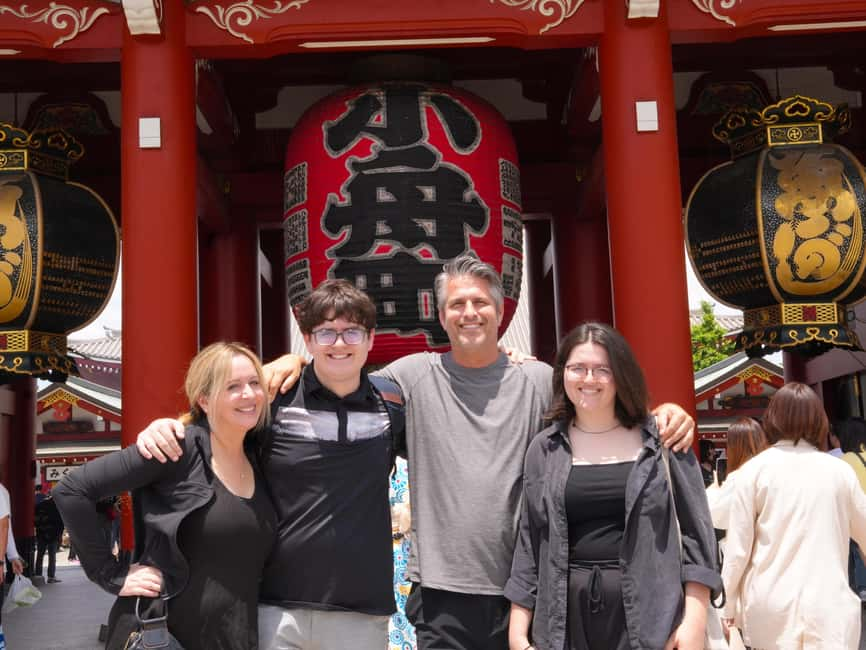
Asakusa brings a very different mood. The district is known for Senso-ji, one of Tokyo’s key temple sights, and the tour gives the neighborhood and the temple separate 30-minute visits.
That split is useful. Asakusa is more than a temple gate and a quick photograph. The surrounding streets help you understand the setting, while Senso-ji gives you a chance to focus on the religious site itself.
One family particularly enjoyed taking part in a Buddhist ceremony during the day. You should not assume a ceremony will happen during your visit, but the experience shows why a local guide can add value here. A guide can explain what you are seeing and help you behave respectfully in a place of worship.
The limitation is familiar: Senso-ji can be busy, and half an hour passes quickly. If temples are your main interest, ask to give Asakusa more time and trim one of the modern-city stops.
Akihabara adds Tokyo’s electric edge
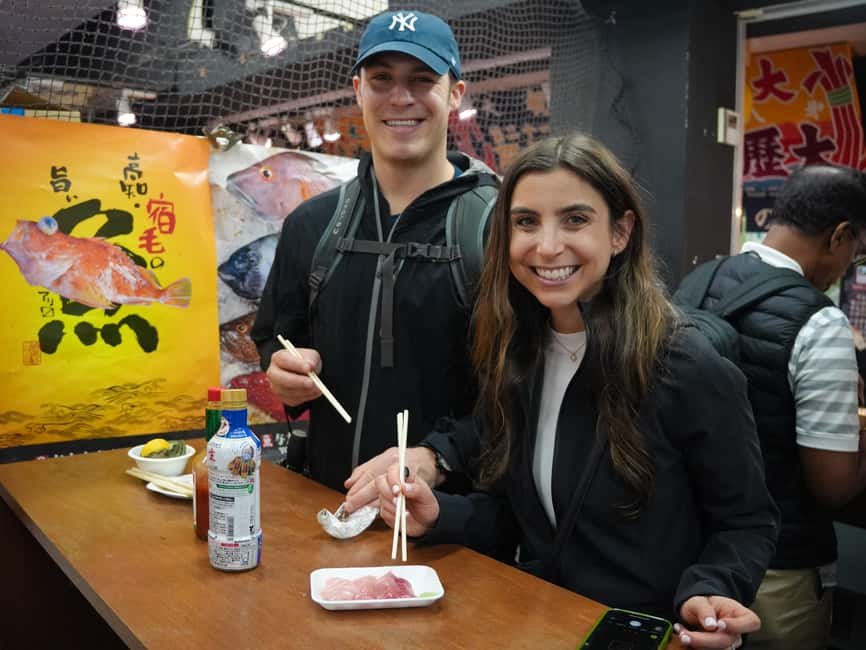
Akihabara supplies the sharp change of scenery that makes this route work. The district is associated with electronics, anime, manga, games, and other parts of contemporary Japanese popular culture.
The tour description specifically presents Akihabara as an option for visitors interested in cutting-edge culture. That wording matters because this is the stop most likely to benefit from customization. You may want shops and arcades, or you may simply want to understand why the district matters.
Do not expect 30 minutes to cover Akihabara in detail. Use it as a guided orientation, then ask for more time if this is one of your main reasons for visiting Tokyo. If you have little interest in its pop-culture side, this is an easy place to shorten.
A completely different kind of day in Tokyo:
- Mt Fuji and Hakone 1-Day Bus Tour Return by Bullet Train
★ 5.0 · 26,383 reviews - 1-Day Tokyo Bus Tour
★ 5.0 · 14,250 reviews - Tokyo: teamLab Planets TOKYO Digital Art Museum Entry Ticket
★ 4.6 · 9,779 reviews - Mt Fuji & Hakone Cruise, Drum Show Bullet Train 1 Day from Tokyo
★ 4.0 · 7,413 reviews
The Imperial Palace gives the route breathing room
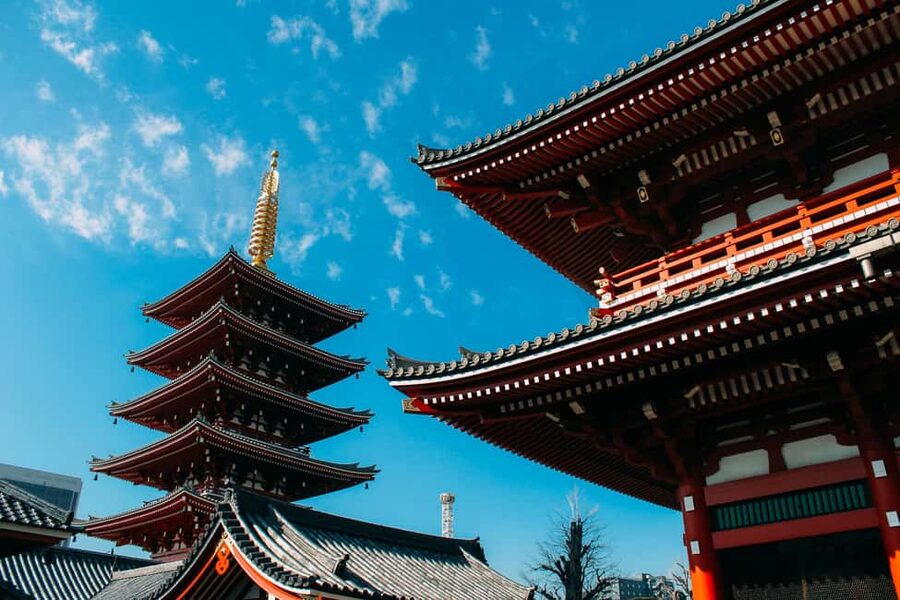
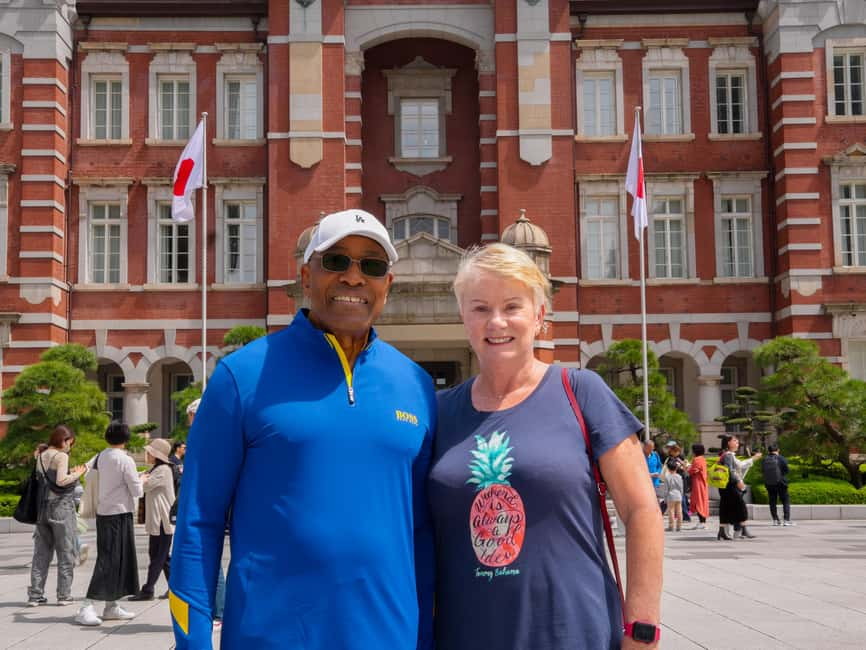
The Imperial Palace adds a formal, central Tokyo setting between the city’s commercial districts. The guide can provide context about the site and its role in the capital, while you get a break from the tighter streets of Asakusa or Akihabara.
The listed visit lasts 30 minutes. That makes this a viewing stop rather than a full palace-area exploration. The tour data does not promise entry into palace buildings, so you should treat the visit as an exterior and surrounding-area experience unless your guide tells you otherwise.
I like this stop in a first-day itinerary because it broadens your picture of Tokyo. You see more than shops, temples, and signs. Still, if you want detailed imperial or architectural context, ask how much time will be spent there before the tour begins.
Meiji Shrine brings a quieter contrast
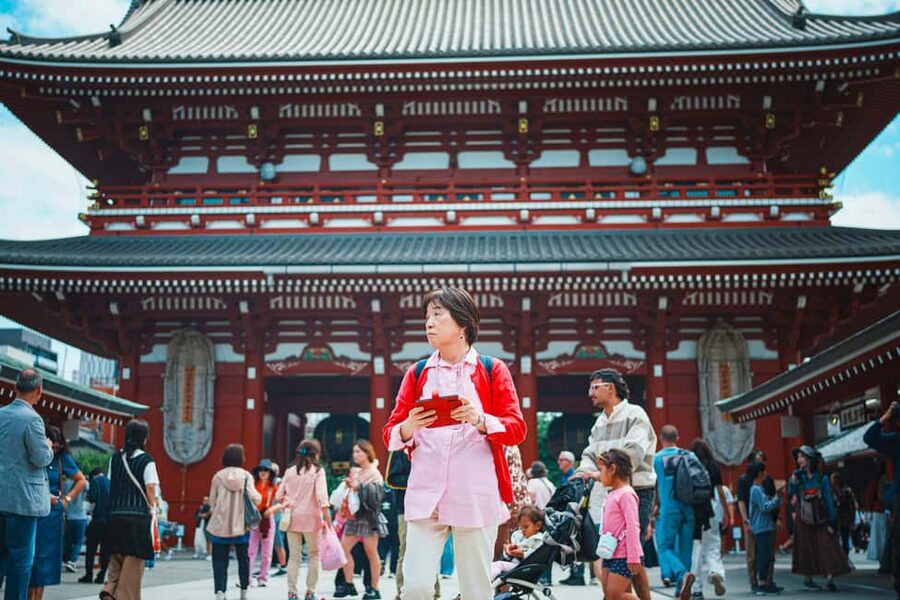
Meiji Shrine is another strong counterpoint to the city’s modern districts. Its inclusion lets you move from the scale of central Tokyo to a major Shinto site with a different atmosphere.
The itinerary allows 30 minutes, which is enough for a focused introduction but not a leisurely visit. A guide can explain customs and help you make sense of what you are seeing, especially if this is your first visit to a Shinto shrine.
The order of the stops may change. That is useful because the guide can group nearby or practical sections of the day, but you should not expect every stop to unfold in the exact order listed. Your interests, timing, and transport choices will shape the final route.
Shibuya Crossing makes Tokyo feel enormous
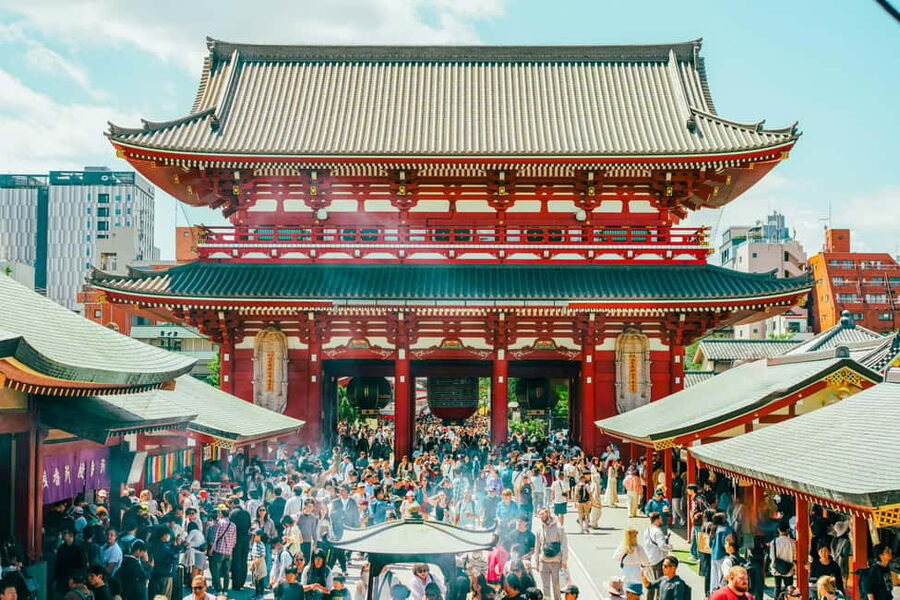
Shibuya Crossing is the tour’s big modern-city image. It gives you the famous spectacle of Tokyo pedestrians moving through the intersection and places you in one of the city’s best-known urban centers.
Thirty minutes is enough to see the crossing and take photographs. It is not enough for a full exploration of Shibuya’s shops, side streets, and viewpoints, so tell your guide if you want more than the central crossing.
I would not judge this stop only as a photo opportunity. With a guide, you can connect the crossing to daily life in Tokyo and ask practical questions about how people use the area. Still, if you dislike famous crowds or prefer quiet neighborhoods, Shibuya may be less appealing than Meiji Shrine or Asakusa.
Shinjuku closes with a city-sized finish
Shinjuku gives the route another look at modern Tokyo. It is a useful final district because it shows the capital at a larger, more commercial scale than the temple neighborhoods.
The 30-minute visit again works best as an introduction. You can get your bearings, ask about the district, and decide if you want to return independently. If your interests include food, shops, or the feel of Tokyo after dark, mention that when setting up the route.
Because Shinjuku is one of the final stops, watch the clock. A long lunch, a slow market visit, or extra temple time could reduce the time available here. That is not a problem if your priorities are clear, but you should not expect the full itinerary to remain unchanged after every extension.
What the guides add to the day
The strongest part of this experience is the guide relationship. Yoyo received praise for explaining history, culture, art, and daily life, while also helping a family find places that would be difficult to discover alone. Another guest described Yoyo as warm, clear in English, and flexible about changing the route.
Akari guided a food-focused market experience, and Lax was praised for adjusting the itinerary and teaching along the way. These names matter because the tour is not just a transport plan. The quality of your day will depend heavily on communication and on whether your guide listens to your priorities.
The tour is conducted in English. It is available as a private experience or for a small group, which gives you more room to ask questions than a large coach tour. You can ask about cultural customs, local food, daily life, or ticket buying. One guest specifically appreciated help with purchasing tickets.
The package also includes unlimited edited photos. That is a pleasant extra, especially if you want to stay present rather than spend the whole day taking pictures. The exact style and delivery method of the photos is not specified, so ask your guide for details at the start.
Walking and trains keep the route practical
This is a walking tour with public transport. You walk through each district, then use public transportation when the next stop is too far away. That approach gives you a closer view of Tokyo than a vehicle-only tour, but it also means you should be prepared for a full day on your feet.
Transportation fees are not included. Add those costs to the $51 per-person price when you compare the tour with other ways of seeing Tokyo. The final amount depends on the route and the transport used.
The value is strongest for a first-time visitor who would otherwise lose hours deciding how to connect distant sights. You are paying for route planning, live explanations, flexibility, and assistance as the day changes. If you already know Tokyo well and are comfortable using public transport, you may get more value from exploring independently.
Is $51 a fair price?
At $51 per person, the tour is reasonably priced for a private or small-group experience, especially if you use the full eight-hour option. The value improves when several people share the guide and when you want a broad introduction in one day.
The price does not include food or public transport. Those are normal extra costs for this type of city tour, but they should be part of your budget. Food at Tsukiji and meals in local restaurants are optional, not part of the package.
I would be more cautious about the price if you choose a very short two-hour version. A brief booking cannot cover the whole route, so you are paying for a custom introduction rather than the full-day experience described here.
Free cancellation is available up to 24 hours before departure, and you can reserve now and pay later. Hotel pickup is included for hotels in central Tokyo, within the city’s 23 wards. Hotels in Chiba, including Maihama, Kanagawa, including Yokohama, airports, and ports are excluded.
If you book within 24 hours of departure, hotel pickup is not guaranteed. In that case, the meeting point may change to Tsukiji Honganji Temple. Give the provider your hotel details in advance so the meeting plan is clear.
Who will get the most from this tour?
I would choose this tour for a first visit, a short stay, or a family that wants a flexible day without managing every train connection. It also suits solo visitors and couples who want to ask many questions and change direction when a district catches their attention.
It is especially useful if you have several competing interests. You can see a temple, a shrine, a market, a palace area, and famous modern districts without building the route yourself.
I would hesitate if you want a slow, specialist visit to one area. Eight stops in one day means an overview. A serious food fan may want most of the day at markets and restaurants. A temple enthusiast may prefer to stay in Asakusa or visit several religious sites. Tell the guide this before the tour so the customization works in your favor.
Should you book it?
Book this Tokyo private walking tour if you want a friendly English-speaking guide, a wide first-day view, and the freedom to adjust the plan. Yoyo, Akari, and Lax have shown the sort of warmth, clear communication, and flexibility that makes a personal tour worthwhile.
Book it with realistic expectations. You will not master eight Tokyo sights in one day, and you will pay separately for food and public transport. But at $51 per person, the tour can be a strong introduction to the city, especially when you use the full day and tell your guide exactly what you want to see.
FAQ
How long does the Tokyo private walking tour last?
The tour lasts from 2 to 8 hours. Available starting times and duration options can be checked when booking.
Which Tokyo sights are included?
The planned stops are Tsukiji Outer Market, Asakusa, Senso-ji Temple, Akihabara, the Tokyo Imperial Palace, Meiji Shrine, Shibuya Crossing, and Shinjuku. The route can be adjusted to your interests.
Is hotel pickup available?
Pickup is available from hotels within Tokyo’s 23 wards. Pickup is not available from hotels in Chiba, Kanagawa, airports, or ports. If you book within 24 hours of departure, hotel pickup cannot be guaranteed.
Is transportation included in the price?
No. The tour includes walking with public transport, but transportation fees are not included. Food and drinks are also separate.
Is the tour available in English?
Yes. The tour has a live English-speaking guide.
Can I cancel the tour or pay later?
You can cancel up to 24 hours before departure for a full refund. You can also reserve now and pay later.
More 1 Day Tours in Tokyo
- Tokyo: DisneySea 1-Day Passport
★ 4.5 · 2,726 reviews - Tokyo Disneyland 1-Day Passport
★ 4.6 · 2,512 reviews - Tokyo Customized Private Tour (Must See Places in 1 Day)
★ 5.0 · 1,499 reviews - Tokyo Customized Private Tour: See Top Attractions in 1 Day
★ 5.0 · 1,351 reviews
Newly reviewed around Tokyo
- Tokyo Asakusa:Calligraphy & Make T-shirt Activity★ 5.0 · 62 reviews
- Intercity Shuttle, Tokyo to Haneda /Narita /Yokohama /Makuhari★ 5.0 · 5 reviews
- 1 Hour Travel around Tokyo with a Professional Photographer★ 5.0 · 3 reviews
- Travel Tokyo with Your Own Personal Photographer★ 5.0 · 43 reviews
- Train in Samurai Swordsmanship and Defeat the Demon in Tokyo★ 5.0 · 5 reviews
- Shuttle Van 6hr Tokyo Tour to-and-from Tokyo, Yokohama and Narita★ 5.0 · 9 reviews
- Kickboxing & Body Training with EX-Pro Fighter★ 5.0 · 4 reviews
- Tokyo History: Sensoji Temple & Asakusa District Private Tour★ 5.0 · 28 reviews
Tokyo Walking Tours, compared.
Tokyo Tsukiji Fish Market Food and Culture Walking Tour
Read our review →
Imperial Palace and Shogun Historical Walking Tour
Read our review →
Shinjuku Local Bar and Izakaya Guided Walking Tour
Read our review →
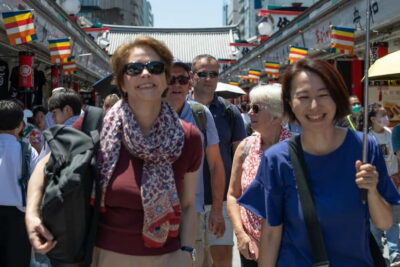
Asakusa Walking Tour with Sensoji Temple Visit
Read our review →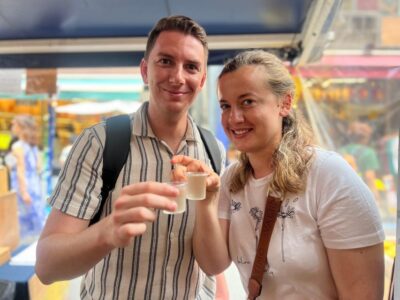
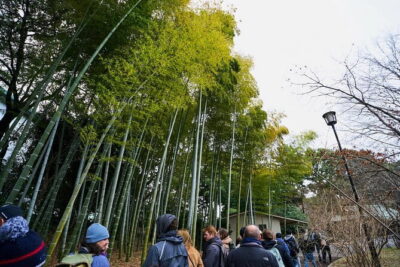
Tokyo Castle & Imperial PalaceーShogun Walking Tour
Read our review →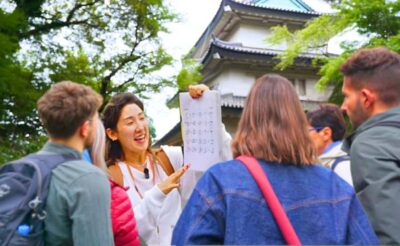
Browse the lists this tour appears in