
Reviewed · TOKYO SUSHI MAKING CLASSES
【Private】Premium Fish filletting sushi making course
The unusual part comes first: you work with whole fish, not just a tray of ready-cut toppings. A sushi master demonstrates professional knife work, then guides you through filleting, curing, aging, slicing, and shaping nigiri in a private class.
I like the one-on-one format and the use of restaurant-grade ingredients sourced from ports or Toyosu Market. I also like that the class connects technique with seasonality and respect for the fish. The main consideration is the price, $260.61 per person, which is a serious fee for three hours, especially if you only want a quick sushi-making activity.
Key Points
- Whole-fish preparation: Learn the knife work behind Edomae sushi instead of starting with pre-cut fish.
- Private instruction: Your group works with a sushi master, with fully bilingual guidance throughout.
- Three kinds of nigiri: Practice shaping sushi with three different fish preparations.
- Traditional methods: Explore marinating, curing, and aging before cutting the fish into neta.
- Flexible focus: The class can include rice preparation or concentrate on particular skills.
- Tokyo setting: Meet at A-PULSE AZABU STUDIO in Nishiazabu at noon and finish at the same location.
Why This Tokyo Sushi Class Is Different
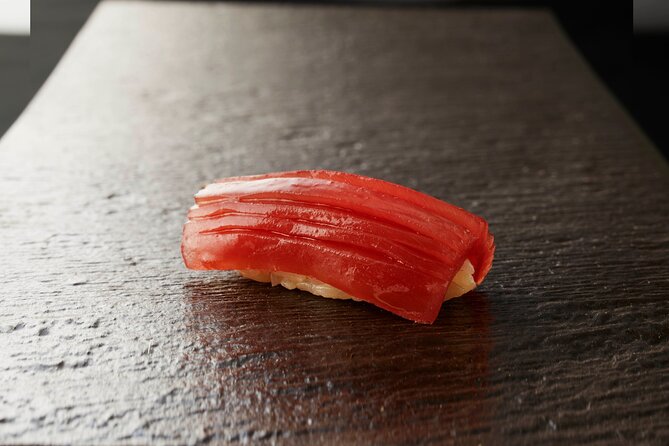
Many sushi classes begin with cooked rice, sliced fish, and a simple lesson in putting the two together. This one takes you further back in the process. You begin with the fish itself, learning how careful preparation affects the final piece.
That matters because Edomae sushi is not only about freshness. The condition of the fish, the angle of the knife, the thickness of each slice, the seasoning, and the balance with rice all shape the result. This class gives you a look at that chain of decisions.
You will not simply assemble lunch. You will see why a sushi chef spends so much time preparing ingredients before a piece reaches the counter. For anyone who enjoys Japanese food, that context is worth more than another quick demonstration.
The class is fully private, so you do not have to share the lesson with a large public group. That creates room for questions and corrections. If your group has mixed experience levels, the sushi master can spend more time with beginners or focus on a particular skill that interests you.
More Tokyo sushi making classes:
- Sushi Making Tokyo Roll and Authentic Japanese Sushi Class
★ 5.0 · 3,971 reviews - Tokyo: Roll and Authentic Sushi Making Class in Asakusa
★ 4.9 · 1,957 reviews - Make Sushi and Create Unforgettable Memories in Tokyo
★ 5.0 · 1,413 reviews
Starting at A-PULSE AZABU STUDIO at Noon
The meeting point is A-PULSE AZABU STUDIO, at 3-chōme-8-18 Nishiazabu in Minato City. The class begins at 12:00 pm and returns to the same location when the three hours are over.
Nishiazabu is a useful base for a food-focused outing in central Tokyo, but you should allow time to find the studio. Your confirmation arrives when you book, so check the exact address and local transport route before the day of the class. The activity is near public transportation, which makes the meeting point practical, but the supplied details do not specify a particular train station or walking time.
The noon start gives you a clear morning beforehand. You can visit another part of Tokyo first, then head to the studio for lunch and instruction. Since the class includes food, you probably do not want to arrive after a heavy meal.
The activity ends back at the starting point. That is helpful if you have another afternoon plan, though the exact finish time can vary slightly because the stated duration is approximately three hours.
Watching Professional Knife Work Up Close
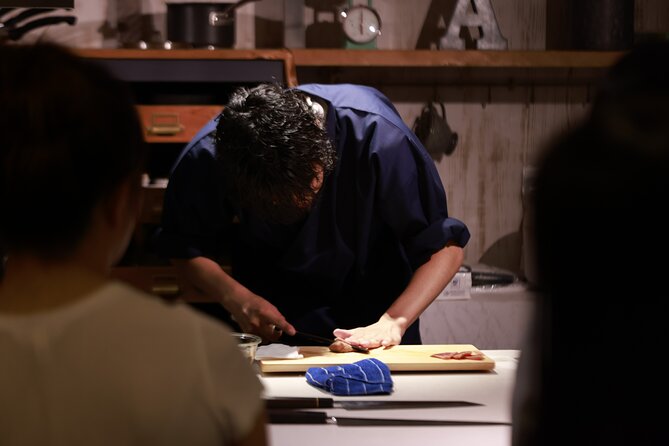
The opening demonstration is one of the strongest parts of the experience. The sushi master shows how to handle the knife, prepare whole fish, and make clean, precise cuts. You get to watch the movement before trying it yourself.
Professional knife work can look effortless from a distance. Up close, you begin to see the small decisions: how the blade moves through the fish, how the chef controls the cut, and how a slice becomes a suitable piece of sushi topping.
You should not expect to master a professional chef’s movements in one afternoon. The value is in learning the basic logic and feeling the difference between a careless cut and a controlled one. Even if your own slices are not perfect, you will understand more about what you are eating at a sushi counter.
Knife handling is also the part that requires the most attention. Follow the instructor’s directions closely, work at a steady pace, and do not rush because you want to keep up. The class is designed to guide you through the process, not test your speed.
Filleting Whole Fish the Edomae Way
The central lesson is filleting whole fish using traditional knife techniques. This is a more serious cooking task than shaping sushi from prepared ingredients, so the course suits anyone who wants to understand fish preparation at its source.
You will work through the steps needed to turn the fish into usable portions. The point is not only to remove the bones. The way you separate, clean, and cut the fish affects its texture, appearance, and later preparation.
This approach also gives the class an environmental and cultural side. The experience frames careful handling of ingredients as a form of respect for what you consume. That idea is not presented as a lecture detached from cooking. It appears through the practical work of using the fish thoughtfully and avoiding careless preparation.
The available information does not name the exact fish used on your date. Ingredients are sourced directly from ports or Toyosu Market, and the chef takes care in conditioning them for the class. That means the particular fish and its preparation may vary with season and supply.
More private tours in Tokyo:
- Tokyo 6hr Private Tour with Government-Licensed Guide
★ 5.0 · 3,902 reviews - Private Tour to Mt. Fuji and Hakone (Fully Licenced Operator)
★ 5.0 · 1,910 reviews - Tokyo Customized Private Tour (Must See Places in 1 Day)
★ 5.0 · 1,499 reviews - Mount Fuji Full-Day Private Tour from Tokyo (Customizable)
★ 4.9 · 1,470 reviews
Marinating, Curing, and Aging the Fish
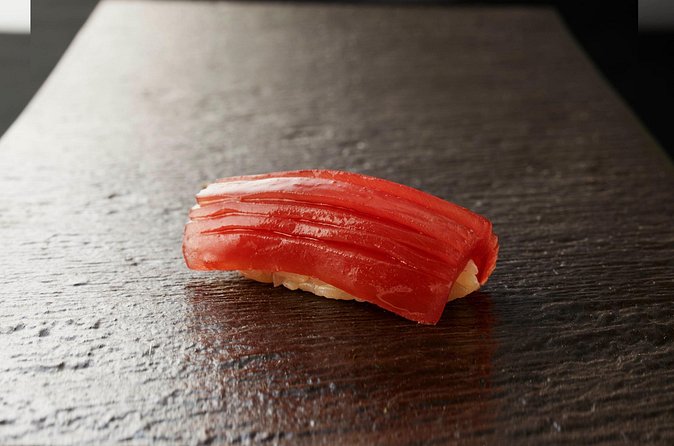
After filleting, the class moves into classic preparation methods, including marinating, curing, and aging. These steps show why sushi is not always about serving fish immediately after it arrives at the market.
Each method changes the fish in a different way. Seasoning can sharpen flavor, curing can affect texture, and aging can help bring out qualities that are not obvious in a newly cut piece. The course presents these methods as part of the Edomae tradition, where preparation is used to bring out the best in an ingredient.
This is one of the most useful parts for a food-minded person. You may already know that sushi fish can be treated before serving, but seeing the process helps explain why two pieces of the same fish can taste very different.
Do not expect a long technical seminar on every preservation method. The workshop lasts about three hours and also includes filleting, cutting, shaping, photography, and eating. Still, you will gain a practical introduction to the reasoning behind these preparations.
Cutting Precise Neta for Nigiri
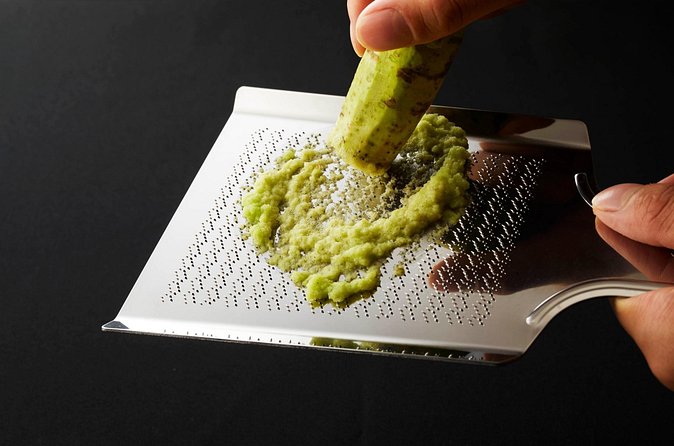
Once the fish is prepared, you learn to cut neta, the topping used for sushi. The goal is precision. Thickness, shape, and direction all matter because the fish needs to sit neatly on the rice and provide the right balance in one bite.
This is where the earlier knife lesson starts to make sense. A slice is not merely a piece of fish. It has to be sized and shaped for the rice, and its texture should work with the way it is cut.
The class uses high-quality fish, properly seasoned rice, and crisp, colorful vegetables. The ingredients are intended to resemble the standard you would find in a serious sushi setting, rather than the cheapest materials suitable for a casual cooking lesson.
That quality improves the meal, but it also raises the price. You are paying for instruction, private attention, specialist ingredients, and access to techniques that are rarely included in a basic sushi workshop. If you mainly want to eat sushi, a restaurant may offer better value. If you want to understand the preparation, the calculation changes.
Shaping Three Kinds of Nigiri
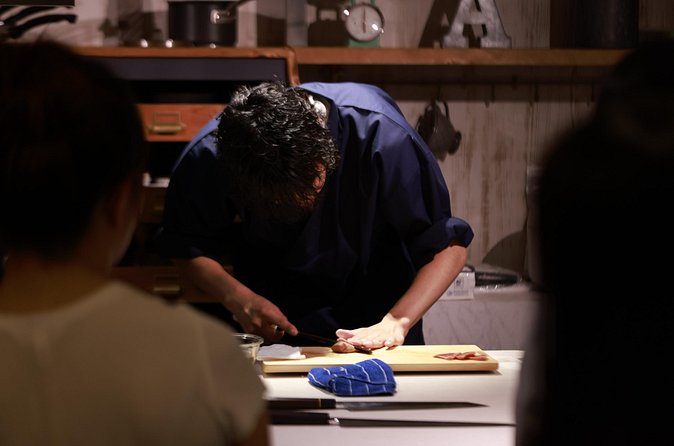
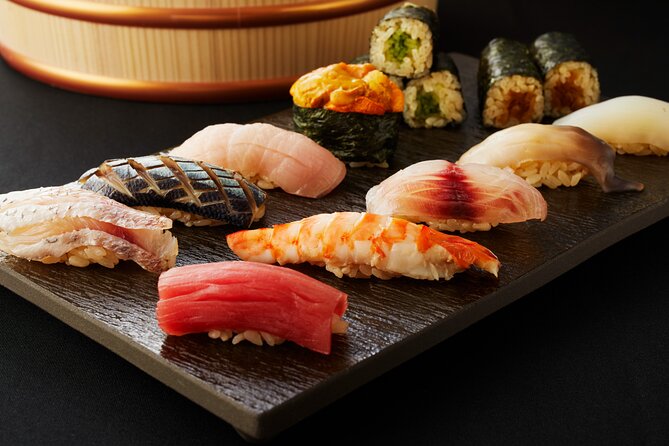
The hands-on highlight is forming nigiri with three different preparations. You will learn how to place the fish on the rice and shape the piece by hand, with the sushi master correcting your technique.
Nigiri looks simple because the finished piece is small. In practice, the rice must hold together without being packed too firmly, and the topping must sit in balance. Small changes in pressure can affect the texture and appearance.
This is a friendly class for first-time learners. The instruction is designed to make beginners comfortable, and questions are encouraged. You should still expect to concentrate. A private setting does not remove the need for careful work, especially when knives and delicate ingredients are involved.
The satisfaction comes from eating pieces you shaped yourself. They may not look exactly like the chef’s, but the comparison is useful. You can see how professional technique creates clean, elegant results, then take home a better sense of what to practice.
The three preparations also keep the lesson from becoming repetitive. You get to compare how different fish treatments work with the rice and how the topping changes the feel of the finished sushi.
Rice Preparation and Customizing the Lesson
The course can be adjusted to include rice preparation or to focus on specific skills. This is a valuable option because rice is the other half of nigiri. A perfectly prepared topping cannot rescue rice that is poorly seasoned, too firm, or packed too tightly.
The description does not guarantee that every booking includes a full rice lesson, so you should ask to include it if that is a priority. The same applies to any specific technique you want to practice. Because the activity is private, it has more room for adjustment than a fixed group class.
This flexibility makes the experience suitable for several types of food lovers. A beginner can request a slower introduction to knife handling and shaping. Someone with previous sushi experience can ask for more attention to fish preparation or rice.
The course is not described as a professional certification or multi-day chef training program. Treat it as a concentrated introduction to the craft, taught by a sushi master with experience at a Michelin-starred restaurant.
Ingredients, Seasonality, and the Meal
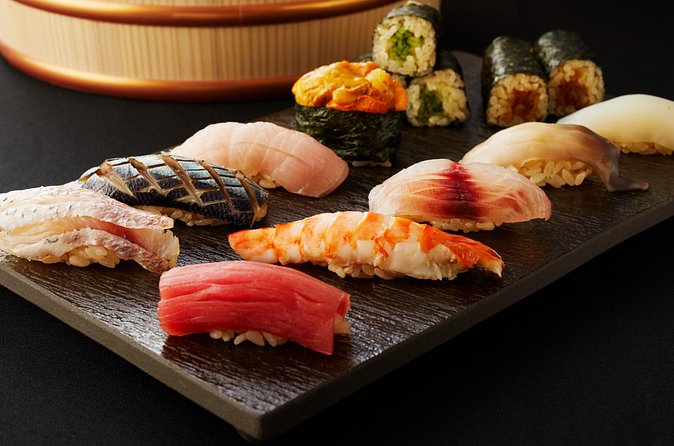
The ingredients are an important part of the experience, not just a detail on the menu. Fish is sourced from ports or Toyosu Market, and the chef conditions it for the class. The rice is seasoned, and the vegetables are fresh and colorful.
You may notice that the class places as much attention on condition and balance as on appearance. Seasonality affects which fish is at its best and how the chef prepares it. The available description does not give a fixed menu, so you should expect the ingredients to depend on the day.
Meals are included. Alcohol is not included, but optional drinks may be available for an additional charge. If you want to keep the cost controlled, plan on paying only for the class unless you choose an extra drink.
The final meal is both lunch and a lesson. You can taste how cutting, seasoning, curing, aging, and rice shaping affect the result. That makes the meal more useful than a standard included lunch, since you have followed the work from whole fish to finished nigiri.
What the Private Format Adds
A private booking is the strongest practical reason to choose this class over a cheaper group activity. Only your group participates, so the pace can be adjusted and the sushi master can respond to your questions.
Private instruction is especially useful for knife work. In a large class, you might watch a demonstration from across a table and wait for help. Here, the format gives you a better chance to receive direct guidance while working through the steps.
It also makes the class a natural choice for a small family group, couple, or group of friends who want a shared activity. The available details do not state the maximum group size, so confirm the number of people allowed when booking if that affects your plans.
The private setting does not mean every moment is one-on-one if your group contains several people. You will still share the sushi master’s attention. But compared with a public class, the structure gives your group more control over the lesson.
Is $260.61 a Fair Price?
At $260.61 per person, this is a premium food experience. The cost is easier to justify if you value private teaching, high-quality ingredients, whole-fish preparation, and a chef with Michelin-starred restaurant experience.
You are not paying only for a plate of sushi. The fee covers approximately three hours of instruction, the meal, fish preparation, hands-on work, bilingual support, and a private setting. The course also offers techniques that a basic roll-making class usually skips.
Still, the price will not suit every budget. If your main goal is to make a few rolls, take photos, and eat quickly, this class is probably more than you need. Tokyo offers many less expensive ways to enjoy sushi.
I would consider it good value for a serious food lover, someone celebrating a special occasion, or a visitor who wants a detailed cultural activity rather than another sightseeing stop. It is less convincing for a person who does not cook and has little interest in how sushi is made.
Who Should Book This Class?
You should consider booking if you want to:
- Learn how whole fish becomes sushi topping
- Practice traditional knife techniques with direct guidance
- Understand curing, marinating, and aging
- Shape nigiri instead of only making rolls
- Ask questions in a private, bilingual setting
- Connect Japanese food traditions with ingredient care and seasonality
Beginners are welcome, and the class is structured so you can start with basic knife handling before moving into more delicate work. You do not need to arrive with professional skills.
Experienced home cooks may appreciate the private customization. Ask to focus on rice, fish preparation, or a particular stage of the process. The class is most rewarding when you use the private format to address the skills you actually want to improve.
You should think twice if you are uncomfortable handling raw fish or want a short, low-effort activity. The whole point is to work with the ingredient directly, and the price reflects that more serious approach.
Booking Details and Cancellation
Confirmation is provided when you book, and the activity is commonly reserved about nine days ahead. A mobile ticket is available, which is useful when moving around Tokyo.
You can cancel for a full refund up to 24 hours before the local start time. Cancellations or changes made less than 24 hours before the class are not accepted for a refund. Keep that deadline in mind when arranging a busy Tokyo schedule.
Should You Book It?
Book this class if sushi is more than something you want to eat. The chance to fillet whole fish, learn classic preparations, cut neta, and shape three kinds of nigiri gives you a clearer view of the craft than a standard roll-making lesson.
The private format and quality ingredients help explain the high fee. For a casual cook, $260.61 may feel excessive. For a food-focused visitor who wants patient instruction and a memorable meal tied to real technique, it is a strong choice.
Arrive ready to work, ask for the rice lesson if you want it, and treat the fish preparation as the main event. The finished sushi is the reward, but the useful part is understanding how much care comes before the first bite.
FAQ
Where does the sushi class take place?
The class begins and ends at A-PULSE AZABU STUDIO, located at 3-chōme-8-18 Nishiazabu, Minato City, Tokyo 106-0031, Japan.
What time does the experience start?
The class starts at 12:00 pm.
How long does the activity last?
The workshop lasts approximately three hours.
Is the class private?
Yes. Only your group participates in the activity.
Is the instruction available in English?
Fully bilingual staff guide all steps of the class.
Do I fillet the fish myself?
The course includes filleting whole fish using traditional knife techniques, with guidance from the sushi master.
Does the class include rice preparation?
Rice preparation can be included or the lesson can be adjusted to focus on specific skills. Ask for the rice section when arranging the experience if it is important to you.
Are drinks included?
Meals are included. Alcoholic drinks are not included, though optional drinks may be available for an additional charge.
Can I cancel for a full refund?
Yes. You must cancel at least 24 hours before the local start time for a full refund. Changes or cancellations made less than 24 hours before the start are not accepted for a refund.
Newly reviewed around Tokyo
- Tokyo Asakusa:Calligraphy & Make T-shirt Activity★ 5.0 · 62 reviews
- Intercity Shuttle, Tokyo to Haneda /Narita /Yokohama /Makuhari★ 5.0 · 5 reviews
- 1 Hour Travel around Tokyo with a Professional Photographer★ 5.0 · 3 reviews
- Travel Tokyo with Your Own Personal Photographer★ 5.0 · 43 reviews
- Train in Samurai Swordsmanship and Defeat the Demon in Tokyo★ 5.0 · 5 reviews
- Shuttle Van 6hr Tokyo Tour to-and-from Tokyo, Yokohama and Narita★ 5.0 · 9 reviews
- Kickboxing & Body Training with EX-Pro Fighter★ 5.0 · 4 reviews
- Traditional Japanese Knife Sharpening Class★ 5.0 · 18 reviews
Tokyo Sushi Making Classes, compared.
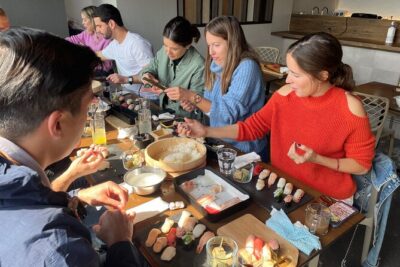
Sushi Making Tokyo Roll and Authentic Japanese Sushi Class
Read our review →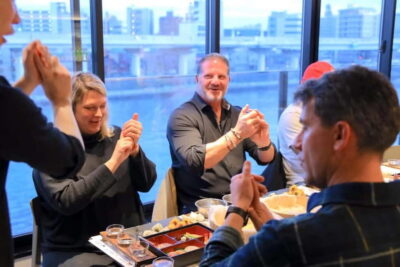
Roll and Authentic Sushi Making Class in Asakusa
Read our review →
Make Sushi and Create Unforgettable Memories in Tokyo
Read our review →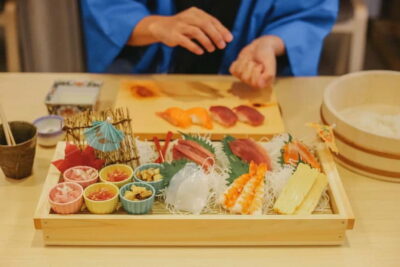
Sushi Making Class in a Happi Coat near a Famous Spot
Read our review →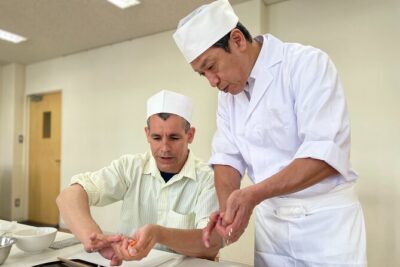
Tokyo Sushi Making Class in Tsukiji with Professional Chef
Read our review →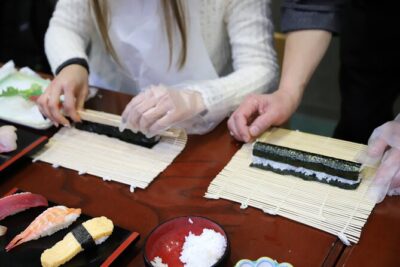
Tsukiji Fish Market Guided Tour and Sushi Making with Pro Chef
Read our review →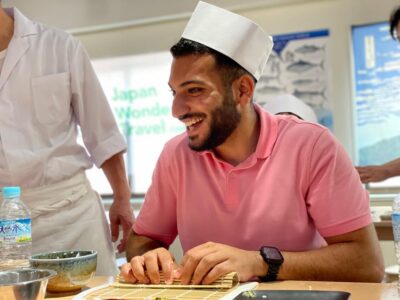
Tsukiji Fish Market Sushi Making Class with Pro Chef
Read our review →
Browse the lists this tour appears in