Reviewed · TOURS
Tokyo Toilet Tour
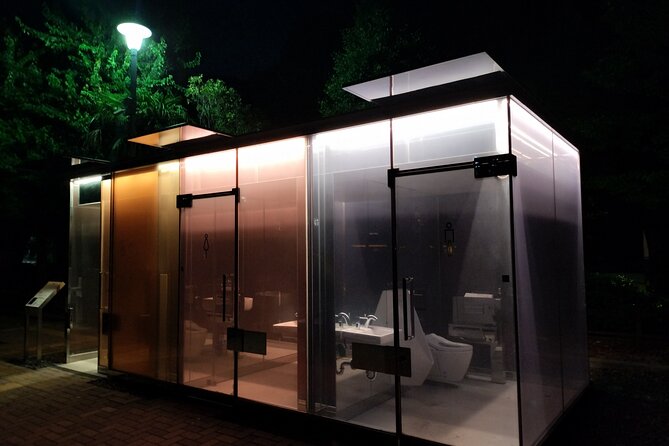
Tokyo’s public toilets are the unexpected stars of this private walking tour. You’ll see colorful transparent cubicles by Shigeru Ban and Toyo Ito, a Tadao Ando design near Miyashita Park, and more architect-designed facilities across Shibuya and Ebisu. It is also a smart way to explore neighborhoods beyond Tokyo’s headline sights.
I like the small-group format, which gives your party of up to four direct time with the guide. I also like the route’s mix of design, parks, shrines, quiet residential streets, and Shibuya Crossing. The main drawback is that this is a walking tour with no private transport, so you need moderate fitness and comfortable shoes.
Key points at a glance
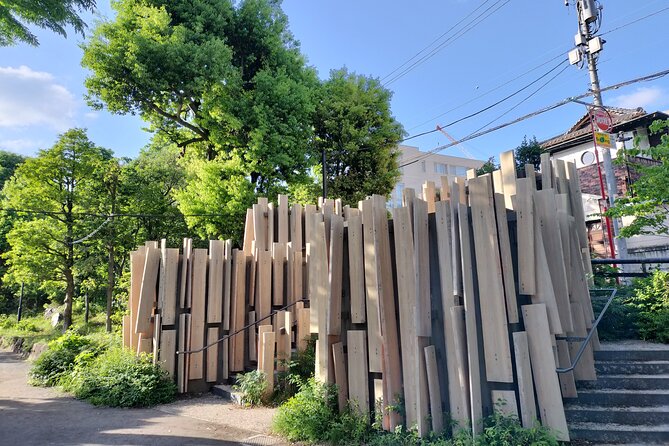
- Five toilet-focused stops: See work linked to Shigeru Ban, Toyo Ito, Tadao Ando, Kengo Kuma, Fumihiko Maki, Kashiwa Sato, and Nao Tamura.
- A private walk for up to four people: The $223.34 group price works out to about $55.84 each if four people join.
- A useful Shibuya-to-Ebisu route: Start near Yoyogi and finish at JR Ebisu Station, with several neighborhood stops in between.
- More than architecture: Expect a small Shinto shrine, Miyashita Park, residential streets, and a pass through Shibuya Crossing.
- Guide Ken adds context: He explains the Shibuya City project and the architects behind the facilities.
- Allow 3.5 hours: The listed stops total about 110 minutes, with the rest of the time used for walking and commentary.
Why Tokyo’s toilets make a worthwhile tour
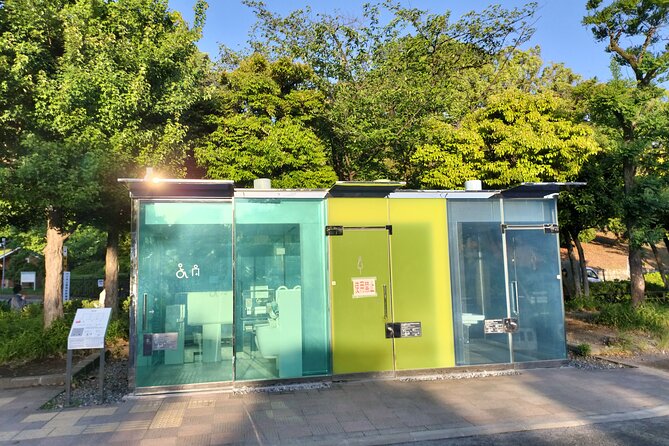
The Tokyo Toilet project turns an everyday public service into a lesson in design and city life. These are not museum pieces behind a rope. They are working facilities placed in parks, near stations, and beside ordinary streets.
That gives the tour a useful point of view. Instead of seeing Tokyo only through temples, towers, department stores, and famous crossings, you look at how the city handles a basic need. You also get to see how well-known architects approach privacy, light, access, shape, and public space.
I find the subject especially appealing because it is specific. You are not simply walking around Shibuya and hearing broad facts about Tokyo. Each stop gives you something concrete to examine, and your guide can connect the buildings to the wider Shibuya City project.
The tour also has a film connection. The toilet designs appear in Wim Wenders’ Perfect Days, where the main character works as a cleaner and takes lunch breaks around Tokyo. At Yoyogi Hachimangu Shrine, you see the toilet associated with one of those stops in the film. If you know the movie, this adds another layer. If you do not, the architecture and local setting still give you plenty to notice.
Other Tokyo days people book alongside this one:
- Mt Fuji and Hakone 1-Day Bus Tour Return by Bullet Train
★ 5.0 · 26,383 reviews - 1-Day Tokyo Bus Tour
★ 5.0 · 14,250 reviews - Tokyo: teamLab Planets TOKYO Digital Art Museum Entry Ticket
★ 4.6 · 9,779 reviews
Starting at Yoyogi Hachimangu Shrine
The meeting point is Yoyogi Fukamachi Mini Park at 1-chōme-54-1 Tomigaya, in Shibuya. From there, the route begins near Yoyogi Hachimangu Shrine, a small Shinto setting that provides a calm opening before the walk heads toward busier parts of the district.
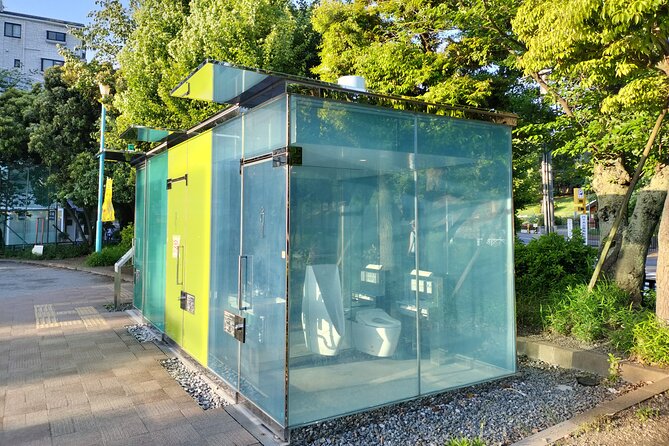
You spend about 30 minutes here, with no admission charge. The focus is on toilets designed by Shigeru Ban and Toyo Ito, including the transparent cubicle associated with the film Perfect Days.
The transparent design is likely to prompt the first good discussion of the day. It raises an obvious question: how can a public toilet use transparent walls while still offering privacy? The answer is part of the design experience, and seeing the facility in person makes the idea easier to understand than a photograph does.
This first stop also sets the tone for the tour. You are not just checking off buildings. You are looking at how each facility relates to its park or neighborhood, and at how a familiar public amenity can change the feel of a place.
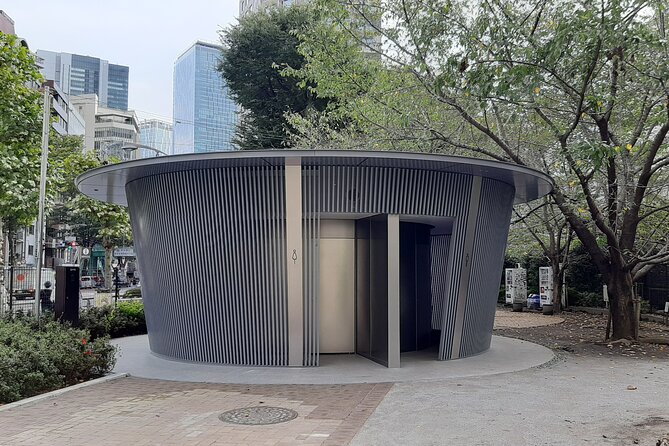
Walking through Miyashita Park to Tadao Ando’s design
The next stop is Miyashita Park, about 30 minutes from the first location. This area has undergone major redevelopment in recent years, so the toilet here gives you a chance to compare a newer public setting with the quieter shrine area.
The design is by Tadao Ando, one of Japan’s best-known architects. The location midway between Shibuya and Harajuku also makes this a practical sightseeing stop. You get a sense of the changing district without spending the whole tour inside the busiest commercial streets.
Miyashita Park is important to the route because it shows how the project fits into a larger urban setting. The surrounding area has been reshaped, while the toilet remains a small-scale object that people use during an ordinary day.
Your guide can help you focus on the details that are easy to miss when you are walking alone. I would take a moment here to look at how the building sits within the park, how people approach it, and how the design differs from the first stop. The tour’s value comes from these comparisons.
A brief crossing at Shibuya Crossing
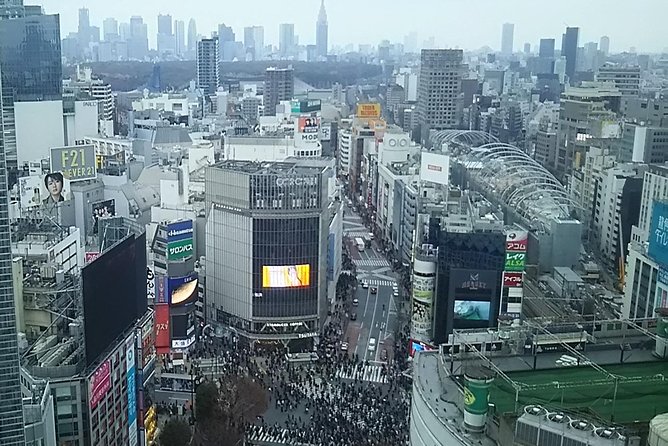
The tour then passes through Shibuya Crossing. The stop is listed at only about five minutes, and it is not directly part of the Tokyo Toilet project.
That short timing matters. You get the experience of crossing one of Tokyo’s most famous intersections without losing half an hour to crowd watching or photographs. It functions as a link between the architectural stops rather than as a major attraction on its own.
For a first visit to Tokyo, this is a useful dose of the famous Shibuya scene. The tour does not pretend that the crossing is a toilet project site, which keeps the focus clear. You see the intersection, cross it, and continue toward a quieter part of the neighborhood.
A completely different kind of day in Tokyo:
- Mt Fuji & Hakone Cruise, Drum Show Bullet Train 1 Day from Tokyo
★ 4.0 · 7,413 reviews - Tokyo: Shinjuku Food Tour (13 Dishes at 4 Local Eateries)
★ 5.0 · 6,603 reviews - Tokyo Mt Fuji 5th St & Hakone Cruise Bus Tour w/Bullet Train
★ 4.4 · 5,024 reviews - Flagship 2-Hours Official Street Go-Kart Tour – Tokyo Bay Shop
★ 5.0 · 4,974 reviews
Kengo Kuma in Nabeshima Shoto Park
Nabeshima Shoto Park brings the route into a quieter residential area about one kilometer from Shibuya Station. The toilet here was designed by Kengo Kuma, and the stop lasts about 15 minutes.
This may be one of the most revealing transitions of the tour. Shibuya is often reduced to giant screens, shopping, and crowds, but residential streets sit surprisingly close to the station. Walking into this area shows you a different side of the district without requiring a separate excursion.
The shorter stop also makes sense. You will have already seen two designs, and this visit is part of a broader sequence. It gives you another architect and another setting, while the walk itself provides some of the local context.
I like this part of the route for the change of pace. The park and residential streets make the tour feel less like a string of photo stops and more like a walk through a real part of Tokyo. You should still expect the stop to be brief, so it is best to arrive ready to look closely rather than linger.
Ebisu and three more designers
The final area is Ebisu, one station south of Shibuya. Here you see toilets connected with Fumihiko Maki, Kashiwa Sato, and Nao Tamura. The Ebisu portion lasts about 30 minutes and ends at Ebisu Station.
This is a strong finish because the route brings together several designers in one neighborhood. By this point, you have seen how the project appears in a shrine area, a redeveloped park, a famous crossing, and a residential park. Ebisu gives you another chance to compare the designs and their surroundings.
The stop also places you in a useful part of Tokyo for the rest of your day. The ending point is JR Ebisu Station, on the JR Yamanote Line and Tokyo Metro Hibiya Line. You can continue independently from there, rather than retracing the whole route to the starting point.
The tour does not include lunch, so Ebisu is a natural place to continue with your own plans after the walk. The supplied details do not name a specific restaurant or provide a meal, so you should treat the station as the practical endpoint, not as part of a food tour.
What the private format changes
The tour is private, and only your group participates. The maximum group size is four people, with a listed price of $223.34 per group.
For four people, that is about $55.84 per person. For two people, it is about $111.67 each, and a solo booking pays the full group price. That makes the experience much better value for a family or group of friends than for one person traveling alone.
The private setup also matters because the subject invites questions. You can ask why one toilet uses transparent walls, how a design fits a park, or what makes one architect’s approach different from another’s. On a larger group walk, those questions may be harder to fit in.
You receive personalized attention from the guide, and the tour can be suited to your group’s interests and abilities. The supplied route is specific, so you should not assume that every part can be replaced at will, but the private format does give you a more personal experience than a fixed group outing.
Guide Ken receives particular praise in the available feedback. He is described as friendly and informative, and as good at explaining the history of the Shibuya City project and the architects involved. That is important here because the buildings are small and sometimes easy to overlook. The guide’s explanations are a central part of the experience, not an extra.
Walking, timing, and practical comfort
The tour lasts about three hours and 30 minutes. The five listed stops account for roughly 110 minutes, leaving about 100 minutes for walking between locations, crossing streets, and hearing explanations.
There is no private transportation included. The route is designed as a walk through Shibuya and Ebisu, with the final stop near a major station. You should wear comfortable shoes and be ready to walk at a steady urban pace.
A moderate level of physical fitness is recommended. The information provided does not give a total distance, stair count, or detailed accessibility notes, so you should ask the operator if your group has specific mobility needs.
The start and finish are different. You begin at Yoyogi Fukamachi Mini Park and end at Ebisu Station. That is convenient if you want to continue by train, but it means you should not plan to leave luggage at the starting point or expect to return there.
The tour uses a mobile ticket, and confirmation is sent within 48 hours of booking, subject to availability. It is often booked about 39 days ahead, so planning early is sensible if you have fixed dates.
Who will get the most from this experience
This tour suits a first-time visitor who wants an introduction to Tokyo but does not want to spend the day on a large group bus or a standard highlights route. You see a famous crossing, but the main experience takes place in smaller parks and local streets.
It also works well for architecture fans and people who enjoyed Perfect Days. The film connection is not the entire point, but it gives the Yoyogi stop a special appeal and helps explain why these facilities have drawn international attention.
Families may appreciate the private arrangement, especially when the group wants to ask questions or set a comfortable pace. Couples and solo visitors can also book, but the fixed group price is less economical when fewer people share it.
I would be less likely to choose this tour if your main goal is Tokyo’s major historic sights. It does not focus on the Imperial Palace, Meiji Jingu Shrine, Tsukiji Market, or other headline attractions listed in the general tour description. This route is about the Tokyo Toilet project, urban design, and neighborhood walking.
Is $223.34 a fair price?
The price is reasonable for a private three-and-a-half-hour experience if you have three or four people in the group. You are paying for a dedicated guide, a planned route, local context, and the freedom to ask questions without competing with strangers.
The value is weaker for a solo visitor because the charge applies per group rather than per person. You also need to pay for your own food and local transportation outside the walking route.
The tour does not include admission fees, but the listed stops are free. That means the price is not buying entry to attractions. It is buying the guide’s time and the chance to understand places you could technically visit on your own.
That distinction is worth considering. If you are happy to locate each facility yourself and read about the architects independently, you can walk much of this route without booking. If you want the project explained as a connected story, the private guide adds the most value.
Should you book the Tokyo Toilet Tour?
Book it if you like modern architecture, saw Perfect Days, or want a different look at Shibuya beyond shopping and the famous crossing. It is particularly appealing for a group of four, when the per-person cost becomes more comfortable.
Think twice if you dislike walking, want a food-focused outing, or expect a classic Tokyo sightseeing tour with major temples and palaces. The toilets are the main subject, and the route is built around them.
For the right audience, this is a clever, focused introduction to Tokyo. You get public design, a small shrine, parks, residential streets, a famous intersection, and a practical finish at Ebisu Station, all with guide Ken’s personal attention.
FAQ
How long does the Tokyo Toilet Tour last?
The tour lasts approximately 3 hours and 30 minutes.
How many people can join the private tour?
The tour is private and is available for a group of up to four people.
What is the price?
The listed price is $223.34 per group of up to four people.
Who leads the tour?
The experience is provided by Tanaka’s Tokyo Tours. The guide identified in the available information is Ken.
Where does the tour start?
The tour starts at Yoyogi Fukamachi Mini Park, 1-chōme-54-1 Tomigaya, Shibuya, Tokyo 151-0063, Japan.
Where does the tour finish?
The tour ends at Ebisu Station, 1 Chome-5 Ebisuminami, Shibuya, Tokyo 150-0022, Japan.
Which architects are connected with the tour stops?
The stops include designs by Shigeru Ban, Toyo Ito, Tadao Ando, Kengo Kuma, Fumihiko Maki, Kashiwa Sato, and Nao Tamura.
Is transportation included?
Private transportation is not included. The tour is conducted on foot and finishes near JR Ebisu Station and the Tokyo Metro Hibiya Line.
Is lunch included?
No. Lunch is not included in the tour price.
Can I cancel the booking?
You can cancel up to 24 hours before the experience start time for a full refund. Cancellations or changes made less than 24 hours before the start time are not accepted for a refund.
Newly reviewed around Tokyo
- Ueno and Yanaka Culture Art Walking Tour in Old Tokyo★ 5.0 · 5 reviews
- Sumo Training Watching Experience in Tokyo★ 4.5 · 8 reviews
- Giant Sushi Cooking Class: Make a 1.5m Sushi Roll in Tokyo★ 5.0 · 9 reviews
- 2 Hours Mochi &Nerikiri Making & Matcha Class in Bunkyo★ 5.0 · 21 reviews
- Japanese Sweets (Mochi & Nerikiri) making at a Private studio★ 5.0 · 22 reviews
- Mt Fuji and Kawaguchiko Private Tour★ 5.0 · 10 reviews
- Half-Day Local Tokyo Tour in Adachi Market and Shibamata★ 5.0 · 16 reviews
- Private Full-Day Tour of Tokyo with Hotel Pickup★ 5.0 · 3 reviews
Tours, compared.
Mt Fuji and Hakone 1-Day Bus Tour Return by Bullet Train
Read our review →
Shinjuku Food Tour (13 Dishes at 4 Local Eateries)
Read our review →
Tokyo Mt Fuji 5th St & Hakone Cruise Bus Tour w/Bullet Train
Read our review →
Flagship 2-Hours Official Street Go-Kart Tour – Tokyo Bay Shop
Read our review →
Mt. Fuji Tour, Hakone Ropeway, Owakudani, Lake Ashi
Read our review →
Tokyo 6hr Private Tour with Government-Licensed Guide
Read our review →