Reviewed · PRIVATE
Tokyo, Shaped Around You: A Private Experience with a Local
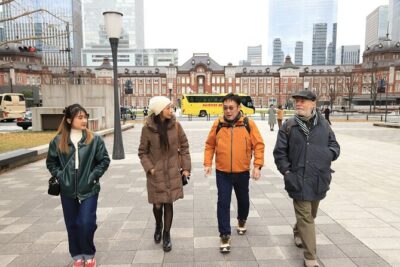
Tokyo is easiest to understand when someone helps you connect the dots. This private experience puts a local beside you, ready to steer you from famous sights such as Shibuya Crossing and Sensō-ji to quiet lanes, family cafés, artisan shops, and neighborhood markets.
I love the pre-tour questionnaire, which gives you a chance to explain what you care about before meeting your host. I also like the practical help built into the experience. Guides such as Tomo, Lauren, Hiroko, and Noah have helped with hotel pickup, train routes, IC cards, restaurant choices, and even ordering lunch.
The main drawback is the open-ended format. You do not receive a fixed list of included sights, and food, admissions, trains, and taxis cost extra. Your experience also depends heavily on the individual host, so ask for the right balance of history, food, and sightseeing before the day begins.
Key points to know before booking
- Your route is built around you: Choose temples, markets, food, shopping, neighborhoods, trains, or cultural questions instead of following a preset script.
- The host can meet you centrally: Hotel pickup may be possible if your accommodation is in central Tokyo, though the listed meeting point is NewDays Harajuku.
- Expect a walking experience: Public transport or local taxis may be used between districts, and those costs are not included.
- The strongest value is local guidance: Hosts have helped families navigate trains, find suitable food, understand customs, and locate places beyond the usual sightseeing circuit.
- The duration is flexible: You can book about two to five hours, making this useful for a first orientation or a focused neighborhood outing.
- The quality can vary by guide: The experience has a 4.9 rating from 1,177 reviews and a 97 percent recommendation rate, but one low rating pointed to weak English and limited historical explanation.
A private Tokyo day that does not follow a script
This is not a standard sightseeing walk where every person sees the same monuments in the same order. City Unscripted matches you with a local host and asks what you want from Tokyo before the meeting.
You might say you want traditional Japan, street food, department stores, anime, architecture, quiet temples, or help using the train system. You can also explain your walking limits, family needs, or preferred pace. Your host then shapes the route and can adjust it as you go.
That flexibility matters in Tokyo. The city is spread across many districts, and crossing from one part to another can eat up time. A host who listens can keep you in one area for a deeper look, or combine nearby sights without forcing you into a rigid plan.
The experience lasts about two to five hours. Two hours works well for a quick introduction or a single neighborhood. Four or five hours gives you more room to combine several districts, stop for food, and use public transport without feeling rushed.
More private tours in Tokyo:
- Tokyo 6hr Private Tour with Government-Licensed Guide
★ 5.0 · 3,902 reviews - Private Tour to Mt. Fuji and Hakone (Fully Licenced Operator)
★ 5.0 · 1,910 reviews - Tokyo Customized Private Tour (Must See Places in 1 Day)
★ 5.0 · 1,499 reviews
What the pre-tour planning really adds
After booking, you receive a short online questionnaire. Treat it as more than a formality. Tell your host what you have already seen, what you do not care about, how much walking feels comfortable, and what you hope to eat or buy.
The strongest experiences seem to begin with clear communication. Shoko contacted her group before the outing and built a route around specific interests. Taka also planned a four-hour day after discussing exactly what mattered to the group. Tomo balanced famous sights with less familiar local stops on a family’s first day.
You can also use the planning stage for practical questions. Lauren helped a group understand Tokyo’s metro system and stayed with them long enough to make sure they boarded the correct train. Hiroko helped a family plan around a Pokémon Center, animal cafés, and a child’s nut allergy by sending a Japanese restaurant note.
That is where this experience can be worth more than a basic walking tour. You are not only paying for facts at a monument. You are paying for a person who can help you function in Tokyo.
Shibuya Crossing and the modern city
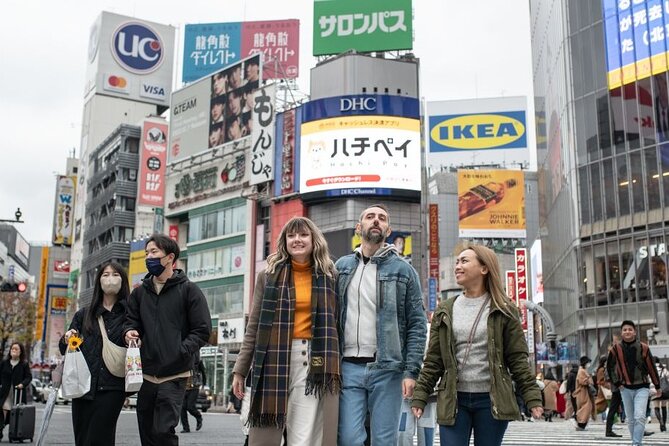
Shibuya is the obvious choice if you want Tokyo’s high-energy side. The famous crossing gives you a quick lesson in the city’s scale and order, while the surrounding streets bring neon signs, shops, cafés, and constant movement.
A host can help you look past the crossing itself. You might discuss how the area fits into modern Tokyo, wander through nearby streets, or focus on shopping and youth culture. Shibuya works well at the start of a first visit because it gives you an immediate sense of the city’s modern face.
The limitation is that Shibuya can feel crowded and intense. If you prefer quiet lanes and old wooden buildings, tell your host in advance. A short visit here can be enough before moving to a calmer district.
Asakusa and Sensō-ji
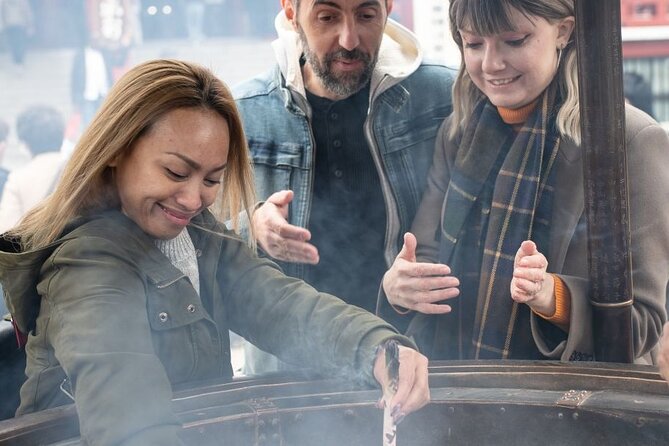
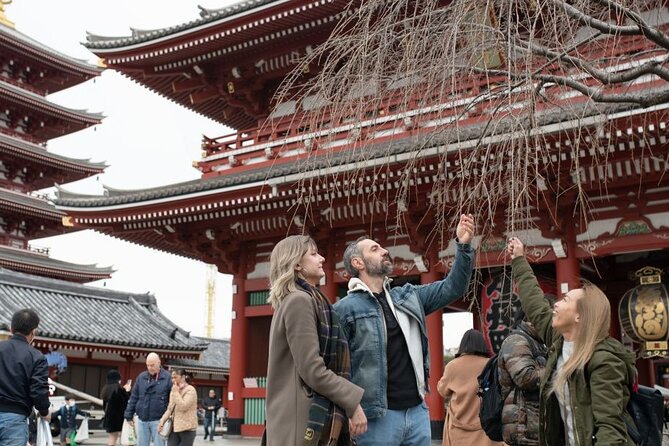
Asakusa offers a more traditional setting, with Sensō-ji Temple at its center. Your host can explain how to approach the temple, point out details you might pass without noticing, and lead you through the surrounding backstreets.
This is a good part of the experience for visitors who want cultural context rather than a quick photograph. A host can explain customs around shrines and temples, discuss neighborhood life, and help you see how old Tokyo sits beside the modern city.
You should not expect admission to every attraction or food and drink to be covered. The walking pace can also be demanding if you try to combine Asakusa with several far-flung districts in only two hours. For a slower visit, give Asakusa a larger share of your time.
A completely different kind of day in Tokyo:
- Mt Fuji and Hakone 1-Day Bus Tour Return by Bullet Train
★ 5.0 · 26,383 reviews - 1-Day Tokyo Bus Tour
★ 5.0 · 14,250 reviews - Tokyo: teamLab Planets TOKYO Digital Art Museum Entry Ticket
★ 4.6 · 9,779 reviews - Mt Fuji & Hakone Cruise, Drum Show Bullet Train 1 Day from Tokyo
★ 4.0 · 7,413 reviews
Kappabashi Street or the Tokyo Skytree district
The itinerary may include Kappabashi Street, a useful stop for anyone interested in cooking, design, or Japanese food culture. Restaurants and chefs shop here for handcrafted knives, ceramics, and the famous plastic food displays seen outside Japanese eateries.
This is more distinctive than another shopping street. You can browse items tied to everyday restaurant life, and a local host can explain what is practical, decorative, or simply fun to take home. Knife purchases may require extra thought about transport and airline rules, so ask questions before buying.
Another option is the district around Tokyo Skytree. The area combines a major modern landmark with neighborhood streets and views. The listing does not promise entry to the tower, so clarify your expectations if a high viewpoint matters to you. You may be visiting the surrounding district rather than going up the structure itself.
Yanaka for a quieter look at Tokyo
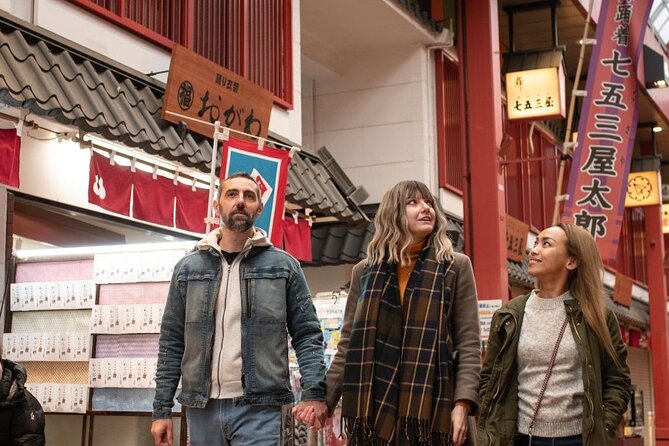
Yanaka is a good choice when you want to slow down. Traditional wooden houses, small temples, family-run cafés, and quiet lanes give the area a more residential feel than Shibuya or Shinjuku.
This district suits you if you like wandering without a strict checklist. A host can point out small details and local businesses that are easy to miss alone. It also provides a useful contrast to Tokyo’s tall buildings and bright signs.
Yanaka is not the best choice if your priority is covering many headline attractions. The reward is mood and conversation, not a long list of famous stops. I would pair it with a focused half-day rather than trying to squeeze it into an already crowded route.
Ginza, from department stores to specialty shops
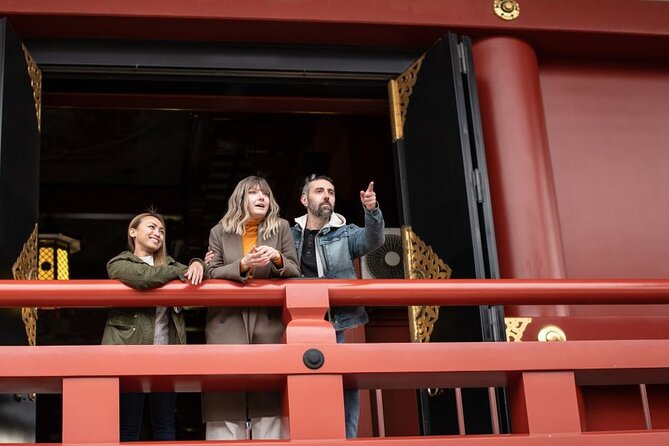
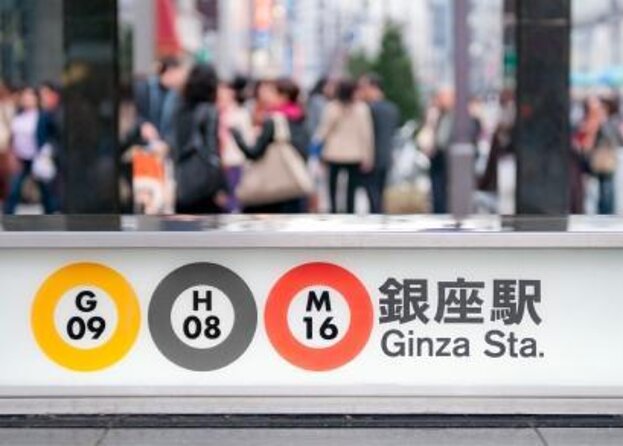
Ginza shows Tokyo’s polished side. Your host can guide you through department stores, luxury boutiques, major avenues, and traditional specialty shops that continue to operate among the modern storefronts.
This works well for shoppers and for anyone curious about the way old businesses and new luxury share the same district. A local can help you decide where to browse rather than simply leading you past expensive displays.
Ginza may offer less of the informal street life some visitors want. If you are looking for low-cost food, small alleys, or neighborhood cafés, make that clear before booking. The district is most useful when you want shopping, design, architecture, or a look at Tokyo’s more formal side.
Harajuku, Takeshita Street, and Meiji Shrine
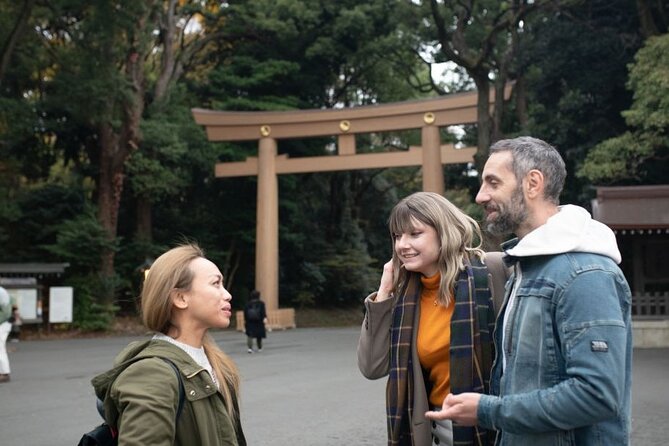
Harajuku gives you several different versions of Tokyo within a short distance. Takeshita Street brings quirky fashion and pop culture, while the wooded paths around Meiji Shrine offer a quieter setting and a chance to discuss Japanese religious customs.
This combination makes Harajuku especially useful for a first visit. You can see youth style, traditional practice, and a major shrine in one outing. A host may also help you avoid spending the whole visit on the busiest commercial street.
Families may find this area easy to tailor. Hiroko built a day around children’s interests, including the Pokémon Center and animal cafés, while still helping the adults understand the transport system. Those special venues are not guaranteed, and any admission or food costs extra, but the planning conversation gives you a chance to request them.
Shinjuku and the old alleys beside the towers
Shinjuku changes quickly from skyscrapers and observation decks to narrow lanes and old-style izakayas. Your host can shape this stop around city views, food, nightlife, or the remaining traces of older Tokyo.
It is a useful district if you want variety. You might begin with a wide city view, then move toward a smaller alley where the atmosphere feels more intimate. A host can also help you decide where to eat, though your meal is not included in the tour price.
Shinjuku is large, and it is easy to lose time simply getting around. The private format helps because you can choose one clear goal instead of trying to conquer the whole district. Tell your host if you want a calm food stop rather than a fast list of sights.
The real strength: practical help from a local
The most useful part of this experience may happen between the headline stops. Guides have helped people use metro lines, set up IC cards, order food, find restaurants, and understand everyday customs.
That support is especially valuable on your first day. A host can show you how Tokyo’s train system works, explain station changes, and help you feel less wary of traveling independently afterward. One family used the experience to understand the trains and arrange Shinkansen tickets for Kyoto.
You can also ask for help with food concerns. The host may suggest restaurants and help with ordering, but you should explain allergies and dietary needs clearly during the planning stage. Hiroko’s assistance with a Japanese allergy message shows how a thoughtful host can make a family’s first meals less stressful.
The tone is usually informal. Several experiences felt more like spending time with a local friend than attending a formal lecture. That can make the day comfortable, but it also means you should speak up if you want more dates, names, and cultural explanation.
Walking, trains, and the true cost
The listed price is $107.62 per person. For a private experience, that can be fair if you use the host well, especially as a first-day orientation or for a group with different interests.
The price does not cover food, drinks, admissions, or transportation. You may use trains or local taxis between districts, and those expenses are discussed with the host after booking. Since Tokyo’s size makes transport likely for a multi-district route, budget for those costs rather than treating the listed price as the full day’s expense.
Walking is central to the experience. One group described a tiring but enjoyable full day, while another appreciated a guide who stopped often because of pain. Tell your host about mobility needs before you meet. Most people can participate, and service animals are allowed, but this is not a private vehicle tour.
The listed start point is NewDays Harajuku, near the Omotesando Exit. A central accommodation pickup may be possible, but confirm it rather than assuming it is included.
The guide matters more than the route
City Unscripted uses a range of local hosts, and their individual strengths differ. Toshi has been praised for warmth, humor, and broad knowledge. Chiara has been described as patient and flexible. Amir has taken groups to fish markets, gardens, temples, and food markets while sharing his experience of living and working in Japan.
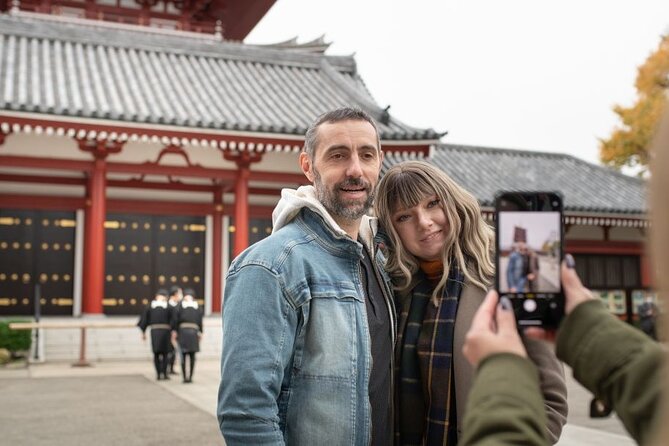
Noah has led three-hour walks that combined cultural explanation with a relaxed pace. Apy has shaped first-day routes and even helped with proposal photographs. These examples show how personal the experience can become when the match is right.
There is also a reason to keep expectations realistic. One two-hour outing around Omotesando and Meiji Shrine did not provide enough historical or language support for the person who booked it. If history is important to you, say so plainly and ask for a host comfortable giving detailed explanations in your language.
The overall score is 4.9 from 1,177 ratings, with a 97 percent recommendation rate. That is a strong record, but the guide match remains the key variable. The questionnaire and pre-tour conversation are your chance to improve it.
Who should book this Tokyo experience?
I would recommend it to first-time visitors who want help getting their bearings, families who need a flexible pace, couples who want a personal route, and anyone who prefers conversation over a fixed sightseeing script.
It is also a smart choice for a short Tokyo stay. In two or three hours, you can focus on one neighborhood and learn how to continue exploring alone. In four or five hours, you can combine major sights with food, shopping, and transport practice.
You may want something else if you prefer a firm itinerary, guaranteed attraction entry, a private car, or a specialist guide with a clearly stated academic focus. This experience is flexible, not all-inclusive, and not designed to promise the same route for every group.
Should you book it?
Book this experience if you want Tokyo to feel easier to navigate and more personal. The best use is to request a clear theme, such as traditional neighborhoods and food markets, family-friendly Tokyo, train orientation, or a first-day overview.
Before you go, state your walking pace, preferred language level, food needs, must-see places, and interest in history. Ask what your host can cover in the time you have. If you do that, the $107.62 price can buy more than sightseeing: it can give you a useful local introduction and the confidence to explore the rest of Tokyo on your own.
Free cancellation is available up to 24 hours before the start time. Changes or cancellations inside that window are not accepted for a refund.
FAQ
How long does the private Tokyo experience last?
The experience lasts approximately two to five hours. A shorter booking suits one district or a quick orientation, while a longer booking gives you more time for several neighborhoods, food stops, and public transport.
What areas can the host show me?
Possible areas include Shibuya, Asakusa, Kappabashi Street, the Tokyo Skytree district, Yanaka, Ginza, Harajuku, and Shinjuku. The final route depends on your interests and the plan agreed with your host.
Can the host meet me at my hotel?
The host can meet you at your accommodation if it is in central Tokyo. The listed meeting point is NewDays Harajuku near the Omotesando Exit, so confirm pickup details after booking.
Is transportation included?
No. This is a walking experience, and you may use public transportation or local taxis between sites. Transportation costs are not included in the price.
Are food, drinks, and attraction tickets included?
No. Food, drinks, and entry fees are extra. You can choose restaurants, snacks, or attractions with your host during the experience if they fit your plan.
What happens if I need to cancel?
You can receive a full refund if you cancel at least 24 hours before the experience start time. Cancellations or changes made less than 24 hours before the start time are not accepted for a refund.
Newly reviewed around Tokyo
- Tokyo Asakusa:Calligraphy & Make T-shirt Activity★ 5.0 · 62 reviews
- Intercity Shuttle, Tokyo to Haneda /Narita /Yokohama /Makuhari★ 5.0 · 5 reviews
- 1 Hour Travel around Tokyo with a Professional Photographer★ 5.0 · 3 reviews
- Travel Tokyo with Your Own Personal Photographer★ 5.0 · 43 reviews
- Kickboxing & Body Training with EX-Pro Fighter★ 5.0 · 4 reviews
- Train in Samurai Swordsmanship and Defeat the Demon in Tokyo★ 5.0 · 5 reviews
- Shuttle Van 6hr Tokyo Tour to-and-from Tokyo, Yokohama and Narita★ 5.0 · 9 reviews
- Traditional Japanese Knife Sharpening Class★ 5.0 · 18 reviews
Private, compared.
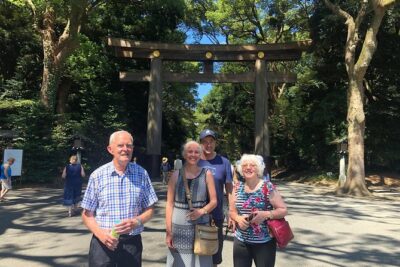
Tokyo 6hr Private Tour with Government-Licensed Guide
Read our review →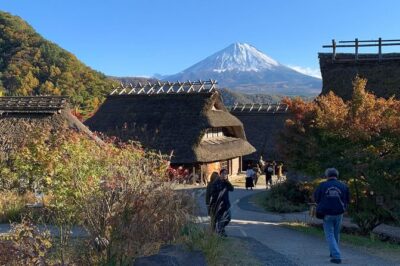
Private Tour to Mt. Fuji and Hakone (Fully Licenced Operator)
Read our review →
Tokyo Customized Private Tour (Must See Places in 1 Day)
Read our review →
Mount Fuji Full-Day Private Tour from Tokyo (Customizable)
Read our review →
Private City Highlights Tour with Local Guide
Read our review →
Tokyo 4hr Private Tour with Government-Licensed Guide
Read our review →