Reviewed · GUIDED
Tokyo Off the Beaten Path 6hr Private Tour with Licensed Guide
Tokyo’s best surprises often hide beyond Shibuya’s neon and the crowds around Sensoji. This private six-hour outing lets you choose three or four lesser-seen places, from quiet Yanaka lanes and cemetery paths to Shibamata’s old shopping street and Fukagawa’s Edo-era sights.
I like the personal planning and the chance to learn Tokyo’s subway system with a local guide. I also like the variety: you can focus on temples, food, neighborhood life, gardens, museums, or a mix of all four. The main drawback is that transport, meals, and entrance fees cost extra, and six hours can feel short if you try to cover too much.
Key points to know before booking
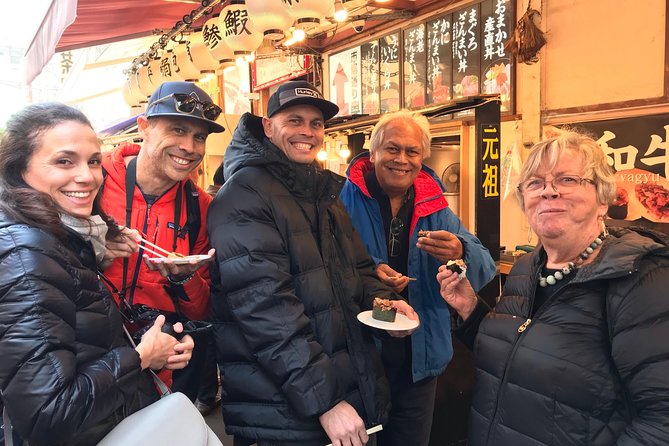
- Choose your own route: Pick three or four sites from a long list covering Yanaka, Shibamata, Fukagawa, Asakusa, Tsukiji, and more.
- Meet at your hotel: Pickup is on foot within a designated area of Tokyo, making the first step easy.
- Use Tokyo like a local: Your guide arranges travel by train, subway, bus, or taxi, though you pay those fares separately.
- Expect plenty of walking: Several visitors found the day active, and one guide helped a family learn the subway system along the way.
- Guides shape the experience: Guides named in past bookings include Yoshi, Taka, Michio, Hideki, Hiro, Kris, and Masa.
- Private means flexible: Only your party participates, so you can adjust the pace and change plans when a site is closed.
Why this private Tokyo tour feels different
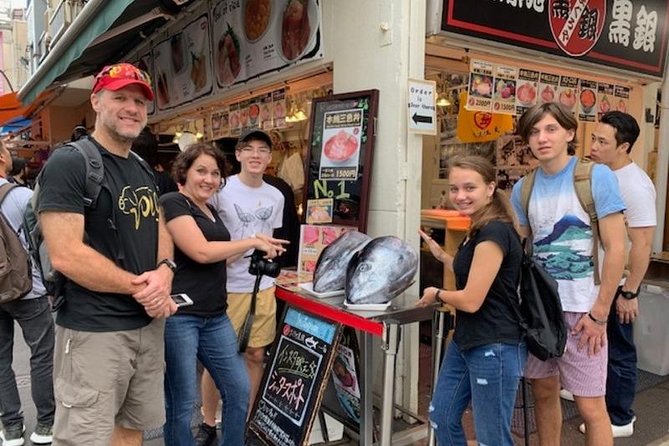
At $155.22 per person, this is not a bargain sightseeing bus. It is a planning and guiding service for people who want help making sense of Tokyo’s enormous rail network and its less obvious neighborhoods.
The value improves with a larger private party, since group discounts may be available. It also improves if you want to visit places that do not fit neatly into a standard first-time Tokyo route. A guide can explain how to reach an outlying district, help you choose a practical sequence, and keep you from losing half the day to transfers.
You pay extra for transportation, food, and most admission charges. There is no private vehicle included. That keeps the experience closer to ordinary Tokyo life, but you should budget for train or taxi fares, lunch, and any museums, gardens, galleries, or amusement rides you select.
The tour is rated 4.9 from 64 reviews, with 94 percent recommending it. More useful than the numbers, though, is the pattern in the feedback: guides are often praised for being kind, flexible, and good at explaining transport. A few people found the pace too fast or the commentary too basic. Your best protection is to agree on a realistic route before the day begins.
More private tours in Tokyo:
- Tokyo 6hr Private Tour with Government-Licensed Guide
★ 5.0 · 3,902 reviews - Private Tour to Mt. Fuji and Hakone (Fully Licenced Operator)
★ 5.0 · 1,910 reviews - Tokyo Customized Private Tour (Must See Places in 1 Day)
★ 5.0 · 1,499 reviews
Start in Yanaka, Nezu, and Sendagi
Yanaka, Nezu, and Sendagi form the old neighborhood cluster often called Yanesen. These districts escaped much of the destruction caused by the Great Kanto Earthquake and the world wars, so the streets retain a more traditional feel than much of central Tokyo.
This is one of the strongest choices for the tour. You get narrow lanes, small shops, local homes, temples, and a slower rhythm without leaving Tokyo. The appeal is not one spectacular monument. It is the accumulated feel of the neighborhood.
Nezu Shrine is the main formal sight here. Dating from 1706, it is known for its Edo-era architecture, with vermilion and gold lacquered buildings in the gongen-zukuri style. Entry is free, and a guide can give the shrine more meaning than a quick photograph would.
Yanaka Ginza Shopping Street offers a different experience. The street is lined with small shops and food sellers, and it helps you see how a neighborhood shopping area functions. It is not a grand department store or a polished tourist complex. That is precisely the point.
Yanaka Cemetery adds a quiet historical stop. It is one of Tokyo’s larger graveyards and one of its more scenic burial grounds. The central avenue is usually calm, and your guide can help you read the area as part of old Tokyo rather than treating it as just a shortcut between attractions.
SCAI The Bathhouse gives this route a modern art angle. The building was once a bathhouse more than 200 years old and now displays contemporary work by Japanese and international artists. Admission is not included, and opening conditions can matter, so confirm that this is practical before making it one of only three stops.
The published timing attached to these locations is often 15 minutes each. Think of that as a rough planning marker, not a satisfying visit to every place. If you want to stroll, shop, enter the shrine buildings, or visit the gallery, choose fewer stops.
Shibamata offers old Tokyo atmosphere
Shibamata sits on Tokyo’s eastern edge near the Edogawa River and the border with Chiba Prefecture. It takes more planning to reach than the central districts, which is why it works well with a private guide who can handle the route.
The neighborhood keeps an old-fashioned character. Taishakuten-Sando is a roughly 200-meter approach to Shibamata Taishakuten Temple, lined with food stalls and small shops. Wooden signboards and traditional storefronts give the street a strong sense of place.
Shibamata Taishakuten, also called Taishakuten Daikyoji, is a Nichiren temple with an impressive Nitenmon Gate. Its wood-carving gallery is especially notable. The carvings were made between 1922 and 1934 and depict scenes from the Lotus Sutra.
This route suits you if you want a neighborhood where the temple, shopping street, and local setting work together. It is less useful if you want a long list of unrelated Tokyo highlights. Getting there takes time, so Shibamata should usually be treated as a main theme for the afternoon rather than a quick detour.
One guide, Tatsu, was praised for planning the route around personal preferences and for visiting both Shibamata and Yanaka. Another guide, Hiro, adjusted the day when some chosen places were closed and created a backup plan. That sort of flexibility is important here because the tour is not built around one fixed schedule.
Fukagawa links museums, temples, and gardens
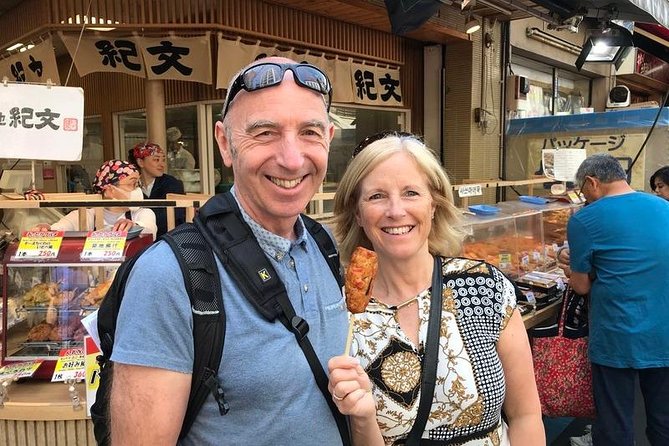
Fukagawa gives you several ways to explore Tokyo’s past. The Fukagawa Edo Museum recreates a village from the late Edo period, complete with houses, a canal, and a fire watchtower. It is a useful choice if you like context and want to see how old Tokyo was organized rather than simply looking at a temple gate.
Admission is not included, and the museum deserves more than a rushed 15-minute stop. If you choose it, pair it with one or two nearby sites instead of trying to add Yanaka or Shibamata on the same six-hour route.
Fukagawa Fudo-do is a Shingon Buddhist temple associated with the Chisan group. The main building includes wood carvings, though its appearance is more mixed and practical than beautiful. It may appeal most if you are interested in religious practice and temple life.
Tomioka Hachimangu is tied to sumo wrestling and hosts one of Tokyo’s major Shinto festivals. The shrine was bombed during the Second World War, and the present building dates from 1956. This gives you a chance to see both older traditions and the physical effects of modern history.
Kiyosumi Teien offers a change of pace. The garden has roots reaching back to the Edo period and has been linked to the merchant Kinokuniya Bunzaemon. Admission costs extra. It is a good pick if you want open space, water, and a quieter walk after several city streets.
The Basho Memorial Museum is the most time-intensive Fukagawa option, with about an hour suggested for the visit. Matsuo Basho was the best-known poet of the Edo period, and Fukagawa was where he wrote some important work and began several journeys. Choose this only if poetry and cultural history genuinely interest you.
A particularly strong Fukagawa combination is the museum or garden with Tomioka Hachimangu and Fukagawa Fudo-do. It creates a clear story about old Tokyo, religion, festivals, and daily life without requiring a cross-city dash.
More guided tours in Tokyo:
- Tokyo: Shinjuku Local Bar and Izakaya Guided Walking Tour
★ 4.9 · 1,794 reviews - Tokyo: Private City Highlights Tour with Local Guide
★ 4.8 · 1,433 reviews - Tokyo: Tsukiji Fish Market Guided Walking Tour
★ 4.9 · 1,397 reviews - Tokyo 4hr Private Tour with Government-Licensed Guide
★ 5.0 · 1,394 reviews
Asakusa and Kappabashi beyond Sensoji
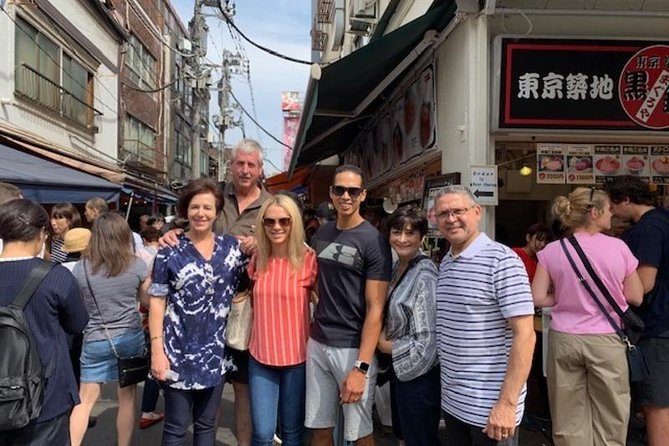
Asakusa is not truly unknown, but this tour can take you beyond the usual temple photograph. Kappabashi Street, in the greater Asakusa area, is known for kitchen supplies, Japanese knives, chopsticks, dishes, and restaurant equipment.
For cooks, design fans, or anyone looking for useful souvenirs, Kappabashi may be more rewarding than another observation deck. It is also a practical place to ask your guide about what is worth buying and how to handle purchases.
Asakusa Nishisando is a covered shopping street near Sensoji. Its structure and traditional shopfronts offer another view of the district, especially if you have already seen the main temple grounds.
Asakusa Hanayashiki, founded in 1853, is one of Japan’s oldest amusement parks. It has about 25 attractions and sits close to Sensoji. Admission is extra, and a short stop will not allow much time for rides, so treat it as a focused choice rather than an add-on.
Some past routes ended at Sensoji after visits to other parts of Tokyo. That can work well if you want a famous finish, but remember that Asakusa is easy to reach on your own. The private guide adds the most value when you combine it with Kappabashi, Nishisando, or a less familiar neighborhood.
Tsukiji and Gotokuji suit different interests
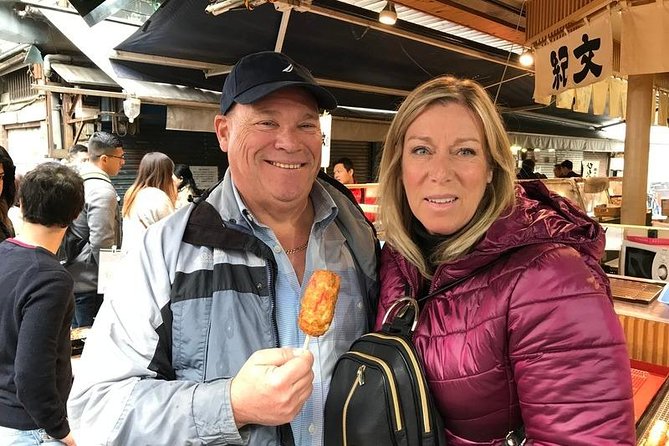
Tsukiji Fish Market is included among the possible destinations, though the market’s exact role in your day depends on your plan. It is a sensible choice for a food-focused route, especially if you want to stop for seafood lunch. Lunch is not included, so allow both money and time for eating.
One successful six-hour route combined Tsukiji with other city sights and ended at Sensoji. Another included a fresh seafood lunch. The practical lesson is simple: do not schedule four major areas and then expect a relaxed meal.
Gotokuji Temple in Setagaya is associated with the maneki-neko, the luck-inviting cat figurine. It is a free stop and a good pick if you are interested in Japanese symbols, Buddhist temples, or a quieter corner of Tokyo.
Gotokuji is not close to every other choice on the list. Pairing it with Yanaka, Shibamata, and Tsukiji could create a long day of transport. Ask your guide to map the route first, and drop a stop if the connections become awkward.
What the six hours really allow
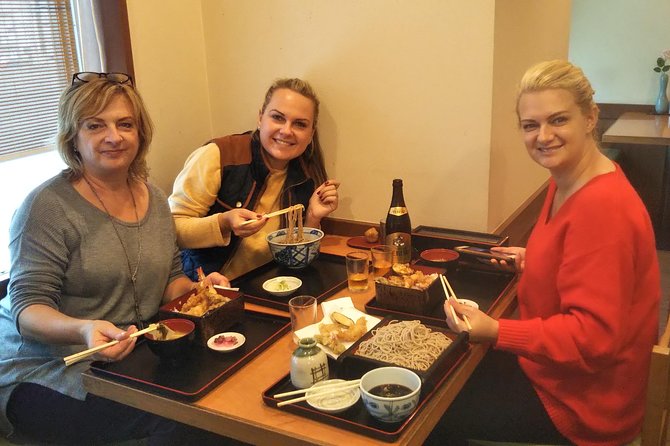
The experience is advertised as six hours, but the clock includes moving around Tokyo. A 15-minute notation beside many sites should not be read as a promise that you will have a full visit at each one.
In practice, three well-chosen places make more sense than four distant ones. Yanaka and Nezu work naturally together. Shibamata and Taishakuten-Sando belong together. Fukagawa Fudo-do, Tomioka Hachimangu, Kiyosumi Teien, and the Edo Museum can form another coherent group.
You will walk, sometimes a lot. One booking was cut short after the guide proposed skipping lunch to see more, while another report described a guide walking ahead and offering limited detail. Those are useful warnings. Tell your guide clearly if you want a slow pace, regular breaks, or time to browse.
The strongest accounts describe guides helping with subway routes, arranging transport in advance, taking photographs, and changing the plan when needed. Yoshi was praised for subway tips and careful help. Taka led a long day through Tokyo’s train system. Kris planned connections around personal interests, explained local customs, and even followed a last-minute change to the final destination.
The quality of a private tour depends heavily on communication. Send your preferred themes before the day: old neighborhoods, gardens, temples, food, art, sumo, or museums. Also say what you do not want. A private guide can tailor the route, but only if you give the guide a useful starting point.
Who should book this experience
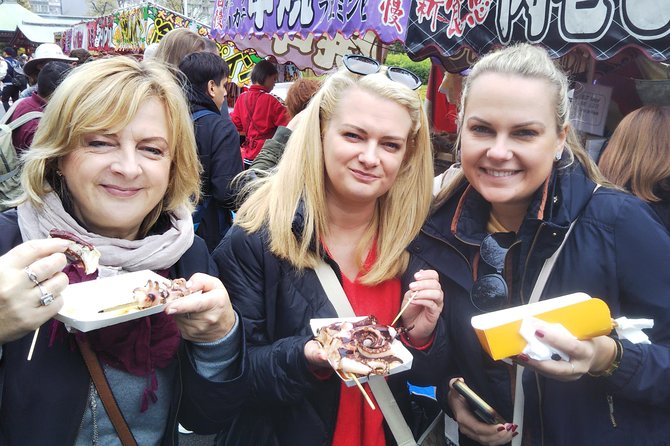
I would choose this tour if you have already seen the major central sights, or if you want a first Tokyo day that feels more local and less packaged. It also suits families who want help with trains, couples who prefer a private pace, and history fans who want context at temples and museums.
It is useful for people who find Tokyo’s rail system intimidating. A guide can meet you at your hotel on foot and show you how the system works as part of the day. That practical lesson may be worth as much as the sightseeing.
I would not choose it if you want a fixed luxury vehicle, included admissions, or a leisurely visit to many attractions. You also need to be comfortable walking and paying transportation costs separately. If you want four distant areas, six hours will probably feel rushed.
The tour has free cancellation up to 24 hours before the start time. Changes or cancellations inside that window are not accepted for a refund. Service animals are allowed, most people can participate, and only your own group joins the activity.
My booking advice
Before paying, decide on one clear theme and two backup stops. For a traditional Tokyo day, choose Yanaka, Nezu Shrine, and Yanaka Ginza. For old neighborhoods and temple culture, choose Shibamata and its Taishakuten-Sando, then add one nearby stop. For history, consider Fukagawa Edo Museum, Tomioka Hachimangu, and Kiyosumi Teien.
At $155.22 per person, the price is fair when you value private planning, English guidance, and help with Tokyo transport. It is less attractive if you only want to be escorted to places you could easily reach alone.
I would book it for the guide’s local knowledge, route flexibility, and access to neighborhoods outside the standard Tokyo circuit. I would also keep the schedule modest. Three good stops, a proper lunch, and time to walk will give you a better day than racing through six districts.
FAQ
How long is the Tokyo off-the-beaten-path tour?
The tour lasts approximately six hours.
How many sites can I choose?
You can customize the experience by choosing three or four sites from the available destinations.
Where does the guide meet my group?
The licensed English-speaking guide meets you at your hotel on foot within the designated Tokyo pickup area.
Is transportation included?
No. The guide organizes travel by taxi or public transport, but transportation fees are paid separately.
Is a private vehicle provided?
No. The experience does not include a private vehicle.
Are entrance fees included?
Most entrance fees are not included. Guide entry fees are covered only for sights listed under the designated activity choices.
Can I cancel for a full refund?
Yes. You can cancel at least 24 hours before the start time for a full refund. Cancellations or changes made less than 24 hours before the start time are not accepted for a refund.
Newly reviewed around Tokyo
- Tokyo Asakusa:Calligraphy & Make T-shirt Activity★ 5.0 · 62 reviews
- Intercity Shuttle, Tokyo to Haneda /Narita /Yokohama /Makuhari★ 5.0 · 5 reviews
- 1 Hour Travel around Tokyo with a Professional Photographer★ 5.0 · 3 reviews
- Travel Tokyo with Your Own Personal Photographer★ 5.0 · 43 reviews
- Train in Samurai Swordsmanship and Defeat the Demon in Tokyo★ 5.0 · 5 reviews
- Shuttle Van 6hr Tokyo Tour to-and-from Tokyo, Yokohama and Narita★ 5.0 · 9 reviews
- Kickboxing & Body Training with EX-Pro Fighter★ 5.0 · 4 reviews
- Traditional Japanese Knife Sharpening Class★ 5.0 · 18 reviews
Guided, compared.
Tokyo 6hr Private Tour with Government-Licensed Guide
Read our review →
Shinjuku Local Bar and Izakaya Guided Walking Tour
Read our review →
Private City Highlights Tour with Local Guide
Read our review →
Tokyo 4hr Private Tour with Government-Licensed Guide
Read our review →
Samurai Ninja Museum Guided tour and Experience
Read our review →