
Reviewed · TOKYO SUMO EXPERIENCES
Tokyo: Not a show- a professional sumo practice with experts
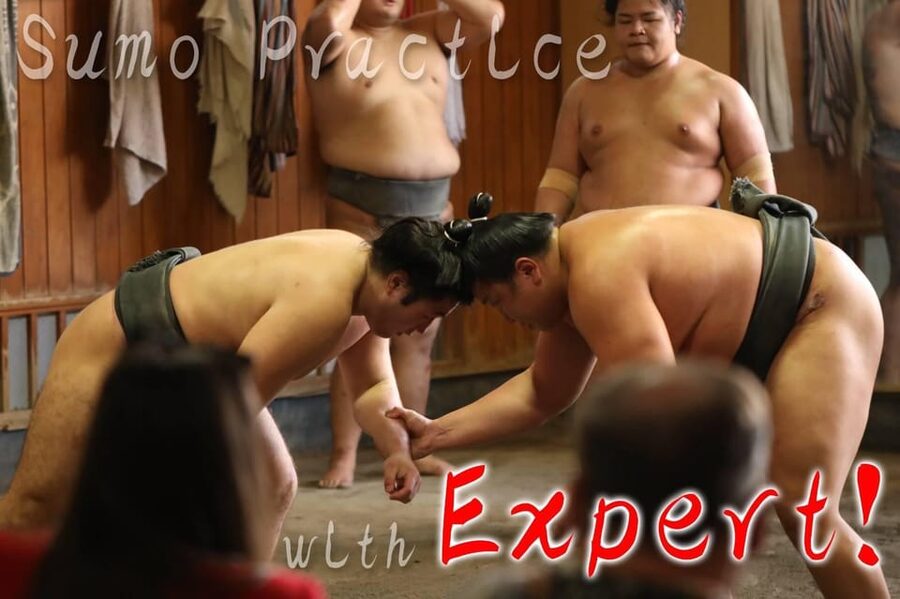
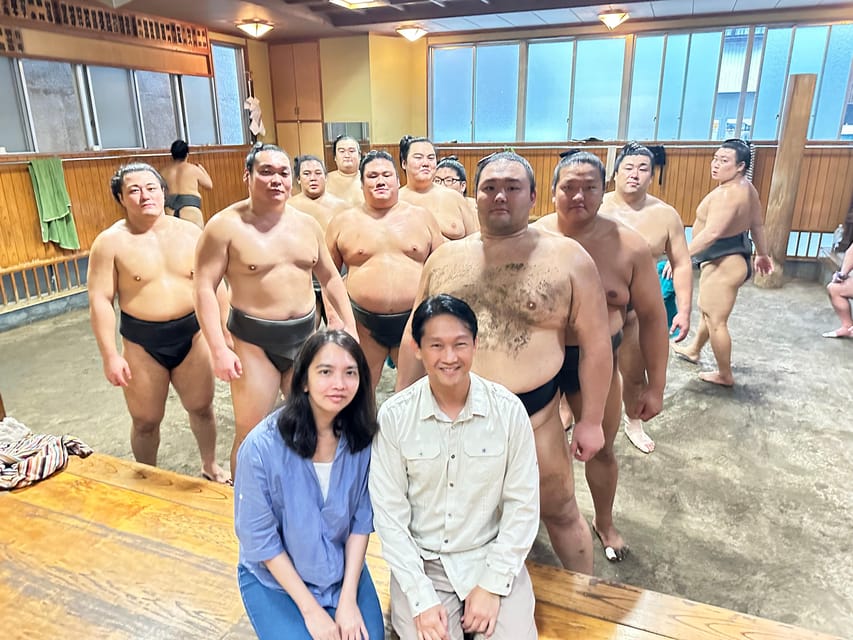
A few feet from professional wrestlers, you watch the real work of sumo: warm-ups, drills, sparring, and the quiet discipline between bouts. This is not a staged tourist show. The stable decides what you see, and you are there as a respectful observer. Shinya, a former national newspaper sumo journalist, adds the context that makes the movements meaningful.
I like the close view of training and the chance to ask difficult questions that a museum cannot answer. I also like the small group, capped at 10 people, which keeps the visit more personal. The main drawback is comfort: you sit on the floor for much of the practice, and the live session is not narrated every minute.
What makes this sumo visit special
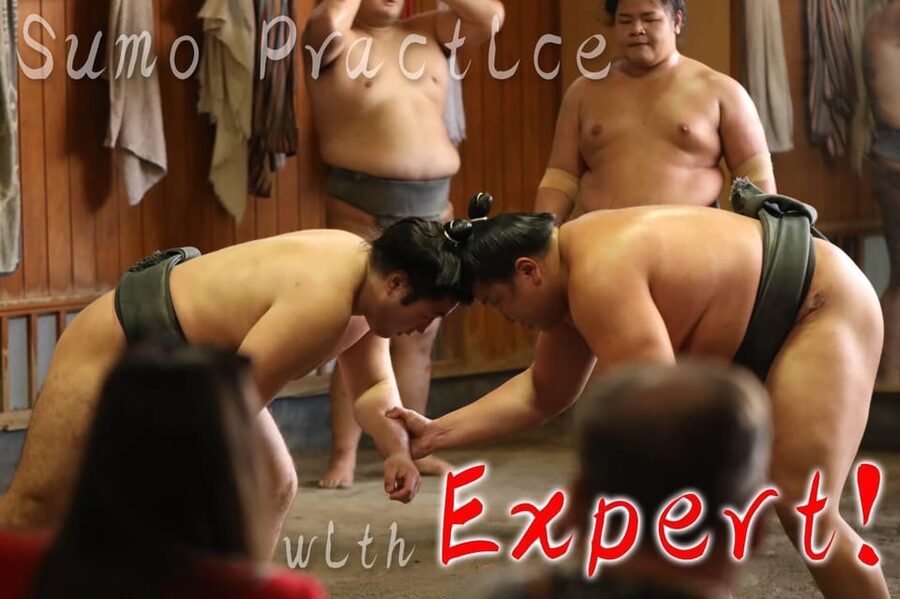
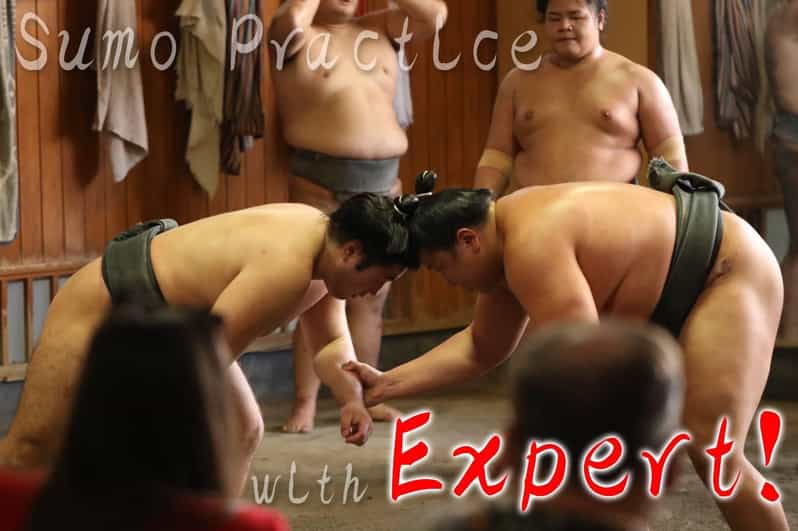
- Real morning practice at Takasago-beya: You watch wrestlers train inside an active sumo stable rather than attend a staged demonstration.
- A guide with rare access: Shinya draws on his work as a sumo reporter and photographer to explain customs, tournaments, and wrestlers.
- Close-up viewing: The seating puts you near the action, sometimes only a few inches from the wrestlers.
- A quiet, respectful setting: You must follow stable etiquette, including keeping your phone off and speaking quietly.
- Ryogoku beyond the stable: The tour continues to Ryogoku Kokugikan and Ryogoku Edo NOREN.
- Good for serious sumo fans: The question period can be useful even if you already know the basic rules and rankings.
Watching the real work of sumo
The heart of this three-hour experience is a morning practice at Takasago-beya, one of Tokyo’s sumo stables. You walk there from the meeting point near Toei Ryogoku Station, a short route of about five minutes. The stable is not a theater, and the wrestlers are not there to perform for you.
That difference matters. A staged sumo experience may be easier for families and first-time visitors, with explanations and comic moments built into the program. Here, you watch athletes follow their normal routine. The mood is serious. You see repetition, physical strain, concentration, and the relationship between more experienced wrestlers and younger members.
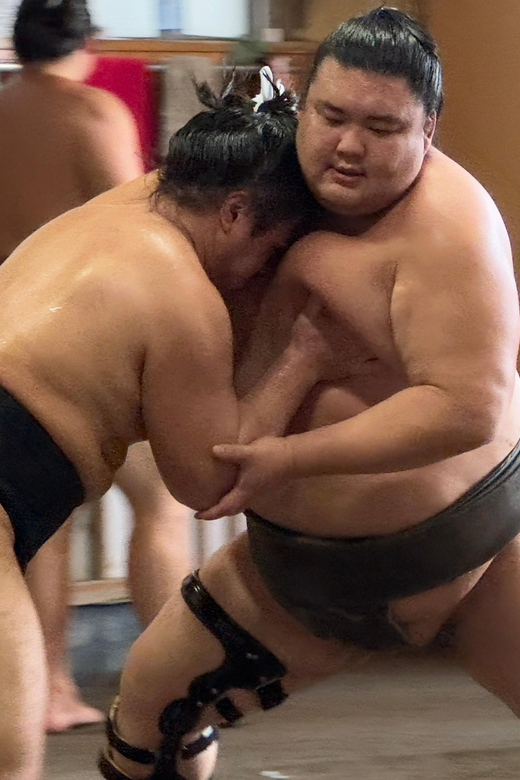
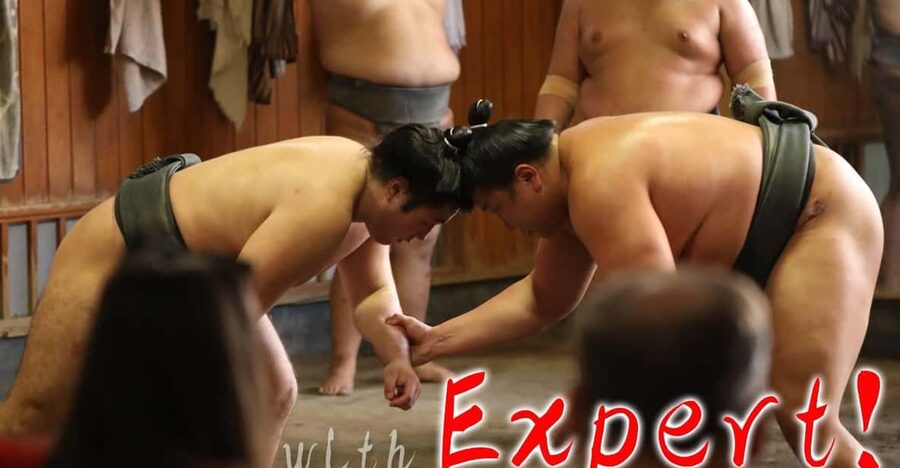
Practice can include warm-ups, training exercises, sparring, and cool-downs. The exact rhythm belongs to the stable, not the tour company. That uncertainty is part of the appeal. You are seeing a working place, not a polished presentation designed around a visitor schedule.
Several people who joined the tour were surprised by how gripping the practice became. An hour of training held attention because the movements were intense and the wrestlers worked at very close range. One especially vivid detail came from a visitor who said the session ended only when the wrestlers themselves called finish. That gives you a sense of the practice as a demanding workout, not a quick photo opportunity.
More Tokyo sumo experiences:
- Tokyo: Sumo Show and Dining Experience
★ 4.8 · 2,742 reviews - the SUMO show
★ 5.0 · 1,960 reviews - Tokyo Shinjuku Sumo Show & Experience with Photo
★ 5.0 · 1,750 reviews
Why the stable setting matters
A sumo stable, or heya, is where wrestlers live and train under the direction of their stablemaster. This tour does not turn that private world into a free-for-all. You are given special permission to enter, and the basic rule is simple: observe with respect.
Keep your voice low. Turn off your phone. Avoid treating the practice like a sporting event where you cheer after every clash. You may be close enough to notice the impact of bodies and the force behind each movement, but your role remains that of a guest in someone else’s workplace.
This is also why the experience may feel less convenient than a regular attraction. There is no guarantee that every ritual will be explained as it happens. One participant felt that a little commentary during the practice would have helped, especially during the second part of the session. That is a fair point.
The guide gives background before and after the practice, but the stable itself may remain quiet. If you need a running explanation of every movement, this could feel sparse. If you appreciate watching first and asking questions later, the quiet makes the session feel more genuine.
Shinya brings the missing context
The guide, Shinya, is the main interpreter between the stable and the visitor. He has worked as a national newspaper journalist and photographer covering sumo, so his role is more than translating basic rules. He can discuss traditions, wrestlers, tournaments, training, and the personalities behind the sport.
I would make full use of the question period. Ask about the rituals you noticed, the difference between training belts, how wrestlers of different experience work together, or anything that confused you during the practice. The experience is particularly useful if you already follow sumo and have questions that a standard introductory tour cannot handle.
Shinya is also described as enthusiastic about the sport, which helps. A guide who is still excited by the subject can point out details without making the visit feel like a dry lecture. He has also helped explain sumo culture to people with no prior interest, so you do not need to study the sport before booking.
English is available, along with Japanese. The quality of the visit depends in part on the questions you bring and on how much explanation the group needs. The English communication has been described as clear and engaging, though not perfect in every case. That is worth knowing if you want highly polished narration.
Sitting close, sitting low
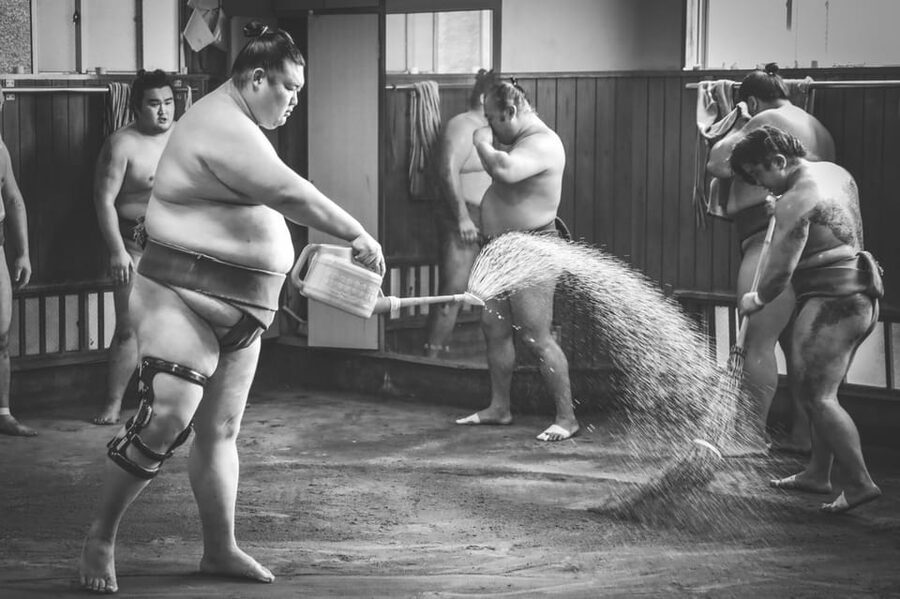
The viewing arrangement is intimate, but it is not designed for maximum comfort. You sit on the floor, with a floor cushion available. Some seating may involve small stools, and the session can last 90 minutes or more.
For many people, the low position is part of the experience. It puts you close to the wrestlers and helps preserve the stable’s normal atmosphere. For anyone with stiff knees, limited flexibility, or a larger body frame, it can become uncomfortable. One participant reported numbness after an extended period.
You should think honestly about your comfort before booking. The tour is not suitable for children under five, and the floor seating may also be difficult for anyone who cannot sit low for a long time. The supplied information does not promise special seating arrangements, so do not assume you can watch from a chair.
The close distance is one of the strongest parts of the visit. You may see the warm-up, training, and recovery from only a few inches away. You also have a chance to take a photo with a sumo wrestler, subject to the stable’s arrangements. Bring a respectful attitude rather than expecting a long posed photo session.
More Tokyo shows and performances:
- Mt Fuji & Hakone Cruise, Drum Show Bullet Train 1 Day from Tokyo
★ 4.0 · 7,413 reviews - Mt Fuji & Hakone Cruise, Drum Show Bus 1 Day from Tokyo
★ 4.0 · 1,287 reviews - Tokyo: Sumo Show and Experience in Shinjuku
★ 4.8 · 1,001 reviews - Tokyo:Luxury Sumo Show Experience & Japanese cuisine & Drink
★ 4.7 · 577 reviews
From the stable to Ryogoku Kokugikan
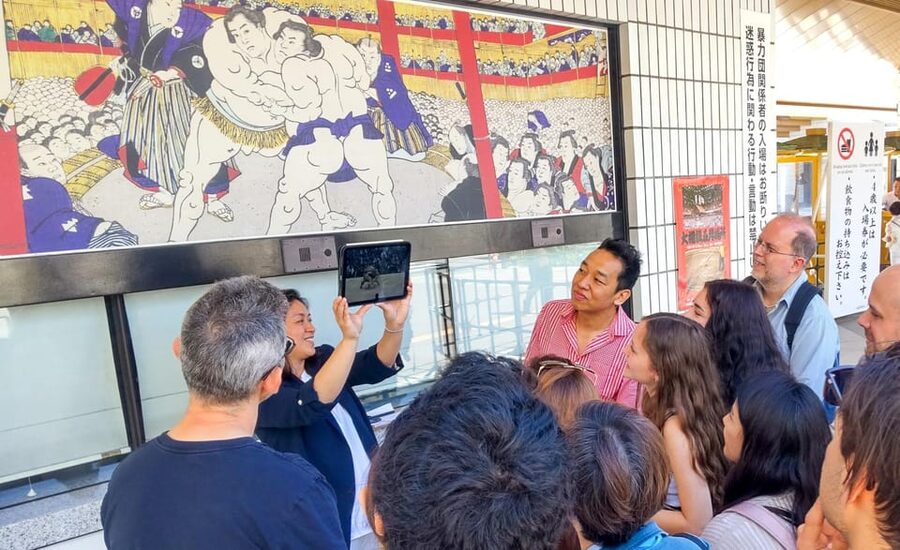
After the practice, the tour moves into Ryogoku, Tokyo’s sumo district. A short guided visit to Ryogoku Kokugikan adds useful place and sport context.
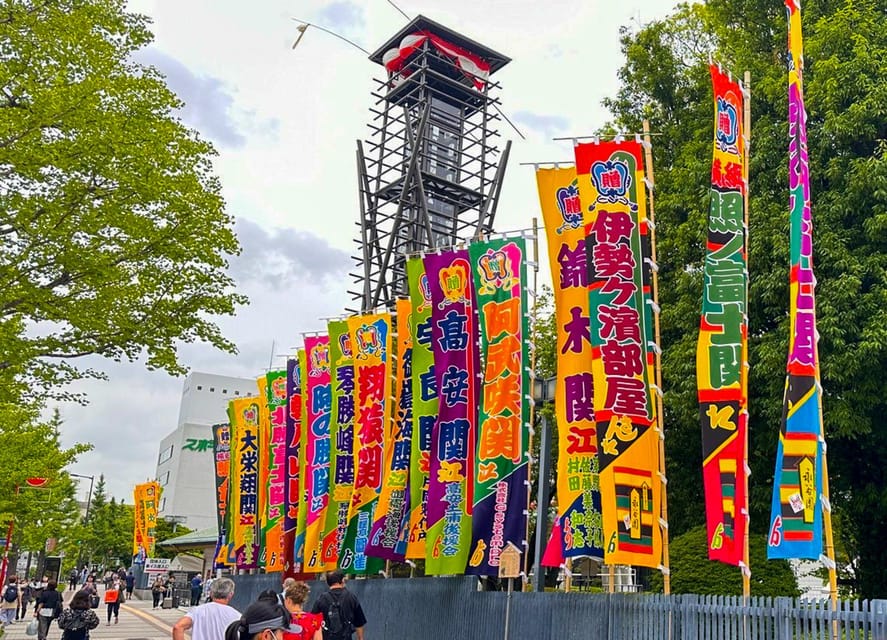
The Kokugikan is the major sumo arena in the area, so seeing it after watching a stable connects the private work of training with the public side of professional sumo. The stop lasts about 15 minutes, which means you should view it as a concise orientation rather than a full arena tour.
The guide can help you understand why Ryogoku matters to sumo. This is the neighborhood where the sport is most visible, and the arena gives you a sense of the tournaments that the wrestlers are preparing for. If you are hoping to attend a tournament during your Tokyo stay, this stop also helps you get your bearings.
Do not confuse this visit with a tournament ticket. The tour provides a guided look at the area and arena, not admission to a live tournament match.
Ryogoku Edo NOREN and the final half-hour
The last part of the route takes you to Ryogoku Edo NOREN, where you have a guided visit followed by about 30 minutes for shopping and sightseeing. This is a gentler finish after the concentrated atmosphere of the stable.
The stop gives you time to look around, ask follow-up questions, and take in more of Ryogoku’s sumo identity. It also offers a practical break in the schedule. You are not rushed directly from the stable to the station.
The itinerary lists the tour as ending at Ryogoku Station. Food and drinks are not included, so plan to buy anything you want separately. This is useful to remember because morning practice can begin early, and the three-hour schedule does not provide a meal.
Is $103 a fair price?
At $103 per person, this is not a cheap way to spend a morning in Tokyo. You are paying for access to a professional stable, a small group of no more than 10 people, an English-speaking guide, a photo with a wrestler, and extended time with a sumo specialist.
The value depends on what you want. If you simply want to see someone in a mawashi or take a quick picture, less expensive options may suit you better. If your goal is to understand how professional sumo training feels, the price is easier to justify. Stable access is unusual, and even people with years of experience living in Japan found the visit rewarding.
I see the tour as especially good value for three kinds of visitors: dedicated sumo fans, people who could not get tournament tickets, and first-time visitors who want a cultural experience that is not built as a show. The small group also matters. A group of 10 is still large enough to affect the room, but it is far more manageable than a coach tour.
The booking terms add flexibility. You can cancel up to 24 hours before the tour for a full refund, and reserve now while paying later. Starting times vary, so check availability for your date.
Who should book this experience?
I would recommend it to adults and older children who can sit quietly and accept the rules of a working stable. It suits curious people who want to ask questions and pay attention to detail. You do not need to know the rankings or tournament schedule in advance.
It is also a strong choice if you are deciding between a staged sumo package and a real training session. The trade-off is clear: the staged option may offer more explanation, comfort, and predictable entertainment. This tour offers access, atmosphere, and a closer look at the hard work behind the sport.
Families can enjoy it, and one group with three children found the visit rewarding, but the formal minimum age is five. Very young children may struggle with the silence, the floor seating, and the need to remain still.
Practical details before you go
The meeting point is at the ground-level A2 exit of Ryogoku Station on the Toei Oedo Line. It is also about a five-minute walk from the east exit of JR Ryogoku Station. The operator sends additional meeting details before the date.
Wear something that lets you sit comfortably on the floor. Arrive on time, since the group travels together to the stable and the practice follows the wrestlers’ schedule. Smoking indoors is not allowed.
Bring questions. That is the best way to gain more from Shinya’s experience. If you are a baseball fan, you may also find common ground with him, since he follows baseball as well as sumo.
Should you book it?
Book this tour if you want the real training room rather than a staged display, and if you can handle sitting on the floor for a long stretch. The practice, close viewing, and access to Shinya’s first-hand reporting background are the main reasons to choose it.
Skip it if you need a fully narrated performance, comfortable chairs, or a guaranteed sequence of demonstrations. For everyone else, this is one of Tokyo’s better ways to see sumo as a living discipline, not just a tournament spectacle.
FAQ
How long does the sumo practice tour last?
The full experience lasts three hours. About two hours are scheduled at Takasago-beya, followed by short guided visits to Ryogoku Kokugikan and Ryogoku Edo NOREN, plus time for sightseeing and shopping.
Where does the tour meet?
You meet at the ground-level A2 exit of Ryogoku Station on the Toei Oedo Line. The meeting point is also about a five-minute walk from the east exit of JR Ryogoku Station.
Is the tour conducted in English?
Yes. The tour offers English and Japanese, with an English-speaking guide available.
Who leads the tour?
The guide is Shinya, a sumo specialist and former national newspaper journalist and photographer who has covered professional sumo.
Can I take a photo with a sumo wrestler?
Yes. A photo with a sumo wrestler is included, subject to the stable’s arrangements.
Do I sit on the floor?
Yes. You sit on the floor to watch practice, and a floor cushion is available. Small stools may also be used, so consider your comfort if sitting low for 90 minutes or longer is difficult.
Are food and drinks included?
No. Food and drinks are not included. Tips are also not included.
Can children join the tour?
Children under five are not permitted. Children five and older may join, but they must be able to sit quietly and follow the stable’s rules.
Newly reviewed around Tokyo
- Tokyo Asakusa:Calligraphy & Make T-shirt Activity★ 5.0 · 62 reviews
- Travel Tokyo with Your Own Personal Photographer★ 5.0 · 43 reviews
- Intercity Shuttle, Tokyo to Haneda /Narita /Yokohama /Makuhari★ 5.0 · 5 reviews
- 1 Hour Travel around Tokyo with a Professional Photographer★ 5.0 · 3 reviews
- Train in Samurai Swordsmanship and Defeat the Demon in Tokyo★ 5.0 · 5 reviews
- Shuttle Van 6hr Tokyo Tour to-and-from Tokyo, Yokohama and Narita★ 5.0 · 9 reviews
- Kickboxing & Body Training with EX-Pro Fighter★ 5.0 · 4 reviews
- Traditional Japanese Knife Sharpening Class★ 5.0 · 18 reviews
Tokyo Sumo Experiences, compared.
Tokyo Shinjuku Sumo Show & Experience with Photo
Read our review →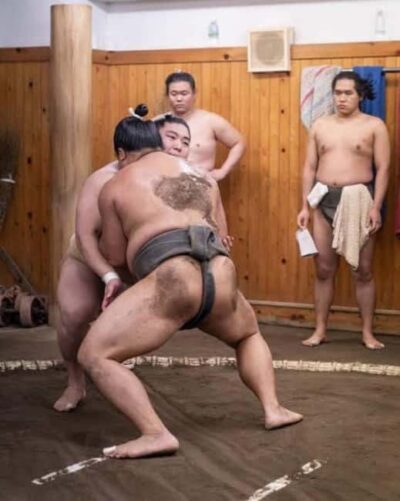

Luxury Sumo Show Experience & Japanese cuisine & Drink
Read our review →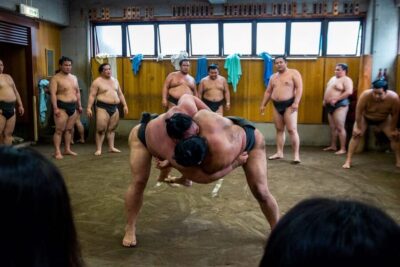
Tokyo Sumo Experience: Chanko & Mochi with a Former Pro
Read our review →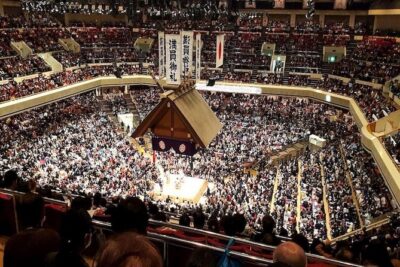
Ultimate Sumo Tournament: Tokyo, Osaka, Nagoya, Fukuoka
Read our review →Browse the lists this tour appears in