
Reviewed · TOKYO JDM CAR CULTURE TOURS
Tokyo Night Drive: Daikoku PA Car Culture & Wangan Midnight
Tokyo’s car culture comes alive after dark at Daikoku Parking Area, where modified cars gather beneath the lights and the highway curves around the parking lot. The ride also brings you the Wangan route, Rainbow Bridge, Tokyo Tower, and Tokyo’s glowing bayside skyline in one compact evening.
I like the small group size, limited to four people, and the mix of car culture with classic night views. I also like that guides such as Lee and Kaku have been praised for being friendly, communicative, and happy to give you time to look around. The main drawback is value: at $93 per person, this is mainly a guided drive and transport experience, not a hands-on car tour or a guaranteed private meet with vehicle owners.
Key things to know before you book
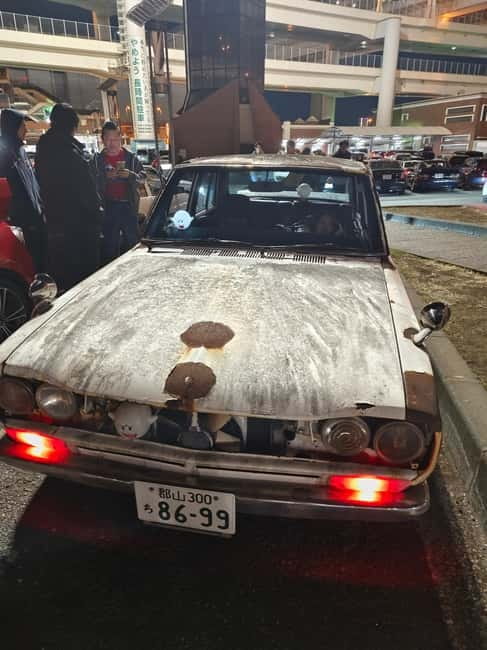
- Daikoku PA is the main event: You get about an hour at Japan’s famous modified-car meeting point.
- A PIT Autobacs adds context: The 30-minute stop offers car parts, motoring goods, and memorabilia alongside the outdoor meet.
- Tokyo’s night sights are part of the ride: You pass Rainbow Bridge and stop near Tokyo Tower rather than spending the whole evening at Daikoku.
- The group is very small: With no more than four participants, the vehicle feels more personal than a large coach tour.
- The tour is built for car fans: Wangan Midnight followers, photographers, and people fascinated by Japanese tuning culture will get the most from it.
- Check the final meeting details: Pickup usually begins in Akihabara, with confirmation sent the day before by email or another contact method.
Why Daikoku PA is worth the late-night ride
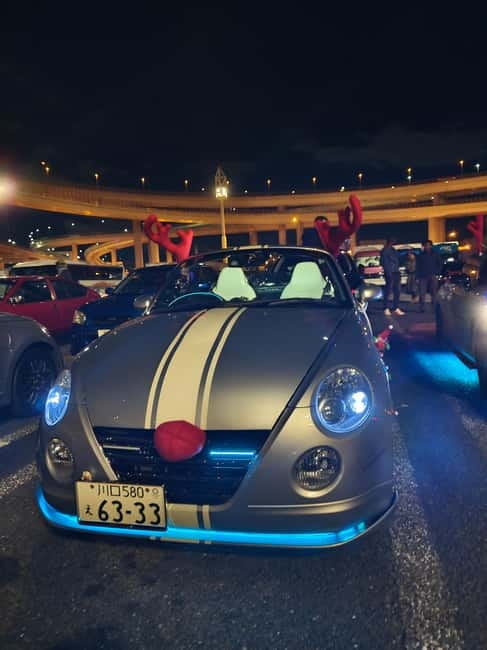
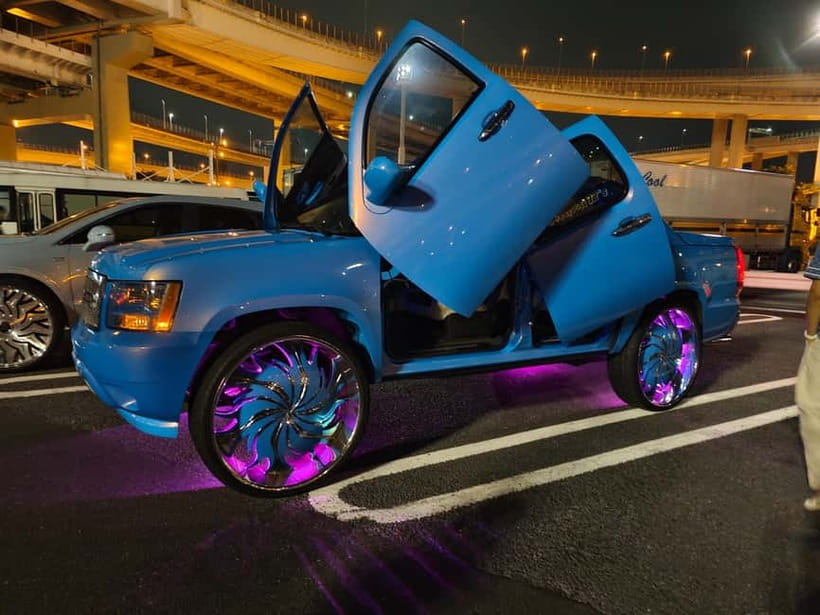
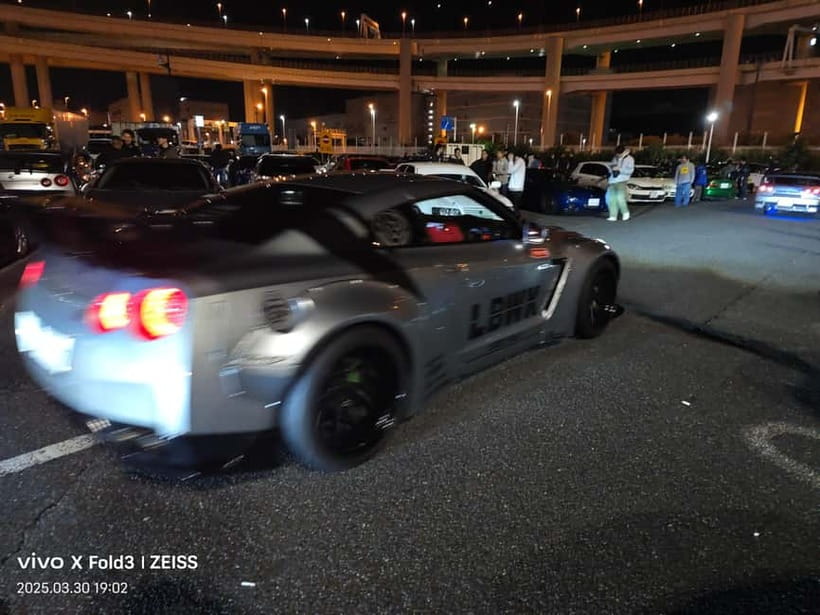
Daikoku PA is more than a roadside rest stop. For car fans, it is a meeting point tied to Japan’s tuning scene, where the setting matters almost as much as the cars. The parking area sits within the network of elevated highways around Yokohama, giving the stop a distinctive ring of concrete, road noise, and artificial light.
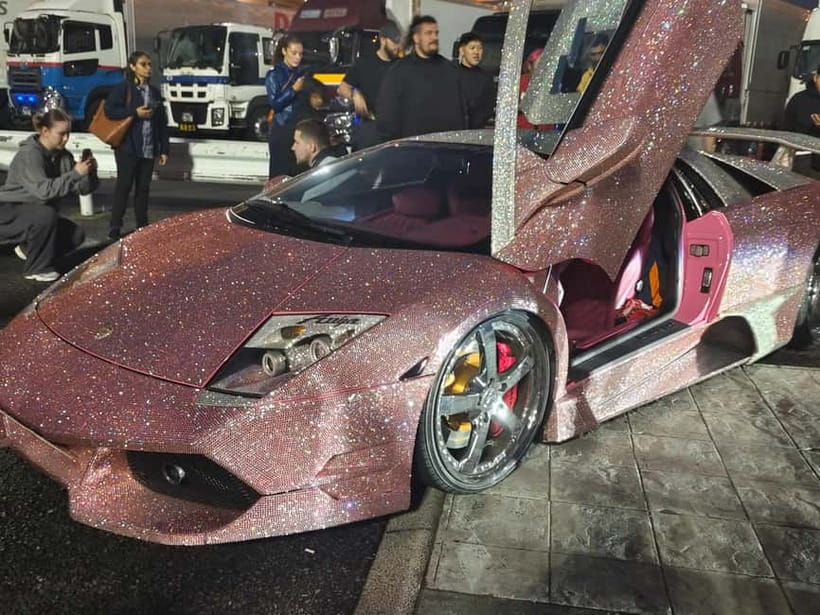
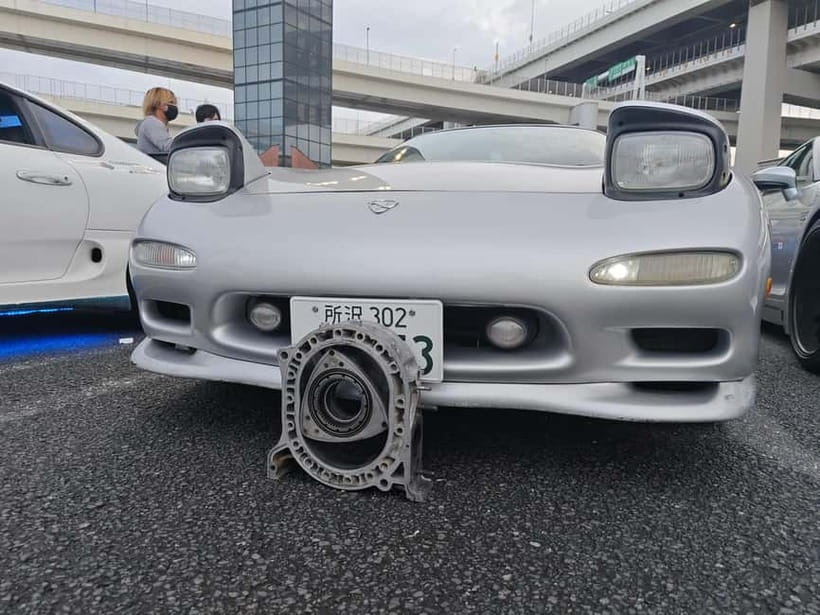
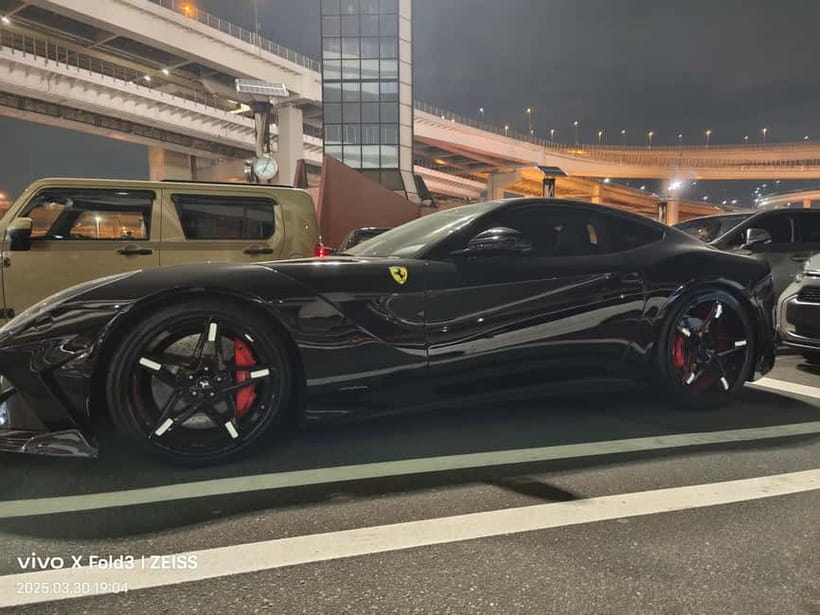
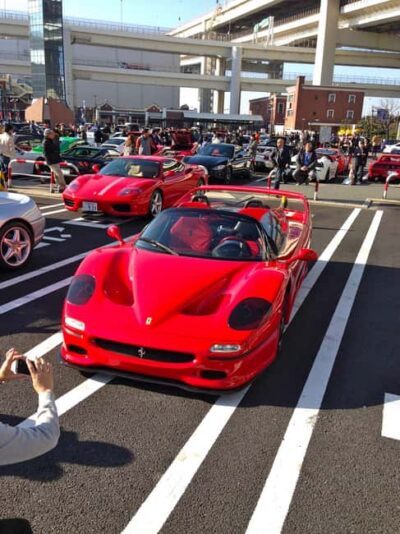
You are not visiting a museum with labeled exhibits. You are looking at real cars gathered in a working parking area. That makes the experience less polished, but also more immediate. Depending on the night, you might find older Japanese models, newer performance cars, special paintwork, heavily modified builds, and machines that look as if they came straight from a street-racing film.
The visit lasts about one hour. That is enough time to walk around, take photographs, and enjoy the sounds and atmosphere without making the whole evening a single stop. Your guide waits while you explore, which matters here because the best way to see Daikoku is at your own pace.
Keep your expectations sensible. The tour gives you access to the meeting point and transportation to it, but it does not promise a particular car, a private demonstration, or a chance to race. The exact lineup can change from night to night. You are paying for access, driving, and local guidance rather than a scheduled performance.
More Tokyo JDM and car meet nights:
- GT-R35 800hp Club Membership – secret underground car meet
★ 4.8 · 998 reviews - Tokyo: Fast & Furious Tokyo Drift 3 Experience (Kaila Yu SP)
★ 4.8 · 947 reviews - Tokyo: Daikoku JDM Car Meet & Night Car Culture Tour
★ 4.8 · 626 reviews
Following the Wangan route after dark
The Wangan route gives the outing its story. This bayside highway is closely linked with Tokyo’s performance-car image and with Wangan Midnight, the manga and anime series that helped make high-speed expressway culture famous outside Japan.
The tour presents that world from the passenger seat. You get the sensation of moving through Tokyo’s expressway system at night, with towers, bridges, lighting, and industrial waterfront areas passing by. The appeal is the combination of motion and scenery. You are not simply being driven from one attraction to another on city streets.
Still, this is not a racing experience. The description promises Wangan-style atmosphere and a night drive, not illegal speed or street racing. That distinction is important. You can enjoy the visual connection to the car scene without expecting a thrill ride built around dangerous driving.
The driving time also helps explain the price. The listed stops total roughly two hours and ten minutes, leaving the rest of the four-hour outing for travel between Akihabara, Tokyo’s central sights, the bayside roads, Daikoku PA, and the finish point. If you want four solid hours of sightseeing on foot, this is not the right format. If you like watching Tokyo pass by from a moving car, the road time is part of the attraction.
A PIT Autobacs: a useful stop for car enthusiasts
The 30-minute visit to A PIT Autobacs Shinonome gives the tour an indoor stop before or around the main Daikoku visit, depending on the night’s running order. A PIT Autobacs is associated with Japanese automotive goods, parts, accessories, and car culture merchandise.
This stop gives you something different from Daikoku PA. At the parking area, you see finished vehicles in an outdoor gathering. At A PIT, you can browse the commercial side of the scene, with motoring products and memorabilia. One participant called it a fitting part of the evening, especially after visiting Daikoku.
Thirty minutes is enough for a look around, but not enough for a long shopping session. If you hope to buy something, keep the visit focused. The tour includes transportation, but food and drinks are not included, so do not count on this stop as a meal break.
For anyone who does not know much about Japanese car culture, A PIT also makes the evening easier to understand. It shows that tuning is not only about rare cars at a nighttime gathering. It is also a retail culture involving parts, style, maintenance, and personal taste.
Rainbow Bridge and Tokyo Tower add balance
The tour is not only for people who can identify engine swaps and wheel brands. The stop near Rainbow Bridge gives you a short ten-minute sightseeing pause, while the Tokyo Tower visit lasts about 30 minutes.
Rainbow Bridge brings the classic Tokyo bay view. You should expect a brief stop, not a long waterfront walk. The point is to see the bridge and surrounding lights as part of the night drive, then continue through the city.
Tokyo Tower supplies a more familiar Tokyo landmark. The tour includes a drive-by or visit near the tower, and one especially useful feature is that it breaks up the car-focused schedule. Even if you are traveling with someone who is less interested in modified vehicles, the tower and bridge make the evening easier to share.
The short timing means you should not treat either location as a full sightseeing visit. You will have limited time for photographs, so keep your camera ready and avoid planning a detailed exploration of the surrounding area. The reward is variety: highways, car culture, modern retail, a famous bridge, and one of Tokyo’s best-known towers in a single night.
More Tokyo night tours:
- Tokyo Night Foodie Tour in Shinjuku – Seasonal Sushi, Wagyu Beef
★ 5.0 · 1,161 reviews - Tokyo After 5: Authentic Japanese Food & Drink Night Tour
★ 4.5 · 560 reviews - Tokyo: Samurai Entertainment Night Show in Kanda Shrine
★ 4.6 · 417 reviews - The Dark Side of Tokyo – Night Walking Tour Shinjuku Kabukicho
★ 4.5 · 297 reviews
What the small group changes
The tour accepts no more than four participants. That is one of its strongest practical features. A small vehicle group can keep the evening more relaxed, and you can ask questions without competing with a busload of people.
Guide quality matters a lot on an experience like this. Guides named Lee and Kaku have been praised for being friendly, easy to talk with, and willing to wait while people explore. Those traits are useful here because Daikoku PA is not a conventional attraction with a fixed presentation. Your guide helps connect the stops and lets you enjoy the spaces without rushing every minute.
The languages offered are English and Japanese. The guide contacts you the day before to confirm details, and pickup usually begins in Akihabara. The exact meeting information is sent through WhatsApp or another contact method, so watch your messages before the outing.
You may be able to finish in Akihabara or Ginza. The stated finish information also refers to Marunouchi, so confirm your preferred drop-off point directly with the guide. This is a small but important detail if you have a late reservation, hotel booking, or train connection.
Is $93 a fair price?
At $93 per person, the value depends on what you want from the evening. For a small group of up to four, with transportation, highway fees, a guide, and a four-hour route, the price can make sense if Daikoku PA is a major goal. You are also getting the Tokyo night drive and several central sights in the same outing.
The price is harder to justify if you see the experience as simple transport to a parking lot. One critical assessment described the service as mostly a transfer to Daikoku and the parts shop, with less than two hours of actual driving from that person’s point of view. That is the key value question: the drive is central to the tour, but it may not feel like a full guided sightseeing experience at every moment.
You also pay for convenience. Reaching Daikoku PA independently can be awkward, and the tour handles the highway travel and return to central Tokyo. If you are already a confident driver with access to a car, the price may feel high. If you are visiting Japan without a vehicle and want an organized way to see the car scene, the cost is easier to defend.
Food and drinks are extra. Bring your passport, since it is required, and plan any meal before or after the tour.
Who will enjoy this most?
This outing is a strong fit for:
- People who follow Wangan Midnight or Japanese tuning culture
- Photographers who want night shots of cars, highways, bridges, and Tokyo landmarks
- Parents traveling with older teenagers who already care about cars
- Visitors who want a social evening in a very small group
- Anyone who prefers a moving city experience to another indoor attraction
It is less suitable if you want a formal history tour, a luxury sightseeing ride, or guaranteed access to a particular vehicle. It is also not suitable for children under 10, wheelchair users, or people over 70. Alcohol and drugs are not allowed.
The tour can work for mixed-interest groups, but only if everyone accepts that Daikoku PA is the main focus. The Tokyo Tower and Rainbow Bridge stops help, yet this remains a car-culture outing first.
Practical timing and booking advice
Allow the full four hours. The schedule includes driving between several parts of Tokyo, and traffic can affect how long each section feels. Since the experience takes place at night, wear comfortable clothes and shoes if you plan to walk around Daikoku PA.
The included charger is a useful touch for anyone taking photographs or using navigation. You should still arrive with your phone charged, since the pickup instructions and guide contact are handled digitally.
Free cancellation is available up to 24 hours before departure for a full refund. You can also reserve now and pay later, which helps if your Tokyo plans are still shifting. Check the available start times, then confirm the pickup and finish location when the guide contacts you the day before.
Should you book Tokyo Midnight Tours?
Book it if Daikoku PA is high on your Tokyo wish list and you want the simple way to reach it without arranging your own car. The small group, night highway ride, A PIT Autobacs stop, and Tokyo Tower pass make the four-hour route more varied than a direct transfer.
Skip it if $93 feels too high for a guided drive with limited time at each sightseeing stop, or if you expect a guaranteed street-racing spectacle. For the right person, this is a memorable look at a very specific side of Tokyo. For everyone else, it may feel like an expensive ride to a parking area.
FAQ
Where does the Tokyo night drive usually start?
The tour usually starts in Akihabara. Your guide sends the final meeting details through WhatsApp, email, or another contact method the day before.
Where can the tour finish?
You may choose to finish in Akihabara or Ginza. The provided finish information also lists Marunouchi, so confirm the exact drop-off point with your guide before departure.
How long does the experience last?
The tour lasts four hours. Starting times depend on availability.
How many people can join the tour?
This is a small-group experience limited to four participants.
Which languages are available?
The live guide service is offered in English and Japanese.
What places are included?
The route includes A PIT Autobacs Shinonome, Rainbow Bridge, Tokyo Tower, and Daikoku Parking Area. The drive also follows Tokyo’s Wangan route.
Is transportation included?
Yes. Transportation and highway fees are included, along with a charger and a friendly introduction.
Is food included?
No. Food and drinks are not included.
What should I bring, and who cannot join?
Bring your passport. The tour is not suitable for children under 10, wheelchair users, or people over 70. Alcohol and drugs are not allowed.
Newly reviewed around Tokyo
- Tokyo Asakusa:Calligraphy & Make T-shirt Activity★ 5.0 · 62 reviews
- Intercity Shuttle, Tokyo to Haneda /Narita /Yokohama /Makuhari★ 5.0 · 5 reviews
- 1 Hour Travel around Tokyo with a Professional Photographer★ 5.0 · 3 reviews
- Travel Tokyo with Your Own Personal Photographer★ 5.0 · 43 reviews
- Train in Samurai Swordsmanship and Defeat the Demon in Tokyo★ 5.0 · 5 reviews
- Shuttle Van 6hr Tokyo Tour to-and-from Tokyo, Yokohama and Narita★ 5.0 · 9 reviews
- Kickboxing & Body Training with EX-Pro Fighter★ 5.0 · 4 reviews
- Traditional Japanese Knife Sharpening Class★ 5.0 · 18 reviews
Tokyo JDM Car Culture Tours, compared.
GT-R35 800hp Club Membership – secret underground car meet
Read our review →
Fast & Furious Tokyo Drift 3 Experience (Kaila Yu SP)
Read our review →
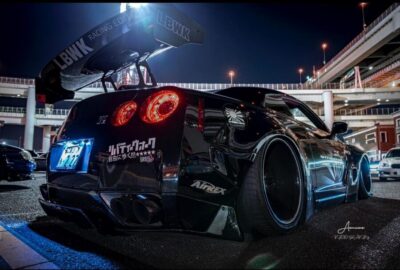
Secret Car Meet: R34 Skyline Car Club Membership
Read our review →
Tokyo Drift: Daikoku PA Supreme Car Experience 大黒PA
Read our review →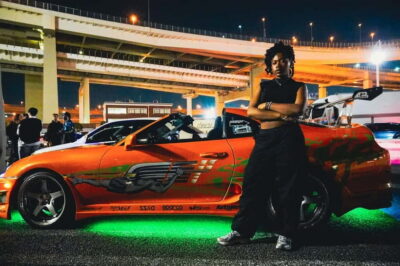
Go Daikoku PA Fast & Furious 3 Sports Car Meetup
Read our review →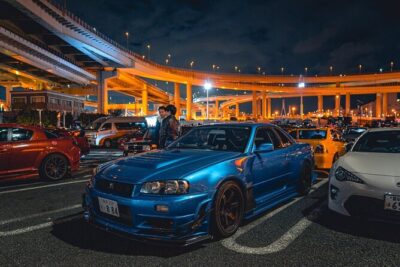
Browse the lists this tour appears in