
Reviewed · MOUNT FUJI DAY TRIPS FROM TOKYO
Tokyo Mt. Fuji Hakone Shrine, Owakudani, Lake Yamanakai Day Tour
Hakone’s volcanic sights give this day trip its spark. You move from the red torii of Hakone Shrine to steaming Owakudani, then on to swans, mountain springs, and possible views of Mount Fuji. I like the range: two lakes, a ropeway, a volcanic valley, and a traditional shrine in one outing. I also like that transport, tolls, fuel, and the ropeway fee are covered.
The catch is the pace. You have about 50 minutes at Owakudani, 20 minutes at Lake Yamanaka, and 40 minutes at Oshino Hakkai, so this is a highlights tour rather than a slow country escape. Fuji views and ropeway rides also depend on weather, and one poor-weather departure included bus travel instead of the cable car.
Key points at a glance
- Five very different stops: Visit Hakone Shrine, the ropeway, Owakudani Valley, Lake Yamanaka, and Oshino Hakkai in one long day.
- Mount Fuji is never guaranteed: Clear weather can reveal Fuji from Lake Ashi, Lake Yamanaka, and Oshino Hakkai, but clouds, rain, and wind can change the day.
- The Hakone Ropeway is included: The scheduled ride from Togendai toward Owakudani takes about 30 minutes, though operations may change in strong wind.
- Black eggs are a local treat: At Owakudani, you can buy the famous eggs at your own cost near the steaming valley.
- Small-group format: The vehicle holds a maximum of 15 people, and at least four people are needed for the tour to run.
- Be ready for extra spending: Lunch, personal purchases, and optional activities are not included.
Why this Tokyo day trip works
At $76.96 per person, this is priced as a transport-heavy day outside Tokyo rather than a private sightseeing experience. That distinction matters. You are paying for a vehicle, fuel, tolls, highway charges, driver service, and the listed ropeway fee, while meals and personal purchases remain yours to cover.
I see good value here if you want to reach several Fuji-area sights without piecing together trains, buses, and local connections. Hakone and the Fuji Five Lakes area are spread out, and this route saves you the effort of planning each leg. The maximum group size of 15 is also more manageable than a large coach.
Still, the price does not buy a relaxed schedule. The total duration is about eight hours and 20 minutes, with the rest of the day taken up by road travel and lunch. You may spend more time looking through a vehicle window than walking. If your ideal day means one shrine, one long meal, and a serious hike, this is not the right shape.
The tour runs daily, but it needs at least four people to proceed. It is commonly booked about a month ahead, so I would not leave it until the last few days if this is your only planned Fuji-area outing.
More Mount Fuji day trips from Tokyo:
- Mt Fuji and Hakone 1-Day Bus Tour Return by Bullet Train
★ 5.0 · 26,383 reviews - Mt Fuji & Hakone Cruise, Drum Show Bullet Train 1 Day from Tokyo
★ 4.0 · 7,413 reviews - Tokyo Mt Fuji 5th St & Hakone Cruise Bus Tour w/Bullet Train
★ 4.4 · 5,024 reviews
Hakone Shrine and the red torii at Lake Ashi
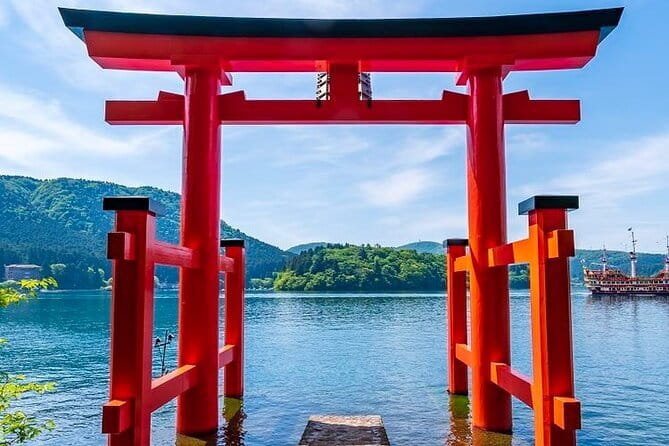
The first major stop gives you around 80 minutes at Hakone Shrine and the Lake Ashi Maritime Torii. That is enough time to see the shrine area, take photographs, and enjoy a short walk, but not enough for a long exploration of every path.
Lake Ashi is a volcanic lake formed about 3,000 years ago on Mount Hakone. Its dark water and wooded mountain setting make a strong contrast with the bright red torii standing at the shore. The gate marks the presence of Hakone Shrine, one of the area’s best-known sights.
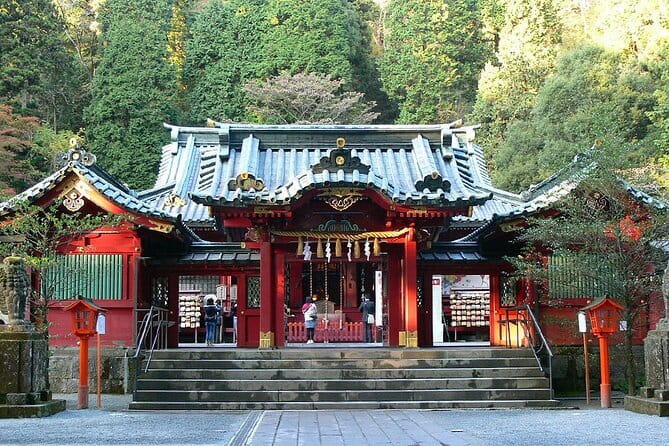
Hakone Shrine was founded in 757 by Manmaki Kamimoto. The mountain had already been linked with sacred traditions, and the shrine later drew worship from figures such as Minamoto Yoritomo and Tokugawa Ieyasu. Today, it is associated with safe travel, fulfilled wishes, love, and protection from misfortune.
I like this opening because it gives the tour a cultural anchor before the volcanic sights take over. You are not simply chasing a Mount Fuji photograph. You get a place tied to mountain worship, military history, and local belief.
The practical issue is timing. The torii is one of the most photographed spots in Hakone, so your 80 minutes can pass quickly if you spend much of it waiting for photos. Keep an eye on the meeting time and do not assume the free time is long enough for every shrine path, lakeside view, and snack stop.
Mount Fuji can sometimes be seen from the Lake Ashi area, but you should treat that as a bonus. Clouds and rain can hide it completely.
The Hakone Ropeway from Togendai toward Owakudani
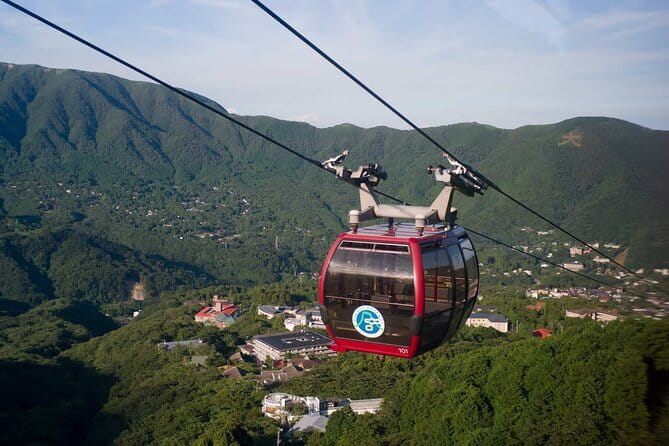
The scheduled Hakone Ropeway section takes about 30 minutes, with the cable car fee included. The ride from the Lake Ashi side toward Owakudani is one of the most scenic parts of the route because you gain height and look across the volcanic area.
The most attractive views are near Owakudani, where the ground opens into a broad volcanic crater zone. On a clear day, the route can also offer views toward Mount Fuji. This is one reason the ropeway is more than simple transportation. It lets you see the scale of the area from above.
Weather can change the plan. Strong wind prevented the cable car from operating on one departure, and the group completed the route by bus instead. That is not a fault you can solve at booking, but it is worth knowing before you build your expectations around the ropeway.
The ride is listed as included, so you should not need to pay separately for the scheduled cable car portion. Optional boat rides or other additions are different matters. If an extra activity is offered, ask clearly what it costs and how it affects the next meeting point. One poor-weather experience involved a boat option that felt difficult to refuse because continuing to the next stop independently would have been awkward.
Owakudani Valley and its black eggs
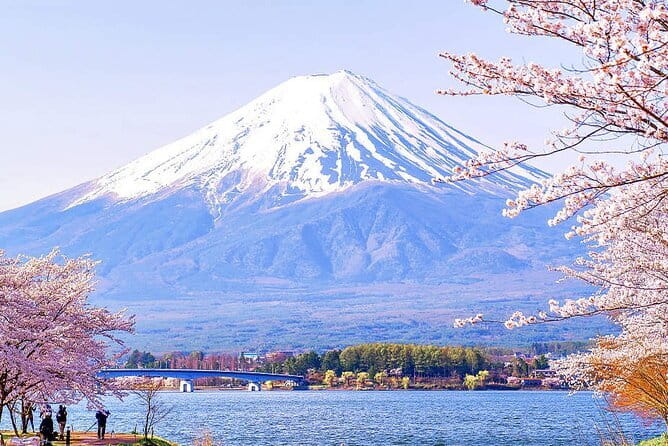
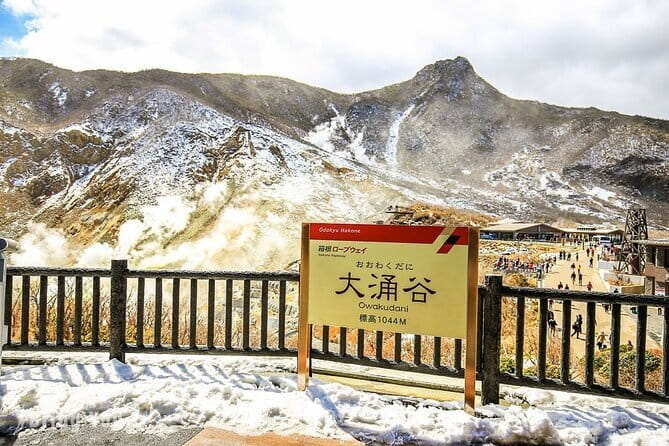
Owakudani is the tour’s most unusual stop. It is a volcanic valley southeast of Mount Fuji, formed in the remains of a crater linked to volcanic activity on Mount Kamiyama. Steam rises from the ground, and the air can carry the sharp smell associated with sulfur.
The area was once known as Big Hell because of its hot, poisonous spring water. It was renamed Owakudani after Emperor Meiji visited the area in 1868. The wider region is promoted as a 4,000-year-old volcanic zone, while the crater remains here are described as forming about 1,000 years ago. Either way, this is a place where you can see and smell active volcanic forces rather than simply read about them.
You get about 50 minutes of free time. A walk from the Nature Research Trail entrance to the main area takes roughly 15 minutes, and Tamago Tea House sits near the spot where smoke rises. The famous food is the black egg, which you buy yourself. It is a simple local snack, but it gives the stop a clear purpose beyond taking photos.
I would wear shoes with a good grip. The route can involve walking on uneven ground, and the volcanic area is better enjoyed when you are not worried about every step. Bring some cash too, since food and personal purchases are not part of the tour price.
The short visit is both a strength and a limit. You see the main volcanic area without committing to a long hike, which suits a full day shared with several other stops. But you will not have time for an extended walk if the site captures your interest.
More Hakone day trips from Tokyo:
- Tokyo: Mt. Fuji Tour, Hakone Ropeway, Owakudani, Lake Ashi
★ 4.7 · 4,002 reviews - Private Tour to Mt. Fuji and Hakone (Fully Licenced Operator)
★ 5.0 · 1,910 reviews - Mt Fuji & Hakone Cruise, Drum Show Bus 1 Day from Tokyo
★ 4.0 · 1,287 reviews - From Tokyo: Mt. Fuji & Hakone Tour w/ Return by Bullet Train
★ 4.2 · 1,278 reviews
Lake Yamanaka and the Shiratori-hama swans
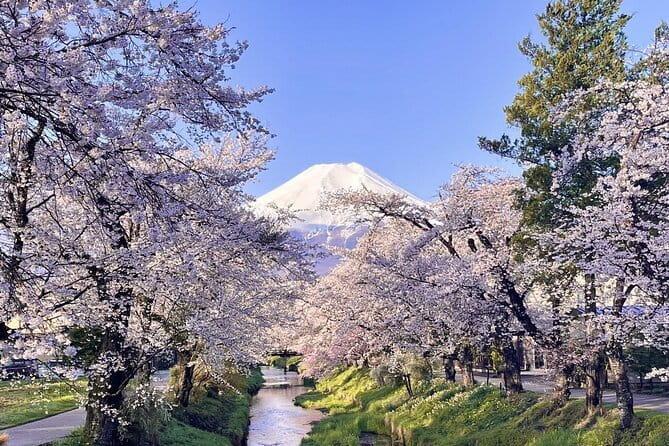
Lake Yamanaka is one of the Fuji Five Lakes and gives you a second chance at a Mount Fuji view. The stop is at Shiratori-hama, a lakeside area known for its swans. You have about 20 minutes here.
The appeal is very direct: frame a swan with Mount Fuji in the background. The birds are accustomed to being fed by people and may come close, making this an easy place for photographs. The stop is short, so you will probably spend most of the time by the shore rather than walking far around the lake.
This is a smart addition to the route. Fuji is a weather-dependent sight, and using two different lake areas improves your chances of seeing it. The catch is that neither location can control clouds, rain, or haze. One departure had poor weather in the morning but still reached several attractive places, including Fuji and cherry trees later in the day.
If the mountain is hidden, the swans and lake still give you something to photograph. I would think of this stop as a quick scenic pause, not a full visit to Lake Yamanaka.
Oshino Hakkai and Mount Fuji spring water
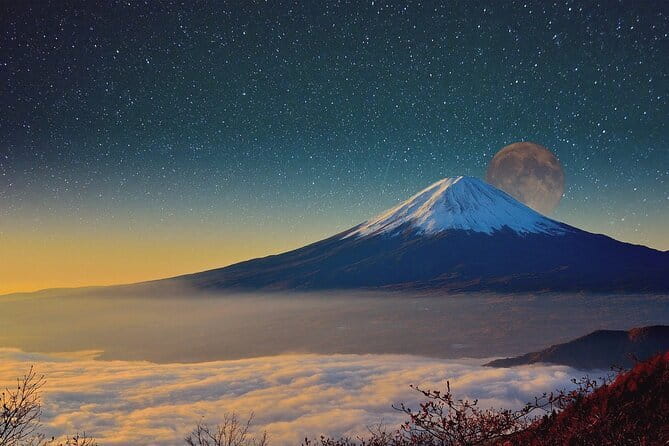
The final listed stop is Oshino Hakkai, where you get about 40 minutes. The name refers to eight springs formed by snowmelt from Mount Fuji filtering through underground layers before reaching the surface.
The water and ponds are the main attraction. On a clear day, the pools can reflect the mountain, and the combination of spring water, traditional surroundings, and Fuji makes this one of the most photogenic stops on the route. Oshino Hakkai is also designated as a national natural monument.
I like the change of mood here. Owakudani is hot, smoky, and visibly volcanic. Oshino Hakkai is calmer, with cold spring water and a closer connection to Fuji’s snowmelt. Together, the two stops explain different sides of the region’s geology.
Forty minutes gives you time to see the key ponds and take photographs, but the stop remains brief. If you want a careful look at all eight springs, a long meal, or a slow walk through the area, you may wish for more time.
Guides, group size, and the day on the road
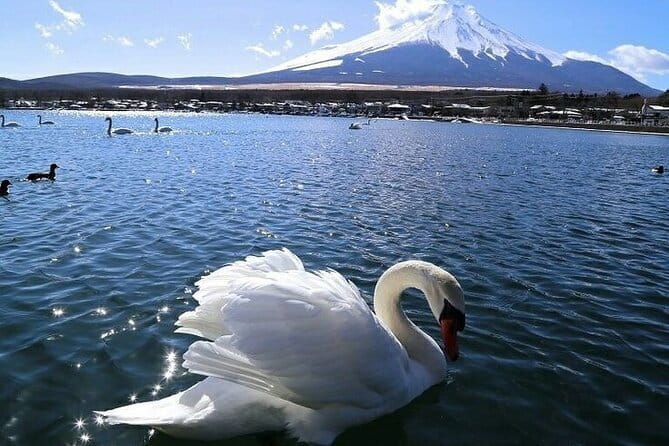
The tour uses a vehicle for the route and allows up to 15 people. That is small enough for a more personal feel, though the experience still depends on how clearly the guide handles meeting times, optional activities, and weather changes.
Guide names associated with departures include Jack, Tom, and Kousei. Jack has been described as friendly, fun, and informative. Tom has also been praised for handling the day well, including a departure affected by strong wind and changing conditions. Kousei is another guide name connected with a warm, helpful experience.
Guide quality matters here because the itinerary moves fast. A guide who explains the shrine, volcano, and springs adds real value. A guide who only points out the next stop leaves you to make sense of the area alone. The available experiences have not all been equal, so I would ask questions if you need detailed cultural or geological commentary.
You will receive a reminder email the night before with the pickup time, vehicle registration number, and guide contact details. Guides do not initiate contact, so read the message carefully and wait at the stated pickup place. If pickup is at a hotel, be outside in advance. Many Japanese hotels cannot let vehicles wait for long.
Do not bring luggage unless you have arranged it clearly when booking. One piece per person is allowed, but an extra charge can apply if you fail to note it or bring more than one piece each. This is designed as a day trip, not a transfer service.
Food, optional extras, and weather planning
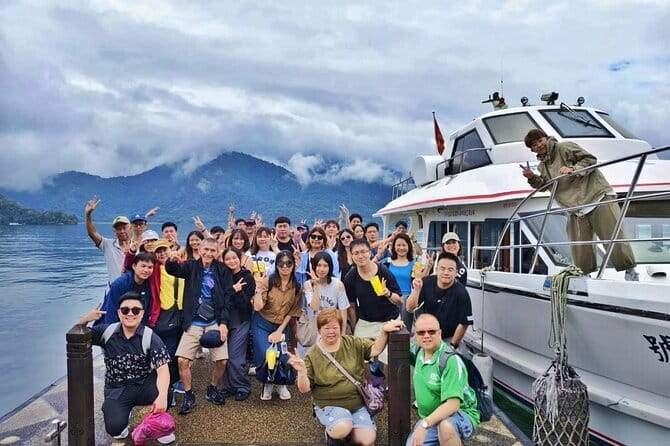
Lunch is not included, and the remaining time in the eight-hour schedule is used for driving and the meal break. Bring money for food, drinks, black eggs, and other personal purchases.
Be cautious with optional boat cruises or add-on activities. The listed route includes the Hakone Ropeway fee, but that does not mean every activity offered during the day is covered. Before agreeing to an extra, ask the price and confirm where you must meet the group afterward.
Weather is the biggest variable. Rain can erase Fuji, while high winds can stop the ropeway. One wet departure produced very limited views, and a different operator allowed a cancellation in similar conditions. This tour’s policy allows a full refund only when you cancel at least 24 hours before the start time. Late cancellation, late arrival, and no-show are non-refundable.
That makes this a better choice for flexible sightseeing than for a single, once-in-a-lifetime Fuji photograph. If the mountain is your main goal, consider the weather forecast and keep a second viewing opportunity in your Japan schedule.
Who should book this tour?
I would choose this trip if you want a practical introduction to Hakone and the Fuji area without arranging several forms of transport yourself. It suits first-time visitors, small groups, and anyone who likes variety more than long walks. Families can also find it workable, with children under three free when they do not occupy a seat, while children over three pay the adult rate.
You should think twice if you dislike fixed schedules, want a long lunch, or need guaranteed access to the ropeway. You may also prefer another option if your main aim is a detailed guided tour, since guide commentary can vary.
Book it for the range of sights and the convenience of the included transport. Skip it if poor weather would ruin the day for you or if you want to explore one area slowly. At this price, the tour makes the most sense as a broad Fuji-area sampler, not a deep visit to Hakone.
FAQ
How long does the tour last?
The tour lasts approximately eight hours and 20 minutes. The remaining time beyond the listed stops is used for driving and lunch.
How much does the tour cost?
The listed price is $76.96 per person.
How many people can join the tour?
The maximum group size is 15 people. At least four people are needed for the tour to proceed.
Is the Hakone Ropeway included?
Yes. The scheduled Hakone Ropeway section from Togendai toward Owakudani is included and takes about 30 minutes.
Are meals included?
No. Lunch, drinks, black eggs, and other personal purchases are paid separately.
Can I bring luggage?
One piece of luggage per person is allowed, but you should clearly note it when booking. An extra charge can apply if you bring more than one piece or fail to register it in advance.
Are young children charged?
Children under three are free if they do not occupy a seat. Children over three are charged as adults.
What is the cancellation policy?
You can cancel for a full refund up to 24 hours before the experience starts. Cancellations or changes made less than 24 hours before departure, as well as late arrival and no-show, are non-refundable.
Newly reviewed around Tokyo
- Tokyo Asakusa:Calligraphy & Make T-shirt Activity★ 5.0 · 62 reviews
- Intercity Shuttle, Tokyo to Haneda /Narita /Yokohama /Makuhari★ 5.0 · 5 reviews
- 1 Hour Travel around Tokyo with a Professional Photographer★ 5.0 · 3 reviews
- Travel Tokyo with Your Own Personal Photographer★ 5.0 · 43 reviews
- Train in Samurai Swordsmanship and Defeat the Demon in Tokyo★ 5.0 · 5 reviews
- Shuttle Van 6hr Tokyo Tour to-and-from Tokyo, Yokohama and Narita★ 5.0 · 9 reviews
- Kickboxing & Body Training with EX-Pro Fighter★ 5.0 · 4 reviews
- Traditional Japanese Knife Sharpening Class★ 5.0 · 18 reviews
Mount Fuji Day Trips from Tokyo, compared.
Mt Fuji and Hakone 1-Day Bus Tour Return by Bullet Train
Read our review →
Mt Fuji & Hakone Cruise, Drum Show Bullet Train 1 Day from Tokyo
Read our review →
Tokyo Mt Fuji 5th St & Hakone Cruise Bus Tour w/Bullet Train
Read our review →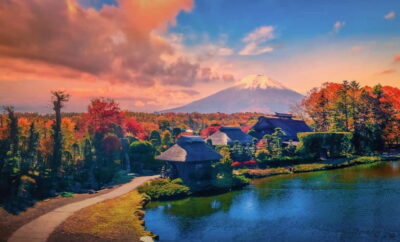
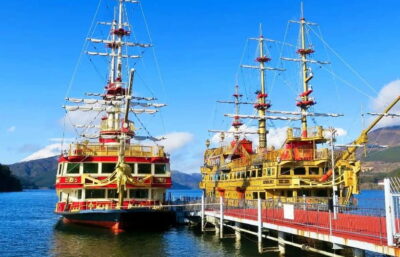
Mt. Fuji Tour, Hakone Ropeway, Owakudani, Lake Ashi
Read our review →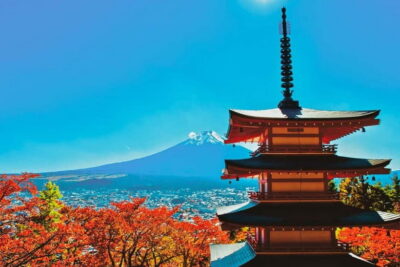
Mt.Fuji,Kawaguchiko Oishi Park,Arakurayama Sengen Park
Read our review →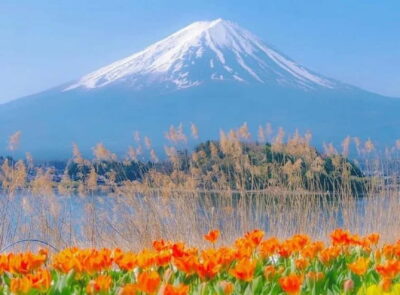
Mt Fuji Top 5 Spots Day Tour: Arakurayama Park,Oshino Hakkai
Read our review →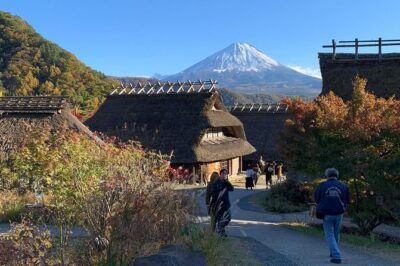
Private Tour to Mt. Fuji and Hakone (Fully Licenced Operator)
Read our review →Browse the lists this tour appears in