
Reviewed · MOUNT FUJI DAY TRIPS FROM TOKYO
Tokyo: Mount Fuji One Day Trip Lake Kawaguchi & Lake Yamanaka
Mount Fuji is the star here, but the real appeal is how many different views you get in one day: calm lakes, flower gardens, spring-fed ponds, a hilltop pagoda, and small-town streets. Lake Kawaguchi and Chureito Pagoda deliver the classic photographs, while Oshino Hakkai adds a more traditional side of the Fuji area.
I like the broad route and the low price. You cover the two best-known Fuji lakes, Oishi Park, a historic shrine, and several easy photo stops without arranging separate buses. Guides such as Taiyo, Yuan, Saki, Lucy, and Kyo have been praised for clear timing, local tips, and helpful photographs. The tradeoff is a long day in a vehicle, a large group, and limited time at each stop.
Key points to know before booking
- Eight stops in about 10 hours: The route packs Lake Kawaguchi, Oishi Park, Lake Yamanaka, Oshino Hakkai, Chureito Pagoda, a shrine, and two street-photo locations into one day.
- Classic Fuji views depend on weather: Clear skies can reveal Mount Fuji from several angles, but the mountain may be hidden on cloudy days.
- The group can reach 45 people: Departure times matter, and meeting the correct vehicle at Tokyo Station may take patience.
- Lunch is not included: Carry cash for food and personal purchases, as one past departure specifically advised.
- The best stops need different kinds of energy: Lake views are easy, but Chureito Pagoda requires a climb to the viewpoint.
- The $58.90 price is mainly for transport and coverage: You pay for an efficient route rather than a slow, deeply narrated cultural tour.
Why this Mount Fuji day trip works
This is a sightseeing sweep, not a quiet retreat. From the Marunouchi meeting point in central Tokyo, you leave at 8:00 am and spend the day moving between the Fuji Five Lakes area and nearby towns. The air-conditioned vehicle saves you from piecing together several train and bus connections, which is the main reason the price makes sense.
The route also gives you variety. Lake Kawaguchi offers open views and a developed lakeside setting. Oshino Hakkai provides ponds and village scenery. Chureito Pagoda gives you the famous postcard composition, with the pagoda, Fujiyoshida, and Mount Fuji lined up when conditions cooperate. The shrine and clock shop add smaller local details between the headline sights.
You should know what this format cannot do. With eight stops and a maximum group size of 45, each visit is short. Most stops last 15 to 25 minutes, with one hour at Oshino Hakkai and one hour at Chureito Pagoda. That is enough for photos and a quick look, but not enough for long walks, careful museum visits, or an unhurried meal.
More Mount Fuji day trips from Tokyo:
- Mt Fuji and Hakone 1-Day Bus Tour Return by Bullet Train
★ 5.0 · 26,383 reviews - Mt Fuji & Hakone Cruise, Drum Show Bullet Train 1 Day from Tokyo
★ 4.0 · 7,413 reviews - Tokyo Mt Fuji 5th St & Hakone Cruise Bus Tour w/Bullet Train
★ 4.4 · 5,024 reviews
Lake Kawaguchi and Oishi Park: your first Fuji views
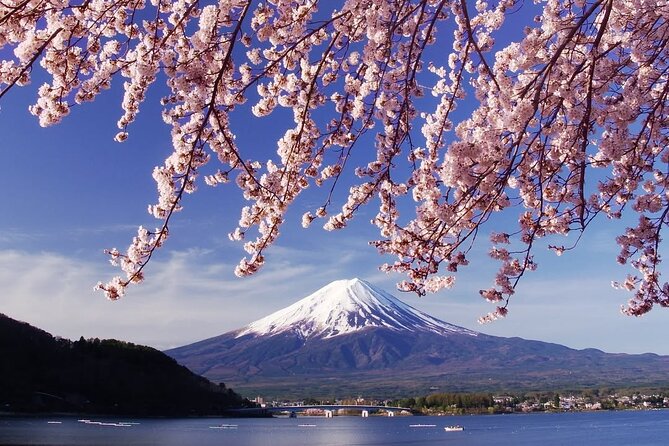
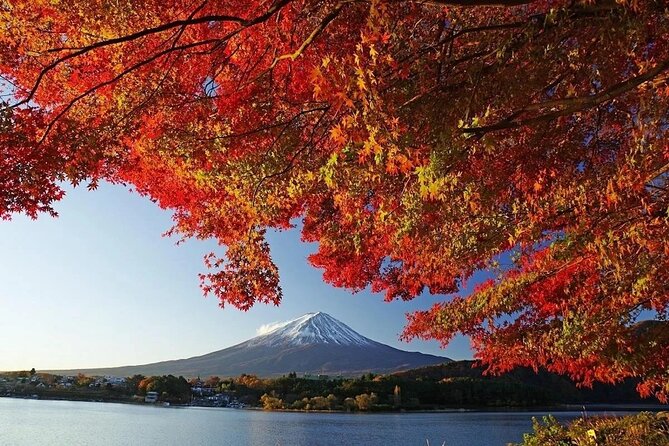
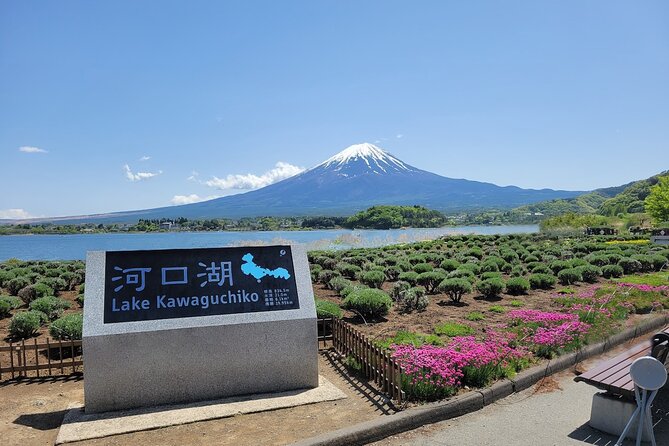
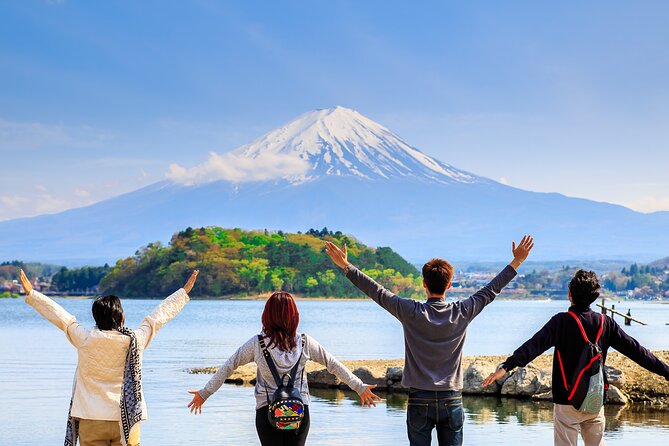
Lake Kawaguchi is usually the main visual event early in the day. It is the most popular of the Fuji Five Lakes and has the longest shoreline among them. From the shore, you may get a broad view of Mount Fuji across the water, especially when the air is clear and the mountain is not covered by clouds.
The planned stop is about 25 minutes. Use that time for the wide view rather than trying to walk far along the shore. If Fuji is visible, take your main mountain photographs here before moving on. If the mountain is hidden, the lake still gives you a pleasant break from Tokyo, but the short visit may feel less rewarding.
Oishi Park follows with another 25-minute stop. The park is known for combining flowers, Lake Kawaguchi, and Mount Fuji in one view. Flowers change with the season, so the exact color and display will vary. The lakeside path is useful for quick photographs and a stretch of the legs, though you should not expect a long garden visit.
I like placing these stops near the start of the day because you get two chances at Fuji before the route moves inland. The drawback is that the schedule leaves little room if you want to linger at the lake or wait for clouds to shift.
Lake Yamanaka, the quieter lake stop
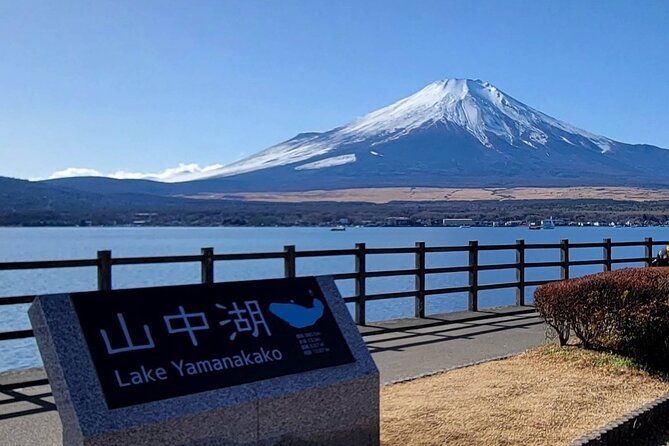
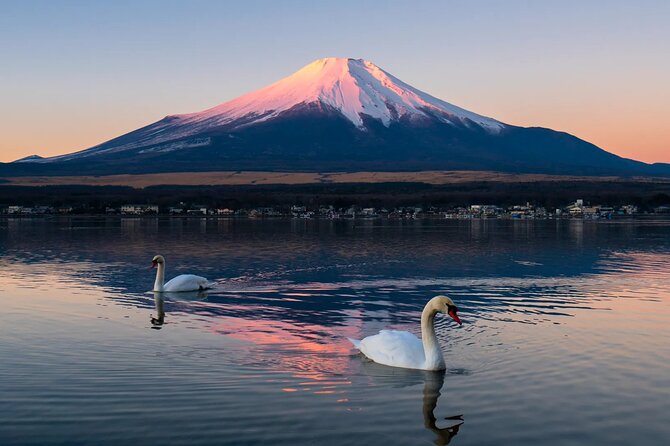
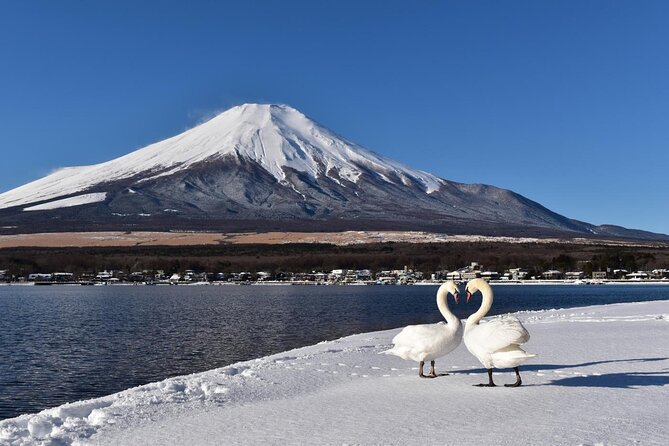
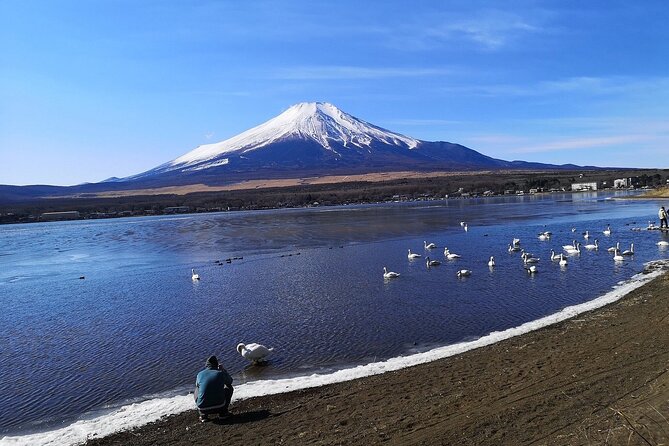
Lake Yamanaka is the largest of the Fuji Five Lakes and the closest to Mount Fuji. It is also known as Swan Lake, a name tied to its setting and local character. You get about 25 minutes here, enough to look across the water, take photographs, and compare the view with Lake Kawaguchi.
This stop helps the day feel less like a single-photo mission. You see Fuji from another side and get a sense of how the lakes surround the mountain. Still, the schedule is tight. If you enjoy slow lakeside walks, you may wish for more time, but the short visit keeps the larger route moving.
The two lake stops also show why weather matters so much. A clear day can make both feel special. On a cloudy day, you may mainly see water, shore, and nearby scenery, with only part of Fuji visible or none at all. The tour does not control the mountain, so book it for the wider Fuji area rather than for a guaranteed peak photograph.
Oshino Hakkai and its eight spring ponds
Oshino Hakkai is the longest stop before the pagoda, with about one hour to explore. This village is known for eight clear spring-water ponds, recognized among Japan’s Top 100 Famous Waters. The site is also a Natural Monument and part of the Mount Fuji World Heritage area.
This is where the day gains its strongest cultural and local flavor. Instead of only looking at the mountain from a distance, you see water, village lanes, ponds, and traditional surroundings connected to Fuji. The clear pools are the focus, but the setting gives you more to notice than a single overlook.
You can use the hour for photographs, a walk through the village, and food or drinks. Lunch is not included, so this is one of the practical places to plan your meal. Bring cash, since a past departure specifically advised it for lunch purchases. Personal spending is also separate from the tour price.
Do not expect a private or empty village experience. Oshino Hakkai is a well-known stop, and the schedule may make the visit feel busy. Even so, the hour gives you more breathing room than the short lake and convenience-store stops.
More Lake Kawaguchiko trips from Tokyo:
- Tokyo:Mt.Fuji,Kawaguchiko Oishi Park,Arakurayama Sengen Park
★ 4.4 · 2,682 reviews - Tokyo: Mt.Fuji & Lake Kawaguchiko 1-Day Bus Tour w/Optional Lunch
★ 4.5 · 839 reviews - Tokyo: Mt. Fuji 5th Station, Kawaguchiko Tour w/ Cable Car
★ 4.5 · 570 reviews - Discover Mt. Fuji 5th Station & Kawaguchiko Sightseeing Day Tour
★ 4.5 · 542 reviews
The Lawson photo stop and Hikawa Clock Shop
The Lawson Fujikawaguchiko Town Hall stop lasts about 15 minutes. Its appeal is unusual: the familiar convenience-store sign and storefront can frame Mount Fuji in a distinctly Japanese town scene. You can also buy ice cream, drinks, or snacks inside.
This is a quick photograph, not a major attraction. I would treat it as a fun visual change rather than a reason to book the trip by itself. Be considerate around the shop and follow the guide’s timing, since the group needs to leave together.
Hikawa Clock Shop offers another street view, with a path leading toward Mount Fuji. The stop lasts about 20 minutes and is built around the contrast between an ordinary Japanese town and the mountain in the distance. It is a good reminder that Fuji is not only a wilderness sight. It appears behind shops, roads, homes, and daily life.
Both stops are short and photograph-focused. If you prefer temples, gardens, or long walks, you may find them less important. If you enjoy recognizable Japan scenes that are easy to capture, they add variety to the route.
Chureito Pagoda and Arakurayama Sengen Park
Chureito Pagoda is the tour’s headline viewpoint for many people. It sits in Arakurayama Sengen Park above Fujiyoshida, with Mount Fuji and the city below. When the weather is clear, the pagoda, mountain, and city create the classic image associated with the Fuji area.
You get about one hour here. That is useful because reaching the viewpoint involves walking uphill and climbing to the pagoda area. The tour details do not give an exact step count or accessibility arrangement, so anyone with a stroller, large luggage, or mobility concerns should notify the operator when booking and ask for current guidance.
The hour allows time for the climb, photographs, and a look around. It is not a long park hike. The path may feel demanding after a full morning of stops, especially if you are trying to keep pace with a large group. Wear comfortable shoes and keep your departure time in mind.
This is the place where weather can make the biggest difference. With Fuji visible, the view can justify the long ride from Tokyo. With heavy cloud, you still have the pagoda and city, but the famous three-part composition is incomplete.
Arakura Fuji Sengen Shrine and Fuji traditions
The Arakura Fuji Sengen Shrine receives about 15 minutes. Built in 705, it has served as the guardian shrine of Arakura Village for more than 1,300 years. It is a place where people seek protection from bad luck and harmony.
The short visit is enough to see the setting and pause after the pagoda, but it is not a full shrine tour. If you care about Japanese religious sites, listen closely to the guide here. A clear explanation can turn a quick stop into something more meaningful than another photograph.
The shrine also balances the modern photo locations on the route. Lawson and Hikawa Clock Shop show present-day town life, while the shrine connects the area to older local customs. That mixture is one of the trip’s better features.
The guide, group size, and pace
The tour uses an English-speaking guide and an air-conditioned vehicle. Past guides associated with the experience include Taiyo, Yuan, Kyo, Saki, and Lucy. Strong guiding makes a real difference here, since the day depends on clear instructions about meeting points and departure times.
Taiyo was praised for keeping the group on schedule and using a WhatsApp group for coordination. Saki was noted for helping with photographs, while other guides were appreciated for clear explanations, local tips, and punctual departures. The quality may vary by guide, but these details show what to value: simple instructions, good time control, and useful context.
The group can include up to 45 people. That is a sizeable coach group, and the Tokyo meeting point can be confusing when several busloads gather at once. Arrive with enough time to identify your group, and pay close attention to the vehicle and guide’s instructions. If you booked separately from relatives or friends, notify the operator at least one day ahead so you can request the same vehicle.
A few practical complaints are worth taking seriously. One departure had a bus with an air-conditioning problem during the first hour or two, and the meeting area felt chaotic. These may not happen on your date, but they show the limits of a budget group tour. You are buying transport and a packed route, not a private car and personal schedule.
Is $58.90 good value?
At $58.90 per person, the price is attractive for a 10-hour trip from Tokyo. The fee includes the vehicle, taxes, and the planned sightseeing route. You do not pay separate admission fees at the listed stops.
The value is strongest if you want to see many Fuji-area highlights in one day without planning regional transport. A private vehicle, separate local buses, or a custom day would cost much more. The tour also protects you from the risk of getting stranded between lakes and smaller sites.
The value is weaker if you want time, privacy, or detailed interpretation. Lunch, snacks, and personal expenses are extra. You also spend much of the day on the road, and each stop has a fixed departure time. Think of the price as an efficient introduction to the Fuji area, not a slow cultural outing.
Who should book this Fuji excursion?
I would choose this trip if you have limited time in Tokyo and want a broad first look at Mount Fuji. It suits photographers, first-time visitors, families who prefer organized transport, and anyone who would rather not manage several regional connections.
It also works well for people who want the famous sights in one sweep: Lake Kawaguchi, Oishi Park, Oshino Hakkai, Chureito Pagoda, and Lake Yamanaka. The English-speaking guide can add useful context, especially when the schedule moves quickly.
I would think twice if you dislike group travel, need flexible meal breaks, or want to spend most of the day in one place. The route is long, the meeting point may be hectic, and the experience depends heavily on clear weather and a well-organized guide.
Final call: book for coverage, not calm
Book this Mount Fuji day trip if your priority is seeing a lot for $58.90. You get two lakes, ponds, a shrine, a pagoda, town streets, and the famous convenience-store photo in roughly 10 hours. The strongest guides, including Taiyo, Saki, Lucy, Yuan, and Kyo, have been praised for keeping the day moving and helping with photographs.
Skip it if you want a quiet Fuji retreat or a deeply narrated cultural tour. The long coach rides, large group, short stops, and weather risk are real. For a first visit from Tokyo, though, the route offers a solid amount of scenery and a practical way to reach places that are awkward to combine on your own.
FAQ
How long does the Mount Fuji day trip last?
The experience lasts about 10 hours and begins at 8:00 am. It ends back at the original meeting point.
Where does the tour start?
The meeting point is STAND TJapan at 100-6590 Tokyo, Chiyoda City, Marunouchi, 1-chōme 5-1, 1F.
Where does the tour end?
The tour ends back at the meeting point in Marunouchi.
What locations are included?
The route includes Lake Kawaguchi, Oishi Park, Lake Yamanaka, Oshino Hakkai, Lawson Fujikawaguchiko Town Hall, Chureito Pagoda, Arakura Fuji Sengen Shrine, and Hikawa Clock Shop.
Is lunch included?
No. Lunch is not included, and personal expenses are separate.
Are admission fees included?
Yes. All fees and taxes are included in the tour price.
Is transportation provided?
Yes. Transportation is provided in an air-conditioned vehicle.
How large can the group be?
The activity can have a maximum of 45 travelers.
Can I bring a stroller or large luggage?
You should indicate at booking if you are traveling with a stroller or large luggage.
What is the cancellation policy?
You can cancel up to 24 hours before the experience starts for a full refund. Cancellations or changes made less than 24 hours before the start time are not accepted for a refund.
More 1 Day Tours in Tokyo
- 1-Day Tokyo Bus Tour
★ 5.0 · 14,250 reviews - Tokyo: DisneySea 1-Day Passport
★ 4.5 · 2,726 reviews - Tokyo Disneyland 1-Day Passport
★ 4.6 · 2,512 reviews - Tokyo Customized Private Tour (Must See Places in 1 Day)
★ 5.0 · 1,499 reviews
Newly reviewed around Tokyo
- Tokyo Asakusa:Calligraphy & Make T-shirt Activity★ 5.0 · 62 reviews
- Intercity Shuttle, Tokyo to Haneda /Narita /Yokohama /Makuhari★ 5.0 · 5 reviews
- 1 Hour Travel around Tokyo with a Professional Photographer★ 5.0 · 3 reviews
- Travel Tokyo with Your Own Personal Photographer★ 5.0 · 43 reviews
- Train in Samurai Swordsmanship and Defeat the Demon in Tokyo★ 5.0 · 5 reviews
- Shuttle Van 6hr Tokyo Tour to-and-from Tokyo, Yokohama and Narita★ 5.0 · 9 reviews
- Kickboxing & Body Training with EX-Pro Fighter★ 5.0 · 4 reviews
- Traditional Japanese Knife Sharpening Class★ 5.0 · 18 reviews
Mount Fuji Day Trips from Tokyo, compared.
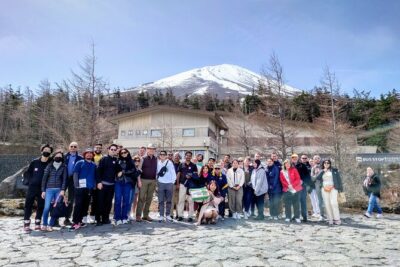
Mt Fuji and Hakone 1-Day Bus Tour Return by Bullet Train
Read our review →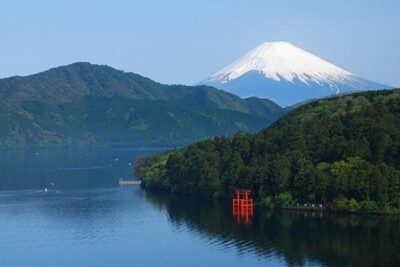
Mt Fuji & Hakone Cruise, Drum Show Bullet Train 1 Day from Tokyo
Read our review →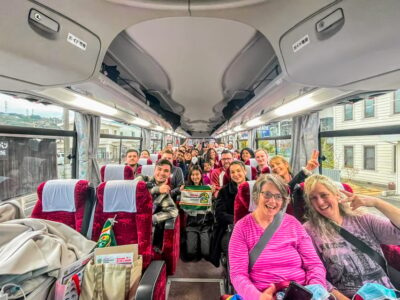
Tokyo Mt Fuji 5th St & Hakone Cruise Bus Tour w/Bullet Train
Read our review →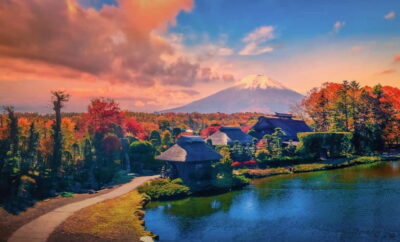
Mt. Fuji Tour, Hakone Ropeway, Owakudani, Lake Ashi
Read our review →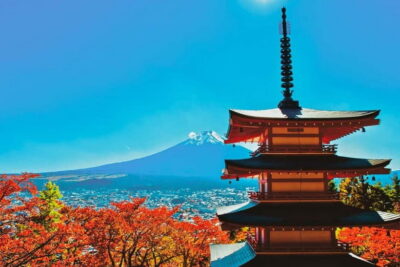
Mt.Fuji,Kawaguchiko Oishi Park,Arakurayama Sengen Park
Read our review →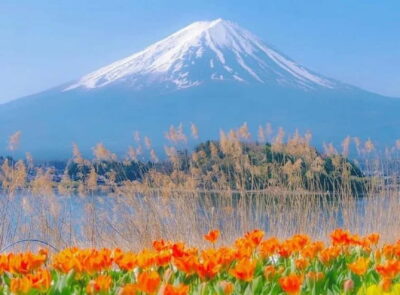
Mt Fuji Top 5 Spots Day Tour: Arakurayama Park,Oshino Hakkai
Read our review →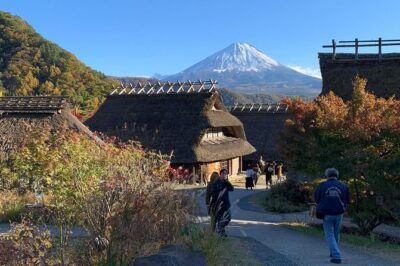
Private Tour to Mt. Fuji and Hakone (Fully Licenced Operator)
Read our review →Browse the lists this tour appears in