
Reviewed · TOKYO SUMO EXPERIENCES
Tokyo: Grand Sumo May Tournament
The best part of this experience is that it turns a sumo match into a cultural lesson. You do not simply find your seat and wonder why wrestlers toss salt, stamp their feet, or spend so long staring each other down. Your guide explains the rituals, rankings, history, and action as the tournament unfolds.
I like the Ryogoku walking tour, which can take you past sumo stables, shrines, and local landmarks before the match. I also like the live commentary through personal earphones, since sumo is much easier to follow when someone explains the rules and wrestlers in real time.
The main caution is value. At $198.20 per person, you are paying well above the face value of a tournament ticket. That extra cost can be worthwhile if tickets are sold out or you want a guide, but a quiet guide or an assigned seat far away may leave you wishing you had gone alone.
Key points to know before booking
- The day begins around 1 p.m. in Ryogoku, with an optional two-hour walk through Tokyo’s sumo district.
- The tournament portion runs from about 3 to 6 p.m. at Ryogoku Kokugikan, with arena access included.
- Live explanations make the bouts easier to follow, using headsets for groups of three or more.
- Chair B or C seats are available as an option, a practical choice if you do not want to sit on a floor cushion.
- Chanko-nabe dinner is optional, and drinks cost extra.
- Booking early matters, since popular tournament days can sell out quickly.
Why the May tournament is worth seeing in person
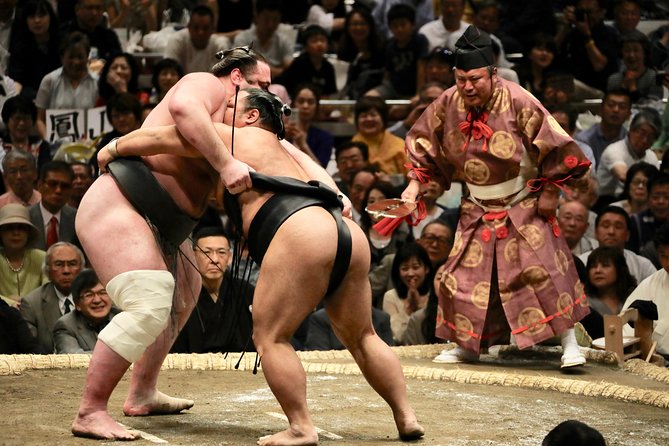
Sumo is not just a series of short wrestling matches. It is ceremony, rank, costume, movement, and crowd response packed into one afternoon. The actual bouts can last only seconds, yet the buildup matters just as much: the wrestlers enter, face one another, perform ritual movements, and prepare the ring before the charge.
The May Grand Sumo Tournament takes place at Ryogoku Kokugikan, Tokyo’s main sumo arena. This is the heart of Ryogoku, a district where sumo is part of the local identity. The setting gives the afternoon more weight than watching a match on television.
You will see bouts by wrestlers from several divisions, including the top-ranked competitors and grand champions. The upper divisions are preceded by formal ring-entering ceremonies, and the atmosphere grows more intense as the afternoon moves toward the highest-ranked wrestlers.
I especially recommend this tour if sumo is new to you. Without guidance, the ceremony can seem slow and the rules can be hard to read from a distance. A good guide gives each moment a reason, from the wrestler’s rank to the meaning of the movements in the ring.
More Tokyo sumo experiences:
- Tokyo: Sumo Show and Dining Experience
★ 4.8 · 2,742 reviews - the SUMO show
★ 5.0 · 1,960 reviews - Tokyo Shinjuku Sumo Show & Experience with Photo
★ 5.0 · 1,750 reviews
Starting in Ryogoku from 1 to 3 p.m.
The first two hours are designed to prepare you for the arena. The walk is optional, so you may choose a shorter package that focuses on the tournament, but I think the neighborhood portion adds useful context.
Ryogoku is known as Tokyo’s sumo town. The route can include sumo-related landmarks, a sumo stable seen from the outside, and a shrine connected with sumo. One guide, Ken, was noted for taking the group to a sumo stable and a sumo shrine near the Kokugikan, where he even sang a sumo song and shared local lore.
Do not expect to enter a stable or watch a training session. The information provided describes exterior visits and historical sights. Still, seeing where wrestlers train and live helps connect the sport to the neighborhood rather than treating the tournament as an isolated event.
Your guide can also explain the ranking system, the role of the grand champions, and the basic structure of a tournament day. That preparation pays off once you enter the arena. You will recognize more names and understand why certain bouts attract more attention.
The walking portion is also the most active part of the afternoon. Wear comfortable shoes and allow time to walk between sights. The meeting point is in Ryogoku, near public transportation, but hotel pickup and drop-off are not included.
Inside Ryogoku Kokugikan from 3 to 6 p.m.
The arena visit begins with more than simply finding your seat. The guide can lead you around the building to see large murals, championship prizes, the sumo museum, paintings, and photographs of past yokozuna, the sport’s grand champions.
This short tour of the building helps you understand the scale and tradition of sumo. Championship prizes can be especially interesting because they show how much attention surrounds the top division. The museum and photographs add faces and stories to the names you will hear during the bouts.
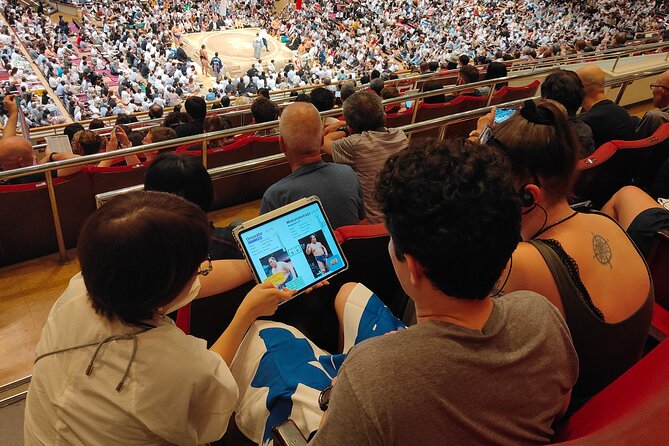
The tournament viewing is the main event. Your guide provides real-time commentary, generally through personal earphones. For groups of three or more, headsets are supplied so you can hear clearly even when the guide is some distance away.
That arrangement is useful, but it is worth understanding how it works. You may not sit directly beside the guide for the entire tournament. Some people have found it helpful to ask questions throughout the bouts, while others have wanted more spontaneous explanation. If you prefer constant conversation, ask questions early and often.
The strongest guides make the afternoon easy to follow. Yoko, Aki, Ali, Yasu, and Ichirio are among the guides praised for explaining sumo history, rules, rituals, and individual wrestlers in clear English. Guide quality can vary, so the experience depends heavily on who leads your group.
The listed maximum is 35 people. That is larger than the phrase private tour might suggest, so check the exact option and group arrangement when booking. The guide-led format can still provide useful help, but it is not the same as a one-to-one private lesson.
Choosing between chair seats and floor box seats
The seating choice matters more than many first-time visitors expect. Chair B or C seats are on the balcony and let you sit in a regular chair throughout the event.
The alternative is a first-floor box arrangement. These boxes use a flat floor area measuring about 1.3 meters by 1.3 meters, with cushions for four people. That setup is part of traditional sumo viewing, but it may not suit anyone who has trouble sitting on the floor for several hours.
I would choose the chair option unless the floor seating is a major part of your interest. You still see the tournament and enjoy the arena atmosphere, while the chair gives you a more comfortable base for the afternoon. The exact view depends on whether you receive chair B or C, so check the seating map shown with the booking options.
The phrase good seats should be treated carefully. Some people have been pleased with their second-floor seats, while others expected to be much closer to the ring. Your ticket includes entry, but the price does not guarantee a ringside view.
A completely different kind of day in Tokyo:
- Mt Fuji and Hakone 1-Day Bus Tour Return by Bullet Train
★ 5.0 · 26,383 reviews - 1-Day Tokyo Bus Tour
★ 5.0 · 14,250 reviews - Tokyo: teamLab Planets TOKYO Digital Art Museum Entry Ticket
★ 4.6 · 9,779 reviews - Mt Fuji & Hakone Cruise, Drum Show Bullet Train 1 Day from Tokyo
★ 4.0 · 7,413 reviews
What the guide adds during the bouts
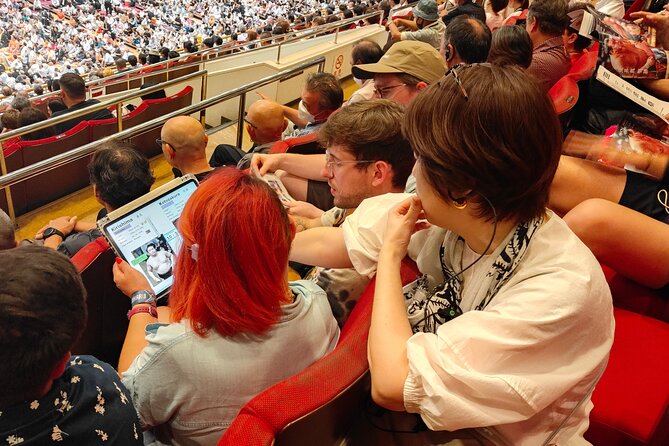
Sumo has a simple basic goal, push or throw the opponent outside the ring, but the sport has layers that are easy to miss. Rank affects attention, ceremony, and the stakes of each bout. The pre-match movements are not filler. They are part of the formal structure of the sport.
A guide can point out the wrestlers you should watch, explain why a bout matters, and tell you what happened when a decision is too quick to understand. You can also ask about the wrestlers’ profiles and rankings using the information package provided with the tour.
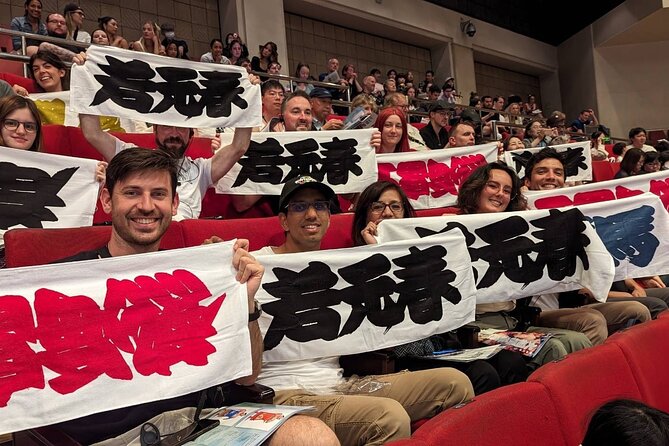
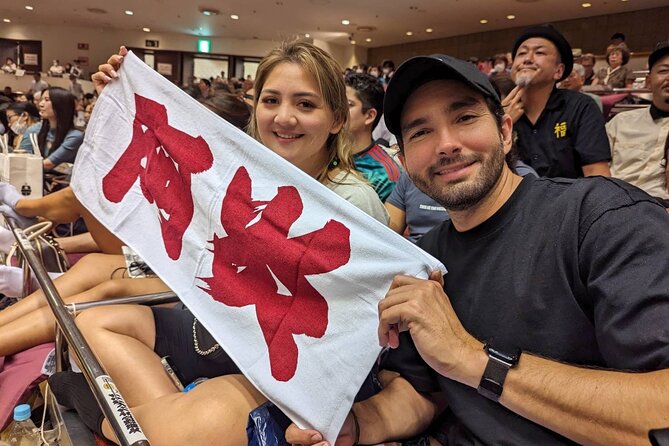
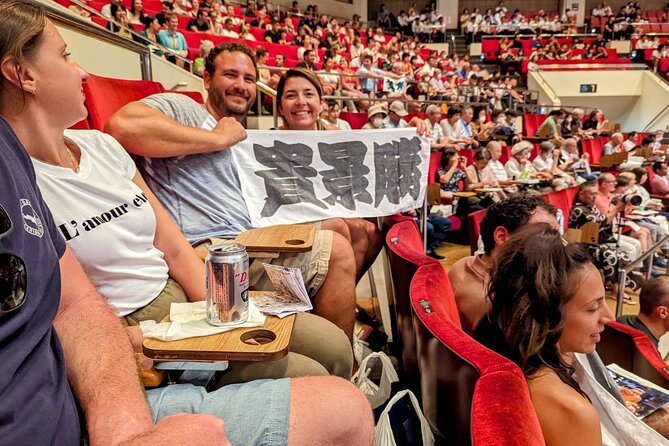
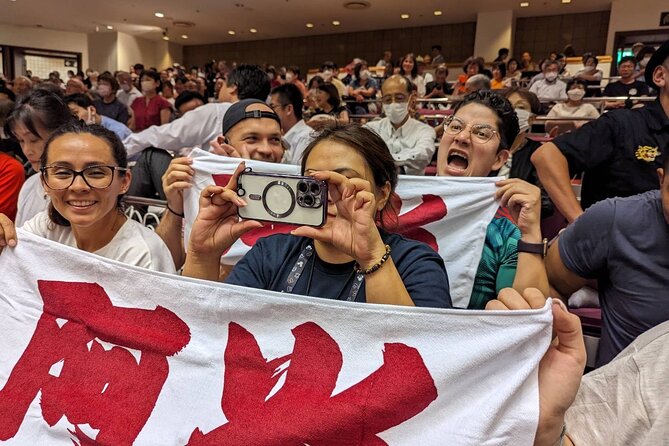
The cheer-up goods are a small but enjoyable touch. You receive materials to support a particular wrestler, adding a simple way to join the crowd rather than watching as a detached outsider.
Still, do not assume the guide will narrate every second. One low-rated experience came from a participant who found the guide too quiet and had to ask many questions. That is useful advice: treat the guide as a resource and speak up when you want more detail.
Chanko-nabe dinner after the tournament
The optional dinner begins around 6 p.m. and lasts about an hour. Your guide takes you to a chanko-nabe restaurant near the arena, so you do not need to make a second long trip after the final bouts.
Chanko-nabe is the hot-pot dish associated with sumo wrestlers. It is filling and designed around the hearty eating habits that help wrestlers build size and strength. The meal gives the day a fitting finish, especially if you want to connect the sport with the daily life of its athletes.
The dinner is not included in every version of the experience, so check your selected option. Drinks are not included and must be ordered separately.
You should also consider your food preferences. One meal included plenty of fish mixed into the hot pot, which may be important if you do not eat fish. The available information does not promise a particular menu or substitutions, so ask before booking if you have dietary restrictions.
The dinner can be convenient because the food may be ready when you arrive, with no long wait after the tournament. It also provides a relaxed chance to continue asking questions, though the main value of the tour comes from the guide and arena access rather than the meal itself.
Is $198.20 a fair price?
At $198.20 per person, this is a premium way to attend sumo. The ticket itself may be much cheaper, and one participant calculated a large difference between the tour price and the ticket’s approximate value.
That criticism is fair. If you can buy a ticket directly, know the rules, and feel comfortable finding your way around Ryogoku Kokugikan, going alone will cost less. The tour is not the best choice for a budget-minded sumo fan who only wants to watch the matches.
The value changes when tickets are hard to obtain. Grand tournament tickets can sell quickly, and this experience is often booked about 41 days ahead. If the tour is your practical way into a sold-out tournament, the higher price may be easier to justify.
You are also paying for several services: an English-speaking sumo guide, the neighborhood walk, arena orientation, commentary, a tournament information packet, wrestler profiles, and cheering items. Add the dinner only if those extras appeal to you.
My advice is simple. Compare the price with the cost and difficulty of finding a ticket independently. Then ask yourself how much you want interpretation. For a first visit, the guide can make the difference between an afternoon of puzzling rituals and an afternoon you understand.
Who will get the most from this experience?
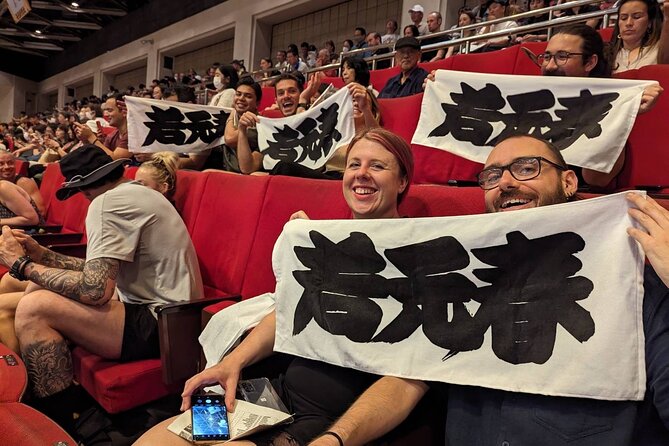
This tour suits first-time sumo spectators, sports fans, and anyone interested in Japanese customs beyond temples and shopping. It is also a good fit for couples or families who want a clear schedule and help navigating the arena.
You will get the most from it if you enjoy asking questions and want cultural background. The experience is less useful if you already follow sumo closely, speak Japanese, or have no trouble buying tickets and arranging your own visit.
The walking route requires some time on your feet, but most travelers can participate. Public transportation is nearby, and the meeting point is in Ryogoku. Since there is no hotel pickup, plan your route to the meeting point before the 1 p.m. start.
Book early if the date matters. The experience accepts mobile tickets, confirmation is provided at booking, and free cancellation is available up to 24 hours before the start time. Changes or cancellations inside that window are not accepted for a refund.
Should you book the May sumo tour?
Book it if you want more than a seat. The strongest reason to choose this experience is the combination of a Ryogoku walk, arena orientation, and live explanations during the tournament. The guides named in the feedback, including Yoko, Aki, Ken, Ali, Yasu, and Ichirio, have been praised for making the sport easier to understand.
Skip it if you are mainly looking for the lowest price. A direct ticket may be better value, especially if you already know sumo and can manage the arena on your own.
For most first-time visitors who can accept the premium, I would choose the chair-seat option and add the neighborhood walk. Add chanko-nabe if you want a full sumo-themed afternoon, but check the fish content first. This is a good cultural outing, but its success depends on receiving an engaged guide and understanding that the fee buys access, explanation, and convenience, not a guaranteed ringside seat.
FAQ
Where does the sumo tour take place?
The experience takes place in Ryogoku, Tokyo, with the tournament held at Ryogoku Kokugikan.
What time does the tour begin?
The optional Ryogoku history and landmark walk runs from about 1 p.m. to 3 p.m. Arena viewing follows from about 3 p.m. to 6 p.m.
Is the walking tour required?
No. The landmark and history portion is optional, and the experience comes in several combinations involving the walk, arena viewing, dinner, and seating type.
Is the tournament ticket included?
Yes. Admission to Ryogoku Kokugikan is included for the arena portion of the experience.
Is the guide English-speaking?
Yes. Guiding is provided in English by a sumo expert guide.
Are headsets provided?
For groups of three or more, headsets are provided so you can hear the guide clearly from a distance.
What kind of seats are available?
The chair option uses balcony chair seats in section B or C. Another option uses first-floor box seating on a flat floor with cushions.
Is chanko-nabe dinner included?
Dinner is optional. Drinks are not included and must be ordered separately.
Can I cancel for a full refund?
Yes, if you cancel at least 24 hours before the experience start time. Cancellations or changes made less than 24 hours before the start are not refunded or accepted.
Newly reviewed around Tokyo
- Tokyo Asakusa:Calligraphy & Make T-shirt Activity★ 5.0 · 62 reviews
- Intercity Shuttle, Tokyo to Haneda /Narita /Yokohama /Makuhari★ 5.0 · 5 reviews
- 1 Hour Travel around Tokyo with a Professional Photographer★ 5.0 · 3 reviews
- Travel Tokyo with Your Own Personal Photographer★ 5.0 · 43 reviews
- Train in Samurai Swordsmanship and Defeat the Demon in Tokyo★ 5.0 · 5 reviews
- Shuttle Van 6hr Tokyo Tour to-and-from Tokyo, Yokohama and Narita★ 5.0 · 9 reviews
- Kickboxing & Body Training with EX-Pro Fighter★ 5.0 · 4 reviews
- Traditional Japanese Knife Sharpening Class★ 5.0 · 18 reviews
Tokyo Sumo Experiences, compared.
Tokyo Shinjuku Sumo Show & Experience with Photo
Read our review →
Luxury Sumo Show Experience & Japanese cuisine & Drink
Read our review →
Tokyo Sumo Experience: Chanko & Mochi with a Former Pro
Read our review →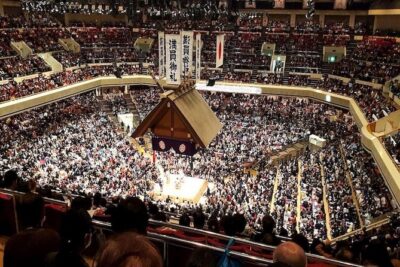
Ultimate Sumo Tournament: Tokyo, Osaka, Nagoya, Fukuoka
Read our review →Browse the lists this tour appears in