
Reviewed · TOKYO BIKE TOURS
Tokyo: 3-Hour E-Bike Tour of the City’s Riverside Areas
Tokyo looks different from a bicycle. This three-hour ride links Ginza and Tsukiji with quieter riverside neighborhoods, gardens, shrines, and temples that are awkward to reach by sightseeing bus. You get a useful mix of famous sights and ordinary Tokyo streets.
I like the small group, limited to eight, and the electric bikes, which make the ride workable for casual cyclists. I also like the route’s local flavor: a fish-market visit, Tsukishima’s Monja Street, and the peaceful Kiyosumi Gardens. The main drawback is a short stretch through Ginza traffic, which can feel less relaxed than the rest of the ride.
Key points
- Three-hour route across eastern Tokyo: Start at Hibiya Park and finish near Fukagawa Fudō-dō.
- Electric bikes included: Each bike has a basket for a small bag, plus bike insurance.
- Eight-person maximum: A compact group makes it easier to follow the guide and manage city riding.
- A useful mix of sights: See Kabuki-za, Tsukiji Hongan-ji, Tsukiji Outer Market, shrines, gardens, and temples.
- Kiyosumi Gardens entry included: You do not need to pay an extra entrance fee for this stop.
- Good for independent-minded visitors: The bicycle reaches older streets and quieter areas that buses can miss.
Tokyo by bicycle, from Hibiya Park to the waterways
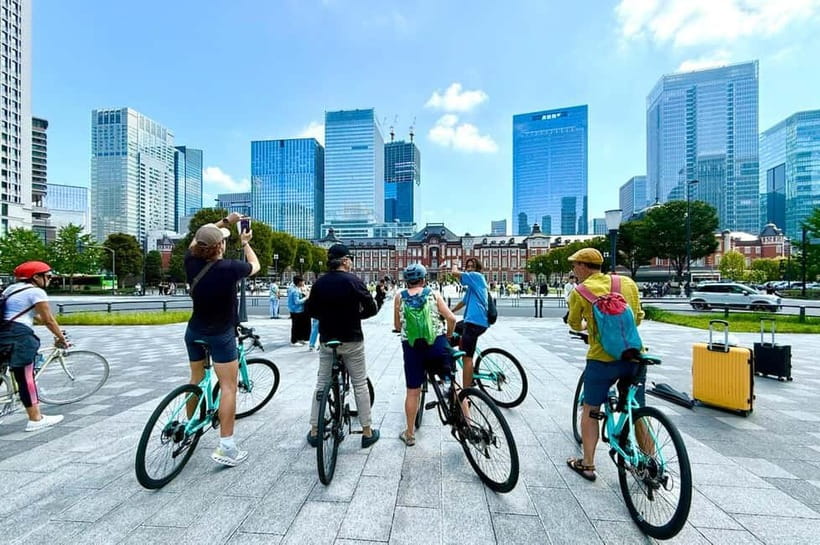
The tour begins beside the kiosk in Hibiya Park, at 1-3 Hibiyakōen. You should arrive about 10 minutes early. That small buffer matters in Tokyo, where crossing a large park or finding the correct meeting point can take longer than expected.
From here, the route heads toward central Tokyo. The electric bicycle gives you assistance rather than removing the effort altogether, so you still pedal and stay active. Bring water, wear comfortable shoes, and choose clothes that work for three hours in the saddle. Sunglasses and sunscreen are sensible additions.
The group size is one of the tour’s strongest practical features. With no more than eight participants, you are less likely to lose sight of the guide at turns or wait through long stop-and-go movements. The guide speaks English or Japanese, and local guides have included Nooki, Casey, Naoki, and Show.
More Tokyo bike tours:
- Tokyo Great Cycling Tour
★ 5.0 · 811 reviews - Tokyo Top Highlights 3h Guided E-bike Tour
★ 5.0 · 714 reviews - 3h Tokyo E-Bike Tour: Hidden Gems, and Local Life with guide
★ 5.0 · 670 reviews
Ginza and Kabuki-za: a brief taste of central Tokyo
Ginza is the first major stop, with about 10 minutes for a guided visit and photos. This is Tokyo’s polished shopping district, known for grand storefronts, department stores, and broad streets. The short stop gives you a look at central Tokyo without turning the tour into a long shopping break.
The riding here is the part to take seriously. A French rider described one section through Ginza as a little difficult because of the traffic, while noting that most of the route uses calmer streets. You should stay alert, follow the guide’s directions, and avoid treating this as a carefree park ride.
The next stop is Kabuki-za, the famous theater associated with kabuki performance. You get another 10-minute guided visit and photo stop. Even if you are not attending a show, the theater gives the route a clear connection to Japanese performing arts and old Tokyo traditions.
These opening stops work best as orientation points. You see the busy commercial center, then move toward areas where the pace changes. If your main goal is extensive sightseeing inside Ginza or a full theater visit, this tour does not allow enough time for that.
Tsukiji Hongan-ji and the Outer Market
Tsukiji Hongan-ji receives about 15 minutes. The temple’s unusual appearance makes it a worthwhile stop, especially after the modern streets of Ginza. Your guide provides context and points out details before you continue toward the market area.
The Tsukiji Outer Market gets a longer 20-minute stop. This is one of the most useful parts of the tour because it adds food culture to the cycling and sightseeing. You can look around the market and, depending on your timing and choices, buy a snack. Food and drinks are not included, so bring money if you want to taste something.
A bicycle is practical here because the market sits within a wider route rather than being your only destination. You get a short introduction instead of spending half a day among the stalls. The tradeoff is that 20 minutes passes quickly. You will need to choose between browsing, taking photos, and eating.
The market stop also shows why this route can be more useful than a bus tour. A bus can take you close to major districts, but a bicycle connects them at street level. You notice the changes between commercial avenues, temple grounds, food streets, and residential areas.
Monja Street and Sumiyoshi Jinja
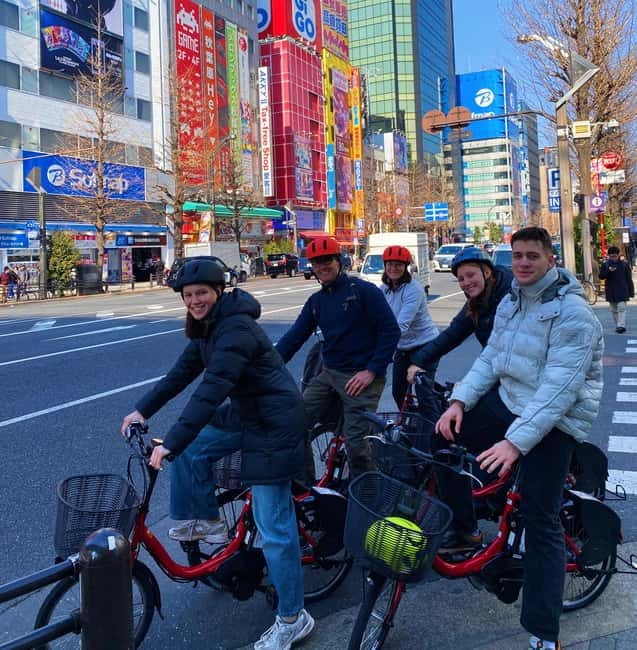
The route continues to Tsukishima Monja Street for roughly 10 minutes. Monjayaki is a local Tokyo specialty associated with Tsukishima, and the street gives you a quick introduction to that food tradition. The schedule allows a photo stop and explanation rather than a sit-down meal, so plan your expectations accordingly.
If you want to eat a full monjayaki meal, you would need to return later on your own. That is not a flaw in a three-hour bicycle tour, but it is worth knowing before you book. This stop is about seeing the area and learning why it matters, not about a long restaurant visit.
Sumiyoshi Jinja follows, also with about 10 minutes. The shrine offers a quieter pause and a chance to see a different side of Tokyo’s religious life. You can expect a short visit led by your guide, with time for photos and local background.
The route’s variety is its main strength here. In less than two hours, you move from high-end Ginza to a theater, a Buddhist temple, a food market, a local food street, and a Shinto shrine. That range gives you a better sense of Tokyo than a route built only around headline attractions.
A completely different kind of day in Tokyo:
- Mt Fuji and Hakone 1-Day Bus Tour Return by Bullet Train
★ 5.0 · 26,383 reviews - 1-Day Tokyo Bus Tour
★ 5.0 · 14,250 reviews - Tokyo: teamLab Planets TOKYO Digital Art Museum Entry Ticket
★ 4.6 · 9,779 reviews - Mt Fuji & Hakone Cruise, Drum Show Bullet Train 1 Day from Tokyo
★ 4.0 · 7,413 reviews
Kiyosumi Gardens: the tour’s calmest stop
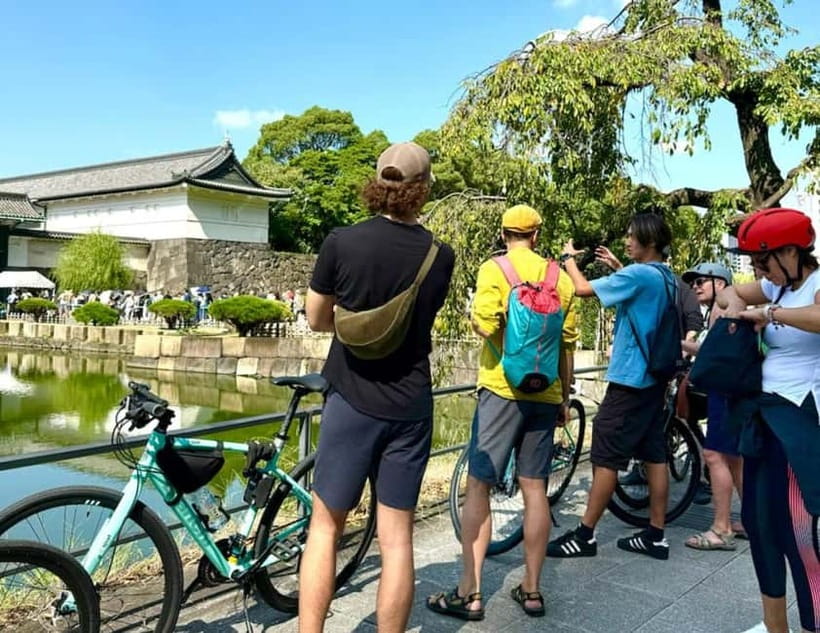
Kiyosumi Gardens receives the longest stop, about 25 minutes, and admission is included. This is the point where the ride slows down. You leave the bicycle route briefly to look around a formal Japanese garden, making it a good counterweight to the traffic and market activity earlier in the day.
The garden is valuable not just for its beauty, but for the change in pace. You get time to walk, look carefully, and listen to the guide without watching the road. If you enjoy gardens, this may be the most rewarding stop on the route.
Twenty-five minutes is enough for an introduction, but not enough for an unhurried garden visit. You will see the main character of the place rather than explore every corner. The included admission keeps the stop simple, and you do not need to decide if an extra ticket is worth buying.
This is also where the e-bike format makes sense. Instead of spending the whole tour pedaling between famous central addresses, you have a proper pause at a place that rewards attention. Bring water, especially in warm weather, since the ride combines outdoor cycling with walking stops.
Fukagawa Fudō-dō and the finish
The final stop is Naritasan Fukagawa Fudōdō, also called Fukagawa Fudō-dō, the Tokyo branch temple of Naritasan. The visit lasts about 20 minutes, giving you a final look at Buddhist practice and temple culture.
The tour ends here, so you can decide if you want to enter the temple. Entry is optional and costs ¥1,000 per person, payable in cash. That fee is not included, and you do not need to enter if you prefer to finish outside.
This arrangement is useful because it leaves the choice with you. If you are tired after the ride or have another appointment, you can end the experience without paying more. If the temple interests you, you have the option to continue inside after the guided portion.
The finishing point also makes the ride feel like a crossing of Tokyo rather than a loop around one neighborhood. You begin in Hibiya and central Tokyo, then finish in the Fukagawa area, after passing through old market districts, waterways, gardens, and religious sites.
What the electric bike changes
The bikes are described as high-quality road bikes with electric assistance and a basket for your bag. Bike insurance is included. You still need to know how to ride a bicycle, and the tour is not suitable for anyone who cannot cycle.
The electric motor is helpful for a route that includes several districts and three hours outdoors. It can make the experience more comfortable for a casual rider traveling with stronger cyclists. You should not assume the motor removes all physical demands, though. You will be riding in city streets, stopping, starting, and handling the bicycle around other road users.
The tour is not suitable for children under 12, pregnant women, or people with back problems. Comfortable shoes and clothes are required, and water is strongly recommended. Smoking, alcohol, drugs, and littering are not allowed.
I would choose this tour early in a Tokyo visit if I wanted to understand the city’s layout. It can also work later in a trip, when you have already seen the major sights and want a different set of neighborhoods. One rider who had spent five days in Tokyo still found new places on the route, which is a good sign for repeat visitors.
How much value do you get for $78?
At $78 per person, this is not the cheapest way to see Tokyo. You are paying for the electric bicycle, a three-hour guided route, a small group, bike insurance, local interpretation, and entry to Kiyosumi Gardens.
The value depends on how you would otherwise explore these areas. If you plan to visit only one market, one temple, or one garden, public transport will cost less and give you more time at each place. But building this same route yourself would require several train or subway connections, walking between stops, and a fair amount of map checking.
The guide is the main reason to pay the higher price. You are not simply renting a bicycle. You get stories and explanations as you move between places, plus help navigating a route that connects several districts. The small group matters too, since city cycling is easier when you can stay close to the person leading you.
The market snacks are extra, and the ¥1,000 temple admission is optional. Keep those costs in mind, but they do not change the main value calculation. For an active introduction to eastern Tokyo, $78 is reasonable. For a visitor who wants long, quiet visits at each sight, it may feel rushed.
Who will enjoy this ride most?
I would recommend it to adults and families with children aged 12 or older who can ride confidently in an urban setting. It suits you if you like seeing a city from street level and do not mind trading long indoor visits for a wider route.
It is especially useful for:
- First-time visitors who want central sights plus less obvious neighborhoods
- Repeat visitors who have already seen Tokyo’s main tourist districts
- Casual cyclists who want electric assistance
- Couples, friends, and small family groups
- Visitors who prefer a guide rather than planning several connections alone
I would be cautious if you dislike traffic, have back problems, or want a relaxed walking tour. The Ginza section can be demanding, and the schedule leaves limited time at each stop. You also need to be comfortable riding for three hours, even with electric assistance.
The tour does not include food, so it is not a market food tour. It does not include a full visit inside Fukagawa Fudō-dō either. Think of it as a guided city ride with short cultural stops and one included garden visit.
Practical advice before you book
Reserve with the weather in mind. The route is outdoors, and water, sunscreen, sunglasses, and breathable clothing will make the ride easier. Comfortable shoes matter because you will get off the bike repeatedly for temple, shrine, market, and garden visits.
Arrive 10 minutes early at the right of the kiosk in Hibiya Park. Check the starting time when booking, since several departure times may be available.
The tour offers free cancellation up to 24 hours before departure, and you can reserve now and pay later. Those terms help if your Tokyo schedule is still shifting, but you should still check the exact booking conditions for your date.
I also like that the tour is offered in English and Japanese. If you are booking in English, the guides who have led this experience include Nooki, Casey, Naoki, and Show. Previous outings have been praised for friendly guidance, good bikes, interesting local stories, and access to quieter old parts of Tokyo. One useful caution comes through clearly: the route is mostly calm, but the Ginza section requires extra care.
Should you book this Tokyo e-bike tour?
Book it if you want a broad look at Tokyo in three hours, especially if you have already seen the main downtown attractions or want to reach areas that are less convenient by bus. The combination of Tsukiji, Monja Street, Kiyosumi Gardens, shrines, temples, and riverside streets gives you plenty of variety.
Skip it if you cannot ride comfortably, dislike city traffic, or want to spend a long time at one market or temple. For most active visitors, though, the small group, electric bikes, and local guide make the $78 worthwhile. Bring water, keep a little cash for snacks or the optional temple entry, and expect one busy stretch in Ginza before the route settles into quieter streets.
FAQ
Where does the Tokyo e-bike tour begin?
The meeting point is beside the kiosk in Hibiya Park, at 1-3 Hibiyakōen.
Where does the tour finish?
The tour ends at Fukagawa Fudō-dō, also known as Naritasan Fukagawa Fudōdō, the Tokyo branch temple of Naritasan.
How long does the bicycle tour last?
The tour lasts three hours.
How many people can join the group?
The group is limited to eight participants.
What languages are available?
The tour is offered with a live guide in English or Japanese.
Is admission to Kiyosumi Gardens included?
Yes. Entry to Kiyosumi Gardens is included in the tour price.
Do I need to pay to enter Fukagawa Fudō-dō?
No. Temple entry is optional. If you choose to enter, the fee is ¥1,000 per person, payable in cash.
What should I bring?
Bring comfortable shoes, comfortable clothes, water, sunscreen, and preferably sunglasses. You should also arrive 10 minutes before the start time.
More 3 Hour Experiences in Tokyo
- Tokyo: 3-Hour Bike or E-Bike City Highlights Tour
★ 4.8 · 435 reviews - Tokyo: 3-hour Guided E-Bike Tour of the City’s Hidden Gems
★ 4.8 · 251 reviews - 3-Hour Tokyo Pub Crawl Nightlife Welcome Guided Tour in Shibuya
★ 5.0 · 209 reviews - Tokyo: 3-Hour Bike/E-Bike Tour of the City’s Highlights
★ 5.0 · 209 reviews
Newly reviewed around Tokyo
- Tokyo Asakusa:Calligraphy & Make T-shirt Activity★ 5.0 · 62 reviews
- Intercity Shuttle, Tokyo to Haneda /Narita /Yokohama /Makuhari★ 5.0 · 5 reviews
- 1 Hour Travel around Tokyo with a Professional Photographer★ 5.0 · 3 reviews
- Travel Tokyo with Your Own Personal Photographer★ 5.0 · 43 reviews
- Train in Samurai Swordsmanship and Defeat the Demon in Tokyo★ 5.0 · 5 reviews
- Shuttle Van 6hr Tokyo Tour to-and-from Tokyo, Yokohama and Narita★ 5.0 · 9 reviews
- Kickboxing & Body Training with EX-Pro Fighter★ 5.0 · 4 reviews
- Traditional Japanese Knife Sharpening Class★ 5.0 · 18 reviews
Tokyo Bike Tours, compared.
3h Tokyo E-Bike Tour: Hidden Gems, and Local Life with guide
Read our review →
3-hour Guided E-Bike Tour of the City’s Hidden Gems
Read our review →
3-Hour Bike/E-Bike Tour of the City’s Highlights
Read our review →
Browse the lists this tour appears in