
Reviewed · TOKYO BIKE TOURS
Tokyo: 3-Hour Bike or E-Bike Tour of City’s Hidden Gems
Tokyo reveals itself differently from a bicycle. In three hours, you can pedal from the temple grounds of Zojo-ji to the bright scramble of Shibuya Crossing, passing imperial landmarks, quiet side streets, parks, and design districts along the way. Guides such as Casey, Shin, Naoki, Marika, Miguel, and KG have been praised for keeping the ride safe, friendly, and informative.
I like the quality Bianchi and Fuji bikes, which make a long city ride easier, and I like the route’s mix of famous sights and less obvious corners. The main consideration is that this is an active tour, not a slow sightseeing walk. You need to ride confidently, and the route covers enough ground to feel like a workout.
Key points at a glance
- See Tokyo’s changing character by bicycle: Move from old temple grounds and palace walls to contemporary shopping streets and Shibuya.
- Choose the bike that suits you: Standard cross bikes are available, with an e-bike option for riders who do not cycle often or lack stamina.
- Expect a guided overview, not long site visits: Most stops are photo breaks or short walks rather than full interior tours.
- Small-group and private options are available: This can make moving through city streets and adjusting the pace easier.
- Bring cash for a helmet: Helmets cost ¥1,000 each and are not included in the $60 tour price.
- Allow for exercise: The route is manageable for regular cyclists but may feel demanding in Tokyo’s summer heat.
From Commodore Perry to Zojo-ji Temple
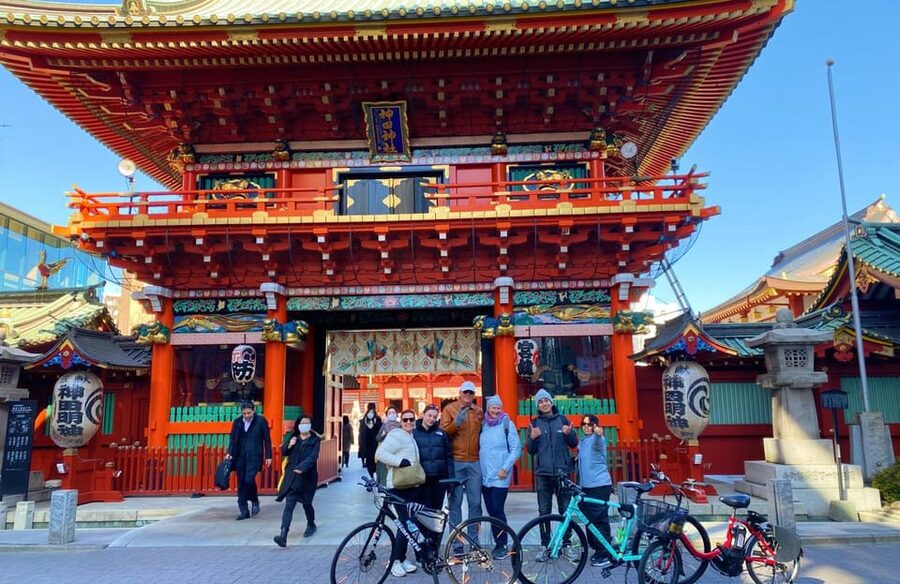
The meeting point is the Statue of Commodore Perry, about a three-minute walk from Daimon Station’s A6 exit. Give yourself a little extra time here. One rider found the meeting place difficult to locate, so checking the station exit and the statue before the start is wise.
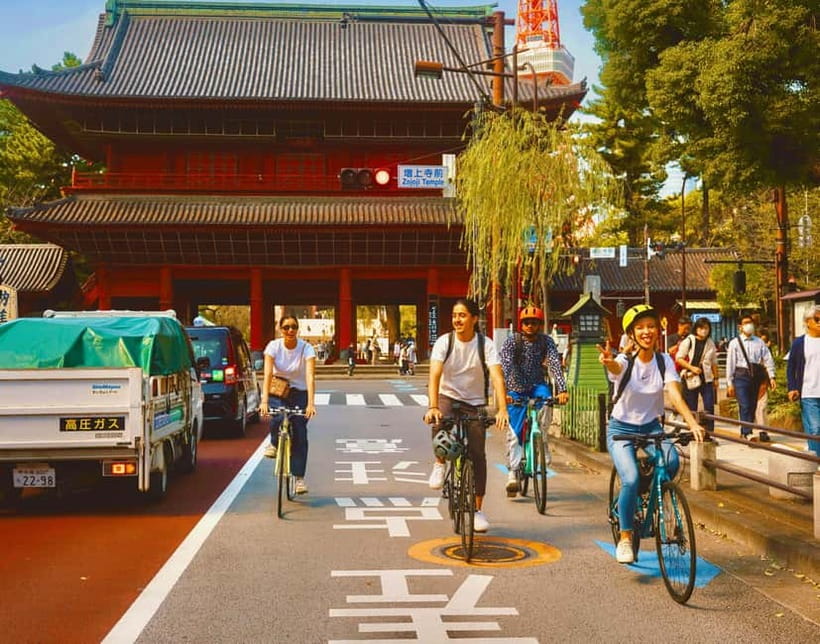
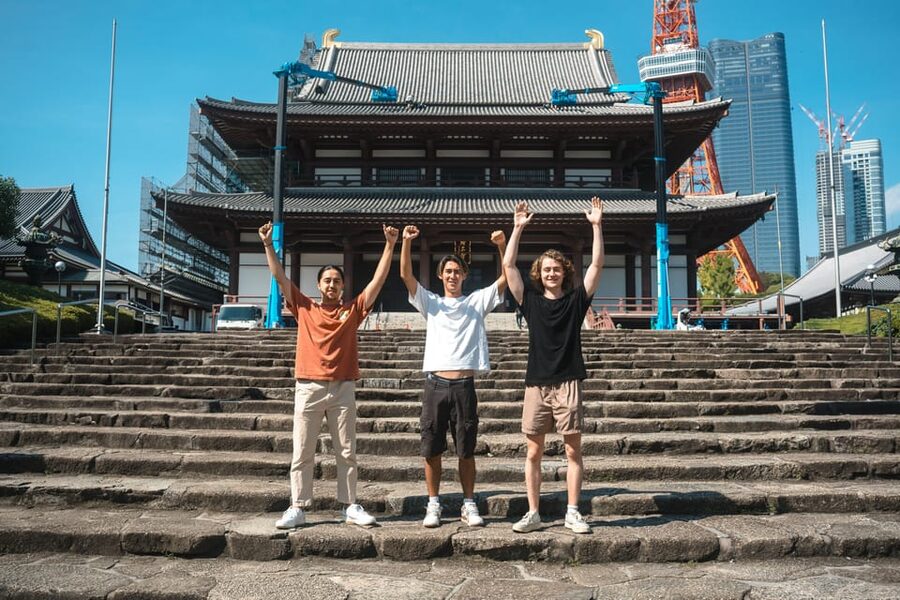
Once fitted with a bike, you head toward Zojo-ji Temple near Tokyo Tower. This is a strong opening stop because it gives you old Tokyo, religious tradition, and one of the city’s most recognizable modern towers in the same view.
The temple visit lasts about 15 minutes. That is enough time for an introduction to the grounds, a few photographs, and a short explanation of the temple’s place in Tokyo’s past. It is not enough for a leisurely visit to every building, so treat it as a useful orientation rather than a complete temple tour.
The early section also lets your guide explain basic riding habits for the group. That matters in Tokyo, where you will share roads and paths with pedestrians, other cyclists, and city traffic. The guides are described as attentive, and several riders specifically appreciated being watched over at crossings and during stops.
More Tokyo bike tours:
- Tokyo Great Cycling Tour
★ 5.0 · 811 reviews - Tokyo Top Highlights 3h Guided E-bike Tour
★ 5.0 · 714 reviews - 3h Tokyo E-Bike Tour: Hidden Gems, and Local Life with guide
★ 5.0 · 670 reviews
Imperial Palace views and Ōte-mon Gate
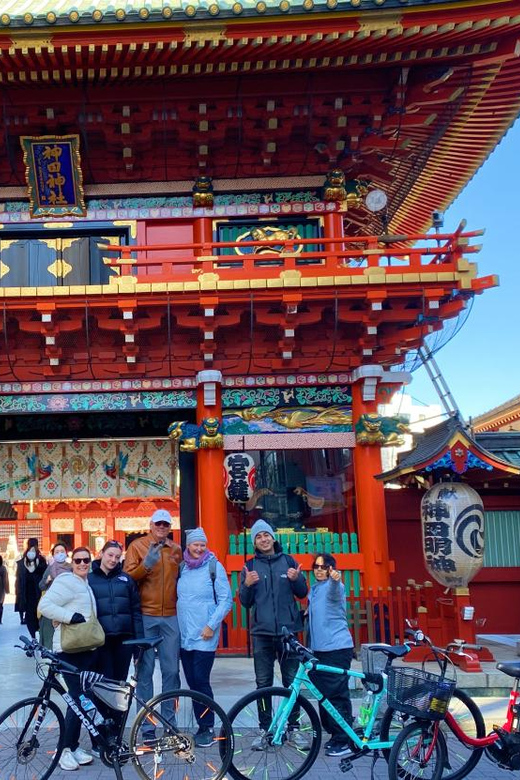
From Zojo-ji, the route continues toward the Imperial Palace. The palace itself is set behind broad grounds and restricted areas, so the appeal here is the setting, the stone walls, and the sense of Tokyo’s political center rather than an interior visit.
You get roughly 10 minutes for a guided stop and photographs. That short pause works well on a bicycle tour. You see an important part of the city without spending half the afternoon standing in line or navigating a large palace complex.
Ōte-mon Gate follows with another brief stop of about five minutes. Its heavy construction and formal approach offer a sharp contrast with the glass towers and crowded streets elsewhere in central Tokyo. Your guide can put the gate and surrounding palace area into context, but you should not expect a long architectural lecture or extended walking time.
This part of the ride is valuable because it links several central sights that are spread too far apart for a comfortable walk. One rider described cycling as much more engaging than moving between the same places by subway. I agree with the logic: you get the connections between neighborhoods, not just isolated stations.
Akasaka Palace and the New National Stadium
The route then turns toward the State Guest House Akasaka Palace. You stop for about 10 minutes to take photographs. The formal European-style facade is unlike the temple architecture near Zojo-ji or the restrained walls of the Imperial Palace.
The stop is primarily visual. You should not assume that the tour includes entry inside the palace. If you are especially interested in the building’s interiors, you will need separate time on another day.
The New National Stadium is next, with another 10-minute photo stop. This brings the tour into modern Tokyo, where major sporting architecture and large public spaces replace palace walls and temple roofs. The pairing of Akasaka Palace and the stadium gives the ride a useful rhythm: old and formal, then recent and purpose-built.
You will spend much of this middle section riding between stops rather than exploring each one on foot. That is one reason the bike format works. The route covers ground efficiently, but it also means the tour favors breadth over detailed visits.
Side streets and a less obvious Tokyo
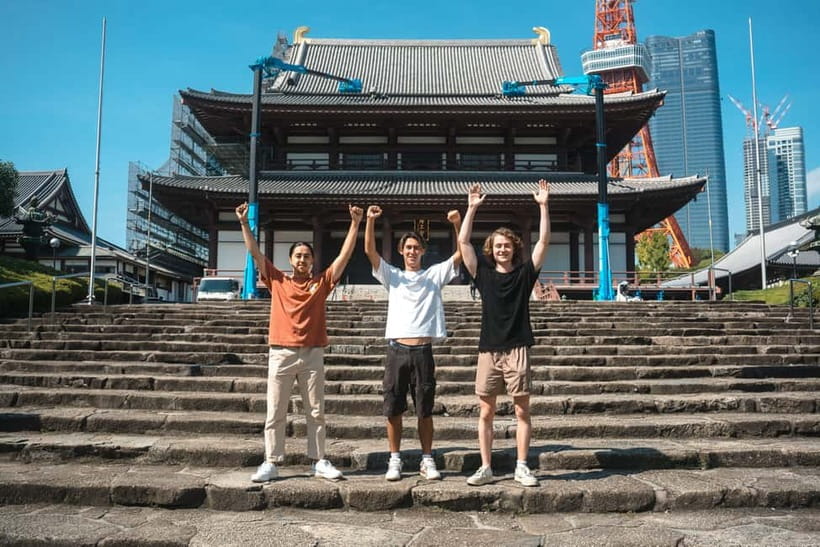
After the major landmarks, the tour includes a 15-minute stop described simply as a hidden gem. The exact place may vary, so do not book this expecting one fixed attraction with a clearly advertised name.
That uncertainty is also part of the appeal. The stop gives your guide room to show you a quieter corner or an interesting local setting that does not fit neatly into a standard sightseeing list. You may find this more rewarding than another large landmark, especially if you already plan to visit the Imperial Palace and Shibuya independently.
The route continues through 3 Chome Minamiaoyama, where you spend about five minutes. This area helps show Tokyo as a collection of distinct neighborhoods rather than one continuous city center. The pace is quick, but cycling lets you notice changes in streetscape and atmosphere as you move between districts.
The guides’ local explanations are important here. Names such as Shin and Casey appear repeatedly in the tour’s feedback for clear explanations, flexibility, and a friendly manner. A guide who can adjust the conversation to your interests adds real value during short stops, since you do not have much time to read signs or wander on your own.
A completely different kind of day in Tokyo:
- Mt Fuji and Hakone 1-Day Bus Tour Return by Bullet Train
★ 5.0 · 26,383 reviews - 1-Day Tokyo Bus Tour
★ 5.0 · 14,250 reviews - Tokyo: teamLab Planets TOKYO Digital Art Museum Entry Ticket
★ 4.6 · 9,779 reviews - Mt Fuji & Hakone Cruise, Drum Show Bullet Train 1 Day from Tokyo
★ 4.0 · 7,413 reviews
Cat Street, Miyashita Park, and Shibuya
Cat Street receives a short five-minute visit. The name is memorable, but the real point is the contrast with the grand civic sights earlier in the day. This is a more youthful, design-focused part of Tokyo, with shops, cafes, and a different street feel.
Five minutes is enough to pause, take photographs, and hear a quick explanation. It is not enough for shopping. If you want to browse stores or stop for coffee, plan to return later without the group.
Miyashita Park follows for about three minutes. That is a very brief stop, so think of it as a passing look rather than a park visit. It works as a link between the neighborhood ride and the final approach to Shibuya.
The tour ends at the Bell of Peace near Shibuya Crossing. Shibuya is one of Tokyo’s essential sights, and arriving by bicycle gives you a satisfying finish after moving across the city under your own power. The five-minute stop lets you take in the crossing and nearby streets, but it will not give you time to explore the district properly.
I would treat the ending as a useful introduction. After the tour, you can continue on foot around Shibuya, return to Cat Street, or find a meal nearby. The bike ride gets you oriented, then leaves you in one of Tokyo’s best areas for further exploring.
What the three hours really feel like
The itinerary includes many stops, but most are short. Zojo-ji receives the longest listed visit at 15 minutes, while several other places get between three and 10 minutes. You should expect a moving overview with frequent pauses, not a series of full guided visits.
That format suits a first day in Tokyo. You can learn where major areas sit in relation to one another and decide where to return later. It is less suitable if your main goal is to study one temple, museum, or palace in detail.
The cycling itself is a meaningful part of the experience. One rider called it an extended ride for this kind of tour, while another described it as a workout. That is useful warning rather than a flaw. The route is designed to show a lot of the city, so you should be comfortable staying on a bike for much of the three hours.
The e-bike option makes the tour more accessible to casual cyclists. The operator specifically recommends it if you do not cycle often or have limited stamina. I would choose it without hesitation if you are unsure about hills, distance, heat, or keeping pace with a group.
Bikes, helmets, and practical comfort
The tour provides Bianchi and Fuji cross bikes, described as high-quality bikes suitable for city riding. Good equipment matters here. A poorly fitted or heavy bike can turn a pleasant outing into an uncomfortable one, while a solid cross bike makes the distance easier to manage.
An e-bike is also available, but you need to select that option when booking. Do not assume you can decide after arriving. One piece of booking information was not clear to a rider, so check carefully that you have chosen the standard bike or e-bike you want.
Helmets are not included. You can obtain one on site for ¥1,000 per unit, payable in cash. Bring comfortable shoes, comfortable clothing, and water. Tokyo can be very hot in summer, and one group completed the ride during record-breaking heat, with refreshment stops helping along the way.
A small bike pouch is included for a phone, wallet, or keys. That is a modest but useful touch. You will want your hands free for riding, and a loose phone in a pocket is not ideal when stopping for photographs.
The tour includes bike insurance. It does not include food, drinks, or other personal expenses. Smoking, alcohol, drugs, and littering are not allowed.
Guide style and group size
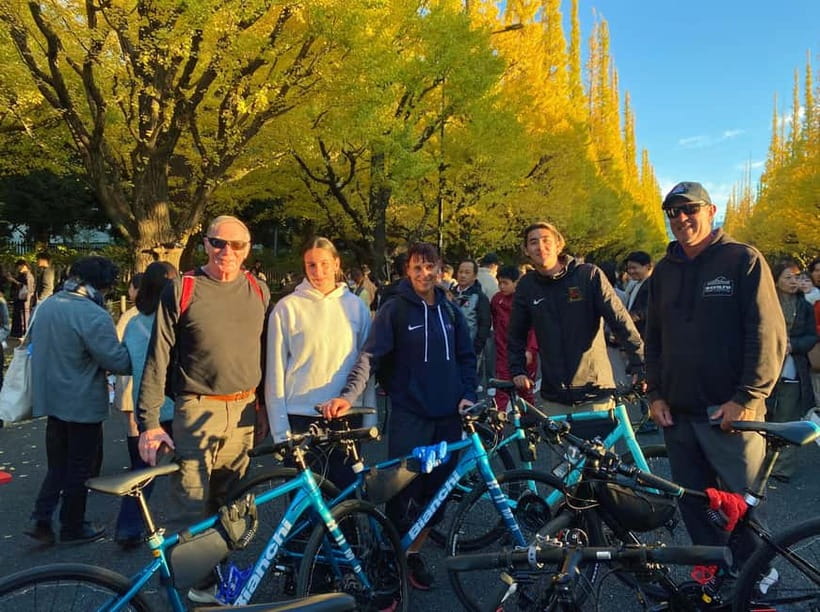
The guide is the difference between this being a simple bike rental and a real city tour. English and Japanese are offered, and the English-speaking guides are expected to explain the places along the route while helping the group move safely through the city.
Several guides have received especially warm praise for their manner. Casey is described as clear and attentive, Shin as flexible and personable, and Naoki, Marika, Miguel, and KG as friendly and engaging. You may not receive one of those particular guides, but the pattern suggests that the company places real weight on personal service.
Private and small-group formats are available. A smaller group is useful on city streets because it is easier to stay together, stop at viewpoints, and hear the guide. It can also make the route feel less like a convoy. If you value flexibility, ask for the private or small-group option when booking.
The guide may also adjust the route or conversation to match your interests, although the core stops remain the advertised route. That flexibility is especially useful for returning visitors or people who already know the main landmarks.
Is $60 good value?
At $60 per person, the tour sits in a sensible range for a three-hour guided city experience, especially since the bike, insurance, guide, and small pouch are included. You are paying not only for transportation, but also for the ability to connect distant parts of central Tokyo in one outing.
The value is strongest if you have limited time. In three hours, you can see Zojo-ji, palace viewpoints, Akasaka Palace, the stadium, Aoyama, Cat Street, Miyashita Park, and Shibuya without planning multiple train connections.
The value is weaker if you want long visits at each attraction. The tour does not include major interior admissions, and most stops are brief. You will need to spend extra time later if a temple, palace, or shopping district catches your attention.
Remember the additional helmet charge of ¥1,000 per person. The child seat costs ¥3,000, although children under 12 are not suitable for this activity, so the child-seat information may apply only in limited circumstances. The tour is not designed for children under 12, pregnant women, people with back problems, or anyone who cannot ride a bicycle.
Free cancellation is available up to 24 hours before the start for a full refund, and you can reserve now and pay later. Those policies are useful if weather or energy levels may affect your plans.
Who should book this ride?
I would recommend this tour to a first-time Tokyo visitor who wants a broad introduction and enjoys active sightseeing. It also suits anyone who finds subway travel tiring or confusing and would rather see the city between its major stops.
It is a particularly good match for confident cyclists, couples, friends, and small groups who want photographs and local explanation without committing to a full-day excursion. The e-bike makes it a better choice for occasional cyclists, but you still need to ride safely and stay with the group.
I would hesitate if you dislike traffic, want a slow cultural visit, or have physical limits that make three hours in the saddle uncomfortable. The tour is not a substitute for visiting Senso-ji in Asakusa, and one rider specifically noted that Senso-ji is too far for this route. If that temple is a priority, visit it separately by train and on foot.
Should you book it?
Book this bike tour if you want to cover a large slice of central Tokyo while hearing the stories that connect its temples, palace grounds, modern architecture, and neighborhood streets. The excellent bikes, strong guide service, and e-bike option make the $60 price reasonable.
Choose the e-bike if you do not cycle regularly, and bring cash for the helmet. If you want lengthy visits or a gentle walking pace, choose a conventional sightseeing tour instead. For an active introduction to Tokyo that finishes at Shibuya, this is a smart use of three hours.
FAQ
Where does the Tokyo bike tour start?
The meeting point is near the Statue of Commodore Perry, about a three-minute walk from Daimon Station’s A6 exit.
Where does the tour finish?
The tour ends at the Bell of Peace near Shibuya Crossing.
How long is the bike tour?
The tour lasts three hours.
What sights are included?
The route includes Zojo-ji Temple, the Imperial Palace area, Ōte-mon Gate, State Guest House Akasaka Palace, the New National Stadium, Minamiaoyama, Cat Street, Miyashita Park, and Shibuya Crossing.
Is an e-bike available?
Yes. You can select an e-bike option, which is recommended if you do not cycle often or do not have much stamina.
Are helmets included?
No. Helmets are available on site for ¥1,000 per unit, payable in cash.
What should I bring?
Bring comfortable shoes, comfortable clothes, and water. Cash is also needed if you want to rent a helmet.
Who cannot join this activity?
The tour is not suitable for children under 12, pregnant women, people with back problems, or people who cannot ride a bicycle.
More 3 Hour Experiences in Tokyo
- Tokyo: 3-Hour Bike or E-Bike City Highlights Tour
★ 4.8 · 435 reviews - Tokyo: 3-hour Guided E-Bike Tour of the City’s Hidden Gems
★ 4.8 · 251 reviews - 3-Hour Tokyo Pub Crawl Nightlife Welcome Guided Tour in Shibuya
★ 5.0 · 209 reviews - Tokyo: 3-Hour Bike/E-Bike Tour of the City’s Highlights
★ 5.0 · 209 reviews
Newly reviewed around Tokyo
- Tokyo Asakusa:Calligraphy & Make T-shirt Activity★ 5.0 · 62 reviews
- 1 Hour Travel around Tokyo with a Professional Photographer★ 5.0 · 3 reviews
- Travel Tokyo with Your Own Personal Photographer★ 5.0 · 43 reviews
- Intercity Shuttle, Tokyo to Haneda /Narita /Yokohama /Makuhari★ 5.0 · 5 reviews
- Train in Samurai Swordsmanship and Defeat the Demon in Tokyo★ 5.0 · 5 reviews
- Shuttle Van 6hr Tokyo Tour to-and-from Tokyo, Yokohama and Narita★ 5.0 · 9 reviews
- Kickboxing & Body Training with EX-Pro Fighter★ 5.0 · 4 reviews
- Traditional Japanese Knife Sharpening Class★ 5.0 · 18 reviews
Tokyo Bike Tours, compared.
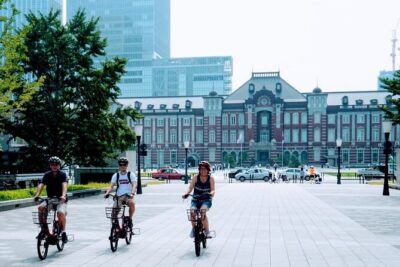
3h Tokyo E-Bike Tour: Hidden Gems, and Local Life with guide
Read our review →
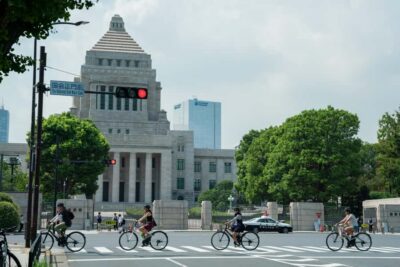
3-hour Guided E-Bike Tour of the City’s Hidden Gems
Read our review →
3-Hour Bike/E-Bike Tour of the City’s Highlights
Read our review →
Browse the lists this tour appears in