
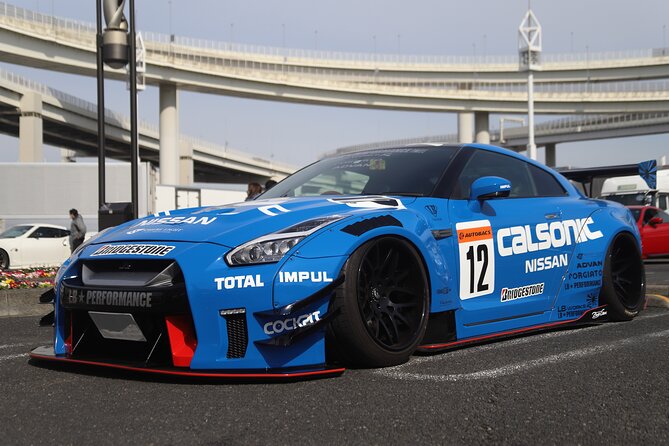
Reviewed · TOKYO JDM CAR CULTURE TOURS
RX-7 FD Daikoku Car Meet JDM Experience (Night)
Tokyo’s car culture is best experienced from the passenger seat of a real machine, and this tour puts you in a Mazda RX-7 FD, one of Japan’s most admired sports cars. Your driver-guide, Michael, takes you onto the city’s expressways, across Rainbow Bridge, and out to Daikoku Parking Area, where car owners gather at night.
I like two things here. First, you get access to a car that would be difficult and costly to rent in Japan. Second, the tour connects the driving with real places: Tatsumi, the C1 loop, the Wangan Highway, and Daikoku. The main drawback is that the cars at Daikoku are never guaranteed, and the RX-7’s back seat is best for people under 175 centimeters tall.
Key points before you book
- Ride in a Mazda RX-7 FD: The car is the main event, not just transportation between stops.
- See Daikoku by road: This famous parking area can only be reached by car, making the tour useful if you do not want to rent one.
- Follow Tokyo’s C1 and Wangan routes: These highways are part of Japan’s modern car culture and street-racing lore.
- Spend about two hours at Daikoku: That gives you time to look around, take photos, and see what has gathered that night.
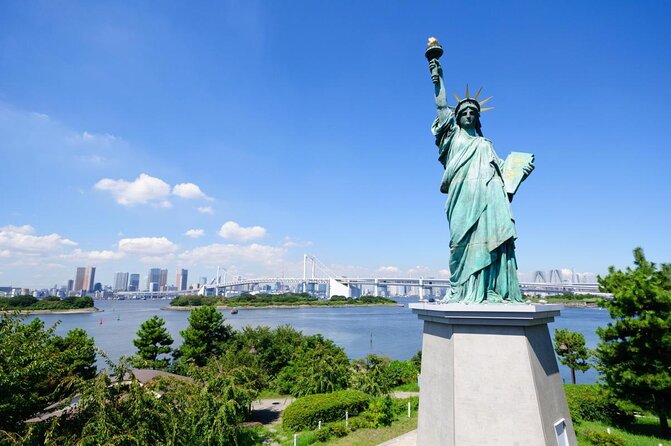
- Enjoy the city after dark: Rainbow Bridge, Odaiba, Yokohama Bay Bridge, and the Tokyo skyline provide much more than a car meet.
- Plan for a private four to five hour outing: Your group participates alone, with all fees and taxes included.
Why the RX-7 makes this Tokyo tour different
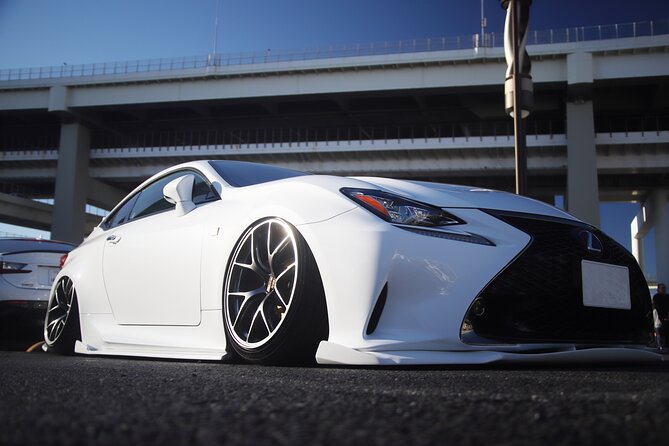
Many Tokyo car tours are really sightseeing drives with a few interesting vehicles along the way. This one begins with the vehicle itself. The Mazda RX-7 FD is a famous Japanese sports car with a rotary engine, a low shape, and a strong following among JDM enthusiasts.
You are not promised a chance to drive it. You ride in it with a driver-guide at the wheel. That distinction matters. If your goal is to experience the sound, feel, and setting of a special Japanese car without handling Tokyo’s complicated expressways yourself, this is a sensible format.
You also avoid the hard part of arranging your own route. Daikoku Parking Area is not a simple city-center attraction. It sits beside the expressway near Yokohama, and access depends on driving the road network. The tour handles that route while you watch the city pass by and hear stories about the local car scene.
Michael is listed as the driver-guide, and his role adds context to the trip. A car meet can be confusing if you do not know what you are looking at. With someone familiar with the scene, you can ask about the cars, the meetups, and the highways connected to Tokyo’s car culture.
More Tokyo JDM and car meet nights:
- GT-R35 800hp Club Membership – secret underground car meet
★ 4.8 · 998 reviews - Tokyo: Fast & Furious Tokyo Drift 3 Experience (Kaila Yu SP)
★ 4.8 · 947 reviews - Tokyo: Daikoku JDM Car Meet & Night Car Culture Tour
★ 4.8 · 626 reviews
Meeting in Ueno and setting out after dark
The meeting point is at 7-chōme-2-2 Ueno, in Taito City. The tour returns to this same point at the end, so you do not need to arrange a second pickup location.
The total outing takes about four to five hours. Since it is a night experience, allow enough time before and after for dinner plans or a late evening train. The tour is near public transportation, but the supplied details do not give a precise meeting time, so check your confirmation carefully.
This is a private activity for your group alone. That is useful if you want to ask questions, take your time with photos, or focus the conversation on particular cars. It also means the price is not simply the cost of a seat on a large bus. You are paying for a private ride in a rare performance car, a driver-guide, and transport to places that are awkward to reach independently.
The listed price is $276.90 per person. That is a serious amount for a few hours, especially for a solo visitor. The value improves if you are traveling with people who care about Japanese cars and can share the experience as a private group. Group discounts may also be available, so check the current price for your party rather than judging the tour only by the individual rate.
Crossing Rainbow Bridge with Tokyo below
One of the best parts comes before the car meet. The route crosses Tokyo Rainbow Bridge, linking the city with Odaiba. From the car, you can see Tokyo’s night skyline and the water around the man-made island.
Odaiba is known for residences, shopping, and leisure attractions. The tour does not present it as a walking stop. Instead, you see it from the moving car, which gives the bridge crossing a different feel from a standard lookout or observation deck.
The view is also tied to the car itself. You are not simply standing in a crowd with a camera. You are watching the city through the windows of an RX-7 while moving along one of Tokyo’s major routes. That makes the crossing especially appealing to anyone who likes the connection between cars, roads, and city lights.
Photography may be tricky from a moving vehicle, so do not treat the bridge crossing as a guaranteed photo stop. Enjoy the view first. The tour’s stronger photo opportunities come when you are parked at Tatsumi or Daikoku.
Tatsumi Parking Area and the C1 loop
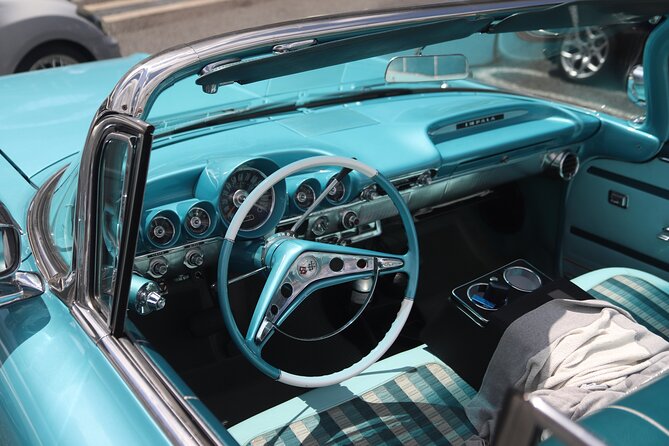
The first named stop is Tatsumi No. 1 Parking Area for Hakozaki. You spend about 45 minutes here, with no admission fee.
Tatsumi is part of the expressway system, so it is not a normal sightseeing plaza. It gives you a chance to pause during the drive and see how Japanese car enthusiasts use highway parking areas as meeting points. The stop also breaks up the route before the longer run toward Daikoku.
The drive around Tokyo’s C1 Highway is an important part of the experience. The C1 is the central loop road, and it has a place in car games and Japanese car lore. You weave through the city’s built-up road system rather than simply driving in a straight line toward Yokohama.
That route is valuable even if the parking area happens to be quiet. You get a sense of Tokyo as a road city, with elevated highways, tight connections, and constant changes in direction. The attraction is the drive itself, not only the destination.
Still, keep your expectations reasonable. The information promises a highway run and time at Tatsumi, but it does not guarantee a certain number of cars or a particular type of driving. This is a guided road experience, not a racing session. You should expect a legal sightseeing drive in a special car.
More Tokyo night tours:
- Tokyo Night Foodie Tour in Shinjuku – Seasonal Sushi, Wagyu Beef
★ 5.0 · 1,161 reviews - Tokyo After 5: Authentic Japanese Food & Drink Night Tour
★ 4.5 · 560 reviews - Tokyo: Samurai Entertainment Night Show in Kanda Shrine
★ 4.6 · 417 reviews - The Dark Side of Tokyo – Night Walking Tour Shinjuku Kabukicho
★ 4.5 · 297 reviews
The Wangan Highway toward Yokohama
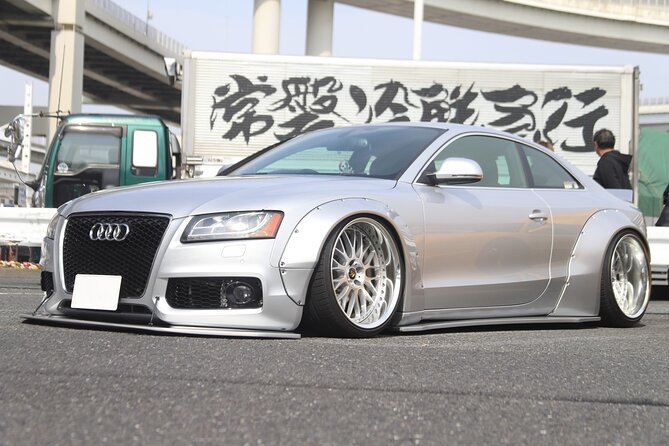
From Tatsumi, the route heads toward Daikoku on the Wangan Highway. This long road connects Tokyo and Yokohama and is strongly linked with Japanese street-racing stories from the 1990s and with manga culture.
You will probably appreciate this section most if you already know the names of Japanese performance cars or have seen Tokyo’s highways in games and films. The road gives the tour its sense of purpose. You are not being taken to a random parking lot. You are following a route that matters to the car scene.
The Wangan also gives you a changing view of the port area. Before Daikoku, the route includes a view of Yokohama Bay Bridge and the Yokohama skyline. Yokohama is a major cruise-ship port, so you might see ships in the distance, depending on the conditions and the traffic.
This part of the ride is less about getting out and taking pictures. It is a chance to listen to Michael, watch the road, and connect the famous names with the actual geography. If you want a tour with lots of walking and scheduled monuments, this will feel different. If you want to understand how the car meet fits into the wider Tokyo and Yokohama road network, it works well.
About two hours at Daikoku Parking Area
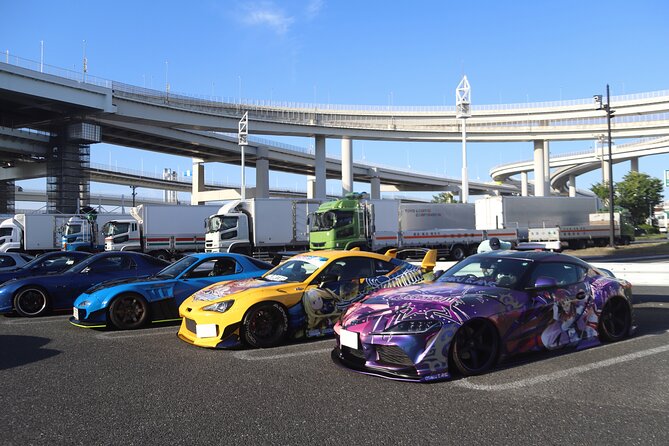
Daikoku Parking Area is the main stop, with about two hours allocated to it. That is enough time to walk around, look at the cars, and take photos without feeling rushed.
The parking area is a highway rest stop, not a formal museum or ticketed attraction. Its appeal changes from night to night. The type and number of cars are not guaranteed, and the tour specifically warns that it stops at impromptu meeting spots.
That uncertainty is part of the deal. You may see an impressive mix of Japanese performance cars, customized vehicles, or other interesting machines, but you should not book this expecting one exact model or a staged display. The scene depends on who has arrived that evening.
You also need to remember that this is an active parking area. It is not presented as a private event arranged solely for your group. Follow Michael’s instructions, stay aware of traffic, and respect the people who have brought their cars there. The best experience comes from looking carefully and giving owners space.
Daikoku’s location is one of the tour’s strongest practical advantages. You could try to reach it independently with a rental car, but that would require navigating Tokyo and Yokohama expressways, understanding access rules, and knowing where to go. Here, the route is already handled, and you can focus on the cars.
The two-hour stay also gives you room to enjoy the social side of the scene. You can compare different styles of cars, ask questions, and take in the atmosphere without racing through a ten-minute photo stop.
What you should expect from the car itself
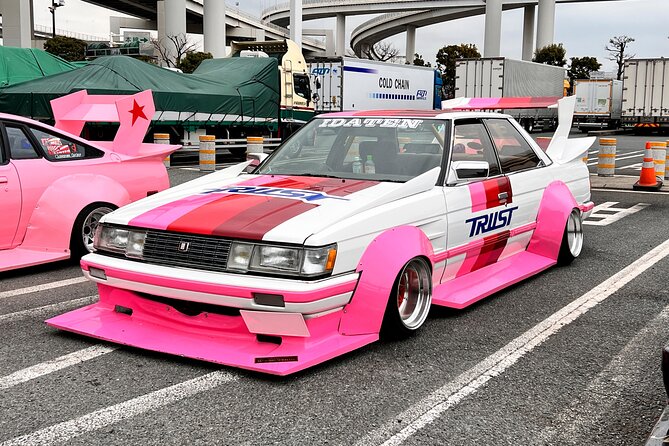
The RX-7 FD is a compact sports car, not a roomy tour vehicle. The back seat is suited to passengers under 175 centimeters tall. If you are taller, broad-shouldered, or carrying a large bag, ask about seating before you pay.
This point matters more than it might seem. A four to five hour outing includes highway driving and stops, but you may spend a good deal of time inside the car. The front passenger position is likely to be the most comfortable, but the supplied details do not promise a specific seat, so raise the issue when arranging the tour.
Do not expect food, drinks, or souvenirs to be included. You may purchase those yourself at stops, but the experience is centered on driving and car culture rather than dining.
All fees and taxes are included, along with the guide service and the ride. You are not being asked to add an entrance ticket for Daikoku or Tatsumi. The main extra costs are anything you buy during the evening and your own transport to and from Ueno.
Who will get the most from this experience
I would recommend this tour most strongly to:
- JDM fans who want to ride in an RX-7 FD
- Visitors who do not want to rent a car in Tokyo
- People interested in highway culture, not only parked cars
- Couples or small private groups who value a personal outing
- Anyone who enjoys Tokyo’s night views from the road
- Visitors who already know a little about Japanese cars and want local context
It may be less suitable if you want a guaranteed lineup of specific vehicles. It is also not ideal if you dislike sitting in a small sports car for extended periods or prefer a daytime tour with many walking stops.
Families can participate, and most people can join, but the rear-seat height limit deserves attention. If your group includes children or taller adults, confirm the seating arrangement in advance.
The experience received a five-star rating from six published ratings, and the strongest praise centers on the fun of seeing Tokyo’s car culture firsthand. One family enjoyed a Sunday outing with Michael through key car areas and Daikoku. That points to an important strength: the tour can work for interested newcomers, not only serious enthusiasts.
Booking, weather, and cancellation details
You receive confirmation when you book, and a mobile ticket is available. The tour is often booked well ahead, with an average lead time of about 51 days, so do not wait until the last evening of your Tokyo stay if this is a priority.
Free cancellation is available if you cancel at least 24 hours before the start time. Changes or cancellations inside that window are not accepted for a refund. The experience requires good weather, and poor weather can lead to a different date or a full refund.
That weather rule makes sense for a night drive built around skyline views and outdoor parking areas. Rain could reduce the bridge views, make photography difficult, and affect the car gathering at Daikoku.
Should you book the RX-7 Daikoku night drive?
Book it if the idea of riding in a Mazda RX-7 FD appeals to you as much as seeing Daikoku. The tour combines a rare car, Tokyo’s major expressway routes, Rainbow Bridge, Yokohama views, and roughly two hours at a famous car meet. You get the setting and the vehicle together, without managing the drive yourself.
Think twice if $276.90 per person feels high for an experience with no guaranteed car lineup. Daikoku is an active meeting place, so the night’s results depend on weather and who turns up.
For a JDM fan, this is a focused and unusual way to see Tokyo after dark. For everyone else, it is worth booking only if the RX-7 ride and the highway route sound genuinely appealing. The car is the reason to go, and Daikoku is the reward at the end.
FAQ
How long does the RX-7 Daikoku experience last?
The tour takes approximately four to five hours, including the drive from Ueno, the stops at Tatsumi and Daikoku, and the return to the meeting point.
Where does the tour begin and end?
It begins at 7-chōme-2-2 Ueno, Taito City, Tokyo 110-0005, Japan, and ends back at the same meeting point.
Is Daikoku Parking Area admission included?
There is no admission fee listed for Daikoku Parking Area. All fees and taxes for the activity are included.
Are specific cars guaranteed at Daikoku?
No. The type and number of cars are not guaranteed because the tour visits impromptu meeting spots.
Can anyone sit in the back seat of the RX-7?
The back seat is suited for passengers under 175 centimeters in height. Confirm the seating arrangement if this could be an issue for someone in your group.
What happens if the weather is poor?
The experience requires good weather. If it is canceled because of poor weather, you will be offered a different date or a full refund.
Newly reviewed around Tokyo
- Tokyo Asakusa:Calligraphy & Make T-shirt Activity★ 5.0 · 62 reviews
- Travel Tokyo with Your Own Personal Photographer★ 5.0 · 43 reviews
- Intercity Shuttle, Tokyo to Haneda /Narita /Yokohama /Makuhari★ 5.0 · 5 reviews
- 1 Hour Travel around Tokyo with a Professional Photographer★ 5.0 · 3 reviews
- Train in Samurai Swordsmanship and Defeat the Demon in Tokyo★ 5.0 · 5 reviews
- Shuttle Van 6hr Tokyo Tour to-and-from Tokyo, Yokohama and Narita★ 5.0 · 9 reviews
- Kickboxing & Body Training with EX-Pro Fighter★ 5.0 · 4 reviews
- Traditional Japanese Knife Sharpening Class★ 5.0 · 18 reviews
Tokyo JDM Car Culture Tours, compared.
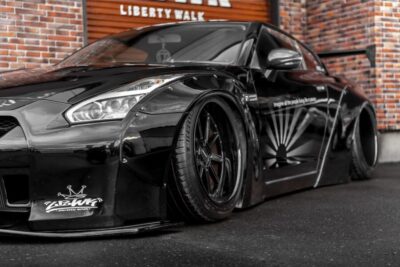
GT-R35 800hp Club Membership – secret underground car meet
Read our review →
Fast & Furious Tokyo Drift 3 Experience (Kaila Yu SP)
Read our review →
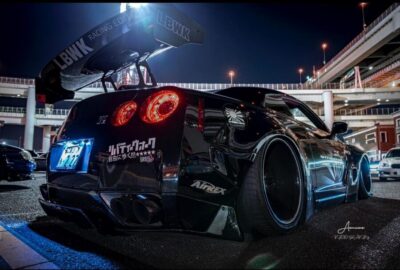
Secret Car Meet: R34 Skyline Car Club Membership
Read our review →
Tokyo Drift: Daikoku PA Supreme Car Experience 大黒PA
Read our review →
Go Daikoku PA Fast & Furious 3 Sports Car Meetup
Read our review →
Browse the lists this tour appears in