Reviewed · PRIVATE
Mochi Making at a Private Studio in Tokyo
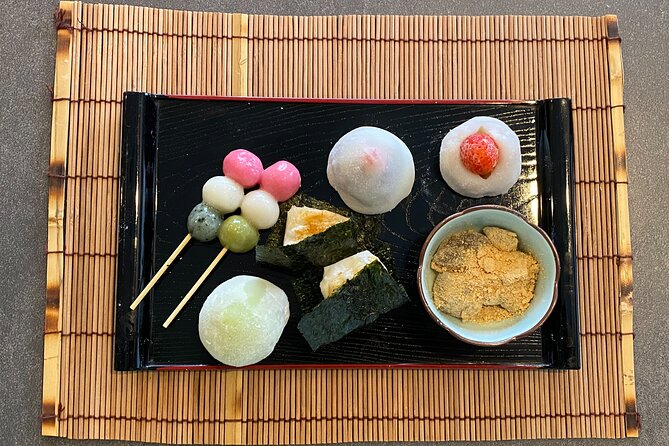
Mochi here is more than a sweet snack. In about two hours, you work with several forms of this chewy Japanese staple, from strawberry daifuku and colorful dango to savory grilled mochi with soy sauce and nori. The class takes place in a private studio near Meguro Station, where instructors such as Michiko, Ayumi, Owa, and Waka lead hands-on lessons in English.
I like the small-group format, which makes it easier to follow each step and ask questions. I also like the range of styles: you make sweet treats, learn about mochi’s role in festivals, and taste a savory version that many first-time visitors do not expect. The main consideration is that the class involves several dishes in a short time, so some flavors or textures may appeal to you more than others.
Key points to know before booking
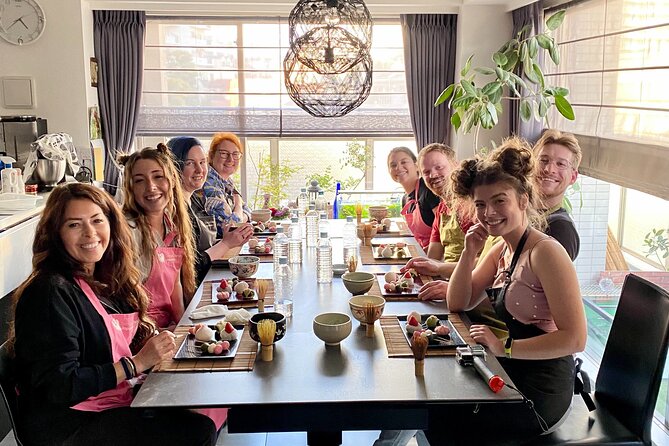
- Several mochi styles in one class: Make strawberry daifuku, three-color dango, and warabi mochi, then taste savory grilled mochi.
- A private studio near Meguro Station: The meeting point is a short walk from the JR Yamanote Line and nearby metro service.
- English instruction with cultural context: The certified wagashi instructors explain mochi traditions, festivals, ingredients, and daily life in Japan.
- Good for families: Children age four and older can attend, and the hands-on format works well for children and adults.
- A tasting session is included: Finish with green tea, hojicha, or coffee, and receive an English recipe sheet.
- Morning or afternoon choices: An afternoon session can be a useful break from Tokyo sightseeing, especially on a hot day.
Why this Meguro mochi class is worth your time
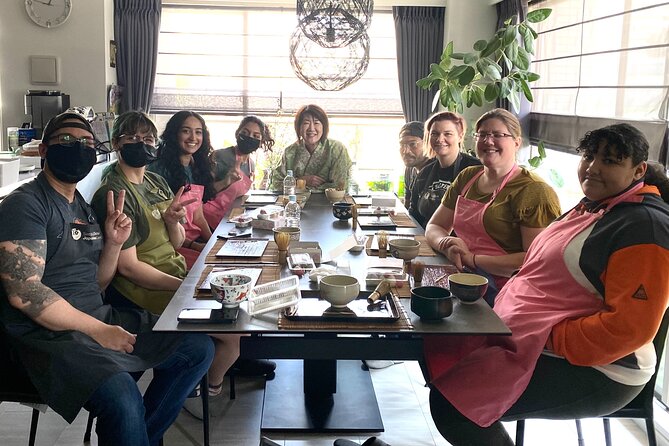
Tokyo offers plenty of polished food experiences, but this class gives you a chance to handle the food yourself. You are not simply watching a chef prepare a finished dessert. You shape, fill, skewer, and taste mochi in several forms, with an instructor explaining what each one means and when it is eaten.
That combination makes the experience especially useful if you are curious about Japanese food beyond sushi and ramen. Mochi appears at celebrations, seasonal events, New Year traditions, and everyday snack tables. The opening presentation places the cooking in that larger setting, so the class has a cultural side as well as a practical one.
The setting is a private studio close to Meguro Station. That location matters in Tokyo. You can reach it without committing half a day to transport, and the class ends where it begins. The exact meeting address is in Meguro, about a short walk from the JR Yamanote Line or a metro station.
The advertised class is designed for a small group, with a maximum of six people for the regular lesson. The activity information also gives a maximum of 12 participants overall, so group size can depend on the booking arrangement. If you want the most private version, a private class can be booked for up to six people by selecting one adult booking.
More private tours in Tokyo:
- Tokyo 6hr Private Tour with Government-Licensed Guide
★ 5.0 · 3,902 reviews - Private Tour to Mt. Fuji and Hakone (Fully Licenced Operator)
★ 5.0 · 1,910 reviews - Tokyo Customized Private Tour (Must See Places in 1 Day)
★ 5.0 · 1,499 reviews
Starting with mochi traditions and Japanese festivals
The class begins with a short presentation about mochi’s place in Japanese culture. This is a useful start because mochi can look simple, but its meaning changes with the season, color, filling, and way it is served.
Your instructor may explain how different types appear at festivals and family celebrations. The certified wagashi instructors teach in English, and the class also leaves room for questions about local life, shopping, and sightseeing in Tokyo. Several instructors are associated with the school, including Michiko, Ayumi, Owa, Waka, and Miho.
This introductory section is not meant to be a long lecture. It gives you enough context to understand why the class includes both sweet and savory preparations. It also helps you notice details such as the use of different colors in dango or the contrast between a soft sweet filling and a grilled, salty rice cake.
Making strawberry daifuku by hand
Strawberry daifuku is one of the most appealing parts of the class. It pairs a fresh strawberry with sweet filling and a soft mochi covering. The contrast between fruit, filling, and chewy rice cake makes it both easy to enjoy and fun to photograph.
You receive step-by-step guidance as you handle the dough and form the covering. Mochi can be sticky and slightly tricky at first, especially when you are trying to make an even shape without tearing the outer layer. That is part of the fun, but it also means you should not expect every piece to look like a shop display.
The instruction is aimed at beginners. You do not need strong cooking skills, and the class provides aprons and the equipment needed for the lesson. The English recipe sheet is useful if you want to try making the treats after returning home.
Fresh strawberries are used when available, and the fruit gives this section a bright, seasonal feel. If you enjoy Japanese sweets but prefer fruit-based desserts to very sweet bean fillings, strawberry daifuku may be your favorite part.
Shaping three-color dango on skewers
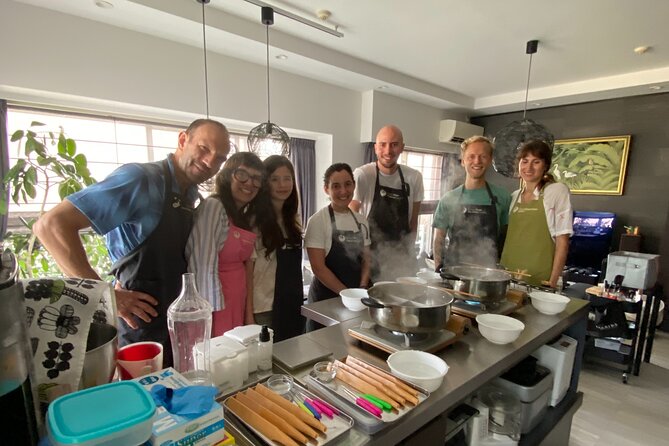
Dango gives the class a different kind of mochi project. Instead of wrapping a filling, you form small pieces and place them on skewers in three colors. The finished result looks simple, but shaping equal pieces takes a bit of patience.
The colors also provide a chance to discuss the meaning and use of different ingredients. You learn how presentation matters in wagashi, the Japanese tradition of making beautiful confectionery. The lesson is hands-on, so you can compare your own shapes with those of the people in your group without needing professional technique.
Dango is a good activity for families because the process is clear and visual. Younger children can take part with help from an adult, though the minimum age is four. The class does not allow children under four because of safety concerns.
Depending on your preference, dango may be more enjoyable for the making than for the eating. Some people prefer the filled sweets, while others like the firmer texture and skewer presentation. The class gives you both options rather than asking you to commit to one style.
A completely different kind of day in Tokyo:
- Mt Fuji and Hakone 1-Day Bus Tour Return by Bullet Train
★ 5.0 · 26,383 reviews - 1-Day Tokyo Bus Tour
★ 5.0 · 14,250 reviews - Tokyo: teamLab Planets TOKYO Digital Art Museum Entry Ticket
★ 4.6 · 9,779 reviews - Mt Fuji & Hakone Cruise, Drum Show Bullet Train 1 Day from Tokyo
★ 4.0 · 7,413 reviews
Trying warabi mochi and a savory grilled version
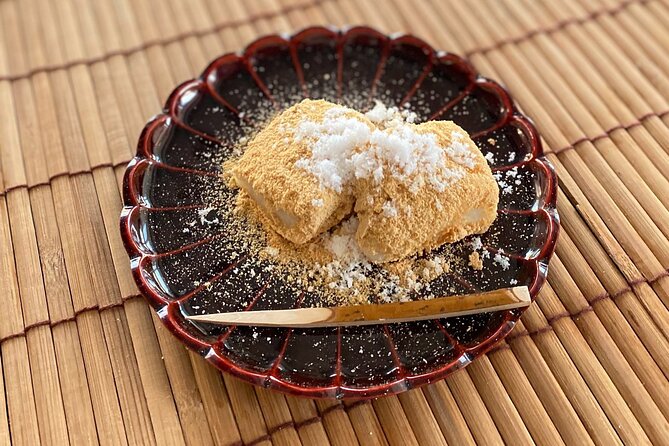
Warabi mochi adds another texture to the tasting. It is soft and slippery rather than stretchy in the same way as standard mochi. Learning several versions in one sitting helps you understand why the word mochi covers more than a single kind of dessert.
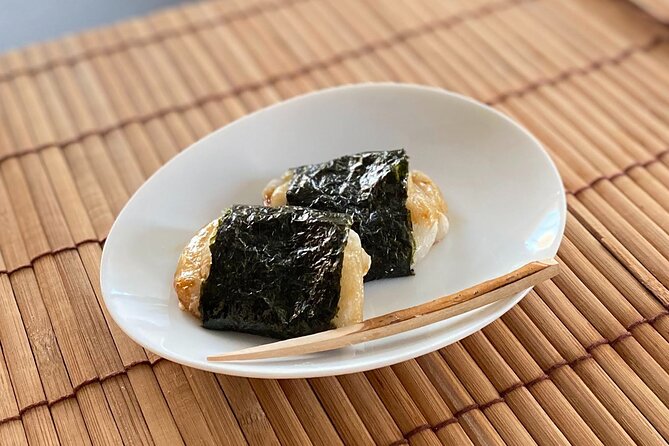
The savory grilled mochi is an important part of the experience. The instructor serves it with soy sauce and nori seaweed, showing you how mochi can move from the sweets table to a savory snack. This is often the surprise of the class for people who have only tried sweet mochi before.
The grilled preparation also provides a useful contrast to the delicate desserts. You taste salt, soy, and seaweed alongside the chewy rice cake. If you are unsure about very sweet fillings, this part may be especially welcome.
There is enough food to make the tasting feel substantial, and some sessions provide containers for leftovers. The amount you take home can depend on how much you eat during the class, so do not assume you will leave with a full box of every item.
Watching the mochi ice cream demonstration
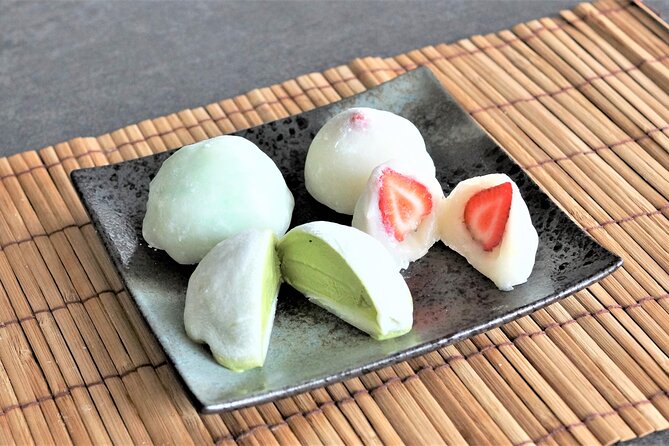
The instructor demonstrates how mochi ice cream is made rather than listing it as one of the main hands-on recipes. That distinction matters. You get to see the technique and understand the process, but the class time is focused on making the other varieties yourself.
Dairy-free ice cream can be prepared if requested. Make that request in advance so the instructor can plan for it. The provided details do not promise other dietary substitutions, so you should ask before booking if you have allergies or restrictions beyond dairy.
The demonstration rounds out the class because mochi ice cream is one of the most familiar modern forms of mochi outside Japan. You see how the soft rice covering works with a cold filling, even though the lesson does not require you to prepare every component from scratch.
Ending with tea, recipes, and local advice
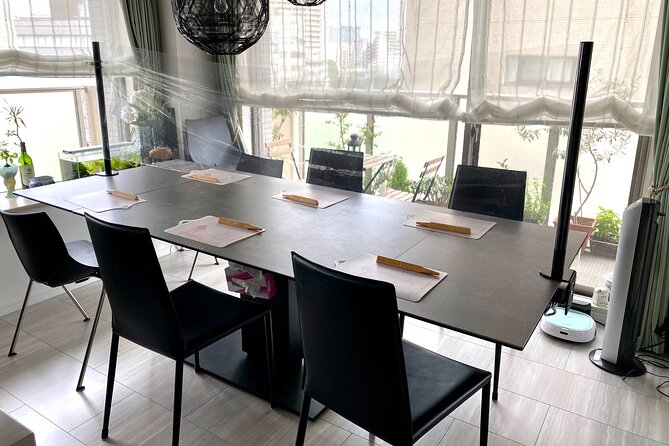
The final tasting is served with green tea, hojicha, or coffee. Tea is a fitting finish because it cuts through the sweetness and gives you time to sit down with the food you have made.
You receive an English recipe sheet, and some sessions also provide a QR code for accessing recipes. That makes this more than a one-time snack stop. You can try repeating at least some of the techniques at home, though the texture of mochi can take practice.
The instructors are also a useful source of Tokyo advice. Because the class is taught by English-speaking local hosts, you can ask about where to shop or what to see. This is not a sightseeing tour, so the local conversation is informal rather than a structured city guide. Still, it can add practical value to the two-hour visit.
Price, timing, and the real value
At $79.26 per person, this is not the cheapest food activity in Tokyo. You are paying for instruction, ingredients, multiple tastings, an English recipe sheet, an apron, drinks, and access to a private studio. The price also covers a small-group format, which usually means more direct help than a large demonstration class.
I consider the value strongest if you already enjoy Japanese sweets or want an activity you can share with children, parents, or a partner. You make several varieties rather than one simple dessert, and the cultural introduction gives the class more substance than a basic cooking lesson.
The value is weaker if you mainly want a large meal or a fast introduction to Tokyo food. This is a focused activity centered on mochi, and the final tasting is made up of what you prepare rather than a broad Japanese lunch.
The choice of morning or afternoon departure helps with planning. An afternoon class can work well after a morning of sightseeing, especially in hot weather. It gives you an indoor break without taking you far from central Tokyo rail connections.
Who should book this experience
This class suits first-time visitors who want a manageable food activity near a major station. It is also a strong choice for families with children age four and older, since the work is tactile and the finished food appears quickly.
You do not need to be an experienced cook. The instructions are designed to be followed step by step, and the small setting makes it easier to receive help. If you are concerned about making perfect shapes, remember that the point is to learn the technique and enjoy the process.
It also suits people who want to ask questions about Japan beyond the recipe. The instructors can offer local suggestions, and the class creates a natural setting for conversation.
You may want to skip it if you dislike chewy textures, sweet bean fillings, or hands-on food preparation. The class is also less suitable if you need a fully private experience but do not book the private option, since the regular class may include other participants.
Practical details before you go
The meeting point is at a private studio in Meguro City, at 1-chome Meguro, near Meguro Station. Bring your booking confirmation and allow enough time to find the building, since Tokyo addresses can be difficult to read quickly.
The experience lasts about two hours and returns to the same meeting point. Mobile tickets are accepted. Hotel pickup and transportation are not included, so you will need to make your own way to Meguro.
The class is non-smoking, and confirmation is provided when you book. The regular booking requires at least two people, while private classes can be reserved for up to six people by booking one adult.
Free cancellation is available if you cancel at least 24 hours before the start time. Cancellations or changes made later are not accepted for a refund.
Should you book the Meguro mochi class?
Book it if you want a friendly, practical look at Japanese sweets rather than a quick tasting from a shop counter. The strongest reasons are the small setting, English instruction, several mochi styles, and the surprise of savory grilled mochi with soy sauce and nori.
Families, couples, and curious food lovers will get the most from it. For the best fit, choose an afternoon when you want a cool indoor break, request dairy-free ice cream in advance if needed, and arrive ready to make imperfect but edible sweets. At $79.26, it is a considered purchase, but the hands-on instruction and cultural context make it a fair choice for a memorable Tokyo food activity.
FAQ
Where does the mochi-making class take place?
The class takes place at a private studio in Meguro City, Tokyo, near Meguro Station. The address is 1-chome Meguro, Meguro City, Tokyo 153-0063.
How long does the activity last?
The class lasts approximately two hours and ends back at the meeting point.
Which types of mochi will I make?
The hands-on lesson includes strawberry daifuku mochi, three-color dango on skewers, and warabi mochi. You also receive savory grilled mochi with soy sauce and nori seaweed.
Is mochi ice cream included?
There is a demonstration showing how to make mochi ice cream. Dairy-free ice cream can be prepared if requested.
Is the class taught in English?
Yes. The certified wagashi instructor is fluent in English and provides an English recipe sheet.
What drinks are included?
The tasting session includes green tea, hojicha, or coffee.
Is food included in the price?
The mochi-making lesson, food tasting, and listed drinks are included. Hotel pickup, drop-off, and transportation to or from other attractions are not included.
Can children attend?
Children age four and older can attend. Children under four are not allowed in the class for safety reasons.
How many people can join the class?
The regular class is advertised as a small-group activity with a maximum of six people. The activity information also lists a maximum of 12 participants overall. A private class can be booked for up to six people.
Can I cancel for a full refund?
Yes, if you cancel at least 24 hours before the experience start time. Cancellations or changes made less than 24 hours before the start time are not accepted for a refund.
Newly reviewed around Tokyo
- Tokyo Asakusa:Calligraphy & Make T-shirt Activity★ 5.0 · 62 reviews
- Travel Tokyo with Your Own Personal Photographer★ 5.0 · 43 reviews
- Intercity Shuttle, Tokyo to Haneda /Narita /Yokohama /Makuhari★ 5.0 · 5 reviews
- 1 Hour Travel around Tokyo with a Professional Photographer★ 5.0 · 3 reviews
- Train in Samurai Swordsmanship and Defeat the Demon in Tokyo★ 5.0 · 5 reviews
- Shuttle Van 6hr Tokyo Tour to-and-from Tokyo, Yokohama and Narita★ 5.0 · 9 reviews
- Kickboxing & Body Training with EX-Pro Fighter★ 5.0 · 4 reviews
- Traditional Japanese Knife Sharpening Class★ 5.0 · 18 reviews
Private, compared.
Tokyo 6hr Private Tour with Government-Licensed Guide
Read our review →
Private Tour to Mt. Fuji and Hakone (Fully Licenced Operator)
Read our review →
Tokyo Customized Private Tour (Must See Places in 1 Day)
Read our review →
Mount Fuji Full-Day Private Tour from Tokyo (Customizable)
Read our review →
Private City Highlights Tour with Local Guide
Read our review →

Tokyo 4hr Private Tour with Government-Licensed Guide
Read our review →