Reviewed · GUIDED
Kawagoe 6hr Private Tour with Licensed Guide (Tokyo/Kawagoe dep)
Kawagoe gives you a taste of old Japan without sending you far from Tokyo. Its best-known sights include the Toki no Kane bell tower, black warehouse-style buildings, Kitain Temple, and the castle remains. With a private guide, you choose three or four stops rather than racing through every attraction on a fixed route.
I like the custom itinerary, which lets you focus on temples, food, museums, shopping streets, or an onsen. I also like the personal pickup arrangement and the chance to meet a guide such as Taka, Isao, or Show, depending on availability. The main catch is that transport, lunch, and admission fees are not included, and a six-hour tour cannot cover all ten suggested sights.
Key points to know before booking
- Choose only 3 to 4 sights: This is a tailored day, not a checklist tour of every Kawagoe attraction.
- Meet in Tokyo or Kawagoe: Pickup is on foot at an agreed location within the designated area.
- English-speaking licensed guide: Your guide handles directions, translation, and the practical details of using local transport.
- Public transport is part of the experience: Train and bus fares are extra, but you get help with the journey from Tokyo.
- The old town is busiest on Saturdays: Go on a quieter day if you want more room around the warehouse district.
- Budget for extras: Entrance tickets, food, transportation, and personal spending are separate from the tour price.
Why Kawagoe makes a good half-day escape
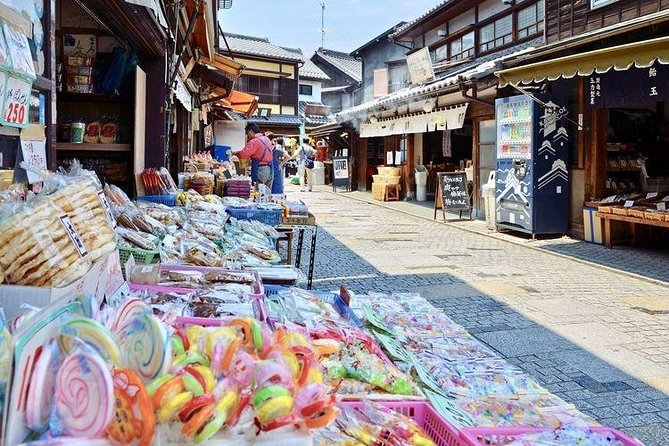
Kawagoe was once a castle town and a key commercial center connected to Edo, present-day Tokyo. It is now known for its old warehouse buildings, temple grounds, shrines, sweets, restaurants, and surviving castle structures.
The appeal is not that every building is untouched. The main warehouse street is very much a working shopping area, with historic exteriors now used as shops and restaurants. That mix is part of the experience. You can look at traditional architecture, then step inside for noodles, rice dishes, or local snacks.
The town is close enough to Tokyo for a practical six-hour outing. You do not need to give up a full day of sightseeing in the capital, yet you get a setting that feels different from Tokyo’s major districts. A guide helps most with the awkward parts: finding the right transport, deciding which sights deserve your limited time, and understanding why a bell tower or temple matters.
The tour costs $153.11 per person. That is not a cheap independent day out, especially once you add train or bus fares, entrance tickets, and lunch. The value comes from the private format and the planning help. If your group wants a flexible day and would rather not work out Kawagoe’s transport and sightseeing order, the price can make sense. If you are comfortable using public transport and visiting only the main shopping street, you can spend much less on your own.
More private tours in Tokyo:
- Tokyo 6hr Private Tour with Government-Licensed Guide
★ 5.0 · 3,902 reviews - Private Tour to Mt. Fuji and Hakone (Fully Licenced Operator)
★ 5.0 · 1,910 reviews - Tokyo Customized Private Tour (Must See Places in 1 Day)
★ 5.0 · 1,499 reviews
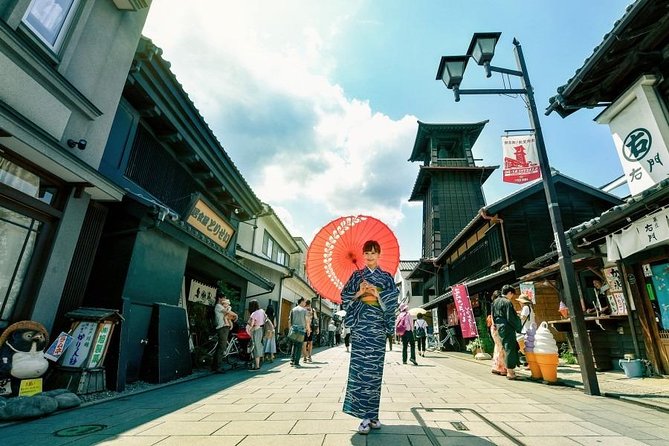
Starting with the Toki no Kane bell tower
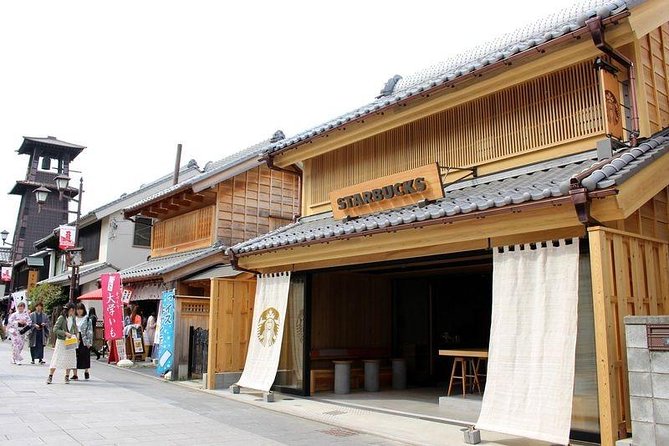
The Toki no Kane is Kawagoe’s most recognizable landmark. This wooden bell tower once marked the hour for local residents at a time when personal clocks were uncommon. The bell still rings at set times, including 6 a.m., noon, and 3 p.m.
The stop itself is short, listed at about five minutes, so think of it as a landmark and orientation point rather than a long visit. Your guide can explain how the bell fitted into daily life in the Edo period and point out the character of the surrounding streets.
The area can become crowded, particularly on Saturdays. It is a good place for a quick photograph, but do not expect a quiet, empty old-town scene during the busiest hours.
Eating and browsing at Koedo Yokocho
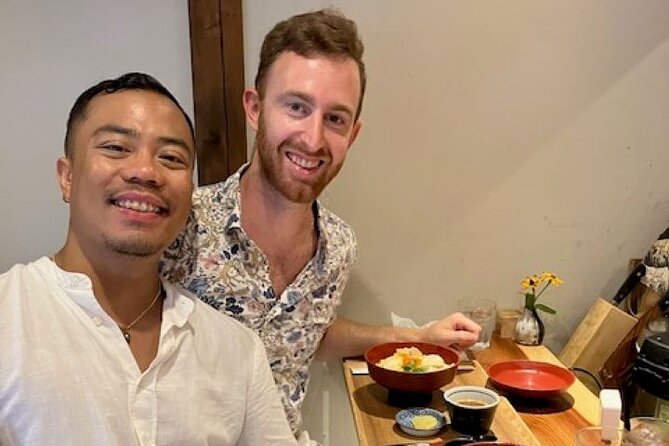
Koedo Yokocho is a useful pause in the middle of the walking route. The warehouse-style building contains restaurants serving Japanese dishes such as kamameshi, a rice, meat, and vegetable meal prepared in a small pot, along with ramen.
You get about 30 minutes here, which may be enough for a quick meal or a look around rather than a leisurely restaurant visit. A free rest area is available, useful if someone in your group needs to sit down.
Food is one of the better reasons to keep the tour flexible. You can ask your guide to help you choose between a meal stop and another cultural sight, depending on your appetite and schedule. One particularly praised part of the experience was handmade udon, so you may want to ask your guide what is good that day rather than treating the food district as a simple photo stop.
Lunch is not included, and the schedule may be affected by fixed bus times. Keep a little room in your plan instead of expecting every minute to run perfectly.
Walking the warehouse district and Kurazukuri Museum
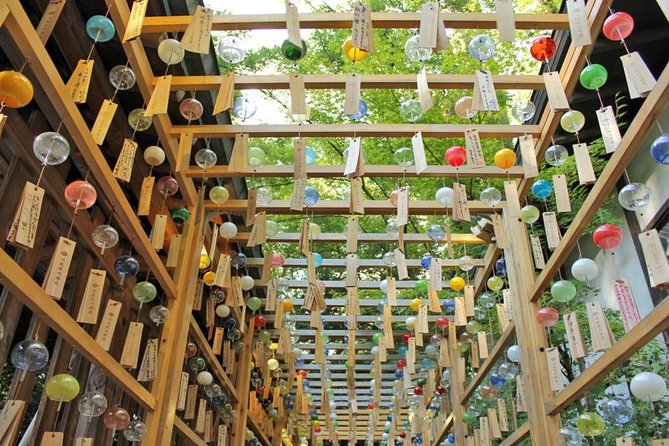
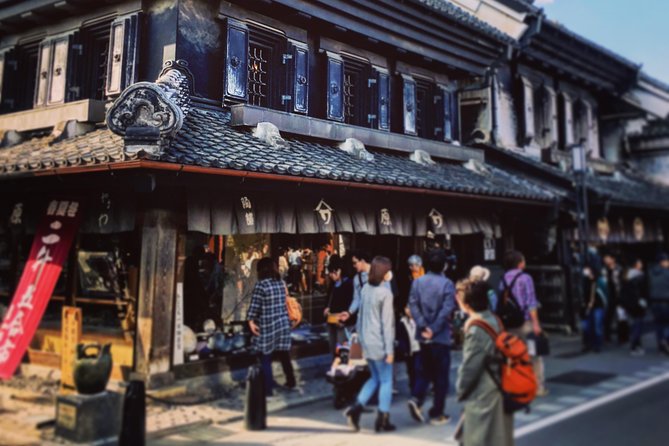
Kawagoe’s warehouse district is its visual calling card. The dark, thick-walled buildings were designed to protect goods from fire, and several survive along the old commercial streets.
The Kawagoe Kurazukuri Museum explains this building style and the town’s merchant past. It is listed as a 30-minute stop, with admission charged separately. I would choose this museum if you want context rather than only street photographs.
The important thing to understand is that the district is not a preserved open-air museum in the strict sense. Many old structures now hold shops, cafés, and restaurants. That makes the area more useful and lively, but it also means the setting can feel commercial. On Saturdays, the street may be packed enough to make a slow look at the architecture difficult.
A weekday visit should give you a calmer pace, although the tour information does not promise a specific crowd level or opening schedule.
More guided tours in Tokyo:
- Tokyo: Shinjuku Local Bar and Izakaya Guided Walking Tour
★ 4.9 · 1,794 reviews - Tokyo: Private City Highlights Tour with Local Guide
★ 4.8 · 1,433 reviews - Tokyo: Tsukiji Fish Market Guided Walking Tour
★ 4.9 · 1,397 reviews - Tokyo 4hr Private Tour with Government-Licensed Guide
★ 5.0 · 1,394 reviews
Seeing the castle remains and Honmaru Palace
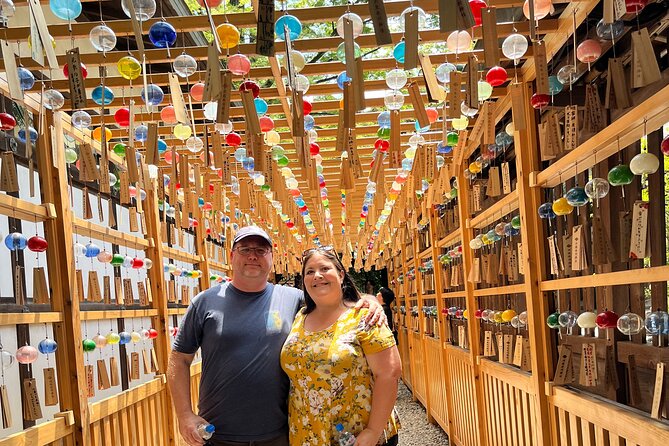
Kawagoe Castle once shaped the town’s identity, but most of the castle no longer survives. The Naka no Mon remains and the Honmaru Palace offer two different ways to explore what is left.
At the Naka no Mon remains, you see part of the former castle entrance and a small number of rooms open to the public. The visit is listed at about 30 minutes, with admission extra. This is a modest site, so it suits visitors who enjoy fragments and historical clues more than grand castle towers.
Kawagoejyo Honmaru Palace offers another look at the castle complex. Japanese castles are popular for good reason, but you should set realistic expectations here. This is not a complete fortress with high walls and a central keep. Your guide can help explain the importance of the surviving buildings and the castle town that grew around them.
These two stops may appeal most to visitors who want a historical day rather than a shopping excursion. They are also a good reason to use the private format, since your guide can explain what remains without forcing you into a long museum visit if your interest fades.
Finding a quieter moment at Hikawa Shrine
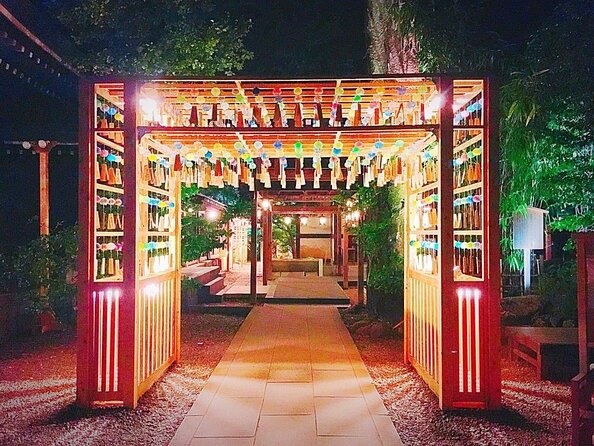
Hikawa Shrine is one of Kawagoe’s best-known religious sites and is associated with love and successful relationships. Its Enmusubi dama, or love-success stone, is a well-known good-luck item.
The shrine is free to enter and receives about 30 minutes on the suggested route. You can expect a more reflective stop than at the shopping streets, though its popularity means it is not guaranteed to be quiet.
I like this choice for couples, families, and anyone who wants to see a living place of worship rather than only historic buildings. Your guide can explain the customs and the meaning of the shrine’s charms, while also helping you behave respectfully in an active religious setting.
Kitain Temple and the city museums
Kitain is a Buddhist temple with a history reaching back roughly 1,200 years. It is one of the strongest choices for a first visit because it gives you temple architecture, religious atmosphere, and a connection to Kawagoe’s long past in one stop.
Admission is listed as free, though other parts of the temple complex may have their own rules or charges. The suggested visit lasts about 30 minutes. You may want longer if you enjoy temple grounds and want time for photographs.
The Kawagoe City Museum is another 30-minute option, with admission extra. Its purpose is to explain why the city is known as Little Edo and how its historic buildings and castle-town character developed.
Choose Kitain if you prefer atmosphere and active religious sites. Choose the city museum if you want a more direct explanation of Kawagoe’s past. Trying to fit both along with the warehouse district, castle sites, and shrine may make the day feel rushed.
Kawagoe Matsuri Kaikan and local festival culture
The Kawagoe Matsuri Kaikan focuses on the city’s traditional festival culture. Japan has local festivals across the country, and this museum offers a way to learn about Kawagoe’s own event even when a festival is not taking place.
The stop is listed at about 30 minutes, with admission not included. It is a sensible option for anyone interested in floats, local celebrations, and community traditions. It is less essential if your main goal is architecture, food, or temples.
Ask your guide to weigh it against the City Museum. Both are indoor cultural stops, and choosing one may leave you more time for walking outside.
Taking a bath at Kawagoe Onsen
Kawagoe Onsen offers natural hot spring bathing, with several wood and stone baths. This can be the most relaxing choice on the menu, especially after a day of walking.
The onsen is listed as a 30-minute stop, but that is a short bathing visit once changing time and facility rules are considered. Admission is extra, and the tour information does not specify the exact bathing cost or whether the guide enters with you.
You should also treat an onsen as a personal choice, not a standard sightseeing stop. Some people will love ending the day with a hot bath. Others will prefer to spend the limited time at a temple or museum. Ask about timing before choosing it, since bathing facilities often have their own procedures.
How the private format works in practice
You meet your licensed English-speaking guide on foot at a suitable location in Tokyo or Kawagoe. The arrangement can include meeting at your hotel, as one highly praised experience did, then traveling together by train. The tour price does not include public transport, so you pay those fares separately.
The guide does not provide a private vehicle. This matters because the day is based on walking and public transport, not door-to-door driving. You should wear comfortable shoes and expect the route to involve ordinary city walking, station transfers, and time outside.
The guide’s role is especially useful if Japanese transport feels confusing. The experience includes help with directions and translation, and the guide can adjust the day around your interests. Past guides have included Taka, Isao, and Show, though no particular guide is guaranteed.
One strong point is the attention to mobility needs. Isao was praised for walking slowly, avoiding stairs where possible, and using elevators and escalators. Still, the tour is described as a walking experience, so explain your needs clearly before the day and confirm that your preferred sights work for your group.
Timing, crowds, and the six-hour limit
Six hours sounds generous, but Kawagoe offers more possible stops than you can comfortably fit. The suggested route lists ten places, yet the actual tour includes only three or four of your choices.
A sensible plan might be:
- Toki no Kane and the warehouse district
- Kurazukuri Museum
- Kitain Temple
- Hikawa Shrine
For food, you could replace one museum with Koedo Yokocho. For a more historical day, choose the castle remains, Honmaru Palace, Kitain, and the City Museum. For a slower day, combine one or two cultural sights with Kawagoe Onsen.
Do not try to visit every location. You would spend too much time moving between stops and too little time enjoying them. Saturday can be especially crowded, so a weekday is the better choice if you want a calmer walk through the old town.
Who should book this Kawagoe tour?
I would recommend it to first-time visitors who want help with Japanese transport, couples or families seeking a private schedule, and anyone who wants to mix major sights with a personal interest such as food, temples, museums, or bathing.
It also suits people who appreciate a slower pace. The guide can adjust the walking speed, and the private setup avoids joining a large group with a fixed route.
I would be more cautious if you are watching every yen, want a private car, or prefer to explore independently. The $153.11 price is before transport, food, and admissions, and a self-guided Kawagoe visit can cost less. Also, the quality of the day depends partly on the guide’s transport knowledge and English ability, so clear communication before departure is worthwhile.
Should you book it?
Book this tour if you want personal help and a flexible route more than the lowest possible price. The strongest plan is to choose three sights, leave room for food, and ask for a weekday departure if your schedule allows.
Skip it if you only want to photograph the bell tower and warehouse street. For that narrow purpose, you can likely manage alone. But if you want to understand Kawagoe, use public transport without stress, and shape the day around your own interests, this private six-hour format is a practical way to do it.
Free cancellation is available up to 24 hours before the start time. Changes or cancellations made later are not accepted for a refund.
FAQ
How long is the Kawagoe private tour?
The tour lasts approximately six hours.
How many sights can I choose?
You can choose three to four sites from the available attractions.
Where do I meet the guide?
You meet the guide on foot at an agreed location within the designated area of Tokyo or Kawagoe.
Is transportation included?
No. Transportation fees are not included, and the tour does not provide a private vehicle.
Is lunch included?
No. Lunch and other personal expenses are paid separately.
Are entrance fees included?
No. Entrance fees are generally extra. The guide’s entry fees are covered only for sights listed under the tour’s included attractions.
Is the tour private?
Yes. Only your own group participates, and separate groups cannot be combined.
Is the tour suitable for people with mobility limitations?
Most people can participate, and the experience is a walking tour. A guide has accommodated mobility limitations by walking slowly and using elevators and escalators, but you should explain your needs in advance.
Can I cancel for a full refund?
Yes, if you cancel at least 24 hours before the experience start time. Cancellations made less than 24 hours before the start time are not refunded.
Newly reviewed around Tokyo
- Tokyo Asakusa:Calligraphy & Make T-shirt Activity★ 5.0 · 62 reviews
- Intercity Shuttle, Tokyo to Haneda /Narita /Yokohama /Makuhari★ 5.0 · 5 reviews
- 1 Hour Travel around Tokyo with a Professional Photographer★ 5.0 · 3 reviews
- Travel Tokyo with Your Own Personal Photographer★ 5.0 · 43 reviews
- Train in Samurai Swordsmanship and Defeat the Demon in Tokyo★ 5.0 · 5 reviews
- Shuttle Van 6hr Tokyo Tour to-and-from Tokyo, Yokohama and Narita★ 5.0 · 9 reviews
- Kickboxing & Body Training with EX-Pro Fighter★ 5.0 · 4 reviews
- Traditional Japanese Knife Sharpening Class★ 5.0 · 18 reviews
Guided, compared.
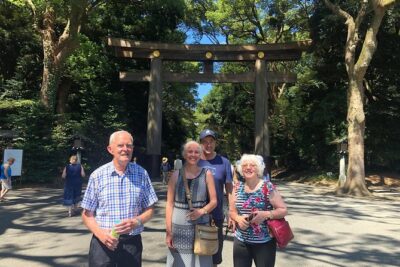
Tokyo 6hr Private Tour with Government-Licensed Guide
Read our review →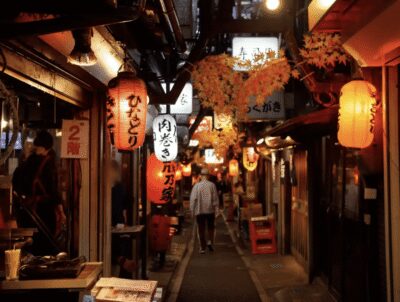
Shinjuku Local Bar and Izakaya Guided Walking Tour
Read our review →
Private City Highlights Tour with Local Guide
Read our review →
Tokyo 4hr Private Tour with Government-Licensed Guide
Read our review →
Samurai Ninja Museum Guided tour and Experience
Read our review →