
Reviewed · TOKYO MARTIAL ARTS EXPERIENCES
Karate Experience with the Shotokan Karate-do Instructor
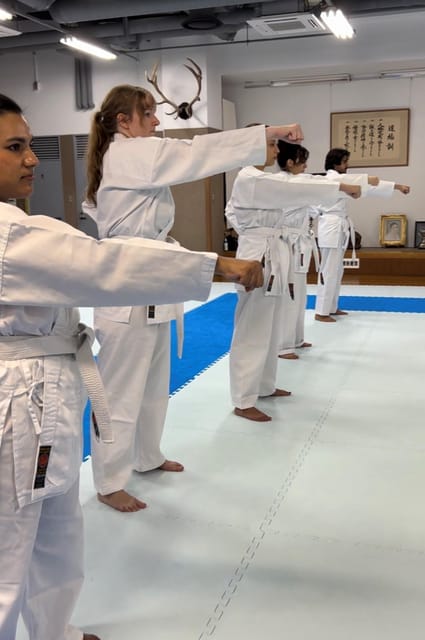
The most unusual part of this Tokyo-area experience is the setting: you train at the Shotokan Karate-do International Federation headquarters, a dojo where world champions teach and practice. In 90 minutes, you’ll learn basic strikes, kicks, kata, and promise kumite, then try board breaking and watch an instructor demonstration.
I like the small group limit of 10, which gives the instructor room to adjust the session. I also like the personal approach for experienced karateka. Tell the organizer your style and training goals in advance, and the lesson can move beyond a generic beginner class. The main consideration is price: at $220 per person, this is a premium short activity rather than a casual drop-in lesson.
Key points
- Train at the SKIF Headquarters dojo: Learn in the home setting of one of karate’s respected international organizations.
- Practice more than basic punches: The session includes striking, kicking, kata, promise kumite, and board breaking.
- Suitable for beginners and karateka: Your instructor can adapt the training if you share your background and goals ahead of time.
- Meet an accomplished instructor: The session may be led by an instructor with SKIF World Championship or All Japan Karate Championship success.
- Keep the logistics simple: Kugahara Station is a two-minute walk away, uniforms are available to rent, and English instruction is provided.
Training at the SKIF Headquarters dojo
This is not a sightseeing stop with a quick martial arts demonstration added on. You go to a working karate dojo and take part in a structured training session. The Shotokan Karate-do International Federation, or SKIF, is an established organization with instructors who have competed at high levels in Japan and abroad.
That setting gives the activity its strongest point. You are not simply learning a few Japanese words for punches and kicks in a hotel room. You are being introduced to Shotokan karate in the place where serious training takes place, with a lesson shaped by instructors connected to national and international competition.
The dojo is near Kugahara Station on the Tokyu Ikegami Line. It takes about two minutes to walk from the station, which makes this much easier to fit into a Tokyo day than an activity requiring a long trip outside the city. If you are unsure of the route, you can contact the organizer in advance and ask to be met at the station.
Arrive at least 10 minutes early. The 90-minute session cannot be extended if you arrive late, and this is not the kind of activity where you want to rush through the door while everyone else is already warming up.
More Tokyo martial arts classes:
- Tokyo: Samurai Sword & Archery Class from Samurai Descendant
★ 5.0 · 603 reviews - Tokyo:Samurai sword and archery class from a samurai descendant
★ 5.0 · 121 reviews - Tokyo 2-Hour Genuine Samurai Experience: Kendo in Japan
★ 5.0 · 112 reviews
The first steps: karate history, etiquette, and movement
The session begins with an introduction to the history and philosophy of karate. This matters because karate is not only a collection of physical techniques. The movements are tied to discipline, control, form, and respectful conduct, and the opening explanation helps you understand what you are practicing.
You then move into fundamental techniques. Expect instruction in basic strikes and kicks, with attention to how the body is positioned and how the technique is delivered. If you are new to karate, the instructor will give you a clear entry point without expecting prior experience.
I would not treat this as a fitness class where the goal is simply to work up a sweat. Karate places value on precision and controlled movement. A simple punch can involve stance, balance, timing, breathing, and the position of the hands. In a short session, you will not master those elements, but you can begin to see why the art takes years to study.
The English-speaking instruction is useful here. You can ask questions rather than copying a movement without understanding it. One participant specifically appreciated being able to ask about techniques and Japanese terms, and the instructor Paul was able to explain the traditional side of karate in detail. Paul may not be your instructor, since the session is led by one of several senior instructors, but that account gives you a good idea of the level of explanation available.
Kata gives the lesson its traditional shape
Kata is one of the key parts of Shotokan karate. It is a set sequence of movements practiced with focus and control. You may recognize the basic elements from the earlier striking and kicking work, but kata puts them together in a formal pattern.
For a beginner, kata can feel like a lot to take in during one lesson. You will need to remember the order of movements while paying attention to stance, direction, and form. That is part of the point. Kata asks you to combine memory, balance, technique, and concentration instead of treating each punch or kick as an isolated action.
For an experienced karateka, kata may be the most useful part of the session. The organizer asks you to share your style and the type of training you want in advance. That gives the instructor a chance to shape the lesson around your background rather than starting from zero.
Do not assume that Shotokan practice will match your usual style exactly. Even if you have trained in karate before, terminology, emphasis, and technique may differ. That difference can be valuable, but you should arrive ready to listen and compare rather than expecting a private version of your normal class.
Promise kumite without the pressure of competition
The session also introduces promise kumite, a form of pre-arranged sparring. Unlike free sparring, the movements follow an agreed sequence. This lets you work on distance, timing, defensive responses, and controlled attacks in a more structured way.
That makes promise kumite a sensible choice for beginners. You can experience the rhythm of working with a partner without being thrown into an unpredictable contest. For experienced karateka, it offers a chance to compare how the SKIF approach handles set exchanges.
The phrase pre-arranged does not mean the exercise is empty. You still need to maintain posture, control your movement, and respond at the right moment. The instructor can show how the sequence should look and help you adjust your pace.
If you are nervous about physical contact, tell the instructor at the start. The supplied information does not specify the exact intensity of partner work, so you should use the opening briefing to explain your comfort level and experience. Clear communication will help the instructor give you the right version of the exercise.
A completely different kind of day in Tokyo:
- Mt Fuji and Hakone 1-Day Bus Tour Return by Bullet Train
★ 5.0 · 26,383 reviews - 1-Day Tokyo Bus Tour
★ 5.0 · 14,250 reviews - Tokyo: teamLab Planets TOKYO Digital Art Museum Entry Ticket
★ 4.6 · 9,779 reviews - Mt Fuji & Hakone Cruise, Drum Show Bullet Train 1 Day from Tokyo
★ 4.0 · 7,413 reviews
Board breaking and the instructor demonstration
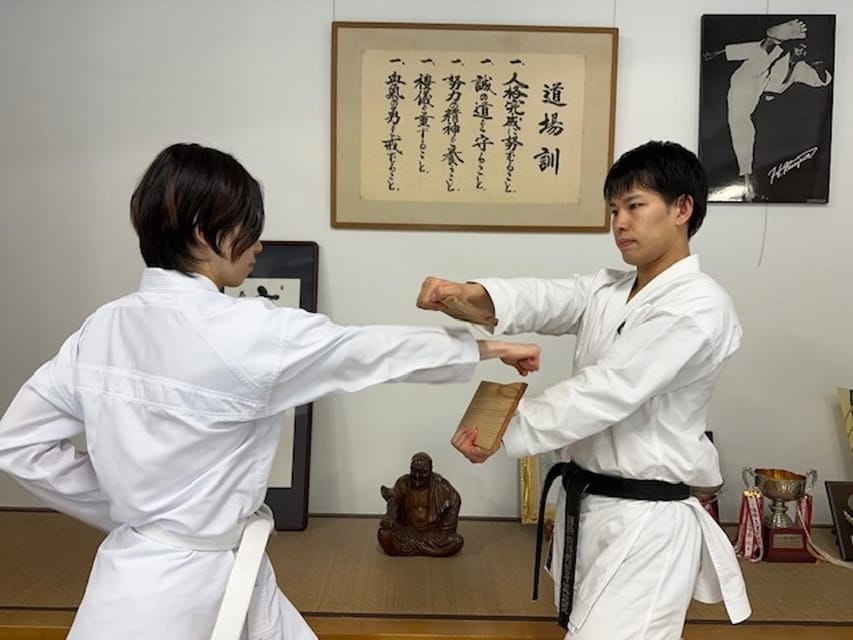
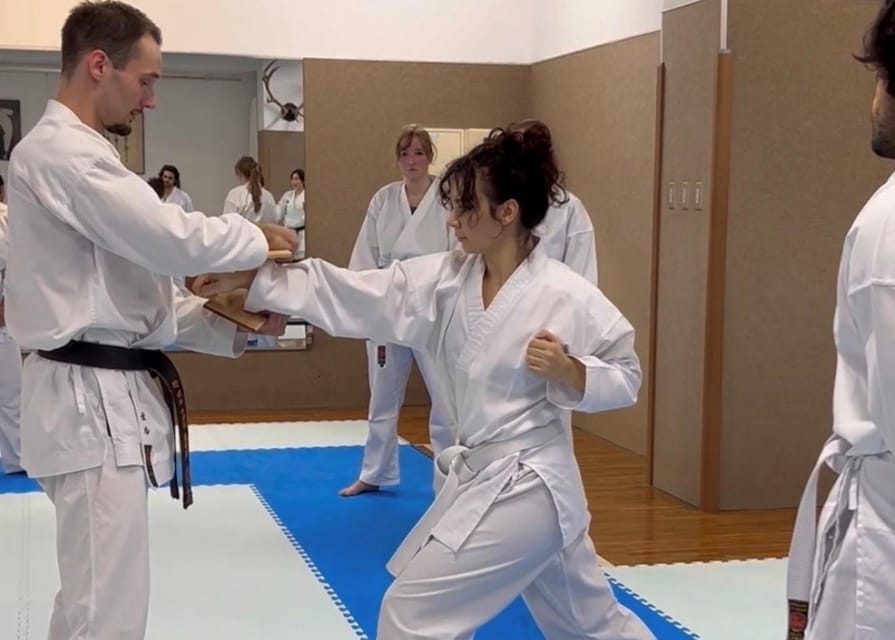
Board breaking is included, and it will likely be the most memorable portion for many first-time participants. You receive the opportunity to try splitting a board under instruction, rather than only watching a demonstration.
Keep your expectations sensible. Breaking a board is not a magic trick or a measure of whether you are good at karate. It depends on technique, confidence, focus, and following instructions. The instructor will guide you, but the point is to experience the mechanics of a committed, controlled strike.
The instructor also gives a powerful demonstration. This provides a useful contrast with your own practice. You see what a polished technique looks like after years of training, then return to the basic movements with a better sense of the goal.
The instructors connected with this program have earned gold medals in kumite at SKIF World Championships, national titles in kata and kumite, and runner-up finishes in major Japanese and international competitions. Those credentials do not turn your 90-minute class into a championship camp, but they do explain why the demonstration and instruction are significant.
A small-group lesson with room for questions
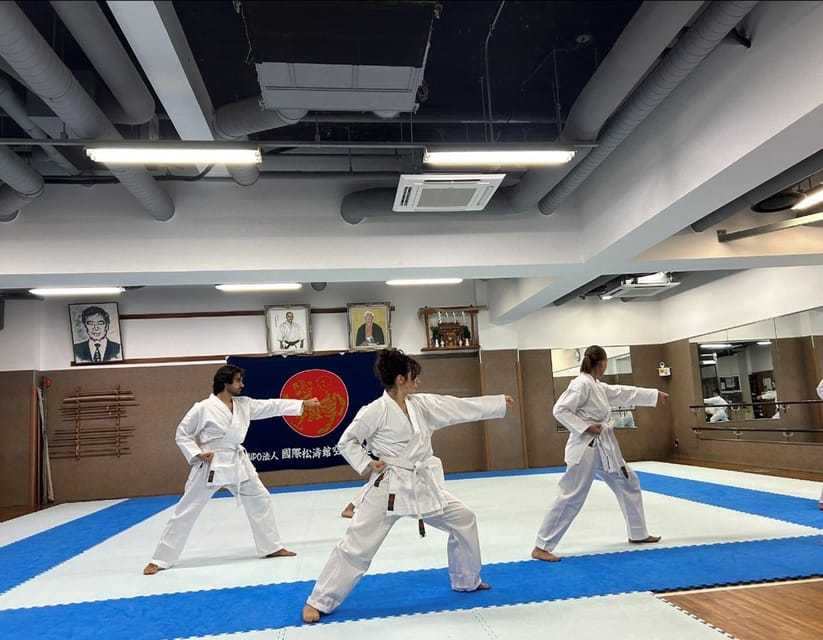
The group is limited to 10 participants. That number is small enough to keep the session personal, though the actual amount of individual attention will depend on the group and the instructor.
I see the group size as a major benefit for first-time participants. You can watch other people try a movement, take your own turn, and ask for clarification without being lost in a large class. It also makes the session less intimidating than entering a full dojo class where everyone else already knows the routine.
For experienced karateka, the group limit may allow more focused feedback. Send your style and training requests before arrival. If you practice another form of karate, the instructor may be able to tailor the work toward traditional techniques, kata, or another area you want to study.
One participant from Germany had previous experience and specifically requested a stronger focus on traditional karate. The instructor responded to that request and explained Japanese terms and techniques along the way. That is a useful tip: do not wait until the session begins to mention your background. The more specific you are beforehand, the more useful the class is likely to be.
What to wear and what to bring
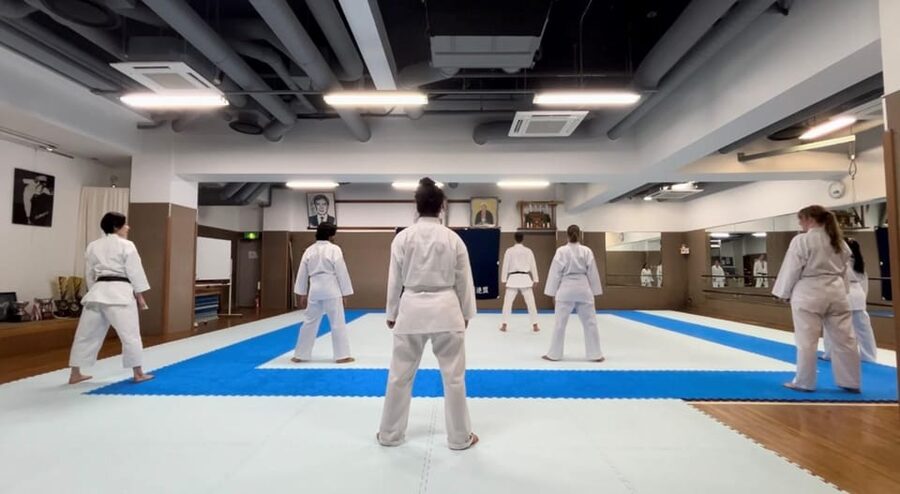
Uniform rental is included, so you do not need to pack a karate gi for this activity. That makes the experience easier to add to a Japan itinerary, especially if you are traveling with limited luggage.
Bring a towel and drinks. Bottled water is not included, and neither is a towel. Food is not allowed in the dojo, and smoking, alcohol, and drugs are prohibited.
You should also plan for physical movement. The supplied information does not specify the exact changing facilities or footwear policy, so follow the organizer’s instructions when you arrive. The practical choice is to wear comfortable clothing under the rental uniform and avoid bringing unnecessary items into the training area.
Children under seven are not suitable for the activity. If a child aged seven or older only wants to visit rather than train, contact the organizer before booking. That request needs to be handled in advance.
Is $220 a fair price for 90 minutes?
At $220 per person, this is expensive for a 90-minute activity. You could find many basic martial arts classes for less, especially if your goal is only to learn a few movements or get a short workout.
The value here comes from the access and the setting. You are paying for instruction at the SKIF Headquarters dojo, a small group, an English-speaking instructor, rental uniform, a demonstration by a highly accomplished karate instructor, and the chance to try board breaking. You are also paying for a lesson that can be adjusted for a trained karateka instead of offering one fixed routine to everyone.
I would recommend the price to someone who has a serious interest in Japanese martial arts, traditional karate, or the chance to train at a respected organization while in Japan. It is harder to justify if you simply want an inexpensive activity between sightseeing stops.
The included uniform rental helps, but transport, bottled water, and a towel are not included. The station is close enough that transport should be straightforward, yet you still need to plan your route and arrive early.
Who will get the most from this karate experience?
This activity suits a few different types of people:
- First-time participants: You can learn basic strikes, kicks, kata, and structured partner work without needing previous karate experience.
- Experienced karateka: You can request training suited to your style and interests if you provide those details in advance.
- Culture-focused visitors: The opening discussion and traditional practice give you more context than a simple physical class.
- Martial arts enthusiasts: The dojo, instructor background, demonstration, and board breaking make this more meaningful than a casual tourist workshop.
- Small-group learners: A maximum of 10 people gives you a better chance to ask questions and receive corrections.
It may not suit someone looking for a long training session. Ninety minutes passes quickly once the introduction, warm-up, techniques, kata, partner work, demonstration, and photos are all included. It is an introduction, not a full day of instruction.
You should also think about the physical side. The activity involves strikes, kicks, movement, and partner exercises. If you have an injury or concern, discuss it with the organizer or instructor before training.
Finishing with an exchange and photos
The session ends with a friendly exchange and a photo opportunity. This gives the class a relaxed finish after the more focused practice.
The photo is also a useful reminder of what makes this activity different from an ordinary karate lesson at home. You are taking part at the SKIF headquarters, with an instructor connected to major competitions, and you have tried practices that include kata, promise kumite, and board breaking.
Do not expect the final photos to replace the training itself. The strongest part of the activity is the chance to learn directly from the instructor and ask questions while you practice. The photos are a pleasant closing touch.
Should you book it?
I would book this karate experience if you want a serious, short introduction to Shotokan karate and value access to an established Japanese dojo. The strongest reasons are the SKIF Headquarters setting, the small group, the option to request a more tailored lesson, and the chance to learn from instructors with major competition records.
I would skip it if your budget is tight or you only want a cheap cultural activity. The $220 price requires genuine interest in karate to feel worthwhile.
For the best session, contact the organizer before arrival with your experience level, karate style, and training goals. Bring water and a towel, arrive 10 minutes early, and treat the lesson as an introduction to a long tradition rather than a test you must pass. If that sounds like the kind of Tokyo memory you want, this is a strong choice.
FAQ
Where does the karate experience take place?
The session takes place at the Shotokan Karate-do International Federation Headquarters dojo in Honshu, Japan. It is a two-minute walk from Kugahara Station on the Tokyu Ikegami Line.
How long does the karate session last?
The activity lasts 90 minutes. It cannot be extended if you arrive late, so you should arrive at least 10 minutes before the scheduled start time.
Do I need previous karate experience?
No. Beginners can join the program. If you already practice karate, provide your style and preferred training focus in advance so the instructor can adjust the session.
Is instruction available in English?
Yes. English instruction is provided.
Is a karate uniform included?
A uniform is available for rental and is included in the experience. You should still bring a towel and drinks because bottled water and towels are not included.
Can children take part?
Children under seven are not suitable for the activity. If a child aged seven or older would like to visit only rather than train, contact the organizer in advance.
Newly reviewed around Tokyo
- Tokyo Asakusa:Calligraphy & Make T-shirt Activity★ 5.0 · 62 reviews
- Intercity Shuttle, Tokyo to Haneda /Narita /Yokohama /Makuhari★ 5.0 · 5 reviews
- 1 Hour Travel around Tokyo with a Professional Photographer★ 5.0 · 3 reviews
- Travel Tokyo with Your Own Personal Photographer★ 5.0 · 43 reviews
- Train in Samurai Swordsmanship and Defeat the Demon in Tokyo★ 5.0 · 5 reviews
- Shuttle Van 6hr Tokyo Tour to-and-from Tokyo, Yokohama and Narita★ 5.0 · 9 reviews
- Kickboxing & Body Training with EX-Pro Fighter★ 5.0 · 4 reviews
- Traditional Japanese Knife Sharpening Class★ 5.0 · 18 reviews
Tokyo Martial Arts Experiences, compared.
Samurai Sword & Archery Class from Samurai Descendant
Read our review →
Samurai sword and archery class from a samurai descendant
Read our review →
Tokyo 2-Hour Genuine Samurai Experience: Kendo in Japan
Read our review →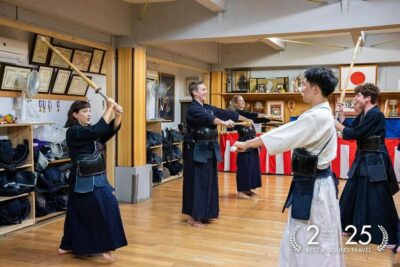
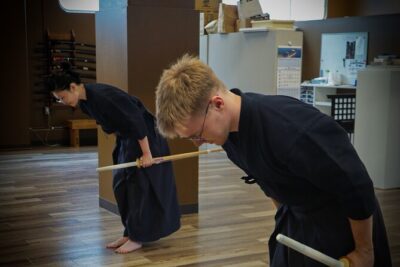
Samurai Experience – Learn Bushido through Kendo, in Tokyo
Read our review →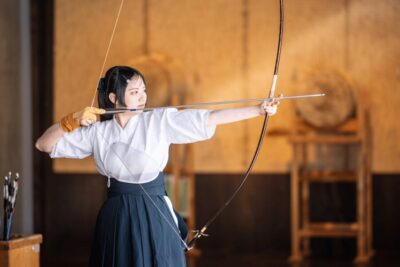
Samurai Experience – Learn Bushido through Kendo, in Tokyo
Read our review →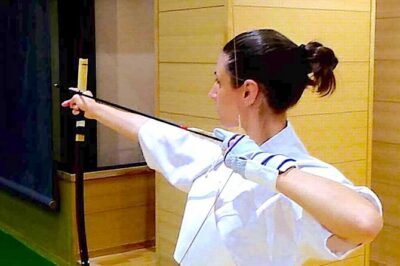
Authentic Kyudo Japanese Archery Experience in Tokyo
Read our review →Browse the lists this tour appears in