
Reviewed · TOKYO SUMO EXPERIENCES
Experience the Sumo World in Tokyo
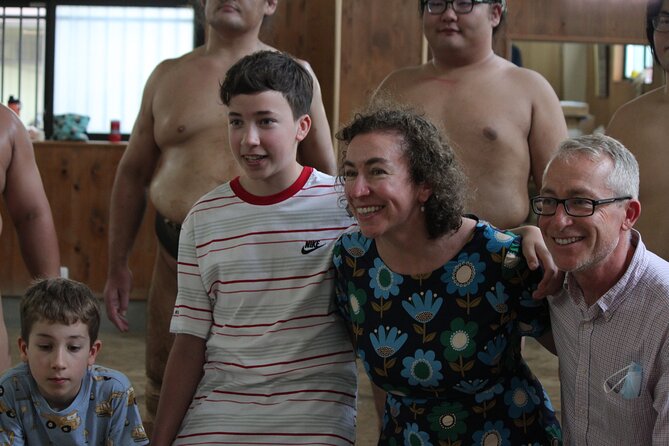
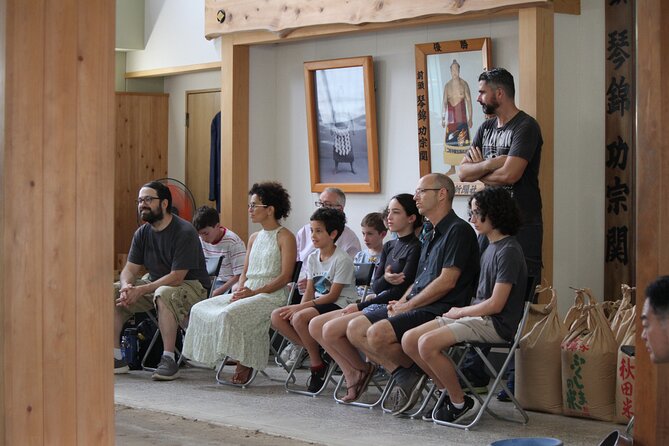
The best part of this Tokyo tour is the front-row view of real sumo training, not a staged show. You sit on chairs beside the practice area, watch the wrestlers work under the stablemaster, and see how much agility, technique, and effort sit behind those huge bodies. Afterward, you can try to push one of the wrestlers yourself, which is fun for adults and children alike.
I like two things in particular: the guides, including Ryoko, Haru, Tomer, Tammy, and Yassmine, explain the rules and customs clearly while helping you navigate the trains; and the meal gives you a direct taste of stable life through chanko nabe, the hearty stew associated with sumo wrestlers. The main drawback is the early 7:45 AM meeting time and complicated train ride. Miss the group and reaching the stable can become costly and stressful.
Key points at a glance
- Watch an actual morning practice: Sit close to the training area for about two hours, with the wrestlers working through demanding drills.
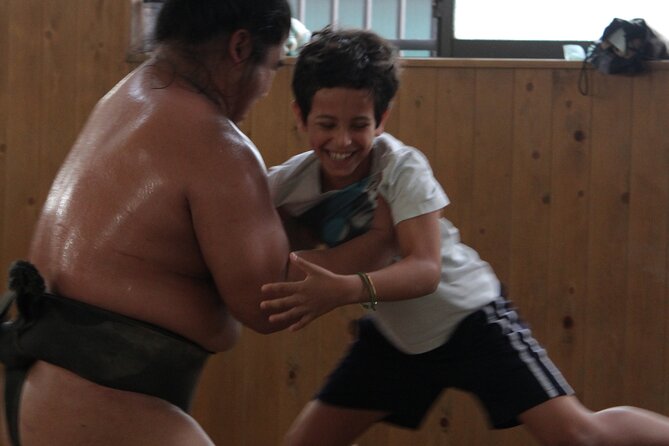
- Try a playful strength test: Step forward and attempt to move a professional wrestler, though your odds of success are slim.
- Eat chanko nabe: Share the traditional wrestler’s stew after practice, with vegetarian service available if requested at least three days ahead.
- Learn on the way there: Guides explain sumo terms, history, rules, and customs during the train journey from Ueno.
- Budget for train fares: Round-trip JR and local train costs total ¥1,060, about $7, and are not included in the tour price.
- Keep the morning free: The experience lasts about four hours and ends back at Ueno Station.
Why this is more than a sumo photo stop
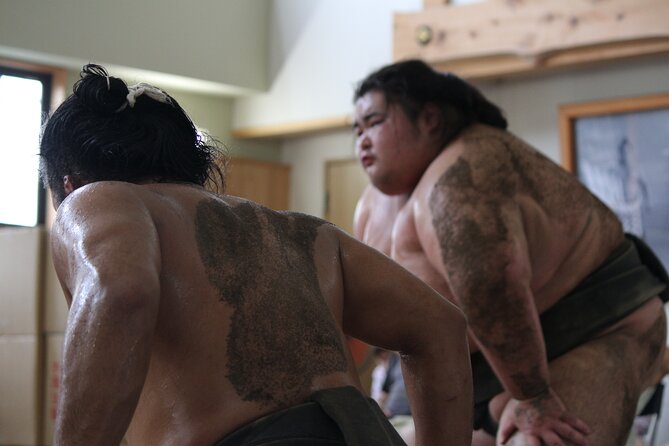
Many Tokyo visitors know sumo as a tournament sport seen at Ryogoku’s arena. This experience gives you another view: the daily work behind the bouts. You watch wrestlers train before the public spectacle, when the focus is on repetition, conditioning, technique, and discipline.
The practice takes place at Asahiyama-beya, a working sumo stable. That setting matters. You are not simply watching a demonstration arranged for tourists. You are entering a place where wrestlers train as part of their normal routine, so the tone is quieter and more serious than a theatrical performance.
You should expect stretches of concentrated practice rather than constant action. Some drills look explosive, while others may seem repetitive until your guide explains what the wrestlers are working on. The close distance helps you notice the speed and force that can be missed from arena seats.
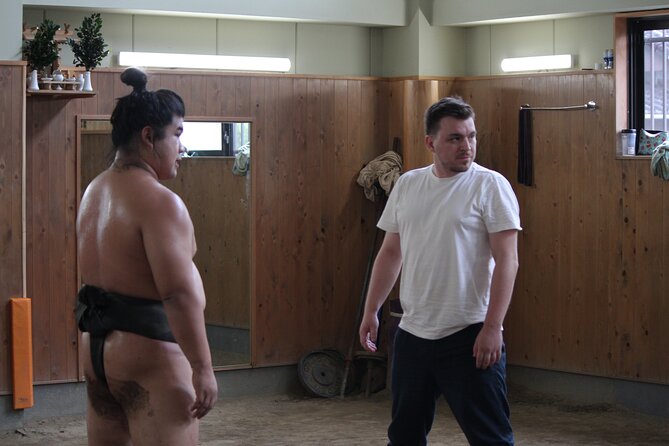
The guides add much of the cultural context. Ryoko is frequently praised for explaining sumo history, rules, and vocabulary in a clear way. Tomer has also helped explain the sport during the train ride, while Haru, Tammy, and Yassmine have led groups on other dates. The guide you receive can vary, but the format is built around having someone interpret what you are seeing.
More Tokyo sumo experiences:
- Tokyo: Sumo Show and Dining Experience
★ 4.8 · 2,742 reviews - the SUMO show
★ 5.0 · 1,960 reviews - Tokyo Shinjuku Sumo Show & Experience with Photo
★ 5.0 · 1,750 reviews
Meeting at Ueno before the city wakes up
The morning begins at 7:45 AM at the JR Information area in Ueno Station. Ueno is a useful starting point because it is a major transport hub, but stations in Tokyo can still feel confusing if you are rushing. I would arrive early enough to locate the meeting point without relying on last-minute messages.
From Ueno, the group takes a train to Matsudo, a ride of about 19 minutes. You then continue to Kunugiyama, taking roughly another 15 minutes. The listed journey includes short waits and transfers, but the total time can vary with the group, station movement, and train schedules.
This train ride is part of the value, not just a transfer. Guides use it to introduce sumo vocabulary and explain the sport before you reach the stable. That helps you follow the practice instead of watching a series of unfamiliar movements with no context.
The train fare is not included. The total round-trip cost is ¥1,060, or about $7. You should carry enough yen or be ready to pay the fare through the normal Japanese rail system. Since the tour finishes back at the meeting point, you do not need to arrange a separate return from the stable.
The one real logistical warning is the meeting time. One delayed start caused a participant to miss most of the training and pay for a long taxi ride after the group had gone ahead. The tour provider uses WhatsApp for some updates, so check all messages before bed and make sure your contact details work. If you do not use WhatsApp, confirm how you will receive final instructions.
Sitting beside the practice at Asahiyama-beya
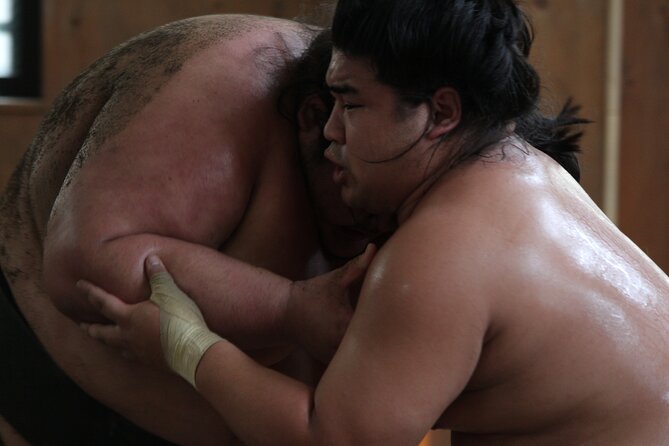
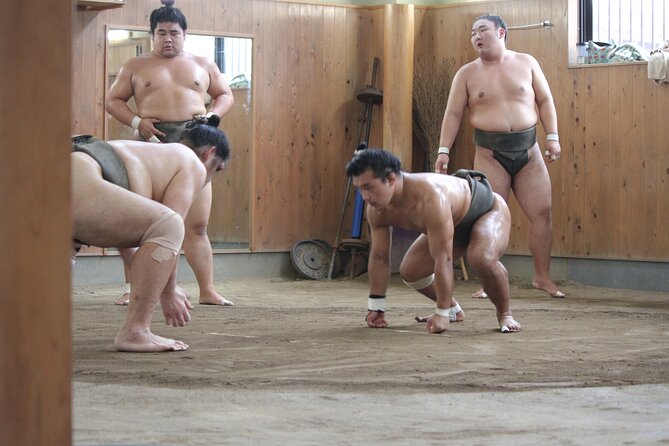
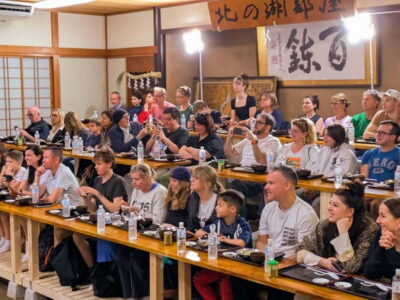
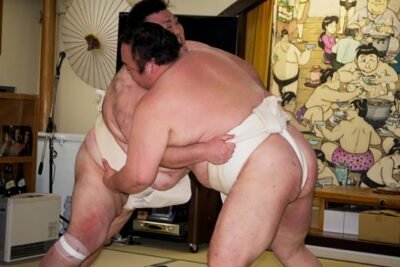
The stable visit is the heart of the morning. You sit on folding chairs close to the training area and watch the wrestlers practice for about two hours. The precise rhythm can change, but you may see bouts, drills, stretching, and instruction from the stablemaster.
You should follow the stable’s rules closely. This is a place of work and training, not a performance venue. The quiet, close-up format means you can watch without a crowd between you and the wrestlers, but it also means you should avoid treating the practice like a noisy sporting event.
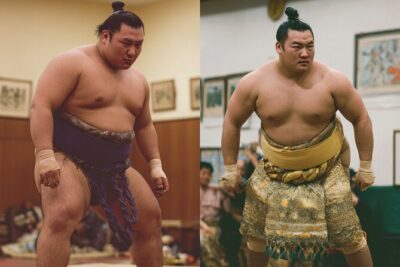
The physical contrast is striking. Sumo wrestlers are famous for size, but the practice also shows footwork, balance, timing, flexibility, and control. One of the most useful things a guide can do is point out that sumo is not simply about being the heaviest person in the ring.
The length of the practice is another reason to plan carefully. If you arrive late, you may see only the final bouts or stretching. The experience still includes explanations and the meal, but the training is the part you cannot repeat later in the morning. Treat 7:45 AM as a firm arrival time, not a suggestion.
The push against a professional wrestler
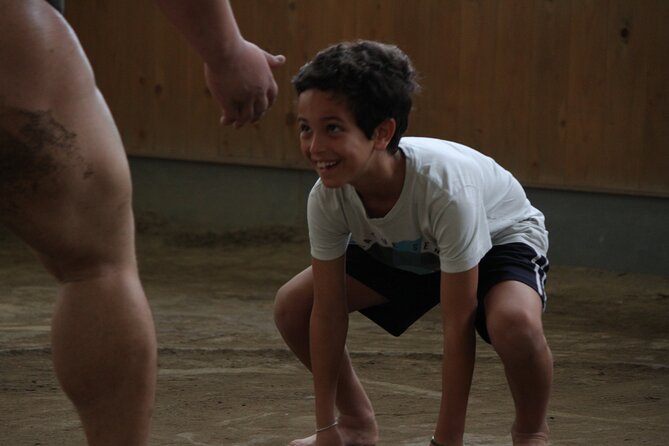
After practice, the tone becomes much lighter. Participants may get the chance to step forward and try to push one of the wrestlers. It is presented as a playful sumo experience, not a formal match, and the results are usually predictable. The wrestler barely moves while you discover how difficult it is to shift a trained athlete with a low, stable stance.
This works especially well for families. Children can take part in the lighthearted challenge, and adults get a quick lesson in leverage and balance. One young participant reportedly enjoyed trying to face a wrestler, while another family found the activity suitable for children under 15.
You should still follow the guide’s instructions and avoid treating the interaction as roughhousing. The wrestlers are generous with their time, but they are also coming off a demanding training session. The activity is brief and controlled.
Photography is allowed at the end of the session. That timing is sensible because it lets you watch the training without holding up a phone or camera throughout the practice. You may also have a chance to ask questions and hear about the wrestlers’ lives and paths into sumo, with the guide helping translate when needed.
A completely different kind of day in Tokyo:
- Mt Fuji and Hakone 1-Day Bus Tour Return by Bullet Train
★ 5.0 · 26,383 reviews - 1-Day Tokyo Bus Tour
★ 5.0 · 14,250 reviews - Tokyo: teamLab Planets TOKYO Digital Art Museum Entry Ticket
★ 4.6 · 9,779 reviews - Mt Fuji & Hakone Cruise, Drum Show Bullet Train 1 Day from Tokyo
★ 4.0 · 7,413 reviews
Chanko nabe, the meal that explains sumo life
Lunch is chanko nabe, the stew traditionally associated with sumo stables. It is generally served as a hearty broth with ingredients such as vegetables and chicken, based on the meal descriptions provided for this experience. It is not presented as a fancy restaurant course. The appeal is eating the kind of filling food connected with the wrestlers’ daily routine.
The meal adds useful context. Sumo is not only what happens in the ring. Training, eating, living arrangements, hierarchy, and stable routines all form part of the sport. Sharing food after watching practice helps connect those pieces.
Vegetarian meals are available, but you must request one at least three days ahead. Do not wait until the morning of the tour. The provided information does not promise specific alternatives for other dietary needs, so you should ask the operator before booking if you have allergies or strict food requirements.
The meal is also one reason the price feels more reasonable than a short photo opportunity. At $105.71 per person, you are paying for a guide-led visit to a place most people cannot enter, the cultural explanation, the training session, the interactive activity, and lunch. You still pay about $7 for transportation, so the full cost is closer to $113 before any other personal spending.
What the guides add to the morning
A good guide is important here because much of the experience depends on interpretation. You may understand that a bout looks powerful, but the guide explains what the wrestlers are attempting, how matches are won, and why certain gestures or routines matter.
Ryoko receives particularly strong praise for her clear explanations and personal help. She has also offered practical suggestions for the rest of the day, which can be useful after returning to Ueno. Tomer is noted for explaining sumo during the train ride and translating information from the stablemaster. Haru, Tammy, and Yassmine have also led groups.
The guides also help with the less glamorous parts of the morning: finding the right platforms, keeping the group together, and making the transfer to the stable. The tour allows a maximum of 26 participants, though group size can vary. A smaller group would feel more personal, while a full group may make the train transfers and seating feel less relaxed.
Communication is the weak point to watch. The operator may send final details through WhatsApp as well as the booking platform. Make sure you know the meeting point, timing, and contact method before the day begins. This is especially important because the stable address is not the starting point, and going there independently can be difficult.
Who will get the most from this sumo experience
I would recommend this tour to anyone curious about Japanese sport, customs, and daily discipline, even if you know little about sumo. The guide’s explanations make it accessible, and you do not need to understand tournament rankings or technical terms before arriving.
Families are a particularly good match. The practice holds the attention of older children, the push against a wrestler adds a fun physical moment, and the meal gives everyone something concrete to talk about afterward. The activity is not described as requiring special fitness, and most people can participate, but you should be comfortable sitting on chairs and following a quiet training-room setting.
It also suits repeat visitors who have already seen Tokyo’s major sights. The suburban train ride and working stable offer a different side of the city than the usual temples, shopping streets, and observation decks.
I would think twice if your schedule cannot absorb an early start or if you dislike fixed group transportation. The tour is not ideal for someone who wants a flexible morning, a long tournament-style spectacle, or a polished stage show. The training may include pauses and exercises that make sense in context but do not deliver nonstop action.
Timing, group size, and practical value
The advertised duration is about four hours. The listed stable visit lasts two hours, with the rest used for meeting, trains, explanations, the meal, and the return to Ueno. Keep your afternoon plans flexible enough to allow for train delays or a slower group transfer.
A maximum group size of 26 is large enough to feel like a proper group tour, but the chairs place you close to the training area. The quality of the morning depends partly on how well the group follows instructions and arrives on time.
Free cancellation is available up to 24 hours before the start time. Changes or cancellations inside that window are not accepted for a refund, and the operator requires a minimum number of participants. If that minimum is not reached and the activity is canceled, you are offered another date or experience, or a full refund.
The tour earns its price if authentic access matters to you. A standard sumo bout in a tournament is a more obvious spectacle, but it does not show the daily training environment in the same way. Here, your money supports a guided visit, transport assistance, lunch, and a rare chance to see the athletes at close range.
Should you book the Sumo World experience?
Book it if you want to see how sumo wrestlers train, not just what they do during a tournament. The close seating, guide interpretation, questions with the wrestlers, push challenge, and chanko nabe make this a well-rounded morning rather than a quick photo stop.
I would book it several days ahead, give the operator dietary information at least three days in advance, and confirm the WhatsApp or message instructions before sleeping. Arrive early at Ueno, budget ¥1,060 for trains, and keep the rest of your morning open.
Skip it if you cannot reliably reach Ueno by 7:45 AM or if your main goal is a full professional bout. For everyone else, especially families and visitors with an interest in Japanese culture, this offers a rare look at sumo as a way of life.
FAQ
Where does the sumo tour begin?
The tour begins at 7:45 AM at the JR Information area in Ueno Station, located at 7 Chome-1 Ueno, Taito City, Tokyo.
How long does the experience last?
The experience lasts approximately four hours and ends back at the meeting point in Ueno.
How do I reach the sumo stable?
You travel by train from Ueno to Matsudo, then continue to Kunugiyama. The listed journey includes about 19 minutes to Matsudo and another 15 minutes to Kunugiyama, plus transfers and station time.
Is train transportation included in the price?
No. Round-trip train fares cost ¥1,060 in total, about $7, and are paid separately.
Is lunch included?
Yes. Lunch is included and features chanko nabe. Vegetarian service is available if you notify the operator at least three days in advance.
Can I take photos with the wrestlers?
Photography is allowed at the end of the training session. You may also have the chance to interact with the wrestlers and try a playful push against one of them.
What is the cancellation policy?
You can cancel at least 24 hours before the local start time for a full refund. Cancellations or changes made less than 24 hours before the start time are not refunded or accepted.
Newly reviewed around Tokyo
- Tokyo Asakusa:Calligraphy & Make T-shirt Activity★ 5.0 · 62 reviews
- Intercity Shuttle, Tokyo to Haneda /Narita /Yokohama /Makuhari★ 5.0 · 5 reviews
- 1 Hour Travel around Tokyo with a Professional Photographer★ 5.0 · 3 reviews
- Travel Tokyo with Your Own Personal Photographer★ 5.0 · 43 reviews
- Train in Samurai Swordsmanship and Defeat the Demon in Tokyo★ 5.0 · 5 reviews
- Shuttle Van 6hr Tokyo Tour to-and-from Tokyo, Yokohama and Narita★ 5.0 · 9 reviews
- Kickboxing & Body Training with EX-Pro Fighter★ 5.0 · 4 reviews
- Traditional Japanese Knife Sharpening Class★ 5.0 · 18 reviews
Tokyo Sumo Experiences, compared.
Tokyo Shinjuku Sumo Show & Experience with Photo
Read our review →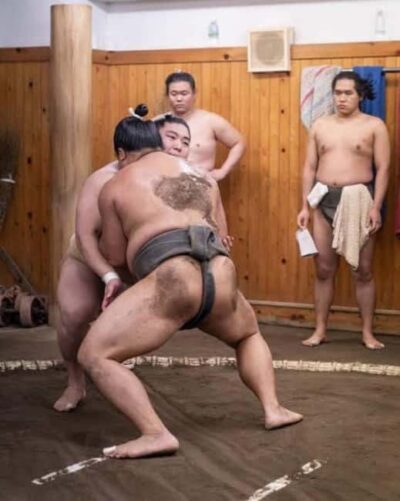

Luxury Sumo Show Experience & Japanese cuisine & Drink
Read our review →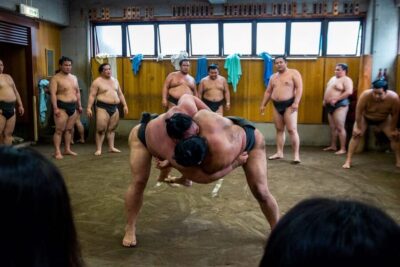
Tokyo Sumo Experience: Chanko & Mochi with a Former Pro
Read our review →
Ultimate Sumo Tournament: Tokyo, Osaka, Nagoya, Fukuoka
Read our review →Browse the lists this tour appears in