
Reviewed · MUSEUMS
Private Edo-Tokyo Open Air Architectural Museum Tour
The most striking part of this private tour is the way Tokyo’s story is told through houses. You move from traditional rooms and wealthy family interiors to the modern design of Kunio Maekawa, then into a Shitamachi district where old shops, a bathhouse, and a train create an atmosphere that may remind you of Studio Ghibli films. I especially like the guide’s role in connecting each building to Japan’s changing politics, tastes, and contact with Europe. I also like that the tour is private, so you can spend more time on tea rooms, gardens, or modern architecture if those are your interests.
The main point to watch is the transport. The museum is not in central Tokyo, and you travel by train and bus, with transport costing about 700 yen each way. The $193 price includes admission and a private English-speaking guide, but not that fare. Also, this is an architectural museum tour, not a visit to the Ghibli Museum.
Key points to know before booking
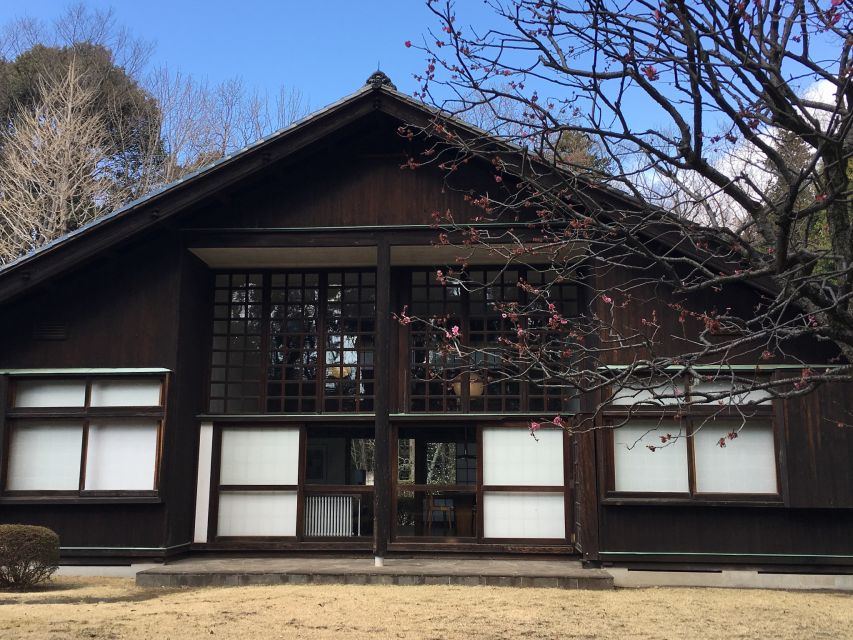
- Kunio Maekawa’s wartime house: See the thoughtful home of a Japanese architect who worked with Le Corbusier and Antonin Raymond.
- European ideas in Japanese rooms: Sutemi Horiguchi’s 1925 residence combines Dutch design, Art Deco, De Stijl, and traditional Japanese spaces.
- A private five-hour visit: Your guide can shape the pace and discussion around architecture, gardens, tea rooms, or Tokyo’s social history.
- The Mitsui family residence: Walk through the lavish home of one of Japan’s wealthiest families.
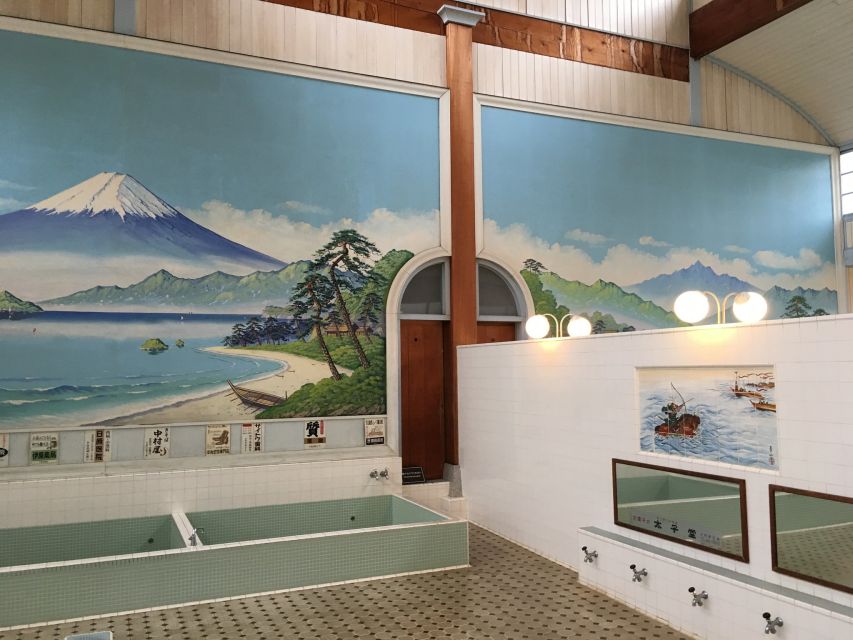
- A Ghibli-like Shitamachi setting: Explore a bathhouse, old train, and streets that recall the mood of classic animation, without visiting the Ghibli Museum.
- Easy shoes matter: Several historic buildings require you to remove your shoes before entering.
Tokyo’s story told through its buildings
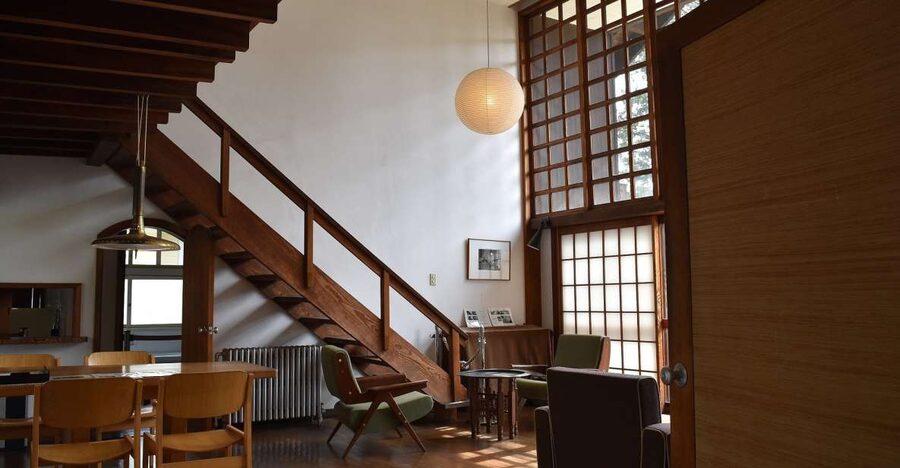
I find this tour valuable because it gives you a way to read Tokyo. Instead of treating architecture as a collection of pretty rooms, the guide can show how the city changed from the end of the samurai era through the Meiji Restoration and into the Showa period.
That time span is the heart of the visit. Traditional Japanese residences reveal older ideas about space, privacy, materials, and daily life. Later houses show Japan responding to Europe, modern technology, new social habits, and changing ideas about comfort. You are not simply looking at old woodwork. You are seeing a country adjust its built environment while keeping familiar Japanese rooms and customs.
A private group makes a real difference here. Yuichi, one of the guides used on this experience, has a particular interest in Japanese architecture and can tailor the discussion to subjects such as tea rooms and gardens. Yuki has also guided the route through the train and bus system while explaining the museum and wider Tokyo. The supplied guide team includes English-speaking licensed guides, and the experience is designed for a private group rather than a large crowd.
The five-hour length gives you enough time to examine the buildings without racing from one stop to the next. Still, the museum contains many structures, so your guide will need to make choices. If you want every building in detail, five hours may feel tight. If you prefer a focused route with context and questions, the time works well.
More Tokyo museums and galleries:
- Tokyo: teamLab Planets TOKYO Digital Art Museum Entry Ticket
★ 4.6 · 9,779 reviews - Tokyo: Samurai Ninja Museum Guided tour and Experience
★ 4.6 · 1,010 reviews - Ninja Experience (Family Friendly) at Samurai Ninja Museum TOKYO
★ 5.0 · 441 reviews
Starting with Kunio Maekawa’s modern Japanese home
The tour begins with a strong contrast to the oldest houses. Kunio Maekawa worked under Le Corbusier and Antonin Raymond, two major figures in modern architecture, before helping shape modern architecture in Japan.
His home was built during the Second World War, a difficult period for Japan. The house is notable because it reflects sophisticated design at a time when materials and resources were under pressure. That context makes the visit more interesting than simply admiring its lines and rooms.
Maekawa’s work also gives you a clear introduction to the tour’s main question: how did Japan adopt Western architectural ideas without simply copying Europe? His answer was not a plain imitation of a European house. The design shows the influence of international modernism while remaining part of Japan’s own architectural development.
This stop is especially useful if you know Le Corbusier by name but have little sense of his influence in Japan. Your guide can place Maekawa between global modernist ideas and local building traditions. You will see why his work still attracts attention, and why this house belongs near the beginning of the route.
Sutemi Horiguchi and Europe brought home
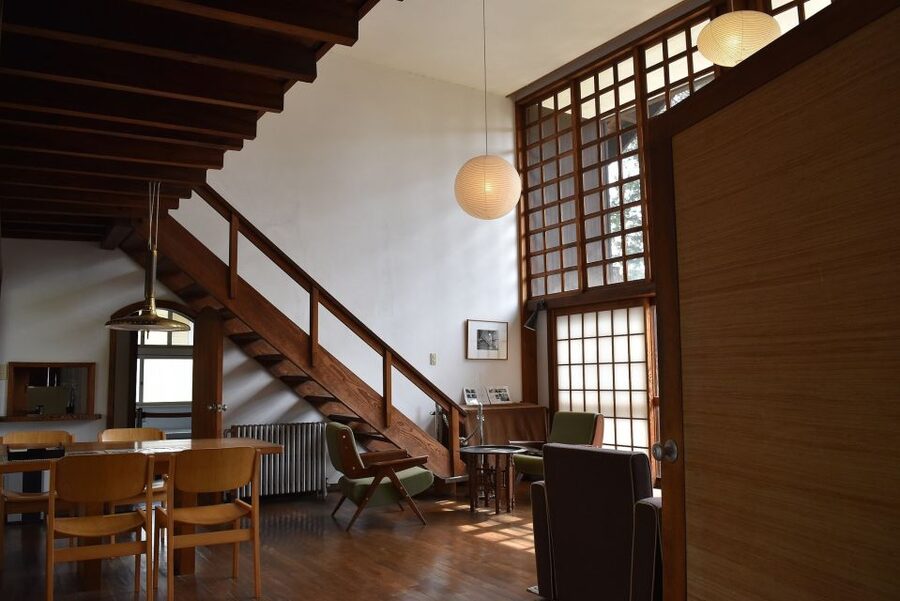
The next major stop adds another layer to the story. Sutemi Horiguchi designed a house in 1925, soon after returning from Europe. He introduced Dutch architecture to Japan, and the residence shows how those ideas could sit beside traditional Japanese rooms.
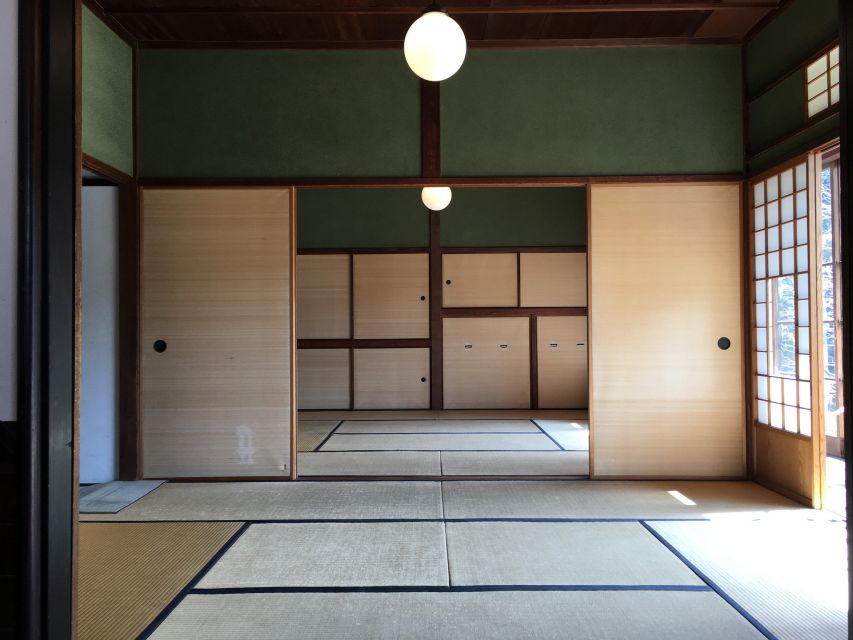
Look closely at the mix of styles. Art Deco details and De Stijl compositions appear in the design, yet the home also includes Japanese spaces. De Stijl, sometimes translated as The Style, is known for strong geometric arrangements and clear blocks of color and form. Here, those European ideas are placed within a Japanese domestic setting.
That mixture is one of the tour’s best lessons. Architectural change rarely happens in a clean break. Japan did not discard its own rooms and customs when European design arrived. Instead, architects tested new forms alongside tatami rooms, familiar proportions, and local ways of living.
You should allow yourself time at this house. It is easy to focus on the headline of Dutch influence and miss the smaller point: Horiguchi was adapting ideas. The pleasure comes from comparing the modern European elements with the traditional Japanese parts of the residence.
The Mitsui residence and the view from wealth
The Mitsui family residence gives the tour a different perspective. The Mitsui family was among the richest in Japan, and the home shows the level of decoration and comfort available to an extremely wealthy household.
This is not the same architectural story as Maekawa’s wartime house or Horiguchi’s European experiments. The Mitsui residence lets you consider status, ceremony, and domestic display. Its luxurious interior decoration gives you a sense of how a powerful family presented itself through space.
I would pay attention to the contrast between this house and the more practical or architecturally experimental stops. The point is not just that the interior is grand. It shows how architecture can express money and rank, while other buildings express artistic ideas or the pressures of a particular period.
Your guide’s explanation matters here. Without context, an ornate room can blur into the next ornate room. With a clear account of the family and the house, you can see the residence as part of Tokyo’s social history.
More private tours in Tokyo:
- Tokyo 6hr Private Tour with Government-Licensed Guide
★ 5.0 · 3,902 reviews - Private Tour to Mt. Fuji and Hakone (Fully Licenced Operator)
★ 5.0 · 1,910 reviews - Tokyo Customized Private Tour (Must See Places in 1 Day)
★ 5.0 · 1,499 reviews - Mount Fuji Full-Day Private Tour from Tokyo (Customizable)
★ 4.9 · 1,470 reviews
Shitamachi, the bathhouse, and an old train
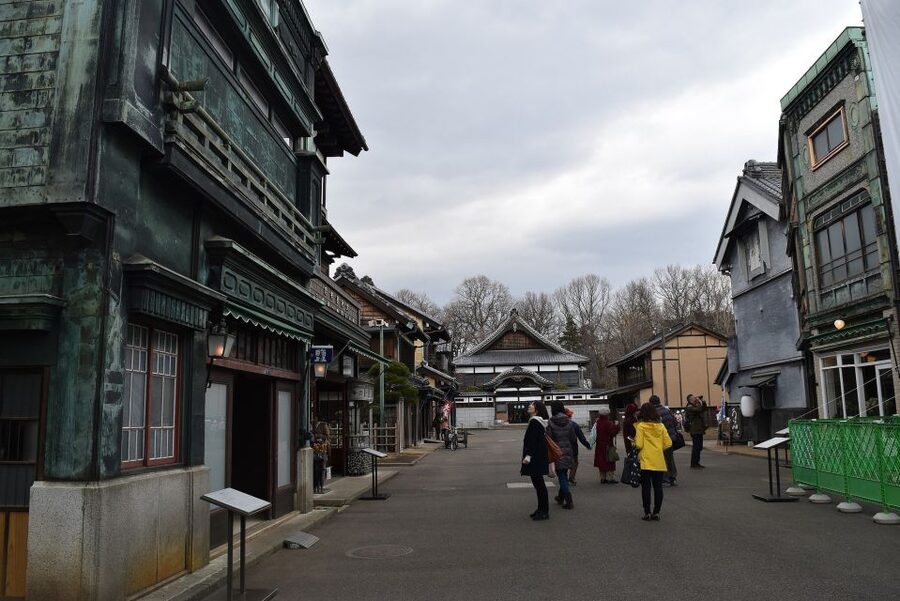
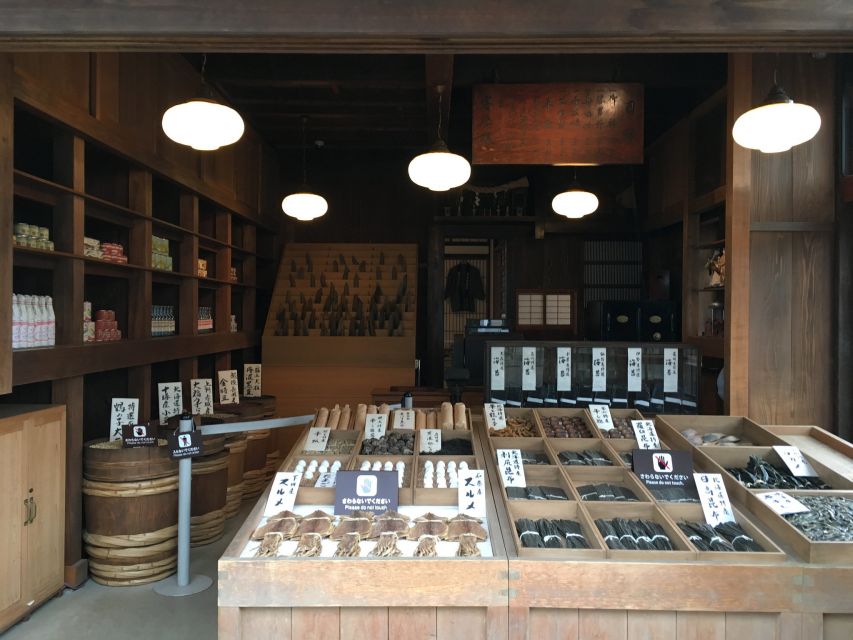
The latter half of the tour shifts the mood. You walk through a Shitamachi area, the traditional eastern part of Tokyo, where the buildings create a more everyday street scene.
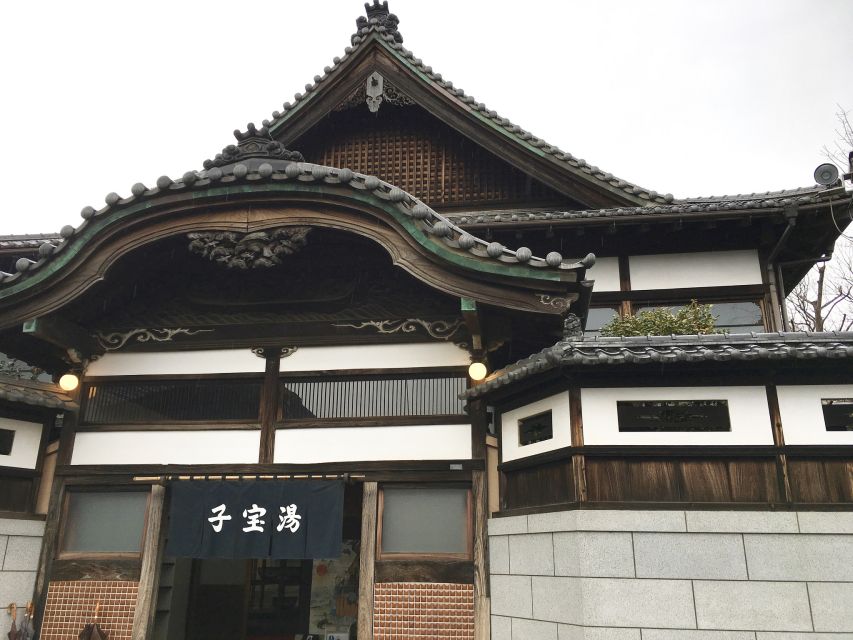
This is where the tour may appeal most to Studio Ghibli fans. The setting has the look of a place that could appear in an animated film: old buildings, a traditional bathhouse, and an old train connected to Tokyo’s past. The comparison is about atmosphere and visual character, not a film location.
The bathhouse is an important stop because public bathing has long been part of Japanese urban life. Here, architecture connects to routine and community rather than only to wealthy households or famous designers. You can think about how the building would have functioned, how people moved through it, and how much character a practical public place can have.
The old train adds another useful detail. It reminds you that Tokyo’s past was not made only by grand residences and celebrated architects. Transport shaped neighborhoods, work, and daily movement too. Seeing the train alongside the Shitamachi buildings gives the final section a human scale.
This part may be the most appealing if you enjoy atmosphere and visual details more than architectural theory. It is also a good counterweight to the earlier houses. The route begins with architects and design movements, then ends with streets and structures that help you picture ordinary city life.
Getting there from central Tokyo
The listed meeting point is Tokyo Station’s Marunouchi Front Plaza. After leaving the JR Tokyo Station Marunouchi Central Gates, go toward the center of the station building. Look for the carriage porch used for VIP arrivals, with a Japanese national flag on each side. The guide carries a bag showing the Nakagin Capsule Tower.
The route to the museum uses trains and buses. The transport fare is not included and costs about 700 yen each way. That amount is modest, but you should budget for it and allow time for transfers.
This is one area where the private guide adds practical value. Tokyo’s transport system can feel confusing on a first visit, especially when you are trying to locate a museum outside the central sightseeing core. Yuki and other guides can explain the route while taking you there, so the journey becomes part of the tour rather than a separate navigation problem.
The meeting information also names JR Shinjuku Station as a possible pickup point, so confirm the exact starting arrangement when you reserve. The detailed instructions provided for this experience describe Tokyo Station’s Marunouchi Front Plaza, making that the clearest meeting point to plan around.
What the $193 price really buys
At $193 per person, this is not a low-cost museum visit. You pay for a five-hour private experience, an English-speaking licensed guide, and admission to the museum. You also pay for personal attention, which matters more here than it would at a simple sightseeing stop.
The value depends on your interests. If you only want to walk around the buildings and read signs, the price may be hard to justify. If you want to understand why Maekawa’s house matters, how Horiguchi adapted European design, and what the Mitsui residence says about wealth, the guide changes the visit.
A private tour can also save mental effort. You do not need to plan the train and bus route alone, decide which structures deserve your time, or work out how the museum’s buildings connect to Tokyo’s larger story. You can ask questions as they come up.
The price makes the most sense for a couple, family, or small private group with a serious interest in architecture, design, or Japanese culture. Solo visitors should weigh the per-person cost more carefully, since the same guide service is spread across fewer people.
Shoes, pace, and practical comfort
Wear shoes that slip on and off easily. Several historic buildings require you to remove your shoes before entering, and you will repeat that process during the day. Comfortable footwear matters because the tour lasts five hours and includes transport, walking, and repeated visits inside old structures.
You should also expect a day that mixes outdoor movement with indoor viewing. The experience is not a bus tour that leaves you at each doorway. Trains, buses, and walking are part of the plan.
The private format gives you some flexibility, but the route still has a set duration. Tell your guide early if you care most about traditional residences, modern architecture, gardens, tea rooms, or European influence. Yuichi has been especially good at matching the explanation to those interests, and that kind of early conversation can shape the day.
The tour is conducted in English. If you need a very slow pace or have concerns about walking between transport connections and buildings, ask about the exact route before booking. The supplied information does not give a separate accessibility plan.
Who should book this architectural tour
I would choose this tour if you want more than a checklist of Tokyo sights. It suits you if you enjoy noticing materials, room layouts, decorative choices, and the reasons a building looks the way it does.
It is also a good choice if Tokyo’s history interests you but major museums feel too formal. The homes give you a concrete way to understand social change. You can see how samurai-era traditions, Meiji-era Western influence, modernist design, wealth, and everyday city life overlap.
Families with older children may find the variety helpful. Maekawa’s house, the European-influenced residence, the lavish Mitsui home, the bathhouse, and the train offer different visual hooks. The tour may be less suitable for anyone hoping for a visit to the Ghibli Museum itself, since that museum is not part of the itinerary.
Architecture students and design fans will get the most from the route, but you do not need technical training. A good guide can explain the ideas in plain terms and connect them to the way you already use rooms and streets.
Should you book it?
Book this tour if you want a personal explanation of how Japanese architecture changed across several eras, and if you like the idea of using public transport with a guide rather than finding the museum alone. The high praise for Yuichi and Yuki is deserved in practical terms: the guide’s knowledge, kindness, and ability to shape the day are central to the experience.
Think twice if you want a cheap museum entry, a fully vehicle-based outing, or a tour of the actual Ghibli Museum. You will pay extra for the private format and the transport is separate.
For the right visitor, the $193 cost buys more than admission. It buys a clear thread through Tokyo’s architectural past, from Maekawa’s modernism and Horiguchi’s European influences to the Mitsui family’s luxury and the welcoming oddness of an old Shitamachi street.
FAQ
Where does the tour meet?
The detailed meeting point is Tokyo Station’s Marunouchi Front Plaza. After leaving the JR Tokyo Station Marunouchi Central Gates, go toward the center of the station building and look for the carriage porch with a Japanese flag on each side. The guide carries a bag with an illustration of the Nakagin Capsule Tower.
Can I start from JR Shinjuku Station?
JR Shinjuku Station is listed as another possible pickup point. Confirm the exact meeting location when booking, since the detailed instructions provided for the experience describe Tokyo Station.
How long does the tour last?
The tour lasts five hours.
Is transportation to the museum included?
No. You travel to Tatemono-en by train and bus, and the transport cost is about 700 yen each way. Admission and the English-speaking licensed guide are included.
Does the tour visit the Ghibli Museum?
No. The tour visits the Edo-Tokyo Open Air Architectural Museum. The Shitamachi section has an atmosphere that may remind you of Studio Ghibli films, but the Ghibli Museum is not included.
Is the tour private?
Yes. It is offered as a private group experience.
What should I wear?
Wear comfortable shoes that are easy to slip on and off. Several historic buildings require you to remove your shoes before entering.
Newly reviewed around Tokyo
- Tokyo Asakusa:Calligraphy & Make T-shirt Activity★ 5.0 · 62 reviews
- Intercity Shuttle, Tokyo to Haneda /Narita /Yokohama /Makuhari★ 5.0 · 5 reviews
- 1 Hour Travel around Tokyo with a Professional Photographer★ 5.0 · 3 reviews
- Travel Tokyo with Your Own Personal Photographer★ 5.0 · 43 reviews
- Train in Samurai Swordsmanship and Defeat the Demon in Tokyo★ 5.0 · 5 reviews
- Shuttle Van 6hr Tokyo Tour to-and-from Tokyo, Yokohama and Narita★ 5.0 · 9 reviews
- Kickboxing & Body Training with EX-Pro Fighter★ 5.0 · 4 reviews
- Traditional Japanese Knife Sharpening Class★ 5.0 · 18 reviews
Museums, compared.
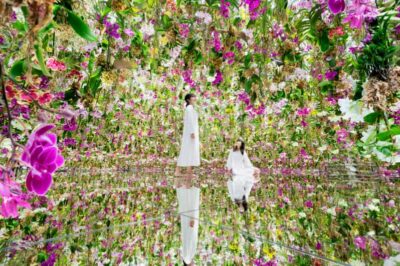
teamLab Planets TOKYO Digital Art Museum Entry Ticket
Read our review →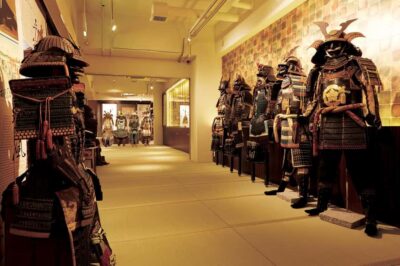
Samurai Ninja Museum Guided tour and Experience
Read our review →
Ninja Experience (Family Friendly) at Samurai Ninja Museum TOKYO
Read our review →
Tokyo Studio Ghibli Museum and Ghibli Film Appreciation Tour
Read our review →
Tokyo Sword Experience – includes Museum Ticket/Ninja Experience
Read our review →
Samurai Ninja Museum Asakusa: Samurai Sword Lesson & Tour
Read our review →

Samurai Sword Experience (Family Friendly)at SAMURAI MUSEUM TOKYO
Read our review →Browse the lists this tour appears in