Reviewed · TOURS
Tokyo: Full Course Tour: Explore 15 Must-Sees & Hidden Gems
Tokyo is easiest to understand when you see its sharp contrasts in one day: a forest shrine, a fashion street, a packed seafood market, imperial stone walls, anime arcades, and old Asakusa temples. This 10-hour small-group tour links those far-flung districts by foot and metro, giving you a fast but useful first look at the city.
I like two things right away. First, the route includes both famous sights and ordinary Tokyo life, from Seven-Eleven snacks to the Ameyoko market. Second, local guides such as Yasuko and Michiko have been praised for clear English, good pacing, and personal attention. The catch is simple: this is a demanding day of roughly 20,000 steps, and the $90 price does not include transport, meals, or drinks.
Key points at a glance
- One long day, 15 main stops: You move from Meiji Shrine and Shibuya to Tsukiji, Akihabara, Ueno, and Asakusa.
- A group capped at seven: The small size makes it easier to ask questions and keep the pace manageable.
- About 20,000 steps: Comfortable walking shoes are not optional on this route.
- Local transport practice: You ride the metro and JR trains, with guidance on Japanese public transport manners.
- Free sights, extra daily costs: The listed attractions have no admission charge, but allow about ¥1,500 for transport plus money for food.
- Best as an early Tokyo day: The guide helps you learn basic etiquette, neighborhood layout, and practical city habits before exploring alone.
What this Tokyo day is really designed to do
This is not a slow temple tour or a food crawl. It is a city orientation day, built for someone who wants to see how Tokyo fits together before spending the rest of a trip exploring at a gentler pace.
You begin at JR Yoyogi Station and finish at Asakusa Shrine. Between those points, you cross the city several times. You will walk through central districts, board public transport, stop for photos, hear local explanations, and learn how to move around without depending on a private vehicle.
The route includes 15 major sightseeing points, though the opening Seven-Eleven visit and the possible izakaya celebration are described separately from the timed sightseeing schedule. The fixed route ends at Asakusa Shrine, so I would confirm before booking whether the evening pub stop is included on your date.
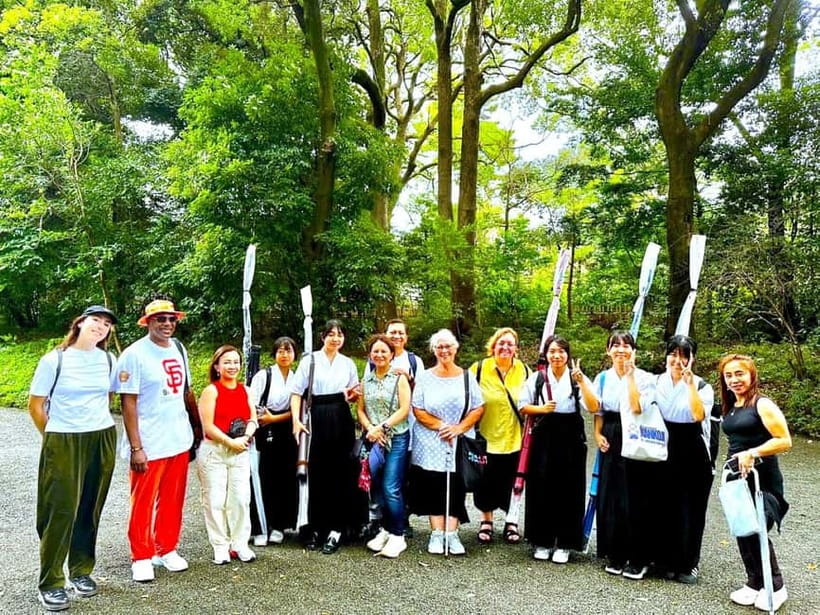
The group limit of seven is a real advantage. Tokyo stations can be confusing, and a smaller group is easier to gather at ticket gates and street crossings. It also gives you a better chance to ask about etiquette, restaurants, shopping, and daily life instead of simply following a flag through the city.
Other Tokyo days people book alongside this one:
- Mt Fuji and Hakone 1-Day Bus Tour Return by Bullet Train
★ 5.0 · 26,383 reviews - 1-Day Tokyo Bus Tour
★ 5.0 · 14,250 reviews - Tokyo: teamLab Planets TOKYO Digital Art Museum Entry Ticket
★ 4.6 · 9,779 reviews
Yoyogi, Meiji Shrine, and Harajuku in the morning
Meet outside the west exit of JR Yoyogi Station, beyond the ticket gate. The precise meeting point matters here. Yoyogi and Harajuku are close on a map but busy around the stations, so arrive early and do not count on joining after departure. Late arrivals cannot join the tour.
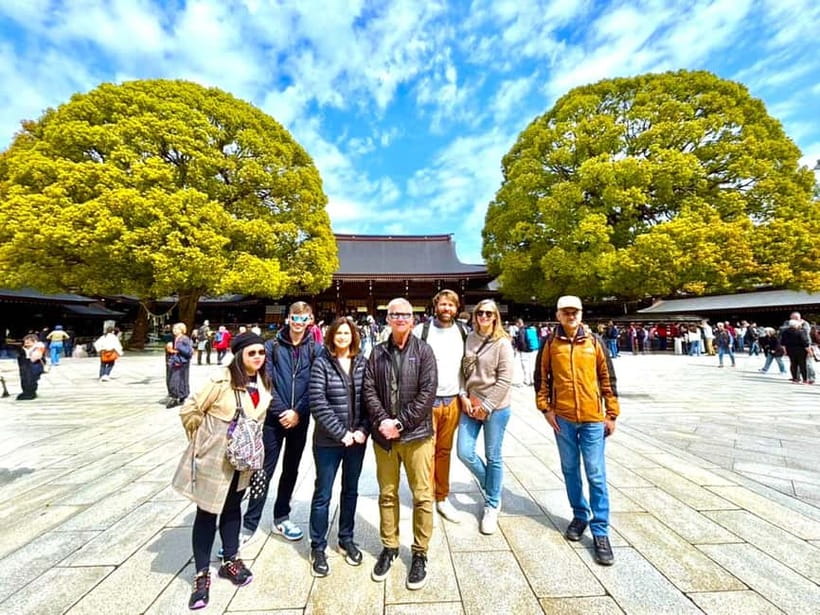
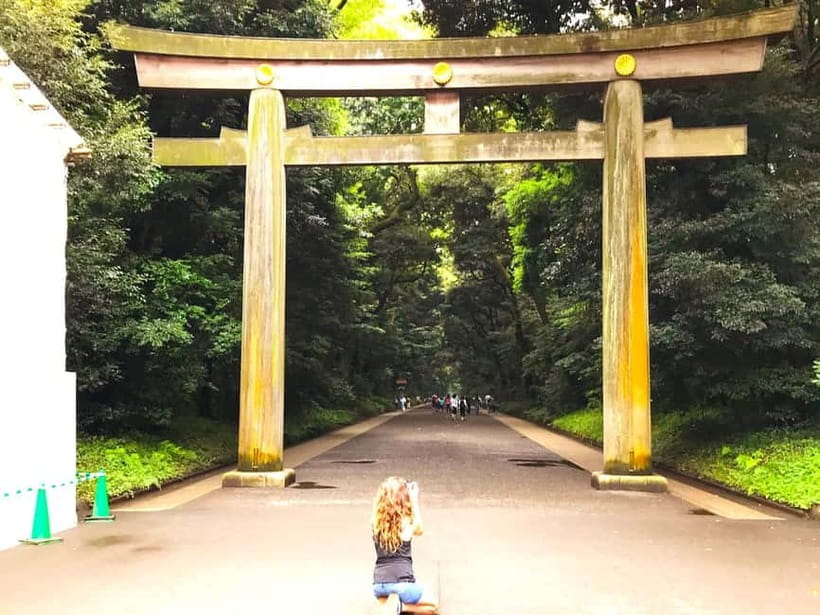
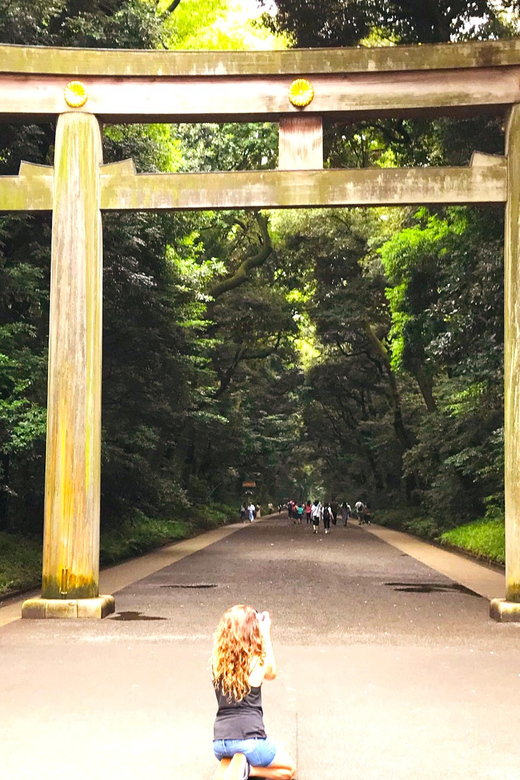
The first main stop is Meiji Jingu, reached from the Yoyogi area. Its broad forest setting provides a calm start before the day moves into Tokyo’s louder districts. You have about 30 minutes for sightseeing, enough to see the shrine approach, absorb the setting, and receive an introduction to Shinto customs.
This is also where practical cultural guidance can help. The tour promises instruction in Japanese etiquette and everyday values, so you can expect explanations about proper behavior at shrines and how to approach the space respectfully. Since the visit is fairly short, this is an overview rather than a detailed religious study.
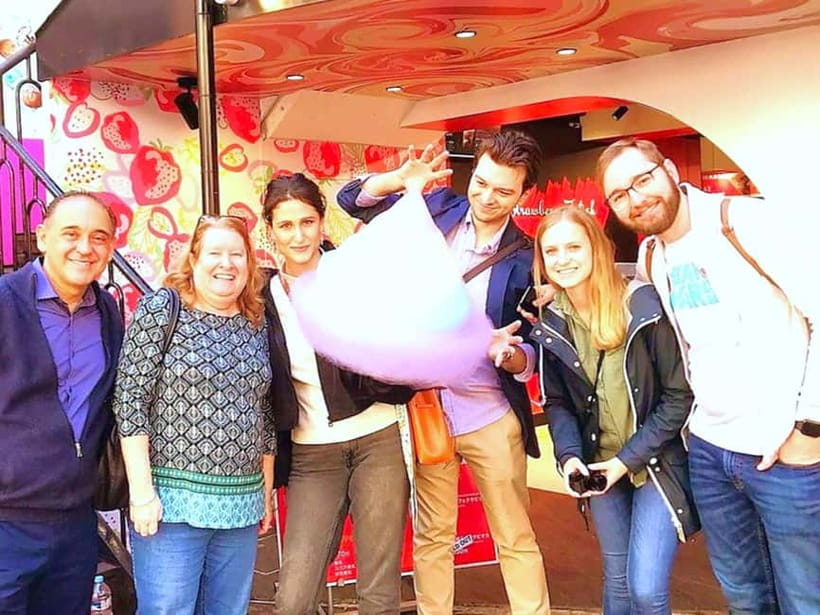
From there, you walk into Harajuku for about 30 minutes. Harajuku Fashion Street is associated with youth style, cute fashion, and snack shops. It is a useful contrast with Meiji Shrine: one stop is quiet and ceremonial, the next is commercial and youthful.
The time limit means you will not have much room for serious shopping. Think of Harajuku as a guided introduction and a chance to note places you may want to return to later.
Hachiko and Shibuya Crossing
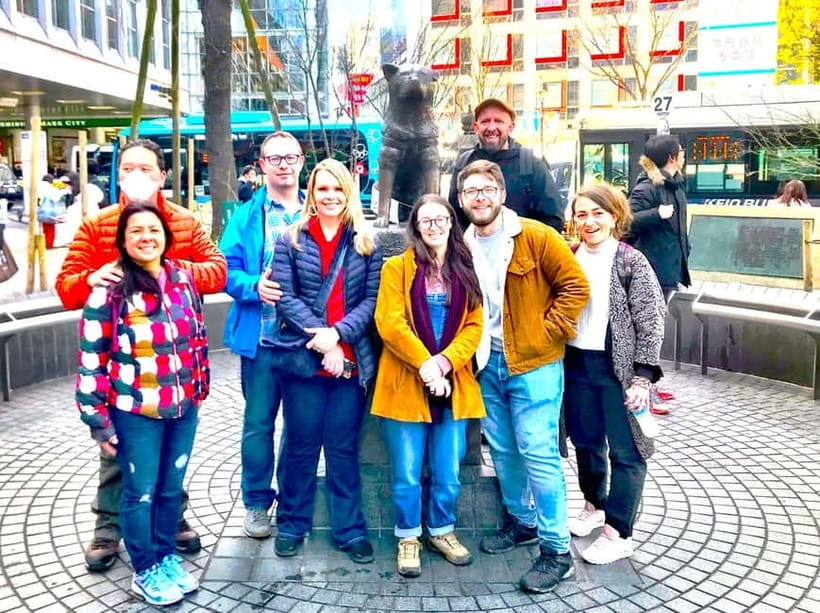
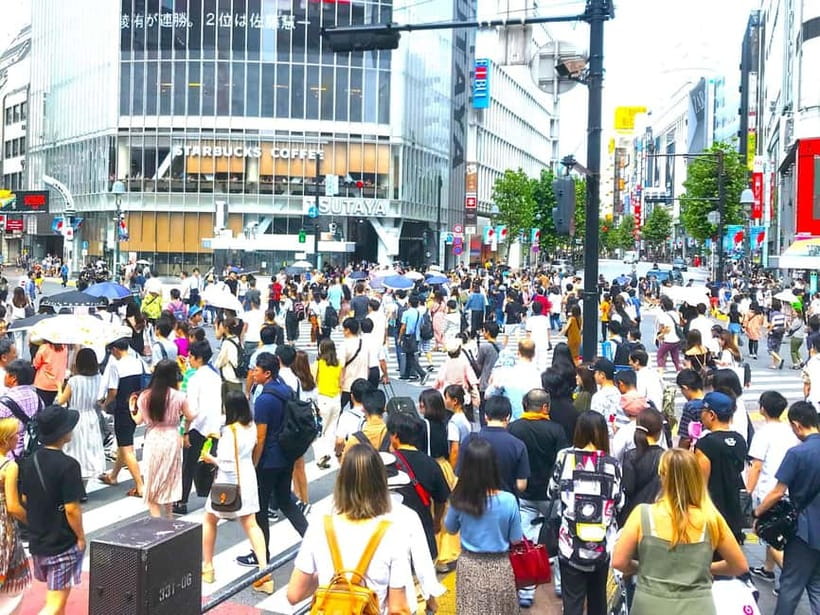
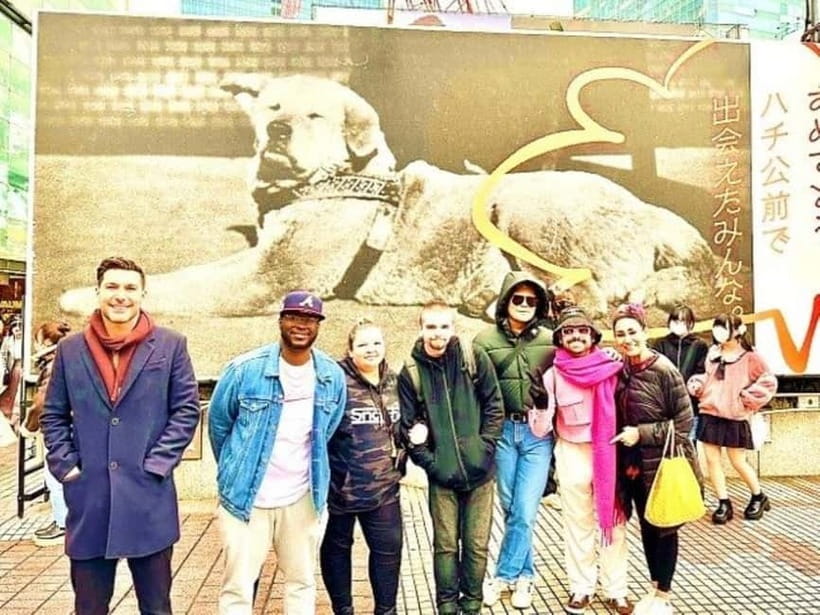
The tour then heads to Shibuya for the Hachiko Statue and Shibuya Scramble Crossing. The Hachiko stop lasts about 10 minutes, giving you time to see the famous meeting point and hear the story behind Japan’s loyal dog.
Another 10 minutes is set aside for the crossing. That sounds brief, but it is enough for the classic experience: wait for the signal, join the flow, and look back at the wave of people moving in every direction. Your guide can also help you find a sensible photo position without losing the group.
Shibuya is one of the places where a local guide earns the fee. The crossing itself is easy to reach, but understanding how the surrounding streets connect is less obvious. You will not see every part of the district in this schedule, but you will leave with a useful first impression and a good reason to return after dark if your own plans allow.
After Shibuya, allow around 30 minutes for the metro ride to Tsukiji. The transport time is not wasted time. It gives you practice with Tokyo’s rail system, including staying together, using a prepaid IC card, and observing public transport etiquette.
Tsukiji Honganji and the market lunch stop
Tsukiji Honganji Temple gets about 30 minutes. Its Indian-inspired exterior and stained-glass details make it unlike the traditional wooden temple designs you will see later at Senso-ji. The unusual architecture is the reason this brief stop works well in a packed itinerary.
Next comes Tsukiji Outer Market, with about 90 minutes. This is the day’s main food stop and one of the places where you should carry cash. The tour introduces you to fresh seafood, snacks, and other Japanese food items, with vegetarian and vegan choices available.
Food is not included, so your spending depends on what you choose. You might keep it modest with snacks, or make this your main lunch. The guide can point out well-known restaurants and smaller local places, but the tour price does not cover the meal.
Ninety minutes is a useful amount of time here. You can browse, eat, and ask questions without being rushed from one stall to the next. Still, the market can be crowded, and you should stay close to the guide. Cash is important because some smaller businesses may not accept cards.
A completely different kind of day in Tokyo:
- Mt Fuji & Hakone Cruise, Drum Show Bullet Train 1 Day from Tokyo
★ 4.0 · 7,413 reviews - Tokyo: Shinjuku Food Tour (13 Dishes at 4 Local Eateries)
★ 5.0 · 6,603 reviews - Tokyo Mt Fuji 5th St & Hakone Cruise Bus Tour w/Bullet Train
★ 4.4 · 5,024 reviews - Flagship 2-Hours Official Street Go-Kart Tour – Tokyo Bay Shop
★ 5.0 · 4,974 reviews
Imperial Palace, Marunouchi, and Tokyo Station
A short metro ride takes you toward the Imperial Palace, where the sightseeing time is about 15 minutes. This is a compact visit focused on the grounds of the former Edo Castle and its heavy stone walls, not a full palace tour.
The short stop is worth understanding before you arrive. You are seeing the public exterior setting and imperial surroundings, not entering every palace building. The appeal comes from the scale of the walls, the central location, and the way old Edo survives among modern offices.
You then walk through Marunouchi for about 15 minutes. Sleek office towers sit beside imperial-era traces, giving you one of Tokyo’s clearest old-and-new contrasts. The area is polished and orderly, but the visit is primarily a walking introduction rather than a long shopping break.
Another 15 minutes goes to Tokyo Station Square. The red-brick station building is a strong photo stop and an important transport landmark. It also helps you understand the city’s central railway structure before you continue east.
This part of the route may feel quick. If you prefer to study architecture or take many photographs, you may want to return on your own. The benefit here is coverage: you see several major city symbols without spending the whole day in one district.
Akihabara for anime, games, and pop culture
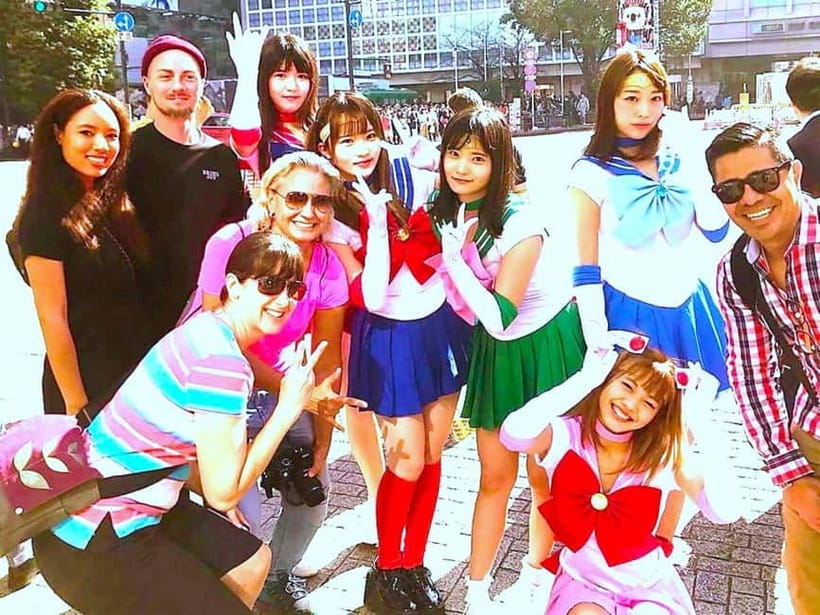
A roughly 10-minute train ride brings you to Akihabara, where you have about 30 minutes. This is Tokyo’s neon center for anime, gaming, electronics, and Japanese pop culture.
The stop gives you a first look at the district rather than a full shopping session. Thirty minutes is enough to see the main street atmosphere and get suggestions for a later visit, but not enough to browse every store. If anime, retro games, or electronics are high on your list, mark Akihabara for another day.
This is also a good example of the tour’s broad range. In one day, you move from a shrine forest and imperial walls to a district shaped by contemporary entertainment. The guide’s local explanations can help you understand what you are seeing instead of treating Akihabara as a wall of bright signs.
Ueno Park and Ameyoko Street
The next train ride takes about 10 minutes to Ueno. You spend around 30 minutes in Ueno Park, described as a forest of art and a place connected with museums and samurai history.
The schedule does not include museum entry or a full museum visit. Instead, your guide introduces the park and its cultural setting. That is useful if you want to return later, since the park contains more than you can reasonably cover in half an hour.
From Ueno, you walk to Ameya-Yokocho, usually called Ameyoko, for about 15 minutes. This market street has a rougher, more crowded feel than polished Marunouchi. It is a good place to see everyday shopping, street food, and the commercial energy of an older market district.
Again, cash helps. Keep your wallet secure and remain with the group, especially where the street is tight and busy. The short stop is enough to sample the mood, not enough for a relaxed meal or serious shopping.
Senso-ji and Asakusa Shrine at the finish
The final district is Asakusa, home to Senso-ji, Tokyo’s oldest temple. You have about 30 minutes here, followed by 10 minutes at Asakusa Shrine.
Senso-ji is the spiritual heart of old Asakusa and one of the city’s most recognizable sights. The tour gives you the setting, the main temple visit, and context for the customs you have been practicing throughout the day.
Asakusa Shrine sits within the same wider temple area and offers a quieter Shinto counterpoint. Ending at the shrine makes practical sense because it keeps the final stops close together, though the day does not return you to Yoyogi.
The scheduled finish is Asakusa Shrine. Plan your onward route before the day begins, especially if you are tired or carrying purchases. The guide can help with general transport advice, but the tour itself ends here.
The guide makes the difference
The strongest part of this experience is the guide, not simply the number of stops. A route this ambitious can become a blur without clear explanations and good time management.
Yasuko is specifically praised for making an effort to know each participant, adjusting the pace, and helping everyone feel included. Another account refers to Yatsuko, likely a spelling variation, and describes excellent English, careful attention to comfort, and deep local understanding. Michiko is also praised for knowing the city’s practical details and even helping arrange a taxi after the tour.
Those details matter. You are not only paying for directions between stations. You are paying for help with a complicated city, cultural explanations, restaurant suggestions, and small decisions that can save time. The guide’s exact name is provided after booking, so you cannot choose Yasuko or Michiko in advance.
Is $90 a fair price?
The tour costs $90 per person, with a maximum of seven participants. Add about ¥1,500, or roughly $10, for metro and JR fares, then budget separately for lunch, market snacks, and any evening food.
The admission value is straightforward: the listed attractions are free to enter. You are paying mainly for the guide, route planning, local context, and the ability to cover widely separated districts in one day.
I consider that reasonable if this is your first Tokyo visit and you want a strong orientation. A self-guided version costs less, but you must plan the route, handle the stations, decide where to eat, and explain the cultural details to yourself. The tour also reduces the risk of wasting time in a city where a wrong station exit can cost more than a few minutes.
The value is weaker if you already know Tokyo well, dislike fixed schedules, or want time for shopping and museums. The pace is designed for breadth, not lingering.
Who should book this day?
You should consider it if:
- You are visiting Tokyo for the first time.
- You want major sights plus local food and neighborhood context.
- You are comfortable walking about 20,000 steps.
- You want help using metro and JR trains.
- You prefer a group of no more than seven.
- You are happy to pay extra for meals and transport.
This is not a good match if you have mobility problems, back trouble, a low fitness level, are pregnant, or are recovering from a cold. It is also unsuitable for wheelchair users, children under 13, and participants who need a stroller or baby carriage. Under-18s must travel with an adult, and children under 13 require a private tour.
Wear sporty shoes and clothes that allow easy movement. Bring rain gear because the tour runs in rain, plus cash and a prepaid Suica, Pasmo, or Icoca card. Intoxication and alcohol are not allowed, and the group must stay together.
My take: book it for orientation, not relaxation
I would book this tour for a first or second day in Tokyo, especially if the city feels intimidating. You will see an impressive range of districts, learn how to ride the trains, and collect practical advice for the rest of your stay.
I would skip it if you want a slow cultural visit, long meals, museum time, or a flexible shopping day. Ten hours and 20,000 steps demand stamina. But for a compact, local-led introduction with clear English, a small group, and a route that reaches far beyond the usual postcard stops, the price is sensible. Just add the transport and food budget, wear your best walking shoes, and confirm the details of the proposed izakaya finish before you pay.
FAQ
Where does the Tokyo tour start?
It starts outside the ticket gate at the west exit of JR Yoyogi Station, at 1-chōme-34 Yoyogi, Shibuya City, Tokyo.
Where does the tour finish?
The scheduled route finishes at Asakusa Shrine.
How long does the tour last?
The tour lasts 10 hours.
What is included in the price?
The professional guide fee and all taxes are included. The listed attractions are free to enter.
Do I need to pay extra during the day?
Yes. Metro and JR fares cost about ¥1,500, or approximately $10. Food, drinks, lunch at Tsukiji, snacks, and any dinner are also extra.
Is the tour suitable for children or people with mobility issues?
Children under 13 are not suitable for the group tour and require a private tour. The experience is not suitable for pregnant women, wheelchair users, people with back problems, people with a cold, or people with a low level of fitness.
Newly reviewed around Tokyo
- Ueno and Yanaka Culture Art Walking Tour in Old Tokyo★ 5.0 · 5 reviews
- Sumo Training Watching Experience in Tokyo★ 4.5 · 8 reviews
- Giant Sushi Cooking Class: Make a 1.5m Sushi Roll in Tokyo★ 5.0 · 9 reviews
- 2 Hours Mochi &Nerikiri Making & Matcha Class in Bunkyo★ 5.0 · 21 reviews
- Japanese Sweets (Mochi & Nerikiri) making at a Private studio★ 5.0 · 22 reviews
- Mt Fuji and Kawaguchiko Private Tour★ 5.0 · 10 reviews
- Half-Day Local Tokyo Tour in Adachi Market and Shibamata★ 5.0 · 16 reviews
- Private Full-Day Tour of Tokyo with Hotel Pickup★ 5.0 · 3 reviews
Tours, compared.
Mt Fuji and Hakone 1-Day Bus Tour Return by Bullet Train
Read our review →
Shinjuku Food Tour (13 Dishes at 4 Local Eateries)
Read our review →
Tokyo Mt Fuji 5th St & Hakone Cruise Bus Tour w/Bullet Train
Read our review →
Flagship 2-Hours Official Street Go-Kart Tour – Tokyo Bay Shop
Read our review →
Mt. Fuji Tour, Hakone Ropeway, Owakudani, Lake Ashi
Read our review →
Tokyo 6hr Private Tour with Government-Licensed Guide
Read our review →