
Reviewed · TOKYO JDM CAR CULTURE TOURS
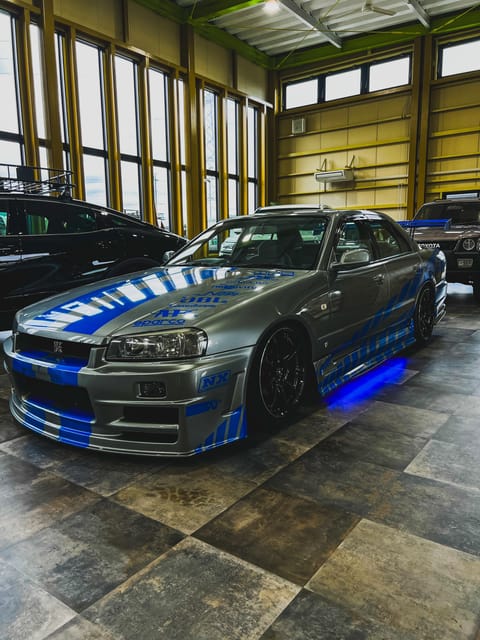
Tokyo and Daikoku by night in a Fast and Furious Skyline 34
Tokyo’s most memorable car culture does not happen in a museum. It happens after dark, on the expressways, in parking areas, and around carefully built Japanese sports cars. This three-hour outing takes you across Rainbow Bridge, around the C1 loop, and out to Daikoku PA, often with a Skyline R34 or another prized JDM car as your ride.
I like the access to Daikoku PA, the famous meeting place for Japan’s tuning scene, and the chance to talk with guides such as Samir, Henrique, Patricia, and Luigi, who regularly drive these cars themselves. I also like that the night is about people and cars, not simply being driven from one tourist sight to another.
The main caution is that the exact car and car meet cannot be guaranteed. Daikoku may close or be affected by police activity, traffic can slow the evening, and this is a private or small-group car culture experience, not a standard sightseeing shuttle.
Key points to know before booking
- You may ride in a Skyline R34: The cars can include R34 Skylines, RX-7s, Lancer EVOs, Integra Type Rs, and other JDM vehicles, depending on the evening.
- Daikoku PA is the main event: This is Japan’s best-known car gathering point, but access depends on conditions and police activity.
- The route mixes city views and expressways: Rainbow Bridge, Tokyo Bay, the C1 loop, Umihotaru, and Tokyo Tower are all part of the planned night.
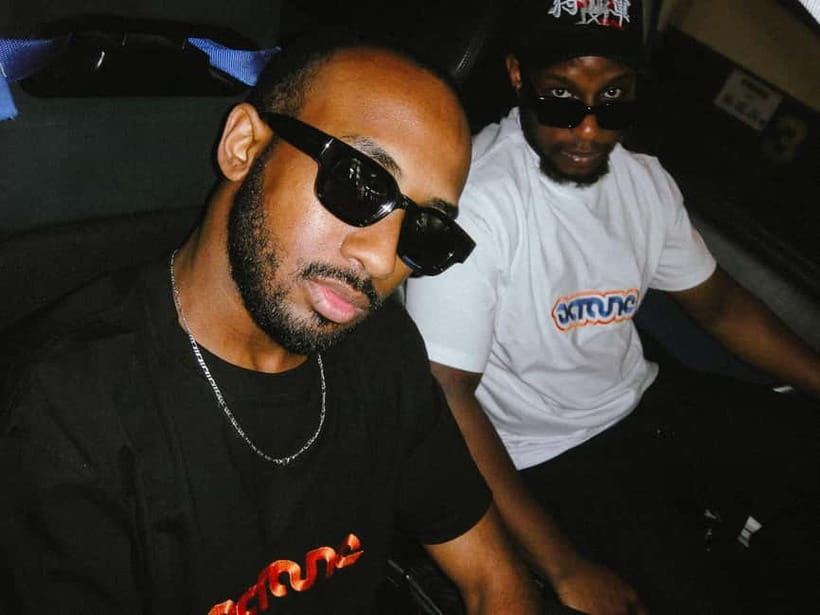
- The guides are part of the appeal: Samir, Henrique, Patricia, Luigi, and other drivers are praised for friendly conversation, car knowledge, and careful hosting.
- The experience lasts 210 minutes: Allow about three and a half hours, with pickup and drop-off depending on the option you choose.
- The price rewards a specific interest: At $180 per person, it is expensive for a ride, but reasonable for access to a private car, a local driver, and Tokyo’s enthusiast scene.
Why Tokyo’s car culture feels different at night
This is not a normal city tour with a sports car added for decoration. The car is the setting, the transport, and the conversation starter. You get to see Tokyo from the passenger seat while following the roads and meeting places that matter to local car enthusiasts.
The appeal is easy to understand even if you cannot tell a Skyline from a Silvia. Tokyo at night already has plenty of visual drama. Add a convoy of Japanese performance cars, expressway lights, bay views, and a parking area filled with tuned vehicles, and the evening takes on a very different rhythm from a temple visit or department-store stop.
The strongest part of the experience is the human side. Guides such as Samir and Henrique are often praised for making the night feel personal, while Patricia is noted for being friendly, patient, and attentive with families. Luigi is also singled out for his driving and easy manner. Names and cars can change, but the format depends on these local drivers sharing a scene they clearly care about.
You should also set realistic expectations. This is not a guaranteed movie recreation, and no responsible operator can promise a particular car meet every night. It is best understood as a guided look at Tokyo’s enthusiast culture, with the possibility of an especially memorable car and a lively meet.
More Tokyo JDM and car meet nights:
- GT-R35 800hp Club Membership – secret underground car meet
★ 4.8 · 998 reviews - Tokyo: Fast & Furious Tokyo Drift 3 Experience (Kaila Yu SP)
★ 4.8 · 947 reviews - Tokyo: Daikoku JDM Car Meet & Night Car Culture Tour
★ 4.8 · 626 reviews
Starting in a Skyline R34 or another JDM icon
The title points to the Nissan Skyline R34, and that is likely the biggest reason many people book. The car carries a powerful place in modern pop culture, especially for anyone who grew up with the Fast and Furious films. Some cars used for the experience are replicas or builds inspired by the famous movie car, so you should not assume every R34 is an original film vehicle.
That distinction does not make the ride less interesting. The Skyline is a real piece of Japanese performance-car culture, and the guides drive their own prized vehicles or cars connected to the group. Past outings have included orange and midnight-purple R34s, an ER34 Skyline, Subaru Impreza models, and other Japanese sports cars.
The available vehicle can change. You might be assigned an R34, but you could instead ride in an RX-7, Lancer EVO, Integra Type R, Subaru, or another car from the group. One useful lesson from the experience is that the car you get may not be the car shown in the promotional material.
I see that as a minor risk rather than a deal breaker. If you are booking only to sit in one exact model, ask about availability before paying. If you care more about being part of the scene, the changing lineup can add interest. A Subaru or EVO gives you a different taste of Japanese performance culture, and you may even change cars during the evening if the group arrangement allows it.
The car is also a conversation piece at every stop. Several guests have described the attention these vehicles attract, especially when the group arrives at a viewpoint or parking area. Bring a charged phone and expect to spend time taking pictures, but remember that the cars are working vehicles, not static displays.
Rainbow Bridge and the first look at Tokyo Bay
The route usually begins with a drive toward Rainbow Bridge. This section takes about 45 minutes and gives you time to settle into the car, meet the guide, and see Tokyo from the road.
Rainbow Bridge is more than a photo stop. It links the city with the waterfront and gives you broad views across Tokyo Bay. At night, the bridge lights and surrounding buildings turn the drive into a moving city panorama. From inside a performance car, the experience feels more immediate than looking at the same skyline from a fixed observation deck.
The exact view depends on traffic, weather, and where the group pauses. The schedule allows time for scenic views, but this is not a long walking stop with a formal viewpoint presentation. You are there to see the city, take photos when possible, and enjoy the drive.
This is also where the group format matters. You may be riding with a small number of other people or as part of a private booking. The mood can be social, especially when several cars travel together. One of the pleasures is seeing the cars ahead of you rather than simply sitting alone in a fancy vehicle.
The C1 loop, Tokyo’s expressway experience
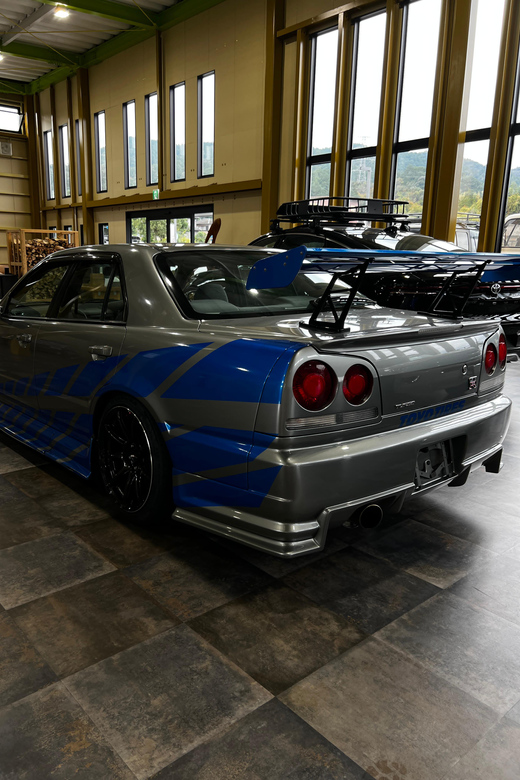
The C1 loop is one of the defining pieces of the night. This urban expressway circles central Tokyo and has long been linked with Japan’s performance-car scene. The drive lets you experience the city’s road network in the way local enthusiasts do, with illuminated towers, tunnels, ramps, and dense development passing by the windows.
You should not book this expecting a formal racing session. The operator describes the experience as car culture, not a taxi service, and public roads come with traffic and safety limits. Some people have described a strong adrenaline rush, but your speed and pace will depend on traffic, road conditions, and the driver.
That is important on a Friday evening. One outing encountered heavy traffic leaving Shibuya, which was treated as a normal Tokyo complication rather than a failure of the tour. If your chosen evening falls during a busy period, the drive may feel more like a lively urban cruise than a nonstop blast.
I like the C1 section because it gives context to the cars. A Skyline or EVO is not just parked under bright lights. You see it moving through the city for which it was built, surrounded by the expressway infrastructure that helped shape Tokyo’s car scene.
More Tokyo night tours:
- Tokyo Night Foodie Tour in Shinjuku – Seasonal Sushi, Wagyu Beef
★ 5.0 · 1,161 reviews - Tokyo After 5: Authentic Japanese Food & Drink Night Tour
★ 4.5 · 560 reviews - Tokyo: Samurai Entertainment Night Show in Kanda Shrine
★ 4.6 · 417 reviews - The Dark Side of Tokyo – Night Walking Tour Shinjuku Kabukicho
★ 4.5 · 297 reviews
Daikoku PA, the night’s main destination
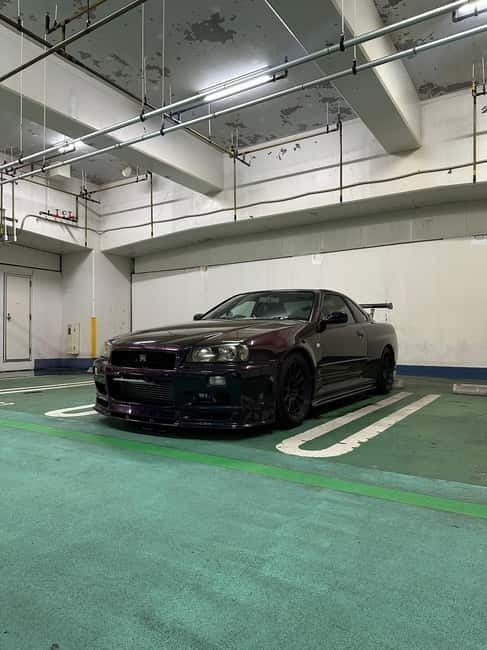
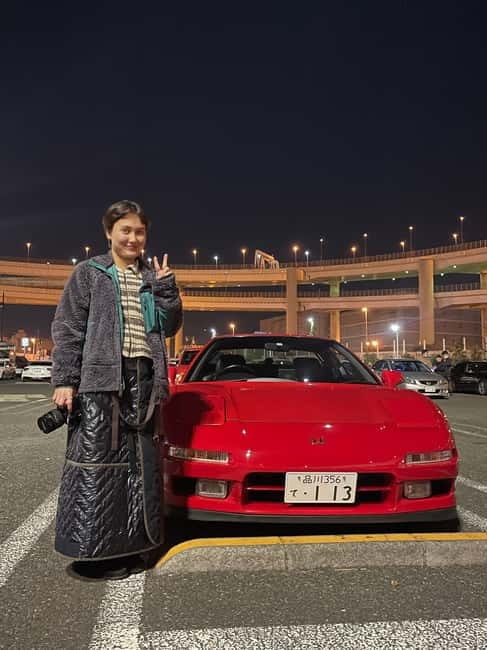
Daikoku Parking Area is the centerpiece. Located in the port area of Yokohama, it is famous among car enthusiasts as a place where unusual Japanese and international vehicles may gather. The planned stop lasts about 75 minutes, giving you time to walk around, take photos, and look closely at the cars.
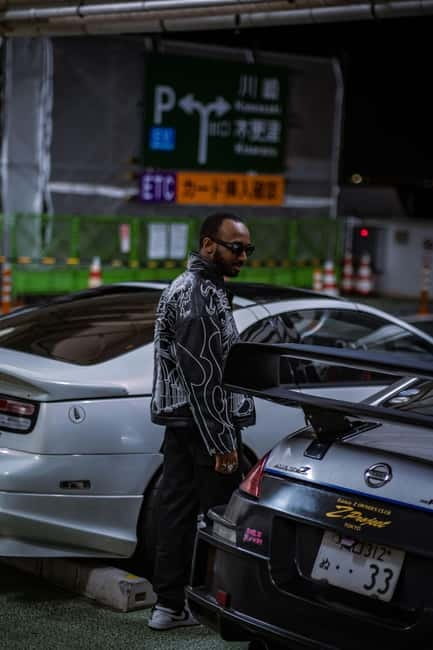
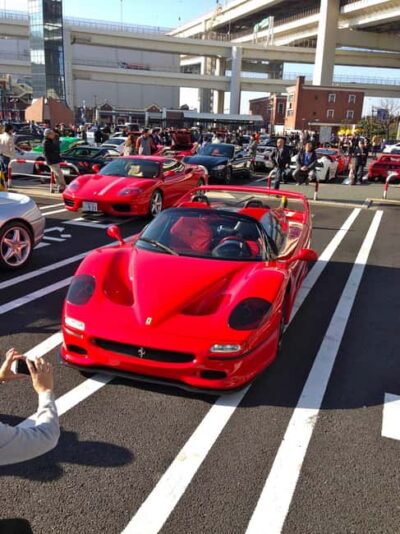
This is where the tour feels least like sightseeing and most like access to a local interest group. You may see Skylines, tuned sports cars, Lamborghinis, and other rare builds. The mix is never fixed, which is part of the fun. A quiet night can be more subdued, while a busy gathering may give you a remarkable range of cars in one place.
Daikoku also comes with the biggest uncertainty. Police activity can lead to the area closing or the group leaving early. If that happens, the guide may take you to another meeting point or use the extra time for more driving. One past outing had its first meet shut down and continued to another location instead.
Do not treat a closure as proof that the whole night has failed. Daikoku is a real public facility, not a reserved attraction, so conditions can change without warning. The honest way to book is to see Daikoku as a strong possibility, not a promise.
You should also follow the guide’s instructions carefully. Do not wander away from the group, touch cars without permission, or treat the parking area like a film set. The best photos come from being respectful and giving owners room.
Umihotaru gives you a different bay view
After Daikoku, the route includes about 30 minutes at Umihotaru. This unusual service area sits out in Tokyo Bay and is known for its open water views and road setting. It offers a change of pace after the noise and concentration of the car meet.
Umihotaru is useful because it lets you step back from the cars and look at the scale of the bay. The stop is relatively short, so you should keep your phone and camera ready and not expect an extended meal break or a long independent visit.
For many people, this will be one of the best places to take a clean photo of the car without the crowds and visual clutter of a large meet. Views can depend on the night and weather, but the location adds a distinctly Japanese road-trip feel to the outing.
Tokyo Tower and the return through the city
The final parts of the route include about 40 minutes of scenic driving in Tokyo and around 20 minutes for Tokyo Tower. The tower gives the night a familiar landmark, but it is not presented as a full tower visit. Think of it as a final sightseeing pause and photo opportunity.
This last section works well because the tour returns you to the city after the port roads and parking areas. You get another look at Tokyo’s streets from the passenger seat, now with a better sense of how much of the city is connected by expressways.
Drop-off can be arranged at up to three listed locations, including Tokyo and the JMF Building Shibuya 02 at 6-4 Kamiyamacho. Pickup depends on the option booked. If you choose private pickup, the operator recommends practical locations such as Shinjuku Station, Tokyo Station, or Shibuya, with final arrangements made after booking.
Keep your schedule flexible at the end. Traffic can affect the timing, particularly on Friday evenings. The listed duration is 210 minutes, but the pace of an urban driving experience is never as exact as a museum entry time.
What $180 buys you
At $180 per person, this is not a cheap way to get around Tokyo. If you only want a ride between neighborhoods, it offers poor value. Public trains and taxis are far more practical for that job.
The price makes more sense when you break down what you are paying for: a private or small-group outing, an English- or Portuguese-speaking guide, access to a local driver, time in a performance car, expressway driving, and a visit to a car gathering that can be difficult to reach as an ordinary tourist.
I would especially consider it good value for a parent and teenager, a couple who shares an interest in Japanese cars, or a fan who has built part of a Japan trip around the Skyline. Several people have booked it for a son or family member and found that the personal attention from the guide made the night work well.
It is less convincing for someone who is only mildly curious about cars and has a tight budget. Tokyo has many excellent evening activities that cost less. You will get the most from this outing if the car itself is part of the reason you came to Japan.
The small-group format also affects the value. A private booking gives you more control and a more personal feel, while a shared outing may be more social and can put you among other enthusiasts. Neither format guarantees a particular vehicle or meet.
Practical advice for making the night work
Wear comfortable clothes. You may spend time sitting in a compact sports car, walking around Daikoku, and standing at viewpoints. A charged smartphone is essential for directions, communication, and photos, and a camera is worth bringing if you care about night shots.
Smoking and drinks are not allowed in the vehicle. Keep the car clean and treat it with care. These are often valuable enthusiast cars, and the atmosphere depends on mutual respect.
English and Portuguese are available. The driver is not only behind the wheel. The best guides, including Samir, Henrique, Patricia, and Luigi, add conversation and explain what you are seeing. If you have a favorite model or question about Japanese car culture, ask early in the evening.
Pickup is optional and the meeting point may vary. Confirm the location after booking, especially if you are staying outside Tokyo’s 23 wards. Major stations and well-known landmarks are recommended because they make the start easier for everyone.
Cancellation is free up to 24 hours before the experience, and you can reserve now and pay later. Those policies help if your Tokyo plans are still moving around, but they do not remove the need to check the final pickup details and vehicle expectations.
Who should book this Tokyo night drive
You should book if a Skyline R34, JDM tuning, or the Fast and Furious connection is a major reason you want to visit Japan. You should also book if you enjoy meeting enthusiasts and prefer a lived-in local scene to a polished attraction.
Families can enjoy it too, particularly when a teenager is the main car fan. Patricia and other guides have been praised for looking after younger guests and making the experience comfortable for mixed-interest groups. You do not need expert car knowledge to enjoy the lights, sounds, views, and excitement of arriving at a meet in a striking vehicle.
You may want to skip it if you need a guaranteed itinerary, a guaranteed R34, or a quiet sightseeing evening. The route can change, Daikoku can close, traffic can interfere, and the experience depends heavily on the available cars and guide.
Should you book it?
I would book this for the right person, not as a general Tokyo tour. At $180, it asks you to pay for access, atmosphere, and a personal connection to Japanese car culture. It is worth it if that sounds like the kind of night you will still be talking about years later.
Choose the private option if you want the most control and personal attention. Choose a small group if you like meeting people with the same interest. Before confirming, ask which cars are likely to be available and understand that Daikoku is subject to police activity.
If you can accept those limits, this is one of the more distinctive ways to spend an evening in Tokyo. You get Rainbow Bridge, the C1 loop, Tokyo Bay, Umihotaru, Tokyo Tower, and a real chance to see Daikoku through the eyes of people who care about the cars, not just the photo opportunity.
FAQ
How long does the Tokyo and Daikoku night experience last?
The experience lasts 210 minutes, or about three and a half hours.
What locations are included?
The planned route includes Rainbow Bridge, the C1 loop, Daikoku Parking Area, Umihotaru, scenic driving in Tokyo, and a stop near Tokyo Tower.
Is a Nissan Skyline R34 guaranteed?
No. The available car depends on the evening, conditions, and vehicle availability. Cars may include an R34 Skyline, RX-7, Lancer EVO, Integra Type R, Subaru, or another JDM vehicle.
Is Daikoku Parking Area guaranteed to be open?
No. Daikoku PA can be affected by police activity or closure. If access changes, the route or driving time may be adjusted.
Are pickup and drop-off included?
Pickup and drop-off are included if you select the private option. Meeting and drop-off locations depend on the booking, with recommended pickup points including major stations and landmarks within Tokyo’s 23 wards.
What languages are available?
The live guides speak English or Portuguese.
Can I cancel the booking?
You can cancel up to 24 hours in advance for a full refund. The experience also offers a reserve-now-and-pay-later option.
Newly reviewed around Tokyo
- Tokyo Asakusa:Calligraphy & Make T-shirt Activity★ 5.0 · 62 reviews
- Intercity Shuttle, Tokyo to Haneda /Narita /Yokohama /Makuhari★ 5.0 · 5 reviews
- 1 Hour Travel around Tokyo with a Professional Photographer★ 5.0 · 3 reviews
- Travel Tokyo with Your Own Personal Photographer★ 5.0 · 43 reviews
- Train in Samurai Swordsmanship and Defeat the Demon in Tokyo★ 5.0 · 5 reviews
- Shuttle Van 6hr Tokyo Tour to-and-from Tokyo, Yokohama and Narita★ 5.0 · 9 reviews
- Kickboxing & Body Training with EX-Pro Fighter★ 5.0 · 4 reviews
- Traditional Japanese Knife Sharpening Class★ 5.0 · 18 reviews
Tokyo JDM Car Culture Tours, compared.
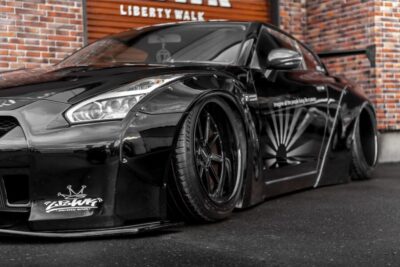
GT-R35 800hp Club Membership – secret underground car meet
Read our review →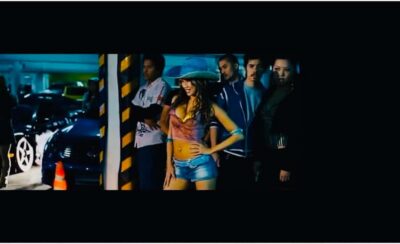
Fast & Furious Tokyo Drift 3 Experience (Kaila Yu SP)
Read our review →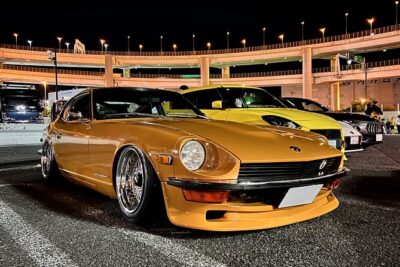
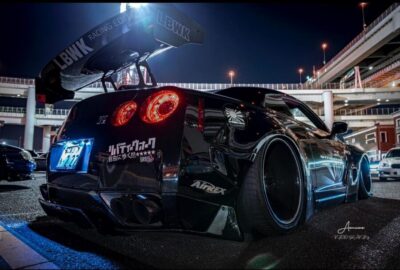
Secret Car Meet: R34 Skyline Car Club Membership
Read our review →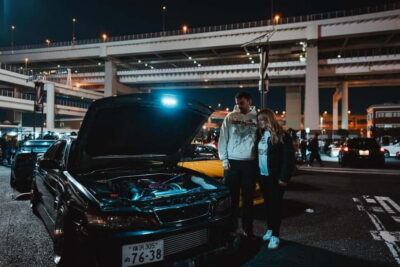
Tokyo Drift: Daikoku PA Supreme Car Experience 大黒PA
Read our review →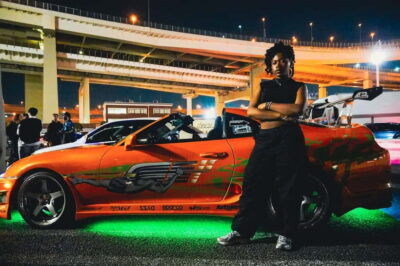
Go Daikoku PA Fast & Furious 3 Sports Car Meetup
Read our review →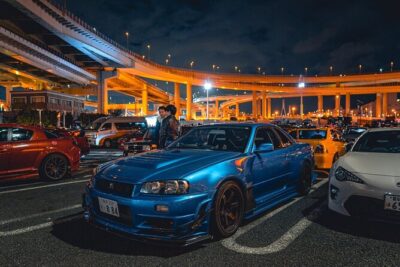
Browse the lists this tour appears in