
Reviewed · TOKYO SUMO EXPERIENCES
Tokyo: Challenge Sumo Wrestlers and Enjoy Meal
Sumo is much more than two large men pushing each other around a ring. This lively Tokyo experience shows you the rituals, language, and physical skill behind Japan’s national sport, then lets you wear a sumo costume and test your own technique against a retired wrestler. The hands-on bout is the big draw, especially for families.
I like the clear English explanation and the chance to ask questions directly. I also like that your meal is part of the experience, with tonkatsu for lunch or sukiyaki for dinner, rather than an extra cost at the end. The main drawback is that it is a short, fixed program, and the food and commentary may be harder to enjoy if you are seated toward the back or near a noisy group.
Key points to know before booking
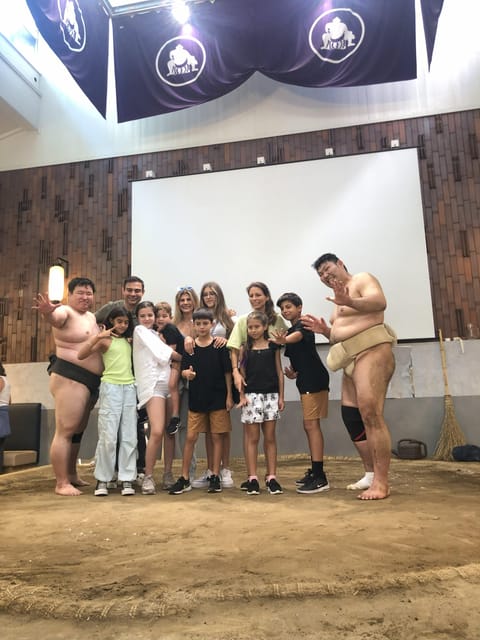
- Former wrestlers lead the action: You see a demonstration by retired professionals, then meet them for photos and questions.
- You can enter the ring: A sumo costume gives you a playful chance to challenge one of the wrestlers.
- The meal changes by time of day: Choose tonkatsu at lunch or sukiyaki at dinner when booking.
- It is easy to reach: The venue is about a 5 to 8 minute walk from Kikukawa Station on the Shinjuku Line.
- English is part of the program: Explanations and hosting are available in English and Japanese.
- Seats are assigned by booking order: Booking earlier may help you get a better position, though larger groups might be split between tables.
Why this sumo experience works so well
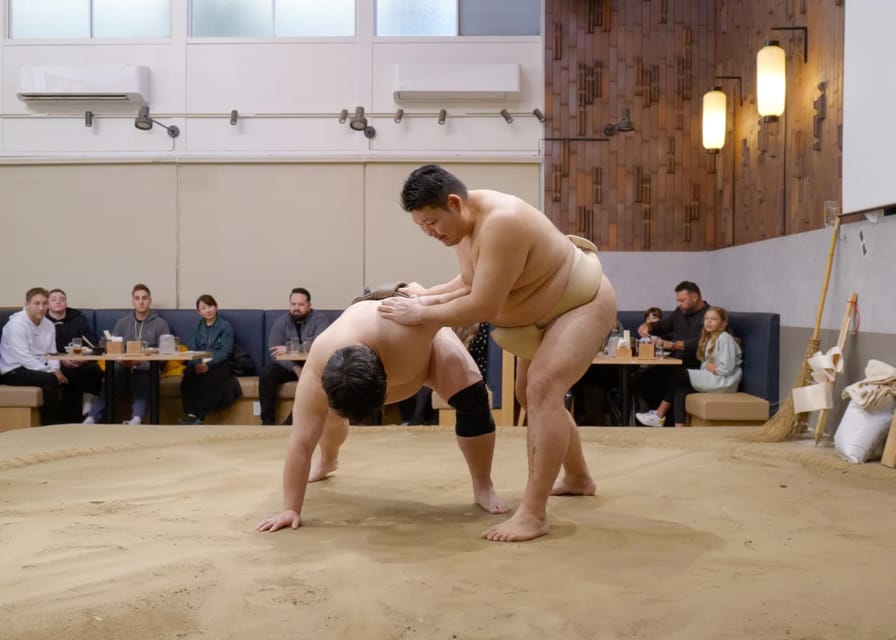
This is a good choice if you want a taste of sumo but cannot attend a grand tournament. Tokyo’s major sumo tournaments take place only at set times, and stable visits can have strict rules about who may enter. This program offers a simpler route: you watch former professionals, hear an explanation in English, try the sport yourself, and sit down for a Japanese meal.
I especially like the balance between watching and doing. A standard demonstration can leave you sitting quietly while someone explains the action. Here, the retired wrestlers show their strength and technique first, then invite you to take part. You get the context before the comedy and physical challenge begin.
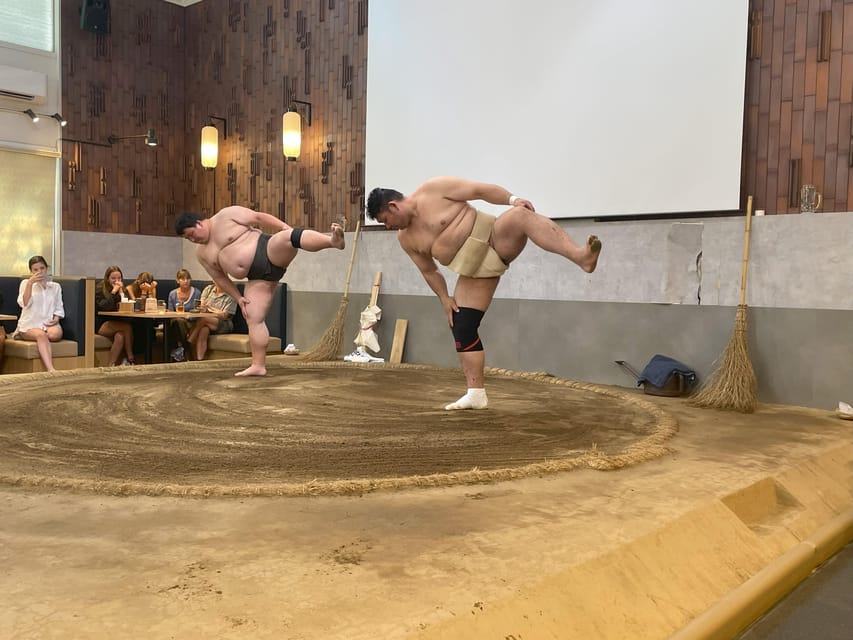
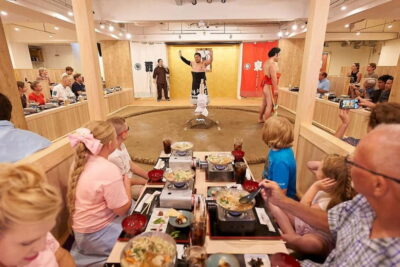
The tone is light, but the sport itself is not treated as a joke. Sumo has deep ties to Japanese customs, ceremony, and everyday language. During the introduction, you learn commonly used sumo terms while watching the wrestlers work in the dohyo, the raised ring where matches take place. Even a short explanation helps you understand why the movements, postures, and rituals matter.
More Tokyo sumo experiences:
- Tokyo: Sumo Show and Dining Experience
★ 4.8 · 2,742 reviews - the SUMO show
★ 5.0 · 1,960 reviews - Tokyo Shinjuku Sumo Show & Experience with Photo
★ 5.0 · 1,750 reviews
Getting to the venue near Kikukawa Station
You make your own way to the meeting point. Take the Shinjuku Line to Kikukawa Station, then allow about 5 to 8 minutes to walk from Exit A1. There is no hotel pickup, drop-off, or transportation included, so plan your route before leaving your hotel.
That location is practical if you are already exploring eastern Tokyo, but it is not a central sightseeing stop such as Shinjuku or Asakusa. Check your train route and starting time carefully. The activity lasts about 1.5 hours, though the exact start times depend on availability.
Arrive with enough time to find the meeting point without rushing. The experience finishes back at the same location, which makes it easier to continue your day afterward. Since transportation is not included, the cost of getting there belongs in your budget.
The introduction: sumo as sport and culture
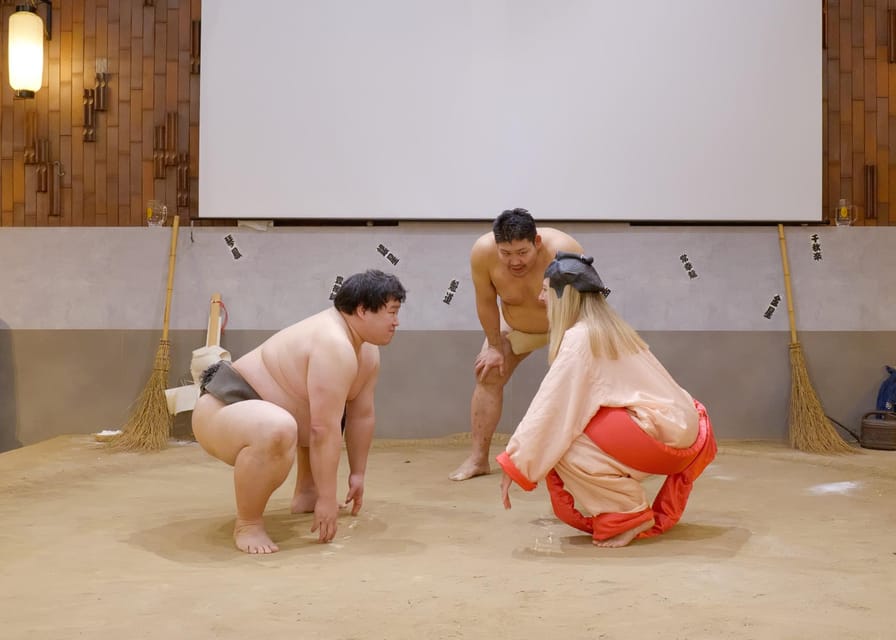
The session begins with an explanation of sumo and its connection to Japanese culture. The host speaks in English and Japanese, so you can follow the basic story even if you know little about the sport.
This opening matters. Without it, the demonstration could look like a simple contest of size and strength. With some vocabulary and context, you can watch for different techniques and understand the purpose of the ring. The former wrestlers also explain terms commonly used around sumo, giving you a better handle on what you are seeing.
The format is friendly and accessible rather than academic. Families and first-time sumo fans can follow along, while people already interested in Japan’s national sport get a chance to ask questions. The English presentation is an important strength, especially because much of the value comes from understanding the jokes, explanations, and answers.
Try to listen closely during this part. Some people have found that loud conversation in the room can make the commentary and question-and-answer period difficult to hear. If you have a choice of seats, a place near the front may help you follow the host more easily. Seating is arranged by booking order, so early booking may be useful.
Watching former wrestlers in the dohyo
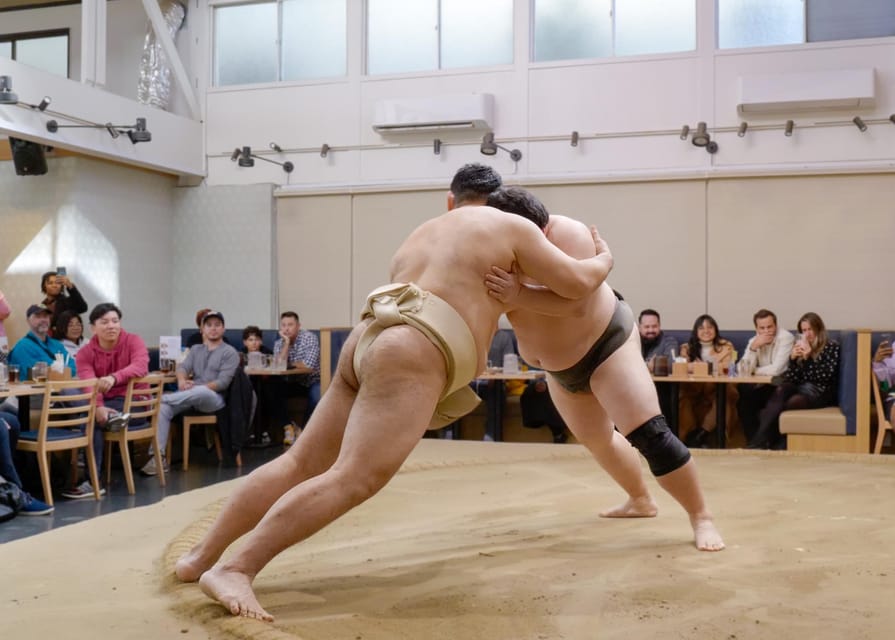
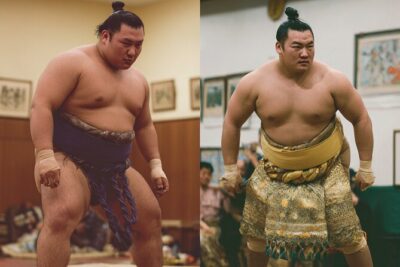
After the introduction, former sumo wrestlers demonstrate the sport in the ring. This is the most authentic part of the program. You are not watching actors in costume. You are seeing retired professionals who understand the balance, timing, and force needed to move an opponent.
The match is designed for entertainment, but it also gives you a sense of how demanding sumo can be. The wrestlers are described as both good-humored and impressive athletes, which is the right combination for this setting. Their size may catch your eye first, but the skill behind their movements is what makes the demonstration worth watching.
The program also uses humor to keep the mood relaxed. That helps children and adults who might feel unsure about sumo customs or terminology. You get a serious look at the sport without sitting through a long technical lecture.
Do not expect a full tournament match or a long professional bout. This is a demonstration built around explanation, participation, food, and photos. If your main goal is to watch extended competitive sumo, a grand tournament is the better choice. If you want a compact cultural activity with personal contact, this format makes more sense.
A completely different kind of day in Tokyo:
- Mt Fuji and Hakone 1-Day Bus Tour Return by Bullet Train
★ 5.0 · 26,383 reviews - 1-Day Tokyo Bus Tour
★ 5.0 · 14,250 reviews - Tokyo: teamLab Planets TOKYO Digital Art Museum Entry Ticket
★ 4.6 · 9,779 reviews - Mt Fuji & Hakone Cruise, Drum Show Bullet Train 1 Day from Tokyo
★ 4.0 · 7,413 reviews
Putting on the sumo costume
The most playful section comes when you put on a sumo costume and step into the ring. You can try a sumo technique and challenge one of the retired wrestlers in a friendly contest.
This is where the experience becomes memorable rather than merely informative. The costume lets you see how awkward the movements can feel, while the wrestler gives you a safe and amusing target to push against. You quickly learn that strength alone is not enough. Balance, stance, timing, and leverage all matter.
You do not have to wrestle if you would rather watch. One useful detail from the program is that everyone receives a photo opportunity at the end, so you do not need to enter the contest simply to stand beside the wrestlers for a picture. That is helpful for shy participants, older visitors, or anyone who would rather avoid physical activity.
Children usually have an easy time enjoying this section, though the adults often get just as involved. Families with children as young as six and eight have found this format more suitable than some sumo stable visits, where younger children may not be allowed into training areas. Infant rates apply when an infant does not occupy a seat, but infant meals are not included.
Follow the staff instructions and use good judgment. Anyone who behaves in a disruptive way may be asked to leave without a refund. That rule is common sense, but it matters in a small indoor setting where the demonstration and meal share the same program.
The Japanese meal: tonkatsu at lunch or sukiyaki at dinner
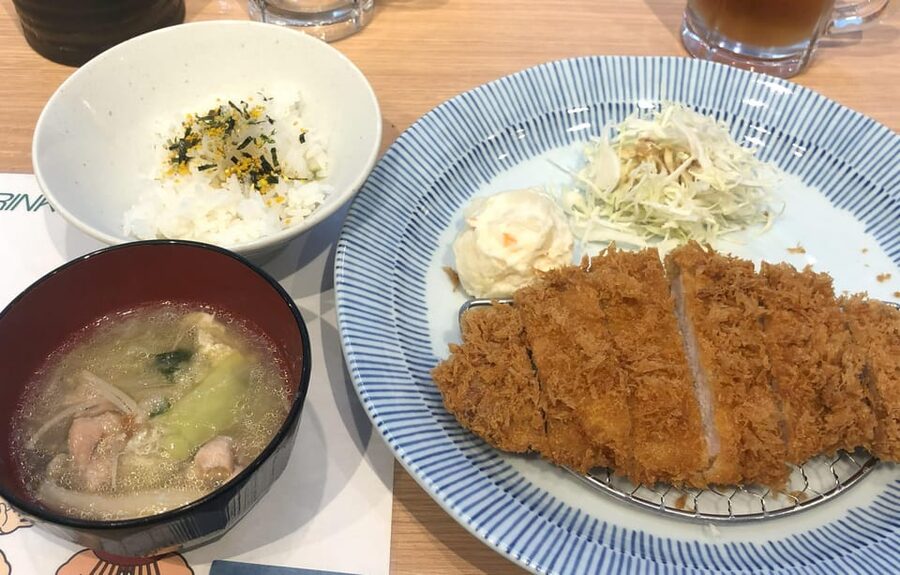
Food is included, and the meal depends on the option you choose when booking. Lunch is tonkatsu, a deep-fried Japanese pork cutlet. Dinner is sukiyaki, a hot pot of beef and vegetables cooked in a sweetened soy broth.
The meal adds real value because you are not paying separately for a restaurant stop after the activity. It also gives you time to continue the conversation and settle after the demonstration. In a short program, a shared meal helps the experience feel like a complete cultural outing rather than a quick performance.
The supplied information also notes that additional food and drinks are not included. You may bring your own food and drink, and you should advise the organizer about dietary requirements in advance. Do not assume every special request can be handled on the spot.
Meal details can vary with the selected booking option. Some past descriptions have referred to boxed meals and chanko-style food, but the stated choices for this experience are tonkatsu at lunch and sukiyaki at dinner. Check the exact option you select so you know what is included.
Photos, questions, and time with the wrestlers
The final photo opportunity is a simple but worthwhile part of the program. You can pose beside the former wrestlers and keep a clear reminder of the afternoon or evening. The wrestlers are described as accommodating with photos and questions, which makes this more personal than watching a performance from a distance.
There is also time for questions and answers. This is your chance to ask about the sport, daily life, training, or anything raised during the demonstration. The usefulness of this section depends partly on your seat and on how considerate the room is. If people talk loudly throughout the program, you may miss parts of the commentary.
A front seat is not necessarily essential for seeing the action, but it can help you hear the explanations and questions more clearly. Since the best available seats are arranged in booking order, reserving earlier may be worthwhile. Groups may be placed at separate tables if the party is large, so do not assume a big group will sit together.
Is the $117 price good value?
At $117 per person, this is not a budget meal or a free temple visit. You are paying for a hosted cultural program, former professional wrestlers, English explanation, participation, a photo opportunity, and lunch or dinner. For someone already interested in sumo, the personal access is the main reason the price can make sense.
The value is strongest when you use every part of the program. Listen to the introduction, watch the demonstration closely, ask questions, try the costume if you want to, and stay for the meal. If you only want a photograph with a wrestler, the price may feel high. The photo is included, but it is one part of a larger session.
It also offers value when a tournament is not taking place. You do not need to organize a difficult stable visit or build your day around a tournament calendar. The 1.5-hour format is short enough to fit into a wider Tokyo itinerary, though the fixed starting times and self-arranged transportation require planning.
For families, the price can compare well with separate activities because the children receive something visual, physical, and interactive. Infant meals are not included, so families with babies should account for that detail.
Who should book this experience?
I would recommend it to first-time sumo fans, families, and anyone who wants a relaxed introduction to Japanese culture. It is also a smart alternative if you cannot attend a grand tournament or if children in your group are too young for a sumo stable training visit.
You will get the most from it if you enjoy guided activities with a playful side. The English explanation means you are not left guessing what is happening, and the personal questions and photo session add contact with the performers.
It may be less suitable if you want a quiet, formal cultural event. The room can be lively, and the wrestling challenge has a comic element. It is also not the right pick if you need hotel transport, a flexible cancellation policy, or a long professional match. The booking is non-refundable, so confirm your schedule before paying.
Practical booking advice
Choose lunch if you prefer tonkatsu, or dinner if sukiyaki sounds better. Give any dietary requirements when booking rather than waiting until arrival. Confirmation is sent within 24 hours, subject to availability.
The host and greeter speak English and Japanese. The experience ends at the meeting point, so you will need to arrange both your route there and your onward transportation.
Book early if seating position matters to you. Seats are assigned by booking order, and large groups may be divided between tables. A front position can make the spoken explanations easier to hear, especially when other people in the room are talking.
Should you book it?
Book this experience if you want more than a photograph and less than a full tournament day. The strongest parts are the former wrestlers, the clear English presentation, the chance to wear a sumo costume, and the meal that rounds out the program.
Skip it if you are seeking serious tournament competition, a long training session, or a low-cost attraction. For most first-time visitors, though, the combination of explanation, demonstration, friendly wrestling, food, and photos makes this a practical and memorable way to meet sumo in Tokyo.
FAQ
Where does the sumo experience begin?
It begins near Kikukawa Station on the Shinjuku Line. Walk about 5 to 8 minutes from Exit A1 to reach the meeting point.
How long does the activity last?
The stated duration is 1.5 hours. Starting times depend on availability.
What meal is included?
The lunch option includes tonkatsu, a deep-fried Japanese pork cutlet. The dinner option includes sukiyaki, a hot pot with beef and vegetables in a sweetened soy broth.
Is transportation included?
No. Hotel pickup, hotel drop-off, and transportation to and from the restaurant are not included.
Is the experience available in English?
Yes. The explanation and hosting are available in English and Japanese.
Can I try sumo wrestling myself?
Yes. You can put on a sumo costume, enter the ring, and try a friendly challenge against the former wrestlers. Taking part is not required for the photo opportunity.
Are children and infants allowed?
Children can take part, and infant rates apply when an infant does not occupy a seat. Infant meals are not included.
Can I cancel for a refund?
No. The activity is non-refundable. Confirmation is sent within 24 hours of booking, subject to availability.
Newly reviewed around Tokyo
- Tokyo Asakusa:Calligraphy & Make T-shirt Activity★ 5.0 · 62 reviews
- 1 Hour Travel around Tokyo with a Professional Photographer★ 5.0 · 3 reviews
- Travel Tokyo with Your Own Personal Photographer★ 5.0 · 43 reviews
- Intercity Shuttle, Tokyo to Haneda /Narita /Yokohama /Makuhari★ 5.0 · 5 reviews
- Train in Samurai Swordsmanship and Defeat the Demon in Tokyo★ 5.0 · 5 reviews
- Shuttle Van 6hr Tokyo Tour to-and-from Tokyo, Yokohama and Narita★ 5.0 · 9 reviews
- Kickboxing & Body Training with EX-Pro Fighter★ 5.0 · 4 reviews
- Traditional Japanese Knife Sharpening Class★ 5.0 · 18 reviews
Tokyo Sumo Experiences, compared.
Tokyo Shinjuku Sumo Show & Experience with Photo
Read our review →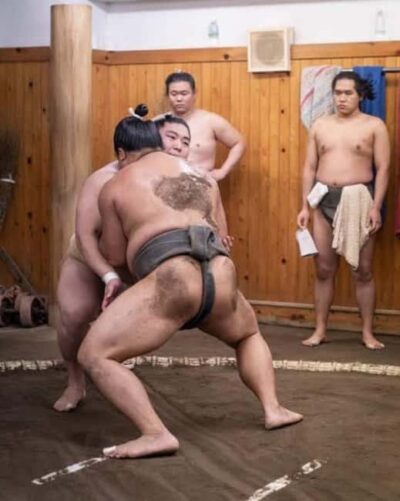
Luxury Sumo Show Experience & Japanese cuisine & Drink
Read our review →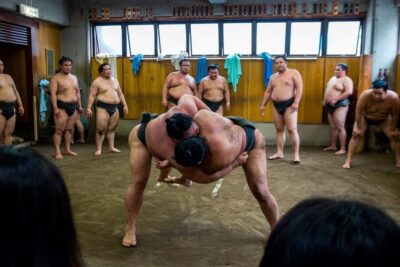
Tokyo Sumo Experience: Chanko & Mochi with a Former Pro
Read our review →
Ultimate Sumo Tournament: Tokyo, Osaka, Nagoya, Fukuoka
Read our review →Browse the lists this tour appears in