
Reviewed · TOKYO FOOD TOURS
Tokyo West-Side Cycling & Food Tour
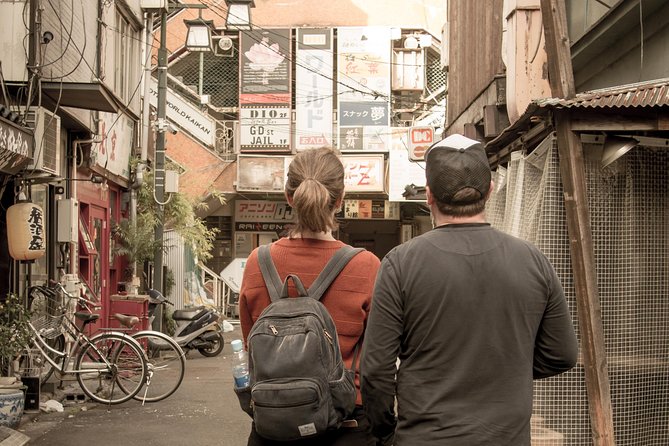
Tokyo’s famous sights are thrilling, but they show only one side of the city. This small-group cycling tour takes you through Koenji, Nakano, and Asagaya, where narrow lanes, neighborhood shops, riverside paths, and ordinary homes replace the usual big-ticket sights. Guide Andy leads the way on a salvaged Japanese mamachari bicycle, with food stops built into the ride.
I like the maximum group size of eight, which keeps the outing social without turning it into a parade. I also like the mix of cycling, walking, snacks, and lunch. The main consideration is that you need to feel comfortable riding 12 to 15 kilometers through narrow, sometimes crowded streets. This is a real urban ride, not a gentle spin around a park.
Key points to know
- Ride ordinary Tokyo streets: Explore Koenji, Nakano, and Asagaya rather than the city’s headline attractions.
- Use a classic mamachari: The Japanese-style bicycles have front baskets and are maintained for city riding.
- Eat along the way: Included snacks and a local-style lunch turn the ride into a food outing as well as a sightseeing trip.
- Hear about daily life: Andy explains local customs, housing, schooling, religion, food, and neighborhood routines.
- Expect a mostly flat route: The ride includes back streets, uneven surfaces, and the Zenpukuji River area, with walking and rest stops.
- Plan for the weather: Basic ponchos are supplied if rain arrives, but poor weather can also lead to a cancellation or change of date.
Why West Tokyo makes a better bike ride than another major sight
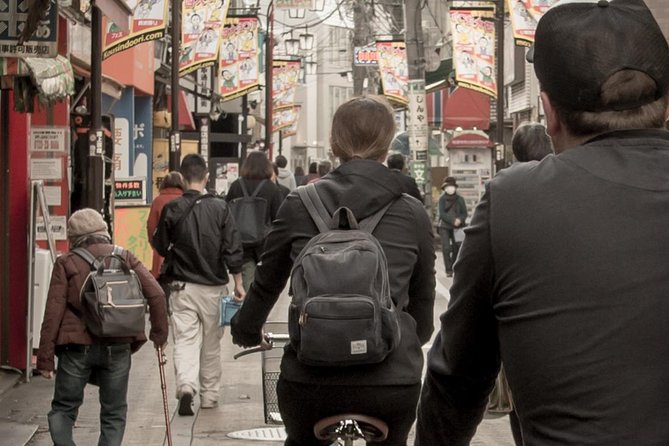
The west side of Tokyo is a useful counterpoint to Shibuya, Shinjuku, and the packed streets around major attractions. You still get the energy of the city, but at a smaller scale. A bicycle lets you cover more ground than walking while keeping you close to the details: small lanes, local businesses, bicycle parking systems, residential streets, and riverside paths.
This is not a sightseeing checklist. You should not expect famous landmarks or a polished fine-dining meal. The reward is seeing how Tokyo works when the city is simply going about its day.
I especially like that the tour gives local context to ordinary places. A quiet street becomes more interesting when you understand how people use it. A food stop becomes more useful when you learn what you are ordering and why it is common in Japan. That sort of information can help you navigate the rest of your trip with more confidence.
Andy is the guide named throughout the experience, and his background living in Japan for more than 20 years is an important part of the outing. His role is not just to point out streets. He also answers questions about Japanese culture and daily routines, and he has been praised for giving practical recommendations after the tour.
More Tokyo food tours:
- Tokyo: Shinjuku Food Tour (13 Dishes at 4 Local Eateries)
★ 5.0 · 6,603 reviews - Tokyo: Shinjuku Food Tour (15 Dishes and 4 Eateries)
★ 4.9 · 2,033 reviews - Best of Shinjuku: Izakaya Food Tour (4 Stops, 14+ Tastings)
★ 5.0 · 1,863 reviews
Meeting Andy at Koenji Station
The tour starts at Koenji Station, at 4-chome-48-2 Koenjiminami in Suginami City. Koenji is a good starting point because it puts you close to the kind of neighborhood the tour is designed to show: lived-in, independent, and away from Tokyo’s largest visitor crowds.
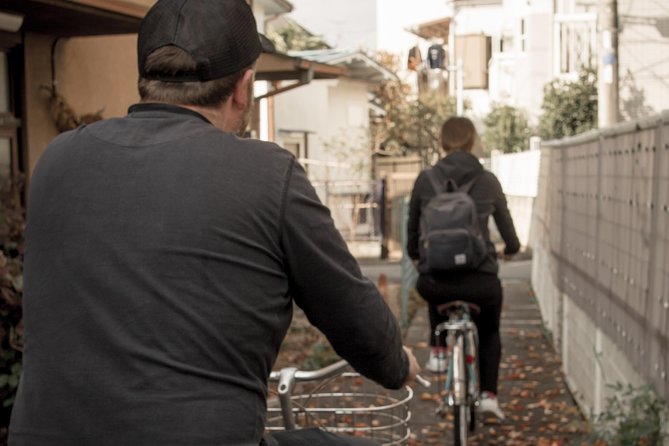
After meeting, you receive one of the salvaged mamachari bicycles. These are Japanese-sized bikes with front baskets that can hold a standard backpack. Helmets are available on request, so ask for one when you arrive if you prefer to ride with a helmet.
The bicycles are described as sometimes creaky or squeaky, but maintained for urban use. That distinction matters. You are not being handed a sleek road bike built for speed. You are getting a practical Japanese city bicycle suited to short stops, narrow streets, and a relaxed pace.
The front basket is handy, but keep your luggage modest. A standard backpack should fit. Large suitcases would not suit this outing and are not part of the plan.
Koenji, Nakano, and Asagaya by bicycle
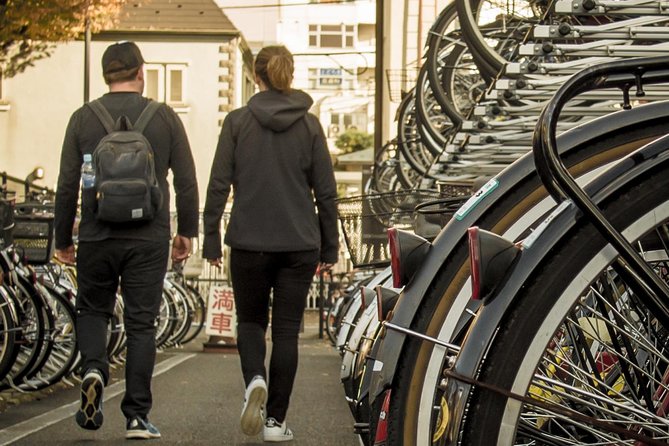
The route moves through the eclectic neighborhoods of Koenji, Nakano, and Asagaya. The exact order and timing can vary with weather, group size, eating pace, and traffic, but the basic pattern is a mix of riding, short walks, food stops, and conversation.
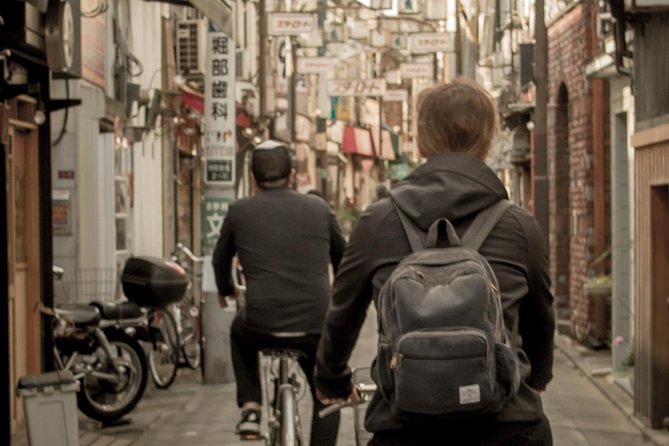
You will use twisting back streets rather than broad sightseeing routes. That makes the ride more interesting, but it also demands attention. You may need to steer around pedestrians, parked bicycles, uneven pavement, and tight corners. You should already be comfortable riding in an urban setting before booking.
The route is generally flat, which helps keep the outing approachable for people with basic cycling skills. Still, flat does not mean effortless. The distance is roughly 12 to 15 kilometers, or 7.5 to 9.5 miles, and much of the challenge comes from concentration rather than hills.
This is where the small group helps. With no more than eight people, Andy can give warnings before tricky sections and keep the ride together. The group remains small enough for questions, conversation, and food stops without a long wait for everyone to catch up.
The Zenpukuji River and the quieter side of Tokyo
A stretch along the Zenpukuji River adds a change of pace. Riverside bike paths offer a more open setting after the tighter back streets, and they help show how Tokyo mixes dense neighborhoods with pockets of calm.
Do not expect a major scenic viewpoint. The appeal is more modest and more local. You are seeing a part of the city that works as a place to live, exercise, commute, and meet daily needs.
That difference is central to the tour. If your idea of Tokyo sightseeing means temples, towers, neon, and grand department stores, this ride may feel understated. If you want to understand what lies between the famous districts, it gives you a useful change of scale.
The river section also gives the group a natural chance to slow down. Strategic pauses are part of the experience, and those breaks matter after riding through narrow streets. They also give Andy time to explain what you are seeing instead of forcing a nonstop commentary while everyone watches the road.
More Tokyo bike tours:
- Tokyo Great Cycling Tour
★ 5.0 · 811 reviews - Tokyo Top Highlights 3h Guided E-bike Tour
★ 5.0 · 714 reviews - 3h Tokyo E-Bike Tour: Hidden Gems, and Local Life with guide
★ 5.0 · 670 reviews - Tokyo: 3-Hour Bike or E-Bike City Highlights Tour
★ 4.8 · 435 reviews
Snacks, food stops, and a local-style lunch
Food is not a side note here. The tour includes a selection of popular local snacks and a Japanese-style lunch, with the stops chosen to fit the route and the group.
You may encounter foods you would not know how to order on your own. That is one of the strongest reasons to choose this tour instead of simply renting a bicycle. Andy can explain what you are eating and help take away some of the uncertainty that comes with a small local shop or counter.
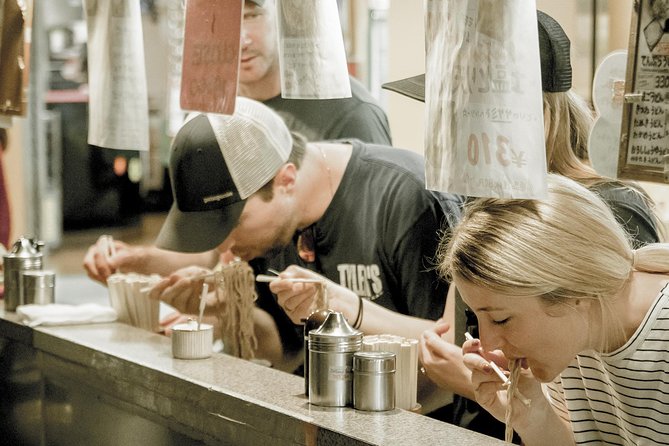
The lunch is described as local-style rather than fine dining. You should expect a typical neighborhood eatery, not a formal restaurant or a special tasting menu. At one point, the group may be sharing counter space with hungry salarymen, which gives the meal a practical, everyday feel.
The food element also breaks up the ride. Rather than pedaling for three and a half hours without a pause, you get time to eat, talk, and rest. Drinks and lunch breaks are included in the flow of the outing, though the exact food choices can vary.
There is an important limitation. Japanese cooking often includes meat and seafood, and dashi, a common soup stock, may contain fish or other animal ingredients. Because the tour uses typical local eateries, it can be difficult to handle strict dietary needs, allergies, or highly specific food preferences. If food restrictions are central to your booking decision, ask the operator before reserving.
Learning how Tokyo works at street level
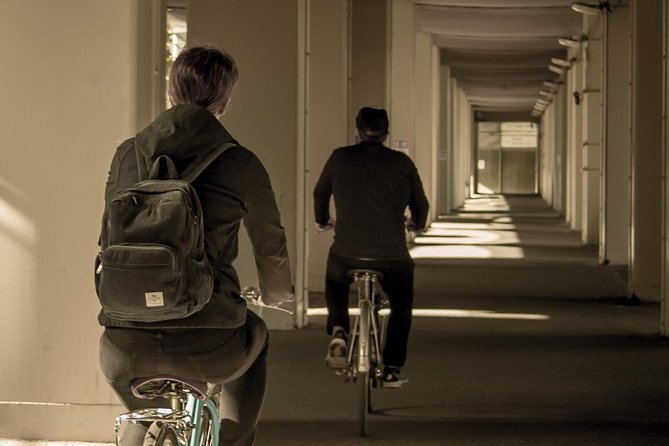
The strongest part of this tour is the conversation. Andy’s explanations cover more than dates and landmark names. You can ask about housing, schooling, religion, work, food, and the small systems that shape daily life.
One particularly unusual feature is the chance to learn about Tokyo’s bicycle parking systems. Bicycle parking may sound like a minor detail, but it shows how a dense city manages limited space. It also connects directly to what you are doing on the tour.
The outing includes socializing, so it works best if you are open to chatting with the guide and the other people in your group. It is not a private lecture delivered while you silently follow behind. The small size makes it easier to ask questions, compare impressions, and slow down when a topic catches your interest.
Andy is also known for helping people after the ride with directions and tailored suggestions. That can be especially useful early in a Tokyo visit, when you are still working out the rail system, restaurant choices, and which neighborhoods fit your interests.
What the bicycles and route feel like
A mamachari is a practical city bicycle, usually designed for short trips rather than speed. Here, the bikes have front baskets and are kept in good working order, but they are not presented as high-end equipment.
You should wear comfortable clothing and shoes suitable for riding and walking. The route includes uneven surfaces, so leave delicate footwear at the hotel. Keep your bag small enough for the front basket, and avoid bringing anything that needs special protection from weather.
The tour covers a distance that most people can manage if they ride regularly or feel at ease on a bicycle. The key skill is controlled riding in a busy urban environment. You should be able to stop, turn, and maintain awareness around other road users.
People over 140 centimeters, or about 4 feet 7 inches, should be able to ride the bikes comfortably. Children can take part if they meet the height and cycling requirements, but the adult booking party should be honest about each rider’s ability. An 11-year-old has taken part successfully, but that does not make the ride suitable for every child.
Timing, weather, and the practical details
The scheduled duration is about three and a half hours, but the real outing can run from three and a half to four hours. Eating speed, traffic, environmental conditions, and the pace of the group all affect the finish time.
The tour runs in all seasons and is described as an all-weather neighborhood outing. Basic ponchos are provided when it rains, and the cycling portion generally continues. At the same time, the booking conditions state that poor weather can cause a cancellation, with a different date or a full refund offered.
That means you should avoid placing an important timed reservation immediately afterward. Build in a little breathing room, particularly if you are using the tour on a busy sightseeing day.
The tour ends back at the Koenji meeting point. It is near public transportation, making it fairly simple to continue elsewhere in Tokyo after the ride. Confirmation is provided at booking, and the experience includes mobile ticketing.
Cancellation is free up to 24 hours before the start time. Cancelling later does not qualify for a refund, and changes made within that period are not accepted. The operator can also cancel if the minimum number of participants is not met.
Is $99.49 a fair price?
At $99.49 per person, this is not the cheapest way to rent a bicycle for a few hours. But a simple rental would not include a route through three neighborhoods, a guide, snacks, lunch, cultural explanation, and help navigating local eateries.
The value depends on what you want from the ride. If you already know west Tokyo well, speak Japanese, and are happy choosing food stops yourself, the price may feel high. If you want a carefully planned introduction to everyday neighborhoods, the included food and small group make the cost easier to justify.
The maximum of eight is important. A larger group might lower the price, but it would also make narrow streets, restaurant seating, and individual questions harder to manage. Here, you are paying partly for access to a route and partly for a guide who can adapt the conversation to the people in front of him.
The tour is also a good early-trip choice. It can give you a sense of local food, neighborhood etiquette, and the city’s west-side layout before you spend the rest of your visit moving between major attractions.
Who should book this ride?
I would choose this experience if you want:
- A break from Tokyo’s major sightseeing districts
- A small group and a social guide
- A mostly flat ride rather than a steep cycling challenge
- Local snacks and an everyday lunch
- Cultural explanation tied to real streets and neighborhoods
- A useful first look at Koenji, Nakano, and Asagaya
I would think twice if you dislike cycling near pedestrians or other bicycles. I would also hesitate if you need fully controlled meals, want famous landmarks, or prefer a quiet private tour with no group interaction.
The experience suits couples, families with capable older children, and solo visitors who enjoy meeting people. It can also work well as a first-day activity, though jet lag and rain may make a long urban ride less appealing right after arrival.
Should you book the Tokyo West-Side Cycling and Food Tour?
Book it if your best Tokyo memories are likely to come from small discoveries rather than famous photo stops. The route, food, and conversation give you a practical look at daily life in Koenji, Nakano, and Asagaya, with Andy’s local experience tying the pieces together.
Skip it if you want a polished sightseeing tour, a luxury bicycle, or a predictable restaurant menu. For confident cyclists who want to see a quieter, more ordinary side of Tokyo, the $99.49 price is reasonable because it covers much more than the bike itself.
FAQ
Where does the Tokyo West-Side Cycling and Food Tour start?
The tour starts at Koenji Station, at 4-chome-48-2 Koenjiminami, Suginami City, Tokyo 166-0003, Japan.
Where does the tour finish?
The activity ends back at the meeting point near Koenji Station.
How long is the tour?
The scheduled duration is about three hours and 30 minutes. The actual outing may take about three and a half to four hours depending on the group, weather, eating pace, and riding conditions.
How far do you ride?
You should expect to cycle roughly 12 to 15 kilometers, or 7.5 to 9.5 miles.
How many people can join?
The maximum group size is eight people.
Are helmets available?
Yes. Helmets can be provided for all participants on request.
Can people with dietary restrictions join?
Japanese cuisine often includes meat, seafood, and dashi. Since the tour uses typical local eateries, strict dietary requirements and food allergies may be difficult to accommodate. Contact the operator before booking if this is important for you.
Newly reviewed around Tokyo
- Tokyo Asakusa:Calligraphy & Make T-shirt Activity★ 5.0 · 62 reviews
- Intercity Shuttle, Tokyo to Haneda /Narita /Yokohama /Makuhari★ 5.0 · 5 reviews
- 1 Hour Travel around Tokyo with a Professional Photographer★ 5.0 · 3 reviews
- Travel Tokyo with Your Own Personal Photographer★ 5.0 · 43 reviews
- Train in Samurai Swordsmanship and Defeat the Demon in Tokyo★ 5.0 · 5 reviews
- Shuttle Van 6hr Tokyo Tour to-and-from Tokyo, Yokohama and Narita★ 5.0 · 9 reviews
- Kickboxing & Body Training with EX-Pro Fighter★ 5.0 · 4 reviews
- Traditional Japanese Knife Sharpening Class★ 5.0 · 18 reviews
Tokyo Food Tours, compared.
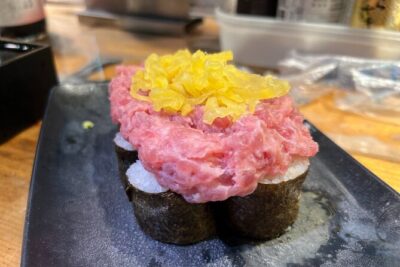
Shinjuku Food Tour (13 Dishes at 4 Local Eateries)
Read our review →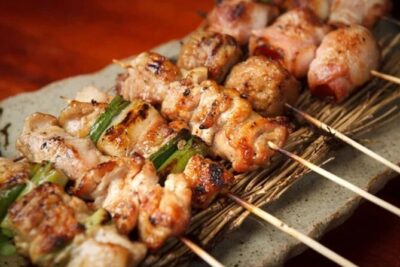
Shinjuku Food Tour (15 Dishes and 4 Eateries)
Read our review →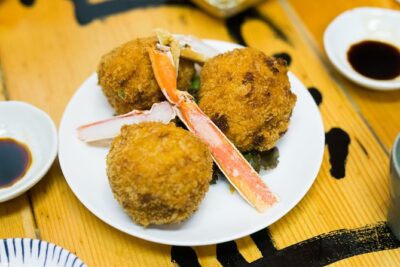
Best of Shinjuku: Izakaya Food Tour (4 Stops, 14+ Tastings)
Read our review →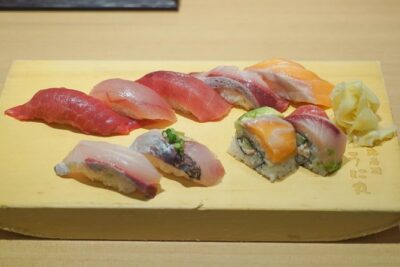
Tokyo Night Foodie Tour in Shinjuku – Seasonal Sushi, Wagyu Beef
Read our review →
Eat and Drink Like a Local: Tokyo Ueno Food Tour-Taverns&Ramen
Read our review →
Tsukiji Fish Market: Street Food & Culture Walking Tour
Read our review →
Browse the lists this tour appears in