
Reviewed · TOKYO FOOD TOURS
Tokyo Vegan Food Tour
Tokyo’s plant-based food scene gets its proper introduction through four styles of mini ramen, vegan gyoza, karaage, fruit sandwiches, and sweet anko sandwiches. The route runs from Shibuya to Ebisu, with a stop near Shibuya Crossing and practical advice for finding vegan food after the tour.
I like the small group limit of six, which gives the guide room to explain ingredients and answer questions. I also like the mix of savory dishes, sweets, one drink, and a convenience-store visit, since you learn how to eat vegan in Tokyo beyond one carefully planned meal.
The main consideration is the price: $101.25 for about three hours is not cheap, especially if you are already comfortable finding plant-based restaurants on your own. You also finish at Ebisu Station rather than returning to the starting point, so plan your evening from there.
Key points to know before booking
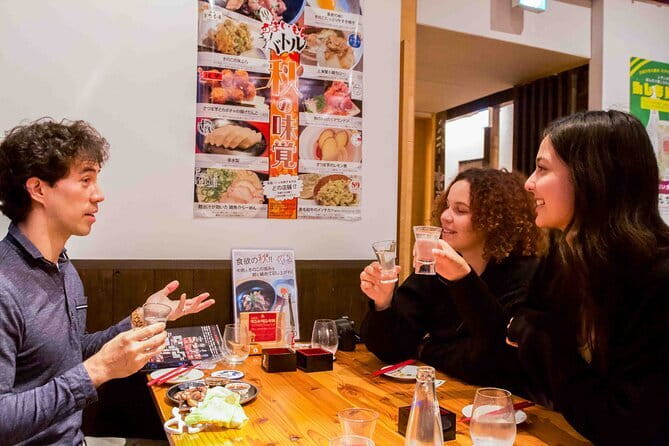
- Four mini ramen flavors: Try Hokkaido-style ramen in spicy miso, miso, shoyu, or shio styles.
- A Shibuya-to-Ebisu route: Begin at Shibu Hachi Box near Shibuya Crossing and finish by Ebisu Station.
- More than a restaurant crawl: Learn about vegan ingredients, cooking methods, and Japan’s growing plant-based dining scene.
- A useful convenience-store stop: Pick up practical ideas for finding vegan food during the rest of your stay.
- Small groups only: The tour accepts a maximum of six people.
- Guide-led and flexible in feel: Guides named in the feedback include Daisy and Sahori, both praised for making the food and cultural background easy to understand.
Why this tour makes sense in Tokyo
Tokyo can be easy for a vegetarian and more complicated for a strict vegan. A dish may look plant-based but contain fish stock, dairy, egg, or meat-based seasoning. That makes a food tour useful, not simply as a way to eat, but as a way to understand what you are ordering.
This experience focuses on Japanese dishes that are often difficult to navigate without help. Ramen, gyoza, karaage, sandwiches, and convenience-store food all belong to familiar parts of daily Japanese eating. Seeing them in vegan form gives you a broader picture than a single specialty restaurant would.
The tour also covers two very different parts of southwest Tokyo. Shibuya is famous for its crossing, tall buildings, shopping, and constant movement. Ebisu feels more relaxed, though the tour information does not promise a full sightseeing tour of either neighborhood. Think of the walk as a food-focused route with city views along the way.
The experience lasts about three hours. That is long enough for several tastings and conversation, but short enough to fit into a busy Tokyo schedule. I would place it early in your visit if vegan dining is important to you, since the advice may help with later meals.
More Tokyo food tours:
- Tokyo: Shinjuku Food Tour (13 Dishes at 4 Local Eateries)
★ 5.0 · 6,603 reviews - Tokyo: Shinjuku Food Tour (15 Dishes and 4 Eateries)
★ 4.9 · 2,033 reviews - Best of Shinjuku: Izakaya Food Tour (4 Stops, 14+ Tastings)
★ 5.0 · 1,863 reviews
Starting near Shibuya Crossing
You meet at Shibu Hachi Box, at 2-chōme-1-1 Dōgenzaka in Shibuya. The meeting point is near one of Tokyo’s best-known scenes, Shibuya Crossing, and your guide takes you past some of the area’s iconic views.
That opening matters because it gives the tour a clear sense of place. You are not being taken straight into an isolated restaurant. You begin in one of Tokyo’s major public spaces, then move into the local food scene from there.
The meeting point is served by public transportation, which is helpful in a city where station exits can be confusing. Give yourself enough time to find Shibu Hachi Box. The supplied information does not state a specific station exit or a grace period for late arrivals, so arriving early is the sensible choice.
Shibuya is also a useful setting for a food tour because it combines famous city sights with small, specialized dining options. Your guide can connect the food to the neighborhood rather than treating each dish as a separate tasting.
Four kinds of ramen in one sitting
Ramen is the centerpiece of the food selection. You receive mini bowls in Hokkaido style, with choices including spicy miso, miso, shoyu, and shio.
The small portions are a smart choice. You get to compare several broths without turning the first stop into a heavy meal. The range also shows how much variety can exist within one Japanese dish. Miso gives you a fuller, savory flavor, shoyu is soy-sauce based, shio is salt-seasoned, and spicy miso adds heat.
You should pay attention to how the guide explains the ingredients and preparation. The food itself is enjoyable, but the useful lesson is learning which parts of ramen need checking when you order elsewhere. A vegan label can refer to the noodles, the broth, or the full dish, and those are not always the same thing.
The information does not specify whether each flavor is guaranteed for every departure, so treat the listed choices as the available range rather than a promise that you will receive all four. If you have a strong preference for spicy food or a concern about ingredients, tell your guide at the start.
Gyoza and karaage, Japanese comfort food without meat

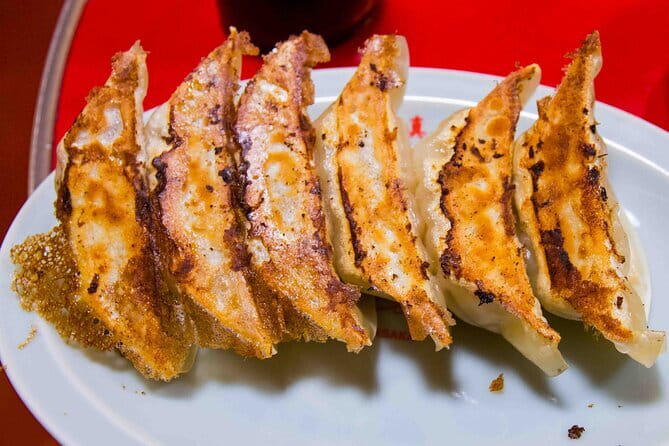
Vegan gyoza gives you a familiar Japanese dumpling in plant-based form. The appeal is partly taste and partly texture: a good gyoza needs a crisped base, a tender wrapper, and a flavorful filling.
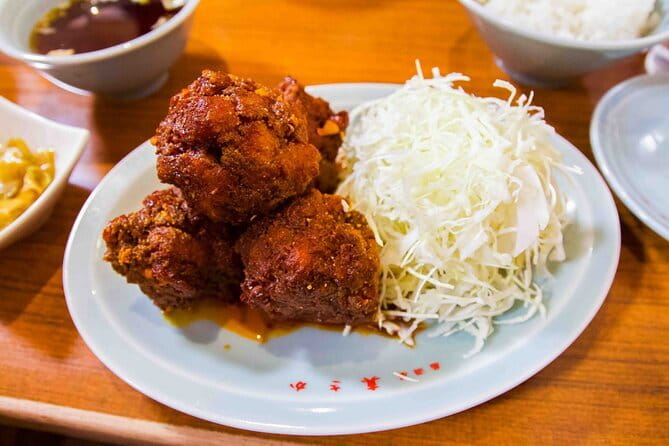
The tour also includes vegan karaage, a plant-based version of Japanese fried chicken. This is a useful inclusion because it shows how familiar cooking methods can be adapted without meat. The attraction is not just replacing chicken, but preserving the crunchy, savory character associated with karaage.
These dishes make the tour suitable for mixed groups. One person may be vegan, while another simply wants to understand Tokyo’s food scene. One person who was not vegan still enjoyed the meal, which suggests that the menu is not limited to people following a strict plant-based diet.
Still, this is a tasting tour rather than a large restaurant meal. The portions are designed to let you sample several items. If you arrive very hungry, the combination of small ramen bowls, dumplings, fried food, sandwiches, and sweets may feel more like a series of stops than one generous lunch.
More vegan and vegetarian tours in Tokyo:
- Vegan Friendly Sushi & Okonomiyaki Shibuya Night Foodie Tour
★ 5.0 · 124 reviews - Ramen & Dumpling Cooking in Tokyo with Chef/Vegan possible
★ 5.0 · 107 reviews - Vegan/Vegetarian Ramen and Gyoza by Bentoya cooking
★ 5.0 · 59 reviews - Ramen Making from Scratch with Tokyo Mom(Vegan Option Available)
★ 5.0 · 39 reviews
Fruit sandwiches and anko sweetness
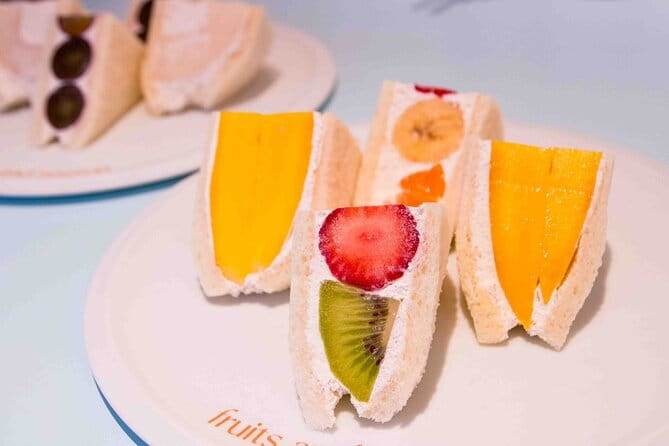
Japanese fruit sandwiches are one of the more unusual parts of the menu. They typically pair soft bread with fresh seasonal fruit and a creamy filling, though the exact vegan preparation is not specified here. On this tour, you get to try a plant-based version and see how seasonal fruit fits into Japanese sandwich culture.
The butter and anko sandwich offers a different style of sweetness. Anko is sweet red bean paste, a common Japanese ingredient with a smooth, gently sweet flavor. Paired with vegan butter and bread, it gives you a small taste of a familiar Japanese snack that many visitors might otherwise miss.
These sandwiches add balance to the savory food. They also make the tour more interesting for anyone who has already tried vegan ramen or gyoza. The menu is not built around one category of food. It moves from broth to dumplings, fried food, fruit, and bean paste.
The fruit selection changes with the season, and the description does not name the exact fruit you will receive. That is normal for a seasonal item, but it means you should view it as a fresh surprise rather than a fixed menu choice.
The convenience-store lesson may be the most useful part
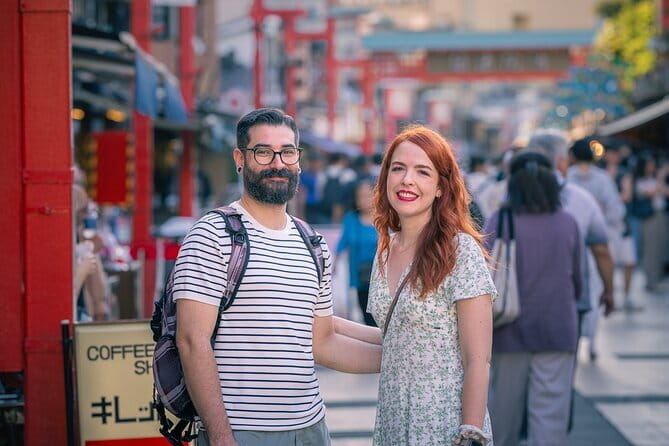
Many food tours end when the final dish is cleared away. This one includes a quick convenience-store stop, which may prove more useful during the rest of your trip than another restaurant tasting.
Japanese convenience stores are everywhere, and they can be a practical source of drinks, snacks, and simple food. For a vegan visitor, the hard part is identifying what is suitable. Ingredient labels, sauces, broths, and flavorings can require careful checking.
Your guide gives you practical tips for handling this part of daily life in Tokyo. The supplied details do not identify a specific store or promise a particular product, so expect guidance rather than a planned shopping trip.
I like this feature because it respects your actual needs after the tour. You may spend several more days in Japan, and knowing how to approach a convenience store can save time and reduce guesswork. It also keeps the tour connected to ordinary Japanese life, not only restaurant food prepared for visitors.
What the guide adds to the meal

The tour is led by food enthusiasts who explain local ingredients, cooking techniques, and the growth of vegan dining in Japan. Names associated with the experience include Daisy and Sahori.
Daisy received especially warm praise for making the food enjoyable for someone who was not vegan. Sahori was described as easygoing and helpful while explaining where to find vegan food and what kinds of dishes to look for. Since guides can vary by departure, you should not assume that either person will lead your specific tour.
The guide’s role is important because the food alone does not explain the wider picture. You learn why a dish matters, how it fits Japanese eating habits, and what to watch for when ordering elsewhere. The cultural background also makes the meal more memorable than a simple list of tastings.
The maximum group size is six. That is small enough for direct conversation and personal questions, and it should feel less hurried than a large food walk. The tradeoff is that the tour may have less of a social group atmosphere than a departure with a dozen or more people.
Walking from Shibuya to Ebisu

The route finishes near Ebisu Station at 1 Chome-5 Ebisuminami, in Shibuya. You do not receive private transportation, so the movement between stops is part of the experience.
The walk gives you a look at the streets between two well-known neighborhoods. It also means you should wear comfortable shoes and keep your schedule realistic. Three hours is the approximate duration, so allow some flexibility if you have a timed reservation immediately afterward.
Finishing at Ebisu is convenient if you want to continue dining, shopping, or riding the train from there. It is less convenient if you expected to return to Shibuya. Check the end point before booking and treat Ebisu as the place to begin your next activity.
The route is described as suitable for most people and near public transportation. No detailed accessibility information is provided, so you should ask the provider directly if you need specific assistance with walking, stairs, or restaurant access.
Is $101.25 a fair price?
At $101.25 per person, this tour sits in the premium range for a three-hour food experience. The price includes snacks, lunch, and one drink, with a choice of alcoholic or non-alcoholic beverage.
The value depends on how much you want from the guidance. If you only want to eat vegan ramen, you may spend less by choosing a restaurant yourself. If you want several styles of food, cultural explanation, and practical help with future meals, the price becomes easier to justify.
The small group also matters. A maximum of six means you are paying for access to a more personal format, not simply for food portions. The tour is booked about 45 days ahead on average, which suggests you should reserve early if your Tokyo dates are fixed.
Alcohol is not the focus, but the included drink gives you one more choice during the meal. If you do not drink, the non-alcoholic option keeps the inclusion useful.
Who will get the most from this experience?
I would recommend this tour most strongly to strict vegans visiting Tokyo for the first time. You get a safe starting point for learning how plant-based eating works across restaurant food, snacks, and convenience stores.
It also suits people traveling with a mixed group. A non-vegan can still enjoy the ramen, fried food, dumplings, and sweets without treating the tour as a compromise. The cultural and cooking explanations give the experience value beyond dietary necessity.
It is a good fit for food-focused visitors who want a compact introduction to Shibuya and Ebisu. It may not suit you if you want a full sightseeing tour, a private car, large portions, or a completely fixed menu.
The tour has a perfect five-star rating from 12 published ratings, with 100 percent recommending it. That is a strong signal, though the sample is small. I would use it as encouragement, not as a substitute for checking the price, walking route, and menu style against your own plans.
Booking details and cancellation
Confirmation arrives when you book, and the activity is offered with a mobile ticket. You can cancel for a full refund up to 24 hours before the local start time.
Cancellations or changes made less than 24 hours before the experience are not accepted for a refund. Keep the approximate three-hour length in mind when arranging train reservations, theater tickets, or another meal.
Should you book the Tokyo Vegan Food Tour?
Book it if you want more than a single vegan restaurant meal. The combination of mini ramen bowls, gyoza, karaage, seasonal fruit sandwiches, anko sandwiches, and a convenience-store stop gives you both tasting variety and practical help.
I would be more cautious if $101.25 feels high for lunch, or if you prefer to explore at your own pace. The tour is short, the route ends at Ebisu, and portions are designed for sampling rather than a huge feast.
For a first-time vegan visitor, the value lies in the explanations and the confidence you gain for later meals. Reserve ahead, arrive at the Shibuya meeting point early, and think of the experience as a compact food lesson with lunch built in.
FAQ
Where does the Tokyo Vegan Food Tour start?
It starts at Shibu Hachi Box, 2-chōme-1-1 Dōgenzaka, Shibuya, Tokyo 150-0043, Japan.
Where does the tour finish?
The tour concludes near Ebisu Station, at 1 Chome-5 Ebisuminami, Shibuya, Tokyo 150-0022, Japan.
How long does the tour last?
The experience lasts approximately three hours.
What food is included?
The tour includes vegan Hokkaido-style ramen, vegan gyoza dumplings, vegan karaage, seasonal fruit sandwiches, and butter and anko sandwiches. Snacks and lunch are included.
Is a drink included?
Yes. One alcoholic or non-alcoholic drink of your choice is included.
How many people can join the tour?
The maximum group size is six people. Confirmation is provided at booking, and the tour uses a mobile ticket.
Newly reviewed around Tokyo
- Tokyo Asakusa:Calligraphy & Make T-shirt Activity★ 5.0 · 62 reviews
- Intercity Shuttle, Tokyo to Haneda /Narita /Yokohama /Makuhari★ 5.0 · 5 reviews
- 1 Hour Travel around Tokyo with a Professional Photographer★ 5.0 · 3 reviews
- Travel Tokyo with Your Own Personal Photographer★ 5.0 · 43 reviews
- Train in Samurai Swordsmanship and Defeat the Demon in Tokyo★ 5.0 · 5 reviews
- Shuttle Van 6hr Tokyo Tour to-and-from Tokyo, Yokohama and Narita★ 5.0 · 9 reviews
- Kickboxing & Body Training with EX-Pro Fighter★ 5.0 · 4 reviews
- Traditional Japanese Knife Sharpening Class★ 5.0 · 18 reviews
Tokyo Food Tours, compared.
Shinjuku Food Tour (13 Dishes at 4 Local Eateries)
Read our review →
Shinjuku Food Tour (15 Dishes and 4 Eateries)
Read our review →
Best of Shinjuku: Izakaya Food Tour (4 Stops, 14+ Tastings)
Read our review →
Tokyo Night Foodie Tour in Shinjuku – Seasonal Sushi, Wagyu Beef
Read our review →
Eat and Drink Like a Local: Tokyo Ueno Food Tour-Taverns&Ramen
Read our review →

Tsukiji Fish Market: Street Food & Culture Walking Tour
Read our review →
Browse the lists this tour appears in