
Reviewed · TOKYO SUMO EXPERIENCES
Tokyo Shinjuku Sumo Show and Experience with Drinks and Photo
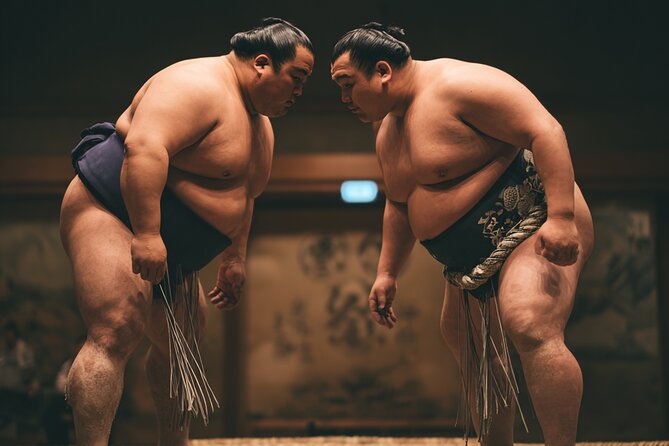
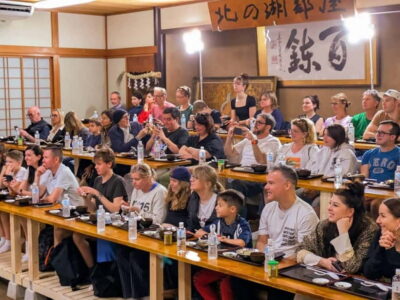
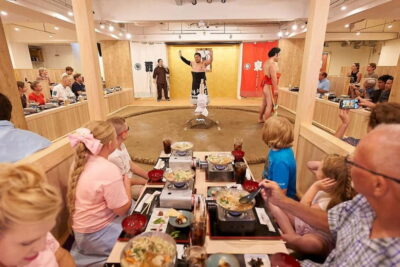
The best thing about this experience is the close view. With about 50 seats around a small dohyo, you are near the action instead of watching tiny figures across a large arena. A bilingual MC, sometimes identified as Manny, explains the rituals, moves, and customs in clear English.
I like two parts in particular: you can step into the ring for the Sumo Challenge, and everyone gets a photo opportunity with the wrestlers. The show is also easy to fit into a Shinjuku evening, since it lasts about 90 minutes and ends where it starts.
The main caution is expectation. This is a staged cultural show, not a tournament, stable training session, or official Grand Sumo event. The matches are brief, and the included drink appears to be a bottle of water, with other drinks available for purchase.
Key points before you book
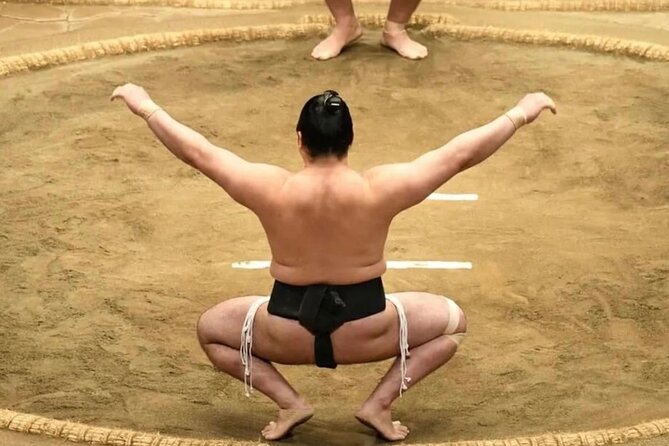
- Small 50-person setting: Every seat is close to the dohyo, making the action easy to see.
- Bilingual explanation: The MC covers sumo rules, ceremonies, terms, and training for first-time viewers.
- Hands-on challenge: Selected participants can try pushing against a wrestler in the ring.
- Professional wrestlers with comic timing: The performers mix real sumo technique with light humor and audience interaction.
- Photo with the wrestlers: The final meet-and-greet gives you a clear souvenir of the evening.
- Good but not cheap value: At $70 per person, you are paying for access, explanation, participation, and photos rather than a full competitive bout.
What the Shinjuku Sumo Club experience really is
This is a compact theatrical introduction to sumo in central Tokyo. It uses real professional wrestlers, real sumo rituals, and genuine physical skill, but the presentation is designed for international visitors.
That distinction matters. You will not be attending a six-hour tournament at Ryogoku Kokugikan. You will not be watching a private training session. Instead, you sit close to a small ring while a host explains what you are seeing, then invites you into the action.
For many people, that is a smart first step. Sumo has rules and customs that can seem mysterious if you only watch a few bouts on television. Here, the MC explains why wrestlers throw salt, how they prepare, what different movements mean, and how a bout is won.
The tone is informal. Expect humor, audience encouragement, and a few deliberately dramatic moments. If you want a solemn look at sumo as a centuries-old sport, this may feel too playful. If you want to understand the basics and have a good story to take home, the format works well.
More things to do in Shinjuku:
- Tokyo: Shinjuku Food Tour (13 Dishes at 4 Local Eateries)
★ 5.0 · 6,603 reviews - Tokyo Bar Hopping Tour in Shinjuku (All-You-Can-Drink + Dinner)
★ 5.0 · 3,587 reviews - Tokyo: Shinjuku Food Tour (15 Dishes and 4 Eateries)
★ 4.9 · 2,033 reviews
Finding the club in Ōkubo
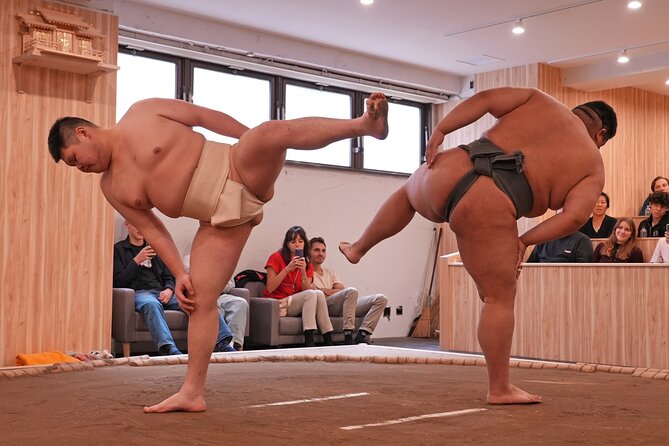
The meeting point is in the Ōkubo area of Shinjuku City, at 2-chōme 5-22, Sekisaku Building, postal code 169-0072. The activity begins and ends at this same building, and it is near public transportation.
Give yourself enough time to locate the entrance. The address is more useful than a broad instruction such as meet in Shinjuku, since Shinjuku is a large district with many stations and busy streets.
The show takes place inside a building rather than in a grand stadium. That helps create the intimate setup, but it also means the first impression is urban and practical, not ceremonial. One useful detail: an elevator is available, although one participant initially used the steep stairs and only noticed the elevator when leaving.
Once inside, you take a seat around the dohyo. The limited capacity, about 50 people, is one of the strongest features of the format. You are not fighting through a crowd for a view, and the host can speak directly to the room.
The opening lesson: salt, training, and sumo manners
The first part introduces the sport before the physical demonstrations begin. The bilingual MC explains the basic traditions, terminology, and rituals, including salt throwing and the preparation associated with entering the ring.
This introduction is important because sumo is not simply two large athletes pushing each other. The ceremony, stance, footwork, and gestures are part of the sport. Without explanation, those details can look like a long prelude. With a good host, they become part of the show.
The MC also discusses wrestler training and the structure of a bout. Manny was praised for explaining the background clearly while keeping the mood light, and the host plays a major role in the quality of your evening. The wrestlers supply the power and comedy, but the MC provides the map.
The lesson is brief rather than academic. You will leave with a working understanding of what to watch for, not a specialist’s knowledge of every rule or rank. That is the right level for most visitors fitting sumo into a larger Tokyo trip.
Professional bouts in a tiny ring
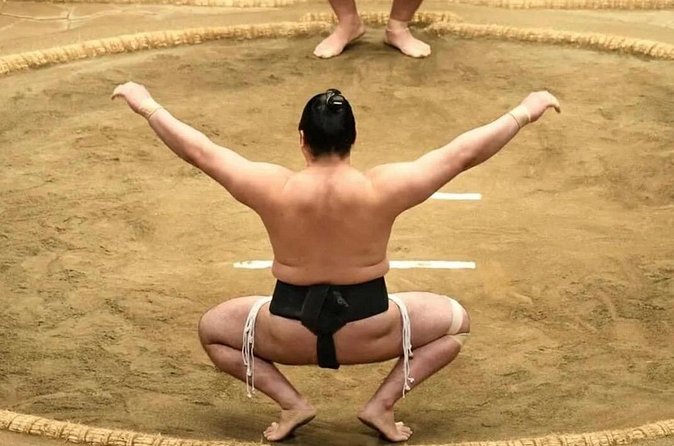
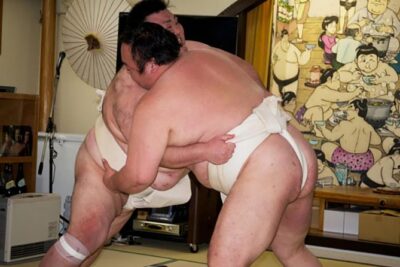
After the introduction, the wrestlers demonstrate techniques and perform several bouts. You see the wrestlers up close, hear the audience reaction, and get commentary on the moves as they happen.
The small ring changes the experience. In a major arena, the scale and tradition are impressive, but a first-time viewer can miss details. Here, you can see the force of a shove, the balance involved in a stance, and the way a wrestler uses timing rather than brute strength alone.
Expect the bouts to be short. Some people enjoy the quick pace, while others want more full matches. The program has been criticized by some participants who expected a longer exhibition and instead saw three very fast bouts after the demonstrations.
That is the clearest limitation of the show. The wrestling is a central attraction, but the total program also includes explanation, ceremony, interaction, and photos. You should book it as an entertainment and cultural presentation, not as a replacement for watching a tournament.
The wrestlers also use humor. They encourage the room to react, play off the MC, and make the sport approachable. This works especially well for families and mixed groups, since not everyone needs to arrive with an interest in sumo.
More Tokyo sumo experiences:
- Tokyo: Sumo Show and Dining Experience
★ 4.8 · 2,742 reviews - the SUMO show
★ 5.0 · 1,960 reviews - Tokyo Shinjuku Sumo Show & Experience with Photo
★ 5.0 · 1,750 reviews - Tokyo: Sumo Show and Experience in Shinjuku
★ 4.8 · 1,001 reviews
The Sumo Challenge puts you in the ring
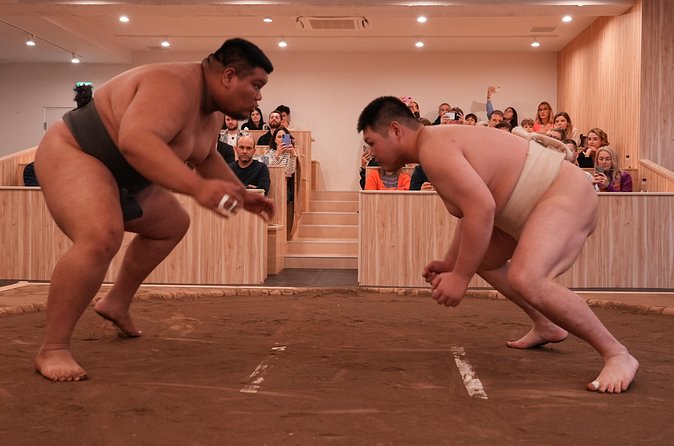
The most memorable part for many people is the audience challenge. You may be invited to try pushing against one of the wrestlers inside the dohyo.
Participation is not guaranteed for every person. A limited number of volunteers are selected, with one session using a lottery for six participants. That approach is fairer than simply choosing the loudest hands in the air, but you should not buy a ticket assuming you personally will wrestle.
Even if you are not selected, you can watch the challenge from close range. The point is not to defeat a professional athlete. It is a playful demonstration of how difficult it is to move someone who has trained for this kind of balance, stance, and force.
The activity is voluntary, so you can cheer from your seat if you prefer. This makes the show suitable for a group with different comfort levels. One person can volunteer, another can take photos, and everyone can still follow the explanation.
The challenge also clarifies the difference between staged entertainment and fake sport. The matchups and comic moments are arranged for the program, but the wrestlers are real athletes, and the physical strength is not pretend.
Photos and the final meet-and-greet
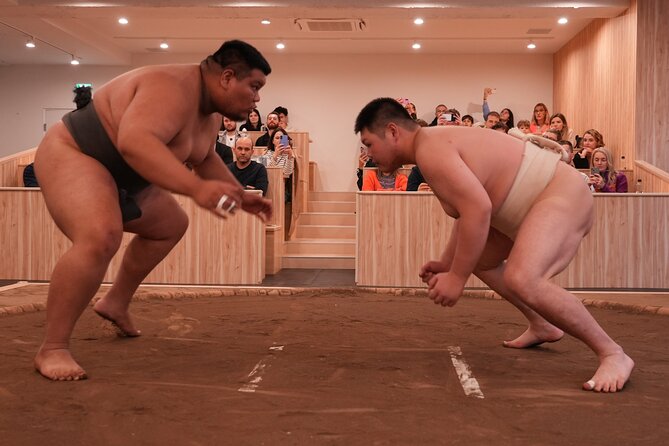
The program ends with a photo session and a chance to meet the wrestlers. Everyone has an opportunity to take a picture with them, which is a strong benefit compared with simply watching a demonstration from a distance.
The wrestlers are described as friendly and patient during the photos. That matters because the picture is not a rushed glimpse from the back row. You get a personal souvenir showing the scale difference between you and a professional sumo wrestler.
The photo session also gives the evening a clear ending. After the bouts and challenge, you are not left wondering if another segment is coming. You can take your picture, ask questions during the available Q&A, and return to the same meeting point.
If you are taking photos during the show, remember that the ring is small and the action moves quickly. Your best chance for a clean personal photo is the planned session at the end, not a hurried shot during a bout.
Drinks, seating, and what the $70 price covers
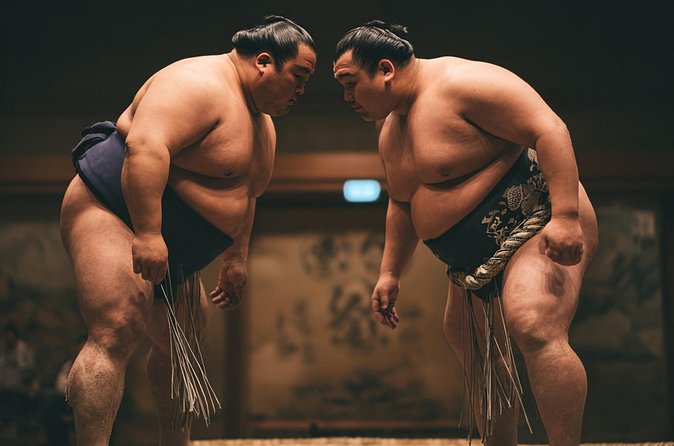
The listed price is $70 per person. That is not a bargain if you judge it only by the amount of wrestling. The matches are short, and the included drink has been described as a bottle of water rather than an alcoholic drink.
Other drinks are available for purchase. Read the word drinks carefully when comparing this experience with other Tokyo activities. You should not assume the price includes a cocktail, beer, or a full meal.
The value comes from the combination of elements:
- A small room with a clear view
- A bilingual explanation of sumo customs and rules
- Live demonstrations by professional wrestlers
- Audience participation
- A photo with the wrestlers
- A 90-minute program in Shinjuku
I think the price makes more sense for someone who wants a ready-made cultural activity with English support and no need to understand sumo in advance. It makes less sense for someone who mainly wants to watch serious competitive bouts or who expects dinner and several included drinks.
The show also saves you from planning a trip around an official tournament schedule. You can book a set 90-minute experience and continue your evening in Shinjuku afterward.
Authentic sport, tourist presentation
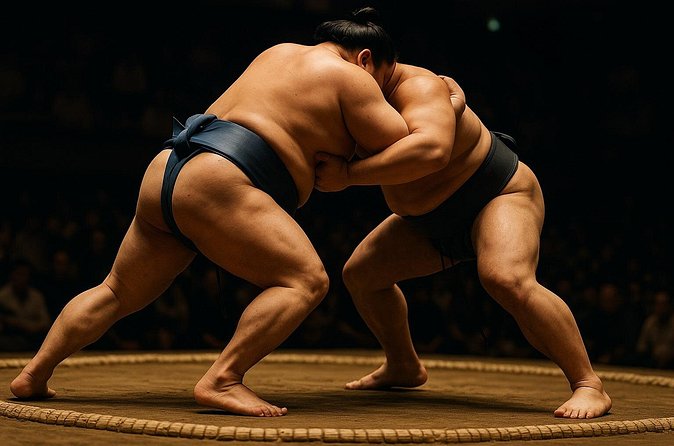
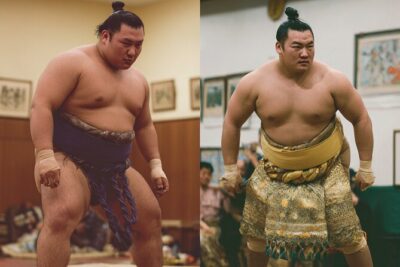
The word authentic needs care here. The wrestlers are genuine sumo professionals, and the customs and techniques are drawn from the real sport. You are not watching actors pretend to be sumo wrestlers.
The program itself is made for tourists. Some people find it overly staged, calling it a pantomime or tourist trap. Another concern is that the host and staff may make the experience feel more international than Japanese, with only the wrestlers representing Japan during some sessions.
I would describe it as a cultural show built around authentic athletes, not as an unfiltered look at everyday sumo life. That does not make it worthless. It simply tells you what kind of experience you are buying.
If you want to learn how sumo works, laugh with the performers, and stand next to a wrestler for a photo, the tourist-friendly format is helpful. If you want to observe a real practice session, see the strict life of a sumo stable, or watch a tournament bout with no staging, choose a different activity.
Who will enjoy this 90-minute program
I would recommend it most strongly to first-time visitors who want a simple introduction to sumo. The bilingual host removes much of the confusion, and the short running time fits neatly into a day of sightseeing.
Families can also do well here. Children may not follow every point about rank or ritual, but the physical demonstrations, jokes, and challenge keep the program moving. The photo with a wrestler gives younger participants a clear highlight.
It is also a good group activity for coworkers or friends. The show encourages people to react together, and volunteers can add a personal story to the evening. You can attend even if only one person in your group is interested in Japanese sport.
I would be more cautious if you are a serious sumo fan. You may appreciate the close range and the chance to see the wrestlers, but you could find the short bouts and scripted humor thin compared with a tournament.
The activity is designed so most people can participate, and confirmation is provided at booking. Since the maximum is about 50 people, the room should feel personal rather than crowded. Free cancellation is available up to 24 hours before the start time. After that point, the payment is not refunded, and late changes are not accepted.
My practical verdict on Shinjuku Sumo Club
Book this if you want an accessible introduction to sumo with English explanation, real wrestlers, a participation option, and a guaranteed photo opportunity. The close seating and friendly performers are the strongest reasons to go.
Skip it if your main goal is a long series of serious matches, a true training session, or a fully Japanese-language cultural setting. The event is polished for international audiences, and its wrestling segments may feel too brief for the price.
For most first-time visitors, I see it as a fun add-on rather than the definitive sumo experience. Set your expectations correctly, and the $70 price buys a lively 90-minute lesson with real physical skill and a memorable photo. Expect a tournament, and you may leave disappointed.
FAQ
Where does the Shinjuku Sumo Show begin and end?
It begins at Sekisaku Building, 2-chōme 5-22, Ōkubo, Shinjuku City, Tokyo 169-0072. The activity ends back at the same meeting point.
How long does the sumo experience last?
The program lasts approximately 1 hour and 30 minutes.
How many people can attend each show?
The maximum group size is about 50 people, with seating arranged around the dohyo for close views.
Is the show explained in English?
A bilingual MC explains the history, rituals, terms, techniques, and rules of sumo. One host identified for the experience is Manny.
Can I try sumo wrestling myself?
You may be invited to join the Sumo Challenge and push against a wrestler. Participation is limited, and selection may be handled by a lottery, so joining the ring is not guaranteed.
What is included with the drink?
An included drink has been described as a bottle of water. Other drinks are available for purchase.
Can I cancel for a full refund?
Yes. You can cancel at least 24 hours before the local start time for a full refund. Cancellations or changes made less than 24 hours before the start time are not accepted for a refund.
More Tokyo shows and performances
- Mt Fuji & Hakone Cruise, Drum Show Bullet Train 1 Day from Tokyo
★ 4.0 · 7,413 reviews - Mt Fuji & Hakone Cruise, Drum Show Bus 1 Day from Tokyo
★ 4.0 · 1,287 reviews - Tokyo:Luxury Sumo Show Experience & Japanese cuisine & Drink
★ 4.7 · 577 reviews - Tokyo Bay Yakatabune Dinner/Day Cruise with Japan Show and Drinks
★ 4.5 · 473 reviews
Newly reviewed around Tokyo
- Tokyo Asakusa:Calligraphy & Make T-shirt Activity★ 5.0 · 62 reviews
- Intercity Shuttle, Tokyo to Haneda /Narita /Yokohama /Makuhari★ 5.0 · 5 reviews
- 1 Hour Travel around Tokyo with a Professional Photographer★ 5.0 · 3 reviews
- Travel Tokyo with Your Own Personal Photographer★ 5.0 · 43 reviews
- Train in Samurai Swordsmanship and Defeat the Demon in Tokyo★ 5.0 · 5 reviews
- Shuttle Van 6hr Tokyo Tour to-and-from Tokyo, Yokohama and Narita★ 5.0 · 9 reviews
- Kickboxing & Body Training with EX-Pro Fighter★ 5.0 · 4 reviews
- Traditional Japanese Knife Sharpening Class★ 5.0 · 18 reviews
Tokyo Sumo Experiences, compared.
Tokyo Shinjuku Sumo Show & Experience with Photo
Read our review →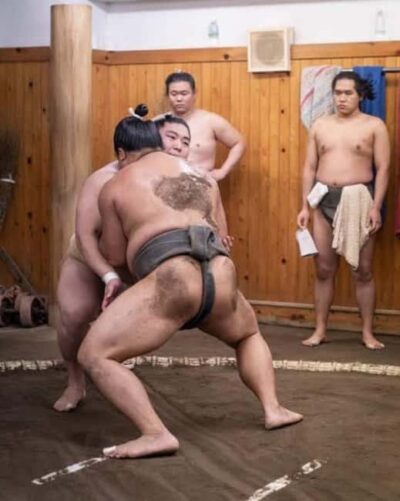
Luxury Sumo Show Experience & Japanese cuisine & Drink
Read our review →
Tokyo Sumo Experience: Chanko & Mochi with a Former Pro
Read our review →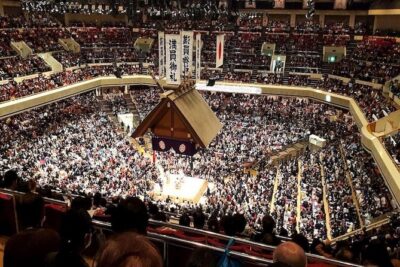
Ultimate Sumo Tournament: Tokyo, Osaka, Nagoya, Fukuoka
Read our review →Browse the lists this tour appears in