
Reviewed · 2-DAY EXPERIENCES
Tokyo Private Guided 1/2-Day Walking Subway Tour English guide
Tokyo in half a day works best when someone else handles the route. This private walk-and-subway tour links Meiji Jingu, Shibuya Crossing, Asakusa, Senso-ji, and Tsukiji without asking you to master Tokyo’s rail map first. You get a useful look at both modern and traditional Tokyo, with hotel pickup and a Metro Pass included.
I especially like the private format, since your guide can slow down for questions or adjust the pace for your group. I also like the practical subway lesson. Guides including Yoshi, Hiromi, and Izumi have been praised for helping people move through crowded stations and make better use of their limited time.
The tradeoff is the pace. Four and a half hours is a lot of ground, and you will walk outdoors between trains, shrines, shops, and markets. This is a smart orientation tour, not a leisurely day at each sight.
Key points to know before booking
- Five major Tokyo stops in about 4.5 hours: You cover a wide slice of the city, from a forested shrine to neon-lit Shibuya and old Asakusa.
- A private guide makes the subway less intimidating: Your guide handles the route and helps you understand how to get around later in your trip.
- Meiji Jingu and Senso-ji offer very different views of Japan: One honors Emperor Meiji, while the other is one of Tokyo’s oldest Buddhist temples.
- Tsukiji is now an outer market: The wholesale operation moved to Toyosu in 2018, but the food stalls and shops at Tsukiji remain.
- Expect a serious amount of walking: Comfortable shoes and rain protection are practical necessities.
- The $136.82 price buys convenience as much as sightseeing: It is easier to justify for first-time visitors, short stays, or small groups that value private help.
Why this half-day route works in Tokyo
Tokyo can feel simple once you understand it, but the first few subway trips can take time. Stations are large, platforms may serve several lines, and a short ride can involve a fair amount of walking. This tour uses the rail system as part of the experience, rather than hiding it from you in a private vehicle.
You begin with pickup at your hotel, then travel by subway from the nearest suitable station. That matters because the tour does not only show you Tokyo. It gives you a working example of how to move around the city after the guide leaves.
The private setup is the main advantage. Only your own group takes part, so you can ask why a shrine works differently from a Buddhist temple, request help with the Metro, or tell the guide if your group needs a slower pace. A guide can also explain small cultural details that are easy to miss when you rush from one landmark to the next.
The route is broad rather than deep. You will not have time to inspect every shop in Asakusa, linger for a long meal, or spend hours at any one shrine. Think of the tour as a well-organized first look, with enough explanation to help you decide where to return.
More Tokyo walking tours:
- Tokyo Tsukiji Fish Market Food and Culture Walking Tour
★ 5.0 · 3,184 reviews - Tokyo: Imperial Palace and Shogun Historical Walking Tour
★ 5.0 · 2,251 reviews - Tokyo: Shinjuku Local Bar and Izakaya Guided Walking Tour
★ 4.9 · 1,794 reviews
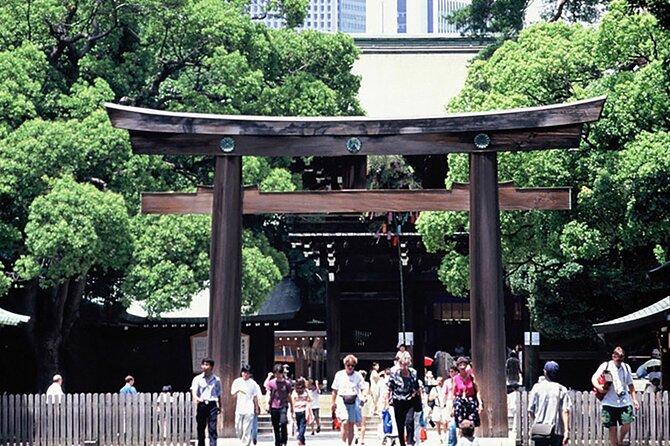
Meiji Jingu, Tokyo’s quiet start
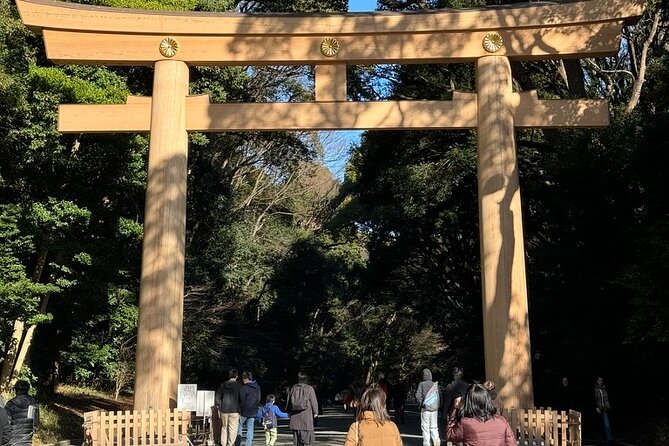
Meiji Jingu gives the morning a calm opening. Completed in 1920, the shrine honors Emperor Meiji, an important figure in Japan’s move into the modern era during the 19th century. The grounds provide a sharp contrast to the dense streets and giant stations you will encounter later.
You have about 50 minutes here, and admission is free. That time should let you see the main approach and shrine area while your guide explains the setting and the role of the shrine. You may also receive guidance on basic shrine etiquette, such as how to approach the worship area respectfully.
I like starting here because it gives you cultural context before the louder parts of Tokyo. The visit is not only about taking a quick photograph. It shows how a major city preserves a place for ritual, remembrance, and quiet movement.
The exact feel of the visit depends on weather and crowds. Rain can make the outdoor paths less pleasant, so pack an umbrella or raincoat. Good walking shoes matter from the first stop, since the tour continues outside for much of the day.
Shibuya Crossing in a short, focused visit
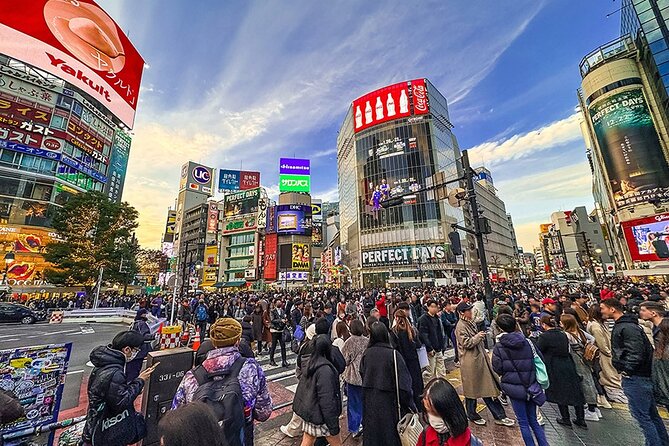
From Meiji Jingu, you make a short trip toward Shibuya Station. The Shibuya stop lasts about 20 minutes, so expect an orientation and a look at the famous crossing rather than a full tour of the district.
This is modern Tokyo at its most recognizable. Several streams of pedestrians move through the intersection while screens, department stores, and station buildings form the backdrop. Your guide can help you understand where you are and how the station connects to the wider subway and rail network.
Twenty minutes is enough to get the idea, but not enough for a full Shibuya visit. You will not have time to shop, explore side streets, or settle into a cafe. That is not a flaw if you want a broad city sampler. It is a limitation if Shibuya is the main reason you came to Tokyo.
The stop also shows why subway help has real value. Shibuya Station can be confusing, and a guide who knows the quickest practical route can save time. Yoshi, Hiromi, and Izumi are among the guides associated with this experience, and the strongest feedback about them focuses on patience, clear explanations, and making the rail system easier to use.
Asakusa brings back old Tokyo
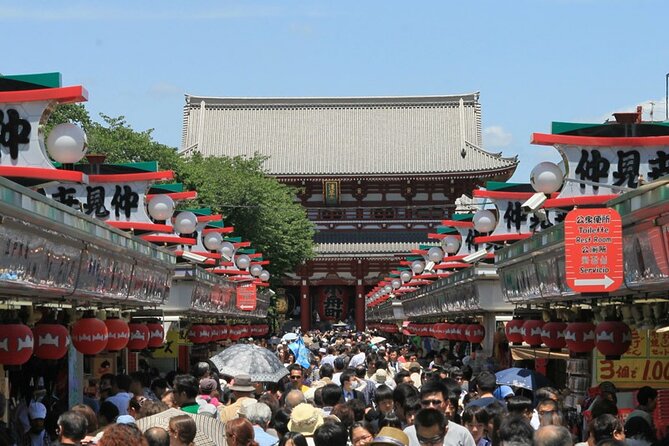
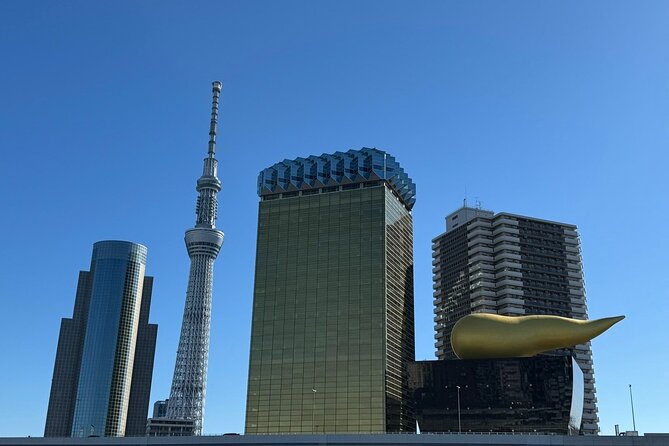
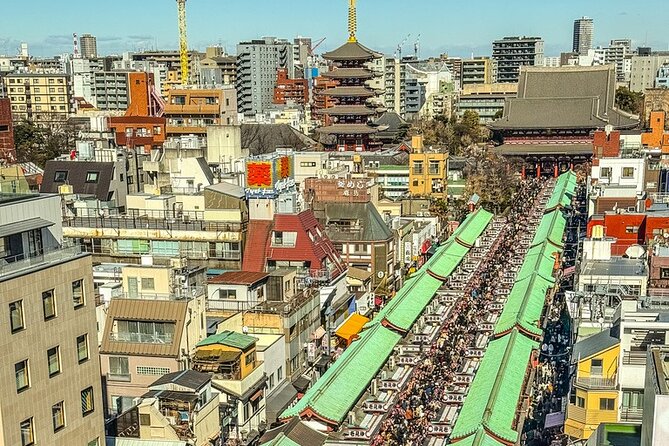
The tour then shifts from Shibuya’s modern energy to Asakusa, a district known for traditional crafts, souvenirs, street food, and small shops. You have about 20 minutes for this general area before spending longer at Senso-ji.
Asakusa is a good place to see how old and new Tokyo sit close together. You might find shops selling handmade goods beside snack counters and busy pedestrian streets. The guide can point out what you are seeing and help you decide what deserves a return visit later.
The short timing means you should not plan to buy a long list of souvenirs during the tour. Shopping, browsing, and eating all take time, and the group still needs to reach the temple and final market stop. If you see something you want, note the location and return independently if your schedule allows.
This stop works best as a transition into traditional Tokyo. It gives you the setting for Senso-ji and lets you see how a historic district functions as an everyday commercial area, not only as a monument for photographs.
More 2 Day Experiences in Tokyo:
- In 2026, 2-Day Mt. Fuji Climbing Tour with Mountain guide
★ 3.5 · 10 reviews - Hakone Private Two Day Tour from Tokyo with Overnight Stay in Ryokan
★ 5.0 · 5 reviews - Tokyo 2-Day Private Walking Tour with Licensed Guide
★ 5.0 · 4 reviews - 2 Days Tokyo ,Mount Fuji / Hakone Private Tour from Tokyo
★ 5.0 · 3 reviews
Senso-ji and the meaning behind the temple
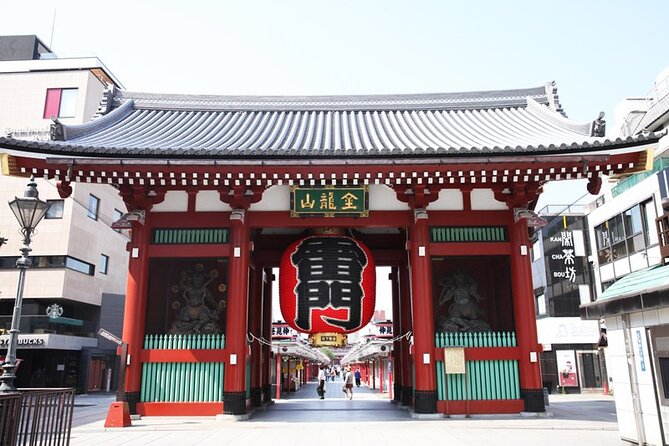
Senso-ji receives about 40 minutes, making it one of the longer stops. Founded in 645, it is one of Tokyo’s oldest and largest Buddhist temples. Its age and importance give your guide plenty to explain, from the temple’s role in local life to the difference between Buddhist and Shinto sites.
You will have time to see the main temple area and take in the scale of the complex. The approach can be crowded, especially at popular times, so staying close to your guide is useful. A private guide can help your group move through the area without losing one another and can answer questions as you go.
I find this pairing of Meiji Jingu and Senso-ji especially worthwhile. The two sites are not interchangeable. Meiji Jingu is a Shinto shrine connected with Emperor Meiji, while Senso-ji is a Buddhist temple with roots reaching back well before modern Japan. Seeing both in one morning gives you a clearer sense of the country’s religious variety.
Do not expect a quiet temple visit. Asakusa is a major stop on Tokyo’s sightseeing circuit, and the approach may be crowded. The guide’s value is greatest here when the paths are full and you want context without stopping to decode every sign yourself.
Tsukiji Outer Market, where the tour ends
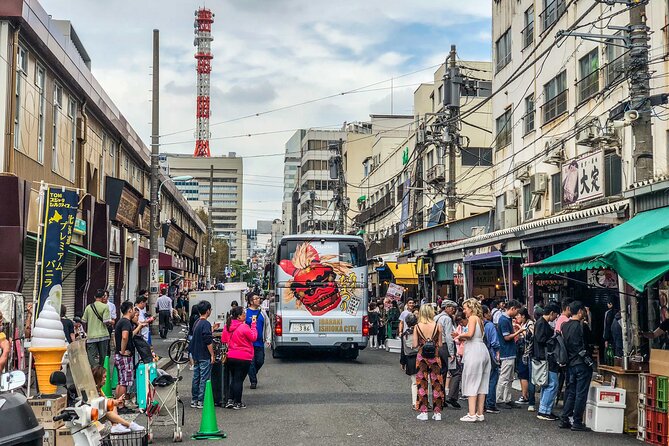
The final stop is Tsukiji Fish Market, reached around 2:00 pm. The wholesale market moved to Toyosu in 2018, but Tsukiji’s Outer Market remains in place with food shops, stalls, and small businesses.
This is the best stop for a flexible finish. You have about 30 minutes, and lunch is not included, so you can use the time to look around or purchase something to eat. The short visit will not allow a long market crawl, but it gives you a useful introduction to the area and a chance to continue on your own afterward.
You should keep the market’s current role in mind. Tsukiji is not the wholesale fish market it once was. It is now an outer-market district, so the experience centers on retail food, prepared snacks, kitchen goods, and local shopping rather than the full wholesale operation.
Ending here makes practical sense. You can eat after the tour instead of trying to fit lunch into the earlier stops, and you are not forced back to your hotel with the group. The tour concludes at Tsukiji, so plan your afternoon from there rather than assuming hotel return is included.
What the subway lesson adds
The included one-day Metro Pass is more than a transport detail. It lets you experience Tokyo’s public transportation with a guide beside you, then use what you learned later. You can watch how your guide finds the station, chooses the correct direction, and moves through the system.
This is particularly useful if you arrive early in your trip. A short lesson in reading signs, locating platforms, and connecting major districts can save you time for the rest of your stay. You still need to pay attention, since the tour does not turn you into a Tokyo transit expert in one morning, but you will have a practical starting point.
The pass is listed as included, along with hotel pickup and an English-speaking guide. Extra subway fares should not be necessary for the planned route, though the operator notes that guests may need to cover transportation costs if their hotel falls outside the pickup range and cannot be reached reasonably by subway.
The route also includes travel time between attractions. The stops add up to less than the full 4.5-hour duration because pickup, station transfers, and subway rides fill the rest. That is normal for a city tour built around public transportation, but it means you should not expect 4.5 hours of uninterrupted sightseeing.
Price, pace, and who gets good value
At $136.82 per person, this is not the cheapest way to see Tokyo. You are paying for a private English-speaking guide, hotel pickup, route planning, subway assistance, and a one-day Metro Pass. The value improves if you are traveling with family or friends and can share the private experience across your group.
I would consider the price reasonable for a first visit, especially if you have only a few days in Tokyo. The guide can help you see five major areas without spending your first morning studying maps or making wrong turns. You also gain a sense of which places deserve more of your time later.
The value is weaker if you already know Tokyo’s subway system or prefer exploring at your own pace. You may feel rushed at Shibuya and Asakusa, and you will not have much freedom to linger. Independent visitors who enjoy planning routes may prefer to split these areas across several days.
The tour suits people with moderate physical fitness. You will walk outdoors, use stations, move through crowded areas, and spend much of the morning on your feet. Wear sneakers or other comfortable shoes, and bring rain gear because weather can affect the route.
The operator may change or substitute stops for weather or other operating reasons. The experience is not automatically canceled in those cases, and the fare is not refunded simply because part of the plan changes. If bad weather forces a full cancellation, you can receive a different date or a full refund.
Free cancellation is available if you cancel at least 24 hours before the start time. Changes made inside that window are not accepted, so keep the local cut-off time in mind.
Guide quality matters more than the checklist
The private format puts much of the experience in the guide’s hands. Yoshi is noted for helping groups manage crowded sites, answering questions, and adjusting to different interests. Hiromi is described as kind and helpful, while Izumi is praised for helping a group see more of Tokyo than it could have managed alone.
Those details point to the real strength of this tour. The five stops are easy to list, but the useful part is the human help between them. A patient guide can explain a custom, keep slower walkers included, and make a packed station feel manageable.
You should still tell your guide what matters to you. If you care most about food, ask for help using the Tsukiji time well. If you want cultural background, use the shrine and temple stops for questions. If you need a slower pace, say so early, since the route covers a lot of ground.
Should you book this Tokyo tour?
Book it if you want a private introduction to Tokyo and would rather learn the subway with help than figure it out alone. It is especially useful for a short first visit, families or small groups, and anyone who wants Meiji Jingu, Shibuya, Asakusa, Senso-ji, and Tsukiji in one organized morning.
Skip it if you want long meals, extended shopping, or hours at each attraction. The pace is brisk, and the walking is real. For the right person, the tour is less about checking five boxes and more about getting oriented quickly, seeing the city’s contrasts, and gaining enough subway confidence to explore on your own afterward.
FAQ
How long does the tour last?
The tour lasts approximately 4 hours and 30 minutes. Time is divided between the five stops, hotel pickup, subway rides, and travel between attractions.
Which attractions are included?
The route includes Meiji Jingu Shrine, Shibuya Crossing, Asakusa, Senso-ji Temple, and Tsukiji Outer Market.
Is hotel pickup included?
Yes. Hotel pickup is included, but if your hotel is outside the designated pickup range and cannot be reached by subway, you may need to pay transportation costs for the guide.
Is subway transportation included?
Yes. A one-day Metro Pass is included. The tour uses the subway between the attractions.
Is lunch included?
No. Lunch is not included. The tour ends around 2:00 pm at Tsukiji Outer Market, where you can continue exploring or find food independently.
Can I cancel for a full refund?
Yes, if you cancel at least 24 hours before the experience start time. If bad weather causes the experience to be canceled, you can choose another date or receive a full refund.
Newly reviewed around Tokyo
- Tokyo Asakusa:Calligraphy & Make T-shirt Activity★ 5.0 · 62 reviews
- Intercity Shuttle, Tokyo to Haneda /Narita /Yokohama /Makuhari★ 5.0 · 5 reviews
- 1 Hour Travel around Tokyo with a Professional Photographer★ 5.0 · 3 reviews
- Travel Tokyo with Your Own Personal Photographer★ 5.0 · 43 reviews
- Train in Samurai Swordsmanship and Defeat the Demon in Tokyo★ 5.0 · 5 reviews
- Shuttle Van 6hr Tokyo Tour to-and-from Tokyo, Yokohama and Narita★ 5.0 · 9 reviews
- Kickboxing & Body Training with EX-Pro Fighter★ 5.0 · 4 reviews
- Traditional Japanese Knife Sharpening Class★ 5.0 · 18 reviews
2-Day Experiences, compared.
In 2026, 2-Day Mt. Fuji Climbing Tour with Mountain guide
Read our review →
Hakone Private Two Day Tour from Tokyo with Overnight Stay in Ryokan
Read our review →
Tokyo 2-Day Private Walking Tour with Licensed Guide
Read our review →
Private 2-Day Tour: Mt Fuji Hakone & Kamakura + Onsen Ryokan
Read our review →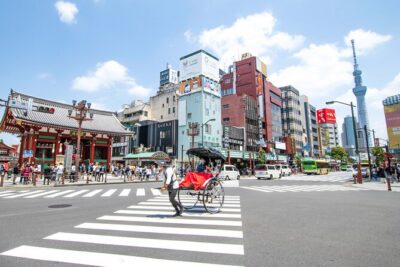
Tokyo Skytree, Asakusa, and Imperial Palace 1/2-Day Private Tour
Read our review →
Browse the lists this tour appears in