Reviewed · PRIVATE
Tokyo Layover 5 Hours Private Tour
Tokyo is a fine city for a long layover because Haneda Airport sits close enough to the central sights for a quick taste of the capital. This private tour lets you leave your luggage in the vehicle, ride between neighborhoods, and shape the day around what you most want to see.
I especially like the door-to-door airport service and the freedom to ask for changes along the way. Free WiFi, bottled water, snacks, and a private vehicle make the hours easier after a long flight. The catch is simple: five hours passes quickly, and traffic or immigration delays can cut the sightseeing time sharply.
Key points at a glance
- Private transport from Haneda: Meet at the airport, keep luggage in the vehicle, and return to the same meeting point.
- A flexible Tokyo sampler: You can focus on temples, markets, shopping streets, shrines, youth culture, or famous city views.
- Strong guide support: Guides including Tomoya, Riley, Aimi, Babu, Nao, Ryu, and Douglas have handled custom routes, delayed arrivals, large groups, and changing plans.
- Comfort between stops: The vehicle includes free WiFi, bottled water, and snacks.
- Good for mixed-age groups: A party of nine, including an 80-year-old and a 4-year-old, used the format successfully.
- A time-sensitive outing: The listed stops total about four hours and 25 minutes before accounting for driving, meals, traffic, or airport formalities.
Why a private vehicle makes sense at Haneda
The real value here is not simply seeing a list of famous places. It is the time saved by avoiding train changes, station corridors, ticket machines, and the question of where to leave your bags.
Your guide meets you at Haneda Airport, and the tour ends back at the airport. That arrangement matters when your onward flight is the reason for the visit. You can use the vehicle as a mobile base, with luggage stored inside while you visit the sights.
The driver can also bring you close to the places you want to see. On a rainy day, one guide adjusted drop-offs so the group did not need to walk far. That kind of small decision can make a big difference when you have limited hours, tired legs, children, or an older family member.
The private format also avoids the fixed pace of a coach tour. You might spend longer at Senso-ji and skip some shopping, or cut a stop short to add Rainbow Bridge or another requested sight. One group changed a five-hour booking into seven or eight hours after a flight change, though you should treat extensions as something to arrange, not something guaranteed.
More private tours in Tokyo:
- Tokyo 6hr Private Tour with Government-Licensed Guide
★ 5.0 · 3,902 reviews - Private Tour to Mt. Fuji and Hakone (Fully Licenced Operator)
★ 5.0 · 1,910 reviews - Tokyo Customized Private Tour (Must See Places in 1 Day)
★ 5.0 · 1,499 reviews
Senso-ji gives you the strongest first taste of old Tokyo
Senso-ji in Asakusa is the oldest temple in Tokyo, and it is the most substantial cultural stop on the planned route. Allow about an hour here.
This is where I would spend time looking beyond the obvious photo. The temple gives you a sense of Tokyo’s traditional side, with a calmer rhythm than the commercial districts later in the day. The story of Asakusa reaches back to 628, when two fishermen found a small Kannon statue, and the area grew around that sacred object.
Admission is free, which helps the tour’s value. Your guide can explain the setting as you walk, then get you back to the vehicle without the usual worry of navigating across the city.
The trade-off is timing. An hour sounds generous, but it can disappear quickly if you want photographs, a close look at the temple buildings, and time to explore the surrounding area. If Senso-ji is your main reason for booking, tell the guide early so it receives proper attention.
Tsukiji still works for food, even after the market moved
Tsukiji receives about 40 minutes, and this is one of the more useful stops if you want to eat rather than simply photograph Tokyo. The main wholesale market moved to Toyosu in 2018, but the outer market at Tsukiji remains open with restaurants and shops.
You might find small food businesses, Japanese kitchen goods, and quick meal options here. One group particularly enjoyed the fish market and lunch nearby, while another had ramen during the tour. Those details point to the best way to use this stop: ask your guide to help you fit in a focused bite instead of trying to cover every lane.
Forty minutes is not enough for a long meal or a careful market crawl. It is enough for a quick look and a snack if traffic has been kind. Since shops and restaurants can have their own schedules, the exact experience may vary.
Ginza and the Imperial Palace show Tokyo’s polished center
Ginza receives about 30 minutes. This is Tokyo at its most refined, with major fashion names, traditional crafts, galleries, restaurants, and bold modern architecture gathered around the district’s grand avenues.
I would treat Ginza as a visual stop unless shopping is your priority. Thirty minutes gives you time to walk a short stretch and see the contrast between old Japanese design and high-end contemporary buildings. It is not enough for serious browsing, so tell your guide if you want a particular shop or craft store.
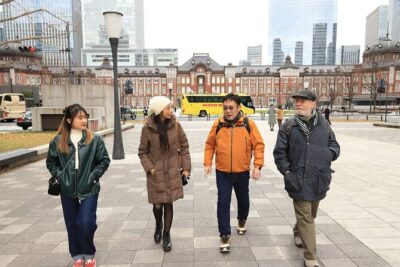
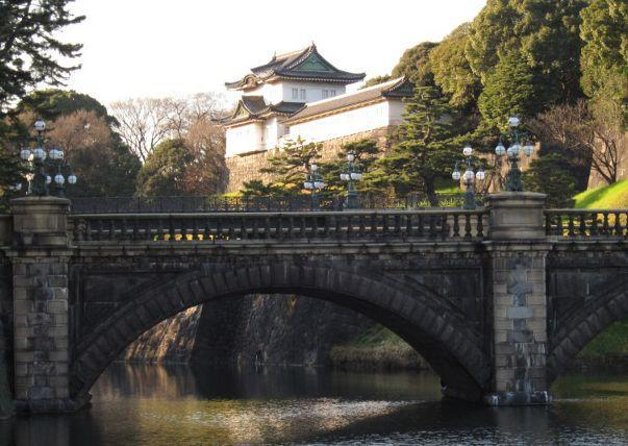
The Imperial Palace follows with another 30-minute stop. The grounds occupy the former castle of the Tokugawa shoguns, who ruled from 1603 to 1868, before the site became the Imperial Palace during the Meiji period.
This stop works best for a quick look at the palace area and its setting. It is not a full palace tour, and the itinerary does not promise interior access. The National Diet building may also be included along the drive or route. Built in 1936, it is one of the few Tokyo buildings to survive the air raids of 1945.
A completely different kind of day in Tokyo:
- Mt Fuji and Hakone 1-Day Bus Tour Return by Bullet Train
★ 5.0 · 26,383 reviews - 1-Day Tokyo Bus Tour
★ 5.0 · 14,250 reviews - Tokyo: teamLab Planets TOKYO Digital Art Museum Entry Ticket
★ 4.6 · 9,779 reviews - Mt Fuji & Hakone Cruise, Drum Show Bullet Train 1 Day from Tokyo
★ 4.0 · 7,413 reviews
Omotesando and Takeshita Street reveal two different Harajukus
Omotesando receives about 20 minutes, so expect a short architectural and shopping pass rather than a full afternoon. The avenue is known for buildings designed by leading architects, along with famous fashion brands and polished storefronts.
Takeshita Street gets about 30 minutes and offers a sharper change of mood. Here, Harajuku’s youth culture comes forward through unusual clothing, bold designs, and an energetic shopping street.
I like pairing these two stops because they explain something about Tokyo without requiring a lecture. Omotesando shows the city’s sleek, design-conscious side, while Takeshita Street shows its playful, youthful edge. The limitation is that both visits are brief. If you want to shop, eat, or spend time taking portraits, ask your guide to trim another stop.
Meiji Jingu is the tour’s quiet reset
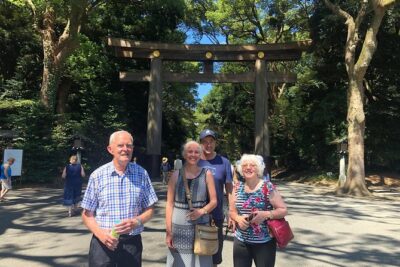
After the dense city streets, Meiji Jingu gives you 40 minutes in a more peaceful setting. The shrine offers a welcome break from the traffic and commercial districts, and it is one of the better choices if you want a traditional place with a calmer feel.
A Japanese wedding ceremony may be taking place on a Saturday or Sunday, though that is not something the tour can promise. I would not build the whole visit around seeing one. Instead, enjoy the change in atmosphere and use the stop to slow the pace before the final city highlight.
The shrine is also a practical choice for families and first-time visitors who want more than shopping streets. It adds balance to a route otherwise filled with markets, commercial districts, and famous intersections.
Shibuya Crossing is a quick finale
The planned visit to Shibuya Crossing lasts about 15 minutes. That is short, but it can be enough to watch the famous intersection fill and empty in waves, then take a few photographs.
The comparison to Times Square is easy to understand, but Shibuya has its own character. You are seeing one of Tokyo’s most recognizable urban scenes, not visiting a museum or historic building. Keep expectations realistic: this is a quick photo and people-watching stop, not a full Shibuya neighborhood tour.
Several routes added requested places such as Rainbow Bridge, and guides adjusted plans when time allowed. If Shibuya is essential to you, say so before setting out. The more stops you request, the less time you will have at each one.
The guide can make or break a tight schedule
The provider assigns different guides, so you should not assume a particular person will be available. Names connected with especially useful experiences include Tomoya, Riley, Aimi, Babu, Nao, Ryu, Douglas, Leonardo, Ren, Roberto, and Style.
Their roles go beyond explaining what you are seeing. A good guide has to watch the clock, choose sensible drop-off points, respond to traffic, and protect your return to Haneda. Tomoya handled a delayed arrival and still built a worthwhile shorter visit. Riley was praised for making clear choices instead of repeatedly leaving every decision to the group. Nao helped a party of nine, including young and elderly family members, keep the day manageable.
Large groups can use the tour, but vehicle arrangements matter. One booking included 15 students and four teachers, while another included 18 people with two guides. Ask about the exact vehicle and staffing for your own party rather than assuming one car will handle every group size.
English communication has also been highlighted by several guides, including Nao and Riley. Since guide assignments vary, the most useful expectation is that the operator will match you with an available guide rather than promise a specific person.
The price works best for a full vehicle
The cost is $641.36 per group of up to nine people. That is a serious amount for a five-hour outing if you are alone or traveling as a couple. It becomes easier to justify as the group grows, since the price does not rise per person up to the stated limit.
You are paying for more than a sightseeing drive. The package includes airport pickup and return, a private vehicle, luggage storage in the vehicle, WiFi, bottled water, snacks, and a route built around your interests. The main financial benefit is convenience: you are buying back time that would otherwise go to getting into Tokyo, changing trains, and finding your way around with luggage.
I would compare it this way:
- For one or two people, public transport will likely be cheaper, if you are comfortable managing bags and watching the clock.
- For a family or group, the private cost can be reasonable because everyone shares the vehicle.
- For older adults, children, or anyone arriving after a red-eye flight, the reduced walking and direct airport return may be worth more than the lowest possible fare.
- For a short layover, the private format gives you a better chance of seeing several districts without treating every transfer as an event.
The tour is booked around 60 days ahead on average, and confirmation arrives within 48 hours, subject to availability. That makes early planning sensible, especially for a large group or a date close to a major holiday.
Build the route around your real priorities
The advertised route tries to cover a remarkable sweep: old Tokyo at Senso-ji, food at Tsukiji, polished Ginza, imperial history, Harajuku culture, a shrine, and Shibuya. It is an excellent sampler, but not a relaxed tour.
You will get more from it if you choose two or three must-see stops before pickup. Then let the guide connect them in a sensible order. If you insist on all eight stops, expect quick visits and considerable time in the vehicle.
For a first visit, I would prioritize Senso-ji, Tsukiji, Meiji Jingu, and Shibuya if the schedule is workable. For architecture and fashion, swap in Ginza and Omotesando. For children or teenagers, Takeshita Street and Shibuya may have more appeal than the Imperial Palace stop.
Your onward flight controls the day. A five-hour tour is not the same as five hours of sightseeing. You still need time for airport formalities, getting back to the terminal, and dealing with an unexpected delay. One group had a three-hour flight delay and still salvaged a fun, shorter outing, but that depended on adjusting expectations.
Who should book this Tokyo layover tour?
I would recommend it most strongly to a group of four to nine people with a long Haneda layover, especially if you value comfort and want one vehicle for the day. Families, school groups, first-time visitors, and people carrying luggage all gain something from the private setup.
It is also a good match if you want a guide to explain buildings and neighborhoods as you drive. Several guides have helped with photo locations, meals, route changes, and local questions, which is useful when you have no spare time for wrong turns.
I would hesitate if your layover is only slightly longer than five hours, if you want an unhurried meal, or if you mainly want one neighborhood. Traffic and airport timing leave little room for mistakes. I would also think twice if you are traveling alone and care more about keeping costs down than saving effort.
Free cancellation is available up to 24 hours before the start time for a full refund. Changes or cancellations inside that window are not accepted for a refund, so protect your booking if your flight schedule remains uncertain.
Should you book it?
Book this tour if your goal is a comfortable first look at Tokyo without risking a complicated return to Haneda. The private vehicle, flexible route, and airport pickup solve the hardest parts of a layover.
Do not book it expecting a slow, detailed tour of every district. You will be sampling Tokyo at speed. But if you choose your priorities, keep the group together, and leave a safe airport cushion, this is a practical way to turn idle hours into temples, market food, modern streets, and a memorable glimpse of the city.
FAQ
Where does the Tokyo layover tour begin and end?
The tour begins at Haneda Airport, at 3-3-2 Hanedakuko, Ota, Tokyo. It ends back at the same meeting point.
How long does the tour last?
The experience lasts approximately five hours. The planned stops add up to about four hours and 25 minutes, leaving the rest of the time for driving and transitions.
How many people can join the private tour?
The listed price covers one group of up to nine people. Larger groups may require special arrangements, since some group bookings have used more than one guide.
Can I choose the sights I visit?
Yes. The tour is private and can be customized around your interests. You can ask to focus on places such as Senso-ji, Tsukiji, Ginza, Harajuku, Meiji Jingu, Shibuya, or other requested sights such as Rainbow Bridge.
Can I leave my luggage in the vehicle?
Yes. The tour information states that you can store your luggage in the private vehicle while sightseeing.
What is included during the drive?
The vehicle includes free WiFi, bottled water, and snacks. Pickup is offered at Haneda Airport, and the tour returns you to the airport.
What happens if my flight is delayed?
The tour can sometimes be adjusted when a flight arrives late, but the available sightseeing time will be shorter. A guide may revise the route to fit the remaining time, but you should keep your onward flight schedule as the priority.
Newly reviewed around Tokyo
- Tokyo Asakusa:Calligraphy & Make T-shirt Activity★ 5.0 · 62 reviews
- 1 Hour Travel around Tokyo with a Professional Photographer★ 5.0 · 3 reviews
- Travel Tokyo with Your Own Personal Photographer★ 5.0 · 43 reviews
- Intercity Shuttle, Tokyo to Haneda /Narita /Yokohama /Makuhari★ 5.0 · 5 reviews
- Train in Samurai Swordsmanship and Defeat the Demon in Tokyo★ 5.0 · 5 reviews
- Shuttle Van 6hr Tokyo Tour to-and-from Tokyo, Yokohama and Narita★ 5.0 · 9 reviews
- Kickboxing & Body Training with EX-Pro Fighter★ 5.0 · 4 reviews
- Traditional Japanese Knife Sharpening Class★ 5.0 · 18 reviews
Private, compared.
Tokyo 6hr Private Tour with Government-Licensed Guide
Read our review →
Private Tour to Mt. Fuji and Hakone (Fully Licenced Operator)
Read our review →
Tokyo Customized Private Tour (Must See Places in 1 Day)
Read our review →
Mount Fuji Full-Day Private Tour from Tokyo (Customizable)
Read our review →
Private City Highlights Tour with Local Guide
Read our review →
Tokyo 4hr Private Tour with Government-Licensed Guide
Read our review →