
Reviewed · TOKYO BIKE TOURS
Tokyo: 3-Hour Bike/E-Bike Tour of the City’s Hidden Gems
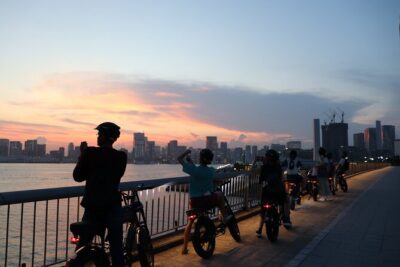
Tokyo is too large to understand on foot in a single afternoon, but this 18-kilometer bike route gives you a useful cross-section in three hours. You move from temple roofs and palace gates to Tokyo Station, Olympic sites, designer streets, and the spectacle of Shibuya Crossing. I especially like the small group, limited to seven people, and the way the route links famous sights with quieter stretches between them.
I also like the e-bike option, particularly in Tokyo’s heat or on the uphill sections toward Aoyama and Shibuya. The main caution is that this is an active ride in city traffic. You need reasonable cycling confidence, and the tour can feel physically demanding even with electric assistance.
Key points to know
- Ride from Tokyo Tower to Yoyogi Park: The route connects central Tokyo’s major districts rather than staying in one sightseeing zone.
- Small groups matter: With a maximum of seven people, guides such as Show, Naoki, Kosei, and Miguel can answer questions and manage the pace.
- Choose the e-bike carefully: Electric assistance helps on hills and in hot weather, while regular bikes suit riders who are comfortable pedaling for three hours.
- Expect a highlights tour with a few quieter corners: Tokyo Station, Zojo-ji, and the Imperial Palace are major sights, not secret discoveries.
- Budget for the helmet: Helmet rental costs ¥1,000 in cash. A child seat costs ¥3,000 and must be arranged at least two days ahead.
- Finish near Harajuku and Shibuya: The ride ends in Jinnan, about five minutes from Yoyogi Park and ten minutes from Shibuya Station.
Why a bike is a smart way to see central Tokyo
Tokyo’s rail system is superb, but trains can make the city feel like a series of disconnected stations. A bike shows you the spaces between them. In one outing, you pass from Minato City to the Imperial Palace, cross through Aoyama, and finish among the shops and pedestrians of Shibuya.
That change of scenery is the main value here. You do not spend the whole tour inside museums or waiting for trains. Instead, you get a moving introduction to Tokyo’s streets, architecture, religious sites, royal district, and modern shopping areas.
The three-hour schedule covers a lot of ground, so this is best viewed as an orientation ride. I would use it early in a Tokyo stay, when you want to learn the shape of the city and note places to revisit later. The guide adds local context and can answer questions about Japanese culture, history, and daily life.
The group size is another real advantage. A maximum of seven riders is small enough for a guide to keep an eye on everyone and stop for questions. Several guides, including Show, Naoki, Kosei, Kazu, Rinto, and Miguel, have been praised for clear explanations, friendly energy, and careful direction.
More Tokyo bike tours:
- Tokyo Great Cycling Tour
★ 5.0 · 811 reviews - Tokyo Top Highlights 3h Guided E-bike Tour
★ 5.0 · 714 reviews - 3h Tokyo E-Bike Tour: Hidden Gems, and Local Life with guide
★ 5.0 · 670 reviews
Starting at Zojo-ji with Tokyo Tower overhead
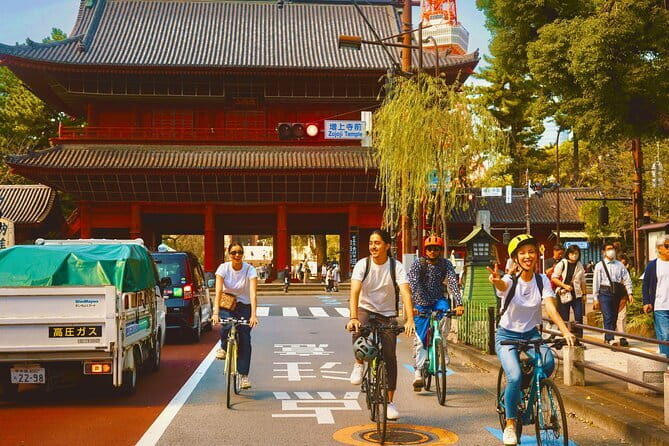
The ride begins at Shiba Park in Minato City, close to Zojo-ji and Tokyo Tower. Zojo-ji is one of Tokyo’s best opening sights because it gives you a strong contrast right away: a major Buddhist temple below the red-and-white tower that has become one of the city’s visual signatures.
You have about 15 minutes here. That is enough for photographs and a short explanation, though not enough for an extended temple visit. If the temple is open for entry during your visit, you may be able to see inside, but you should not count on a long interior tour.
This stop also gives your guide a natural place to explain how old religious architecture and modern Tokyo share the same compact urban space. You get a sense of the city’s layered character before the ride moves toward the government district.
The Imperial Palace and Otemon Gate
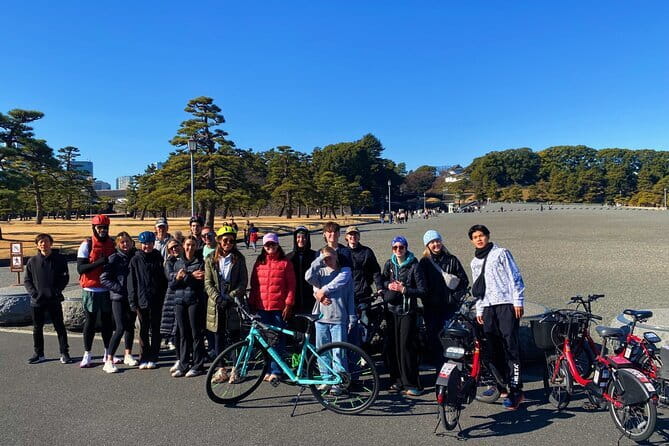
The Imperial Palace section comes in two short stops. First, you see the palace entrance and the guards, with about ten minutes for photographs and a brief explanation of the emperor’s residence. Later, you stop at Kokyo Otemon Gate, another ten-minute photo stop and one of the more visually rewarding parts of the route.
Otemon Gate is the impressive historic entrance to the palace grounds. Its walls, gate structure, and surrounding open space offer a welcome pause after riding through central streets. You should expect an exterior visit, not access to the palace itself.
The two stops are close in subject but useful in different ways. The first introduces the imperial district, while Otemon gives you a clearer architectural image. If you are hoping for a long palace tour, this excursion will not provide it. If you want a quick look and a few good photographs without dedicating half a day, the timing works well.
Tokyo Station’s red-brick face
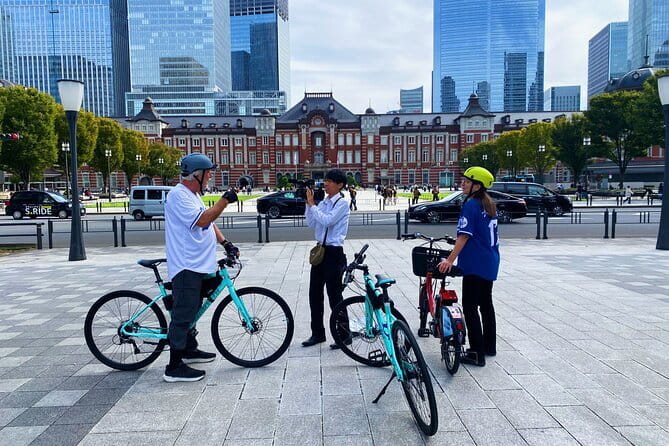
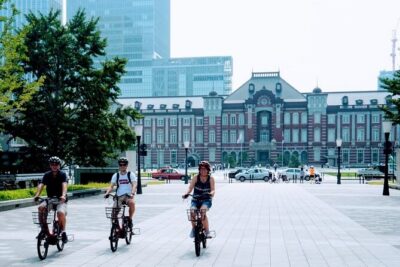
Tokyo Station Marunouchi Station Square is another ten-minute stop. The station’s red-brick exterior dates from 1914 and looks striking beside the modern office towers of Marunouchi.
This is one of the places where the title’s promise of lesser-known sights needs a little qualification. Tokyo Station and the Imperial Palace are among Tokyo’s best-known landmarks. Still, seeing them as part of a connected bike route is useful, especially if you have not yet explored the Marunouchi area.
The guide can point out the contrast between the historic station facade and the newer business district around it. You will have time for photographs, but not a full station exploration or a meal stop. Food and drinks are not included, so eat beforehand or plan to buy something after the tour.
A completely different kind of day in Tokyo:
- Mt Fuji and Hakone 1-Day Bus Tour Return by Bullet Train
★ 5.0 · 26,383 reviews - 1-Day Tokyo Bus Tour
★ 5.0 · 14,250 reviews - Tokyo: teamLab Planets TOKYO Digital Art Museum Entry Ticket
★ 4.6 · 9,779 reviews - Mt Fuji & Hakone Cruise, Drum Show Bullet Train 1 Day from Tokyo
★ 4.0 · 7,413 reviews
A brief look at Akasaka Palace
Akasaka Palace, the State Guesthouse, receives about five minutes. The building began as a royal villa and now serves as a state guesthouse, making it an interesting stop for anyone curious about Japan’s royal and diplomatic past.
Admission is not included. The short stop is mainly for an exterior look and a quick explanation, so you should not plan on entering the building as part of the standard outing. Its place on the route adds another layer to the story of modern Japan, but the visit is brief compared with Zojo-ji or the palace gates.
Olympic history at Japan National Stadium
The Japan National Stadium is a 15-minute stop connected with the 2020 Tokyo Olympic and Paralympic Games. It gives the ride a modern landmark after the temple, palace, and station stops.
This is a good example of the route’s range. You are not only seeing old Tokyo. You are also passing through places tied to recent national events and contemporary architecture. The stadium stop may appeal most if you followed the Olympic Games or enjoy seeing how a city uses major sports venues.
As with the other stops, the point is the outside view and the guide’s explanation, not admission to an event or a stadium tour.
From Aoyama style to Cat Street
Aoyama is a short five-minute pass through an area known for high-end fashion and distinctive architecture. The stop is quick, but the ride itself lets you see how the mood of Tokyo changes from palace grounds and office towers to stylish retail streets.
Next comes Shibuya Cat Street, another five-minute stop. This area mixes current fashion brands with vintage shops and has a more youthful feel. You may want more time here if shopping is your main interest, but the tour keeps moving so it can reach Shibuya and Yoyogi Park within the three-hour window.
These streets are part of the tour’s urban texture rather than major sightseeing monuments. I like that they show a different side of Tokyo, but you should not expect time to browse stores or shop seriously. Treat them as a moving introduction and make a note to return later.
Riding through Shibuya Crossing
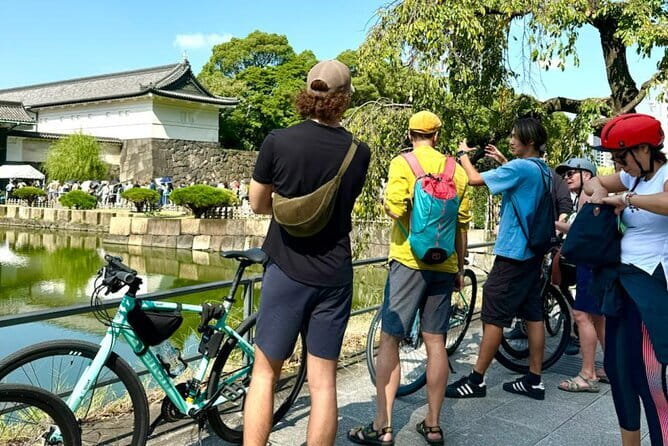
The route reaches Shibuya Crossing for about five minutes. Cycling through or near this famous intersection gives you a memorable final city scene, with crowds, traffic, large signs, and surrounding retail streets.
This can also be the most demanding portion of the ride. You need to stay alert around pedestrians, cars, and other cyclists. One useful point from the experience is that guides direct the group and keep riders together, but no city bike tour can remove the need for you to watch the road.
The contrast is satisfying. You begin near a quiet temple and finish in one of Tokyo’s most energetic commercial districts. Shibuya is not a secret corner of the city, but it is an effective finale.
Ending near Yoyogi Park and Harajuku

The ride ends in Jinnan, between Yoyogi Park and Shibuya. Yoyogi Park is about a five-minute walk away, while Shibuya Station is roughly ten minutes on foot. Harajuku Station is also nearby, making the finish convenient for continuing your day.
This is a better ending point than returning to the starting area because you finish in a part of Tokyo with plenty to do. You can walk through Yoyogi Park, continue toward Harajuku, or use the area for shopping and food.
The route is not a loop, so plan your day around ending on the west side of central Tokyo. If your hotel is near Tokyo Station or Asakusa, allow time to take the train back after the ride.
E-bike or regular bike?
The choice of bike affects how much you enjoy this outing. Riders using regular bikes have completed the tour comfortably, but some have found the hills tiring, especially when riding behind e-bikes. The route covers 18 kilometers, includes city traffic, and may feel strenuous in warm or humid weather.
I would choose the e-bike if you are not a regular cyclist, if you are visiting during summer, or if you want to save energy for the rest of your day. Electric assistance does not turn the ride into a passive sightseeing trip, but it makes hills and long stretches easier.
Regular bikes can work well if you cycle often and want more exercise. At least one larger rider found an e-bike too small and not fully effective, so it is sensible to confirm the available bike size and electric option before booking. One important practical point is that the advertised price may vary by bike type, so check the final cost carefully.
A helmet is not included. Rental costs ¥1,000, payable in cash on the day. The included bike insurance offers some reassurance, but it does not replace careful riding.
How much value do you get for $59.45?
At $59.45 per person, the tour is priced as a compact sightseeing and guiding experience rather than simple bike hire. The fee includes the bicycle, insurance, an in-person English or Japanese-speaking guide, and a small pouch attached to the bike for your phone, wallet, or keys.
The value comes from the route design. Covering Zojo-ji, the Imperial Palace area, Tokyo Station, Akasaka Palace, the National Stadium, Aoyama, Cat Street, and Shibuya independently would require several train rides and careful timing. You also get explanations along the way instead of only passing the buildings.
The cost is less attractive if you already know central Tokyo well or want long visits at each landmark. This is a fast-moving overview, not a series of in-depth tours. You also need to add the helmet charge if you want one, and food and drinks are separate.
For a first visit, I consider the price fair, especially if the e-bike saves you from tiring out early in your trip. For experienced cyclists who only want a rental, it may be more than necessary.
Heat, traffic, and the physical effort
The tour requires a moderate level of physical fitness. You need to pedal, stop, restart, follow the guide, and remain comfortable around traffic and pedestrians for three hours. Even with an e-bike, one participant described the ride as fairly demanding.
Weather can make a large difference. The operator provides a raincoat on rainy days, but the experience requires good weather and may be canceled if conditions are poor. If that happens, you are offered another date or a full refund.
Summer heat is a strong reason to select an e-bike. Several rides have been especially enjoyable because electric assistance reduced the effort in hot, humid conditions. Still, bring water and dress for active outdoor time. Food and drinks are not included, and there is no scheduled meal stop.
Sunday may be especially pleasant for cycling because some streets can be closed to traffic, though the exact conditions will vary. You should remain comfortable riding among pedestrians and cars even on a quieter day.
Who should book this ride?
I would recommend it to first-time Tokyo visitors who want a quick orientation, active couples and families with older children, solo riders who enjoy asking questions, and anyone with only half a day available. The small group and flexible guide style make it easy to ask about customs, history, and places to visit later.
It also suits older riders who are comfortable on a bike and choose the e-bike. A couple in their late 60s completed the outing with their adult son and found the electric bikes made it manageable. That does not mean the ride is effortless, but it shows the tour can work for more than young, athletic cyclists.
I would skip it if you dislike city cycling, feel uneasy around traffic, need a slow pace, or want to spend substantial time inside each attraction. The route is active and efficient, not leisurely.
Children may need a child seat, which costs ¥3,000. You must arrange that at least two days ahead and bring cash on the tour date.
Final verdict: a useful three-hour introduction
Book this tour if you want to connect several parts of Tokyo in one outing and prefer seeing the city from street level. The strongest features are the small group, the wide route, the friendly guides, and the e-bike option for hills and heat.
Go in with the right expectation: the famous sights are the backbone of the ride, while the quieter streets and changing neighborhoods provide the extra flavor. You will not get long temple visits, palace access, or serious shopping time.
For most first-time visitors, I would choose the e-bike, confirm the bike size and price, bring cash for the helmet, and schedule the ride early in your stay. It gives you a practical sense of Tokyo’s scale, then leaves you near Yoyogi Park, Harajuku, and Shibuya with the rest of the day still ahead.
FAQ
How long is the Tokyo bike tour?
The tour lasts approximately three hours.
How far do you ride?
The route covers about 18 kilometers through central Tokyo.
Where does the tour start?
It starts at Shiba Park BLD in Shibakoen, Minato City, Tokyo, near Zojo-ji and Tokyo Tower.
Where does the tour end?
It ends in Jinnan, near Yoyogi Park and Shibuya. Yoyogi Park is about a five-minute walk away, and Shibuya Station is about a ten-minute walk.
What sights are included?
The route includes Zojo-ji, the Imperial Palace entrance, Tokyo Station Marunouchi Station Square, Otemon Gate, Akasaka Palace, Japan National Stadium, Aoyama Street, Shibuya Cat Street, and Shibuya Crossing.
Is an e-bike available?
Yes. You can choose between a regular bicycle and an e-bike, though you should confirm the current bike options and prices when booking.
Is a helmet included?
No. Helmet rental costs ¥1,000, and you should bring cash if you want one.
Is a child seat available?
Yes. A child seat costs ¥3,000. You must contact the operator at least two days before the tour and bring cash on the tour date.
What languages does the guide speak?
In-person guiding is available in English and Japanese.
What happens if the weather is poor?
The tour requires good weather. If the operator cancels because of poor conditions, you can choose another date or receive a full refund. Free cancellation is also available when you cancel at least 24 hours before the start time.
More 3 Hour Experiences in Tokyo
- 3-Hour Tokyo Pub Crawl Nightlife Welcome Guided Tour in Shibuya
★ 5.0 · 209 reviews - Tokyo: 3-Hour Bike/E-Bike Tour of the City’s Highlights
★ 5.0 · 209 reviews - 3-Hour Small-Group Sushi Making Class in Tokyo
★ 5.0 · 166 reviews - 3-Hour Tokyo Private E-Bike Tour Starting from Your Hotel
★ 5.0 · 117 reviews
Newly reviewed around Tokyo
- Tokyo Asakusa:Calligraphy & Make T-shirt Activity★ 5.0 · 62 reviews
- Intercity Shuttle, Tokyo to Haneda /Narita /Yokohama /Makuhari★ 5.0 · 5 reviews
- 1 Hour Travel around Tokyo with a Professional Photographer★ 5.0 · 3 reviews
- Travel Tokyo with Your Own Personal Photographer★ 5.0 · 43 reviews
- Train in Samurai Swordsmanship and Defeat the Demon in Tokyo★ 5.0 · 5 reviews
- Shuttle Van 6hr Tokyo Tour to-and-from Tokyo, Yokohama and Narita★ 5.0 · 9 reviews
- Kickboxing & Body Training with EX-Pro Fighter★ 5.0 · 4 reviews
- Traditional Japanese Knife Sharpening Class★ 5.0 · 18 reviews
Tokyo Bike Tours, compared.
3h Tokyo E-Bike Tour: Hidden Gems, and Local Life with guide
Read our review →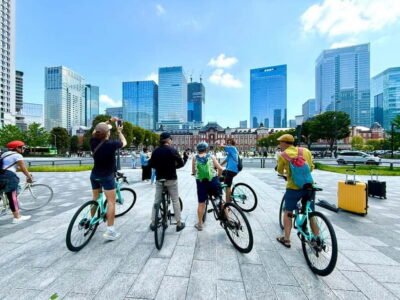
3-hour Guided E-Bike Tour of the City’s Hidden Gems
Read our review →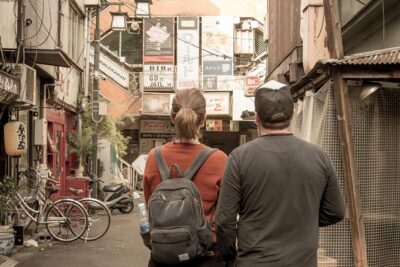
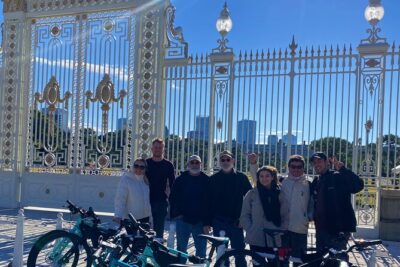
3-Hour Bike/E-Bike Tour of the City’s Highlights
Read our review →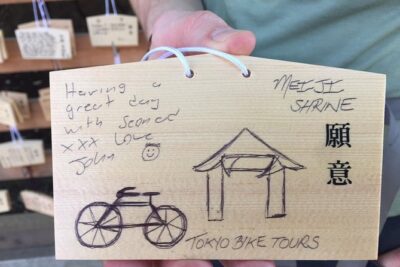
Browse the lists this tour appears in