
Reviewed · TOKYO BIKE TOURS
Tokyo Deep Inside Cycle Tour~3 Hours E Bike Tour around Tokyo
Tokyo reveals itself best when you can move between its grand avenues and narrow back streets. This three-hour e-bike tour links Tokyo Station, Kanda, Akihabara, shrines, bookshops, parks, and the Imperial Palace without making you solve Tokyo’s train map every few minutes.
I like the small maximum of four people, which keeps the ride personal, and I like the way the route joins old Edo with modern Tokyo. The electric assistance also makes a long sightseeing day easier, especially after many miles on foot. Guides including Micky, Kumiko, and Tussie add history and local color, while a warm taiyaki snack gives you a pleasant break.
The main caution is that this is still a bike tour in a busy capital. The pace may slow if someone in the group is new to cycling, and the tour can be canceled for rain or other unsafe conditions. You must also be at least 145 centimeters tall.
Key points to know before you book
- Small groups of up to four: A shared tour can become private when four people book together.
- A useful Tokyo route: You’ll connect Tokyo Station, Kanda, Akihabara, Jinbocho, Yasukuni Shrine, Kitanomaru Park, and the Imperial Palace.
- Electric assistance, not a race: The e-bikes help reduce effort, but you still need to ride safely in city traffic.
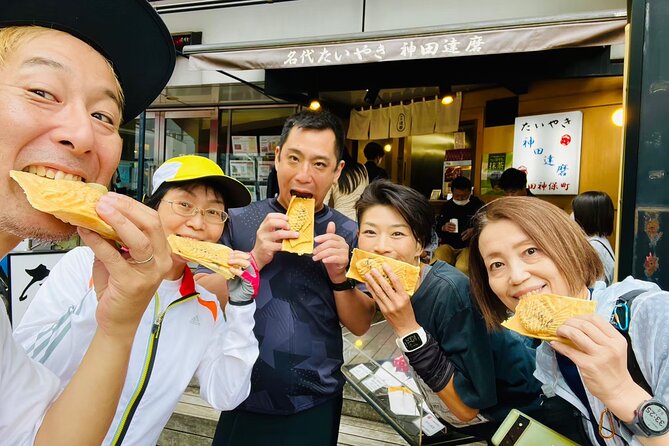
- Taiyaki is included: Choose red bean paste or cream at the Kanda snack stop.
- Strong guide element: Micky, Kumiko, and Tussie are among the guides named in the tour information.
- Weather matters: Rain may lead to a walking route or a refund, depending on your choice.
Why an e-bike makes sense in central Tokyo
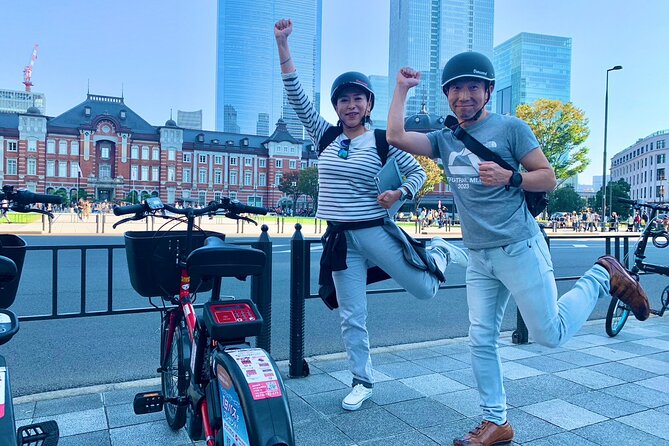
Tokyo’s central districts look close together on a map, but walking between them takes time. The e-bike fills the gap between a subway ride and a long march. You can cover more ground than on foot while still seeing side streets, bridges, shrine gates, and neighborhood scenes at street level.
The electric motor is useful for anyone who wants to stay active without turning the afternoon into an endurance test. One ride covered about 6.8 miles, or more than 10 kilometers. That is a meaningful distance in three hours, especially when the route includes stops for history, photographs, a snack, and restrooms.
You will receive the bicycle, helmet, and bicycle accident insurance. Bottled water is not included, so bring your own drink. The start time is 1 p.m., a practical choice if you want a relaxed morning before riding.
The maximum group size is four. That matters here because cycling in Tokyo requires attention, and a smaller group is easier to manage at crossings and stops. If you book four people, the reservation automatically becomes private. A shared group may include people with different riding abilities, and the guide may adjust the pace, especially if children or beginners are present.
More Tokyo bike tours:
- Tokyo Great Cycling Tour
★ 5.0 · 811 reviews - Tokyo Top Highlights 3h Guided E-bike Tour
★ 5.0 · 714 reviews - 3h Tokyo E-Bike Tour: Hidden Gems, and Local Life with guide
★ 5.0 · 670 reviews
Starting at Tokyo Station and meeting modern Japan
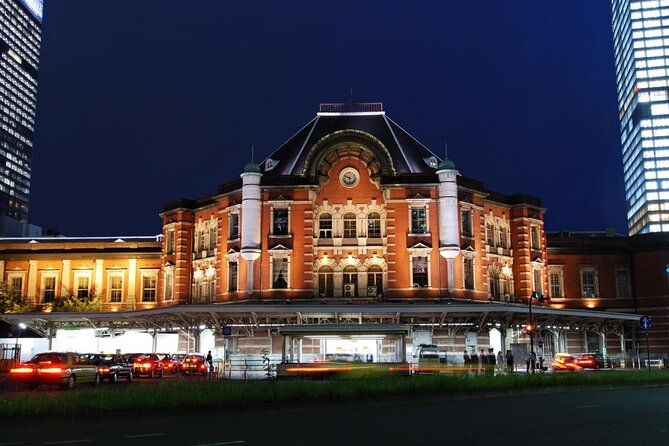
The tour begins in front of Tokyo Station, near the JTB Marunouchi Store. This is an easy meeting point: the store is about a one-minute walk from the Marunouchi South Exit of JR Tokyo Station and directly connected to Tokyo Station on the Marunouchi Line. Nijubashimae Station on the Chiyoda Line is also directly connected.
The first stop looks at how this part of the city changed from open land into the Tokyo skyline you see today. That opening gives the ride a useful theme: Tokyo is a city shaped by repeated decisions about rebuilding, adapting, and preserving.
After a brief introduction, you ride toward the remains of the Kanda Bridge Gate stone wall. Here, the focus shifts to Edo, the old name for Tokyo, and the town that developed along the Nihonbashi River. You’ll hear about local festivals and the origin of the neighborhood’s name.
I like this early contrast. Tokyo Station gives you the capital’s polished present, while the old stonework points to a city that was already organized and lively long before the modern towers arrived.
Kanda’s narrow streets and everyday traditions
Kanda Matsuya marks a change in mood. The skyscrapers fade, and the route enters a district where older common-town culture remains visible. The ride uses narrow lanes, so this is one of the places where the bicycle offers something a subway tour cannot.
You are not simply moving from one famous sight to another. The appeal is the transition itself: busy central Tokyo gives way to streets with a more local scale. The route description compares this part of the ride to a treasure hunt, which is a fair way to think about it. You’ll look for small details while the guide explains how Kanda retained older customs.
The stop at Akihabara provides the opposite story. This district began as a postwar black market in the ruins left by wartime destruction. It later became famous for electronics, animation, games, and changing youth culture.
The tour uses Akihabara to explain Tokyo’s ability to change with the times. You will not simply get a quick photo of the neon district. Instead, you’ll hear how a place can shift from black-market trading to one of the city’s best-known modern commercial centers.
Kanda Shrine and the Edo story
Kanda Shrine, also called Kanda Myojin, receives one of the longer stops, about 35 minutes. It was the chief Shinto shrine of Edo, and the guide discusses the Edo period, the Kanda Festival, and the shrine’s place in local culture.
This is a good pause in the route. You can leave the bike for a while, look around the shrine grounds, and take in a setting that feels far removed from Akihabara, even though the two districts are close. A souvenir shop stop is also included.
The guide style is an important part of the experience. Micky and Kumiko are named guides, and Tussie is another guide who has led the route. The information is designed to be accessible rather than academic, with enough history to make the sites meaningful without turning the afternoon into a lecture.
The route then crosses Hijiribashi Bridge. From above, you can look toward Ochanomizu Station and consider the area’s role as a student district. The tour connects this student culture with Akihabara’s business and creative energy, showing how different groups have shaped nearby neighborhoods.
A completely different kind of day in Tokyo:
- Mt Fuji and Hakone 1-Day Bus Tour Return by Bullet Train
★ 5.0 · 26,383 reviews - 1-Day Tokyo Bus Tour
★ 5.0 · 14,250 reviews - Tokyo: teamLab Planets TOKYO Digital Art Museum Entry Ticket
★ 4.6 · 9,779 reviews - Mt Fuji & Hakone Cruise, Drum Show Bullet Train 1 Day from Tokyo
★ 4.0 · 7,413 reviews
Taiyaki, bookshops, and a slower stretch
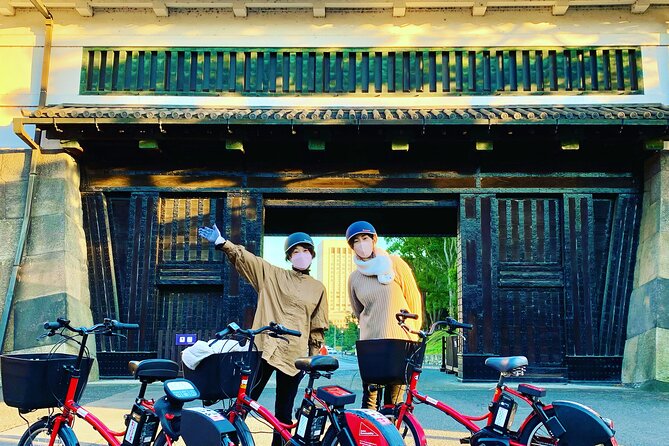
At Kanda Daruma, you stop for taiyaki, a traditional Japanese snack shaped like a fish. You can choose anko, a red bean paste filling, or cream. The break lasts about 15 minutes and is included in the price.
This snack stop is more than a pleasant extra. Three hours on a bicycle can leave you ready for something small to eat, and taiyaki gives you a distinctly Japanese treat rather than a generic energy bar. It also gives the group a natural chance to pause before the route continues.
Next comes Kanda Jinbocho, an antiquarian book district described as one of the largest in the world. The bicycle passes through the area rather than stopping for a long visit, so set your expectations accordingly. You’ll get a quick look at the bookshop district and its streets, but this is not a dedicated browsing session.
That limitation is worth noting. If old books are a major interest, you may want to return to Jinbocho on your own. On this tour, it works as part of a broader portrait of Tokyo, showing another side of the city beyond technology, shrines, and major landmarks.
Yasukuni Shrine and Kitanomaru Park
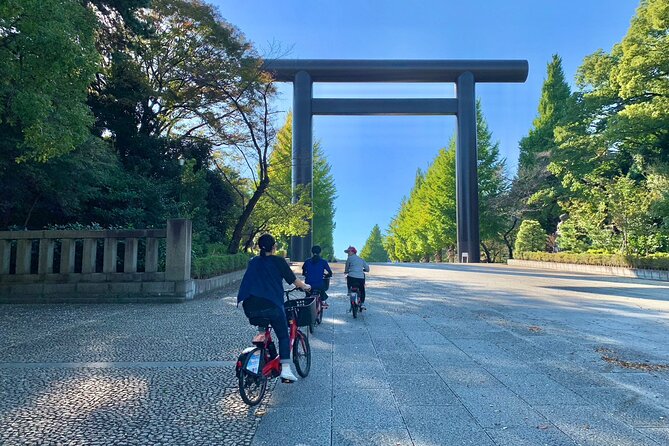
The ride continues under the large torii gate of Yasukuni Shrine. The gate is one of the highest and largest in Japan, and the route takes you into the shrine grounds for a brief look at the surrounding nature. A restroom break is included here.
The stop is short, about 10 minutes including the riding time. You should not expect a lengthy visit or a detailed museum tour. The value comes from seeing the scale of the entrance and the change from city streets to shrine grounds.
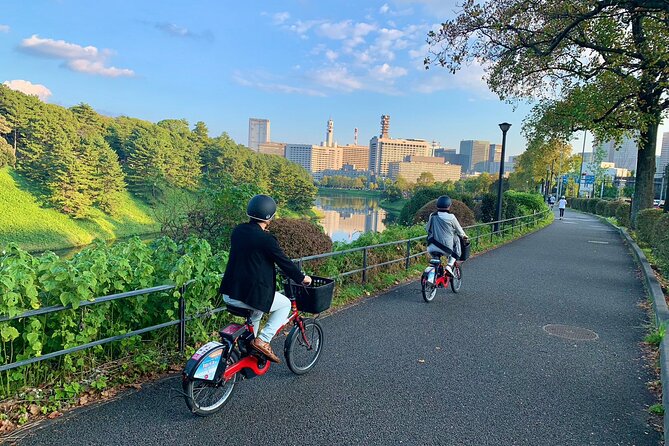
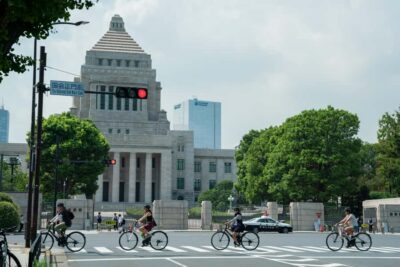
From there, you ride through Kitanomaru Park. This area was once the northern section of Edo Castle, and the route includes the Nippon Budokan and other buildings. It is a useful bridge between the city’s feudal past and modern public spaces.
Kitanomaru Park also gives you a chance to ride through a more open setting before reaching the Imperial Palace area. The itinerary lists only a short amount of time here, so the park is part of the moving route rather than a long stop.
The Imperial Palace and Sakurada-mon Gate
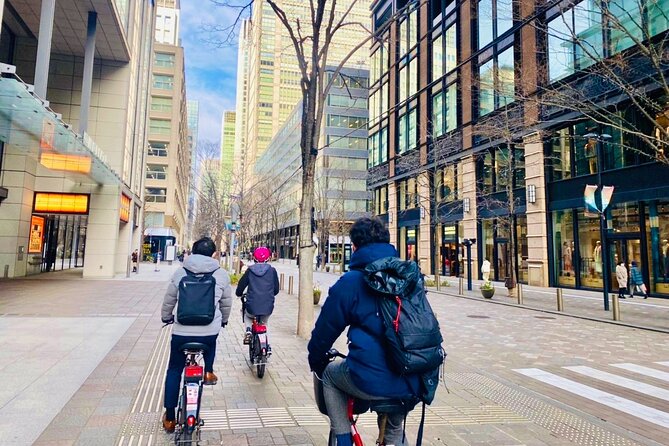
The Imperial Palace stands on the former site of Edo Castle. Here, the guide turns to major questions about Japan’s transition from the samurai era to the modern imperial state. You’ll hear why the site became the Imperial Palace and how Japanese society changed after the age of the chonmage, the traditional samurai hairstyle.
This history gives the route its strongest thread. You began with the making of modern Tokyo, then passed through older districts, shrines, and the former castle grounds. The stops are not isolated points. They form a story about how Edo became Tokyo.
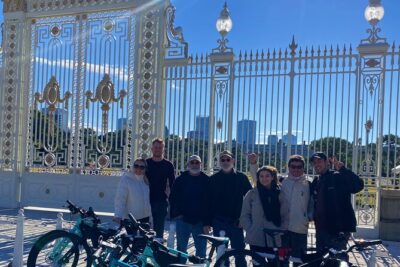
At Sakurada-mon Gate, you pass through the largest gate of the Imperial Palace and ride around the palace’s outer area. The route allows you to see the broad setting without the complicated process of arranging an interior palace visit.
The palace section is also a strong reason to choose a bicycle. You can connect the gate, park, outer grounds, and Marunouchi district without repeatedly entering and leaving subway stations. You will still need to follow the guide’s instructions carefully, since the route mixes roads, crossings, and shared public spaces.
Returning to Marunouchi and the final art stop
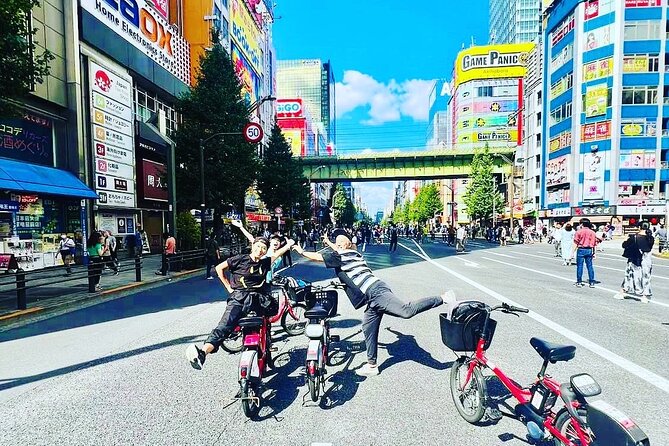
The bicycle portion ends at the Marunouchi Building. After returning the e-bikes, you walk to a floor where art is displayed around the theme of Time and Memory.
That final stop gives the tour a thoughtful finish. Instead of ending abruptly after the last palace view, the experience returns to modern Marunouchi and links the city’s past with contemporary art. The art visit is brief, about 15 minutes, so think of it as a closing reflection rather than a full gallery visit.
The end point is about a one-minute walk from the Marunouchi South Exit of Tokyo Station. You finish in a useful central location, with easy access to trains and nearby parts of the city.
Price, pace, and the real value
The price is $83.23 per person. That is more than a self-guided ride, but the comparison is not simply bicycle rental versus bicycle rental. The cost includes the e-bike, helmet, bicycle insurance, guide, and taiyaki snack.
I see the value in the route design. You are paying to connect several districts that would otherwise require a mixture of walking and subway rides, while also getting explanations at each major stop. The small group size adds value, especially if you prefer to ask questions or want a guide who can adjust the pace.
The tour covers a lot in three hours. That is its strength, but also its tradeoff. Stops such as Jinbocho, Yasukuni Shrine, and Kitanomaru Park are brief. If you want long visits inside every location, this will feel rushed. If you want a well-planned introduction to central Tokyo, the pace makes good sense.
The tour is recommended for most people who meet the height requirement and can ride a bicycle. A rider who recently had knee replacement surgery reported feeling safe and capable, with the guide taking care around local pedestrians and traffic. That is encouraging, but it does not remove the need to judge your own mobility honestly.
Weather, cancellation, and practical details
This is a good-weather activity. If rain makes the ride unsafe, you can choose the rain-day limited walking route or request a refund. The tour can also be canceled for weather or other safety reasons, with a different date or full refund offered in that situation.
You can cancel for a full refund up to 24 hours before the start time. Late arrival without advance notice can result in cancellation with a 100 percent same-day fee, so plan to reach Tokyo Station early. The listed start time is 1 p.m.
Bring water, comfortable clothing, and anything you need for three hours outside. The tour provides helmets and insurance, but it does not provide bottled water. Children and less experienced riders may cause the guide to reduce the pace, which is sensible for a shared group.
Who should book the Tokyo Deep Inside Cycle Tour
I would choose this tour if you want history and neighborhood texture without spending the entire day walking. It suits active couples, families with eligible riders, and anyone who has already spent several days collecting 15,000 steps and wants a gentler way to keep sightseeing.
It is also a strong choice for a first look at central Tokyo. You will see old stone walls, a shrine, a postwar commercial district, a book district, a former castle site, and the modern Marunouchi skyline in one compact route.
I would skip it if you dislike cycling in cities, need a completely private pace but cannot fill all four places, or want long unhurried visits at each stop. Book it if you value a guide, want to cover about 10 kilometers with less effort, and like the idea of finishing with a small Japanese snack and a clearer sense of how Edo became Tokyo.
FAQ
How long is the Tokyo Deep Inside Cycle Tour?
The tour lasts approximately three hours.
What time does the tour start?
The listed start time is 1 p.m.
Where does the tour begin?
It begins at the JTB Marunouchi Store in the Marunouchi Eiraku Building, near Tokyo Station.
Where does the tour end?
The e-bike ride ends at the Marunouchi Building, where the bicycles are returned. The final art stop also takes place there.
How many people can join the tour?
The maximum group size is four people.
Can I book a private tour?
Yes. If you reserve four places, the tour automatically becomes private.
Is food included?
Yes. A taiyaki snack is included, with a choice of red bean paste or cream filling. Bottled water is not included.
What happens if it rains?
If the ride cannot operate safely because of rain, you can choose the Rain Day Limited Walking Route or request a refund. A different date or full refund may also be offered when the tour is canceled because of poor weather.
More 3 Hour Experiences in Tokyo
- 3-Hour Tokyo Pub Crawl Nightlife Welcome Guided Tour in Shibuya
★ 5.0 · 209 reviews - Tokyo: 3-Hour Bike/E-Bike Tour of the City’s Highlights
★ 5.0 · 209 reviews - 3-Hour Small-Group Sushi Making Class in Tokyo
★ 5.0 · 166 reviews - 3-Hour Tokyo Private E-Bike Tour Starting from Your Hotel
★ 5.0 · 117 reviews
Newly reviewed around Tokyo
- Tokyo Asakusa:Calligraphy & Make T-shirt Activity★ 5.0 · 62 reviews
- Intercity Shuttle, Tokyo to Haneda /Narita /Yokohama /Makuhari★ 5.0 · 5 reviews
- 1 Hour Travel around Tokyo with a Professional Photographer★ 5.0 · 3 reviews
- Travel Tokyo with Your Own Personal Photographer★ 5.0 · 43 reviews
- Train in Samurai Swordsmanship and Defeat the Demon in Tokyo★ 5.0 · 5 reviews
- Shuttle Van 6hr Tokyo Tour to-and-from Tokyo, Yokohama and Narita★ 5.0 · 9 reviews
- Kickboxing & Body Training with EX-Pro Fighter★ 5.0 · 4 reviews
- Traditional Japanese Knife Sharpening Class★ 5.0 · 18 reviews
Tokyo Bike Tours, compared.
3h Tokyo E-Bike Tour: Hidden Gems, and Local Life with guide
Read our review →
3-hour Guided E-Bike Tour of the City’s Hidden Gems
Read our review →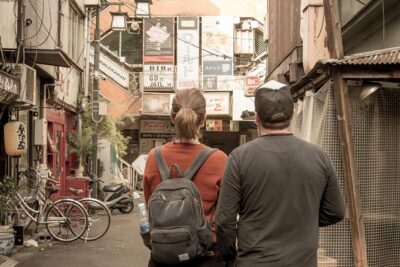
3-Hour Bike/E-Bike Tour of the City’s Highlights
Read our review →
Browse the lists this tour appears in