
Reviewed · DESSERT TOURS
Japanese Traditional Sweets making
Making Japanese sweets is part cooking class, part edible sculpture. In this 65-minute workshop, you shape two seasonal nerikiri using white and red bean paste made by long-established Kyoto shops. The ingredients are serious, but the price is not: at about $11 per person, this is one of the easier ways to add a hands-on Japanese activity to a Tokyo day.
I like the connection to Kyoto confectionery traditions, and I like that you eat the sweets right away instead of carrying fragile sugar art around town. The main caution is pace. Some sessions move quickly, and English support is limited to what the Japanese instructor can provide, so this suits you best if you enjoy copying a demonstration and working with your hands.
Key points at a glance
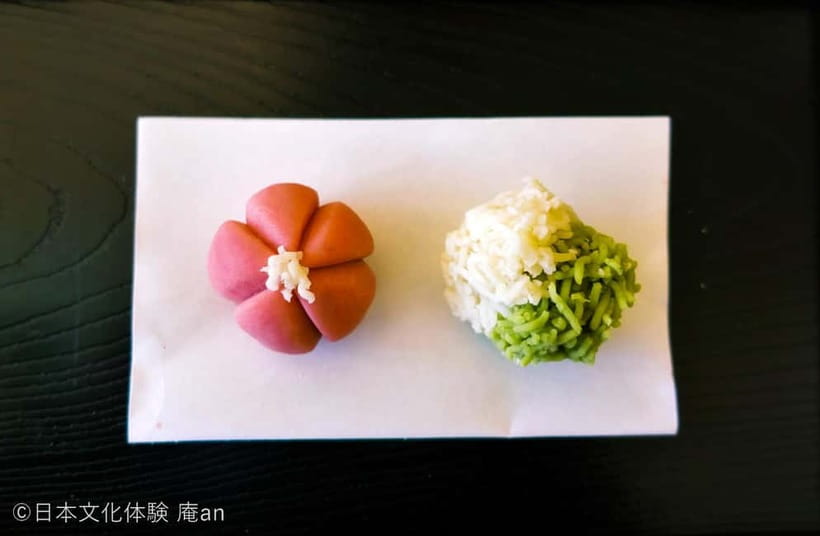
- Two seasonal nerikiri designs: You make a flower-shaped sweet and a kinton-style sweet.
- Kyoto bean paste: The white and red bean paste comes from long-established Kyoto shops.
- Eat your work on site: The class includes eating time, with a takeout box available for 100 JPY.
- Short and inexpensive: The full visit lasts 65 minutes and costs $11 per person.
- Japanese-led instruction: English translation is provided as much as possible, but the class is conducted in Japanese.
- Watch the clock: The workshop can feel rushed, and late arrivals cannot be accommodated.
What you actually make in 65 minutes
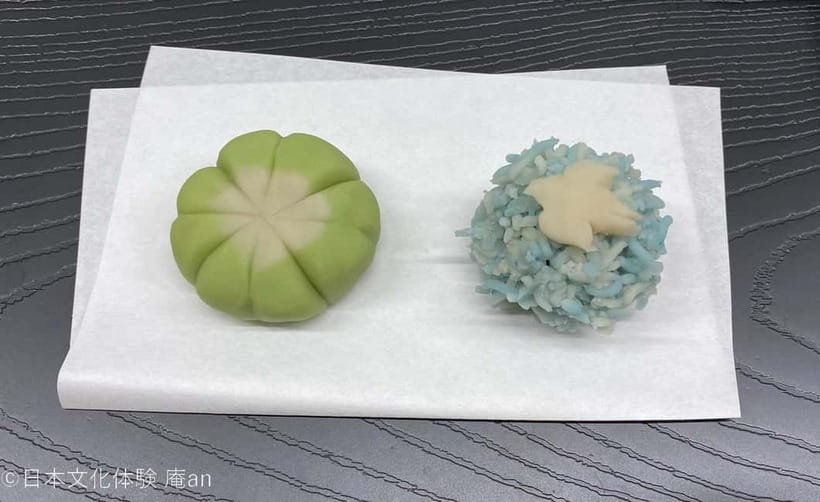
The session begins with an explanation of Japanese traditional sweets and the role of nerikiri. You then move into the hands-on portion, first making a flower-shaped nerikiri and then a kinton nerikiri.
The schedule gives you about 55 minutes for the explanation, shaping, and a photo moment. The final 10 minutes are for eating, followed by departure. That is a tidy format for a busy Tokyo itinerary, but it leaves little spare time for hesitation, questions, or a slow artistic approach.
Nerikiri is made from a smooth bean-paste mixture that can be shaped into seasonal forms. The appeal is visual as much as culinary. A finished sweet can look like a flower, foliage, or another sign of the season, and placing your pieces on a plate gives the activity a small art-class feel.
The two designs give you useful variety. The flower shape asks you to think about petals and form. Kinton nerikiri has a more textured appearance, so the second piece does not feel like a repeat of the first. You are not simply filling a mold twice. You are learning two different ways to turn bean paste into a finished sweet.
More Dessert Tours in Tokyo:
- Matcha Making Class in Tokyo with Authentic Japanese Sweets Set
★ 5.0 · 744 reviews - Tokyo: Matcha Making Experience with Mochi Sweets in Asakusa
★ 4.9 · 388 reviews - Make Traditional Nerikiri Sweets & Matcha experience in Shibuya
★ 5.0 · 130 reviews
Why the Kyoto bean paste matters
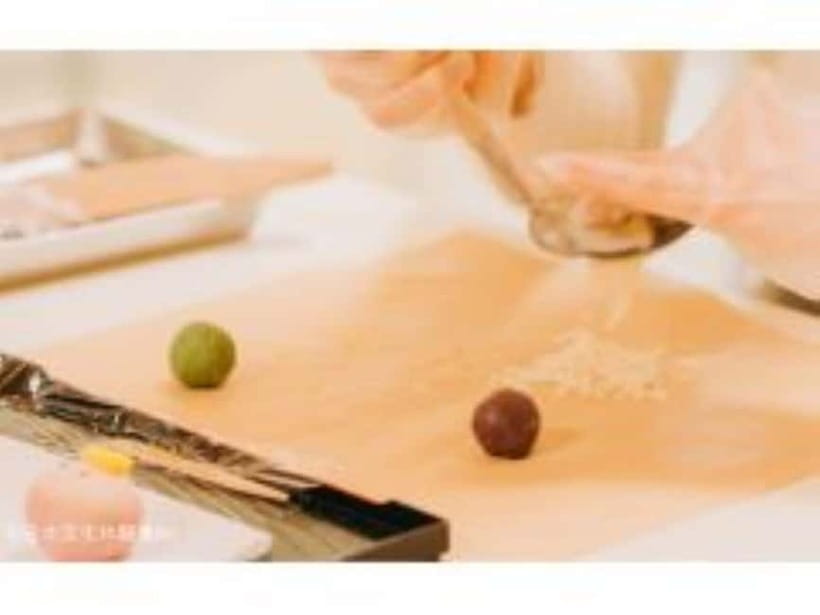
The workshop uses white and red bean paste produced by long-established shops in Kyoto. That detail adds context to what might otherwise seem like a simple craft activity.
Japanese sweets often rely on a short ingredient list, which puts pressure on texture and balance. With nerikiri, the bean paste is both the material you shape and the main flavor you taste. Good ingredients matter because there is nowhere for heavy seasoning or complicated cooking to hide a bland or rough base.
You also get a small link between Tokyo and Kyoto. The class takes place at AN TOKYO Japanese Culture Experience in Honshu, but the paste connects your work to Kyoto’s established confectionery tradition. It is a useful reminder that Japanese food culture is not only about sushi, ramen, or elaborate restaurant meals.
The taste is gentle and sweet, with bean paste at the center. If you normally prefer savory food, the flavor may take a little adjusting. Still, the class lets you try the result immediately, so you do not need to commit to a full box of sweets before knowing what you think.
The flower-shaped nerikiri
The first making task is a flower-shaped nerikiri. This is likely to be the most immediately recognizable piece, since the form depends on shaping the paste into a clear seasonal image.
You will work with the supplied paste and follow the instructor’s demonstration. The key is not perfect pastry-school precision. It is learning how a soft mass can become a layered, decorative sweet through simple hand movements.
Take care during this stage, because the class can progress quickly. A detailed criticism of the experience is that the instructor may allow only 30 to 40 seconds for some individual steps before moving on. If you are seated far from the demonstration, seeing each movement may also be harder.
My practical advice is to watch first, then copy. Do not spend too long trying to perfect one petal while the instructor is already explaining the next stage. Your final sweet should look like your own work, not a failed attempt to match a professional confectioner’s sample exactly.
The textured kinton design
The second project is kinton nerikiri. Its appearance differs from the flower design, giving you a chance to work with texture rather than relying only on smooth shapes and defined petals.
This is where the class becomes more than a quick demonstration. You get two finished pieces with different visual characters, and the contrast helps you understand how traditional sweets can suggest nature through form alone.
The word seasonal is important here. The designs match the time of year, so the activity changes rather than offering one fixed souvenir in every month. The precise seasonal motifs are not specified in the booking details, so you should not expect to choose from a menu of designs. The instructor sets the forms for the session.
Once both sweets are shaped, you have time for pictures. This is worth doing before eating, since nerikiri is delicate and the shapes are the main visual reward. If you want to take the sweets away, a box costs an additional 100 JPY.
A completely different kind of day in Tokyo:
- Mt Fuji and Hakone 1-Day Bus Tour Return by Bullet Train
★ 5.0 · 26,383 reviews - 1-Day Tokyo Bus Tour
★ 5.0 · 14,250 reviews - Tokyo: teamLab Planets TOKYO Digital Art Museum Entry Ticket
★ 4.6 · 9,779 reviews - Mt Fuji & Hakone Cruise, Drum Show Bullet Train 1 Day from Tokyo
★ 4.0 · 7,413 reviews
Eating time is part of the experience
The class does not end when you finish shaping the paste. You eat the sweets on site during the last part of the session.
That makes the workshop easy to fit into a day. You do not need to find a separate café, protect the sweets from being crushed in your bag, or wonder when they are best eaten. You make them, photograph them, and taste them in one compact visit.
The eating period is only about 10 minutes. One negative account describes the instructor pressing the group to eat quickly and leave, so you should plan for a practical tasting rather than a long tea ceremony. The supplied information does not say that tea is included, so do not book this expecting a full tea service.
The included item is the nerikiri-making experience itself. The takeout box and completion certificate cost extra. A named certificate requires your names in advance; otherwise, a blank space is left for you to fill in. At 300 JPY, the certificate is optional and most useful if you want a small memento of the activity.
A good $11 value, with clear limits
At $11, this experience offers strong value if you want a short cultural activity rather than a long guided tour. The price includes the materials and the chance to make two sweets, so you are paying for both food and instruction.
I would not compare it with a private confectionery lesson. You are not receiving an extended session with unlimited practice time. You are joining a structured class that moves a group through two designs on a fixed schedule.
That distinction explains the mixed impression the activity can create. Some people value the low cost, the friendly staff, and the chance to meet others, especially when visiting alone. One especially positive assessment called it informative, fun, and good value, with regular updates about the location. Another simply praised the staff, while a separate comment found the sweets delicious.
At the same time, the strongest criticism concerns the teaching speed, welcome, and room setup. The classroom can hold around 30 people, and sitting at the back may make demonstrations harder to see. Coats and bags may need to remain on the floor because there is reportedly no coat-hanging area.
So the value depends on your expectations. For $11, a fast group workshop is a fair bargain. For a calm, carefully translated lesson with plenty of personal attention, it may feel too basic.
Language and teaching style
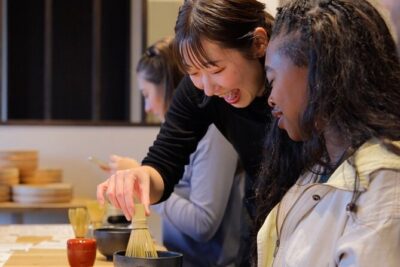
The instructor is Japanese, and the additional information lists Japanese as the activity language. English translation is provided as much as possible, but it is not presented as a fully English-led class.
You can still follow the session if you are comfortable watching gestures and copying each stage. The process is visual, and the two designs are demonstrated in front of the class. But if you need detailed verbal explanations, ask questions often, or want to understand every cultural point, the language gap may limit the experience.
The instructor’s pace matters more than the language alone. One session was described as rushing through both Japanese and English explanations. If you are at the back of a large room, the combination of distance, speed, and translation may make the class harder to follow.
I would choose a seat near the front if seating is open. Arrive early enough to get oriented, keep your hands free, and pay close attention at the start. The operator will not hold the event for late arrivals, regardless of the reason for the delay.
Who should book this activity
This workshop fits you well if you want one or more of the following:
- A compact activity between sightseeing stops
- A low-cost introduction to Japanese sweets
- A hands-on class you can do alone or with a group
- A seasonal souvenir that you create yourself
- A simple activity for solo visitors who enjoy meeting people
- A food experience that does not require a full meal
It is also a good choice if you like small creative tasks and do not need perfect results. Your sweets will be edible even if the petals are uneven or the shape differs from the instructor’s sample.
I would think twice if you dislike rushed instruction, need extensive English support, or want a quiet, intimate setting. The class may operate in a fairly large room, and you should be prepared for a group format rather than a private workshop.
Children who sit on a parent’s lap are free, but only if they are under 2 years old. Anyone taking part in the actual experience needs a reservation. People who are not participating are not allowed to enter the activity.
Location, timing, and small practical details
The meeting point is AN TOKYO Japanese Culture Experience at coordinates 35.6916541, 139.7715022. The supplied details do not identify a nearby station or provide a walking route, so check the venue location carefully before setting out.
Operating hours are 10:00 to 17:00. Reservations received after 17:00 are processed the following day. Since the class cannot wait for late arrivals, leave extra time to find the venue.
The complete visit lasts 65 minutes. The making and photography portion ends at about 55 minutes, followed by eating time and departure at the 65-minute mark.
Cancellation is free up to 24 hours before the start time for a full refund. After that point, a cancellation fee applies, and changing the date or time can also bring a specified fee. The operator does not cover your travel costs if the booking is cancelled, so keep your transport plans flexible.
The reserve-now-and-pay-later option is useful if your Tokyo schedule is still changing. It lets you hold a place without paying immediately, but it does not remove the late-arrival or cancellation rules.
Is this Japanese sweets class worth booking?
I would book it if you want an affordable, hands-on introduction to nerikiri and can accept a quick group format. The Kyoto bean paste, two seasonal designs, on-site tasting, and $11 price give you a lot for a short visit.
I would skip it if your main goal is deep instruction, polished English explanations, or plenty of time to work slowly. In that case, the 65-minute schedule and possible crowding could frustrate you.
For the best chance of enjoying it, arrive early, sit near the front, watch each demonstration closely, and treat the finished sweets as edible artwork rather than a test of pastry perfection. Add the 100 JPY box only if you need to carry them away, and request a named certificate in advance if that keepsake matters to you.
FAQ
How long does the Japanese traditional sweets class last?
The full activity lasts 65 minutes. Making, explanations, and picture time take about 55 minutes, followed by eating time before departure.
How many sweets will I make?
You will make two seasonal nerikiri sweets. The planned designs are a flower-shaped nerikiri and a kinton nerikiri.
Can I eat the sweets at the venue?
Yes. Eating time is included after the making and picture session.
Is English instruction available?
The instructor is Japanese, and Japanese is the listed activity language. English translation is provided as much as possible. You can contact the operator if you would like English support added.
Can I take the sweets home?
A takeout box is available for an additional 100 JPY.
What happens if I arrive late or need to cancel?
The event cannot be held for late arrivals. You can cancel up to 24 hours in advance for a full refund. After that, a cancellation fee applies, and changing the booking time or date after the fee has begun can also incur a specified charge.
Newly reviewed around Tokyo
- Tokyo Asakusa:Calligraphy & Make T-shirt Activity★ 5.0 · 62 reviews
- Intercity Shuttle, Tokyo to Haneda /Narita /Yokohama /Makuhari★ 5.0 · 5 reviews
- 1 Hour Travel around Tokyo with a Professional Photographer★ 5.0 · 3 reviews
- Travel Tokyo with Your Own Personal Photographer★ 5.0 · 43 reviews
- Train in Samurai Swordsmanship and Defeat the Demon in Tokyo★ 5.0 · 5 reviews
- Shuttle Van 6hr Tokyo Tour to-and-from Tokyo, Yokohama and Narita★ 5.0 · 9 reviews
- Kickboxing & Body Training with EX-Pro Fighter★ 5.0 · 4 reviews
- Traditional Japanese Knife Sharpening Class★ 5.0 · 18 reviews
Dessert Tours, compared.
Matcha Making Class in Tokyo with Authentic Japanese Sweets Set
Read our review →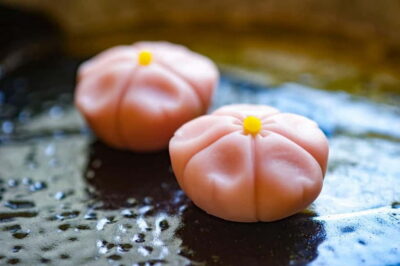
Matcha Making Experience with Mochi Sweets in Asakusa
Read our review →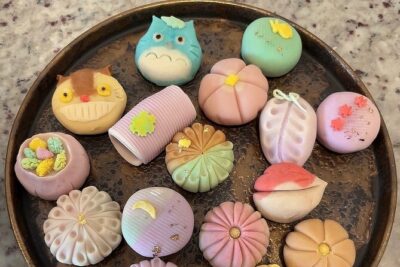
Make Traditional Nerikiri Sweets & Matcha experience in Shibuya
Read our review →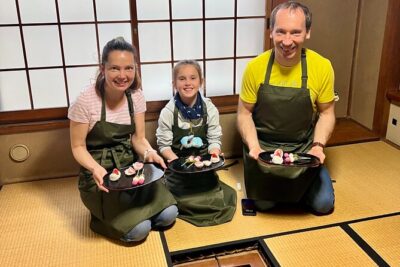
Private Mochi Sweets Making class near Shibuya area
Read our review →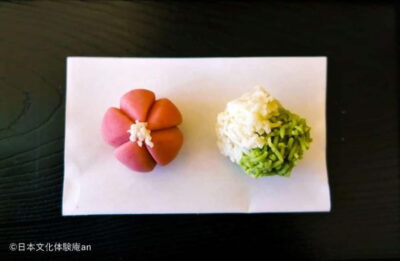
Japanese Traditional Sweets making and Tea Ceremony
Read our review →
Tokyo Local Food Tour: Noodles, Skewers, Dumplings, Sweets
Read our review →
Two Types of Japanese Sweets Making and Tea Ceremony
Read our review →
Mochi Matcha Gluten Free Japanese Sweets Class near Shibuya area
Read our review →Browse the lists this tour appears in