Reviewed · GUIDED
Private Custom Tour in Tokyo with a Bilingual Japanese Guide
Tokyo can feel like several cities stitched together. A private tour with Nobu, a bilingual Japanese guide, gives you a local point of view as you move from shrine grounds and temple lanes to neon streets, food markets, and residential neighborhoods. You tell him what interests you, and he shapes the day around it.
I like the true flexibility here, and I like the practical help with Tokyo’s public transportation. Nobu can explain local customs at Senso-ji, help you find your way through Shibuya, and guide you toward restaurants or less familiar parts of the city. The main drawback is that the $112.75 per-person price does not include trains, taxis, meals, or attraction fees, and a long wish list may be too much for one day.
Key points to know before booking
- Choose your own Tokyo: Focus on famous sights, food, shopping, local life, or less familiar neighborhoods.
- Meet Nobu at your hotel: Pickup is offered on foot from hotels in central Tokyo.
- Expect a walking day: The pace can be adjusted, and taxis may be used if needed, but transport costs are extra.
- Combine Tokyo’s contrasts: A single custom route can connect Meiji Shrine, Takeshita Street, Shibuya, Asakusa, Tsukiji, and more.
- Get practical city help: Nobu offers advice on trains, restaurants, and navigating Tokyo with less fuss.
- Book for your group alone: This is a private experience, with no unrelated people joining you.
A private introduction to Tokyo with Nobu
The best reason to book this experience is not simply the number of sights. It is the chance to decide what kind of Tokyo you want to see.
You might build a first-day route around Meiji Shrine, Shibuya, Asakusa, and Tsukiji. You might ask for food stops and traditional customs. You might skip the famous sights and spend time in Shimokitazawa, Ueno, or other neighborhoods that suit your interests. The pre-tour questionnaire gives you a useful starting point, but you should also send clear requests before the day begins.
Nobu is a Tokyo native who has spent years in the West. That background matters because he can explain Japanese customs in English while also understanding the questions an English-speaking visitor is likely to have. His role is part guide, part city translator, and part practical problem-solver.
The private format is especially helpful for families and small groups. You are not trying to keep up with strangers, and the route can slow down when you want to look around or change plans. A family of four can travel together at its own pace, while couples can give the day a sharper focus.
More private tours in Tokyo:
- Tokyo 6hr Private Tour with Government-Licensed Guide
★ 5.0 · 3,902 reviews - Private Tour to Mt. Fuji and Hakone (Fully Licenced Operator)
★ 5.0 · 1,910 reviews - Tokyo Customized Private Tour (Must See Places in 1 Day)
★ 5.0 · 1,499 reviews
How the three to eight hours work
The tour lasts approximately three to eight hours, which is a wide range. That is useful, but it means you need to discuss your plan before booking.
A three-hour outing is best for one compact area or two nearby priorities. You could focus on Meiji Shrine and Harajuku, or explore Asakusa with time for Senso-ji and Nakamise Shopping Street. A longer day gives you room to connect districts, though Tokyo’s size and train system still make careful planning important.
Do not assume that every place listed can fit comfortably into one eight-hour visit. Meiji Shrine, Shibuya, Asakusa, Tsukiji, Ginza, Shinjuku, Shimokitazawa, and the Imperial Palace cover a large part of the city. Ask Nobu to rank your top two or three interests, then keep a few secondary choices in reserve.
The day is primarily a walking tour. A moderate level of fitness is recommended, and you should expect time on your feet in crowded streets, station areas, and temple approaches. The pace is flexible, and taxis can be used when needed, but you pay those fares separately.
Starting at Meiji Shrine and Harajuku
Meiji Shrine offers a calm opening to a Tokyo tour. It sits in a forested setting in the center of the city, creating a sharp change from the surrounding roads and shops. Nobu can explain the basic customs of a Shinto shrine and help you approach the visit with respect rather than treating it as a quick photo stop.
This is a good place to learn how a Japanese shrine differs from a Buddhist temple. You can ask about the customs practiced at the entrance and near the worship area. The value of having a local guide here is that small actions and symbols become easier to understand.
Afterward, the mood changes on Takeshita Street. The Harajuku strip is known for unusual desserts, colorful clothing, and animal cafes. It is playful and youthful, but it can also feel crowded and commercial. I would treat it as a short, lively contrast to the quiet shrine, not as the sole reason to book the tour.
If you care about fashion, sweets, or youth culture, give this stop more time. If you prefer architecture, food traditions, or neighborhood life, ask Nobu to keep the walk through Harajuku brief.
Seeing Shibuya beyond the famous crossing
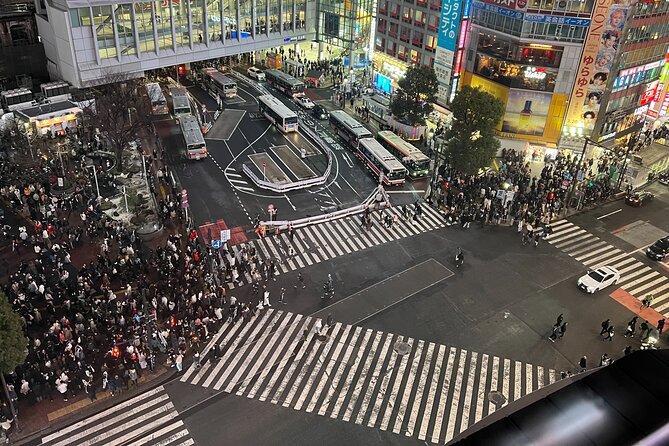
Shibuya is one of Tokyo’s most recognizable districts, and the Shibuya Scramble is the obvious first stop. When the signals change, streams of pedestrians cross from every direction. It is a short event, but seeing the movement from nearby is part of understanding Tokyo’s scale and rhythm.
The nearby Hachiko statue adds a small piece of local history to the visit. From there, you can explore the surrounding shopping and restaurant streets. Nobu’s help is most useful here if you want to do more than take a crossing photo. Ask about the kind of shops, food, or city views that match your interests.
Shibuya is not a quiet district. It is full of signs, traffic, crowds, and large commercial spaces. That energy appeals to many first-time visitors, while others may find it tiring after a few minutes. A private guide lets you decide when enough is enough and move on without waiting for a group schedule.
More guided tours in Tokyo:
- Tokyo: Shinjuku Local Bar and Izakaya Guided Walking Tour
★ 4.9 · 1,794 reviews - Tokyo: Private City Highlights Tour with Local Guide
★ 4.8 · 1,433 reviews - Tokyo: Tsukiji Fish Market Guided Walking Tour
★ 4.9 · 1,397 reviews - Tokyo 4hr Private Tour with Government-Licensed Guide
★ 5.0 · 1,394 reviews
Experiencing Asakusa and Senso-ji
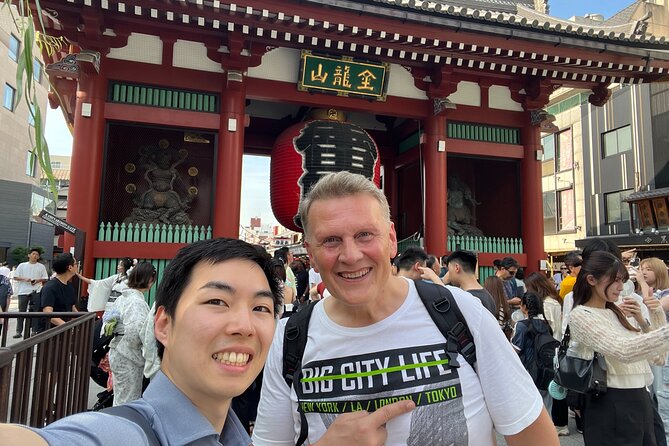
Asakusa gives you a different face of Tokyo. Senso-ji is the city’s oldest temple, and the approach along Nakamise Shopping Street is lined with traditional snacks and souvenirs. This is one of the strongest choices for a first visit because it combines a major sight with customs that you can see and discuss on the spot.
The temple area can be busy, especially around the main approach. A guide helps you understand what you are seeing and how to behave respectfully. Nobu can explain local practices rather than leaving you to copy the nearest person.
Nakamise is also a useful place for small gifts and Japanese snacks. Keep in mind that it is a shopping street aimed partly at sightseers, so it may not feel like an ordinary neighborhood market. The benefit is convenience and atmosphere. If you want a more everyday food or shopping experience, ask Nobu to pair Asakusa with another market area.
Eating your way through Tsukiji
Tsukiji was once the world’s largest fish market, and its outer market area still attracts people looking for fresh food. This is the natural part of the tour for visitors who want to try sushi, grilled skewers, and other Japanese specialties.
Food costs are not included, so set aside money for snacks or a meal. The custom format is useful here because you can tell Nobu your comfort level, dietary needs, and appetite before the tour. The available information does not promise a specific restaurant or tasting menu, so treat the food route as something to shape with him rather than a fixed culinary program.
Tsukiji can be an excellent choice for a morning or lunchtime visit. It is less suited to someone who wants a quiet meal in a formal setting. The appeal is the market atmosphere and the chance to sample several things in small portions.
Comparing Ginza’s polish with Shinjuku’s energy
Ginza is Tokyo’s luxury district, with flagship stores, modern buildings, fine dining, and art galleries. It is a good choice if you want high-quality Japanese gifts or an introduction to the city’s polished retail side.
You do not need to be a luxury shopper to enjoy Ginza. The architecture and department-store displays can be worth a look, and Nobu can help you focus on Japanese products rather than simply wandering through familiar international brands. Still, this area is less about old Tokyo and more about refinement, design, and shopping.
Shinjuku offers a louder contrast. You can look for the giant Godzilla head, the 3D cat billboard, and the free observation deck at the Tokyo Metropolitan Government Building. The observation deck is a particularly useful inclusion because it gives you a city view without an added admission charge.
Shinjuku is large, crowded, and easy to find confusing. This is where the transportation advice becomes valuable. Nobu can show you how to move through the area and explain which sights are worth your limited time. The giant signs and photo stops are fun, but the district works best when combined with a clear plan.
Finding a slower pace in Shimokitazawa
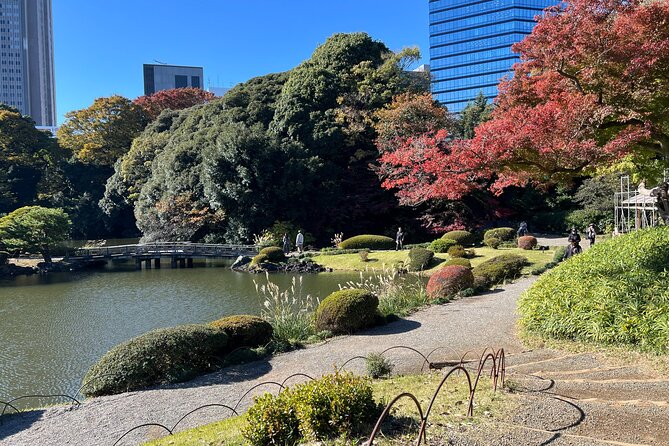
Shimokitazawa is often described as Tokyo’s bohemian district. It has vintage and boutique shops, small theaters, live music venues, and cozy cafes. This is a strong choice if you have already seen the major sights or want a neighborhood that feels younger and less formal.
The appeal is not one grand monument. It is the chance to see a creative local district through its shops and small venues. You might find the area more personal and relaxed than Ginza or Shibuya, though the exact experience depends on what is open and what interests you.
Ask Nobu to include Shimokitazawa if you care about secondhand clothing, independent shops, cafes, or music. If your visit is short and this is your first time in Tokyo, you may prefer to give those hours to Senso-ji, Meiji Shrine, or a food market.
Understanding the Imperial Palace and old Edo
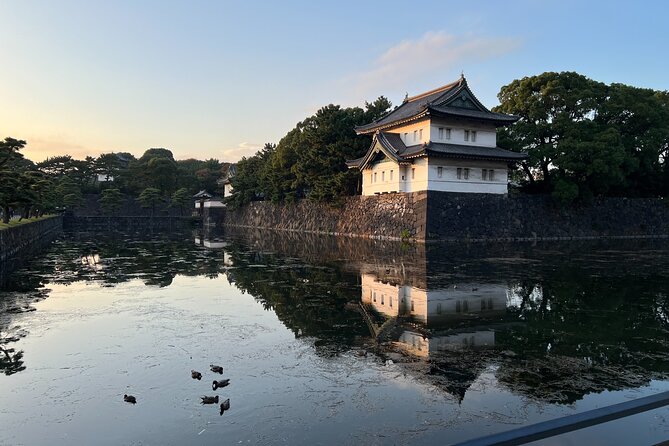
The Imperial Palace occupies the former site of Edo Castle, once home to the Tokugawa shoguns, who ruled Japan from 1603 to 1868. That connection gives the area historical weight, even though much of the original castle was lost.
A visit here works best if you want context about Tokyo’s change from shogunal capital to modern national center. Nobu can explain the relationship between the palace grounds and Edo’s past, helping you see the city as more than a collection of shopping districts.
The palace area is not the same kind of stop as Senso-ji. You should not expect a temple complex full of interior rooms or a reconstructed castle experience. Its value comes from the setting, the history, and the chance to connect present-day Tokyo with the city that came before it.
The tour’s flexible format also makes it possible to pair the Imperial Palace with the Ueno area or an older marketplace, as Nobu has done for some groups. If history and traditional Tokyo matter most to you, state that clearly in advance.
What the price includes, and what it does not
At $112.75 per person, this is not a bargain sightseeing bus. You are paying for a private guide, a custom route, hotel pickup within central Tokyo, and personal help throughout the day.
The price makes more sense for a small group that values control and guidance. A family or group of friends can split the cost while keeping the experience private. Group discounts may also be available, so check the rate for your party before deciding.
You still need to budget for train tickets, taxi fares, food, drinks, and any attraction fees. The guide can explain how to use public transportation, but the cost of getting around remains yours. That transparent separation is useful, as long as you do not mistake the tour price for an all-inclusive day.
The strongest value comes from the first part of your Tokyo stay. Use the tour to learn the train system, understand the city’s layout, and get restaurant or shopping advice. You can then explore more confidently on your own afterward.
Who will get the most from this tour
I would recommend this experience to first-time visitors who want a clear introduction without being locked into a fixed route. It also suits families, older adults, and small groups who need a flexible walking pace.
Food-focused visitors should explain their priorities before the tour. The same is true for shoppers, history fans, photographers, and people who want quieter neighborhoods instead of major landmarks.
This is less suitable if you prefer a formal tour with a fixed script, included admissions, and guaranteed meal stops. It may also disappoint if you expect to see every listed district in one day. The more specific you are about your priorities, the better the result is likely to be.
Free cancellation is available up to 24 hours before the start time. Changes made inside that period are not accepted, and poor weather may lead to a new date or a full refund. Confirmation arrives within 48 hours, subject to availability.
Should you book the Tokyo custom tour?
Book it if you want a private, adaptable introduction to Tokyo and value practical help more than a packed checklist. Nobu’s bilingual background, local roots, and ability to help with restaurants and train navigation are the main reasons this experience can be useful.
Before booking, send a short priority list: for example, shrine and temple traditions, sushi and markets, modern Tokyo, or neighborhood life. If you do that and accept the extra costs for transport and food, this can give you a much easier first day in a city that often feels hard to read on your own.
FAQ
How long does the private Tokyo tour last?
The tour lasts approximately 3 to 8 hours. The exact length and route should be discussed around your interests and priorities.
Can I choose which Tokyo neighborhoods to visit?
Yes. The itinerary is customizable, and you can request famous landmarks, local neighborhoods, food stops, shopping areas, or less familiar parts of Tokyo before the tour.
Is hotel pickup included?
Pickup is included for hotels in central Tokyo. The guide meets you on foot in your hotel lobby.
Are transportation costs included in the price?
No. Train tickets and taxi fares are extra. The guide provides advice on using Tokyo’s public transportation system, and taxis may be used if needed.
Are food, drinks, and entrance fees included?
No. You pay separately for food, drinks, and any attraction entrance fees that apply.
Is this a private tour?
Yes. Only your group participates, and the walking pace and route can be adjusted for your party.
Newly reviewed around Tokyo
- Tokyo Asakusa:Calligraphy & Make T-shirt Activity★ 5.0 · 62 reviews
- Intercity Shuttle, Tokyo to Haneda /Narita /Yokohama /Makuhari★ 5.0 · 5 reviews
- 1 Hour Travel around Tokyo with a Professional Photographer★ 5.0 · 3 reviews
- Travel Tokyo with Your Own Personal Photographer★ 5.0 · 43 reviews
- Train in Samurai Swordsmanship and Defeat the Demon in Tokyo★ 5.0 · 5 reviews
- Shuttle Van 6hr Tokyo Tour to-and-from Tokyo, Yokohama and Narita★ 5.0 · 9 reviews
- Kickboxing & Body Training with EX-Pro Fighter★ 5.0 · 4 reviews
- Traditional Japanese Knife Sharpening Class★ 5.0 · 18 reviews
Guided, compared.
Tokyo 6hr Private Tour with Government-Licensed Guide
Read our review →
Shinjuku Local Bar and Izakaya Guided Walking Tour
Read our review →
Private City Highlights Tour with Local Guide
Read our review →
Tokyo 4hr Private Tour with Government-Licensed Guide
Read our review →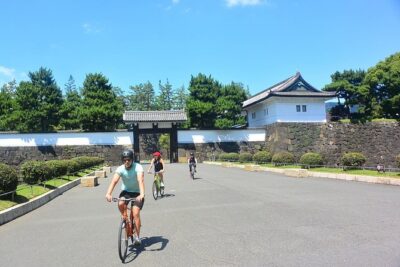
Samurai Ninja Museum Guided tour and Experience
Read our review →