
Reviewed · TOKYO SUMO EXPERIENCES
Chair Seat Guaranteed SUMO Practice +Photo +Culture Option
Tokyo’s morning sumo practice is quiet, close, and wonderfully raw. You sit just a few feet from wrestlers as they warm up, slam into one another, and repeat the basic movements that shape the sport. This is not a tournament with cheering crowds. It is a working practice inside a sumo stable.
I like the guaranteed chair, a real help if your knees do not enjoy long stretches on the floor. I also like the small group, capped at 10 people, and the way the guide adds context after the silent practice. The main drawback is that you must stay quiet, still, and empty-handed during much of the training, so this is not a casual, chatty sightseeing stop.
Key points to know before booking
- Front-row chair seating: Watch the wrestlers from very close range without sitting on a cushion or floor.
- Morning training, not a tournament: You see working practice, coaching, warmups, and repeated drills.
- Max and Masao may guide the visit: Guides explain the sport, customs, and daily life around sumo.
- Active wrestler Q&A: After practice, you may speak with wrestlers and take photos.
- Small group format: The maximum is 10 people, which keeps the visit personal.
- Strict stable rules: No talking, eating, or drinking during practice. Still photos are allowed, while video is not permitted according to the tour briefing described by families who attended.
Why this sumo visit feels different from a tournament
A Tokyo tournament is polished public theater. This visit shows the work behind it. You watch wrestlers train before the sport reaches the ring, with no announcer, music, or cheering crowd to soften the impact.
The atmosphere is controlled and serious. You are expected to observe quietly while the wrestlers focus on their routines. That silence is not a flaw. It lets you notice the repeated movements, the force of each collision, and the way coaching shapes the session.
The close distance is the real prize. You are not looking across a large arena at tiny figures. You are seated near the action, close enough to feel the sudden force when two large bodies meet. A review of the seating described a front-row view, and that is the point of paying for this format.
The visit also makes sense for a first-time sumo audience. If you know little beyond the mawashi, the topknot, and the shove out of the ring, the guide gives you a framework. You learn what the wrestlers are doing and why the customs matter.
More Tokyo sumo experiences:
- Tokyo: Sumo Show and Dining Experience
★ 4.8 · 2,742 reviews - the SUMO show
★ 5.0 · 1,960 reviews - Tokyo Shinjuku Sumo Show & Experience with Photo
★ 5.0 · 1,750 reviews
Meeting at Kiyosumi-shirakawa Station at 8:00
The meeting point is Kiyosumi-shirakawa Station in Koto City, served by the Hanzomon and Oedo lines. The instructions identify Exit B1 and the ground level, with a FamilyMart convenience store next to the meeting area.
I would treat this as a place to arrive early, not a spot to find at the last second. The station has several exits, and the meeting instructions have caused confusion for at least one participant. Check that you are at the correct station and exit before the 8:00 a.m. start.
The early hour is part of the value. Sumo practice takes place in the morning, and an earlier start can put you in position before other groups arrive. One account described meeting around 7:30 a.m. and reaching the stable in time for front-row seats, but the official start time for this activity is 8:00 a.m. Follow the time on your confirmation.
The walk and transfer to the stable take about 20 minutes in total, according to the schedule. The tour ends back at the station, so you do not need to solve your own route to an unfamiliar stable afterward.
Inside the stable: 1 hour and 40 minutes of close observation
The main portion lasts about 1 hour and 40 minutes. You sit in a chair and watch the practice unfold at very close range.
This is the part where expectations matter most. You are not promised a staged demonstration or a chance to interrupt the training. You observe a real practice session, and the stable’s rules come first. No talking, eating, or drinking is allowed while the wrestlers train.
Still photography is allowed, which gives you a chance to capture the setting and the action. The tour guidance described in the supplied family account also prohibited video, so bring a camera for photos but do not expect to film the practice. Put your phone away when needed and pay attention to the session.
The quiet can be challenging for children. One family prepared a seven-year-old by explaining the rules in advance, including no talking, movement, food, drink, or video. Their child managed it, but that preparation is useful advice. This is a good family experience for children who can sit quietly, not for a child who needs to move or ask questions throughout.
The chair is a major practical advantage. Many sumo practice visits use floor cushions, and that can be hard on weak knees or stiff hips. Here, you get a proper seat, although one account still found the seating uncomfortable. A chair does not guarantee luxurious theater seating, so people with serious mobility concerns should keep expectations modest.
What you will actually see during practice
The schedule does not promise a fixed list of drills, and the session unfolds according to the stable’s routine. You might see warmups, repeated practice bouts, and wrestlers working on strength, balance, and timing.
The physical contrast is striking. Sumo is often reduced to a short burst in the ring, but practice reveals how much repetition sits behind those seconds. Wrestlers hit one another like heavy machinery, reset, and do it again. The force is impressive, but so is the discipline required to repeat it.
The guide does not narrate constantly during the training, since talking is prohibited. That means you may not understand every movement while it happens. The later presentation matters because it gives you the terms and customs needed to make sense of what you have just watched.
This is also why I would not book the outing only for photographs. You will get a group photo and may take photos with a wrestler later, but the strongest part is the observation itself. The visit works best when you are willing to watch a demanding routine without constant explanation.
A completely different kind of day in Tokyo:
- Mt Fuji and Hakone 1-Day Bus Tour Return by Bullet Train
★ 5.0 · 26,383 reviews - 1-Day Tokyo Bus Tour
★ 5.0 · 14,250 reviews - Tokyo: teamLab Planets TOKYO Digital Art Museum Entry Ticket
★ 4.6 · 9,779 reviews - Mt Fuji & Hakone Cruise, Drum Show Bullet Train 1 Day from Tokyo
★ 4.0 · 7,413 reviews
Meeting active wrestlers after practice
After the training, you get about 20 minutes for a Q&A with active sumo wrestlers. You may also have an opportunity to take photos with them.
This changes the mood of the morning. During practice, the wrestlers are working and you are expected to keep your distance and your voice down. Afterward, you have a more direct connection with the people you have just watched.
The Q&A is included in the price, as is a group photo of the session. The photo gives you a simple souvenir, and the possibility of a picture with a wrestler adds a personal touch. The description says you may speak with active wrestlers and potentially take photos, so treat this as an opportunity rather than a guaranteed private meeting with a particular wrestler.
There is also a playful long-term angle. A photo taken with a wrestler might become especially meaningful if that athlete rises through the ranks. You cannot know what the future holds, but the idea gives the photo more character than a standard group snapshot.
Max and Masao are named in the experience material as guides associated with the outing. Max, who was educated in the United States, has been praised for making the sport easier to understand in English. Guide assignments can vary, so do not book on the assumption that one particular person is guaranteed unless your confirmation says so.
The 25-minute sumo lesson that completes the picture
After the wrestler Q&A, the local guide gives a 25-minute presentation on sumo’s history, customs, and way of life.
This short lesson is important. Without it, you may remember the impact of the practice but miss the meaning behind the rituals and training. The presentation turns the visit from a seat at a gym into a clearer introduction to Japanese sumo culture.
I particularly like the order of events. You watch first, ask questions of active wrestlers second, and then receive the broader explanation. The sport feels less abstract because you have already seen the physical work up close.
The guide also helps you connect sumo’s rules and techniques to what happened in the room. If you have never watched a full bout, this is enough background to help you follow future matches with more interest.
The presentation is not a substitute for a full cultural course, and the total tour lasts only about three hours. Still, it adds useful value to a morning that might otherwise be little more than silent observation.
Is $102.47 a fair price?
At $102.47 per person, this is not the cheapest way to see sumo-related activity in Tokyo. The price makes more sense when you separate the included elements.
You are paying for entry to the stable, reserved chair seating, a local guide, the sumo presentation, the wrestler Q&A, and the group photo. The chair matters most if you cannot comfortably sit on the floor. The guide and presentation matter most if you are new to sumo.
A cheaper visit that only provides access to practice might suit someone who already understands the sport and wants only a brief look. Here, you receive a longer morning with several parts, including direct contact with wrestlers and a guide-led explanation.
The group limit of 10 also helps justify the cost. This is not a large bus outing where you disappear into a crowd. A small group makes the station meeting easier once everyone is assembled and gives the Q&A a better chance of feeling personal.
I would call the price fair for a first sumo experience, particularly for visitors who value comfort and explanation. It is less attractive if you are a serious sumo follower who wants tournament competition rather than practice, or if you dislike structured tours.
Who will enjoy this best?
This outing suits first-time Tokyo visitors who want something more local than a major sightseeing stop. It also fits anyone with weak knees, since the chair removes the main physical problem with many stable visits.
Families can enjoy it if children receive a clear briefing beforehand. The seven-year-old who handled the visit shows that age alone is not the issue. The key question is whether your child can remain quiet and still during the training.
You should also like early mornings and focused observation. The practice is not a place for free conversation, snacks, or casual wandering. If you need a relaxed schedule, the 8:00 a.m. meeting and roughly three-hour commitment may feel demanding.
The experience is less suitable for anyone expecting a tournament, an English-language play-by-play, or a chance to interact freely throughout the practice. You are a respectful observer first and a participant later.
The stated physical requirement is moderate fitness. The activity involves public transportation and movement to and from the stable. Service animals are allowed, and the meeting point is near public transportation.
Booking details worth keeping in mind
Confirmation is sent within 48 hours of booking, subject to availability. The tour usually sells about 25 days ahead, so I would not leave it until the last few days of a short Tokyo visit.
The activity is mobile-ticket based, which keeps the paperwork simple. Keep the ticket easy to open on your phone, especially while meeting the guide at the station.
The tour requires a minimum number of participants. If that minimum is not met and the activity is canceled, you are offered another date or experience, or a full refund.
You can cancel for a full refund up to 24 hours before the start time. Changes or cancellations inside that 24-hour window are not accepted for a refund, and the cut-off uses Tokyo local time.
Should you book this sumo practice?
I would book it if you want to understand sumo by watching the work up close, not just by taking a photo outside a tournament venue. The chair seating, small group, active wrestler Q&A, and guide-led explanation make this a strong introduction for a first visit to Japan.
Book with realistic expectations. You must be quiet during practice, the seating may still feel basic, and the exact wrestler or guide cannot be assumed. Arrive at the correct Kiyosumi-shirakawa exit, prepare children for the rules, and leave room in your morning for the transfer back to the station.
For a quiet, close look at a serious Japanese sport, the $102.47 price is reasonable. For tournament drama, cheering crowds, or a flexible drop-in activity, choose something else.
FAQ
Where does the sumo practice tour meet?
The meeting point is at Kiyosumi-shirakawa Station in Koto City, Tokyo. The instructions specify Exit B1 at ground level, near a FamilyMart convenience store.
What time does the tour start?
The stated start time is 8:00 a.m.
How long does the activity last?
The experience lasts approximately three hours, including the station transfer, sumo practice, wrestler Q&A, presentation, and return to the station.
Do I sit on the floor?
No. This activity guarantees chair seating rather than floor seating or cushions.
How close will I be to the wrestlers?
You watch the morning practice from very near the action. The experience is designed to provide a close view inside the stable.
Can I take photos?
Yes. Still photography during the practice is allowed, and you receive a group photo. You may also have an opportunity to take photos with active wrestlers. Video is not permitted according to the tour guidance described for the experience.
Can I talk during the practice?
No. You must remain quiet during the training. Eating and drinking are also not allowed during the practice.
Is a guide included?
Yes. A local guide provides a presentation about sumo’s history and customs. Max and Masao are named as guides associated with the activity, but the assigned guide may vary.
What is the cancellation policy?
You can cancel at least 24 hours before the start time for a full refund. Cancellations or changes made less than 24 hours before the start time are not refunded or accepted.
Newly reviewed around Tokyo
- Tokyo Asakusa:Calligraphy & Make T-shirt Activity★ 5.0 · 62 reviews
- Intercity Shuttle, Tokyo to Haneda /Narita /Yokohama /Makuhari★ 5.0 · 5 reviews
- 1 Hour Travel around Tokyo with a Professional Photographer★ 5.0 · 3 reviews
- Travel Tokyo with Your Own Personal Photographer★ 5.0 · 43 reviews
- Train in Samurai Swordsmanship and Defeat the Demon in Tokyo★ 5.0 · 5 reviews
- Shuttle Van 6hr Tokyo Tour to-and-from Tokyo, Yokohama and Narita★ 5.0 · 9 reviews
- Kickboxing & Body Training with EX-Pro Fighter★ 5.0 · 4 reviews
- Traditional Japanese Knife Sharpening Class★ 5.0 · 18 reviews
Tokyo Sumo Experiences, compared.
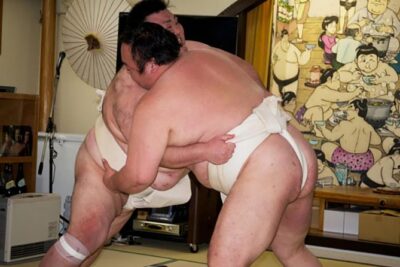
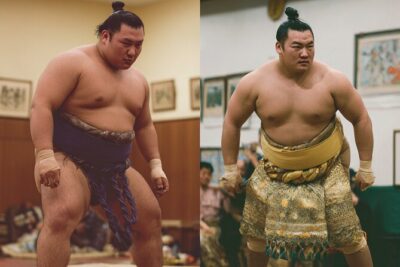
Tokyo Shinjuku Sumo Show & Experience with Photo
Read our review →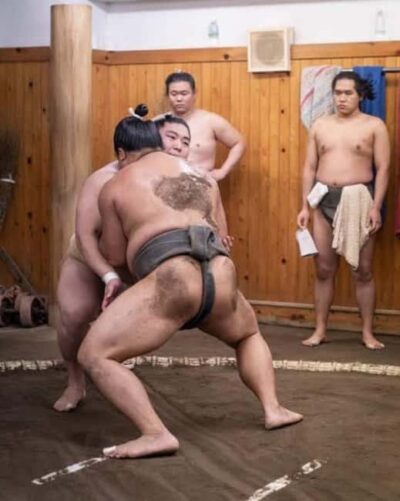

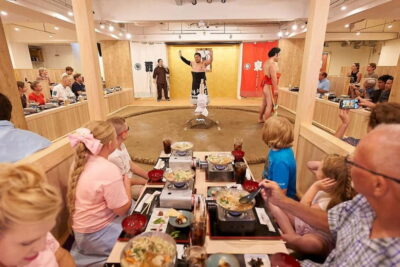
Luxury Sumo Show Experience & Japanese cuisine & Drink
Read our review →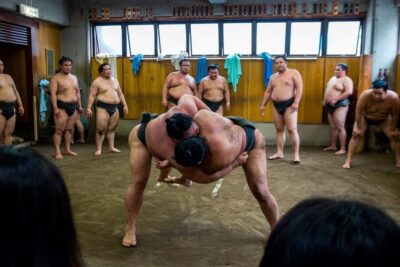
Tokyo Sumo Experience: Chanko & Mochi with a Former Pro
Read our review →
Ultimate Sumo Tournament: Tokyo, Osaka, Nagoya, Fukuoka
Read our review →Browse the lists this tour appears in